A Famous Set Play: Pivot Feed and Indirect Block Starting from Fixo Isolation
Published: 2021.06.02Updated: 2026.05.03
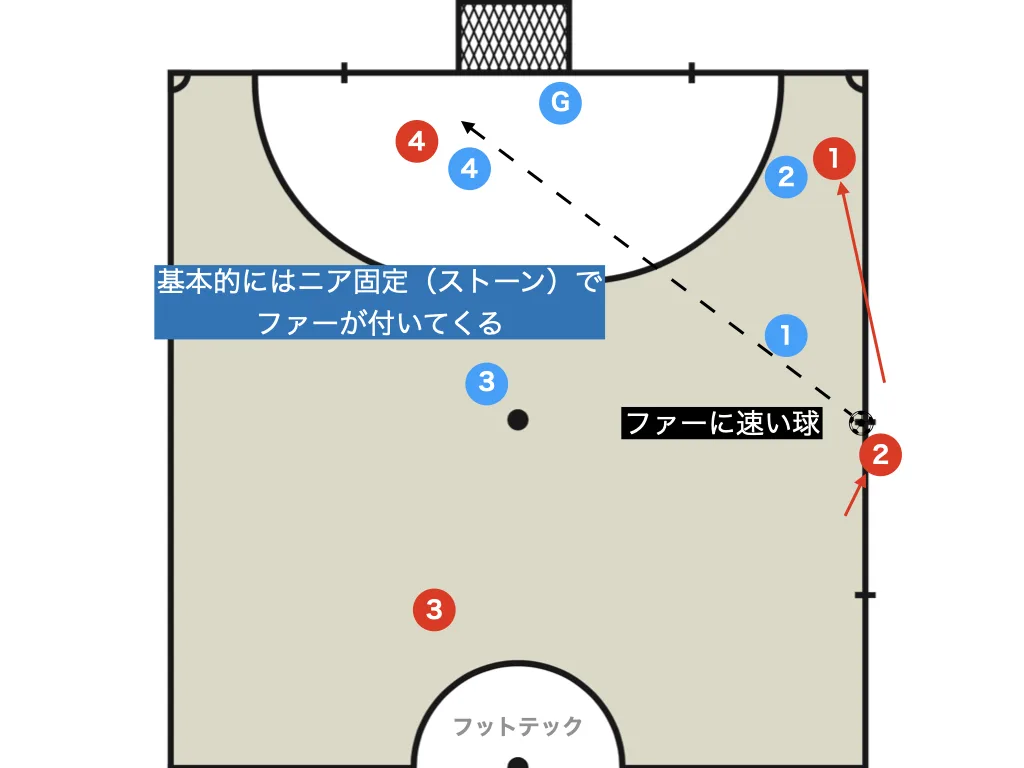
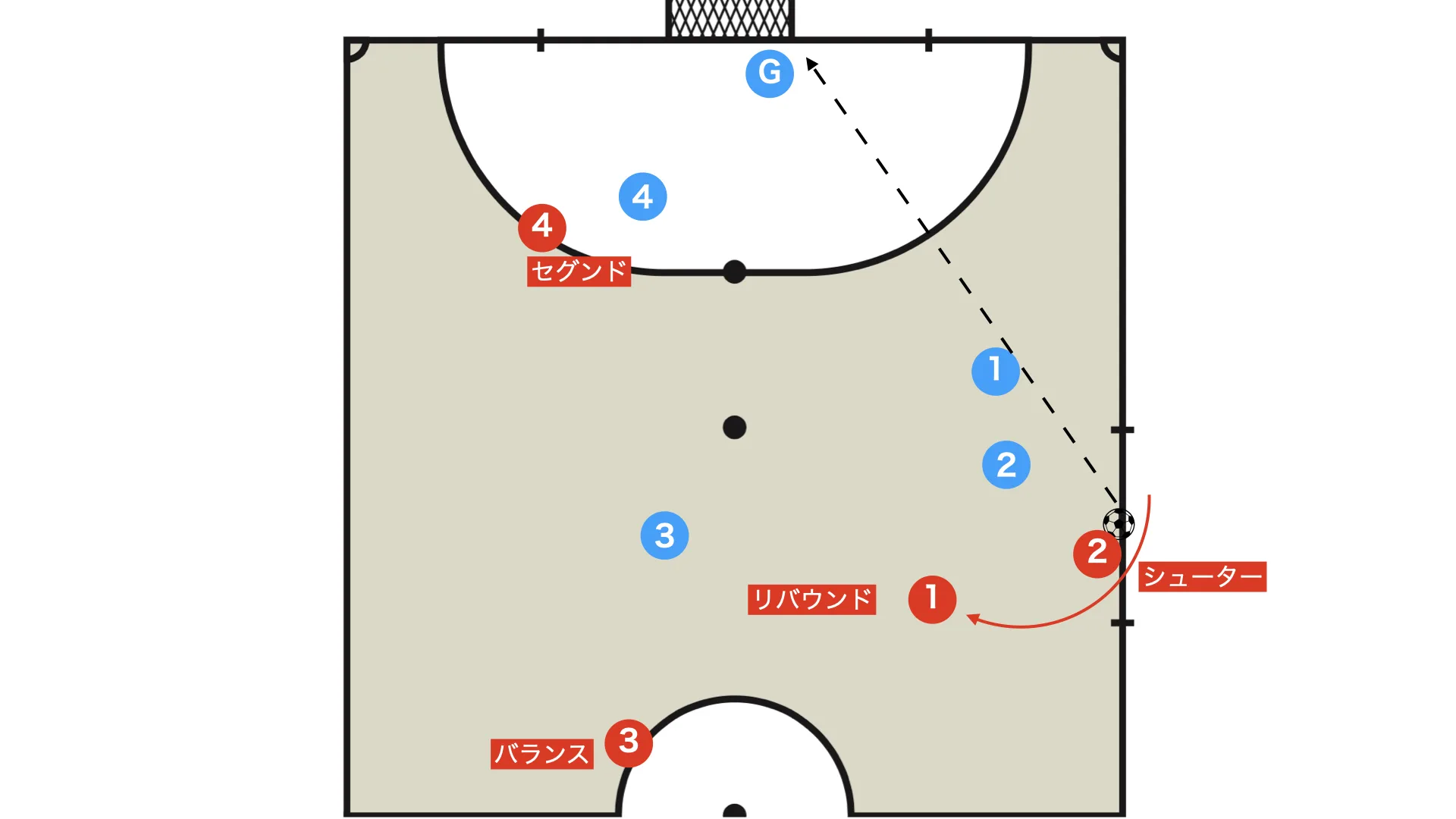
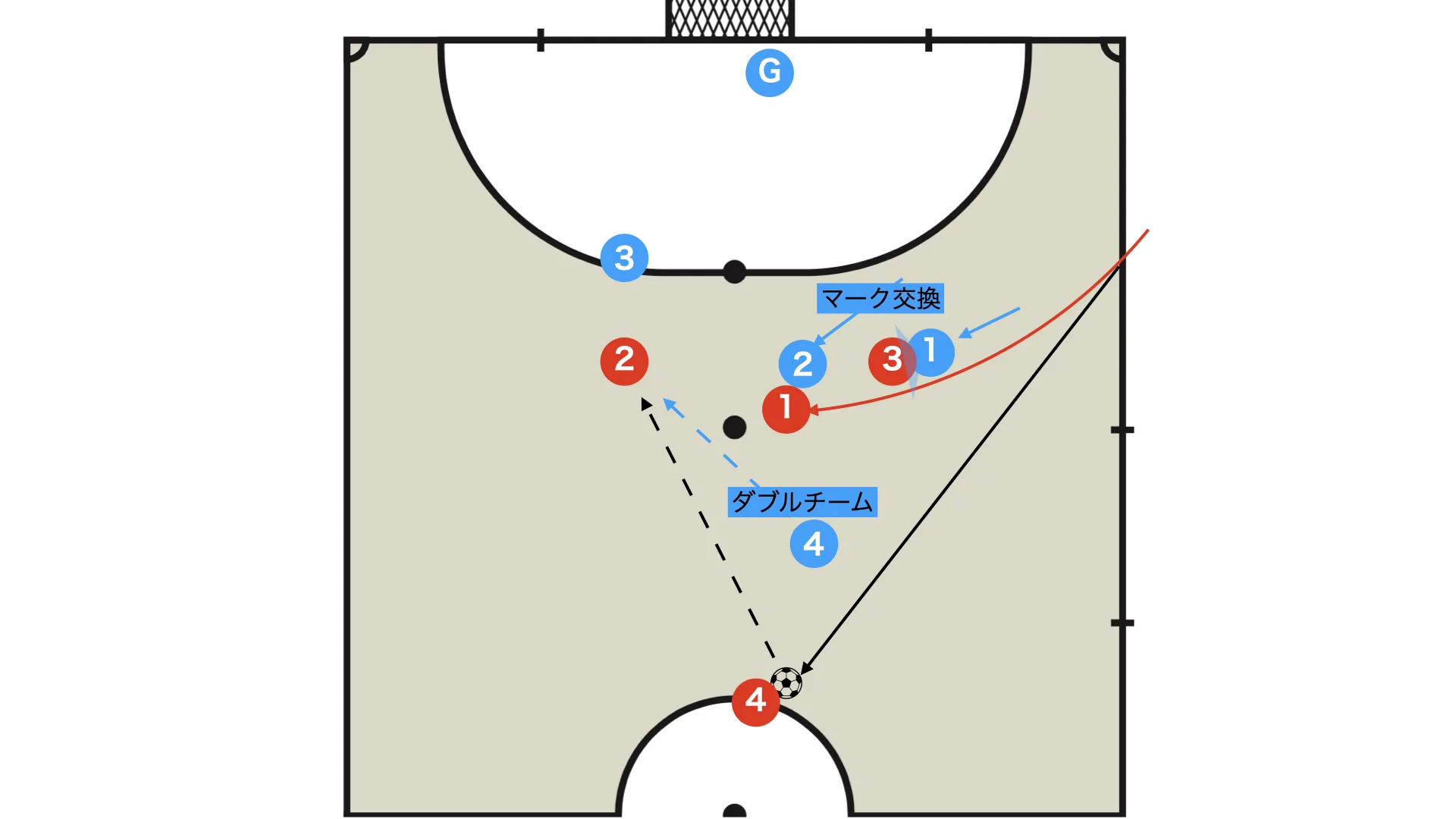
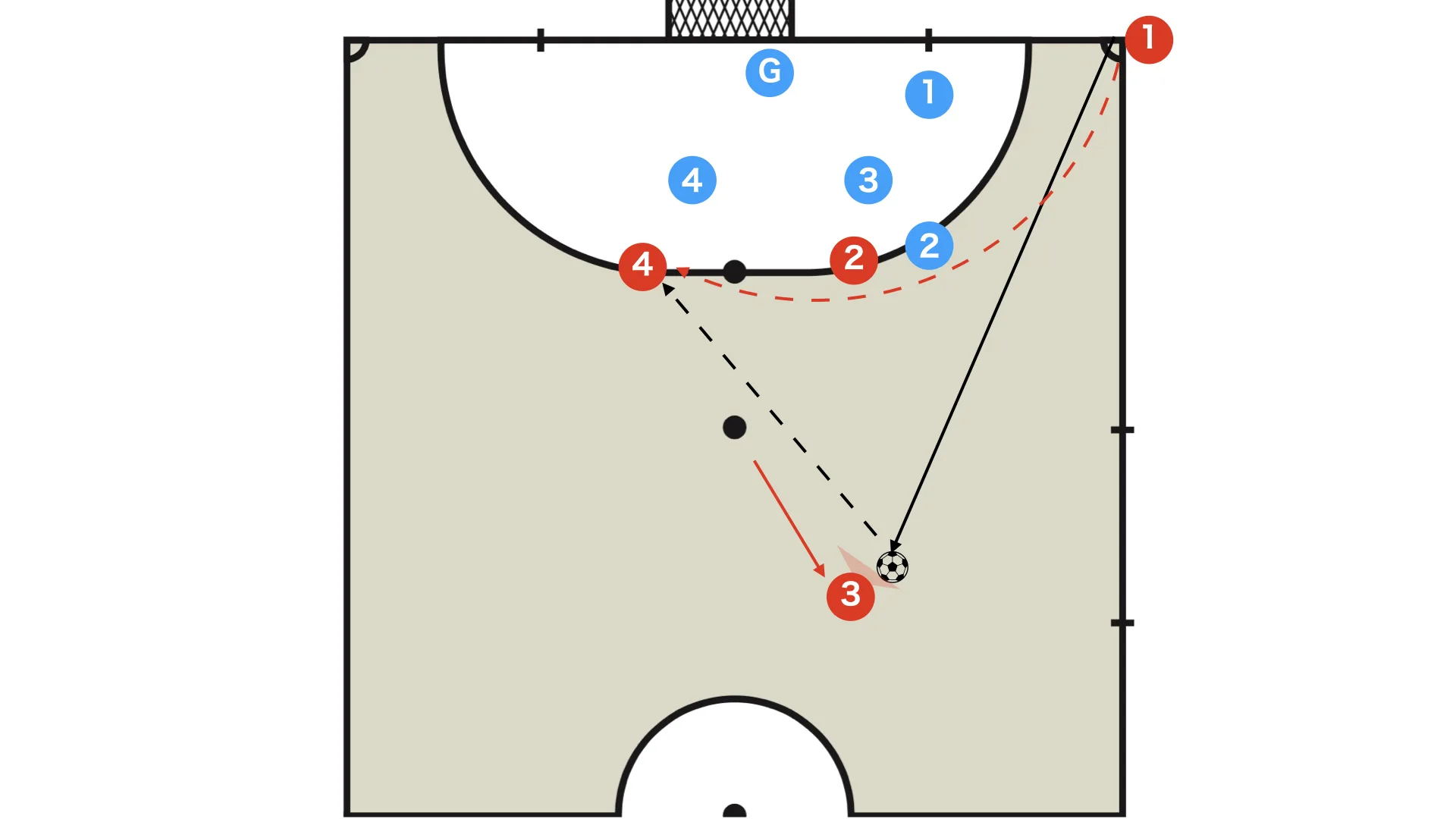
The set play explained in this article is the very famous sign play shown below.
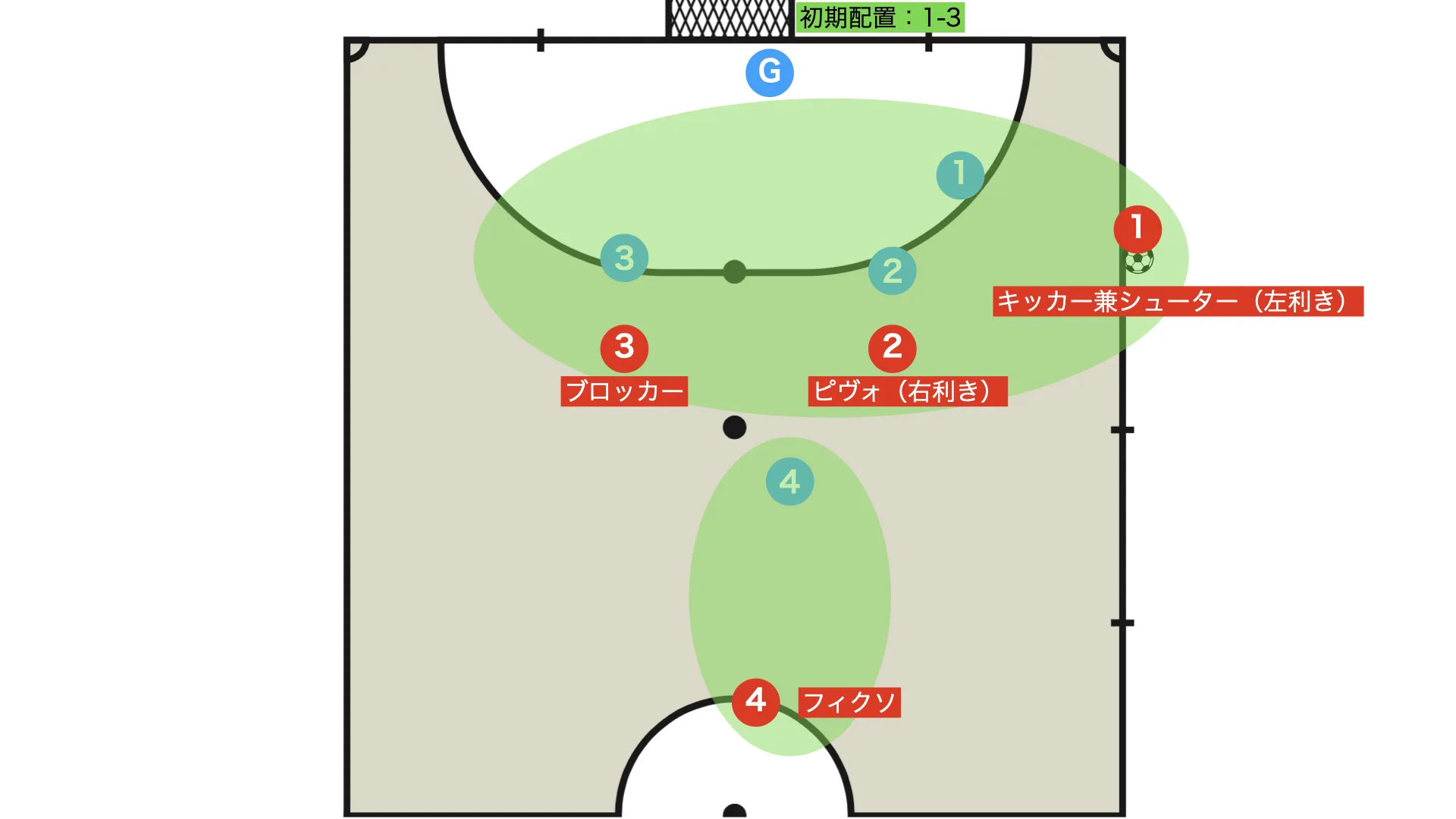
Each player's role:
- Red 1 (kicker) = shooter (ideally on the side opposite the player's stronger foot; in this diagram, left-footed)
- Red 2 = pivot (creates the reference point in front of goal)
- Red 3 = blocker (blocks the marker on Red 1)
- Red 4 = fixo (supplies the pass into the pivot)
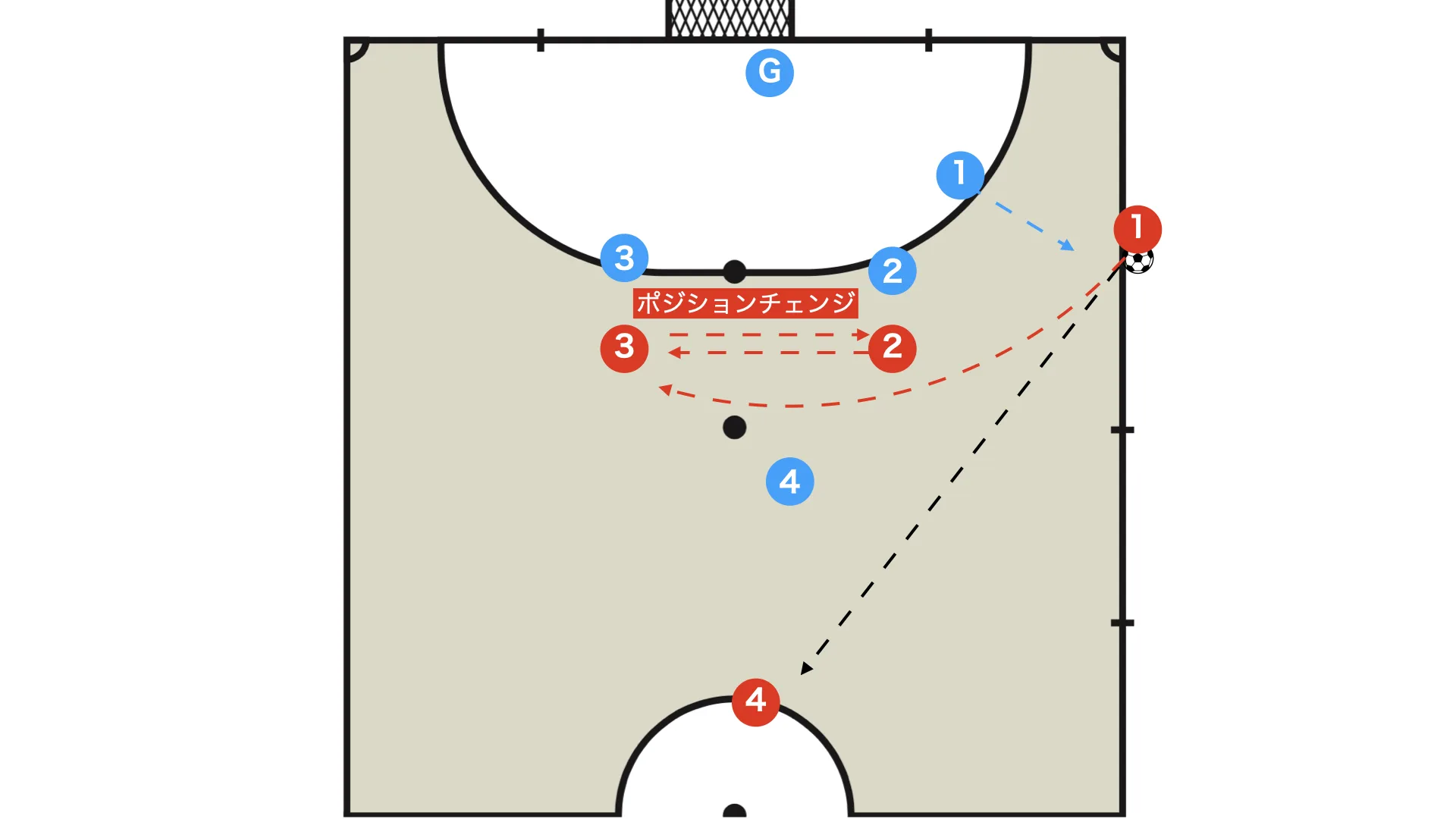
Opening:
- The kicker passes to the fixo in the anchor position.
- The two front players (Red 2 and Red 3) exchange positions.
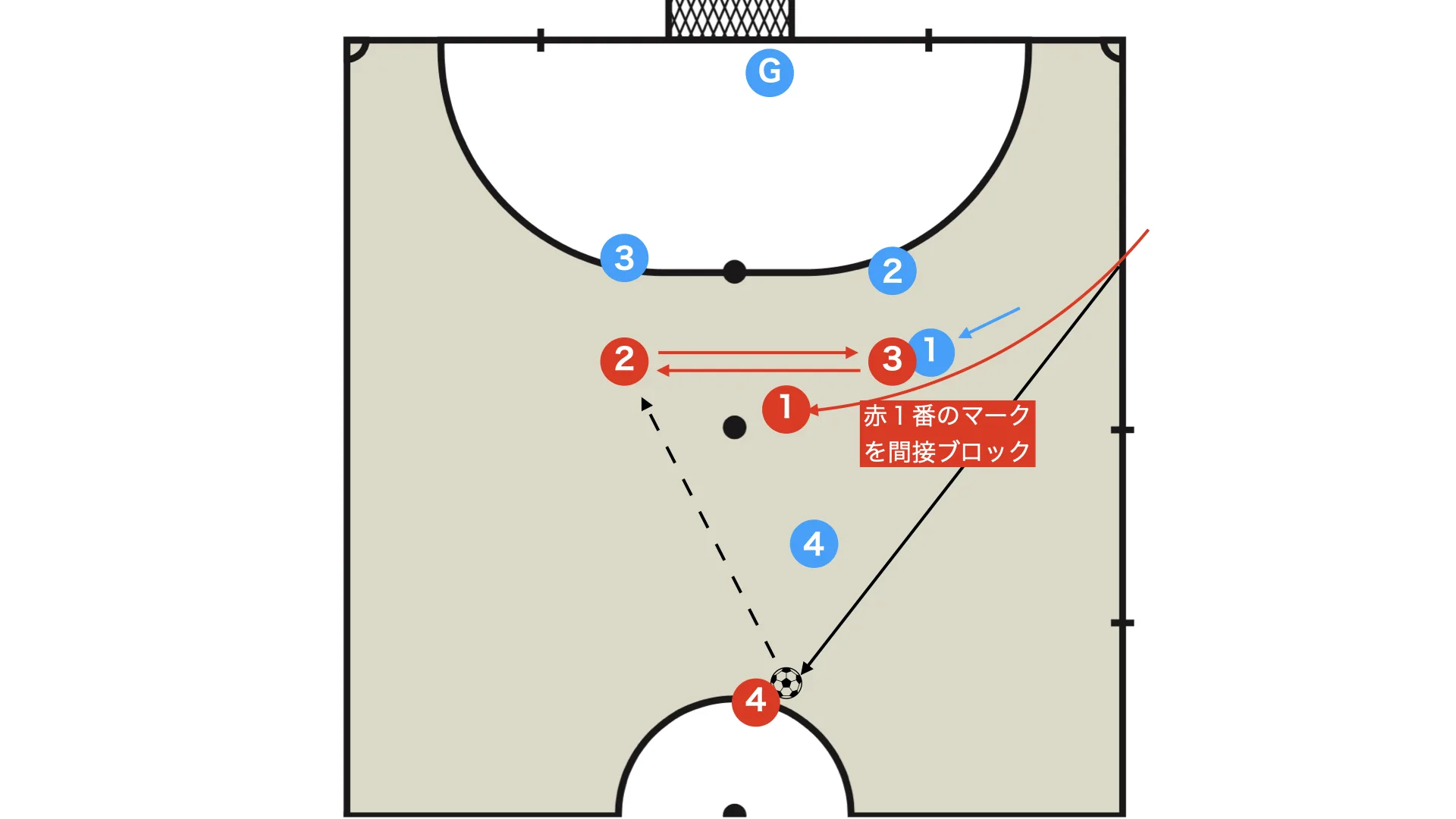
- Red 1 attacks the middle from the defender's blind side.
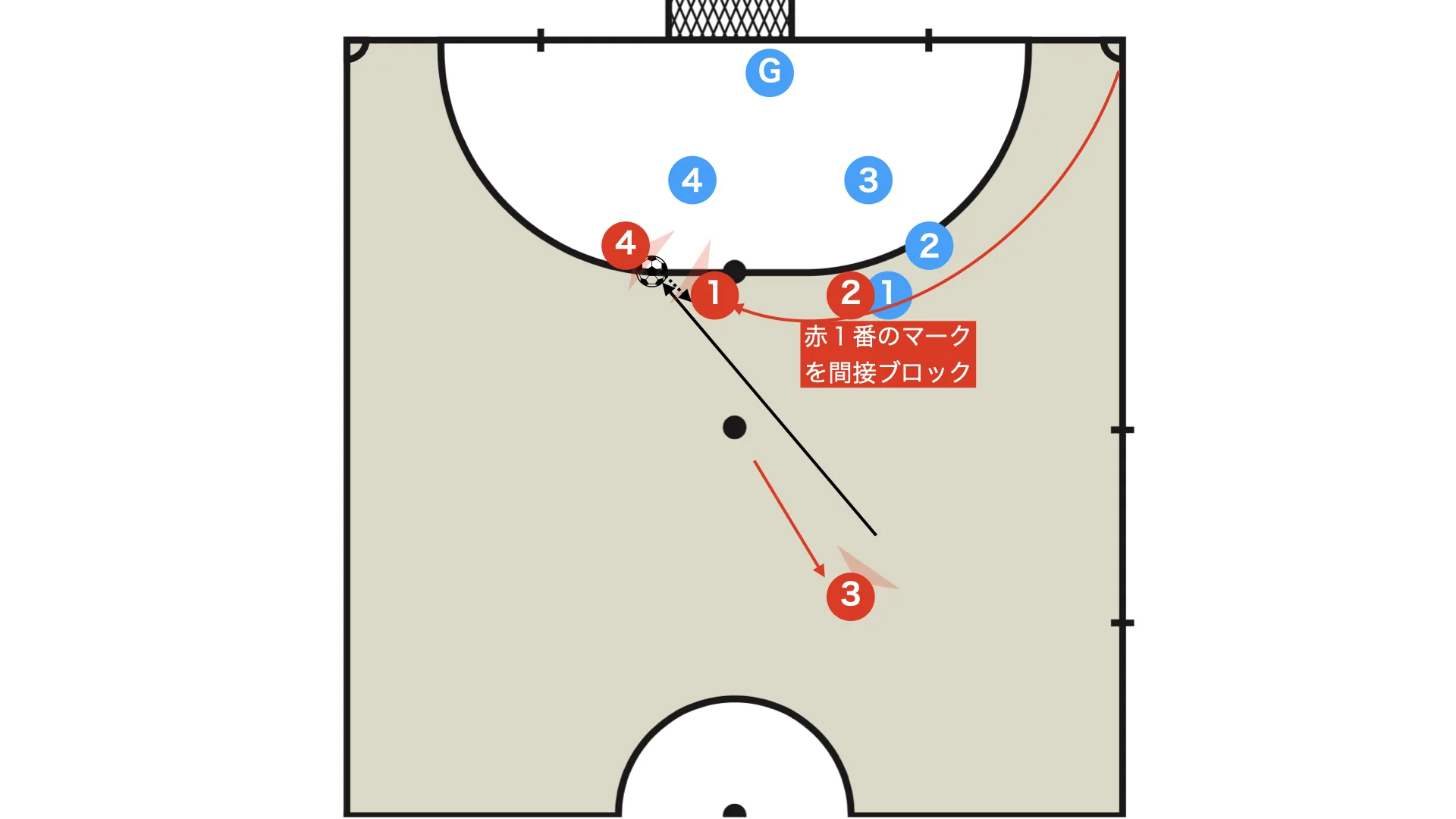
- Red 3 makes an indirect block on Red 1's marker.
- Once Red 4 (the fixo) receives the ball, that player should quickly pass to Red 2 (the pivot).
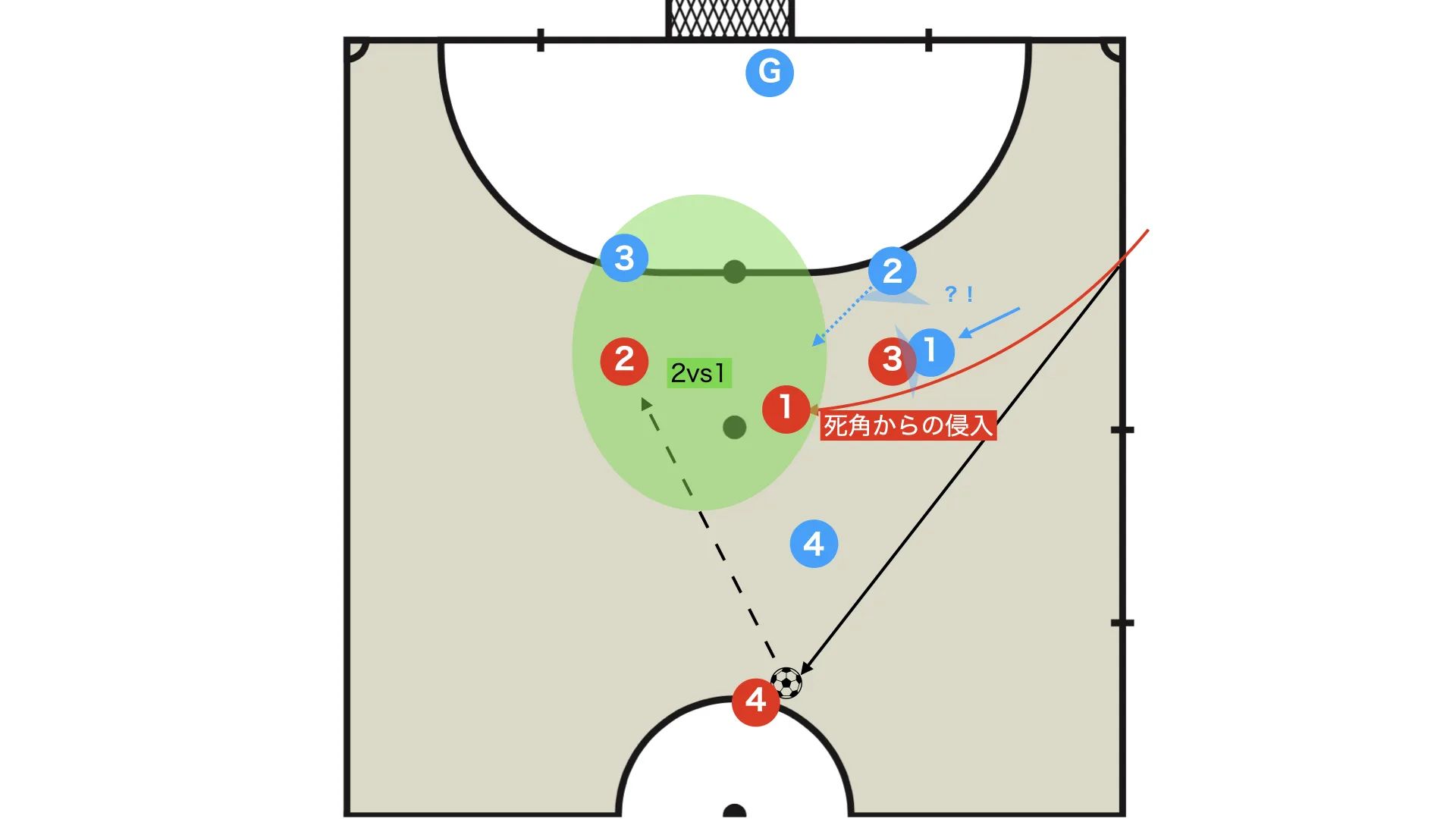
The kicker's movement into the goalmouth, dropping off the line, together with Red 3's indirect block, can free Red 1 for a moment and create a temporary 2v1 numerical advantage in front of goal.
Defensive solution:
- Blue 1 and Blue 2 switch marks (to deal with the block).
- Blue 4 abandons the mark on the fixo (Red 4), presses the pivot (Red 2), and goes to win the ball with a double team.
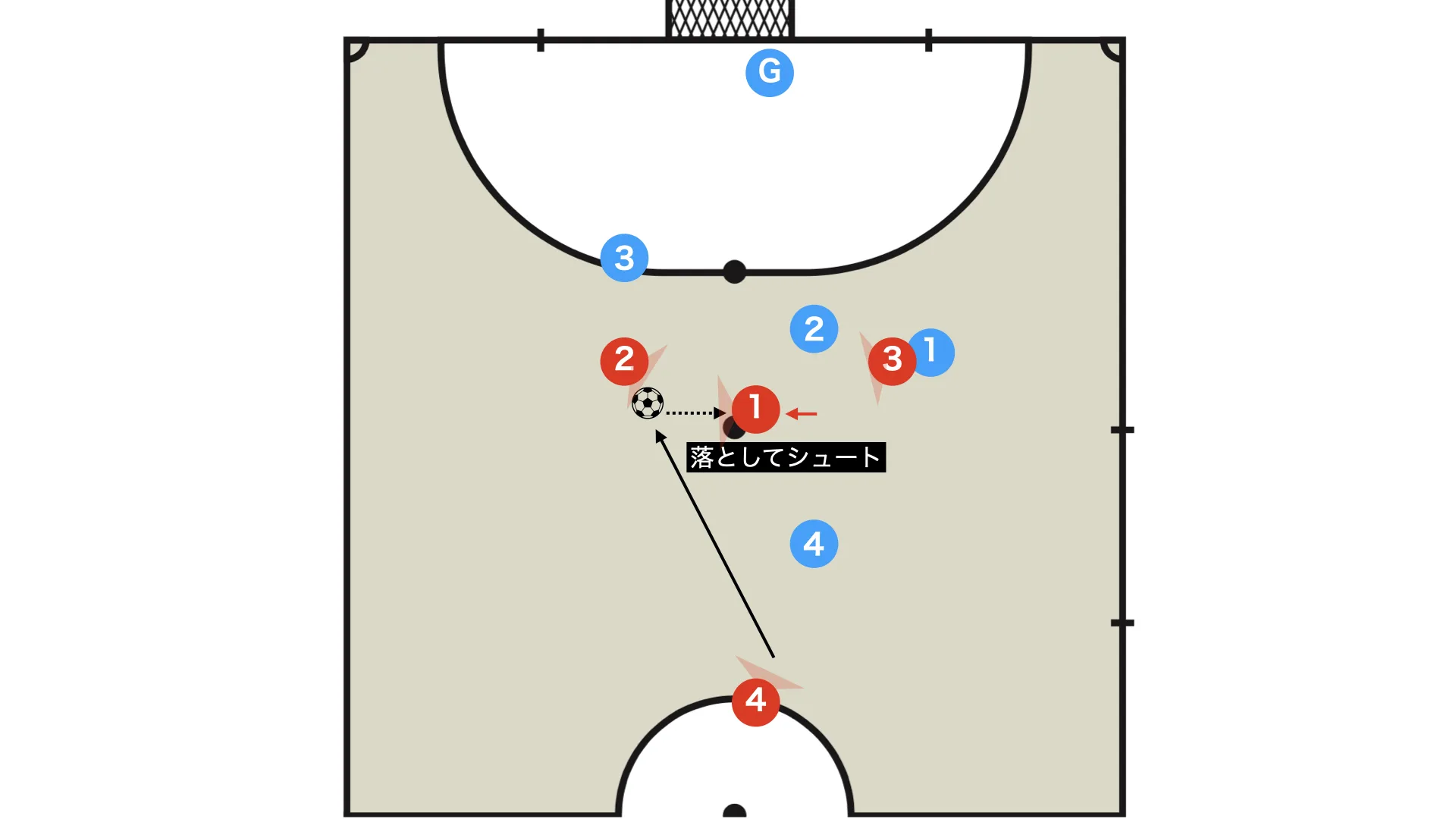
At this moment, it is important for the pivot to be aware of the shooter's body orientation and play a layoff that makes the shot easy to hit.
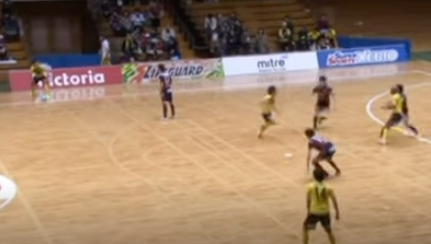
You should understand the full sequence by this point, so let us look at it in a real match.
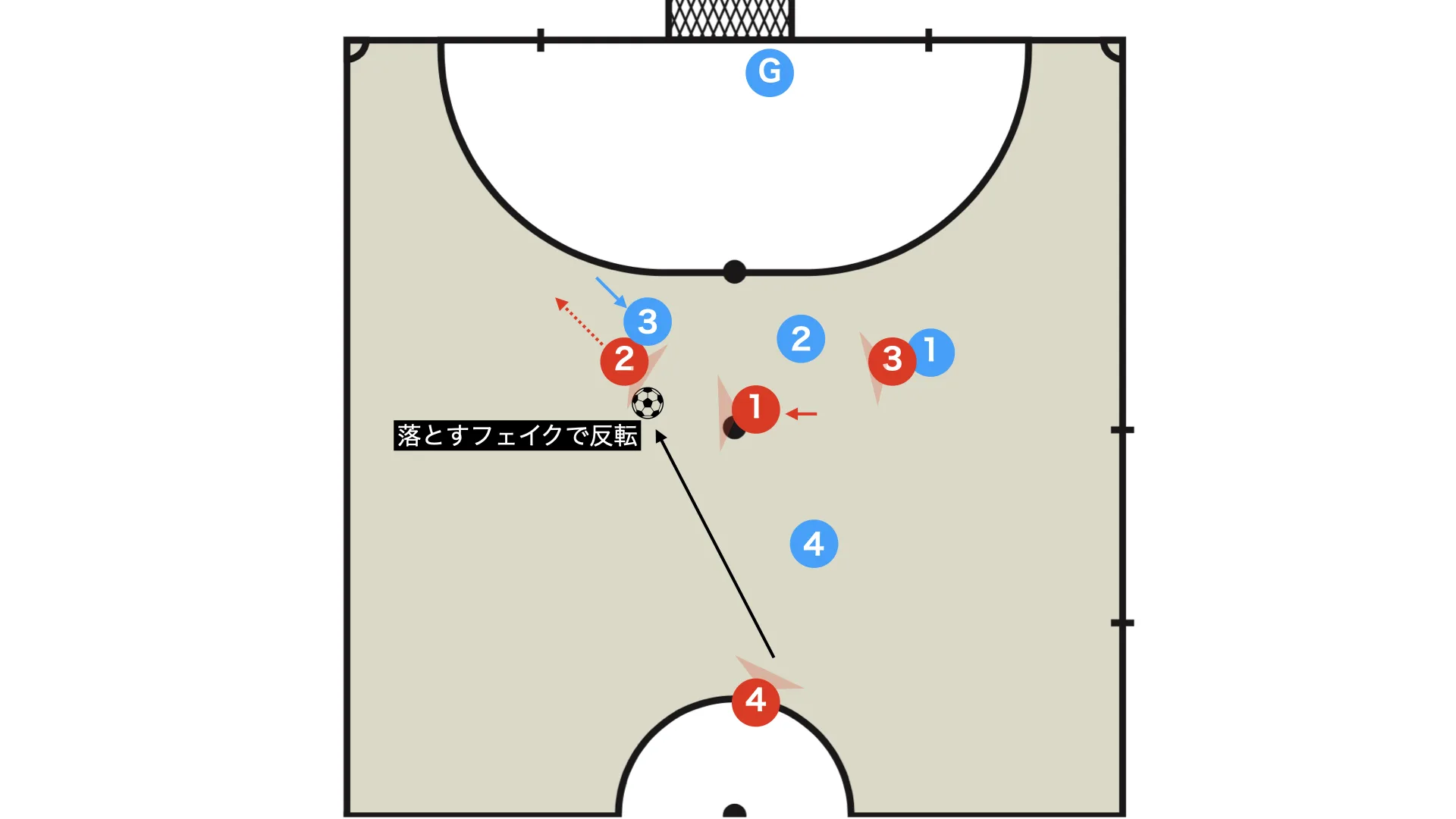
If it feels like the defender on the pivot is reading the layoff and may jump to intercept, or if the pivot feels pressure from the inside, turning is effective.
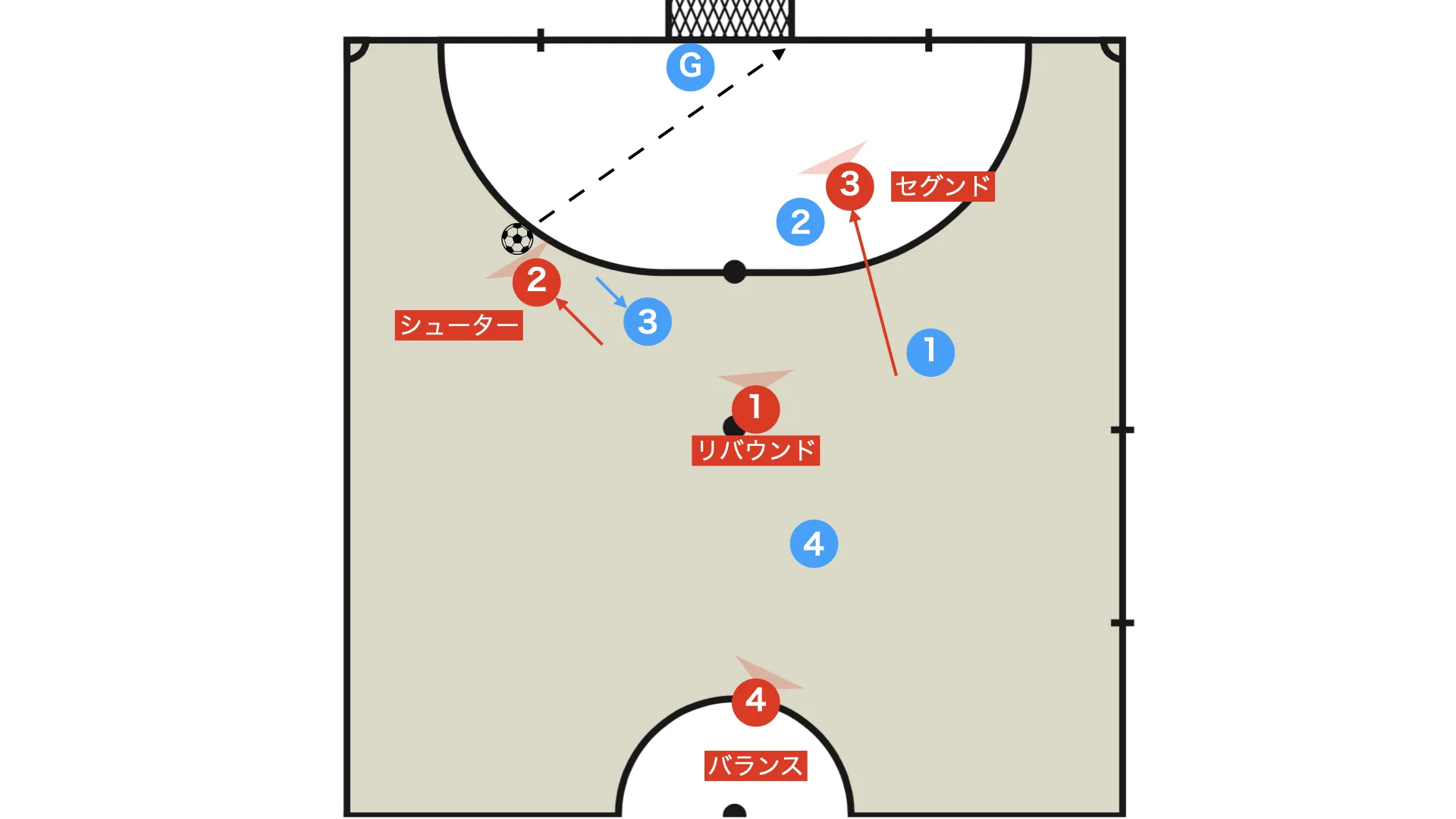
If the pivot turns, create the finishing triangle as shown above.
At that moment, there is a high chance that the goalkeeper will come forward to block, and if that happens, the pass to the segundo is effective.
This set play can also be adapted for a corner kick in the following way.
There is also a version like this diagram that does not use the position exchange, but in general it is easier to shake off the opponent's marking if the front two players exchange positions whenever possible.
This is such a famous and powerful set play that teams struggling to score from set plays should seriously consider adding it.