A Standard 3-2 Shape for Own-Half Kick-Ins with the Goalkeeper Joining the Attack
Published: 2021.05.18Updated: 2026.05.03
In recent years, especially in Europe but also worldwide, more teams have started using the goalkeeper as a fifth outfield player in attack.
This is a tactic that teams should definitely have if they need to challenge stronger opponents through group tactics because they cannot rely on superior individual ability.
- basic technical ability to control and pass the ball
- goalkeeper foot skills (passing, control, shooting)
- the pivot's ability to hold the ball up
- mentality (the ability to stay calm and make good decisions even with the goal left open)
- You can always create a numerical advantage.
- If you can escape the opponent's press, it becomes easy to create a numerical advantage in the attacking half and go straight to goal.
- You can enter the attacking half with relatively little running (good for teams with limited substitutions).
- If the opponent has no defensive guidelines, you can make them hesitate and disrupt their defensive structure.
- You leave the goal open, which creates a risk of conceding.
- If the opponent drops off, you may no longer be able to use the space that would otherwise be available.
- If the opponent has clear defensive guidelines, this setup may not be effective and you can get trapped.
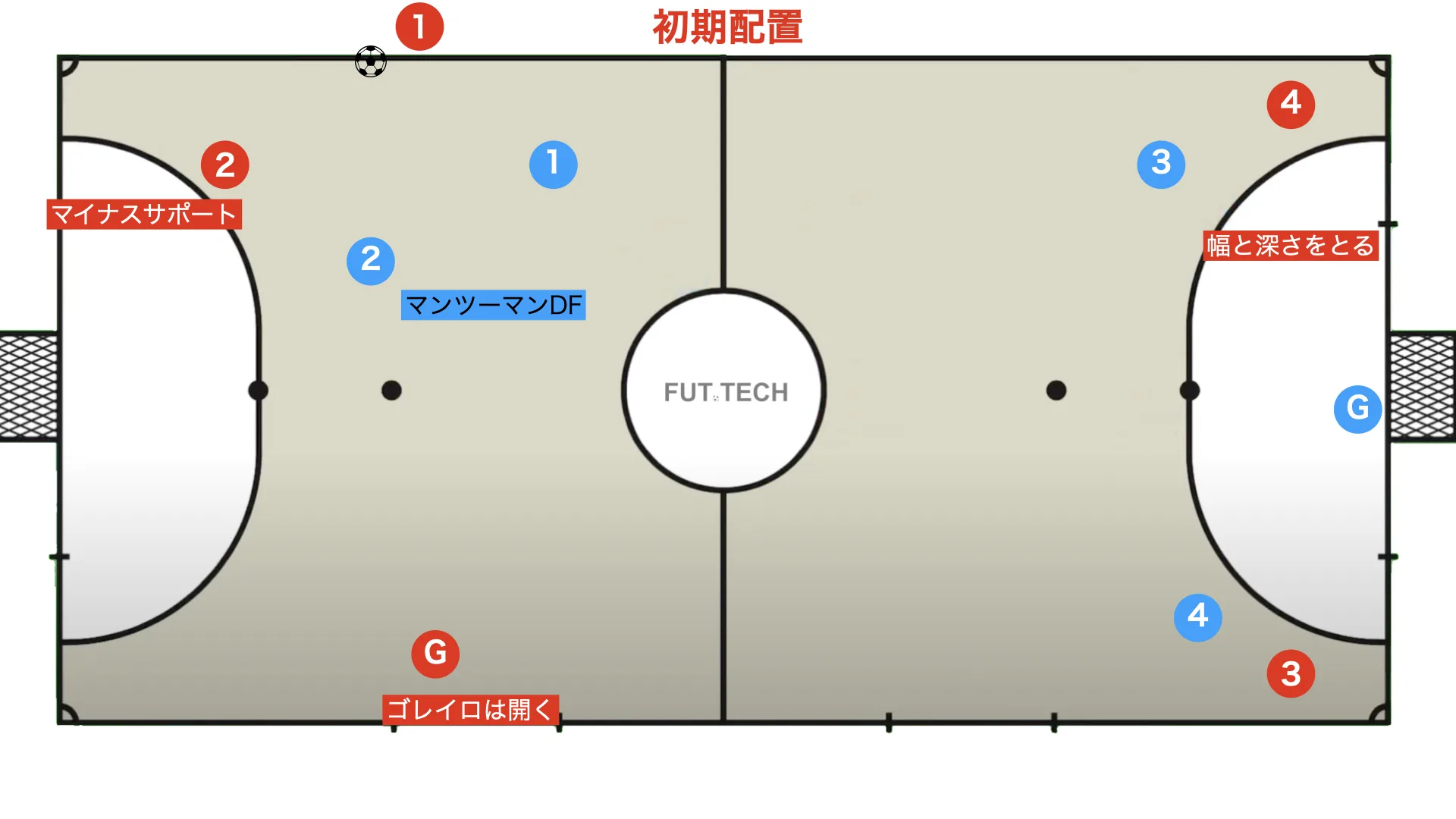
Taking up the initial shape quickly is one of the keys to making this tactic work.
- The two pivots position themselves near the corners to provide width and depth.
- The goalkeeper spreads out to provide width.
- The fixo gives negative support to the kicker.
First, I will explain how to attack when the opponent defends in a man-oriented way.
(I will explain how to attack zone defence at the end.)
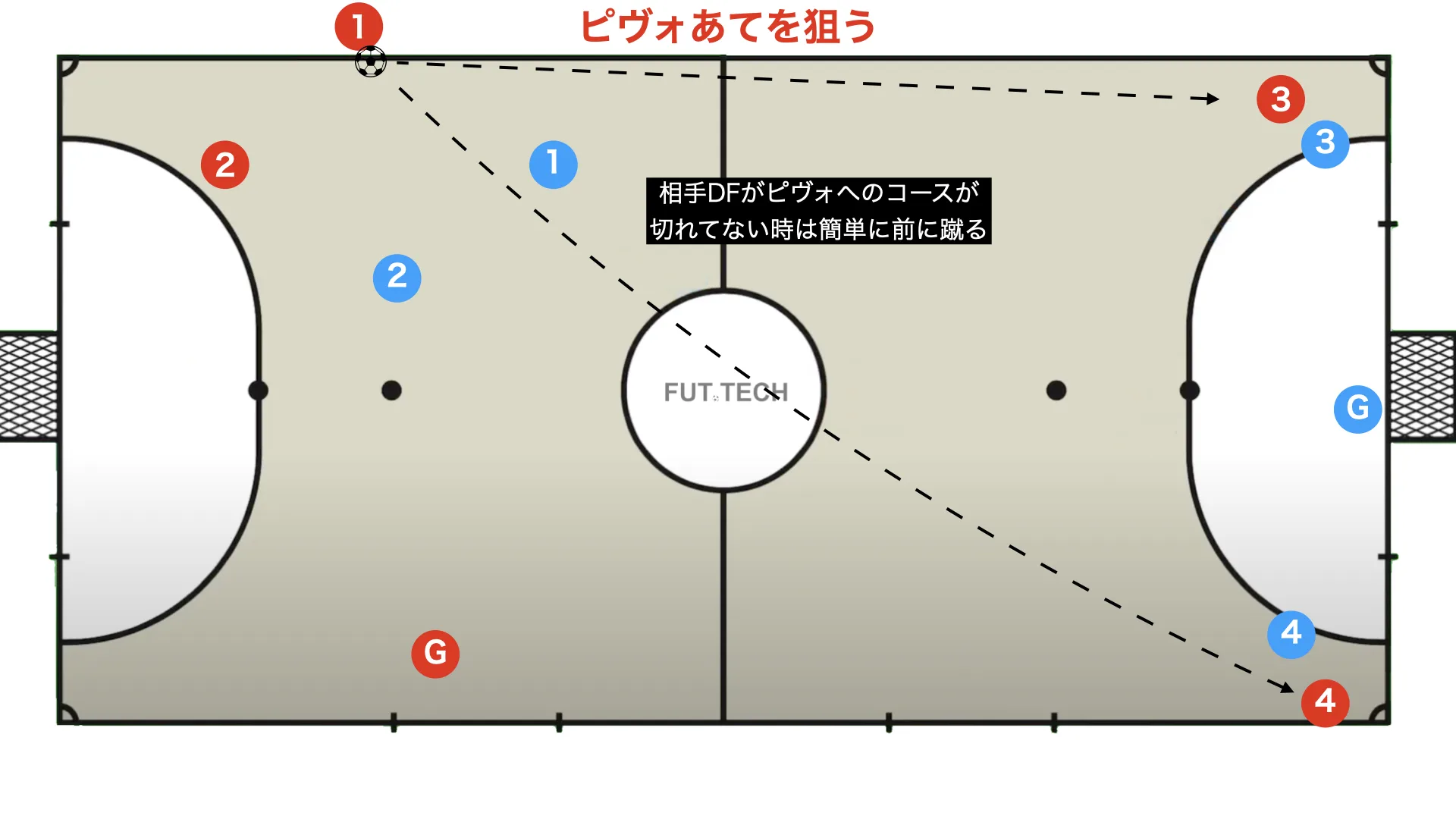
Rather than becoming fixated on forcing the use of the goalkeeper, it is important to advance simply by playing into the pivot whenever the passing lane to the goalkeeper is open.
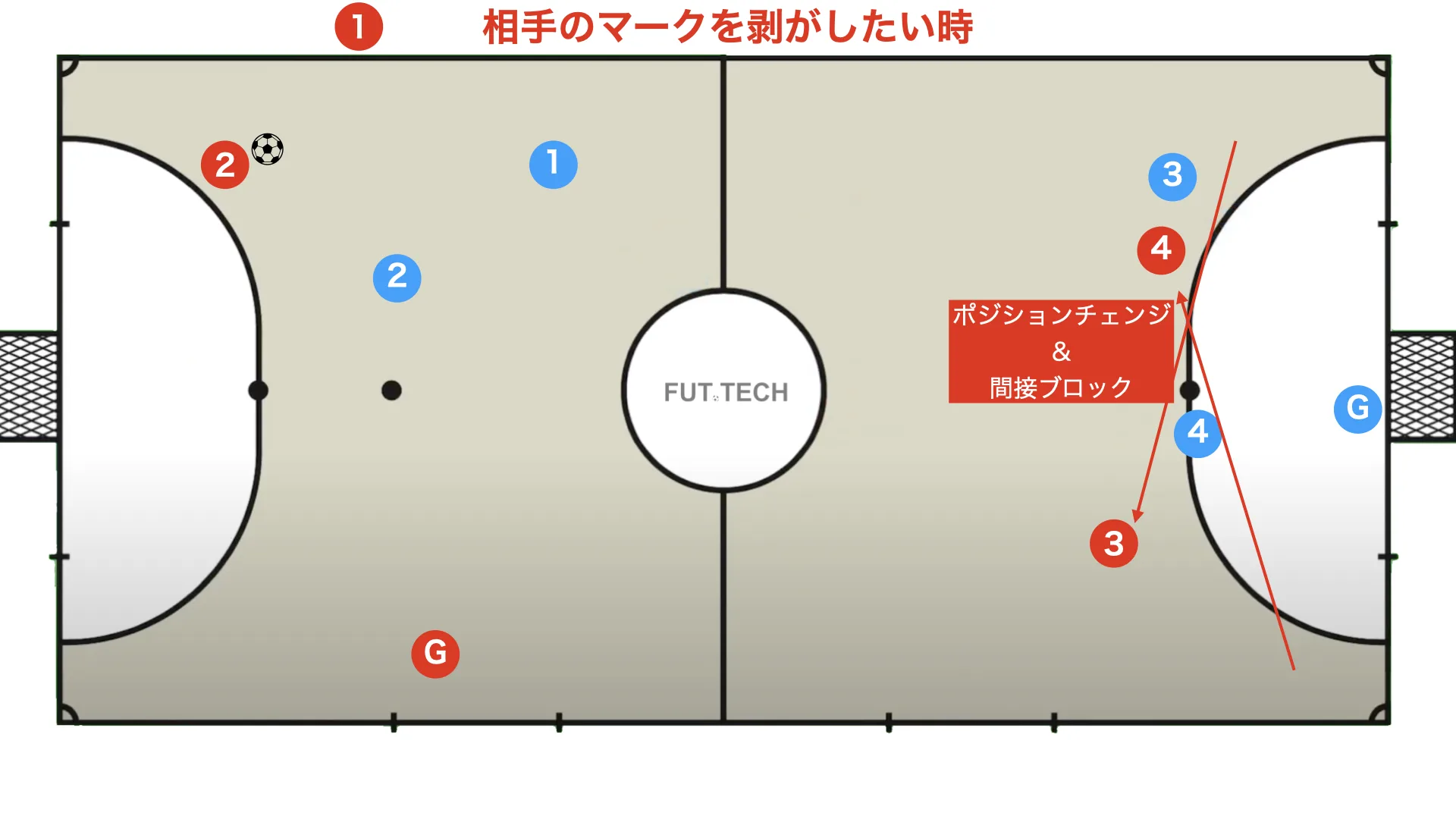
If the pivot stays still and tries to receive, there is a very high chance that the opposing fixo will step in front and intercept.
In that case, the pivot can move more fluidly and lose the marker by rotating positions or using an indirect block, making it possible to receive freely.
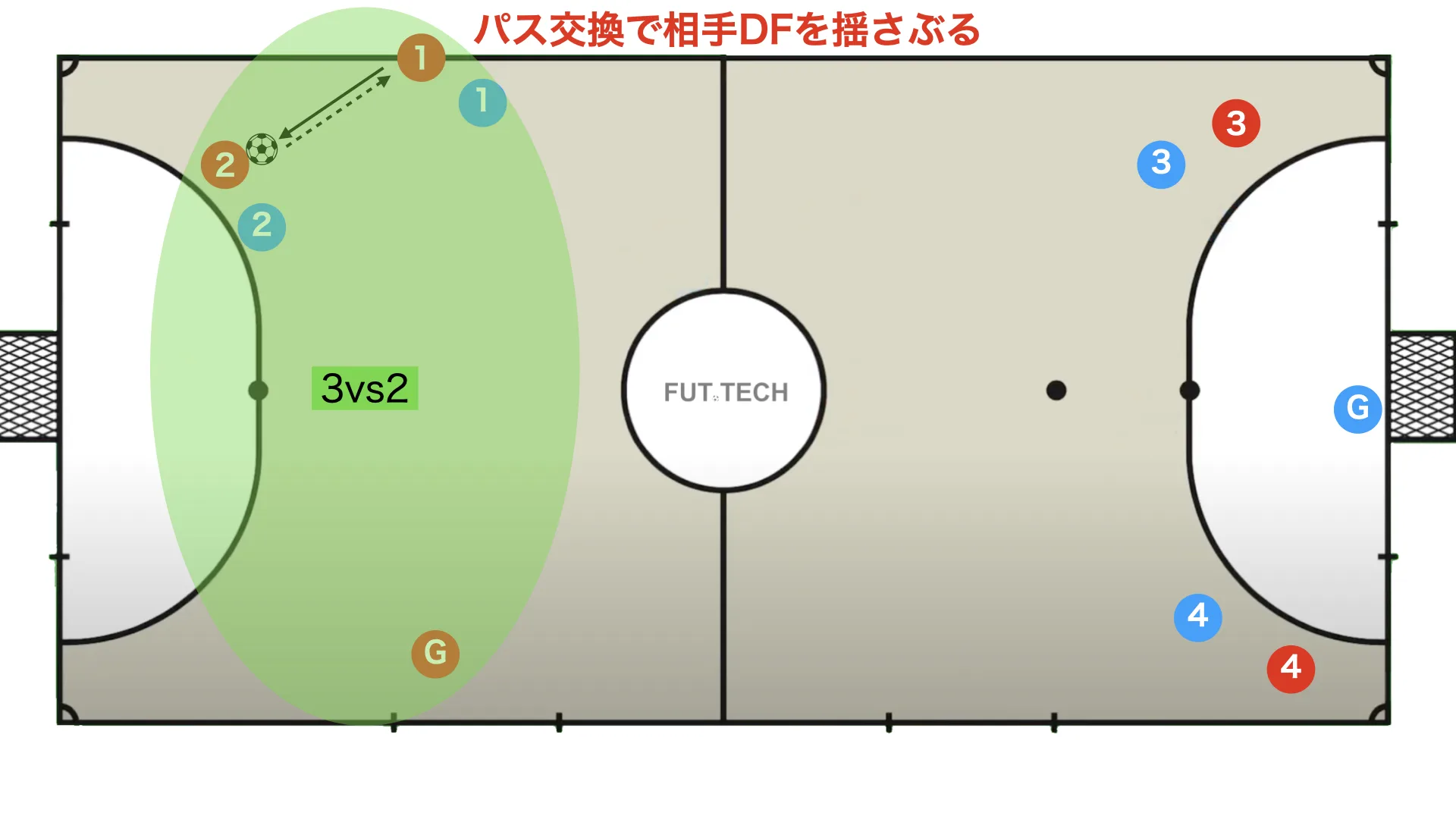
If you cannot immediately play into the pivot or switch to the far side (the goalkeeper), exchange passes with the negative support player (red no. 2) to unsettle the defence.
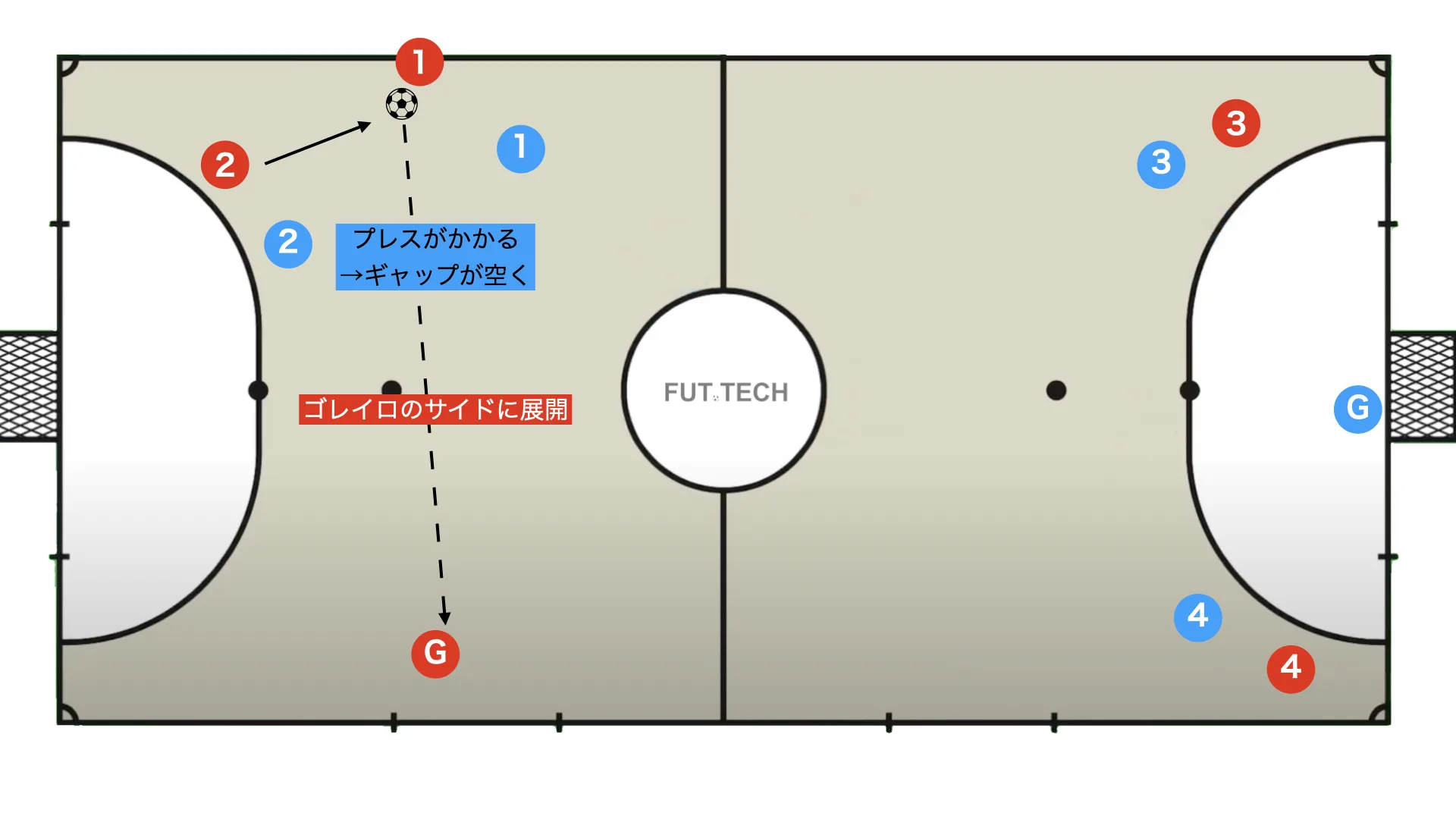
When the press on the negative support player is intense (blue no. 2 pressing), gaps tend to open up, so target those gaps.
At that moment, if blue no. 1 tries to block the lane through the gap, use one of the following options.
- Use an ala corta movement (coming toward the ball) and switch play first time to the far side.
- Use a
tompa(contrapie) action to break vertically. Playing into the pivot is also possible. - Return the ball once more to the negative support player.

If blue no. 2 is not close enough to press red no. 2, you can switch directly to the goalkeeper.
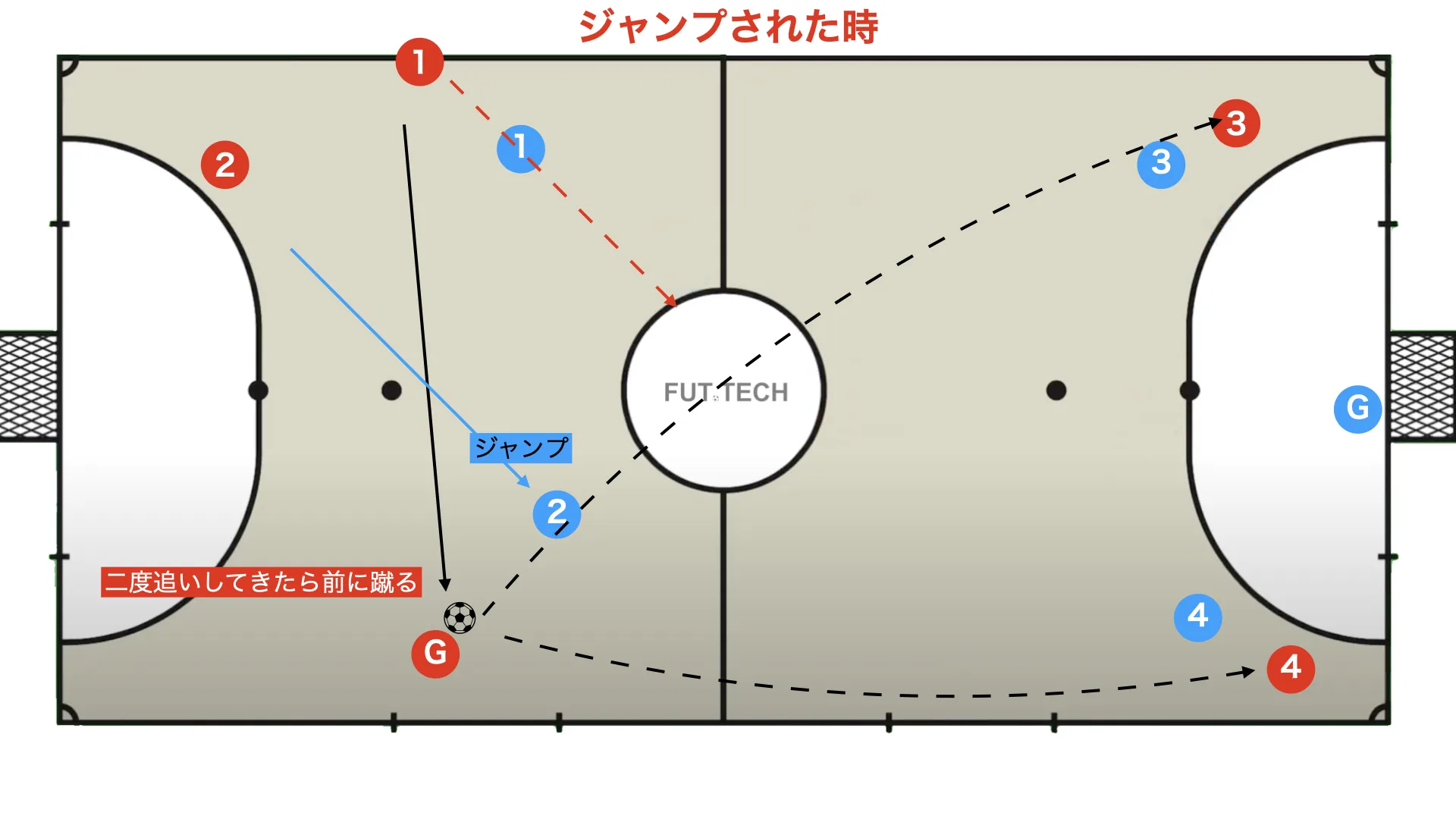
If the pass is weak or slightly off and the defender jumps out again (a second chase), do not force the ball forward. Play it long instead, usually into the pivot.
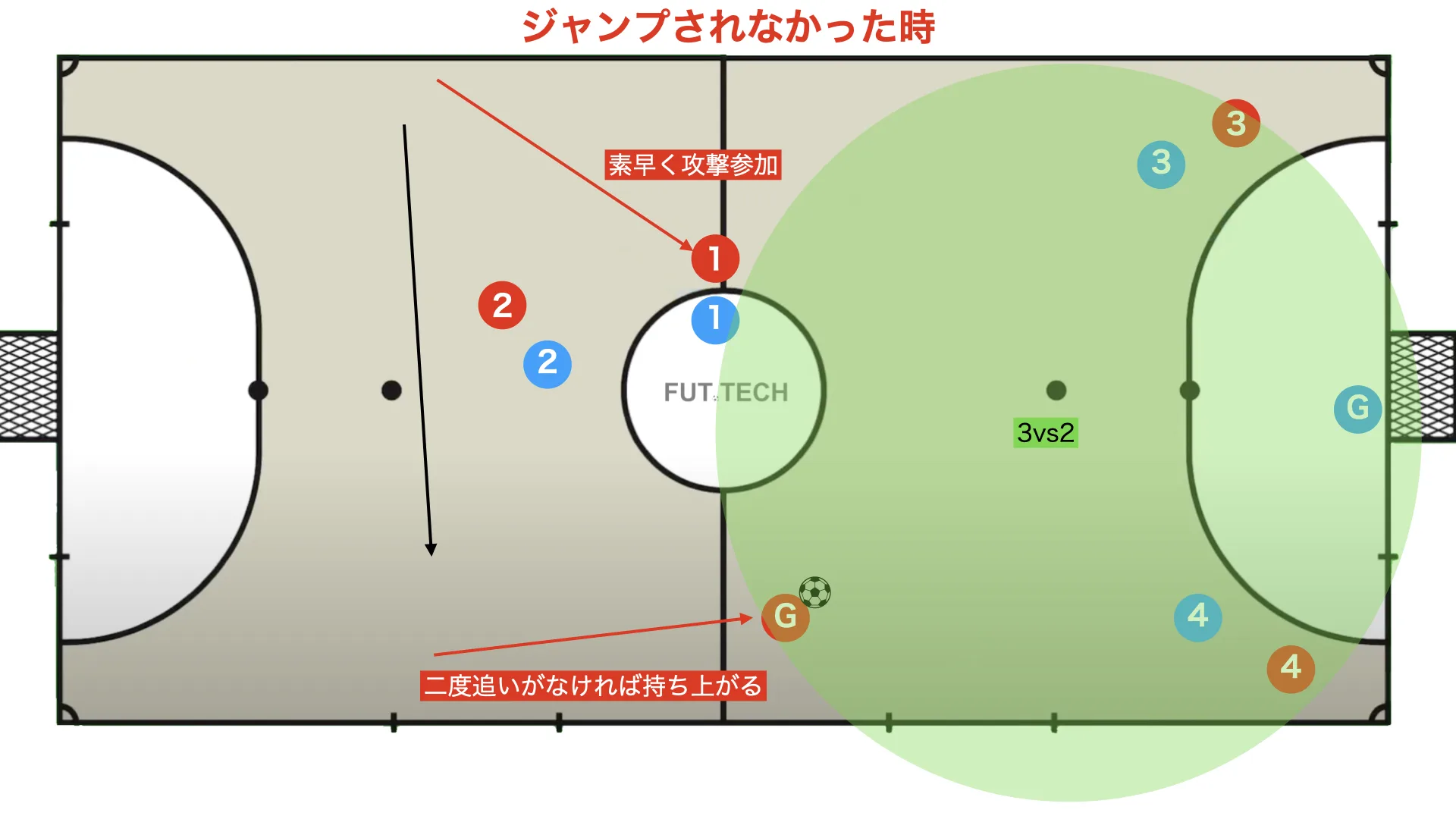
If they do not jump, the goalkeeper can simply carry the ball forward and create a 3v2 numerical advantage in the attacking half.
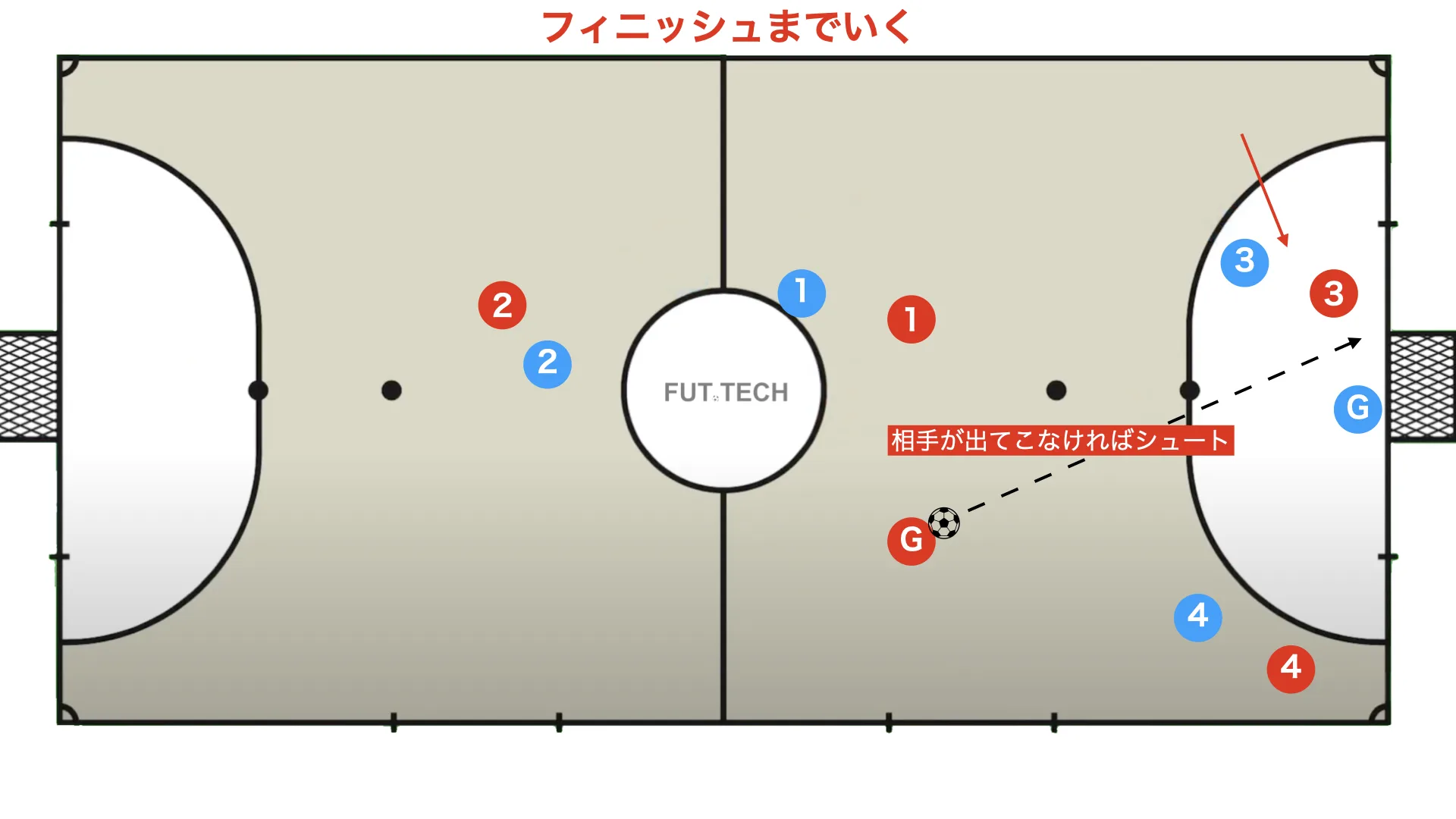
If the opponent does not come out, look to shoot.
When the goalkeeper does not have much shooting power
If the goalkeeper lacks shooting technique, taking low-percentage shots only increases the risk of conceding on the counter. In that case, it is better for the team to share the idea of aiming for goal with a shot-like pass to the second post instead.
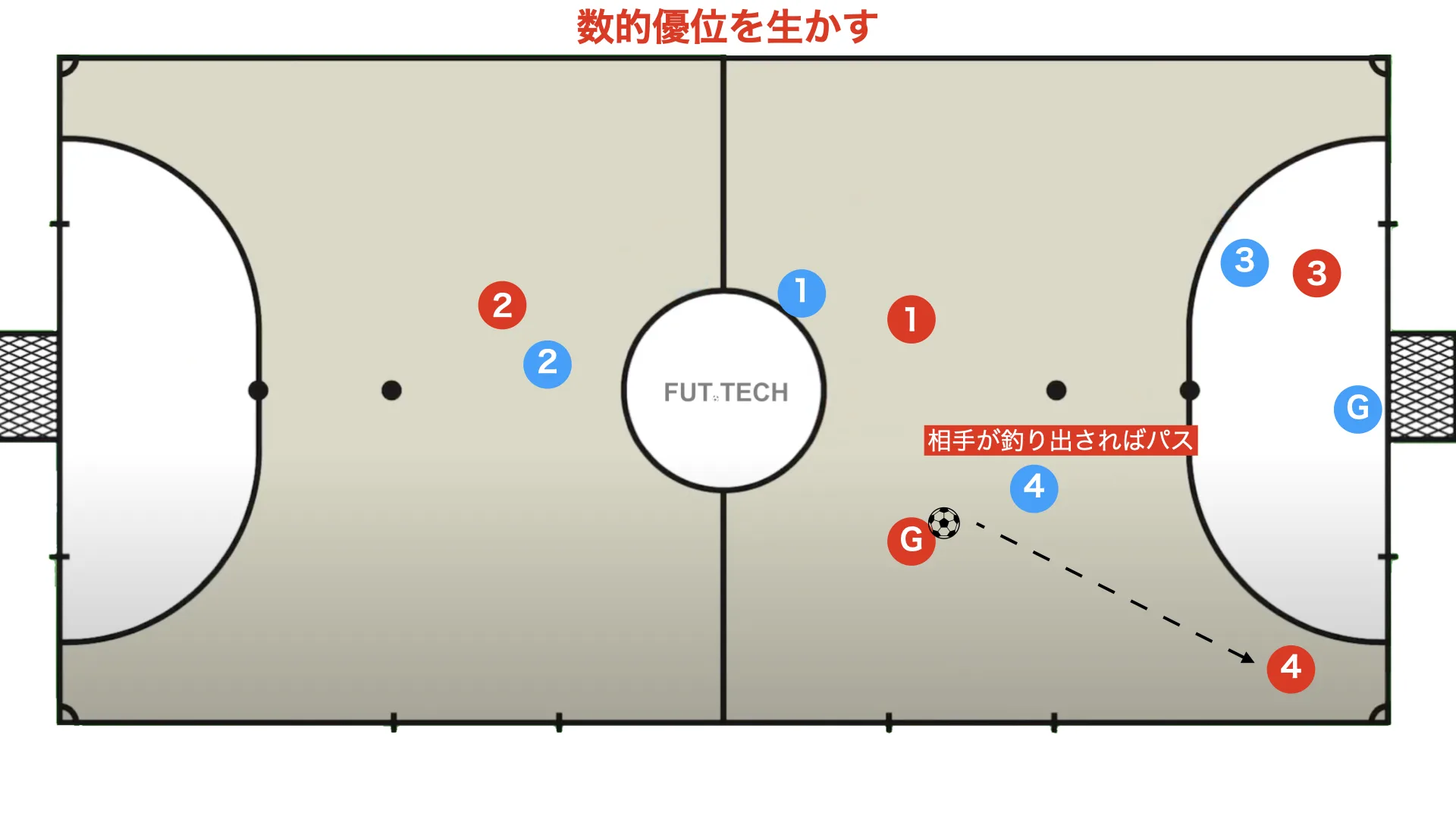
If the opponent is drawn out, something will always open up somewhere, so use the free player or the free space.
Many teams will defend man-to-man against this tactic, but some teams will sometimes defend in a more zonal way, so here is a way to deal with that.
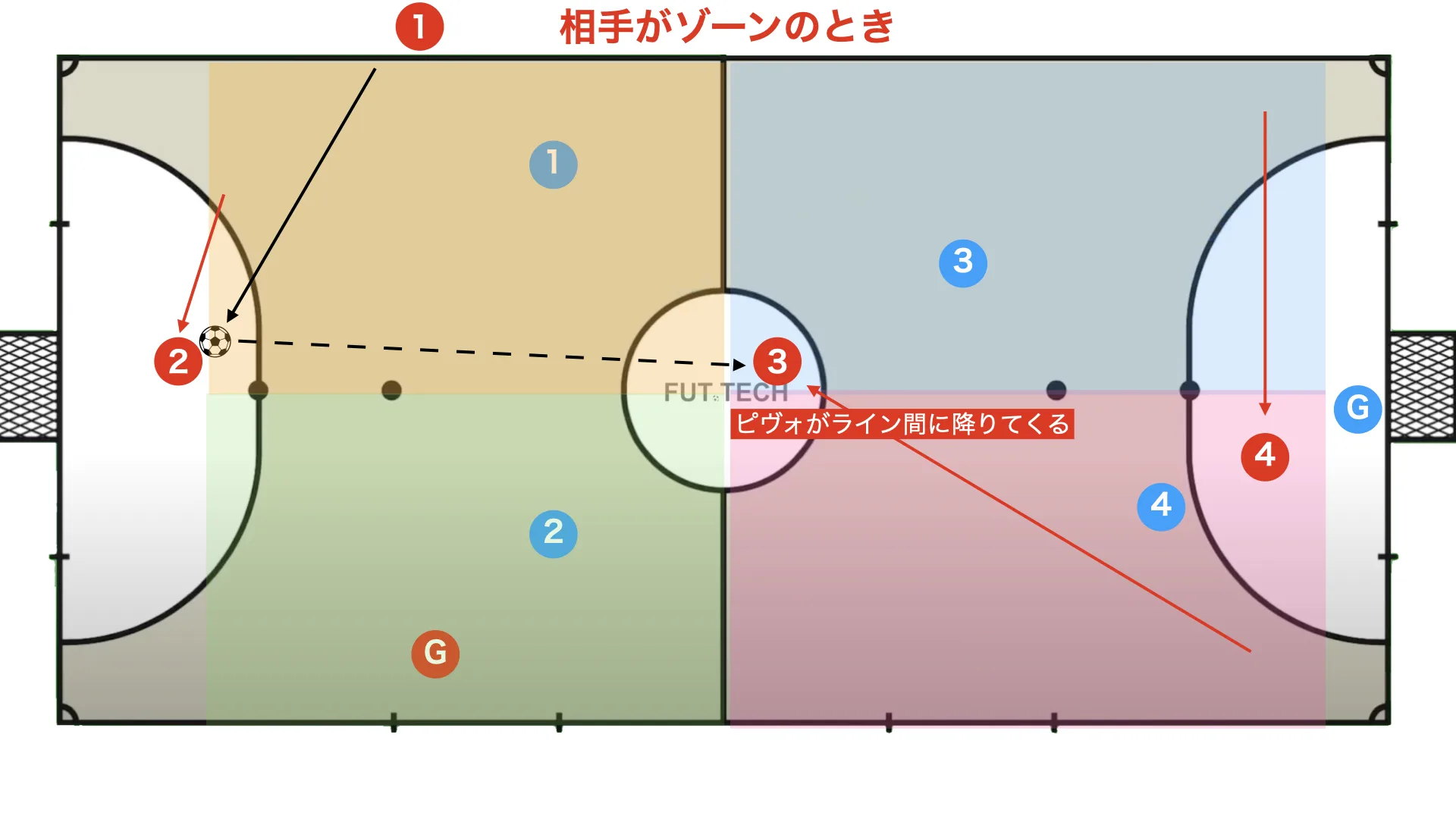
When the opponent defends in a more zonal way, use the space between the lines to make the defence uncomfortable.
- Red no. 2 stays wide all the way toward the goal.
- One of the pivots drops between the lines. Decide in advance which one depending on the team.
- Secure the space on the side opposite the goalkeeper.
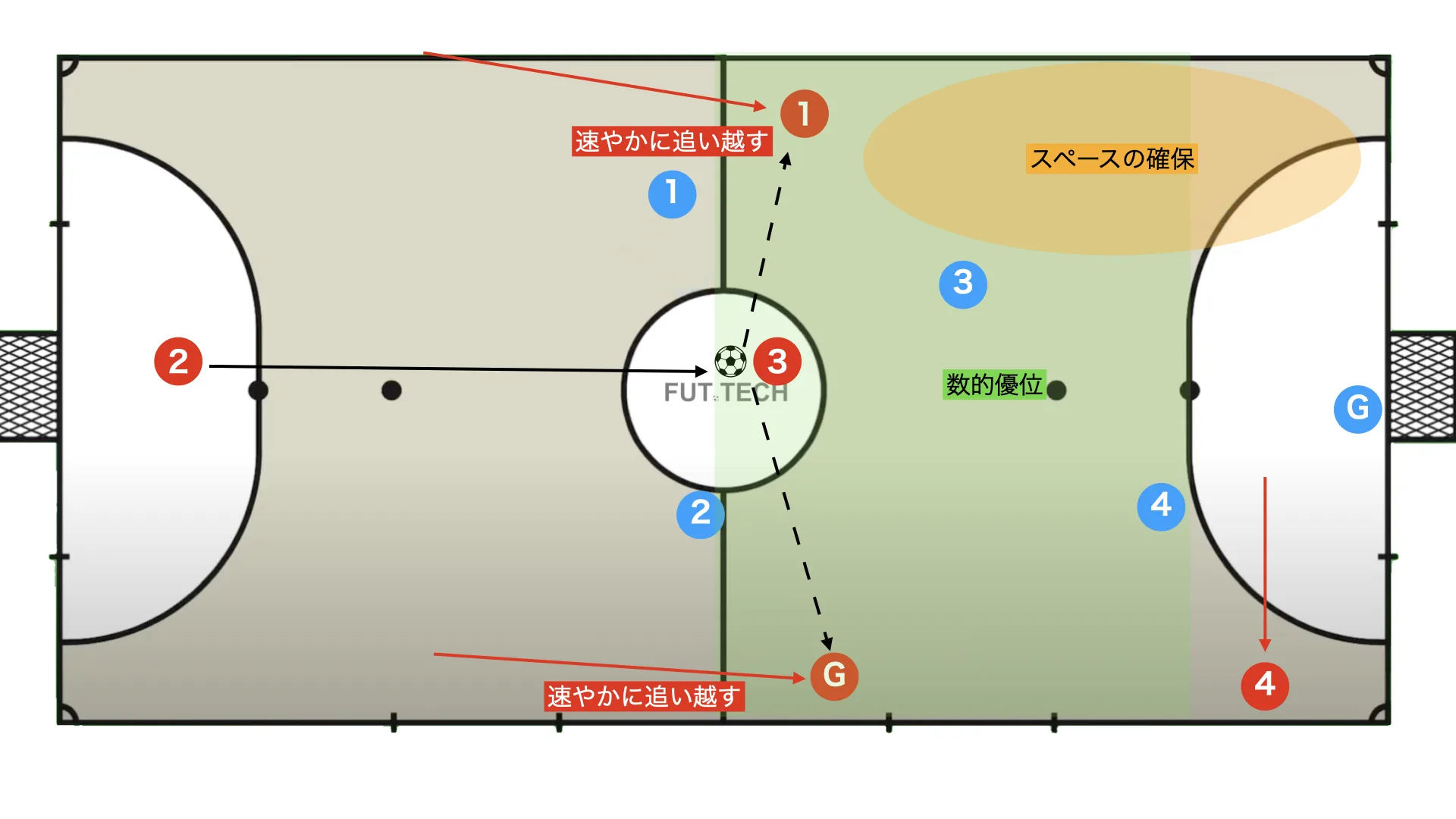
Once the ball enters the space between the lines, both wide players should quickly take higher positions, create a numerical advantage in the attacking half, and finish the move efficiently.
What did you think?
Using the goalkeeper as a fifth outfield player in attack is something teams often hesitate to do, but if the whole team shares the same understanding and works on it regularly in training, it can absolutely be used in matches.
It is especially effective as a way to create a numerical advantage when facing stronger opponents.
Depending on the situation, some opponents may even retreat into their own half and defend there against this attack. Even just having this as one option makes it easier to enter the attacking half.
Related posts