The Finish Triangle: Three Zones and Attacking Principles Derived from Geometry
Published: 2021.06.16Updated: 2026.05.03
"What do you usually think about when you play futsal?"
In futsal, thinking backward from the goal is extremely important.
Even so, "thinking backward from the goal" is too abstract on its own, and most people probably do not know how to approach it.
One way to approach it is through the idea of "distance from the goal x angle."
In this article, I will show the one objective rule that can be derived by calculating "distance from the goal x angle" through the inscribed angle theorem from geometry.
This concept is also extremely important when defining set plays and deciding the number of players in the wall, so it is essential for anyone playing competitive futsal.
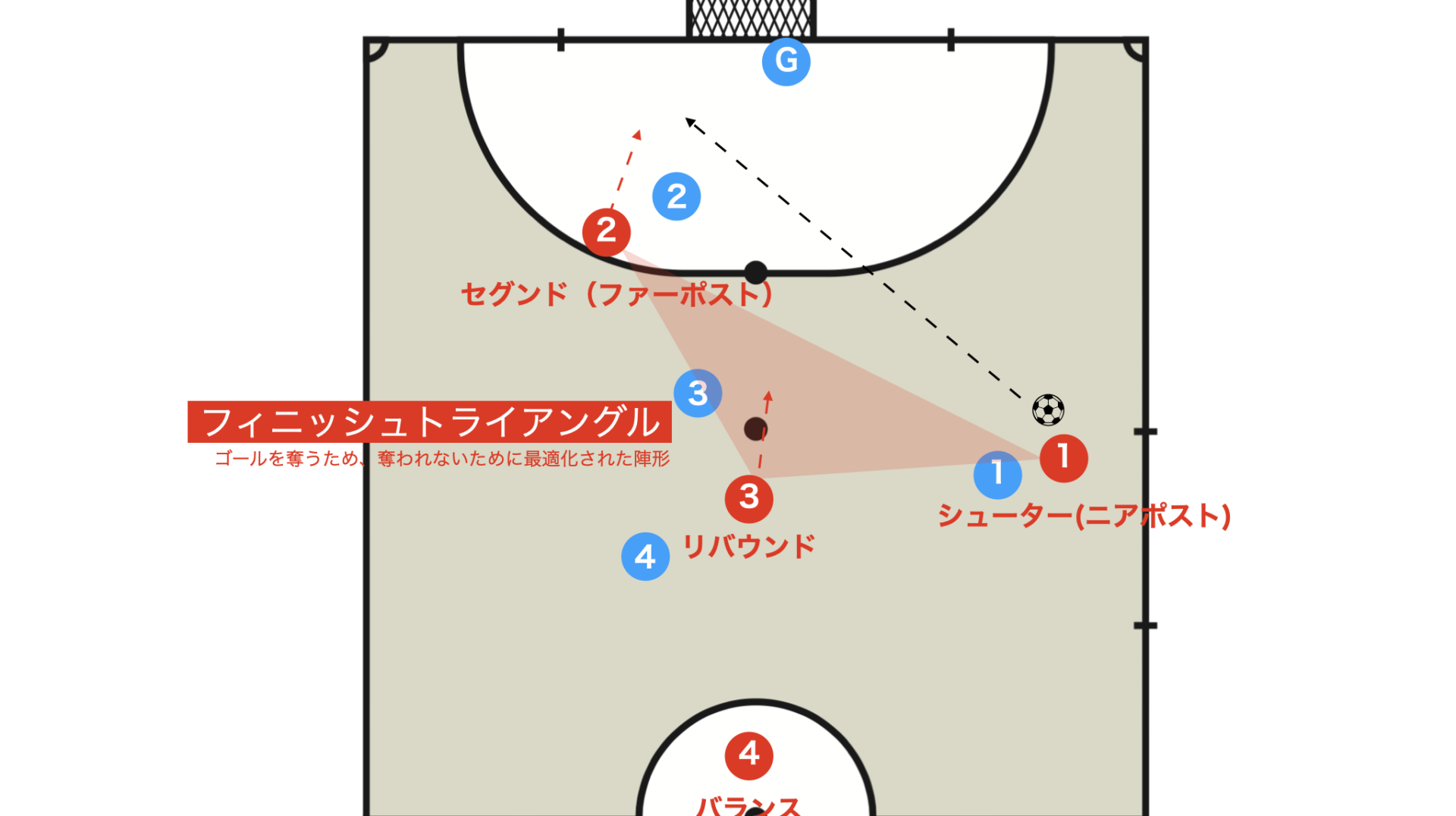
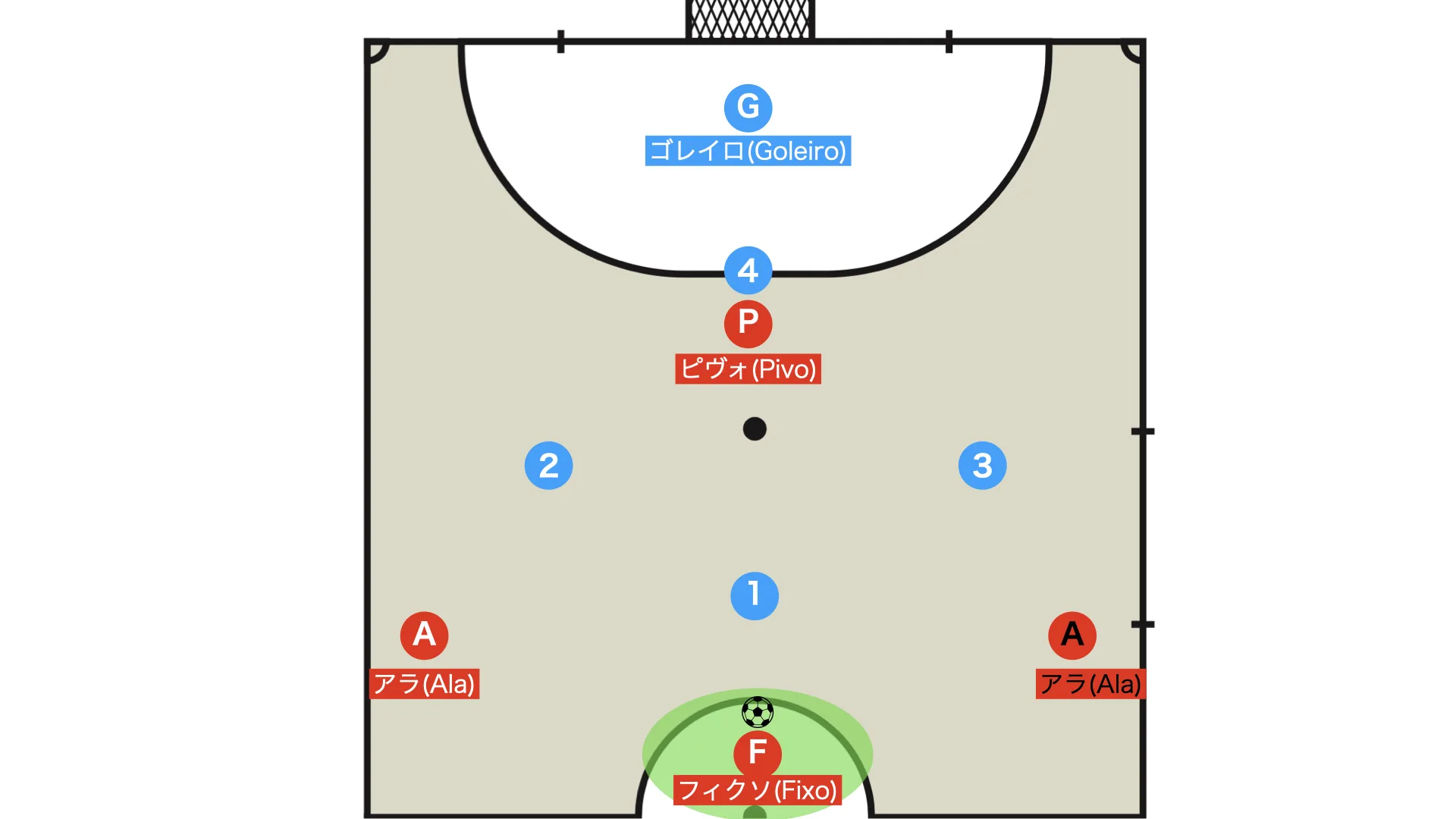
When finishing, creating a shape of "triangle (shooter, segundo, rebound) + 1 (balance)" is said to be the optimal structure both for scoring and for preventing counters after losing the ball.
This structure is called the finish triangle, and the role of each player is as follows.
- Shooter: take the shot or pass to the segundo (sometimes also doubling as the rebound player)
- Segundo: attack the far post
- Rebound: collect loose balls and deal with the counter if possession is lost
- Balance: cover from the last line and give instructions
This theory is a solid one that can also be proven geometrically as a way to maximize your team's usable space.
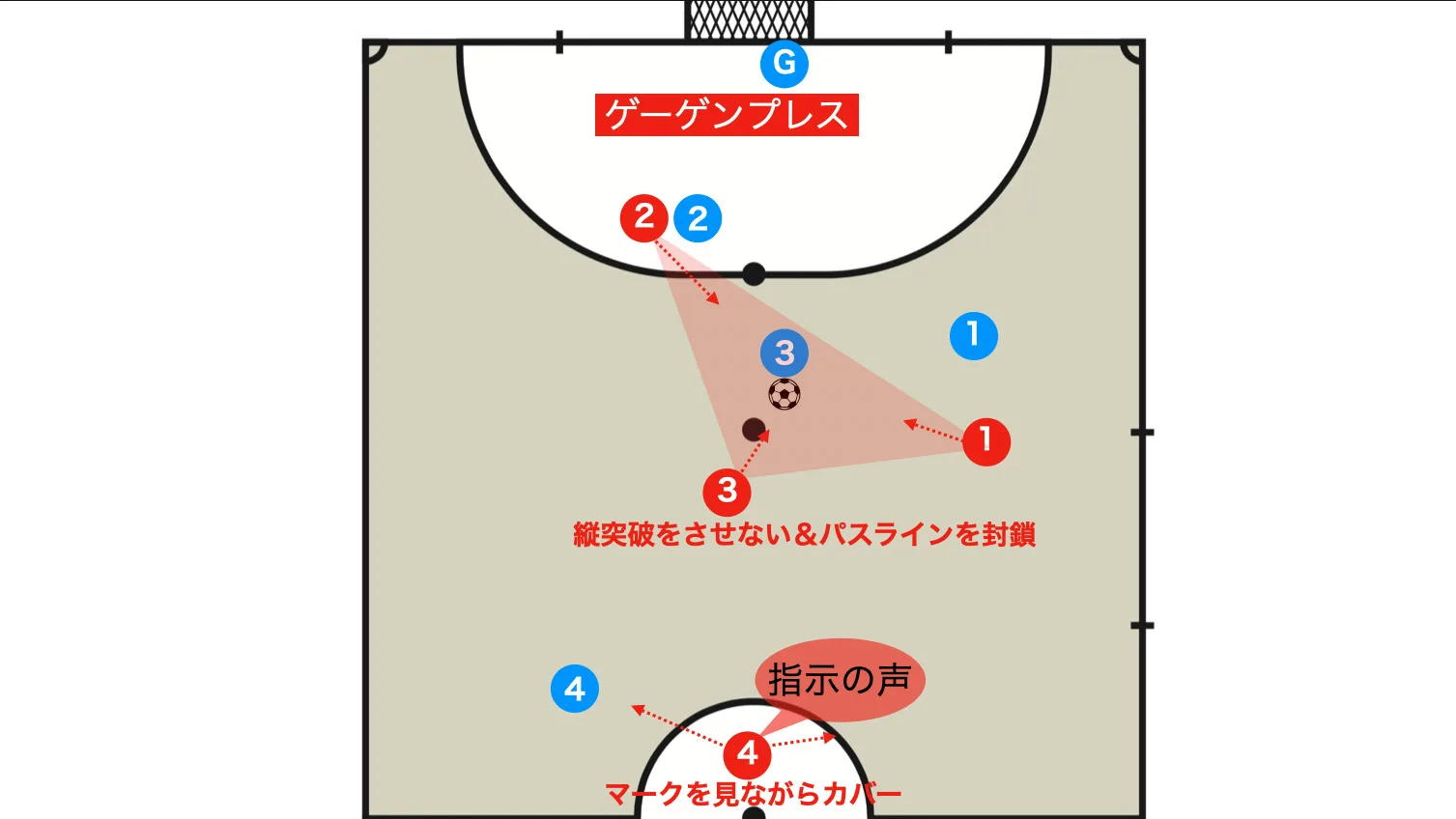
Made famous by Klopp's Liverpool, there is a tactic called gegenpressing, where a team presses immediately after losing the ball in order to win it back right away.
I will skip a detailed explanation of gegenpressing here, but the finish triangle can also be considered the optimal shape for applying it.
To calculate the angle to the goal, let us first review the inscribed angle theorem, which is taught in middle school mathematics.
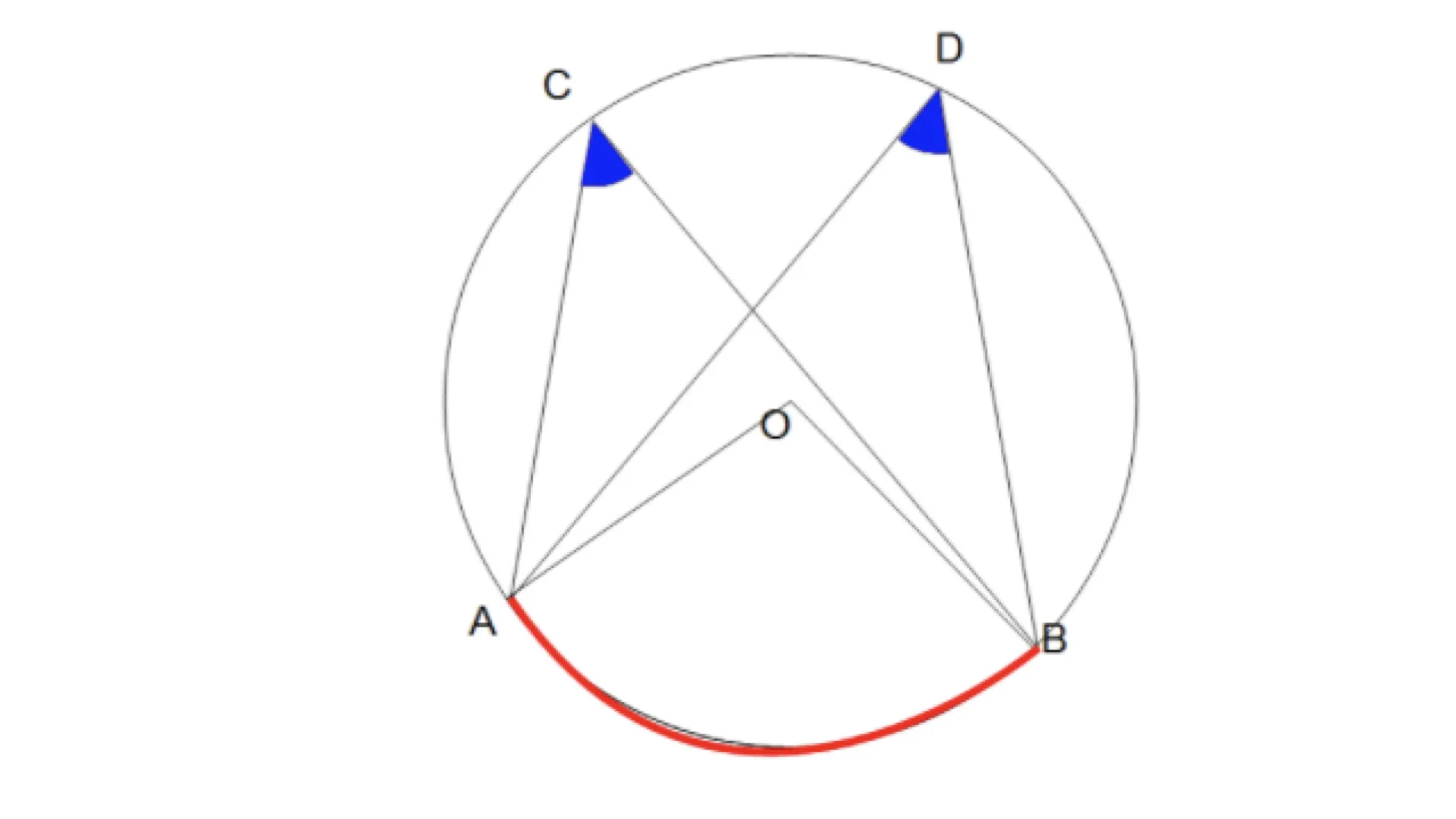
The inscribed angle theorem
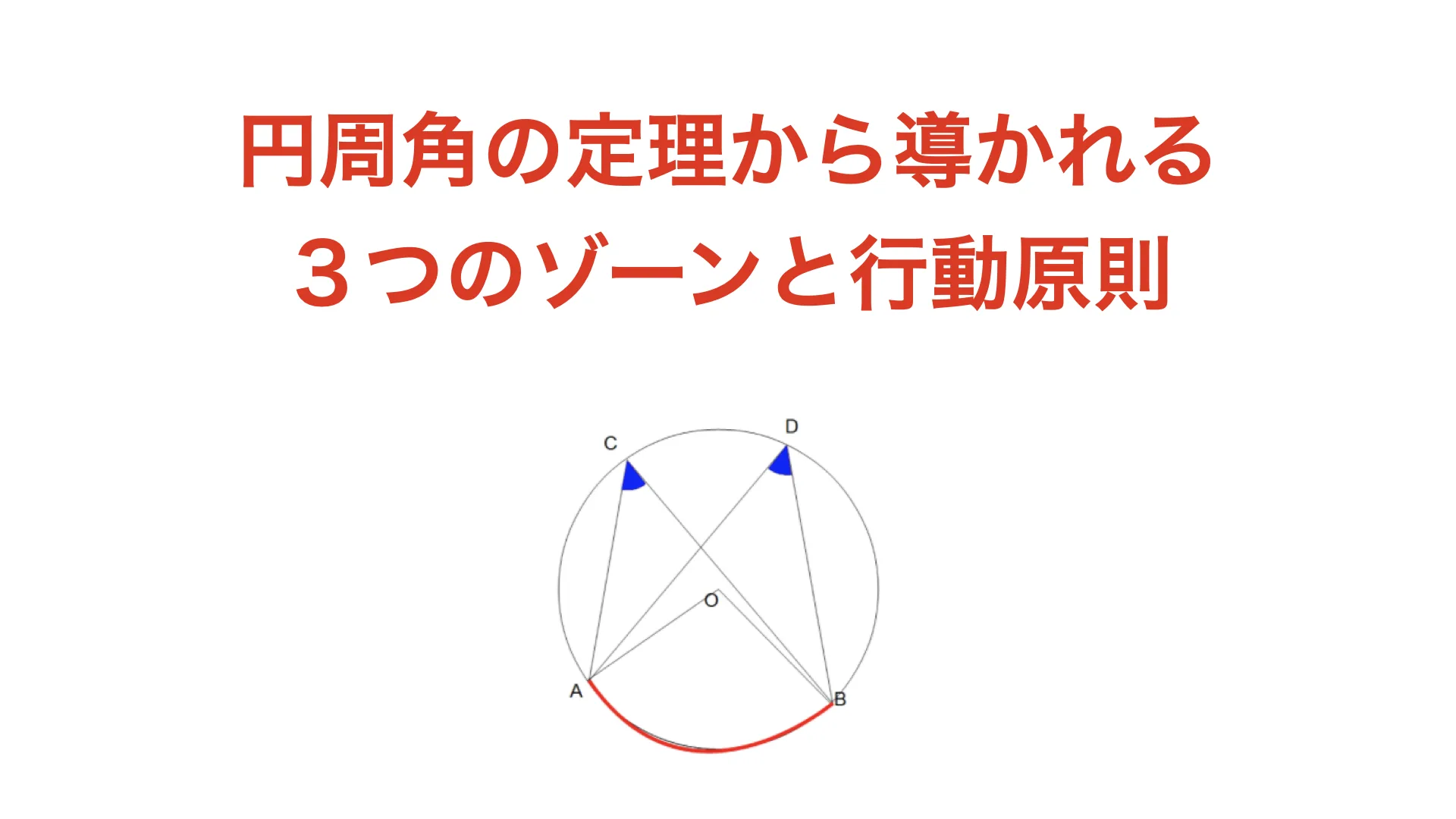
The measure of an inscribed angle subtending arc AB is always constant,
and that angle is half the measure of the central angle subtending the same arc.
- ∠ACB=∠ADB
- ∠AOB=2∠ACB=2∠ADB
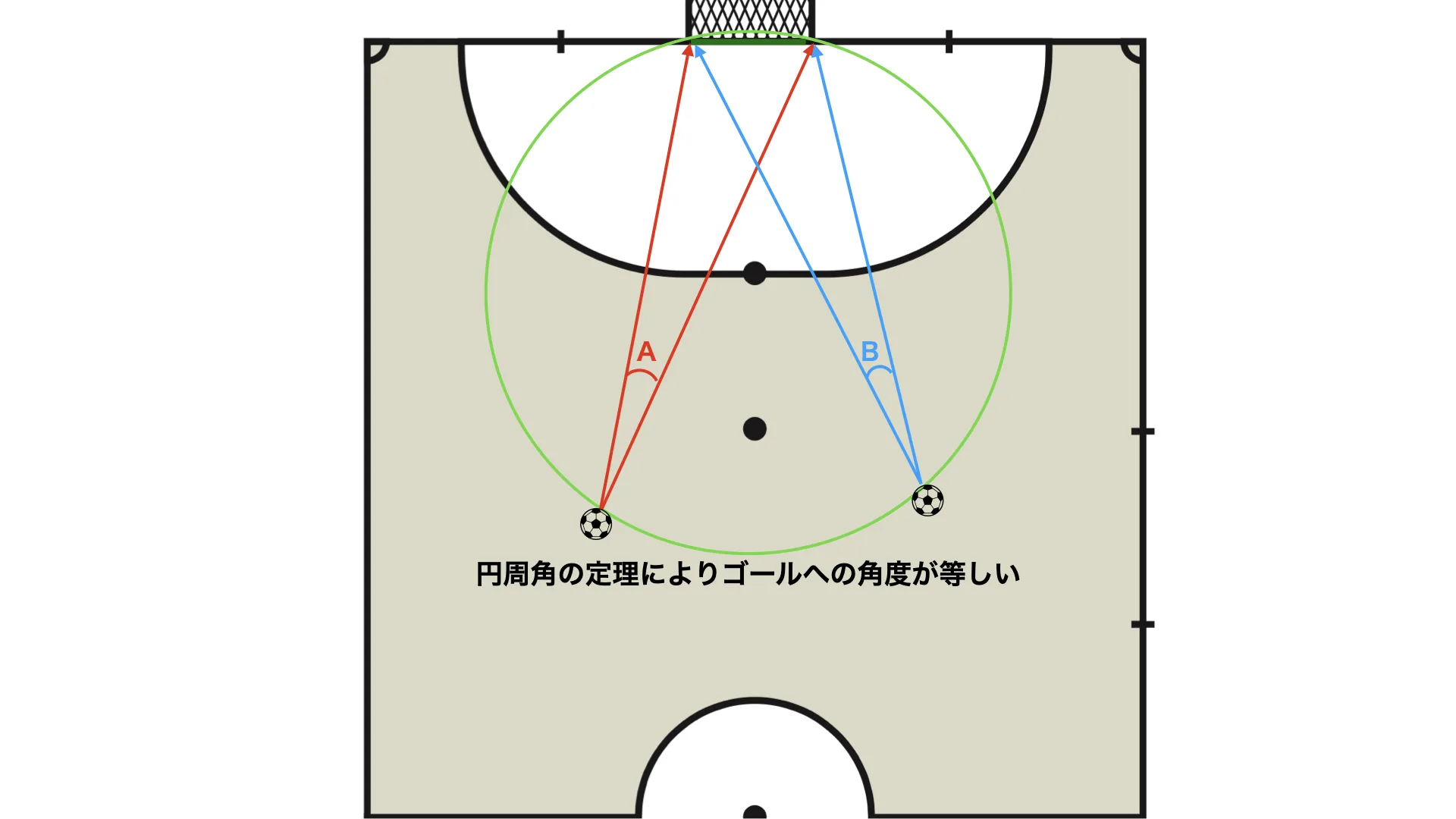
As shown in the diagram above, if you draw circles from the goal on a futsal court and apply the inscribed angle theorem,
you get equal angles at A and B.