Individual Futsal Skill to Deceive Defenders: Pisada (Heel Pass)
Published: 2021.08.31Updated: 2026.05.03
"I've seen the pisada before, but when exactly do you use it?"
The pisada, also called a heel pass, is an individual skill where you play a pass behind yourself with the sole of your foot. If you understand when to use it, you can completely beat the defender's expectation and break open the situation in one move.
This article explains how the pisada works, when to use it, and the main cautions. If you also want to combine it with other individual skills, take a look at contrapie and kick feint.
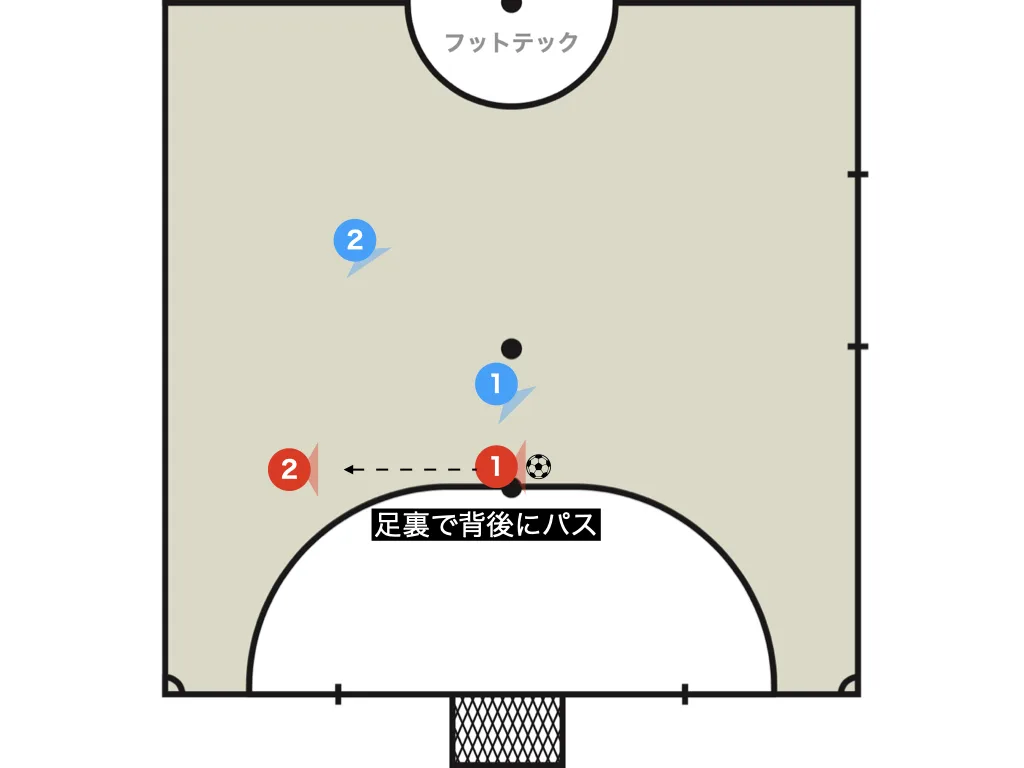
In futsal, a pisada is a play like the one above, where red no. 1 uses the heel to pass straight backward.
Because it is a pass into an area outside your field of vision, it is difficult and not something that is used constantly in football.
However, because the pisada can give you an edge over the defender, many players use it frequently in futsal.
In futsal, the pisada can be used to throw the opposing defence into confusion.
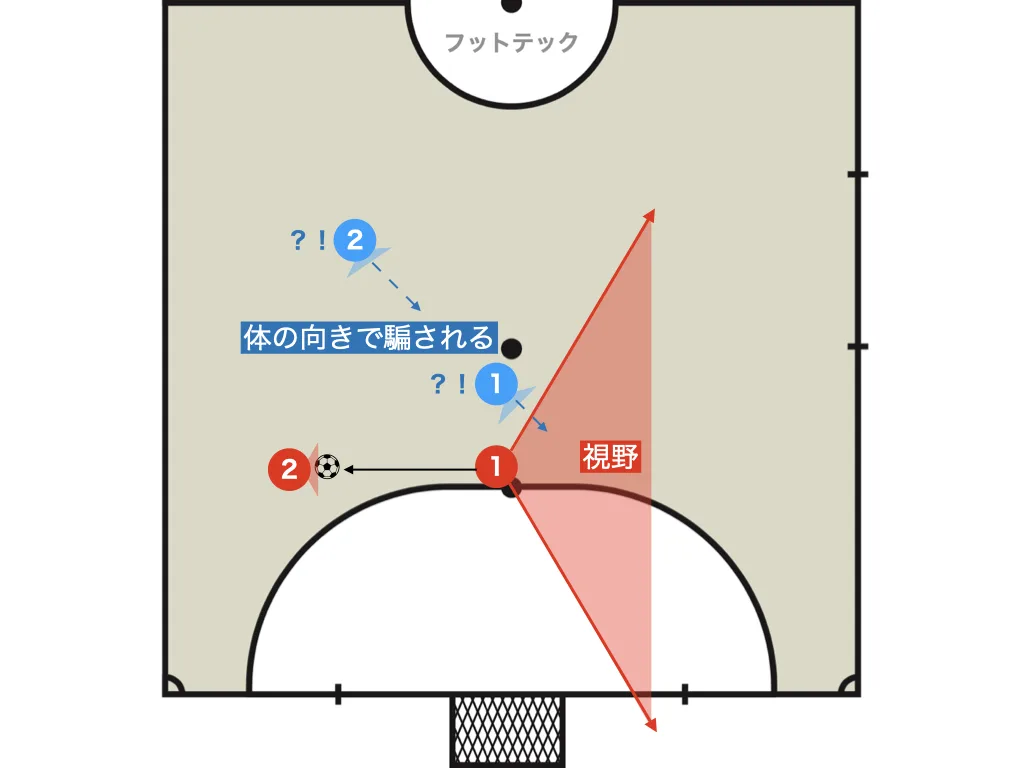
On the defensive side, players predict where the next pass will go by watching the body orientation of the player on the ball.
But when the attacking side uses a pisada to play backward, the defenders are forced to react to a pass that went in the opposite direction from what they expected.
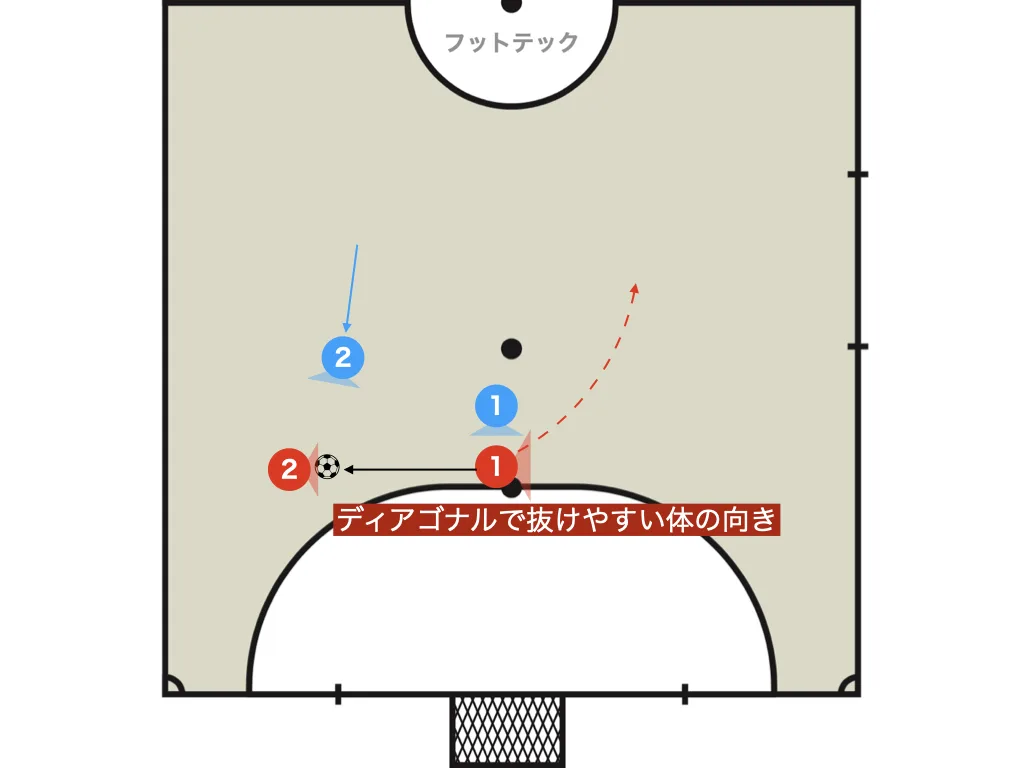
Also, in situations where the pisada is used in futsal, the ball holder can use that body orientation to start moving more quickly.
If used well, this makes it easier to break away on a diagonal run and lose your marker.
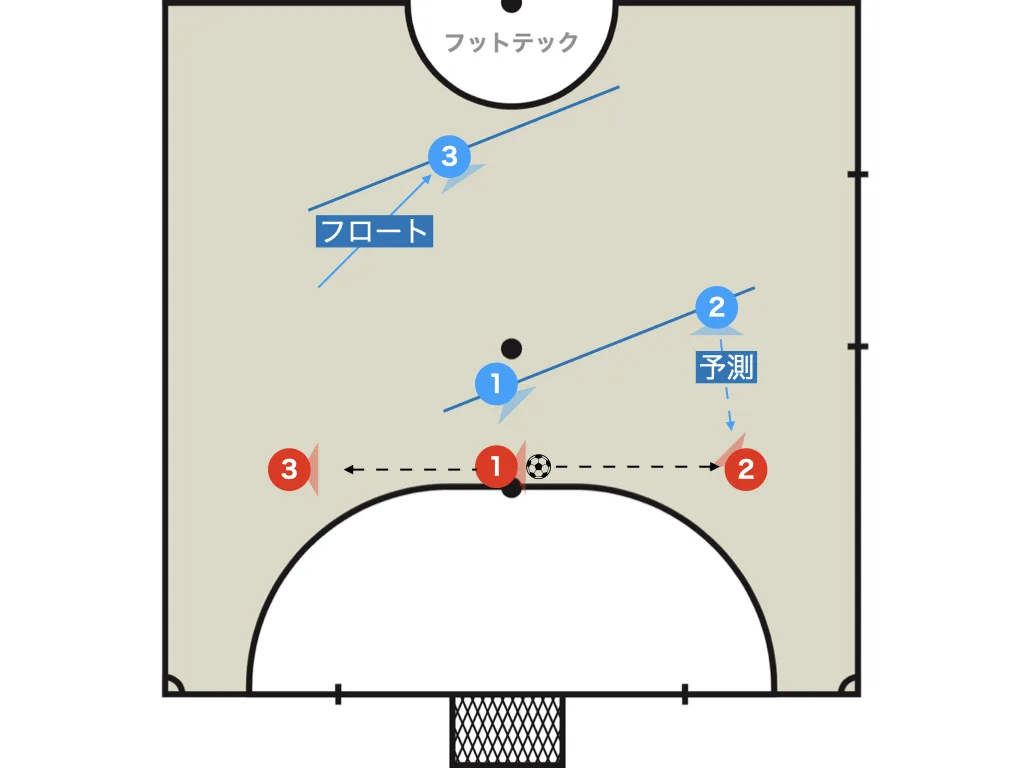
The pisada works especially well against teams that build multiple defensive lines.
In the diagram above, red no. 1 is facing left, so under normal circumstances it would be difficult to pass to red no. 3. Blue no. 2 can easily predict the next pass, so it looks like a situation where the defence has the advantage.
However, if red no. 1 uses a pisada to pass to red no. 3, the situation immediately flips in favor of the attack.
Also, if red no. 1 has recognized the floating blue no. 3, that indirectly tells them that red no. 3 behind them is definitely free, which makes the pisada a viable option.
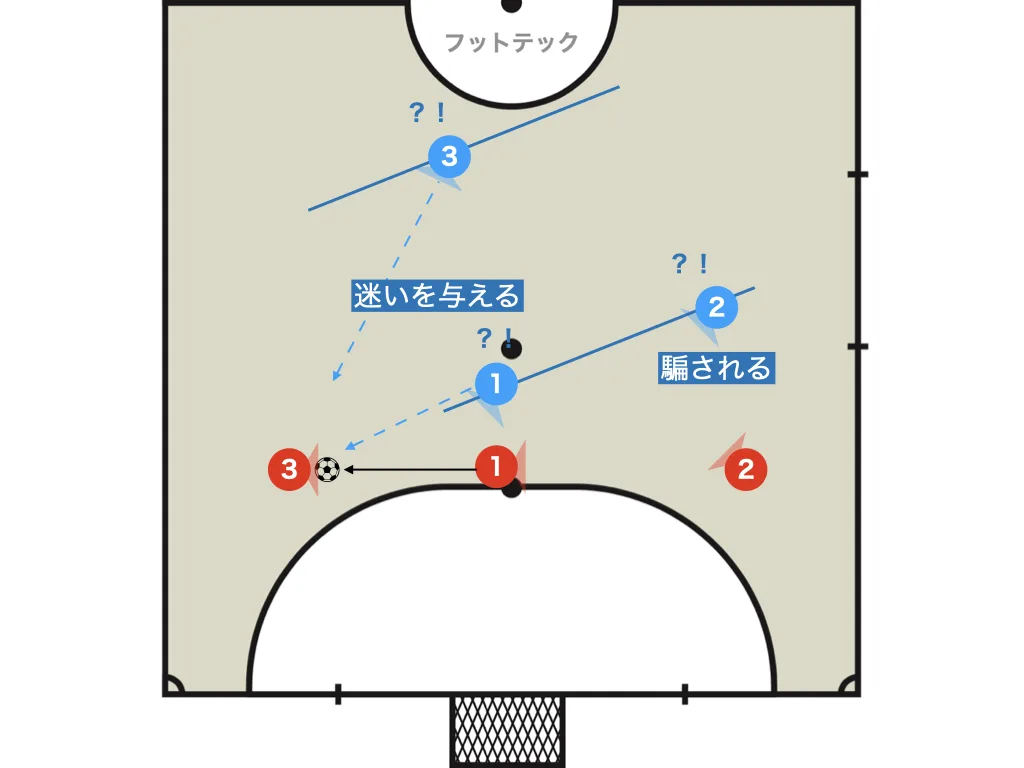
The defenders were prepared to force the pass to red no. 2. Because of that, when red no. 1 unexpectedly chooses a pisada, the defence hesitates over who should deal with red no. 3.
That hesitation gives the attacking side both time and space.
In this article, I explained:
- what the term pisada means
- the tactical effect of the pisada
- how the pisada can be used to beat multiple defensive lines
Compared with other passes, the pisada carries more risk, so it is not something you should use blindly.
What matters is using the pisada only after you have indirectly confirmed that the player behind you is free to receive.