Futsal Pivo Position Guide: Movement and Key Traits
Published: 2021.01.21Updated: 2026.05.03
"People always tell me to get into the pivo position, but what am I actually supposed to do there?"
If that sounds familiar, this article is for you. The pivo is not just a target player. It is one of the most important positions in futsal because it serves as the starting point of the team's attack.
This article explains the pivo's role, how to receive with a defender on your back, how to lose your marker, and the basics of the pivo feed in a structured way. Once you finish reading, move on to Pivo feeds and the third man's movement for more practical combination patterns.
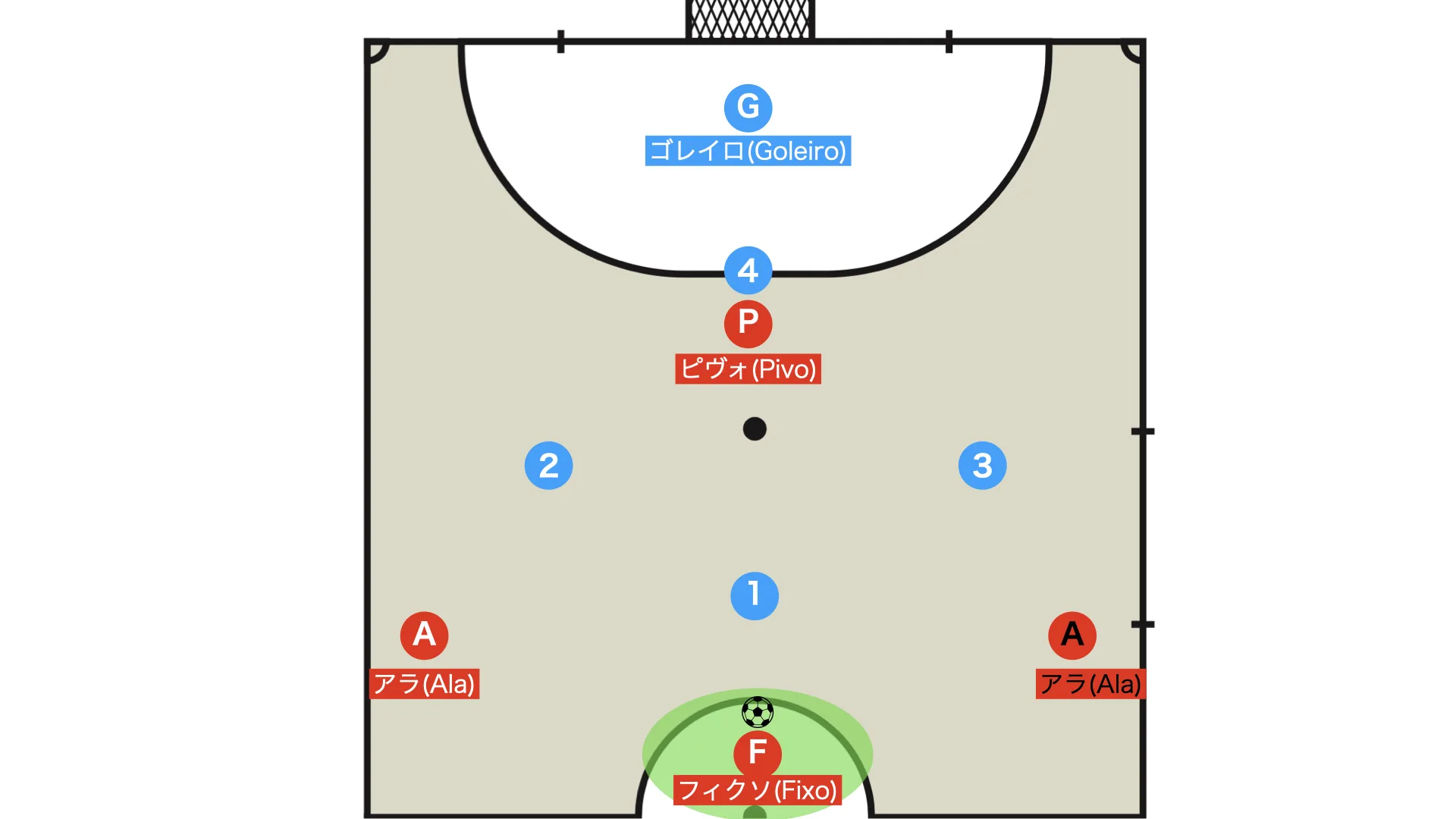
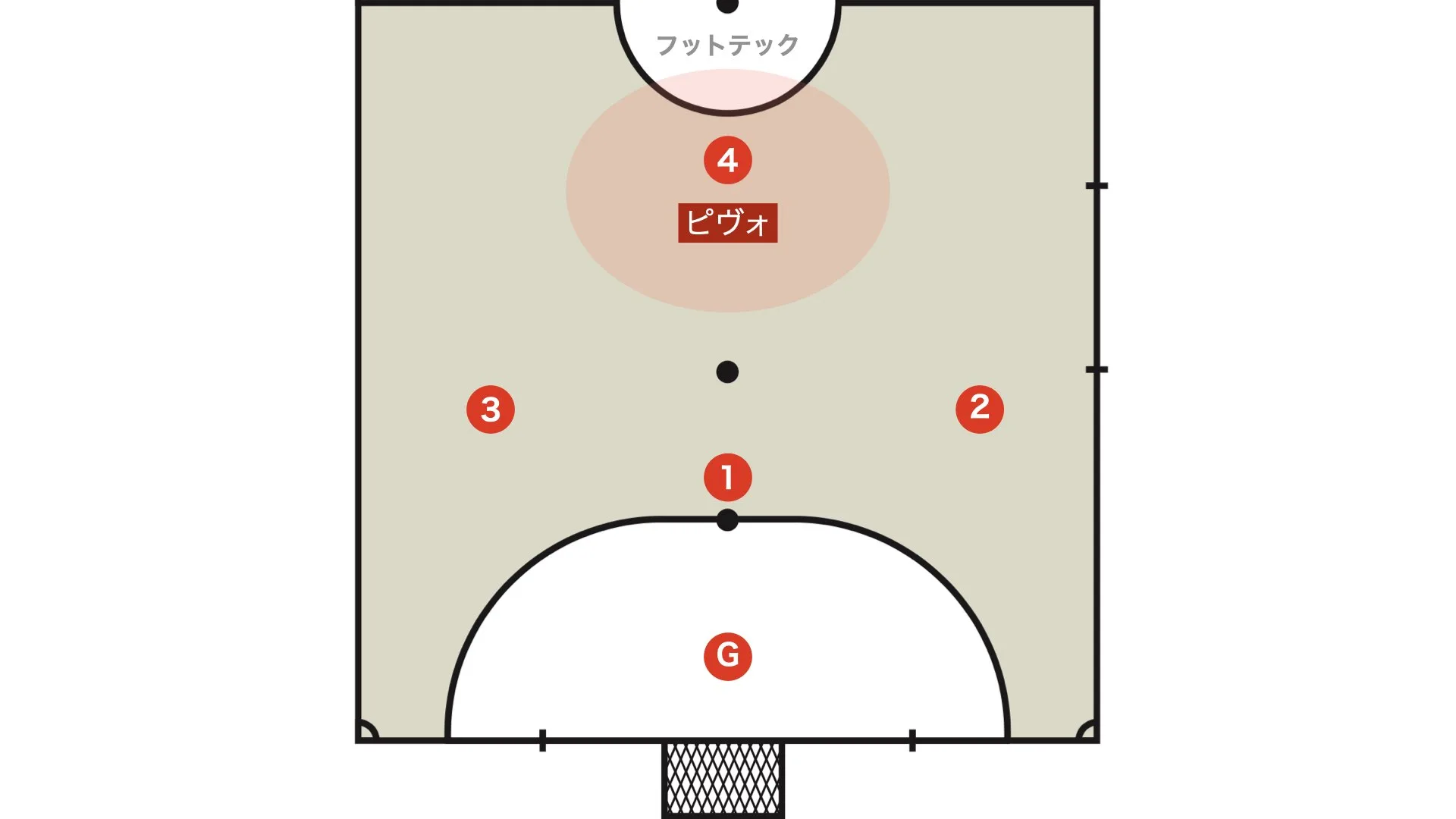
In futsal, the pivo is the most advanced attacking position, roughly equivalent to a forward in football. The word comes from Portuguese and carries meanings such as "tip," "axis," and "center." As the focal point of the attack, the pivo is always looking to threaten the goal.
The pivo's main job is to use their body to protect the ball in the opposition half and score goals. In many cases, the pivo faces the opponent's fixo (defender), receives vertical passes from teammates, and acts as a central reference point in the attack. The role is not limited to scoring. A pivo also creates goals for teammates, helps the team keep possession, pushes the opposing defensive line backward, and reduces pressure on teammates.
In the past, physical strength was often seen as the most important quality for a pivo. In modern futsal, though, that alone is not enough. A pivo also needs the technique to control and protect the ball well, along with the vision and spatial awareness to read the game. The position is also central to one of futsal's basic tactical ideas, the pivo feed, and the success of that pattern depends heavily on the pivo's quality.
Because a futsal court is much smaller than a football pitch, it is very difficult for a pivo to receive facing forward and get a shot off cleanly. That is why pivos often play with their back to goal, receive while holding off a defender, and then turn quickly to shoot. This is one of the position's most basic actions.
The pivo is an advanced attacking position in futsal, but many players probably play it more by feel than by clearly understanding the role.
Since there are systems such as quatro that do not use a pivo at all, the role and movement of the pivo are not always given much attention. Even in team training, because there are usually fewer pivo players, sessions often end up focusing more on the movements of the alas and the fixo.
If a pivo wants to improve, they need to properly understand the role and movement of the position, then apply that understanding in training and matches.
This article explains the following four points in detail:
- the five roles of the pivo in futsal
- the playing characteristics of a pivo
- what kind of person suits the pivo role
- why it matters for a pivo to understand their teammates' characteristics
Read through to the end, compare the ideas with your own game, and use it to take your level as a pivo up another step.
Broadly speaking, a futsal pivo has five major responsibilities.
They are as follows:
- create a passing lane for the pivo feed
- hold the ball up in advanced areas and create a pause
- turn and attack the goal directly
- pass to assist teammates' goals
- defend for the team
These are all basic points, but every one of them matters.
If you can do all of these things, it is fair to say you are a good pivo.
On the other hand, if even one of these areas is a weakness, there is probably still room to improve in your play as a pivo.
I will go through each one carefully, so use this as a way to identify both your strengths and what you still need to work on.
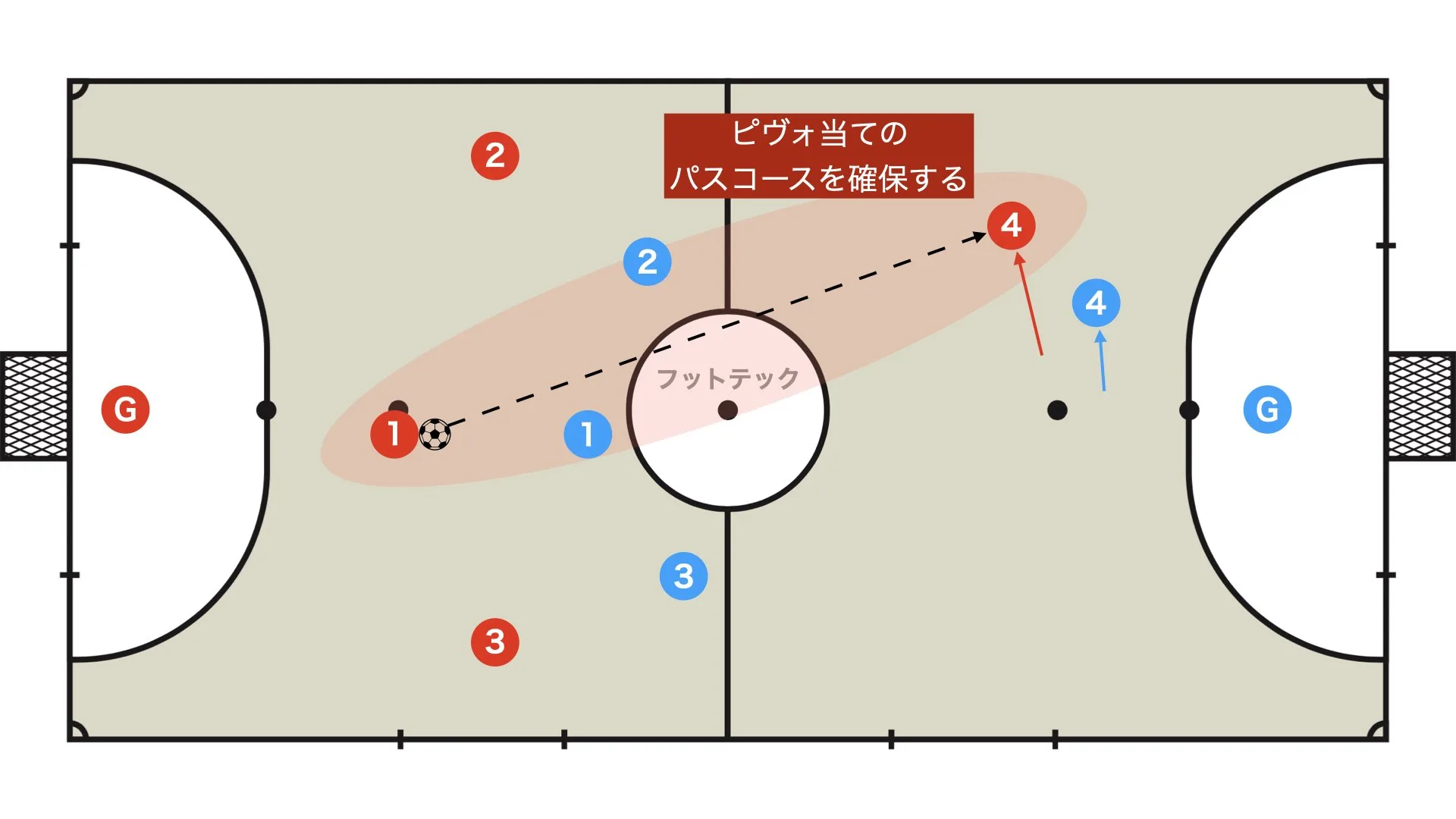
The first role of a futsal pivo is to create a passing lane so the ala or fixo behind them can play a pivo feed.
As the term pivo feed suggests, feeding the pivo is one of futsal's classic attacking patterns. Getting the ball into the advanced pivo is extremely important.
That is why it is also crucial for the pivo to create the passing lane for the pivo feed. There are three main reasons:
- It gives the ala or fixo another passing option, allowing them to choose a forward pass.
- If the pivo receives further forward, the team gets closer to the opponent's goal.
- It forces the opponent to stay aware of the passing lane into the pivo.
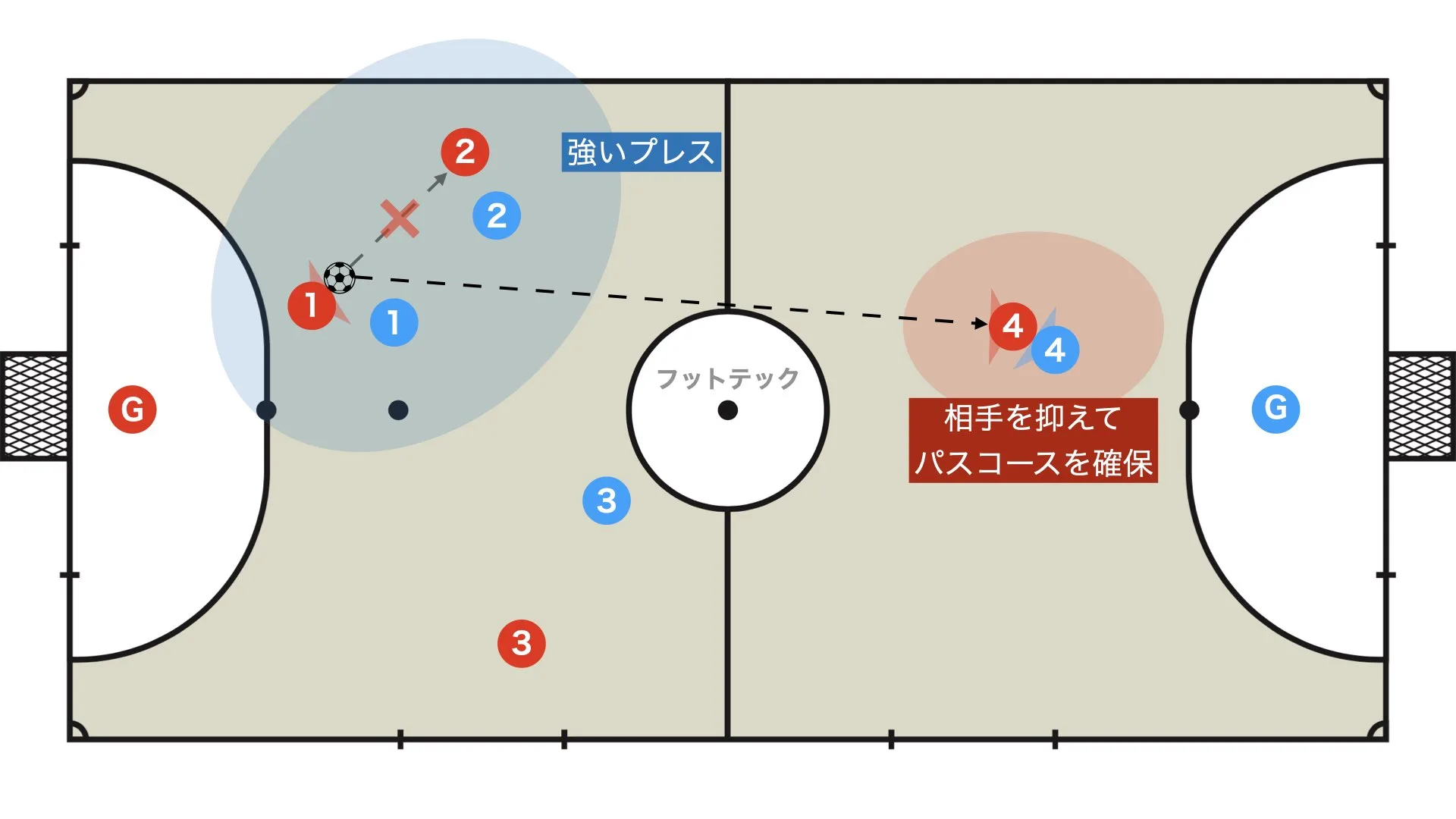
First, by creating a lane for the pivo feed, the pivo adds an extra passing option for teammates behind the ball. If the opponent is pressing in an organized way, having a forward option makes a major difference to how easily your team can circulate possession.
Second, creating that lane increases both the number of attempts and the success rate of pivo feeds. If the team can connect to the pivo more often, it will almost certainly be able to control the game more effectively.
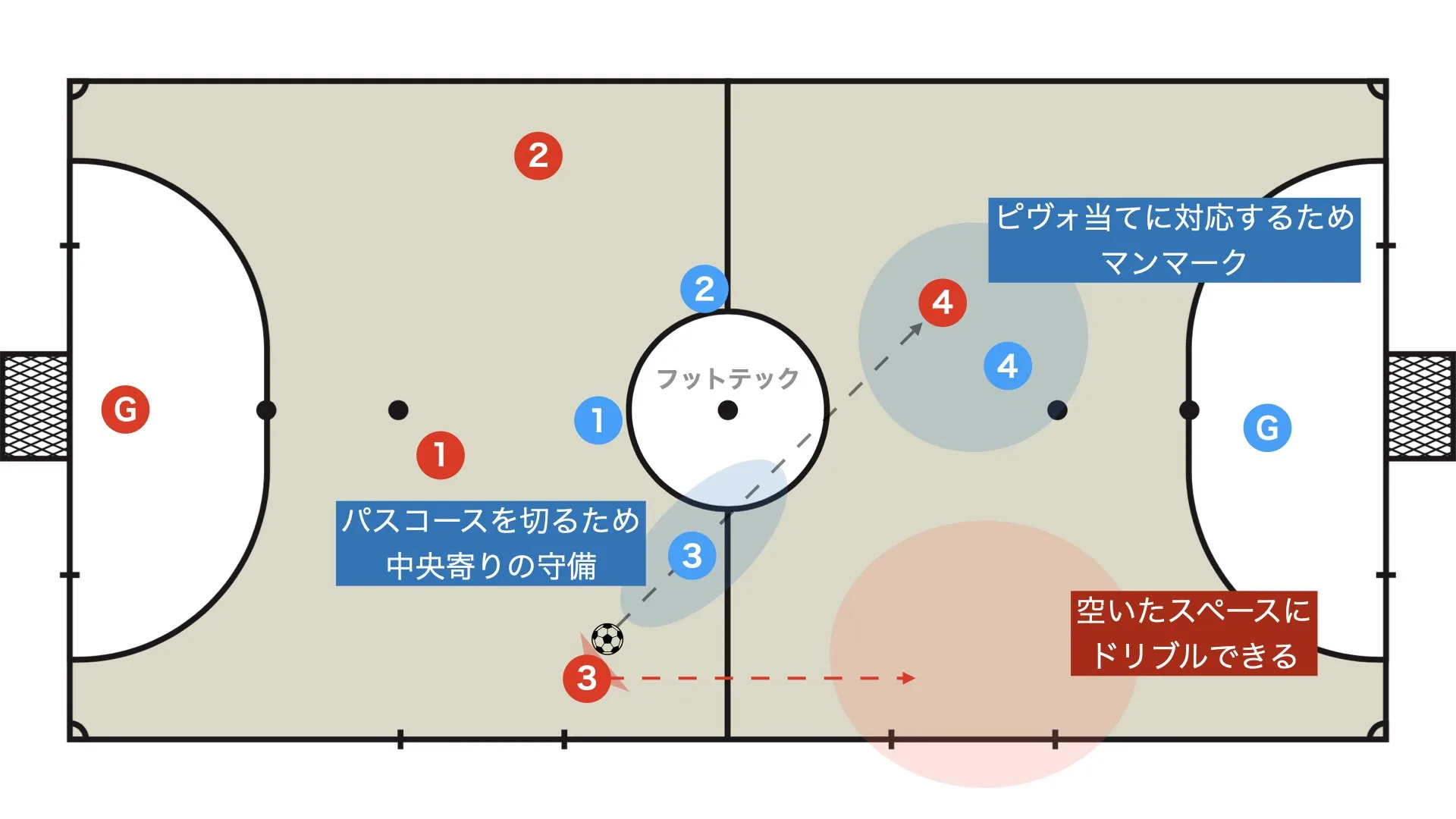
It also forces the opponent to defend with more concentration. If they become so concerned about the pivo feed that they stop pressing high or begin positioning mainly to cut that lane, your team will usually find it easier to attack smoothly.
For a futsal pivo, it is important to secure the pivo-feed passing lane through proper positioning and good awareness of space on the court.
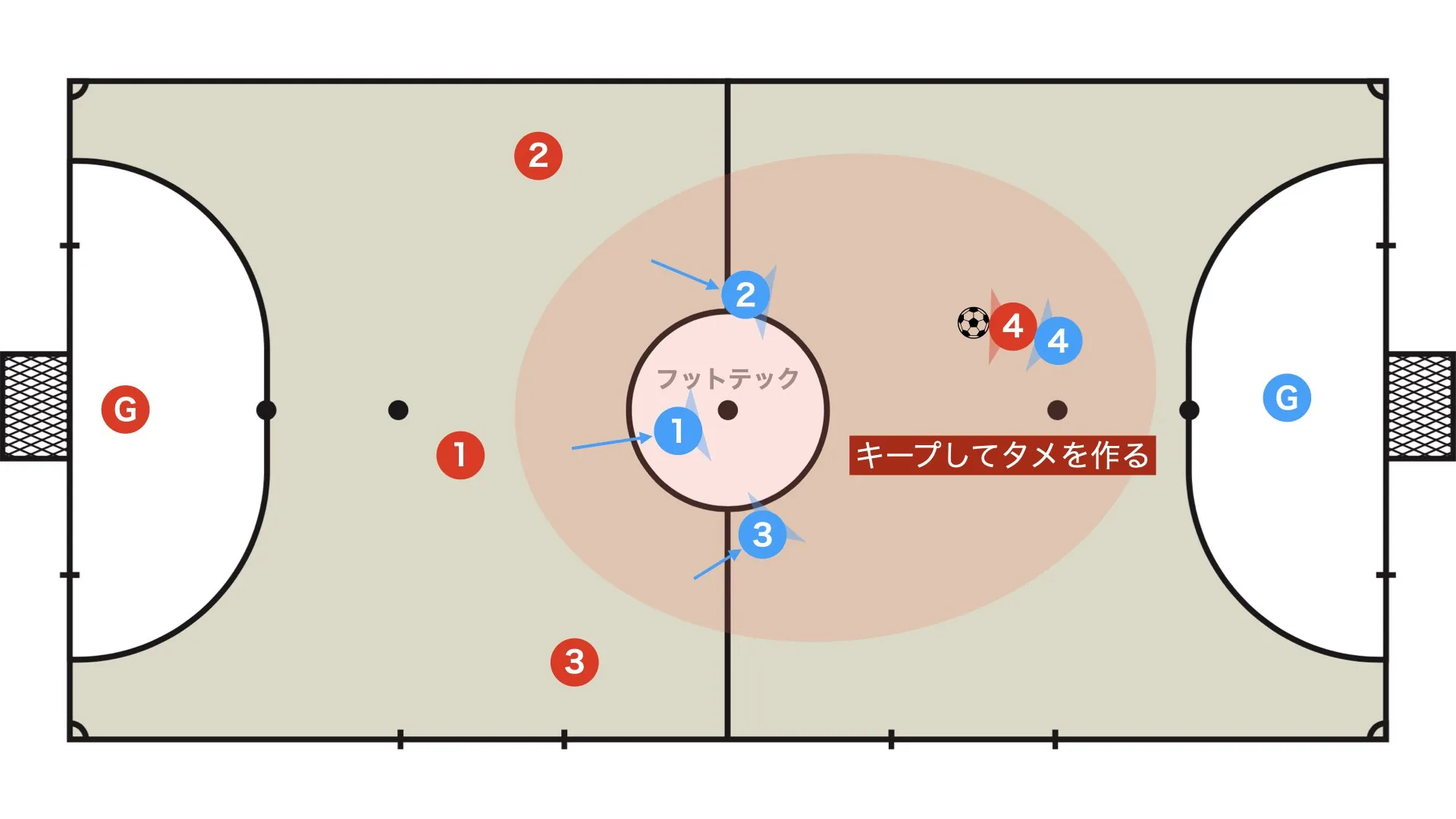
The second role of a futsal pivo is to keep the ball in advanced areas and create a pause.
Creating a pause means holding the ball well enough to draw the opponent's attention to you, giving your teammates both space and time.
When the pivo creates that pause high up the court, the opponent's defensive line is pushed back, making it easier for teammates behind the play to receive the ball again in freer positions. By attracting the defender's eyes and focus, the pivo can also create chances for teammates to run in behind.
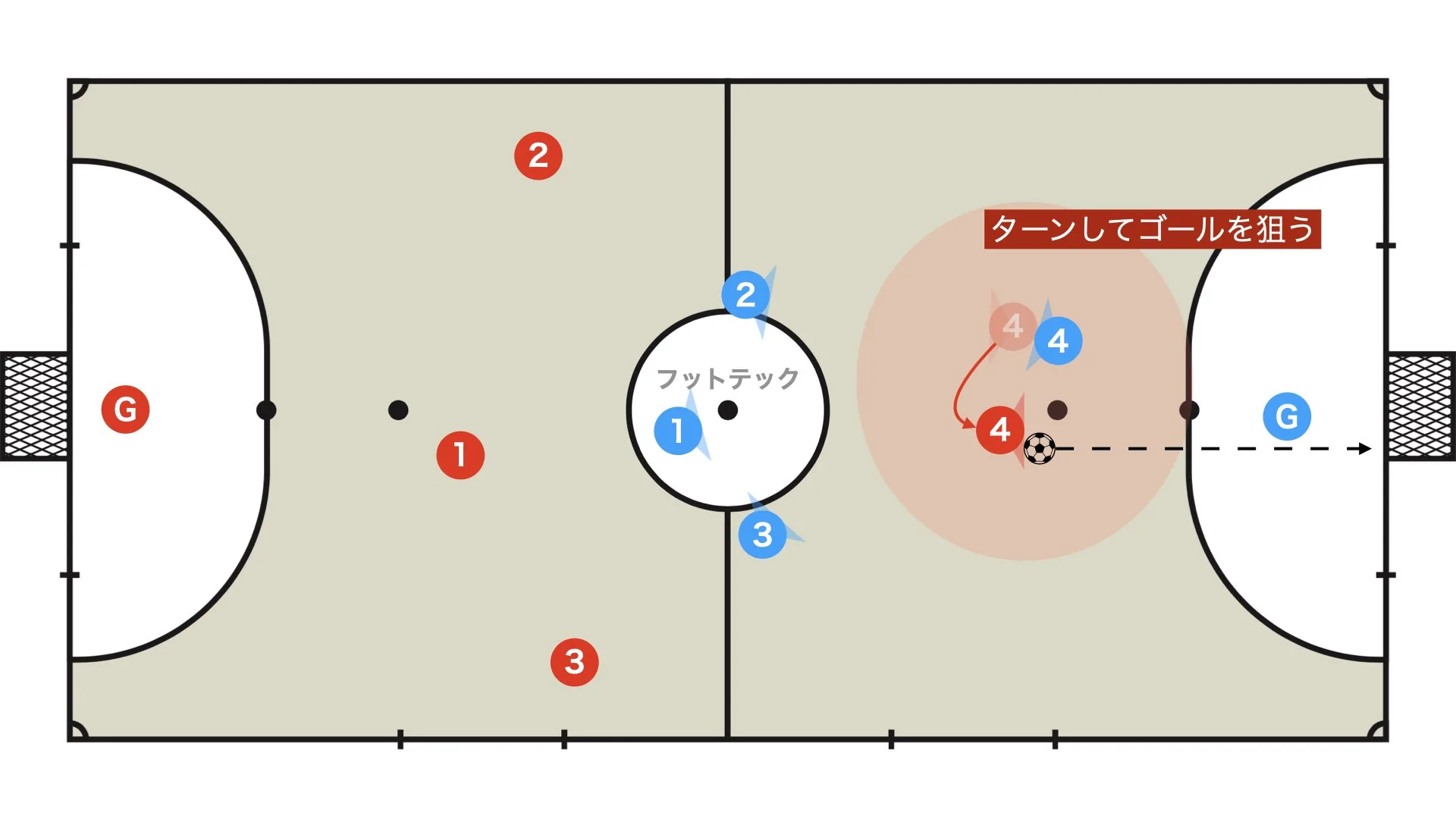
The third role of the futsal pivo is to receive high up the court, turn, and attack the goal directly.
The pivo turn is one of futsal's standard scoring patterns and a very simple attacking method. It is also an individual skill, so it does not depend on the quality or condition of teammates. In other words, a pivo who can turn is valuable on any team.
A pivo who can turn is also very difficult for defenders to deal with. The opponent has to defend with both the pass and the turn in mind. Even if turning is not one of your strengths, it still matters to make the opponent aware that you might turn.
The fourth role of a futsal pivo is to receive the ball in advanced areas and then pass to set up a teammate's goal.
Unlike the turn, this is not mainly an individual action. It is a way of creating goals through combination play with teammates, which makes it a pattern that can work regardless of the opponent's level.
There are three main patterns in which a pivo with the ball up front can assist a teammate.
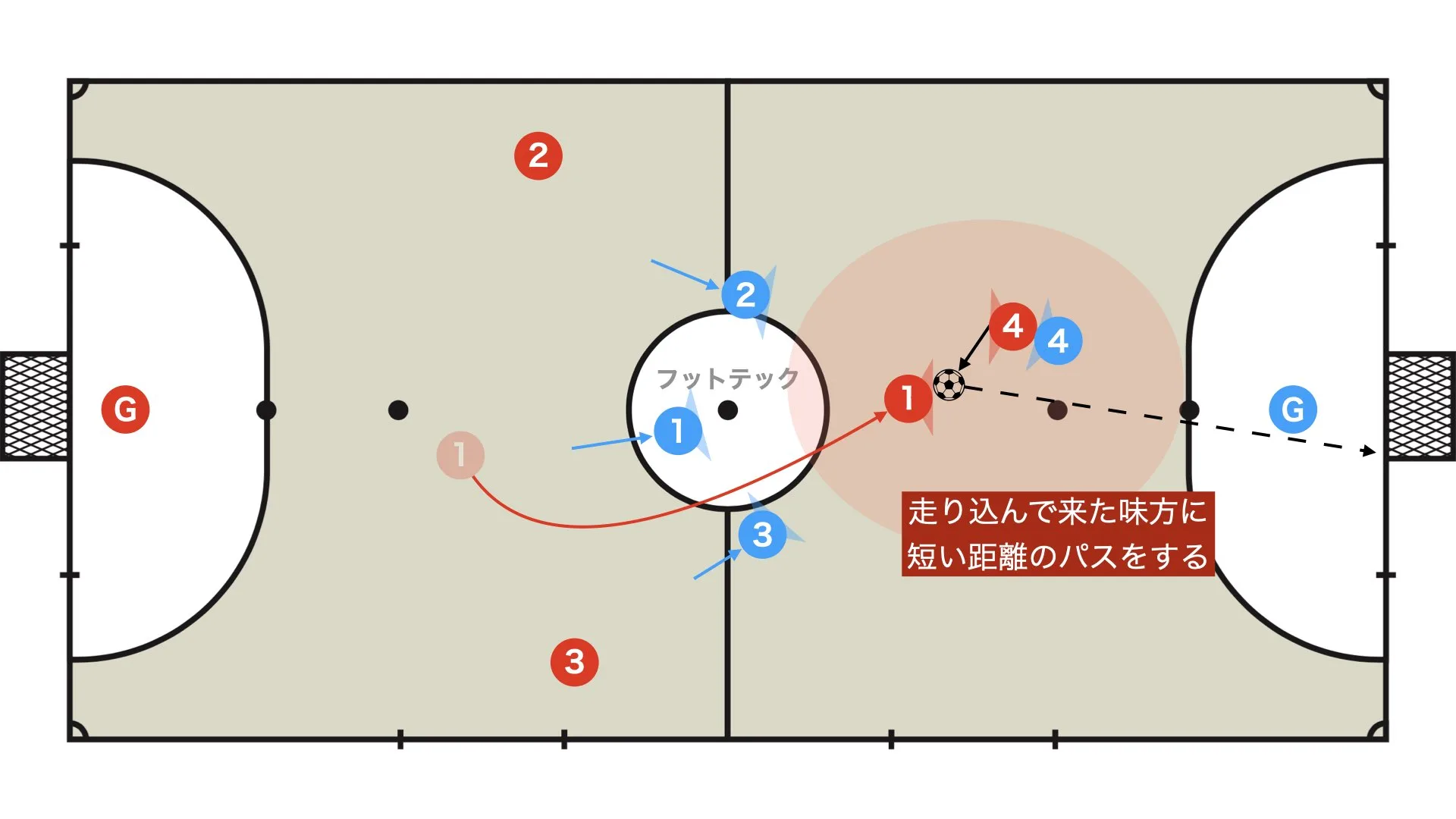
The first assist pattern is to play a short pass into the feet of a teammate who has made a run toward the pivo. This is a common pivo assist pattern and often leads to high-quality chances.
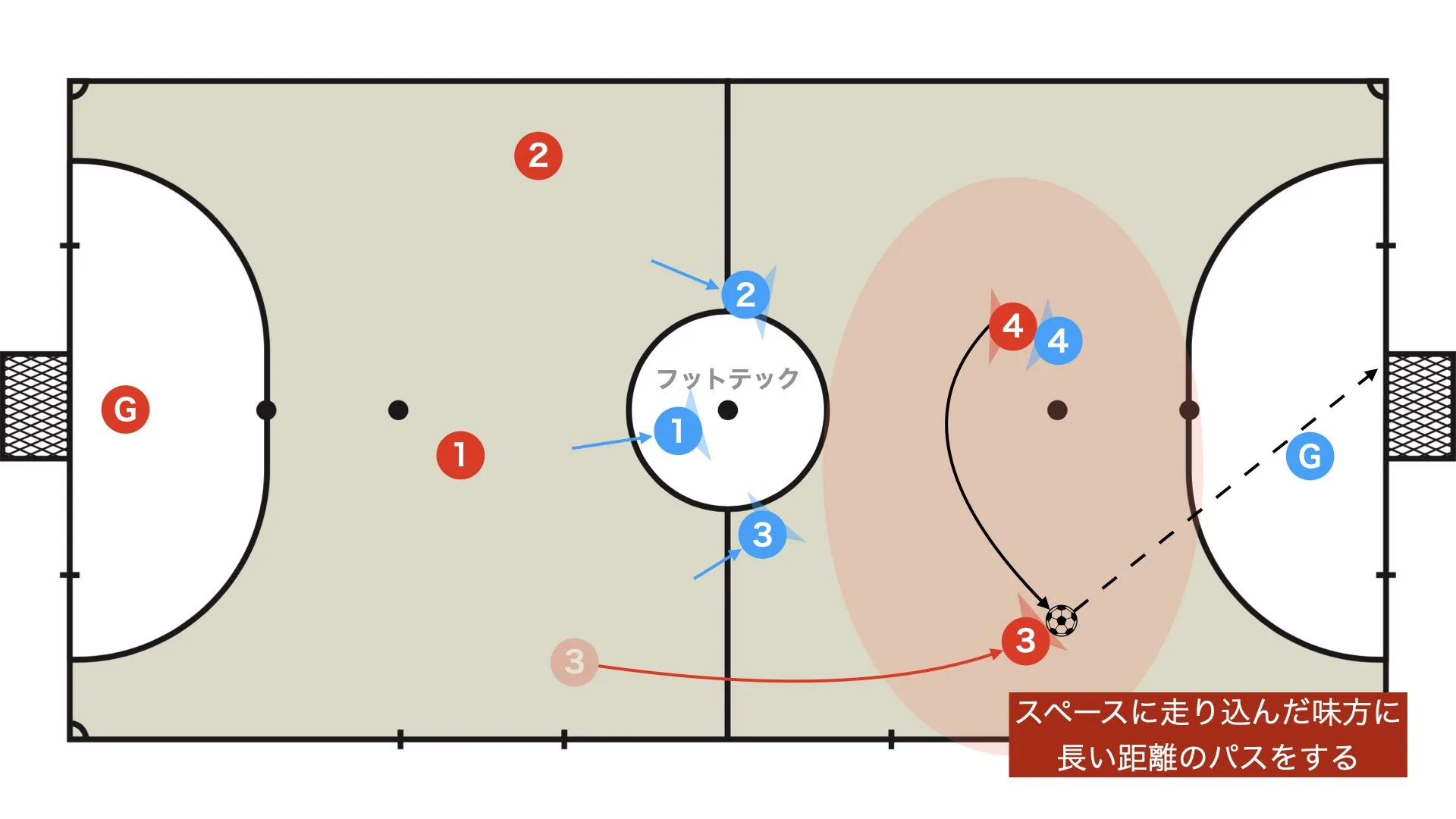
The second assist pattern is to pass into open space in front, allowing a teammate running into that space to score. If the pivo is under heavy pressure, this requires the technique to deliver an accurate pass even without a perfect body shape.
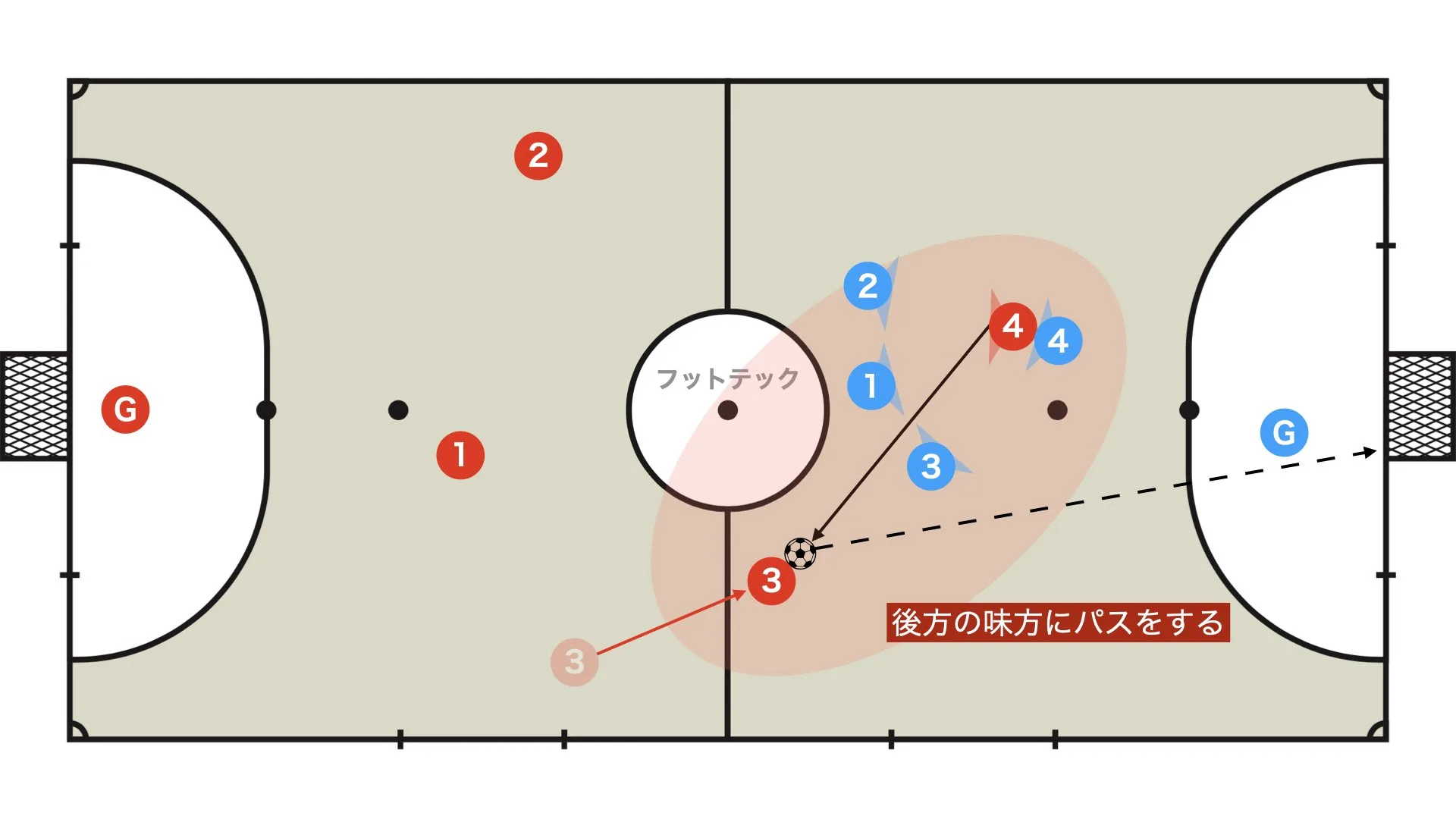
The third assist pattern is to pass back over a longer distance to a teammate deeper on the court, who then scores with a long-range shot. Because the shot comes from farther out, the scoring probability is lower, but if your team has a strong shooter, it can still be an effective route to goal.
The fifth role of a futsal pivo is to defend for the team.
The pivo is the most attack-minded position in futsal, but that does not mean the player can neglect defending. There are only five players per team on the court, so if even one player stops defending properly, it can easily lead to a goal for the opposition.
There are four defensive points a pivo should keep in mind:
- do not get beaten in 1v1 situations
- track your marker properly when they make a run forward
- provide cover for teammates in defense
- if your teammates are outnumbered, recover all the way back into your own half
If the pivo also understands the team's defensive structure, they can help the side on both attack and defense.
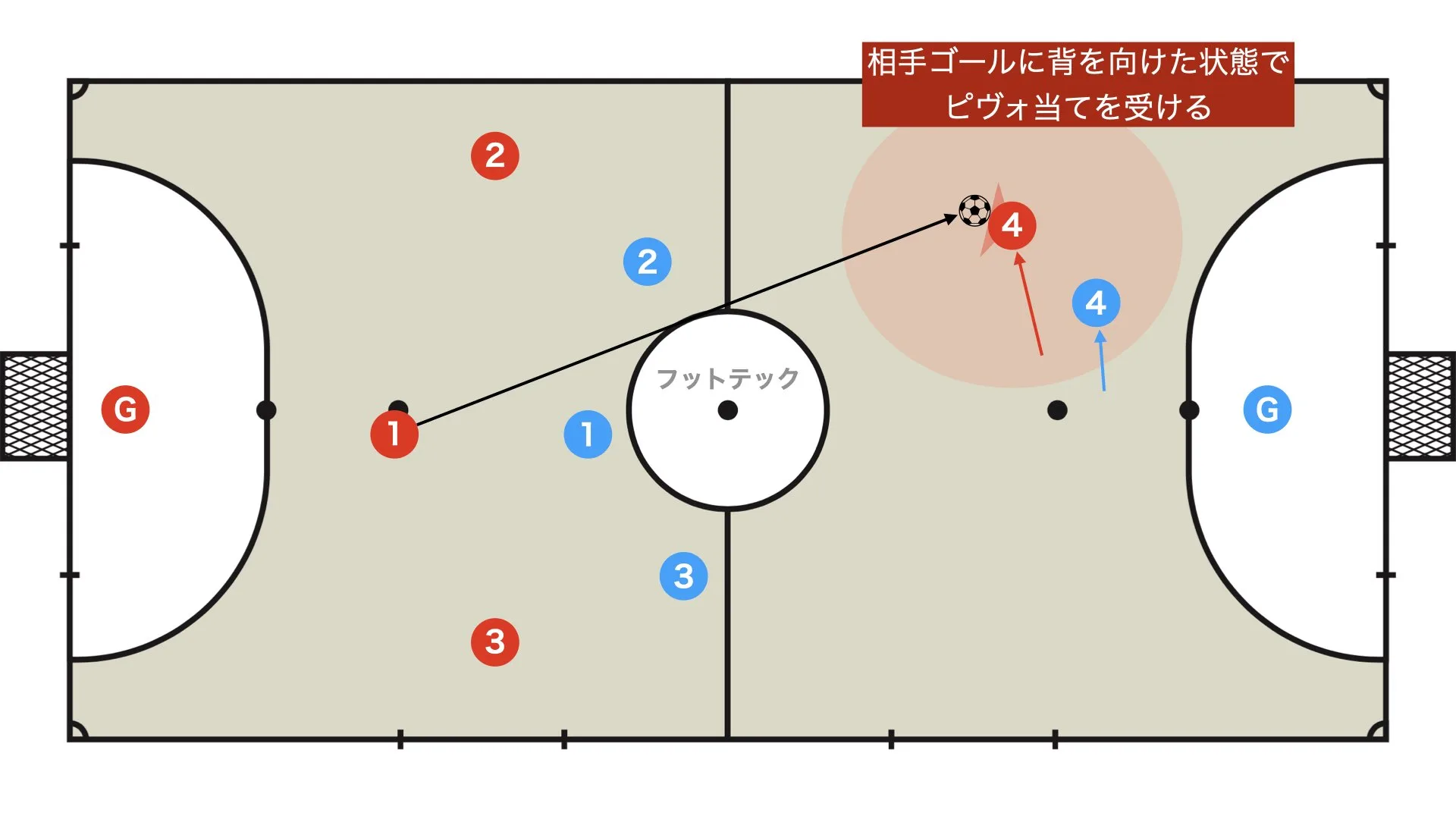
One defining characteristic of the futsal pivo is how often they play with their back to the opponent's goal.
When the pivo receives in space, there are situations where they still have some distance from the opposing fixo. In that moment, the pivo could turn, square up to the defender, and attack 1v1.
However, in many cases it is the safer option to keep possession without turning, while still facing away from goal. There are three reasons for that:
- By placing your body between the defender and the ball, you reduce the risk of losing possession. (Related: Role 2 of the pivo: hold the ball up high and create a pause)
- It may seem hard to shoot when facing away from goal, but it is still very possible to turn while holding off the opposing fixo and score. (Related: Role 3 of the pivo: turn and attack the goal directly)
- Because you are facing back toward your own half, it is easier to see the movement of your teammates and choose the right pass. (Related: Role 4 of the pivo: pass to assist teammates' goals)
Facing up the opposing fixo and trying to beat them 1v1 is one valid tactical option, but deliberately playing with your back to goal can also be an effective way to create scoring chances.
In futsal, there are more pivos who are "strong" than pivos who are simply "skillful."
Here, a "skillful player" means someone with technique and flair. A "strong player" means someone who competes aggressively with their body and keeps battling with persistence.
Skillful players shine most when the opponent's pressure is weak and there is space to work in. But a pivo is constantly dealing with the opposing fixo, and the futsal court itself is tight. The positions that make the most of a purely skillful player's qualities are usually ala or fixo rather than pivo.
The pivo role is better suited to a strong player who can still compete effectively even when space is limited and the pressure is intense.
For a futsal pivo, improving individual ability is important, but it is just as important to understand how teammates play.
For example, if you know that your ala likes to play the pivo feed on the touch immediately after their trap, you can time your movement to receive at exactly that moment and connect much more easily.
A pivo should understand the following three points about teammates:
- when the players behind are likely to play the pivo feed
- the typical movements teammates make after the pivo feed to receive a return pass
- when the players behind are likely to run in behind
You cannot learn all of this through communication alone. It is very difficult for players to describe their own play clearly, and in some cases they may not even fully understand their own tendencies.
That is why a pivo needs both communication with teammates and a way to study their movement, such as watching match video.
This article covered the basics of the pivo position in futsal.
To summarize the main points:
- the pivo has five key roles in futsal
- pivos often play with their back to goal
- "strong players" are generally better suited to the role than "skillful players"
- a good pivo needs to understand not only themselves, but also their teammates
The futsal pivo is asked to fulfill roles and movements that differ from those of an ala or a fixo. I hope this article helps you understand what makes the position unique and supports your progress toward truly becoming a pivo.
Finally, Futsal University Foot Tech has many more articles on futsal tactics, so I would appreciate it if you took a look.