Targeting the Pivo and Losing Your Marker: The Vertical Two-Player Combination (Fixo-Pivo)
Published: 2021.12.14Updated: 2026.05.03
Do you have any of these problems?
- You do not know how to lose your marker after playing into the pivo
- You are not sure how to move after playing into the pivo
- You do not know how to support the pivo after the pass goes in
Most likely, many players can somehow play into the pivo, but then stop moving or get lost afterward.
This time, I will explain in detail how to play into the pivo and lose your marker, using diagrams and video.
I will also introduce specific training methods at the end, so read through to the end.
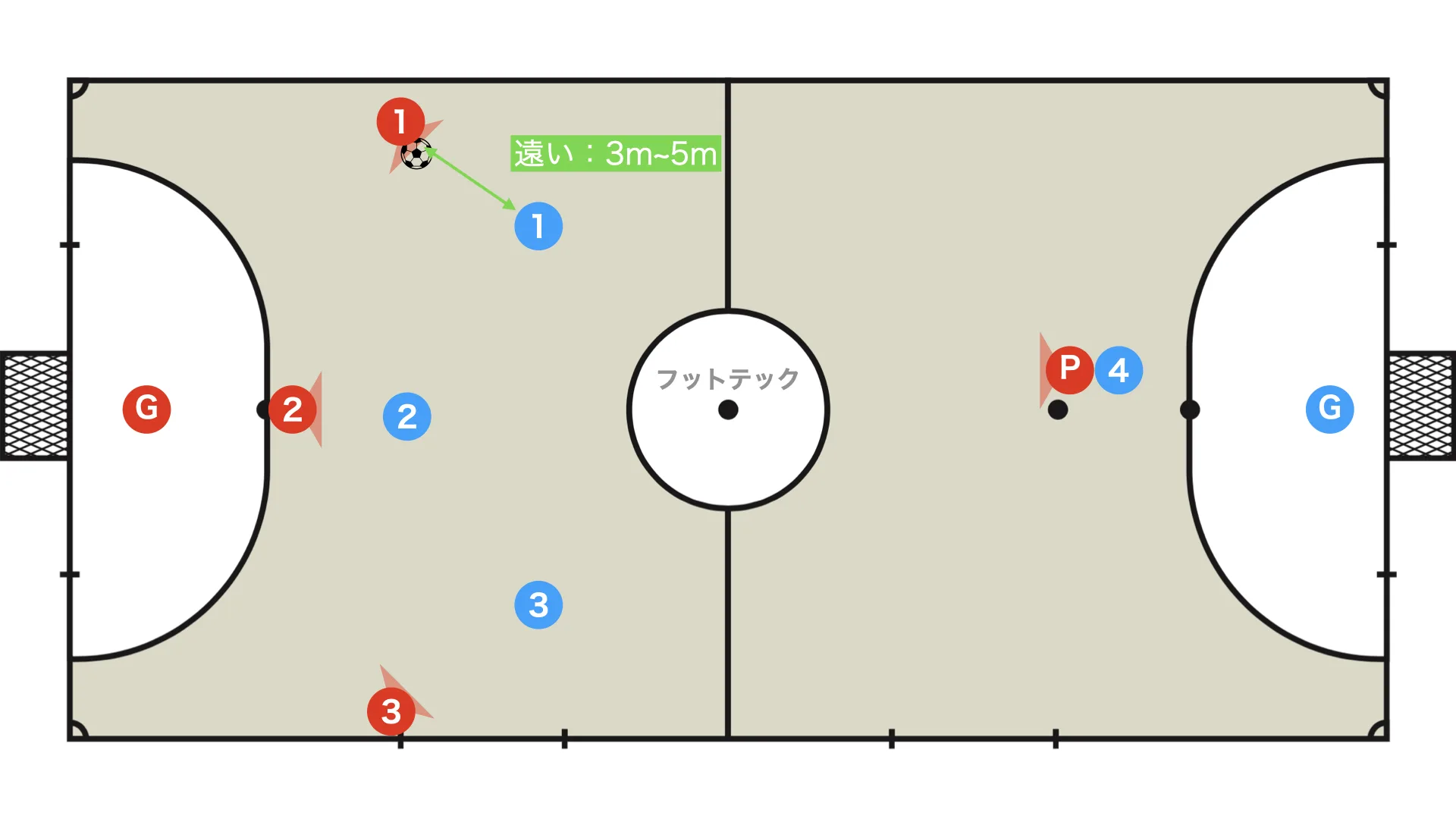
The farther the pivo is from the opposing marker, the more areas the pass can be played into.
Speaking in concrete terms, if the pivo is about 3 to 5 meters or more away from the marker, you can usually play the pass into most areas. (This varies depending on the passer's ability.)
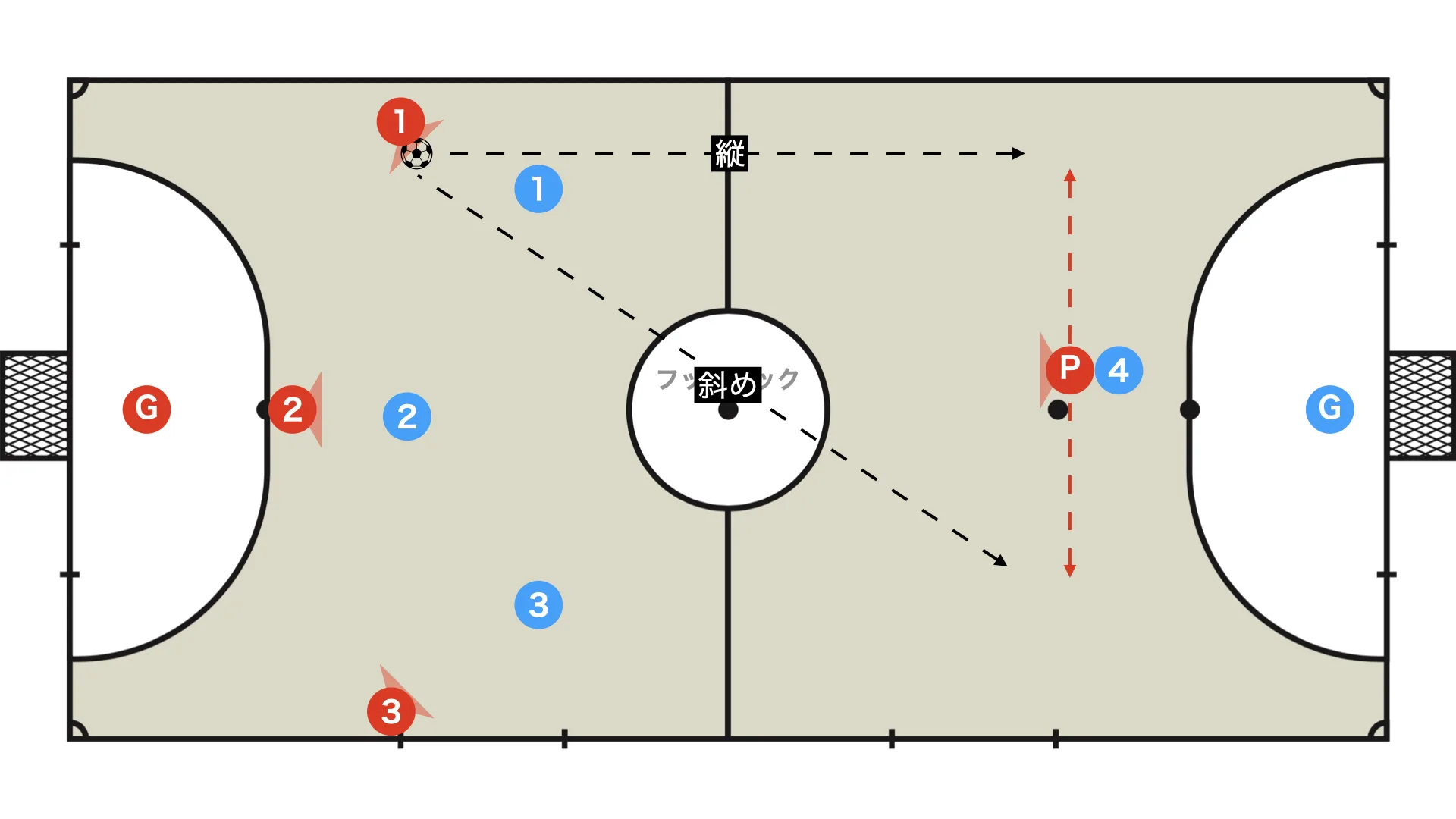
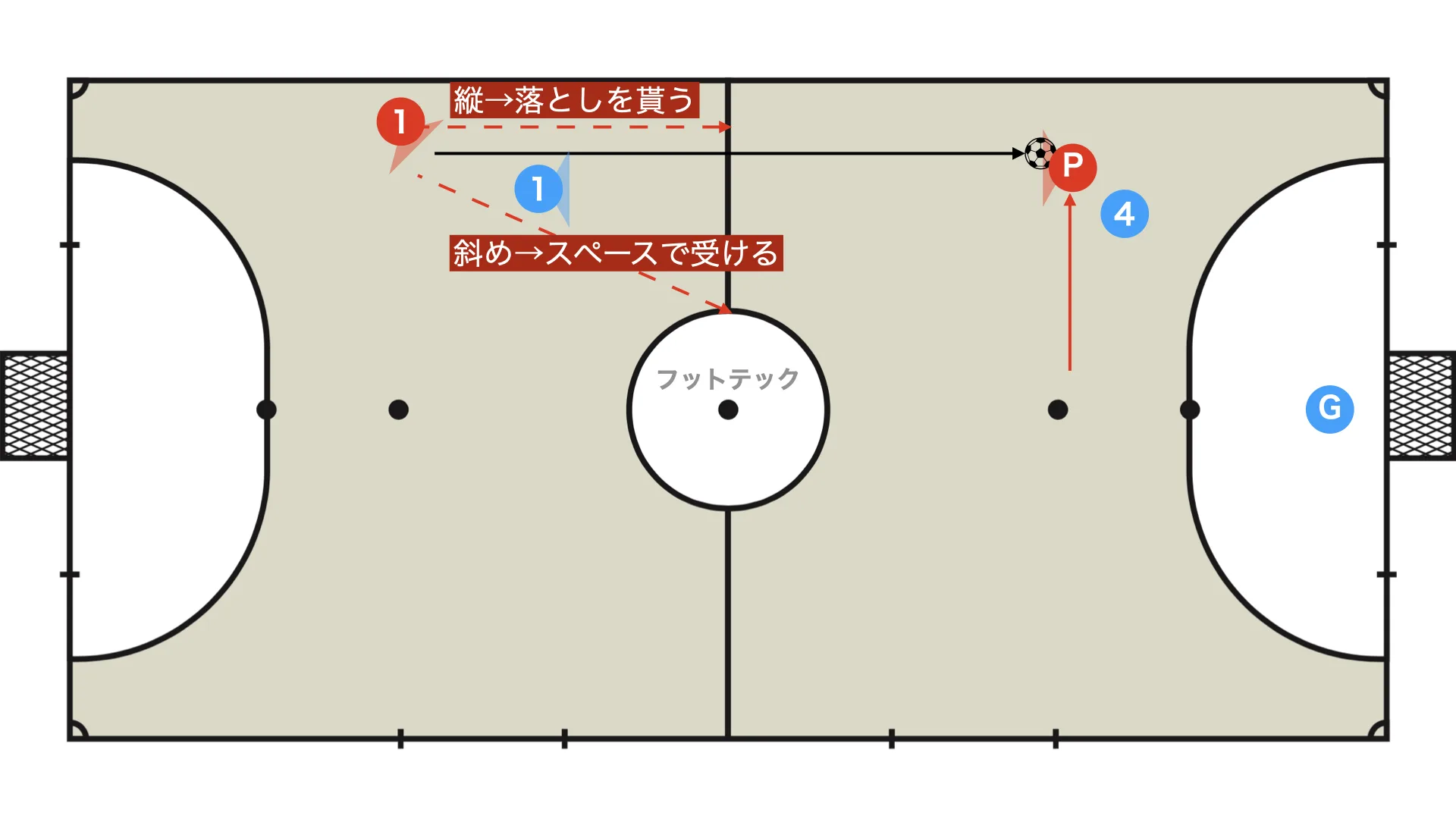
Passes into the pivo can be divided broadly into two types: vertical and diagonal.
There are other ways to classify them in more detail, but this article will use this simpler breakdown for clarity.
From the passer's point of view, the two main options after playing into the pivo are:
- Vertical: receive the layoff
- Diagonal: receive in space
In the end, these are the two patterns you will use to battle with the opposing defender.
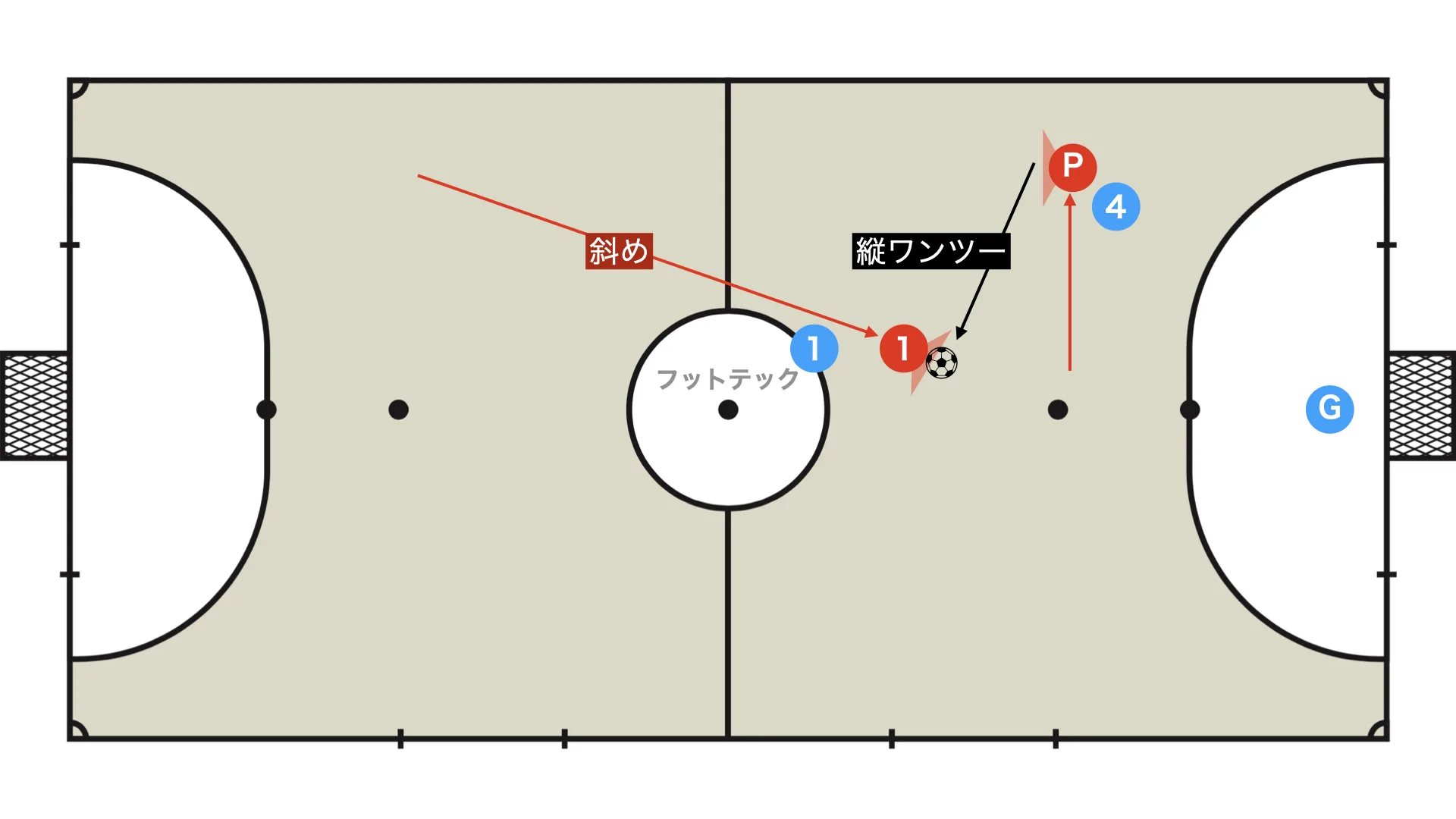
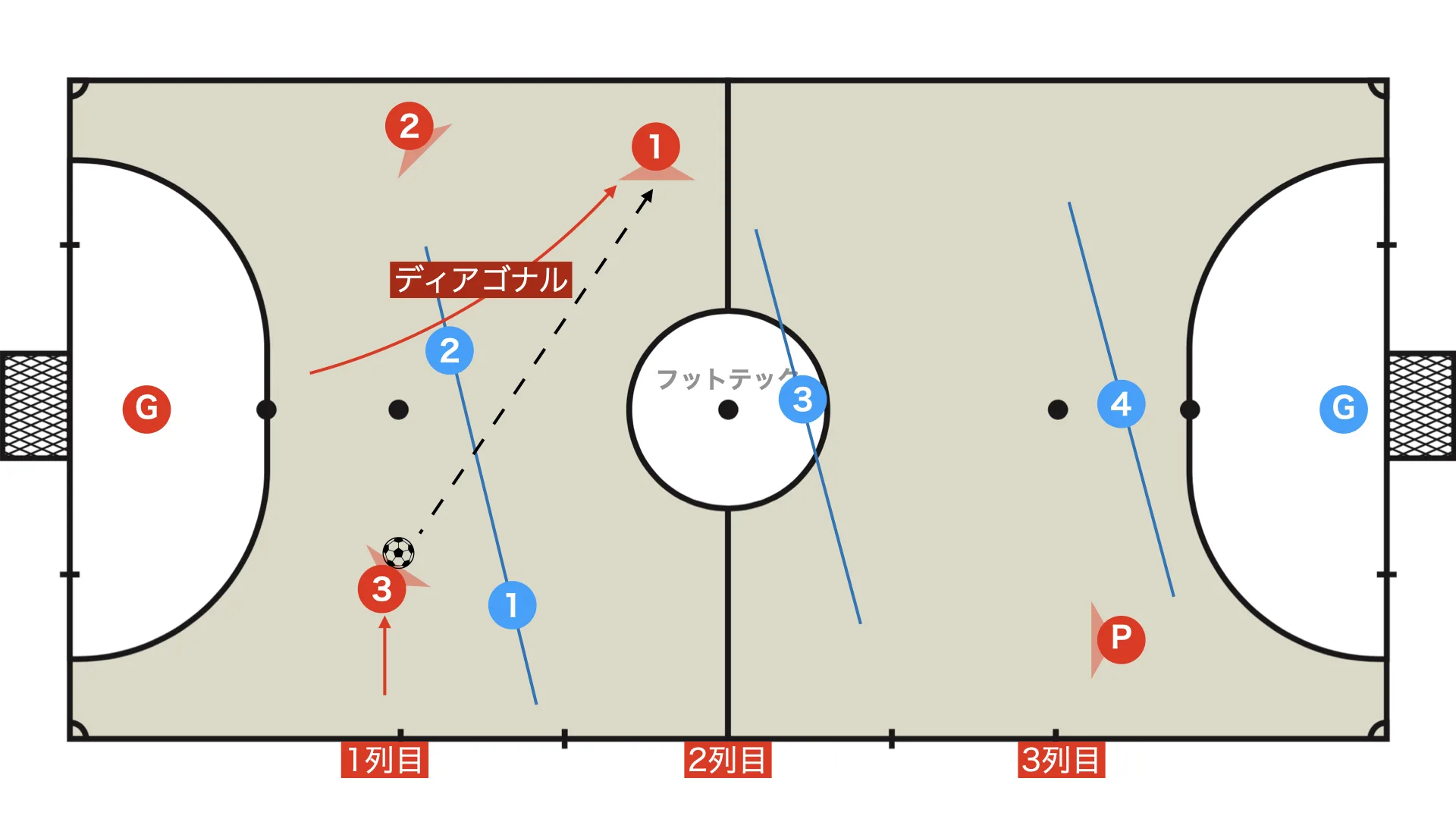
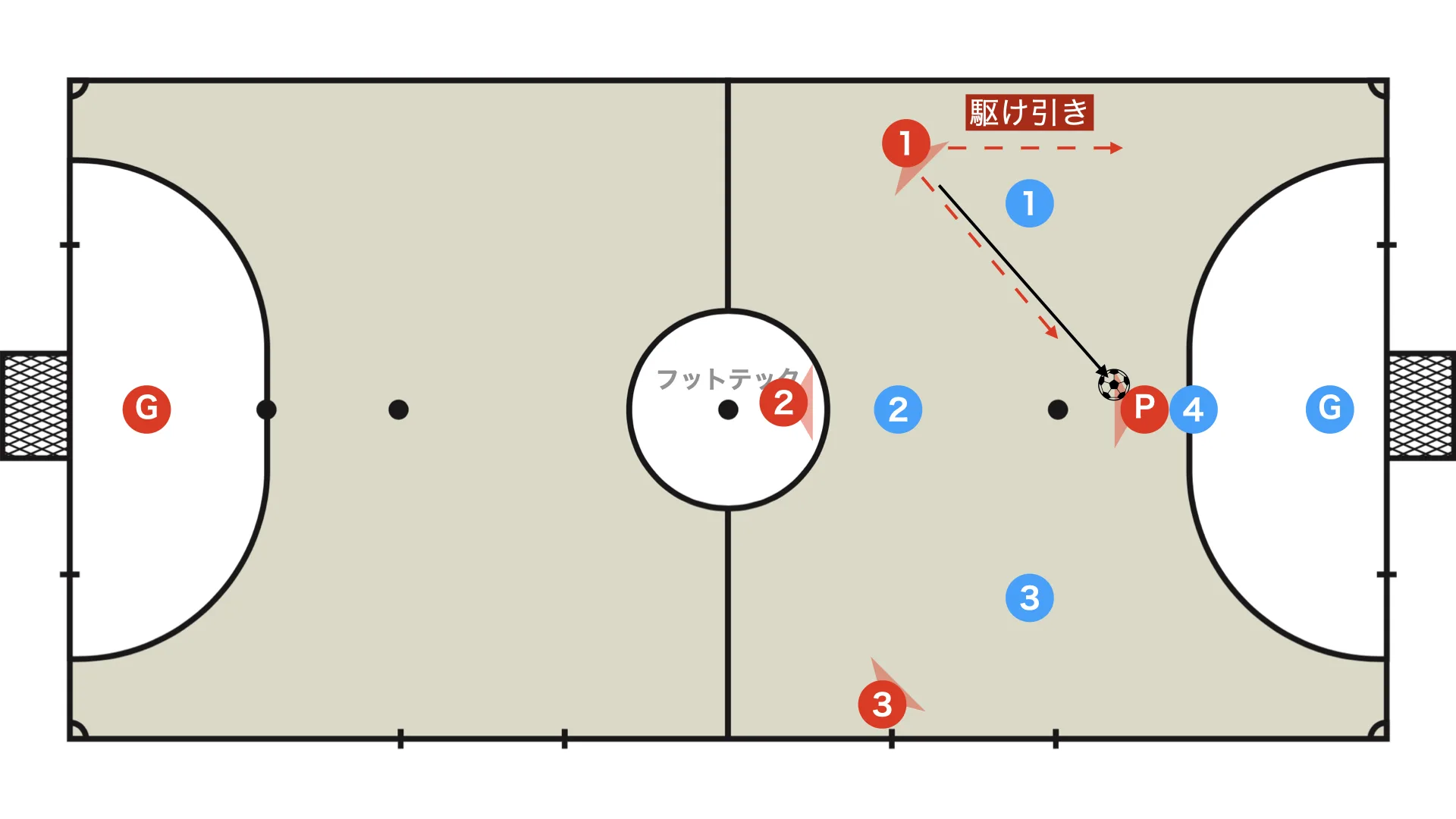
As shown here, when the passer runs diagonally and the pivo returns the ball to break the defence, that sequence is called a vertical one-two.
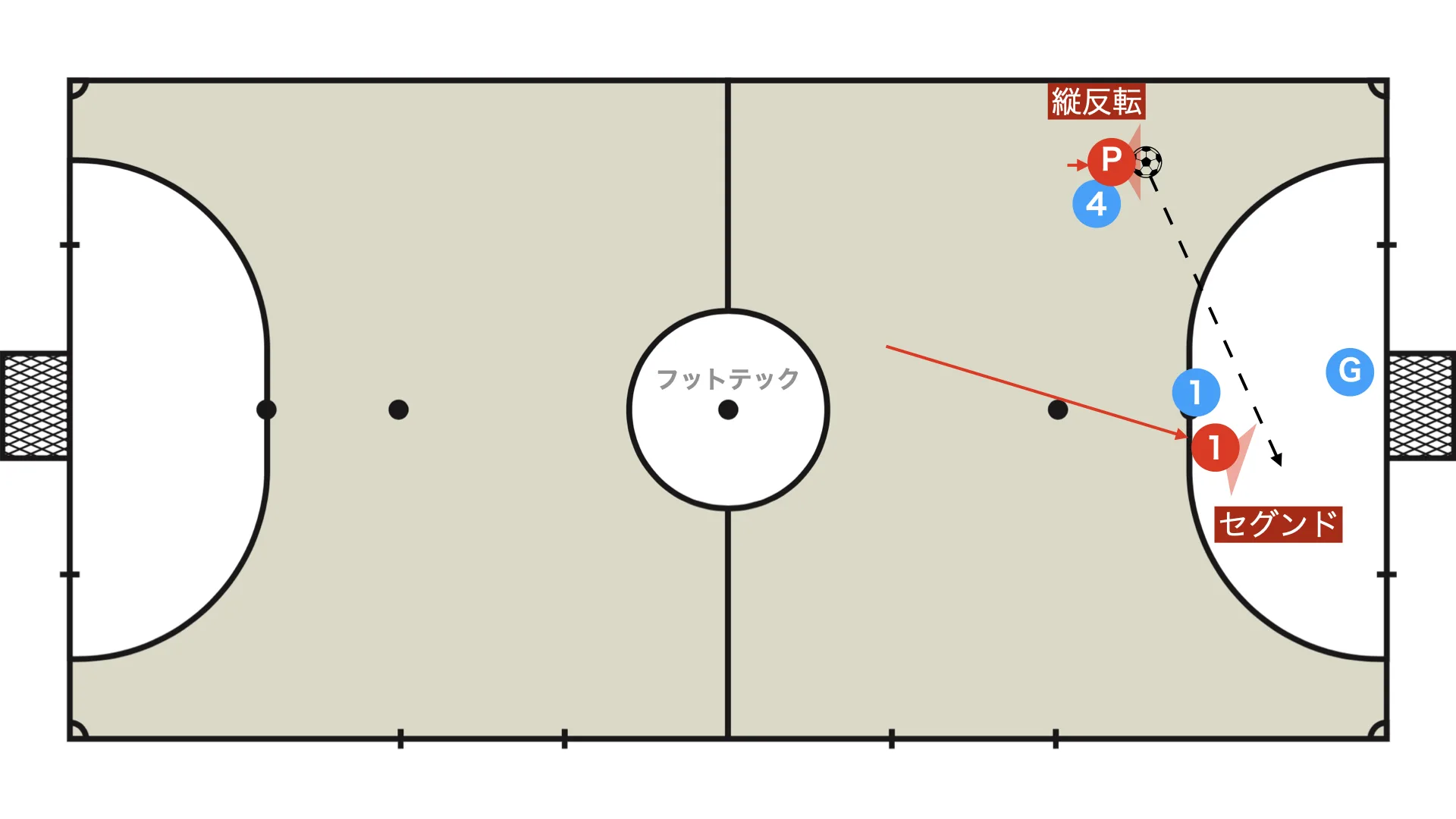
If the vertical one-two is not available, the pivo simply turns vertically.
At that moment, the player who tried to receive in space becomes the segundo runner.
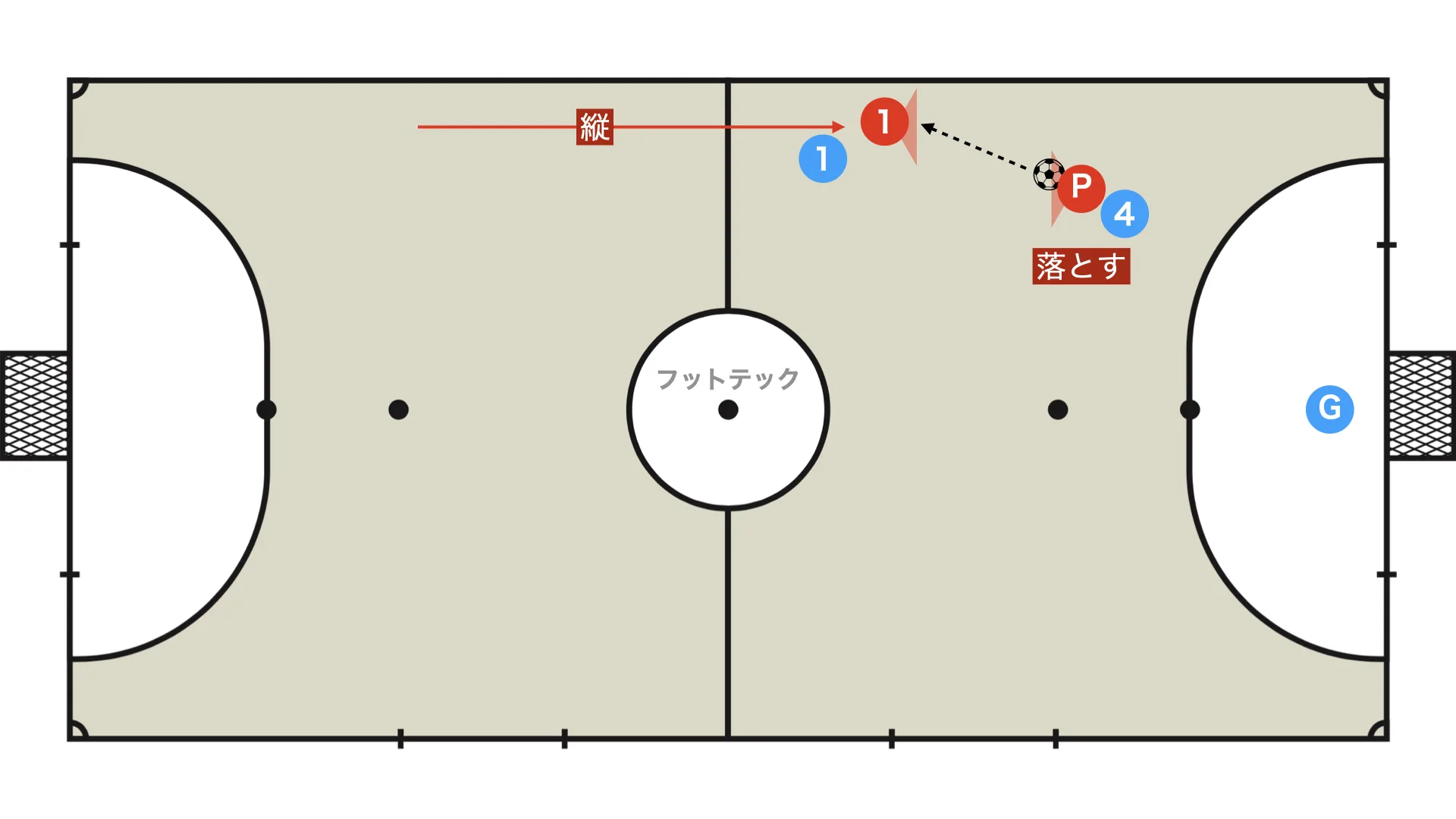
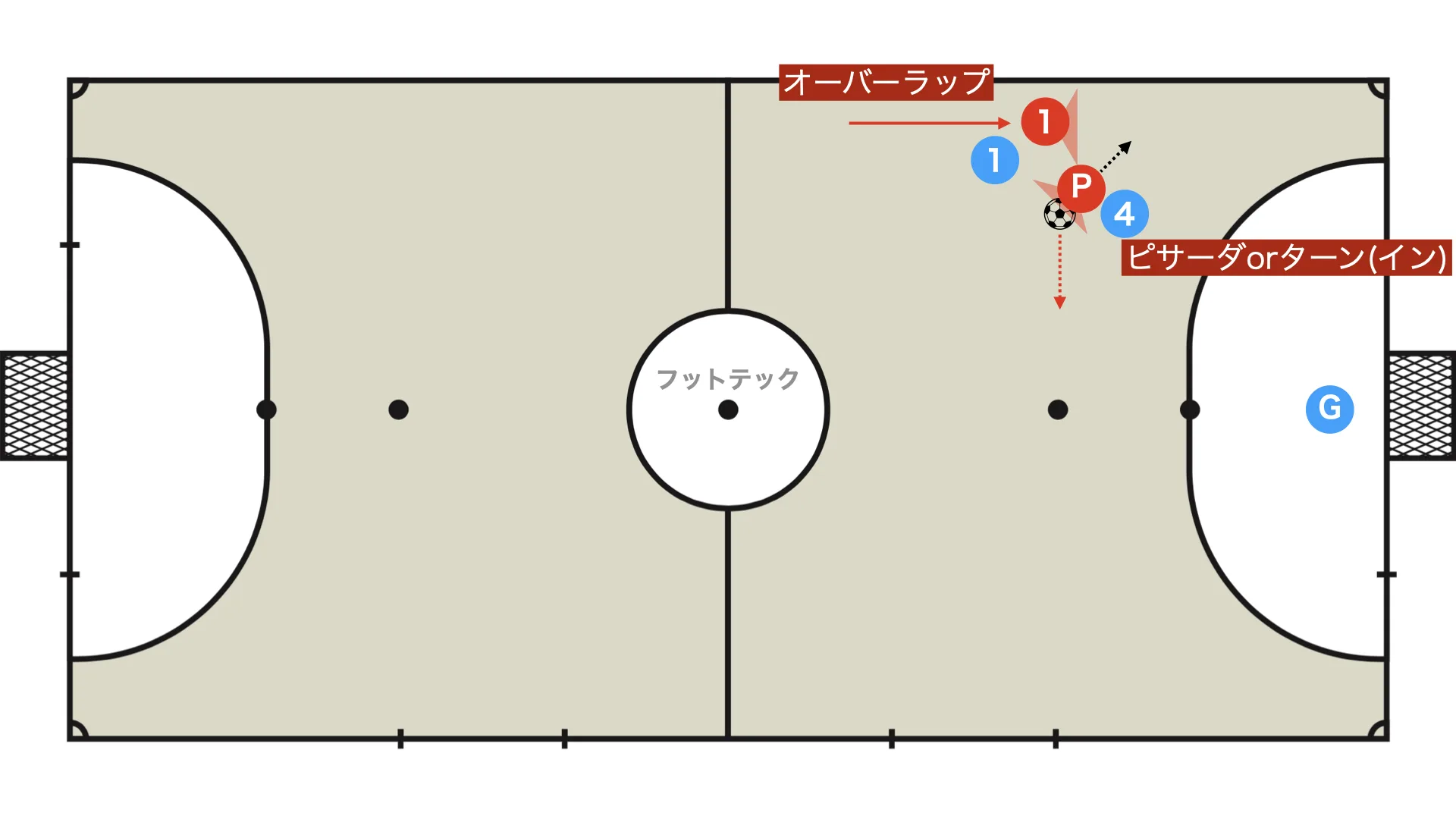
If you cannot receive the layoff, continue with the overlap and make the defender choose between the pivo's inside turn and the pisada.
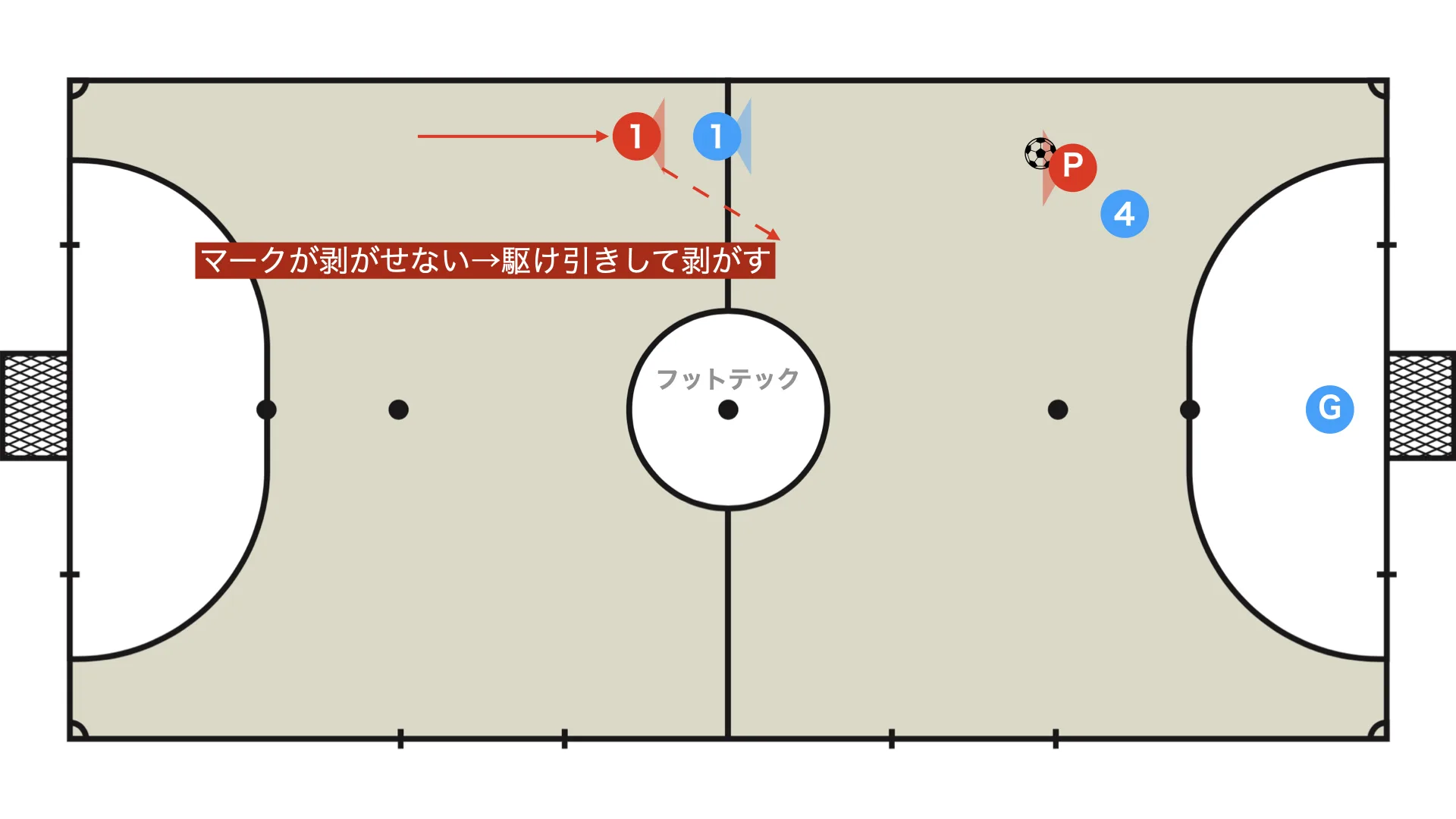
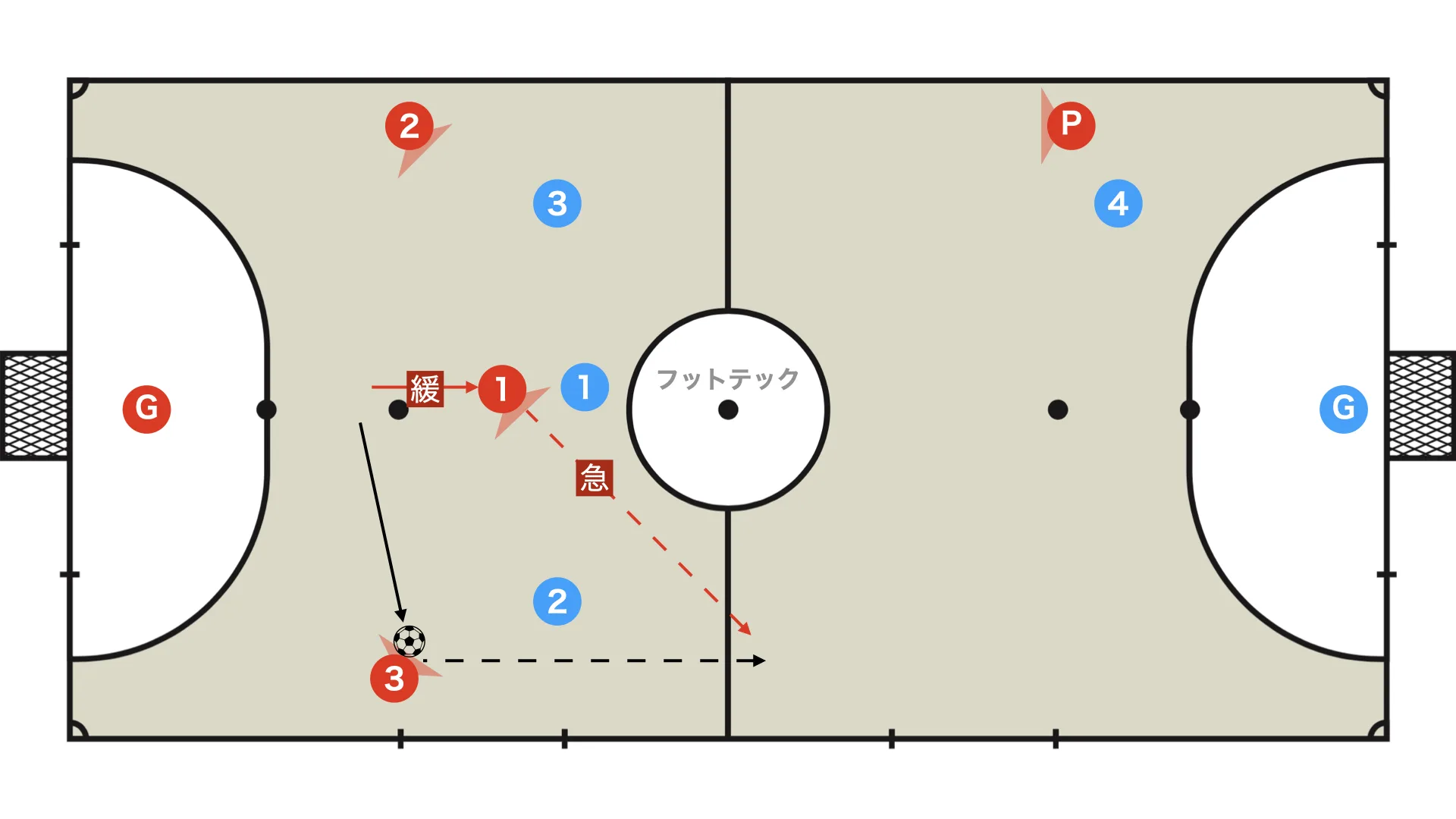
If you cannot lose your own marker with a single movement, use vertical and diagonal runs as feints against each other.
At this point, it is important to make the off-ball run at a speed that forces the opponent to turn and look behind.
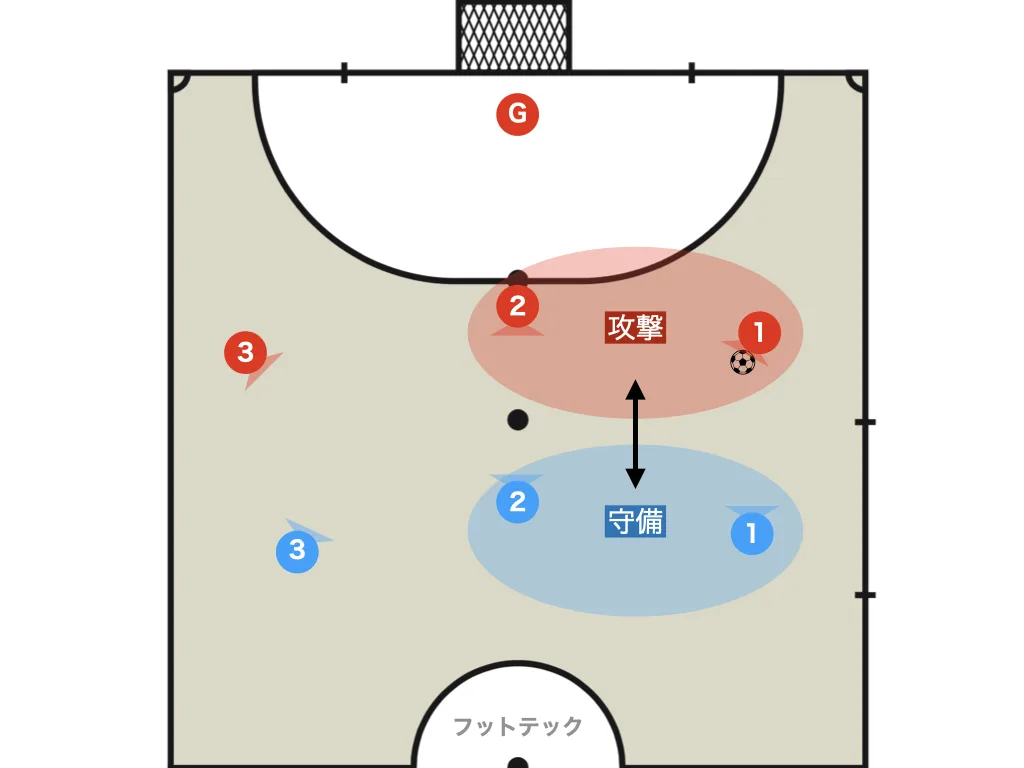
That makes it impossible for the defender (blue no. 1) to keep both the ball and the player they are marking in the same field of vision. This is a positional advantage.
Use the positional advantage created in this way to duel with the defender. (1v1 off the ball)
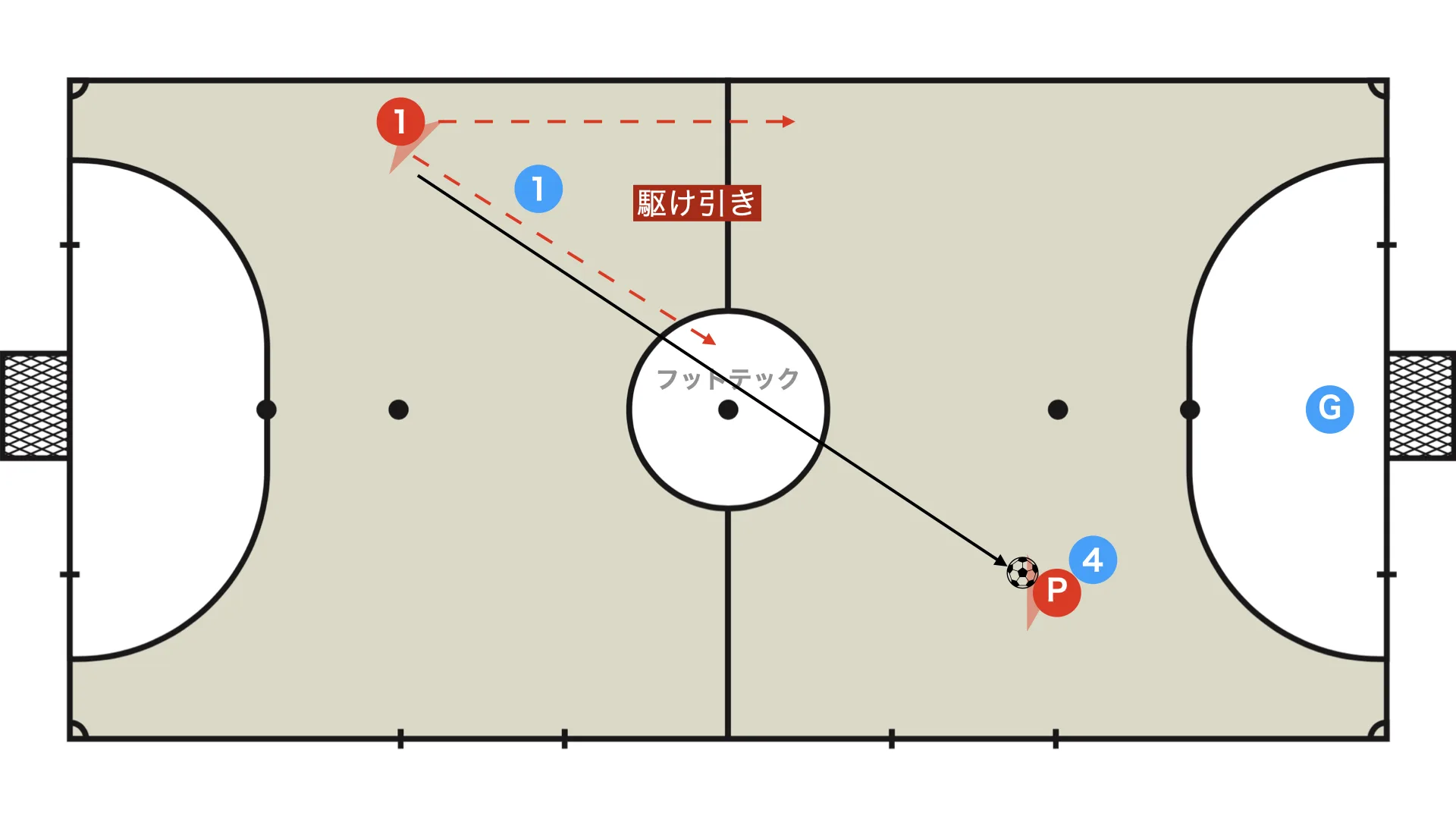
Because the ideas overlap with the vertical pass into the pivo, I will leave out the details here.
Try using a tactics board and think through the finishing patterns yourself.
In systems that use a pivo, such as 3-1 or 2-2, finishing through passes into the pivo and losing your marker is extremely effective.
To bring out this type of pivo action more often, the standard approach is to run training with the pivo left free.
There are many possible training menus, but here are some representative ones:
- 1v1 + pivo
- 2v2 + pivo
- 3v3 + pivo
The University of Tokyo futsal team has posted an easy-to-understand video, so take a look.
Rules
- The pivo can move only near the corner-kick area and is limited to two touches
- Shots must come from a pass by the pivo and be taken within two touches
- Rotate out after scoring