Diagonal (Jagonau) Explained in Depth
Published: 2021.11.19Updated: 2026.05.04
Diagonal means a crosswise or slanted line, and in futsal it is an important action that works as a pair with the parallel run.
But have you ever had this question?
"Jagonau? Diagonal? Daiagonal? Which name is actually correct?"
The answer is that all of them are correct.
They all come from the same spelling, diagonal, but the pronunciation changes depending on whether you say it in English, Spanish, or Portuguese.
Ways to say diagonal
- English: diagonal
- Portuguese: jiagonau, jagonau, jagunau
- Spanish: diagonal
Across Japan, a very large number of people call it "jagonau", while among coaches, "diagonal" is especially common. (That is probably because many of them are connected to Spanish coaches.)
This article explains the tactical benefits of the diagonal run, the key points behind it, and tips for both the runner and the passer.
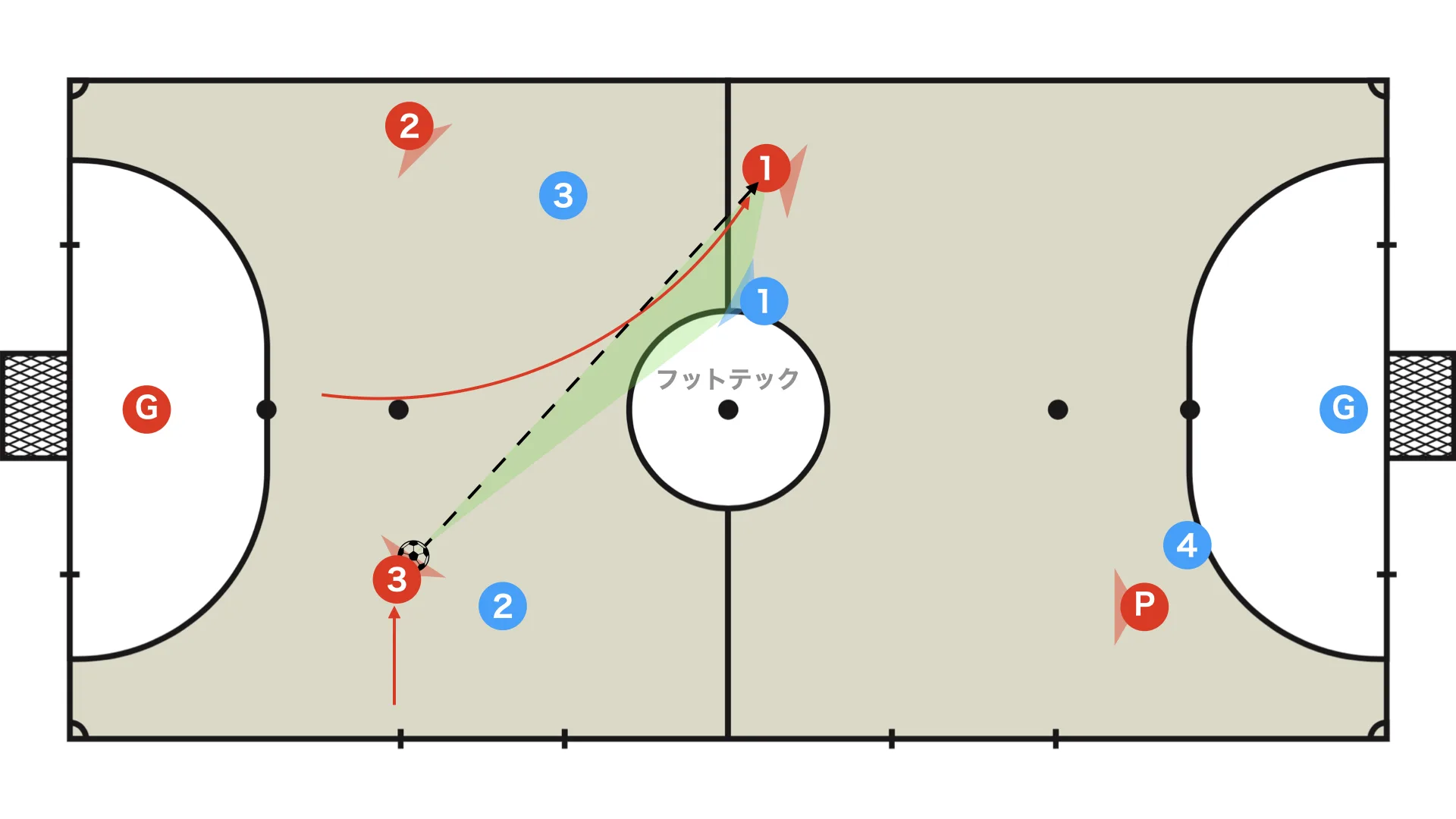
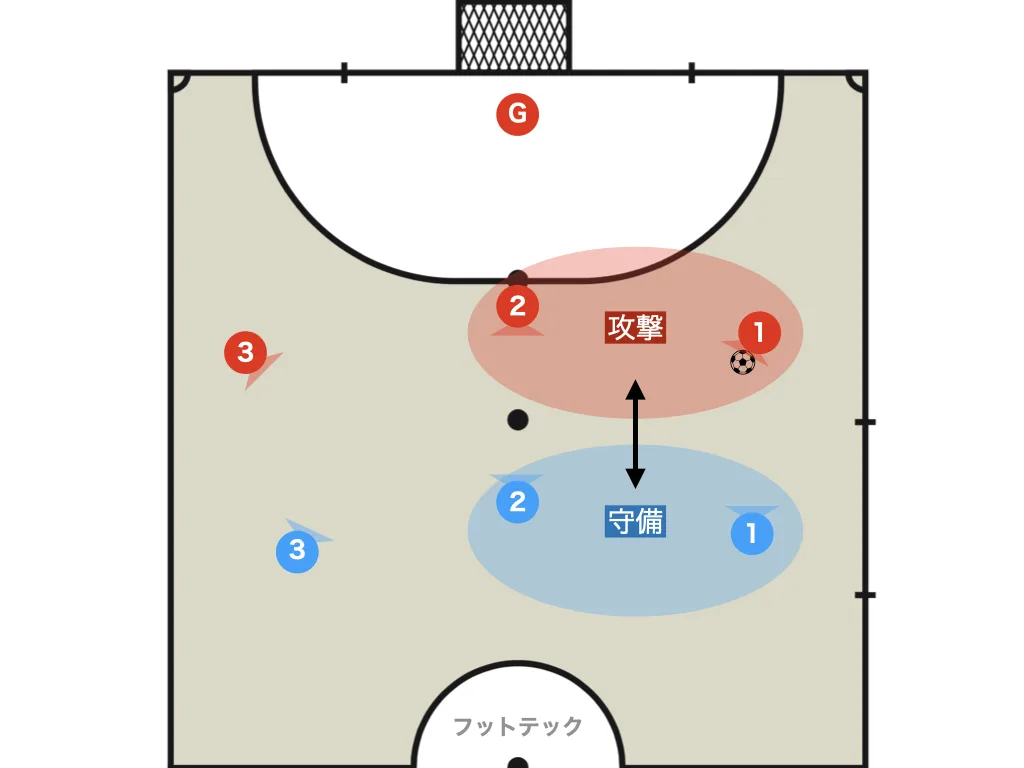
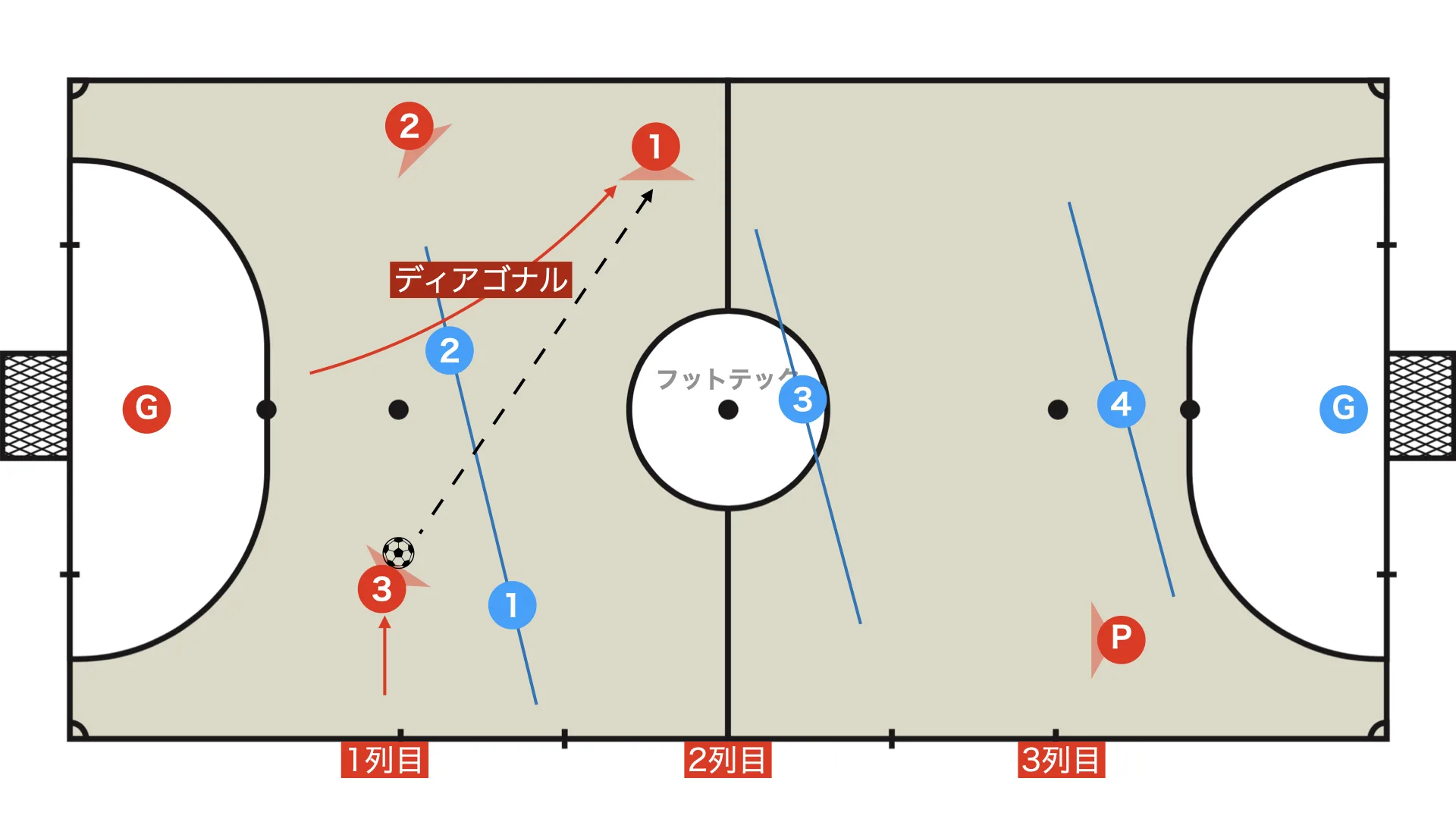
The biggest tactical benefit of the diagonal run is that the opposing defender cannot see both the ball and their mark within the same field of vision.
By contrast, on a parallel run the defender can check both the ball and the mark at the same time, so it is harder to create positional superiority.
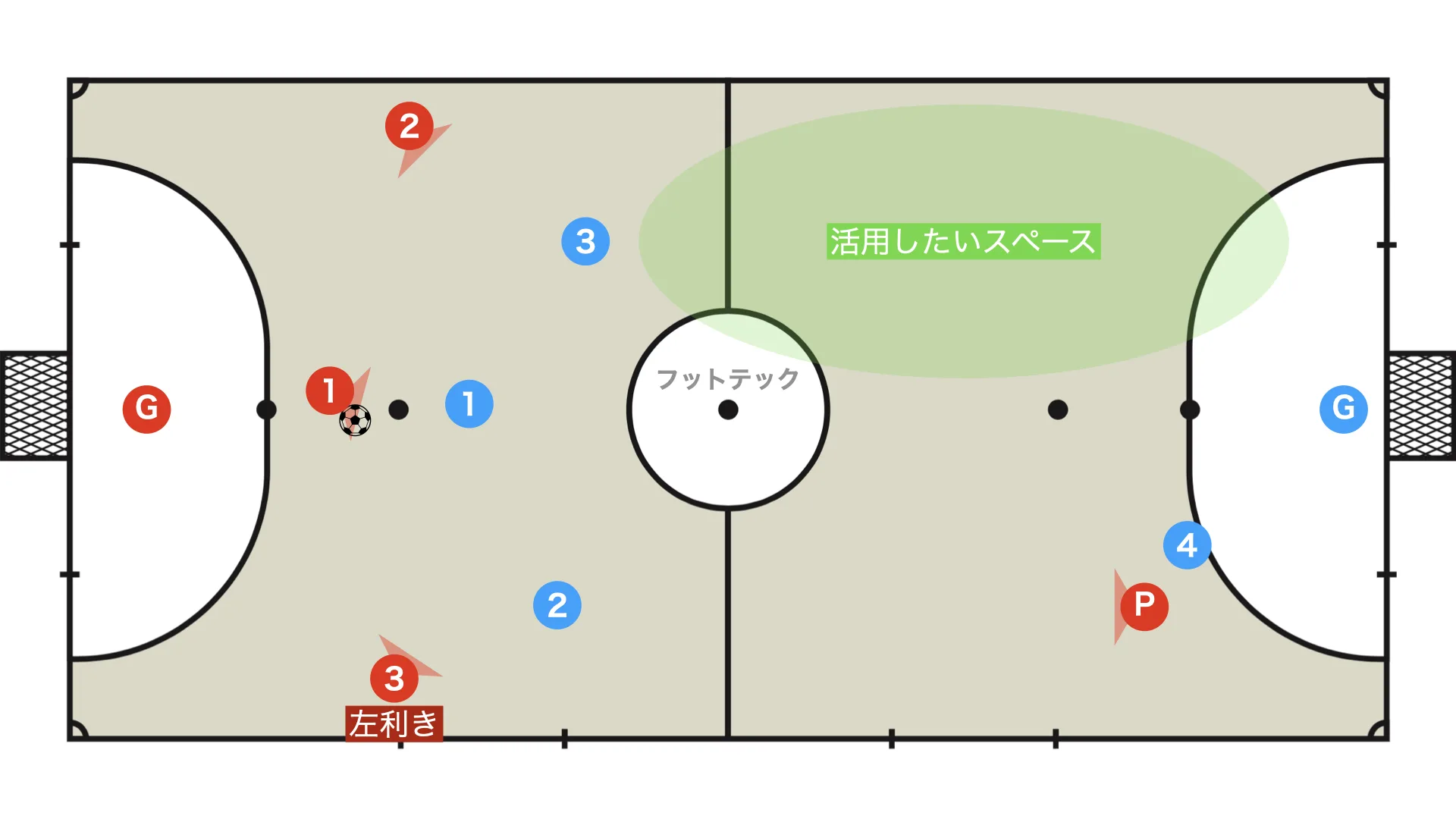
It is important for the runner to secure and recognize the space they are going to attack with the diagonal run.
On a parallel run, the receiver's stronger foot matters a lot, but on a diagonal run the passer's stronger foot becomes especially important.
That is because it is difficult to carry the ball inside and then play a diagonal pass with the weaker foot.
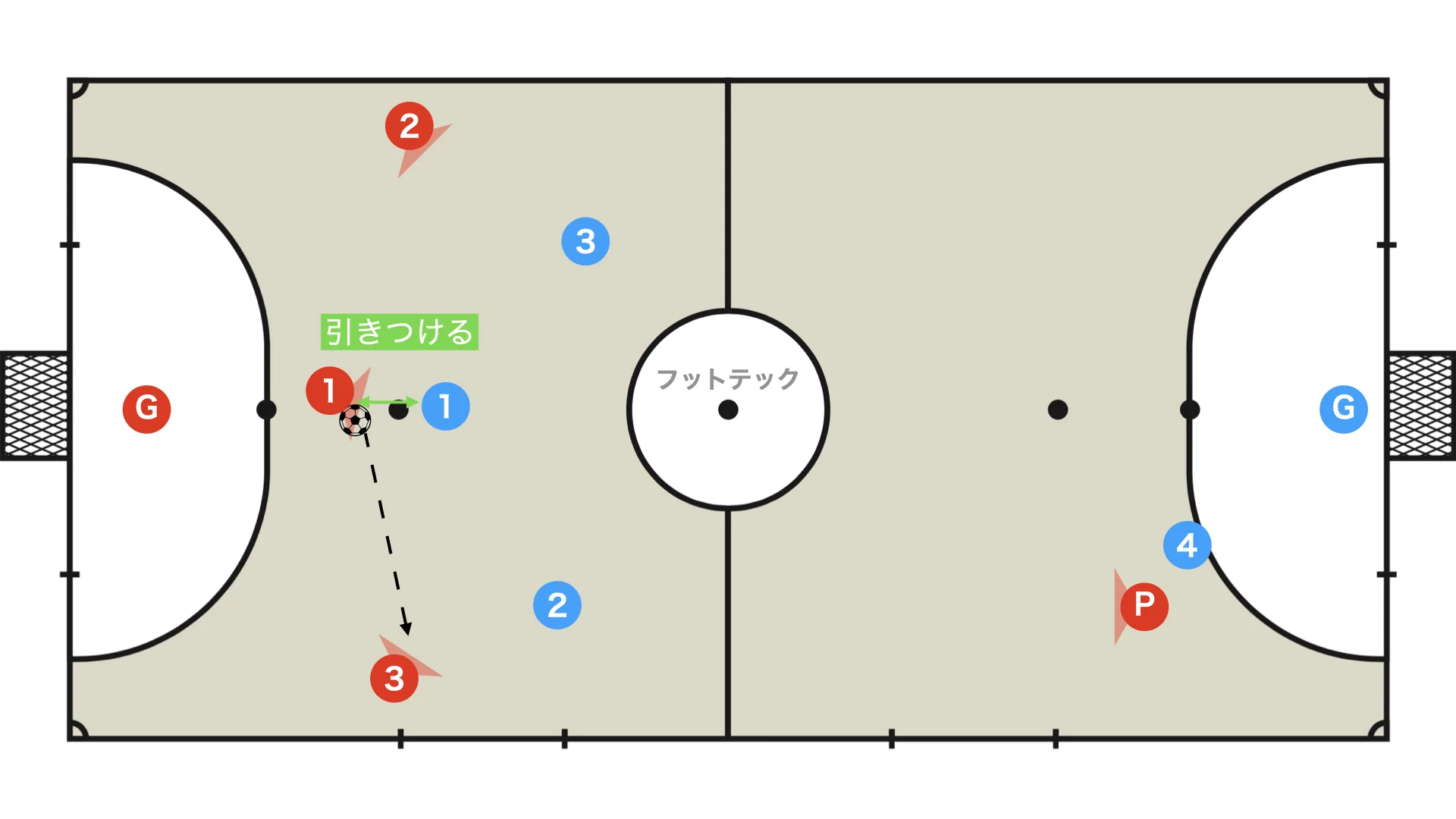
Even without drawing the defender in, it is possible to lose the mark by shaping the movement well after releasing the ball. But if you intentionally attract the opposing defender first, it becomes much easier to shake free.
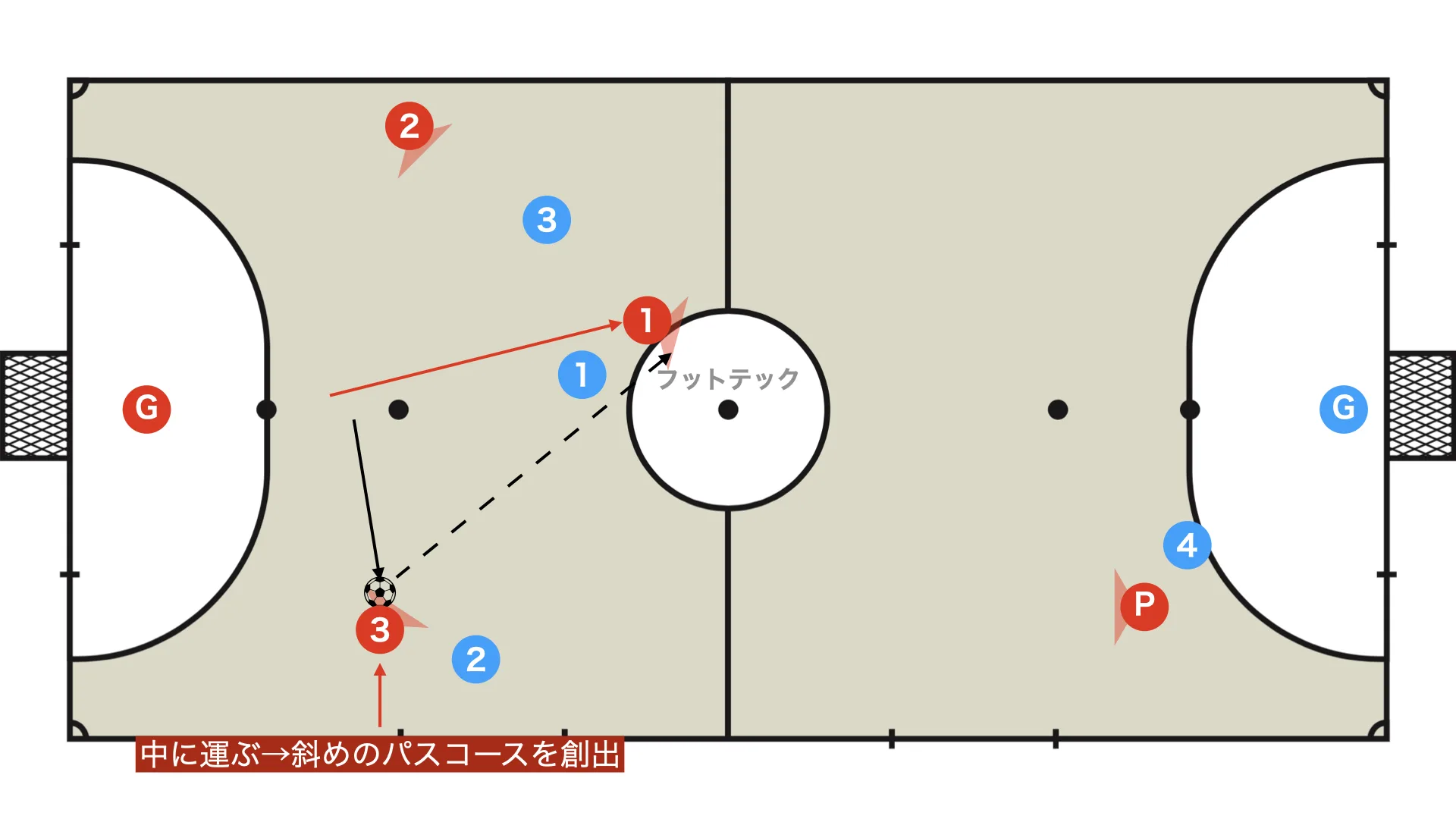
By carrying the ball inside, the passer can avoid the pressure from the opposing defender (blue no. 2) while also creating the diagonal passing lane.
If the passer is not under pressure, there is no problem with not carrying the ball inside first.
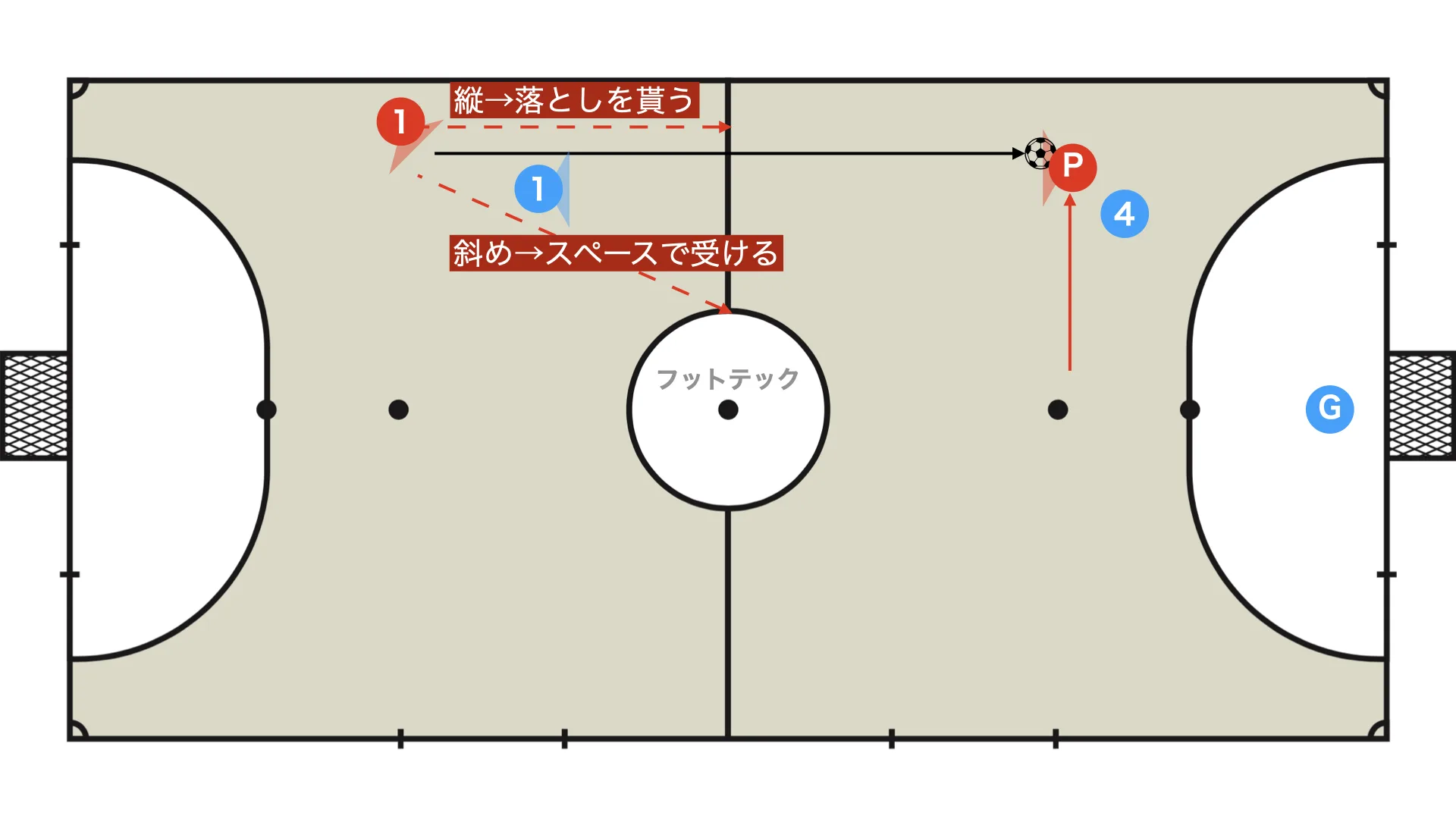
There are mainly two ways for the receiver to take the ball: in behind and to the front side.
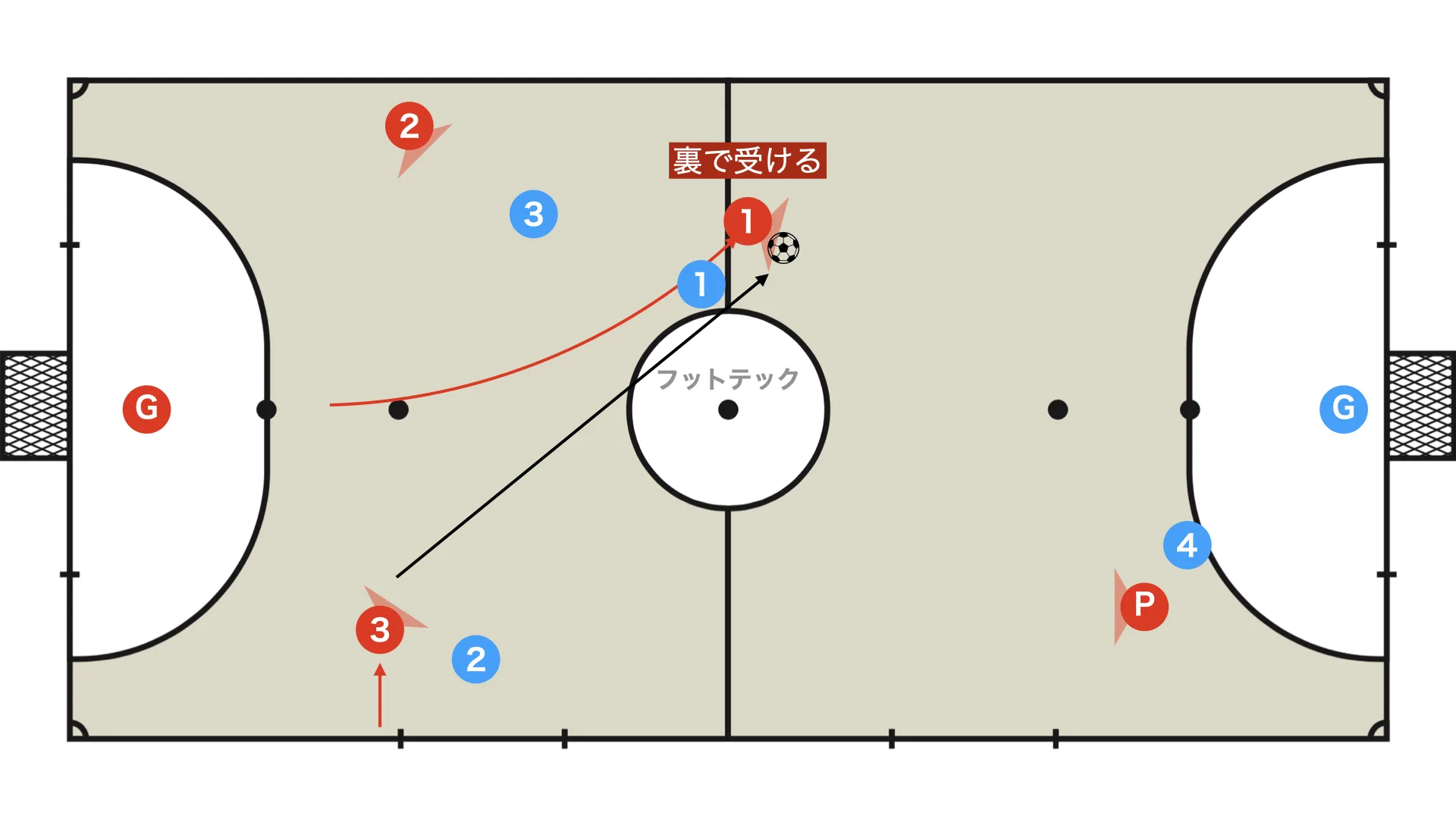
This is the diagonal run you generally want to look for first.
Even though the movement pattern is diagonal, in essence it is almost the same as a backdoor, so quite a few people understand this situation simply as a "backdoor."
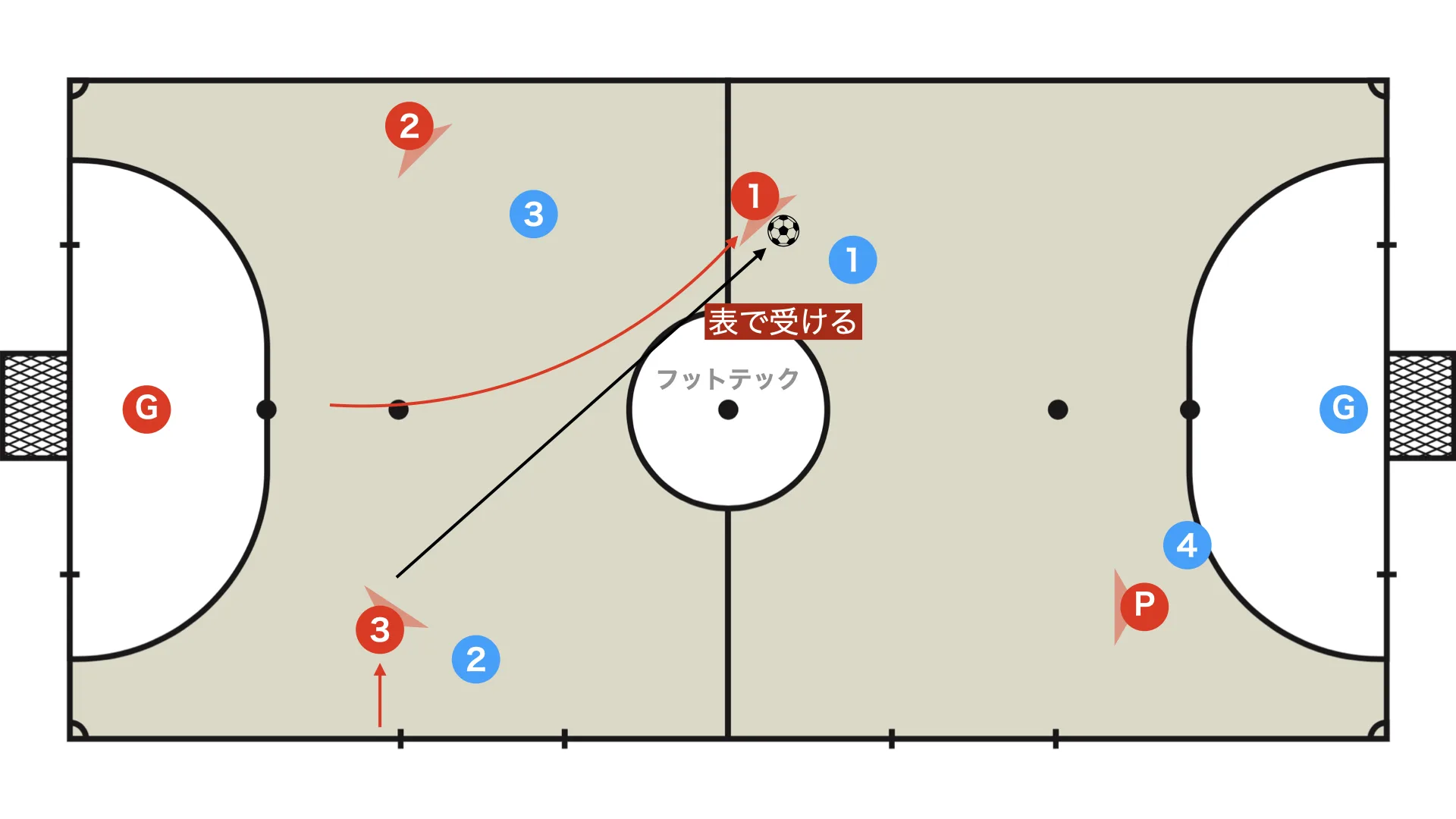
In general, when people say "diagonal", this is often what they mean.
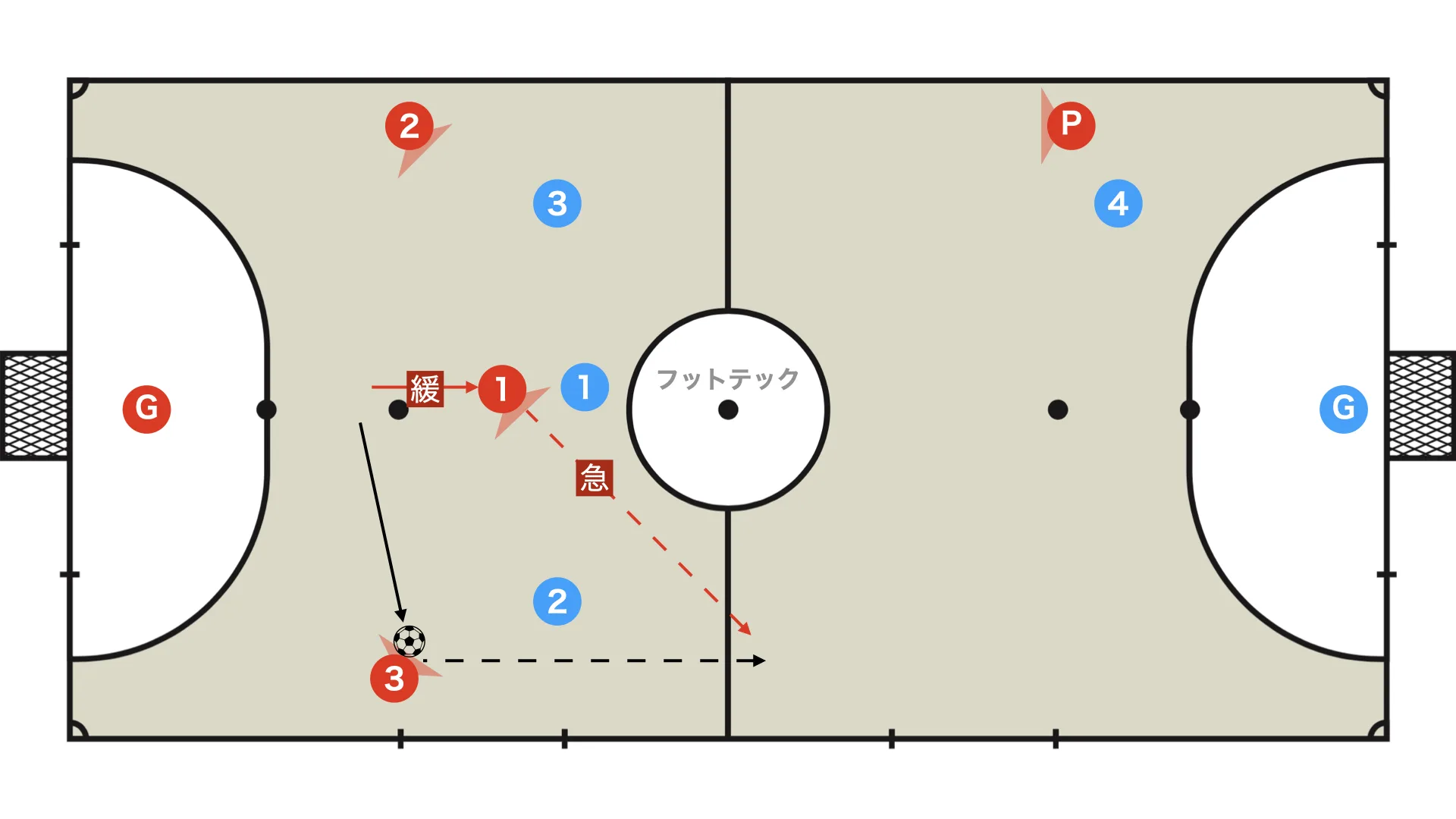
The key is to first threaten the space behind the defender with a backdoor or a parallel-style movement, then use a quiebra movement to break away sharply.
This does not create numerical superiority, but there is a large amount of space available until the defender recovers. That opens patterns such as attacking 1v1 directly off the dribble, or having the player who received the diagonal ball stay high as the pivot while the passer moves to receive the layoff.
From the length of the pass, diagonal runs can be roughly divided into long and short.
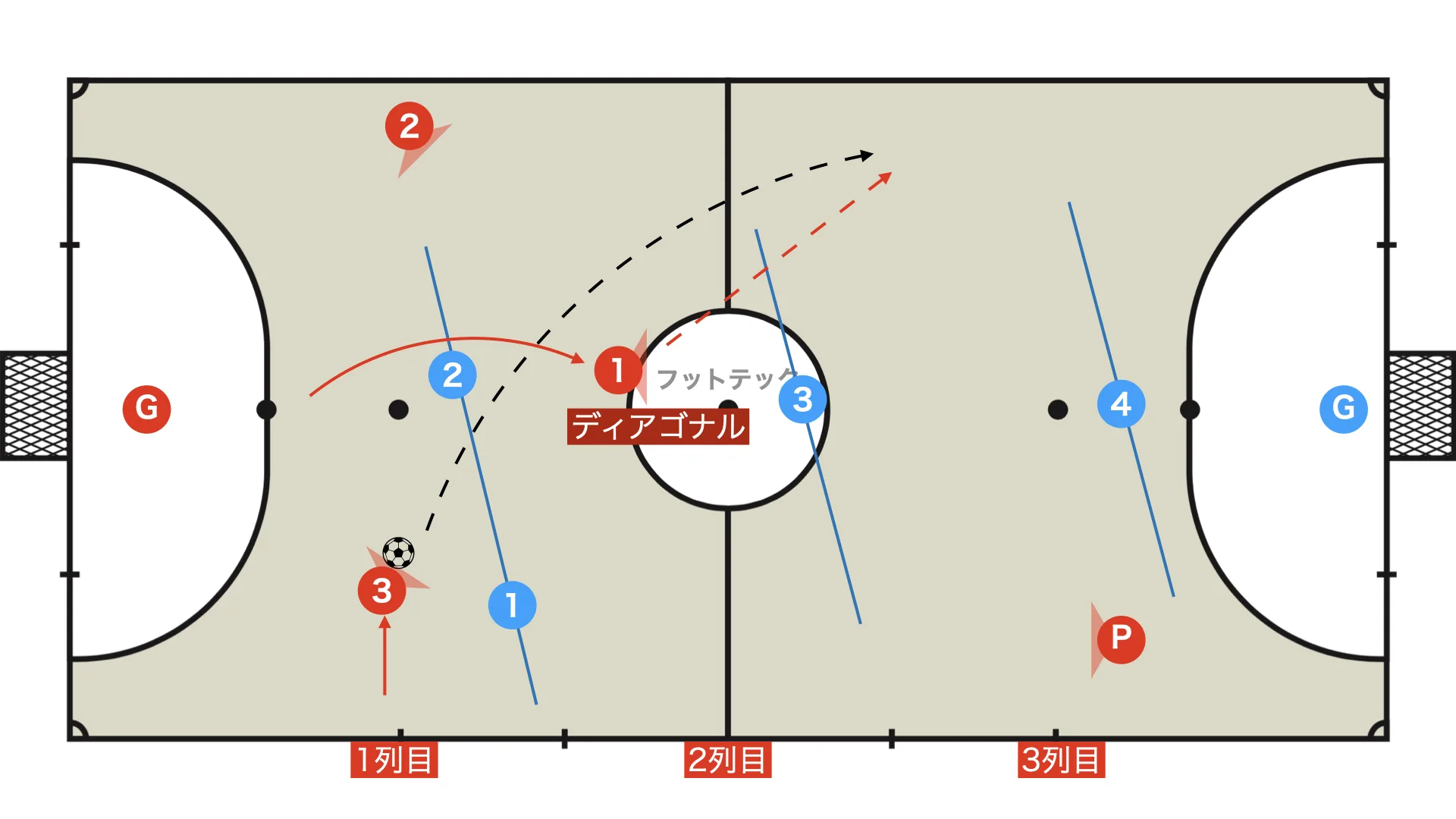
A long diagonal that crosses more than two lines.
The player who breaks free with the diagonal can also stay high as the pivot.
It is used as a way to change shape from 3-1 to 2-2, or to swap the pivot and fixo within a 3-1.
A diagonal that crosses more than one line.
It is also used as a way to change shape from 3-1 (3-0-1) to 2-1-1.
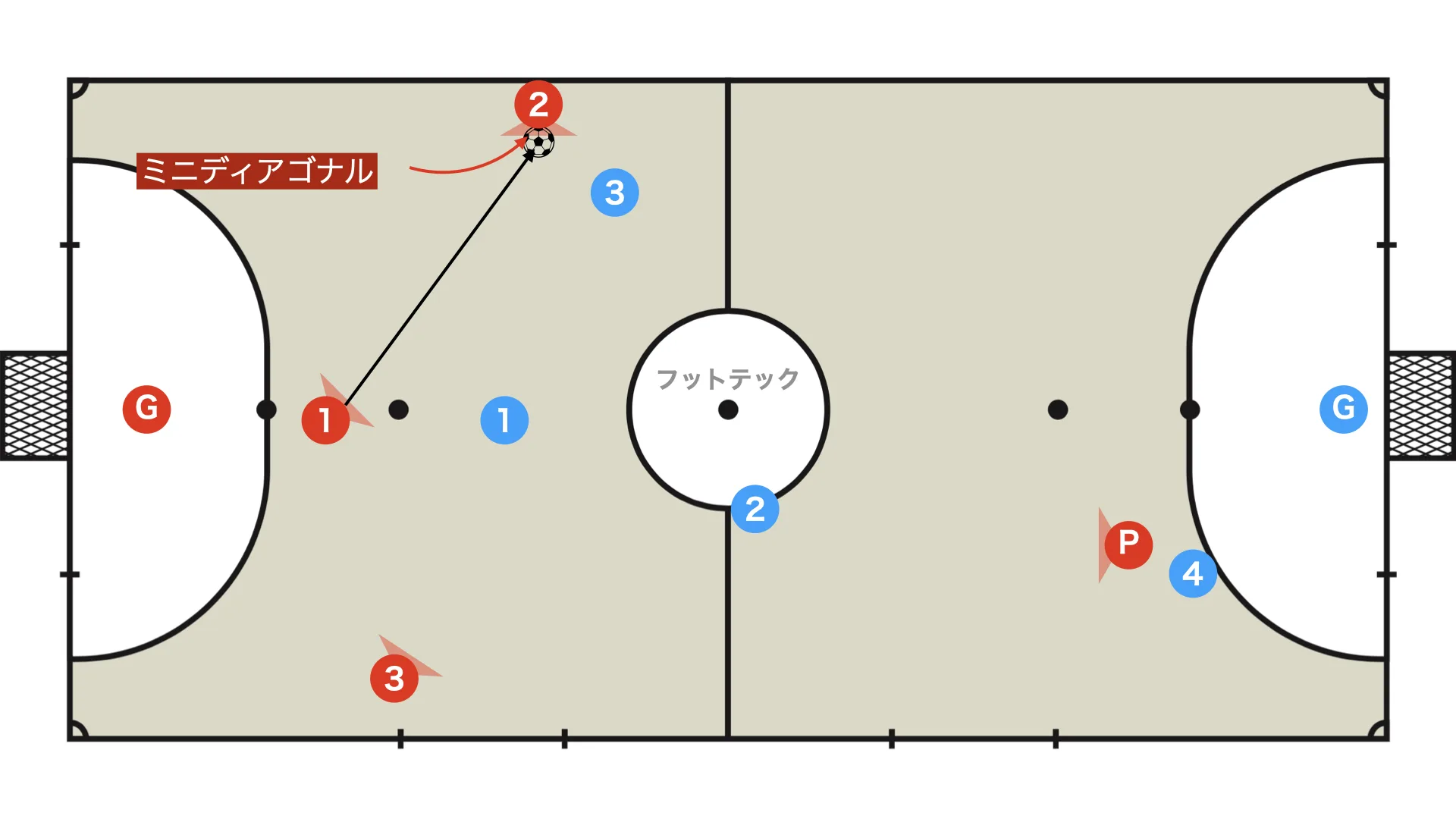
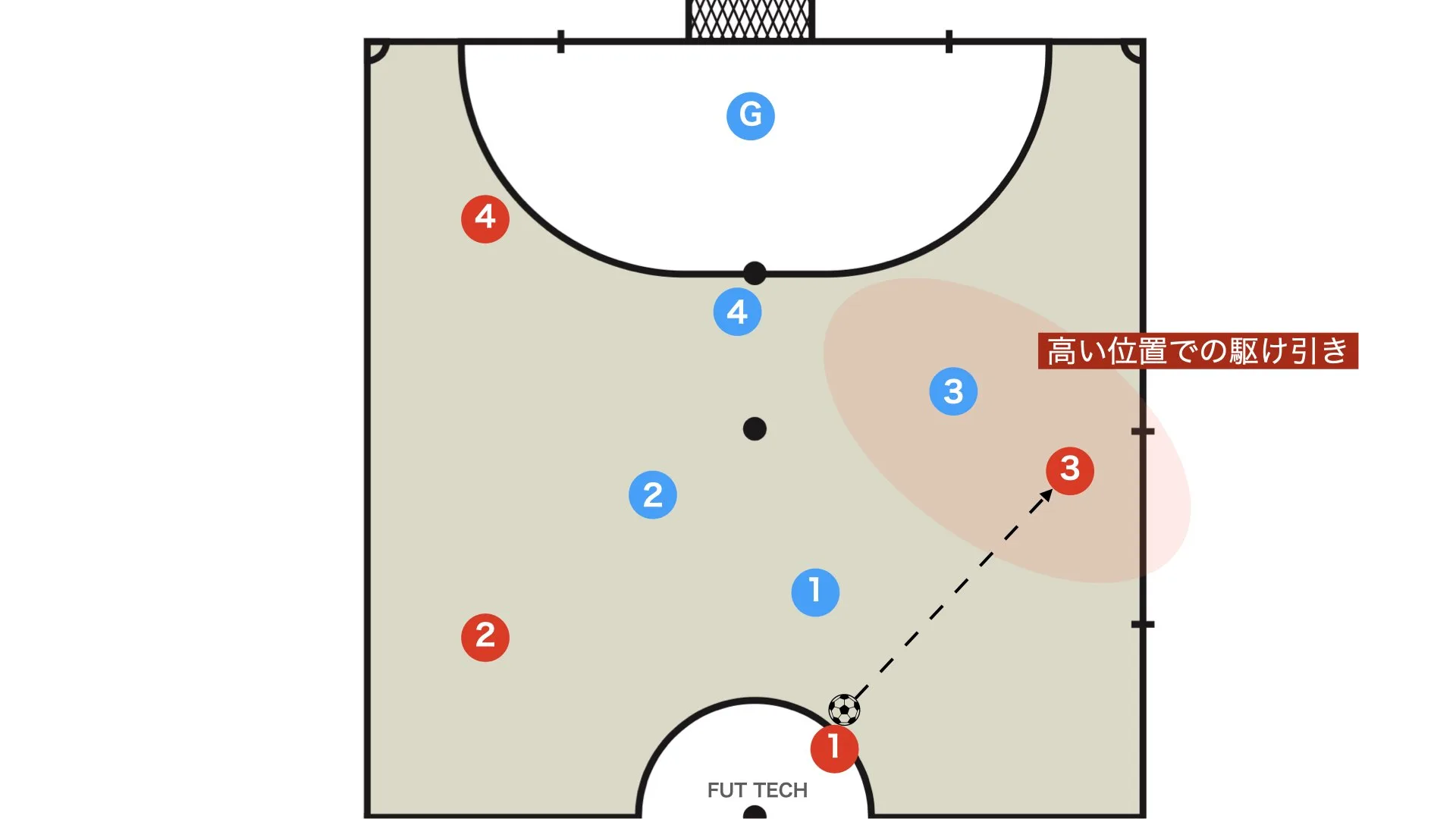
In the two-player relationship between the fixo and the ala, when the ala in the side lane takes up a high position and moves away from the defender, that is called a mini diagonal.
This allows the ala to receive the pass in a favorable state, separated from the opposing defender.
関連記事
Two-Player Relationships: The Ala's Tactical Moves (A la Corta, Mini Diagonal, Central Push-Out)
An explanation of the tactical interplay between the fixo and the ala in two-player relationships. U…
続きを読む →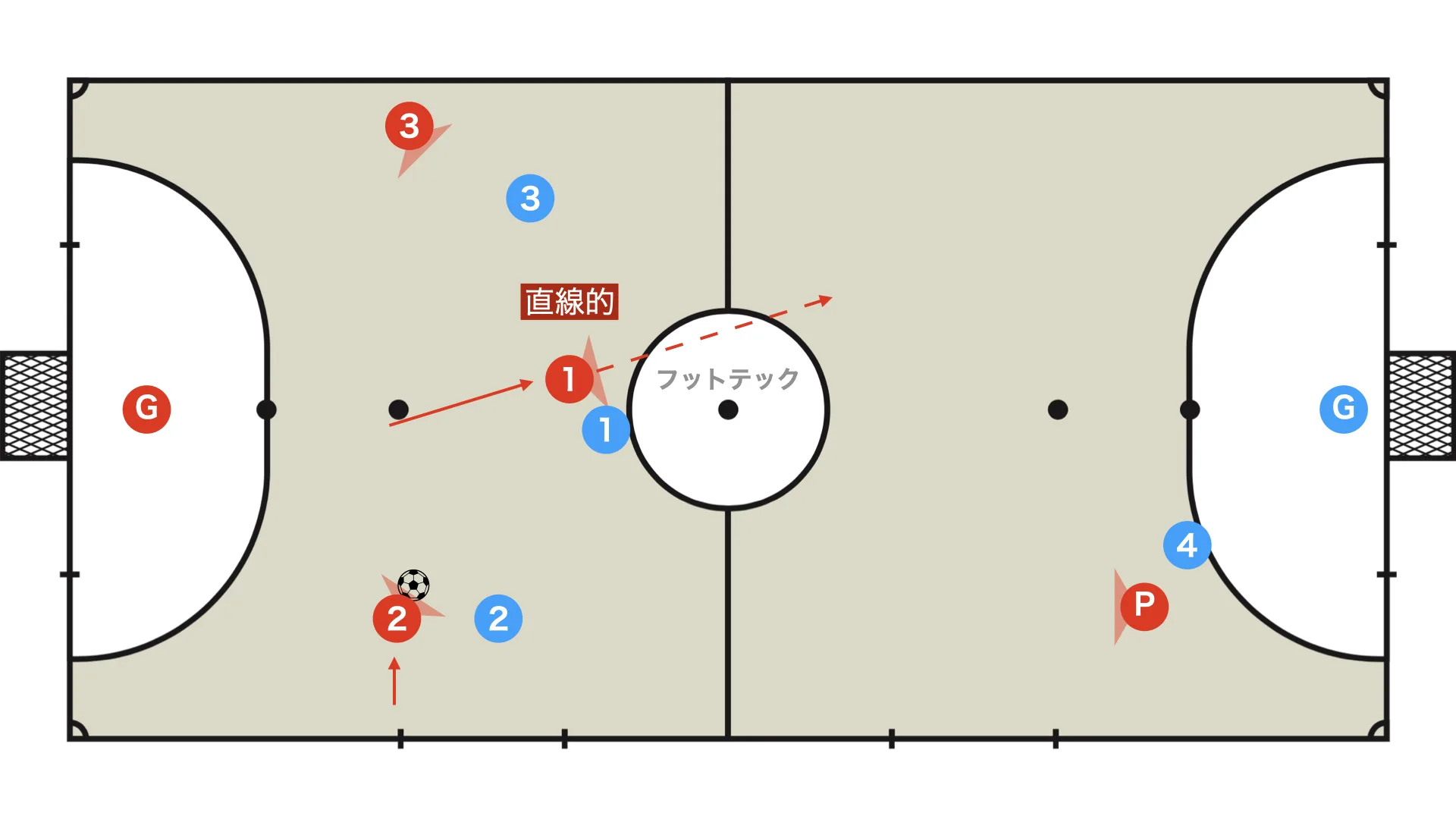
A diagonal run that beats the defender with straight-line speed.
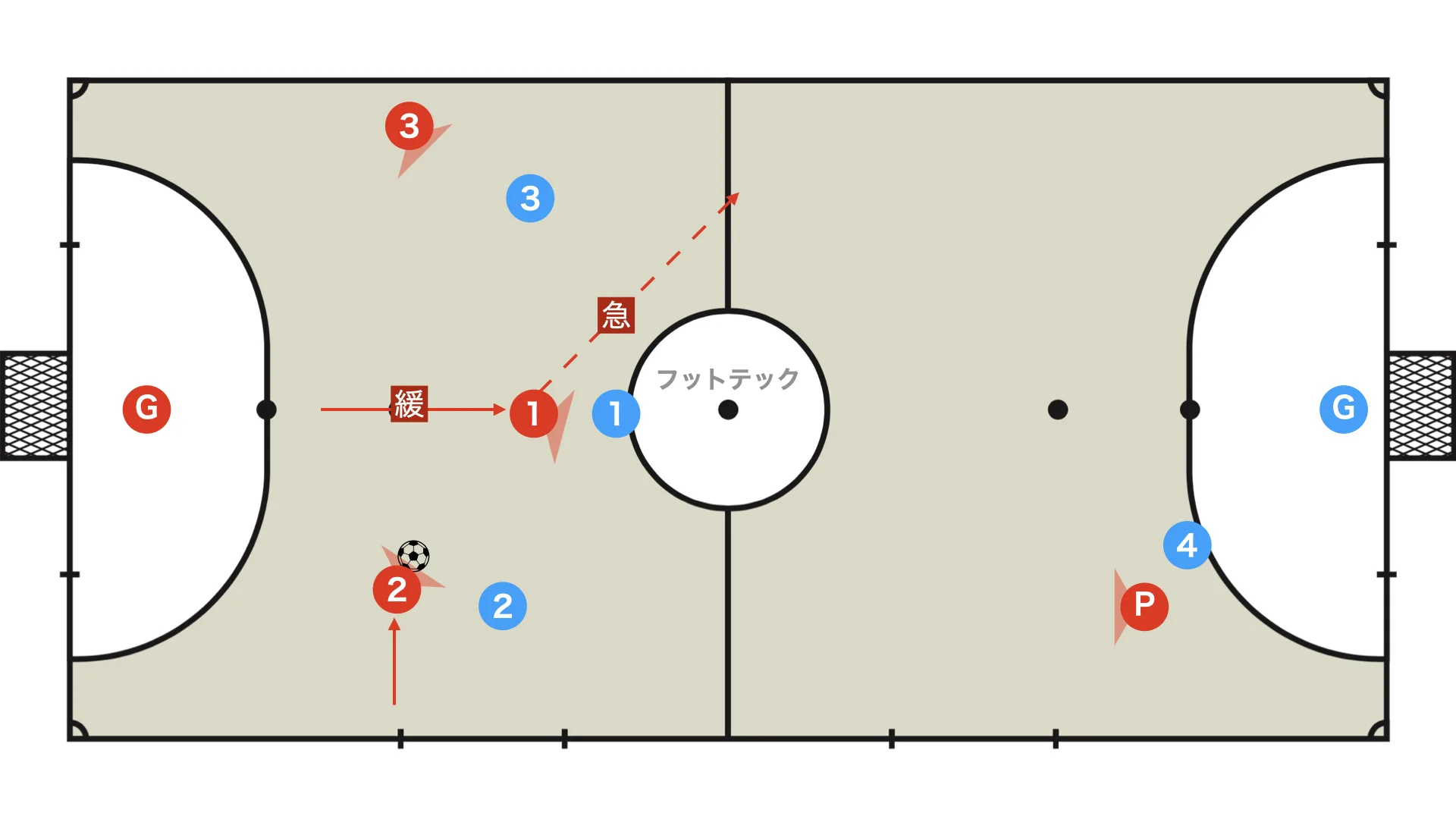
A diagonal run where the player first pretends not to want the pass, then suddenly accelerates.
A diagonal run made after making the defender think another option is coming, then changing direction.
In futsal, the kind of cutting movement introduced below is called a quiebra.
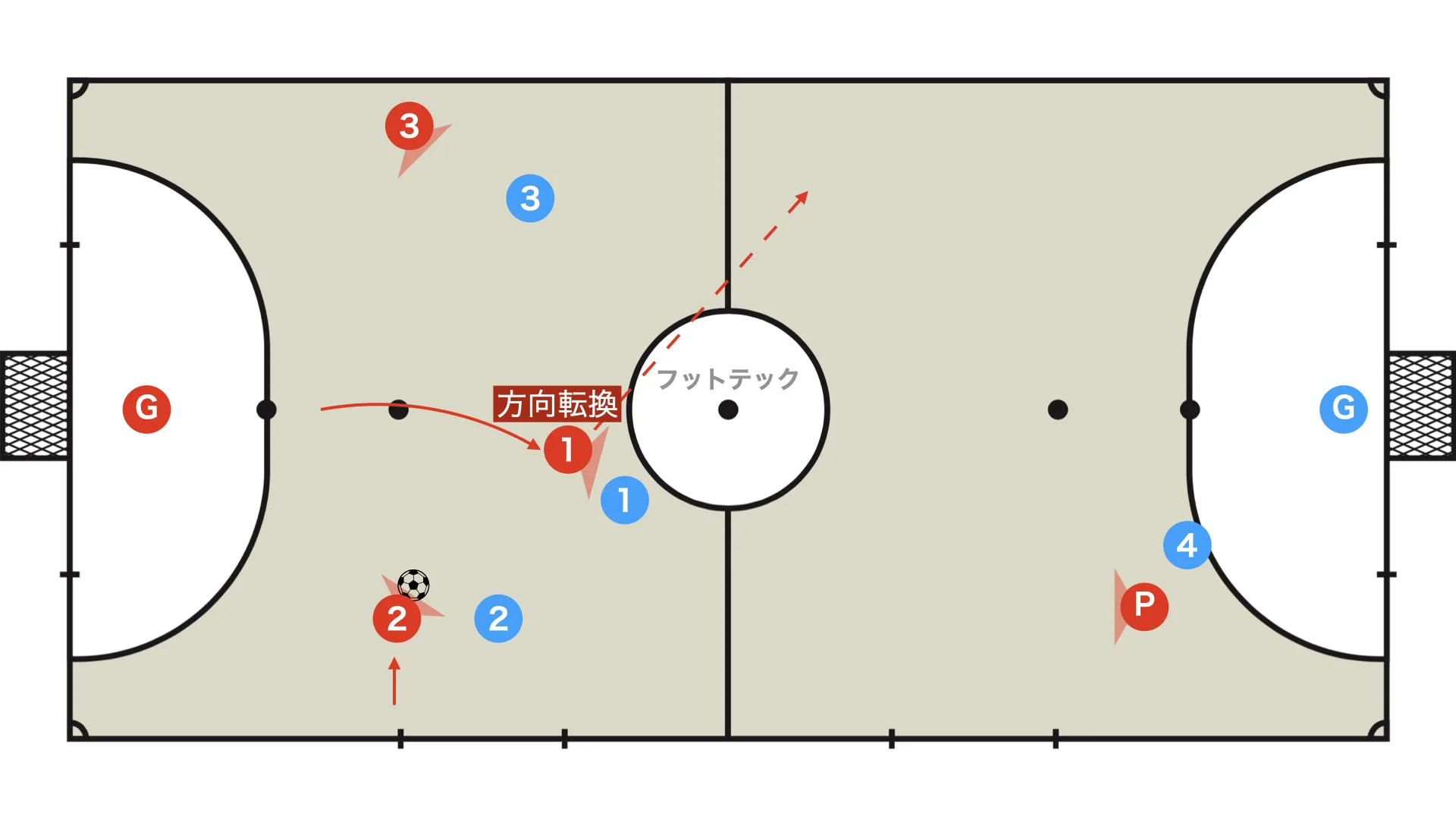
The player changes direction out of a fake parallel run and then breaks free with a diagonal run.
What matters is using the interaction between the parallel and the diagonal to confuse the defender.
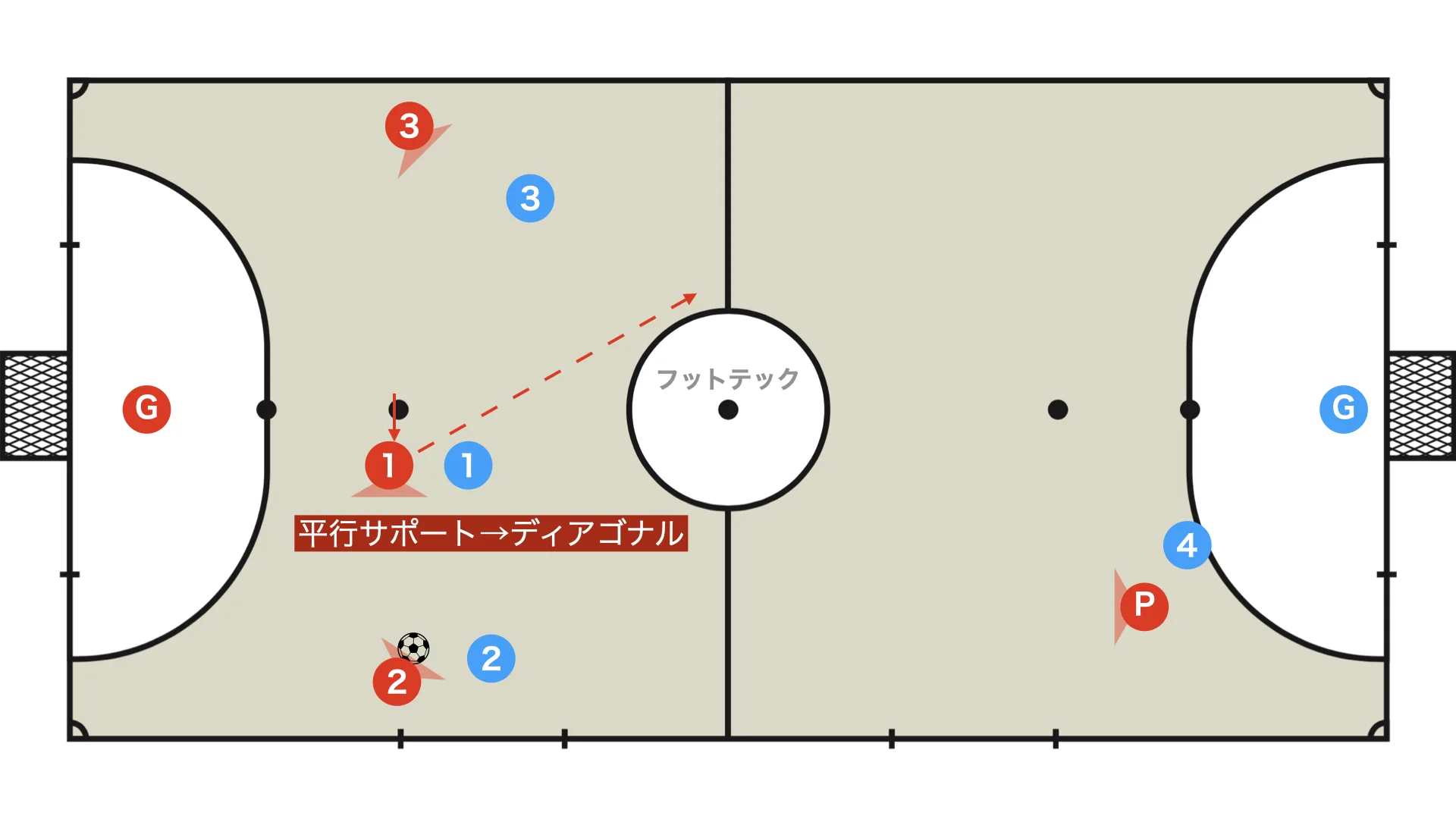
The player first makes the opponent think a parallel support action is coming, such as a one-two, block, or screen, and then goes diagonal.
One advantage is that it becomes easier to secure space in behind.
The diagonal run is the counterpart to the parallel run, but it appears less often in matches than the parallel.
Even so, it is just as important an action, so the key issue is how well you can build it into your team.
Finally, I will leave a video in which some well-known coaches discuss the diagonal run for two hours.
If you are interested, give it a watch.