Two-Player Relationships: The Ala's Tactical Moves (A la Corta, Mini Diagonal, Central Push-Out)
Published: 2021.01.05Updated: 2026.05.03
This page focuses specifically on what the front ala should do against the defender when the fixo is relatively free to face forward.
It is especially for players who:
- are still unclear on the difference between a la corta and the mini diagonal
- find it hard to judge when to come to the ball and when to run in behind
- want a more concrete understanding of two-player relationships from the ala's perspective
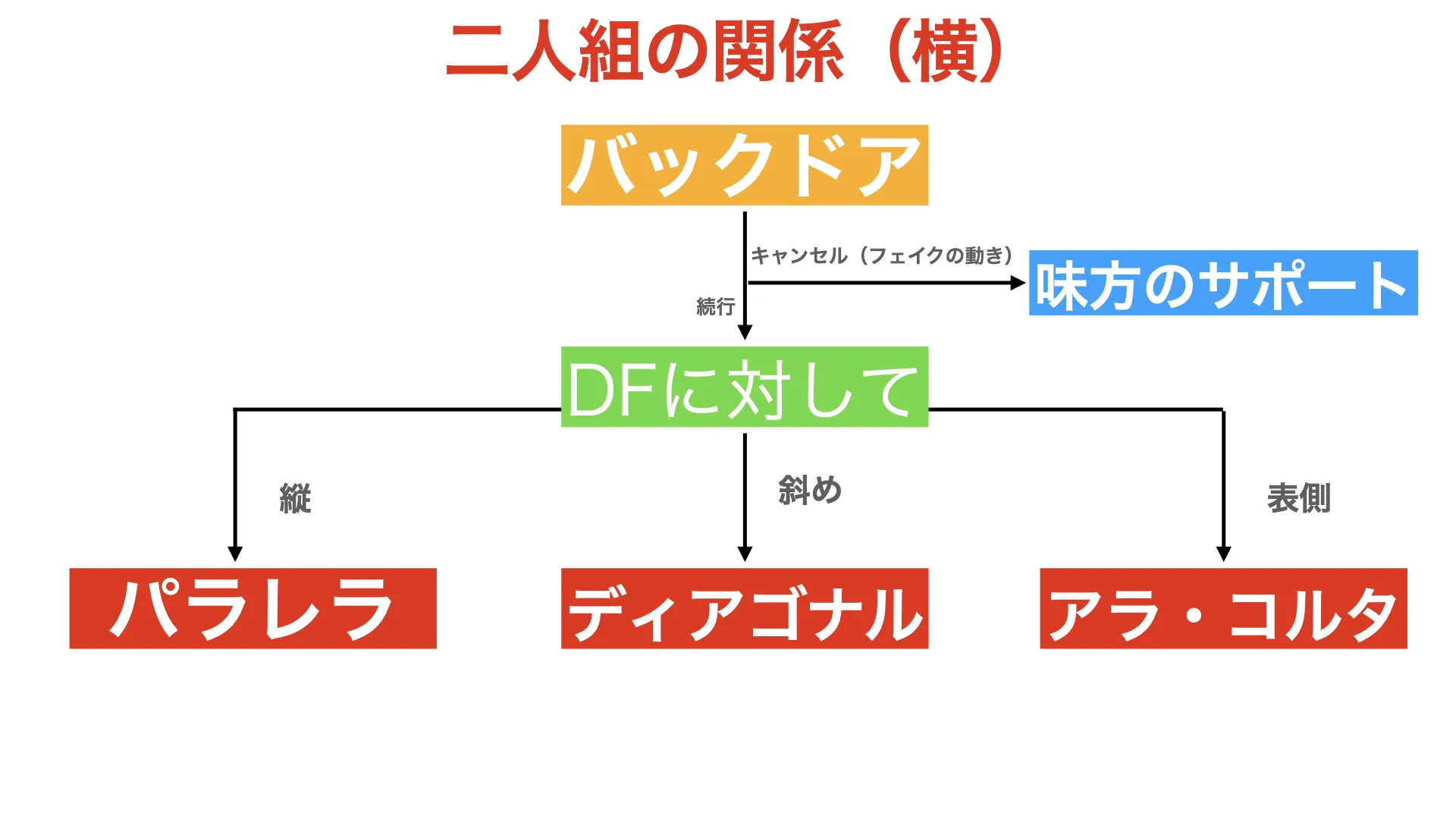
To give the conclusion first, the starting point of the ala's tactical battle is to "show the run in behind first." From there, the decision branches into a la corta, the mini diagonal, or the central push-out depending on whether the defender follows or stays in front.
If you want to review the basics first, it will be easier to understand this article after reading Overview: Two-Player Relationships in Futsal. If you also want to see how this differs from combinations involving the pivot, see Two-Player Relationships Using the Pivot.
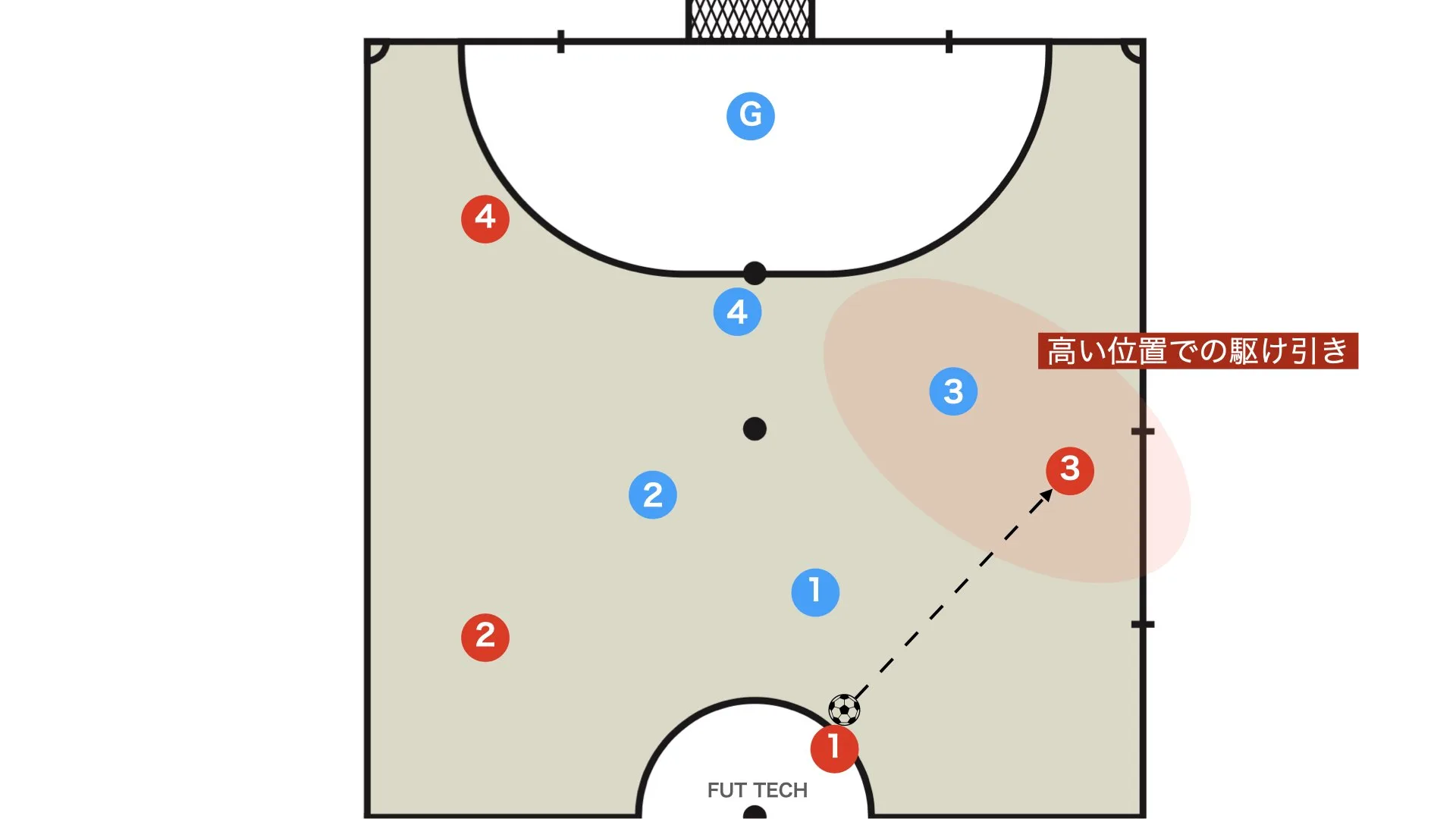
Within two-player relationships, when the fixo has the ball and is not under much pressure, it is effective for the ala to take a high position and try to break the defense by engaging in a tactical battle with the opposing defender.
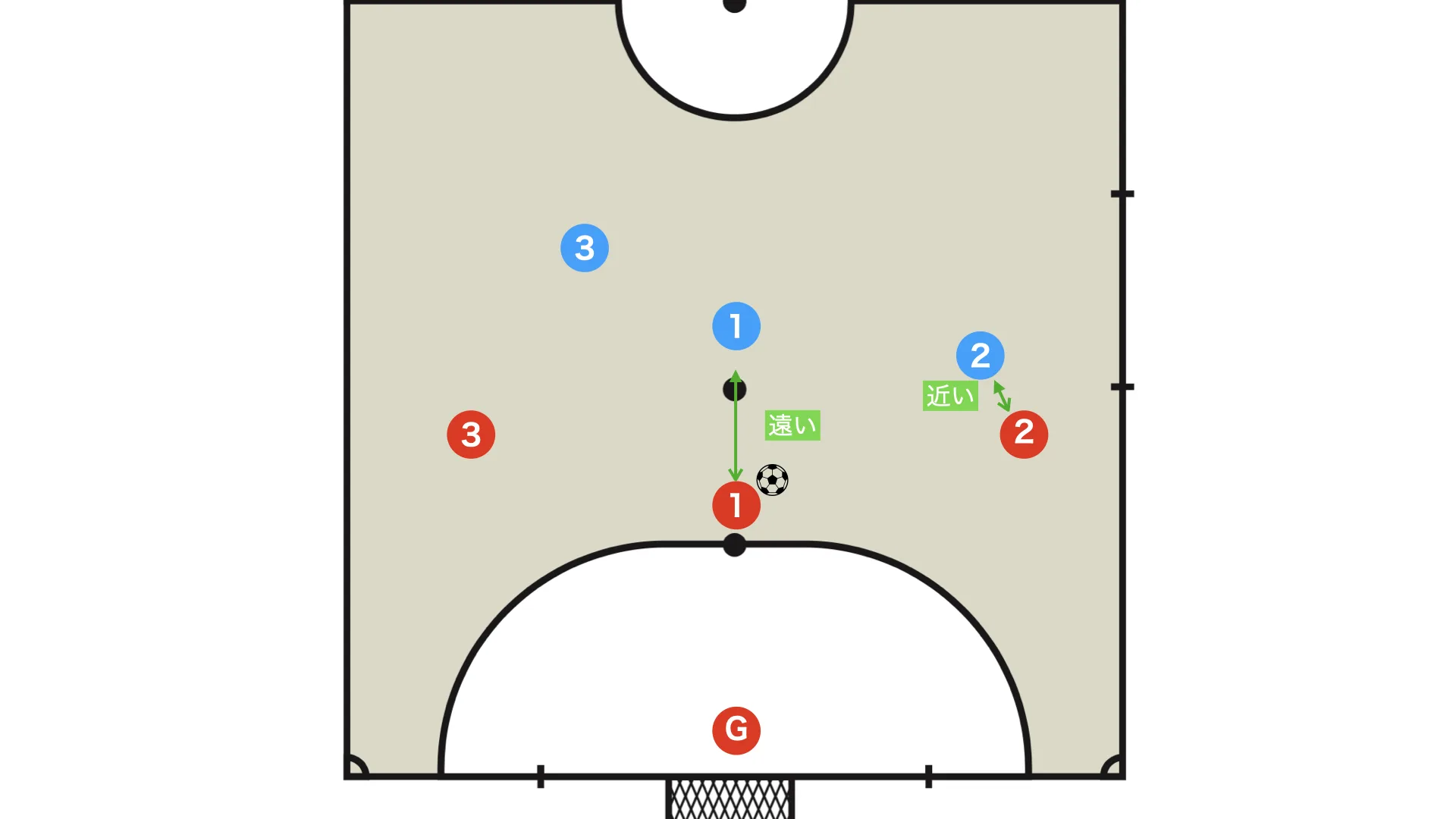
When the distance to the defender is short, the basic idea is to attack the space behind them. Read the defender's position and body orientation (their weight balance), then make the best decision.
関連記事
Overview: Two-Player Combinations in Futsal
An overview article explaining two-player combinations in futsal. It organizes the relationships and…
続きを読む →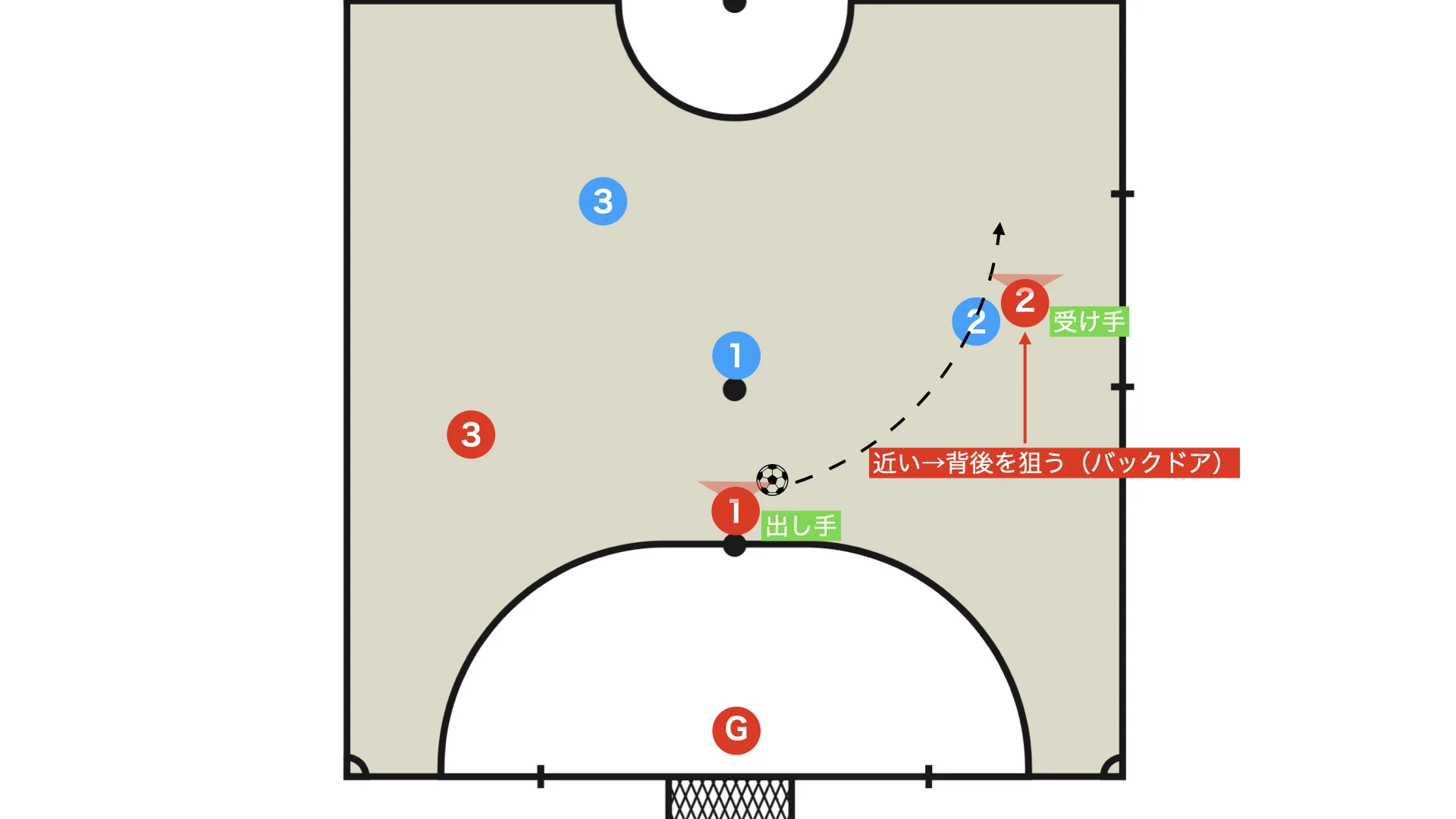
Start with the simple option of attacking in behind with a backdoor run.
When the defender is leaning forward like this and you attack the space behind them, that play is called a backdoor.
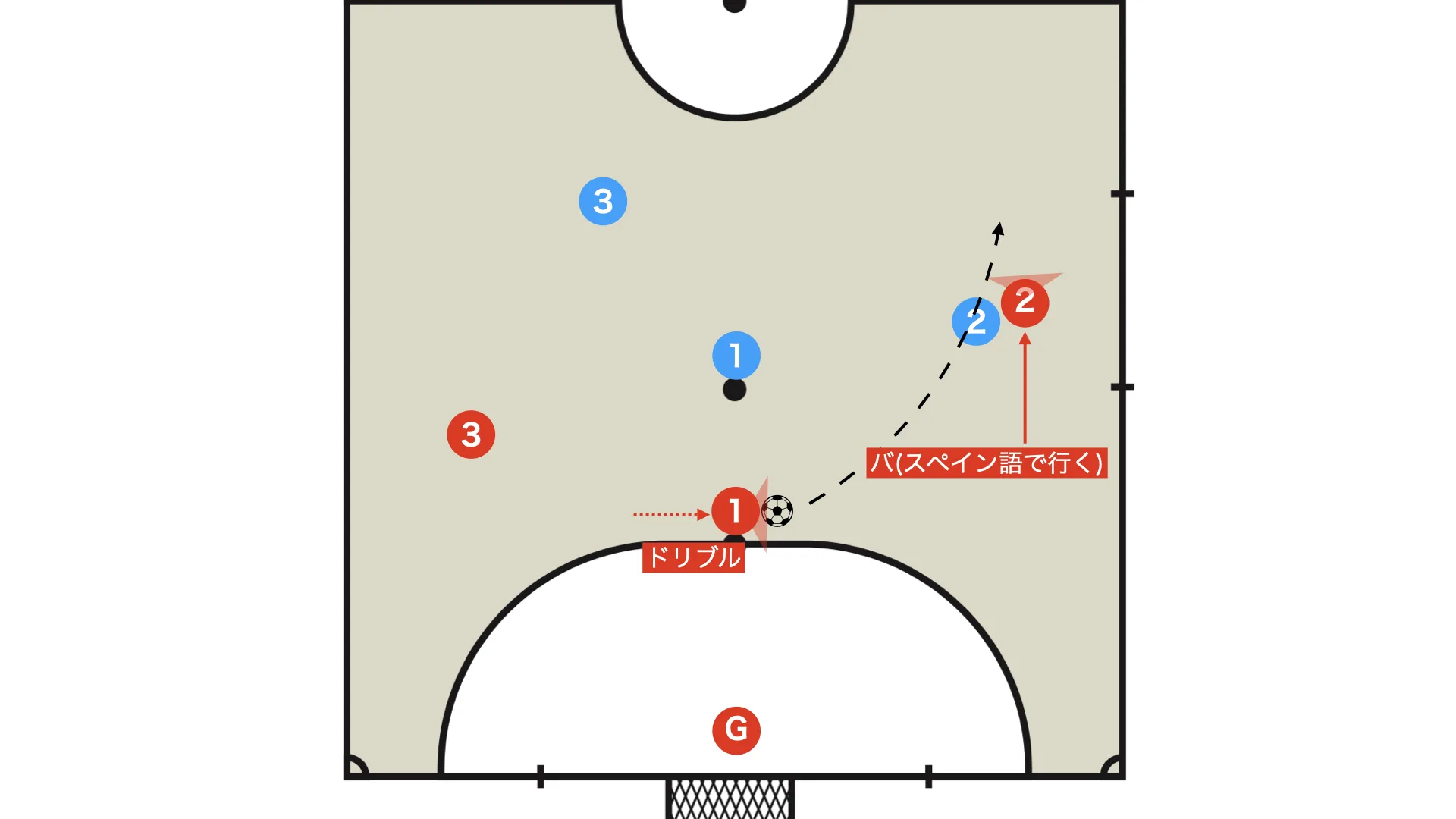
The action where the fixo carries the ball forward on the dribble and then plays a through pass to the ala is called Va.
Va means "go" in Spanish, and it can also be seen as a type of backdoor action.
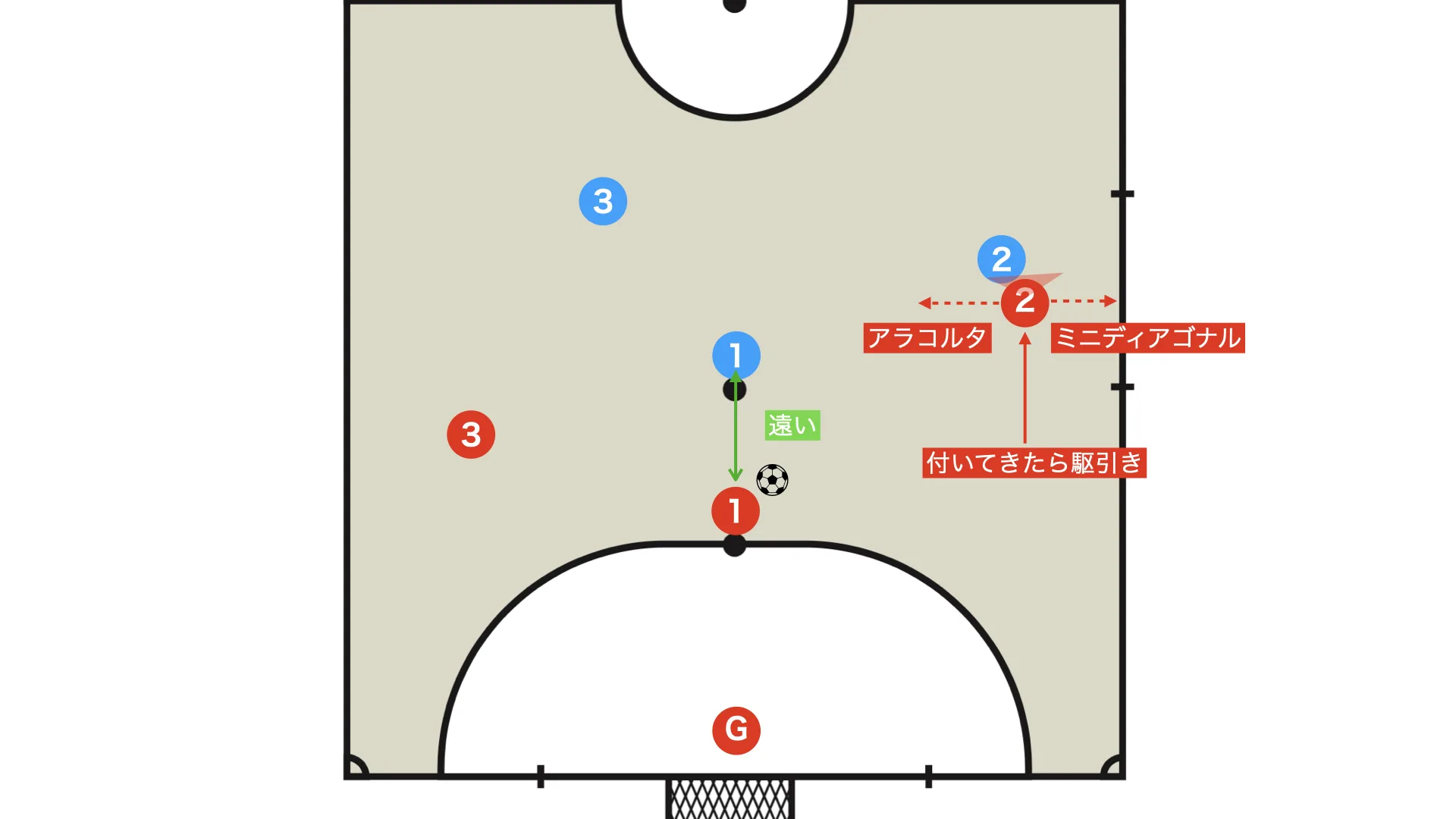
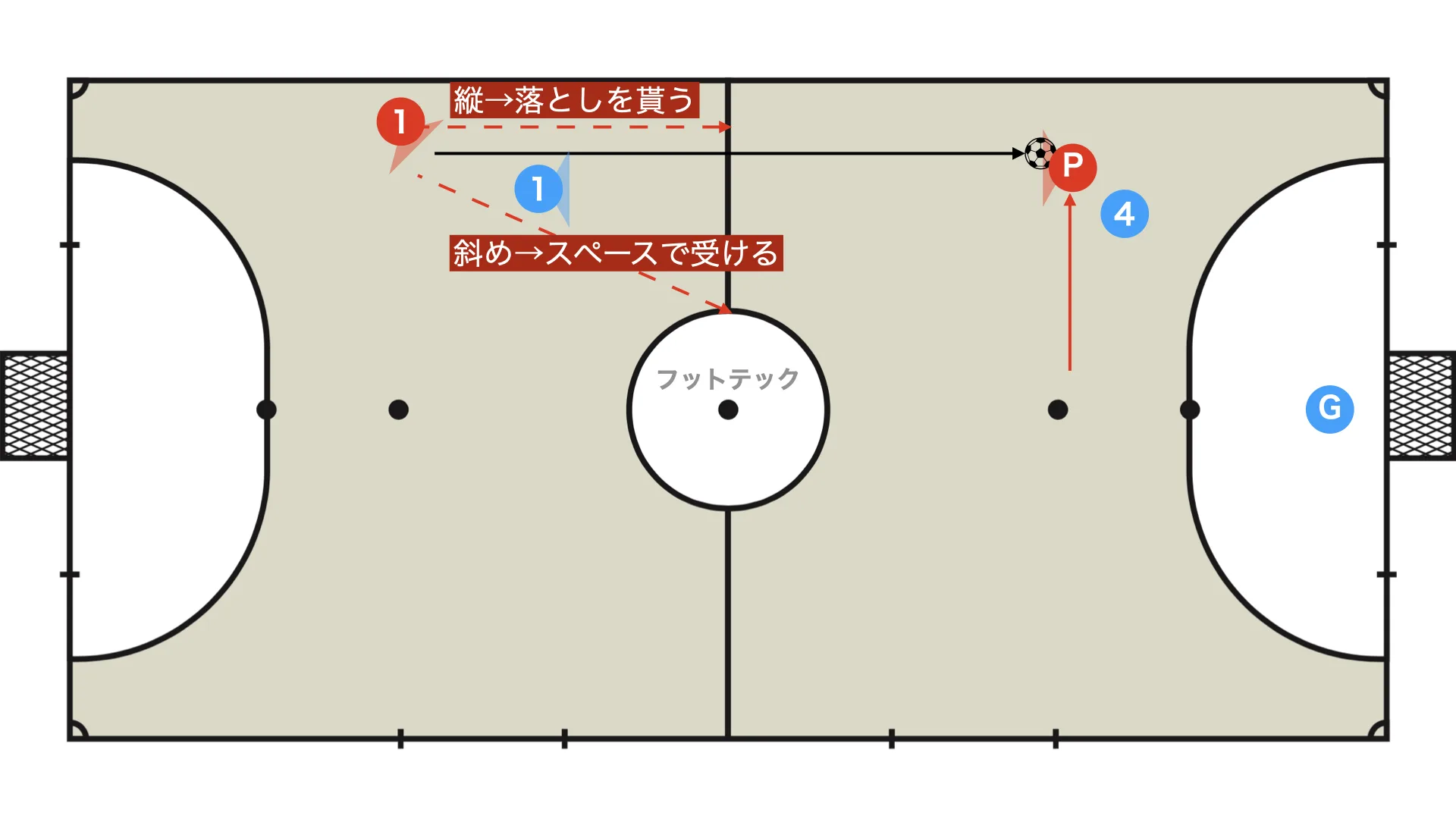
If you attack the space behind the defender and they follow you, then the next step is to outmaneuver them either with a mini diagonal movement away from the ball or with a la corta movement toward the ball.
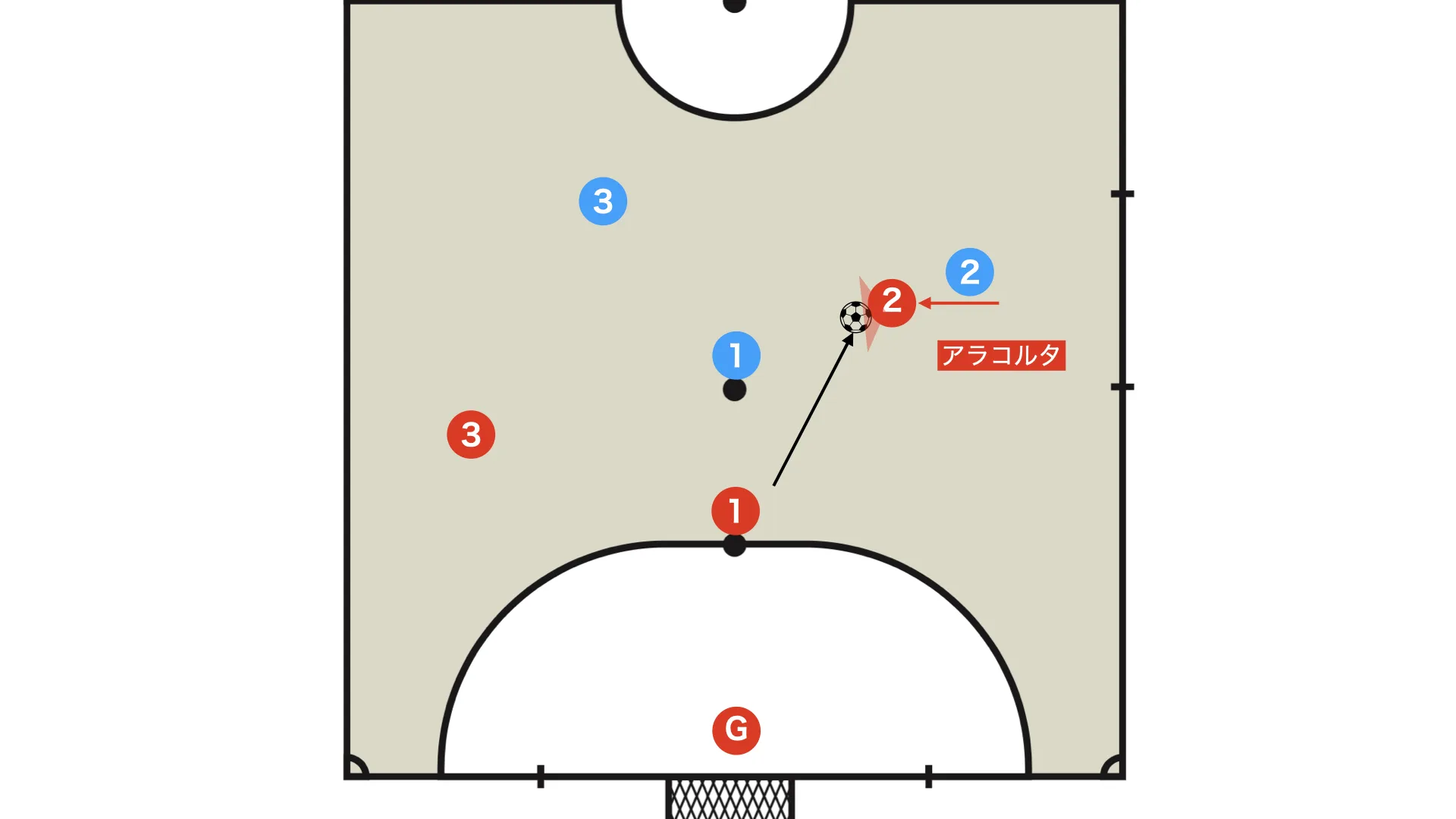
The movement of coming toward the ball is called a la corta.
A la corta is especially powerful in the attacking half rather than your own half.
Its main strength is that you can receive in front of goal and quickly turn the action into a shot.
A la corta is slightly difficult because the passer and receiver need to be in sync, and the ball usually needs to be fed a little more inside.
If your team is not used to it yet, it is a good idea to set it up as a rehearsed pattern play (jogada).
Is a la corta an action only the ala does?
Many people mistakenly think it is called a la corta because it is an action done by the ala, but strictly speaking the term is a la corta, not "ala corta." That means even a fixo moving toward the ball is also performing a la corta.
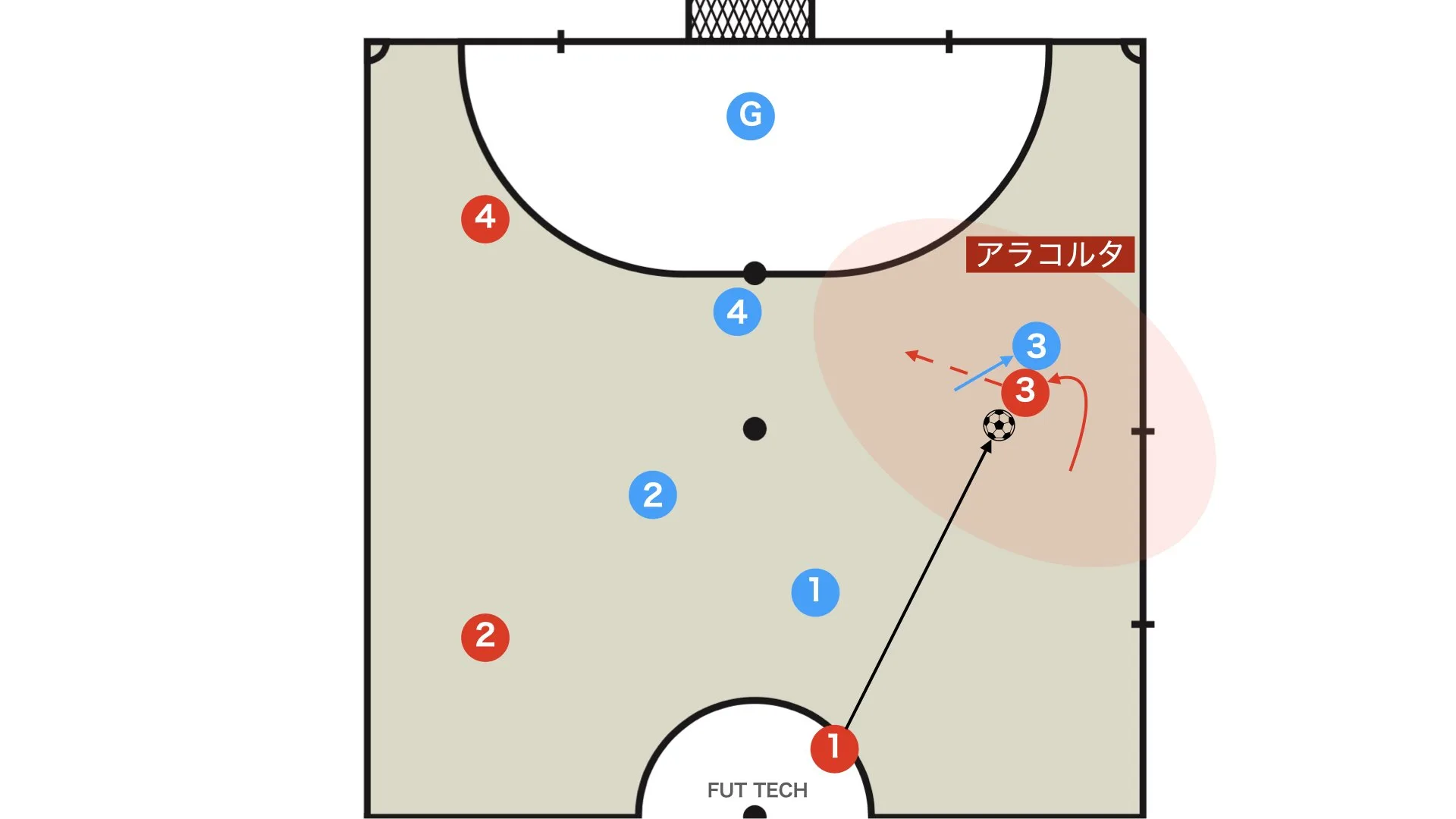
If you can receive with a la corta during an attack in the opposition half, you can often carry it straight into a shot near goal.
If you want to make 3-1 or 4-0 attacks in the opposition half possible
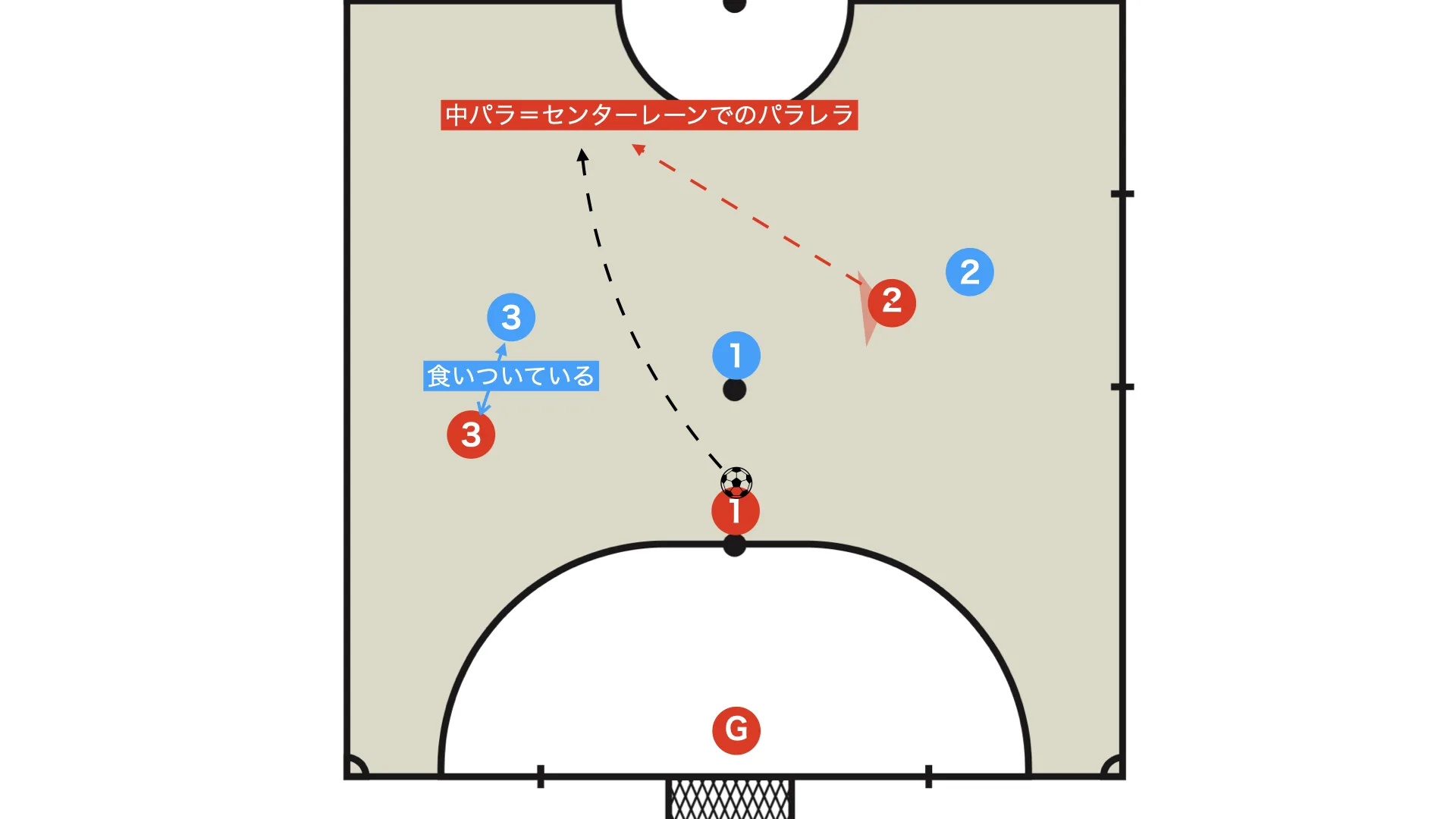
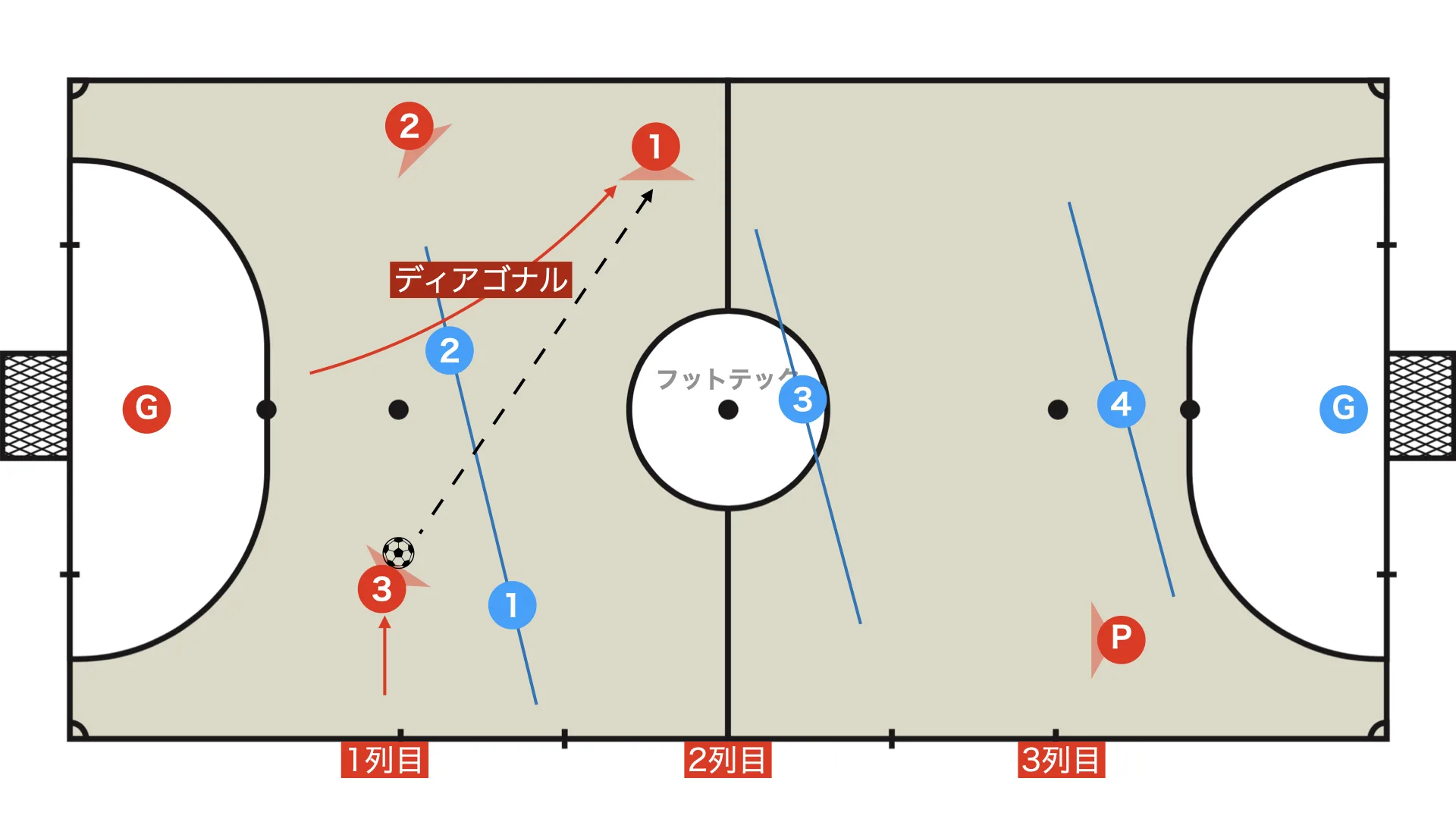
As an extension of a la corta, you receive through the gap between blue 1 and blue 3 with a feeling similar to parallel.
This kind of parallel run by the ala through the center lane is called central parallel.
It is a common way to break lines from a false-pivot shape in 3-1 (3-0-1), or in quatro.
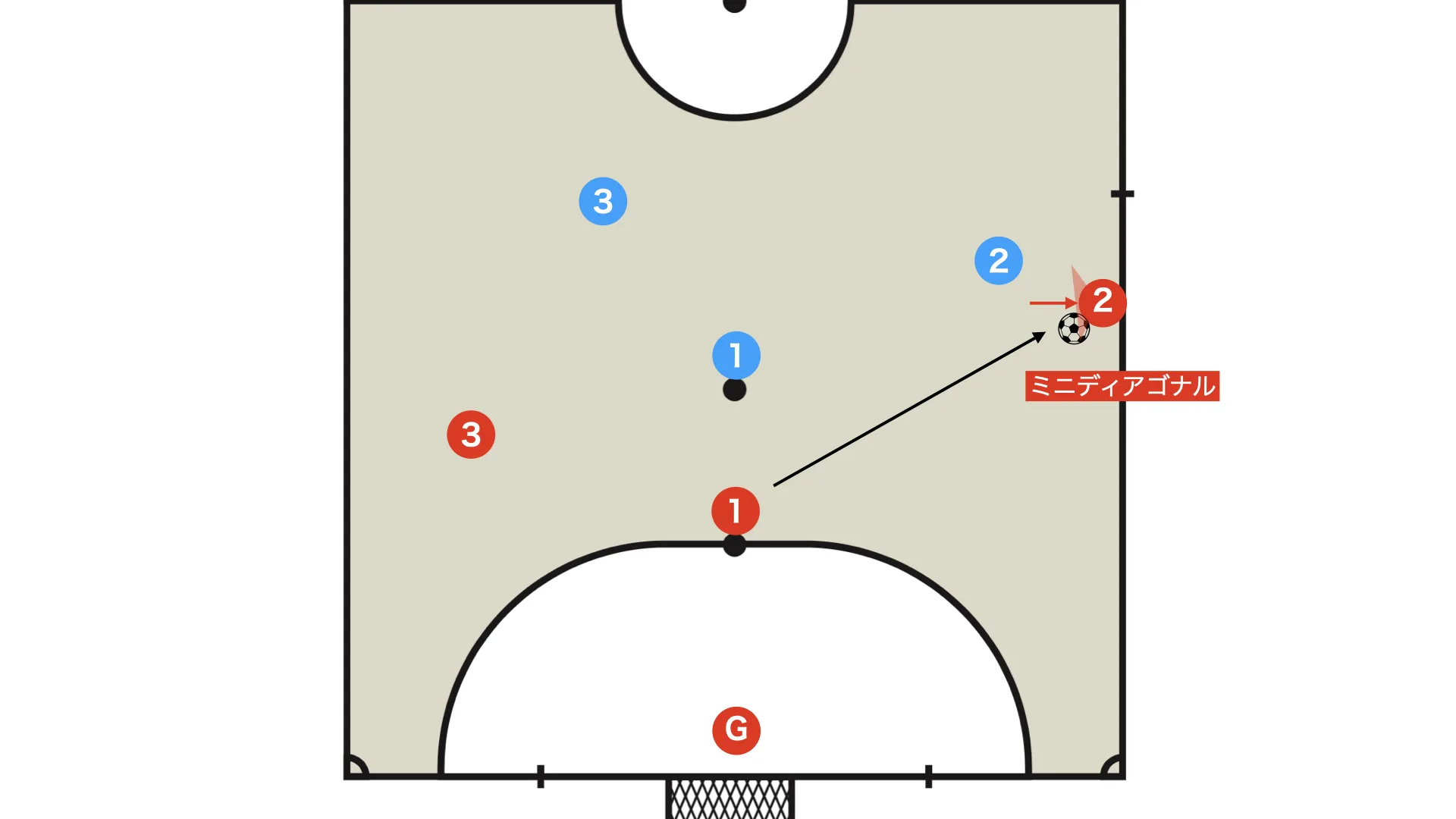
By bending the run and moving away from the defender, you can create a momentary free state.
It is effective when the ala wants to receive high up the court and in a good body position.
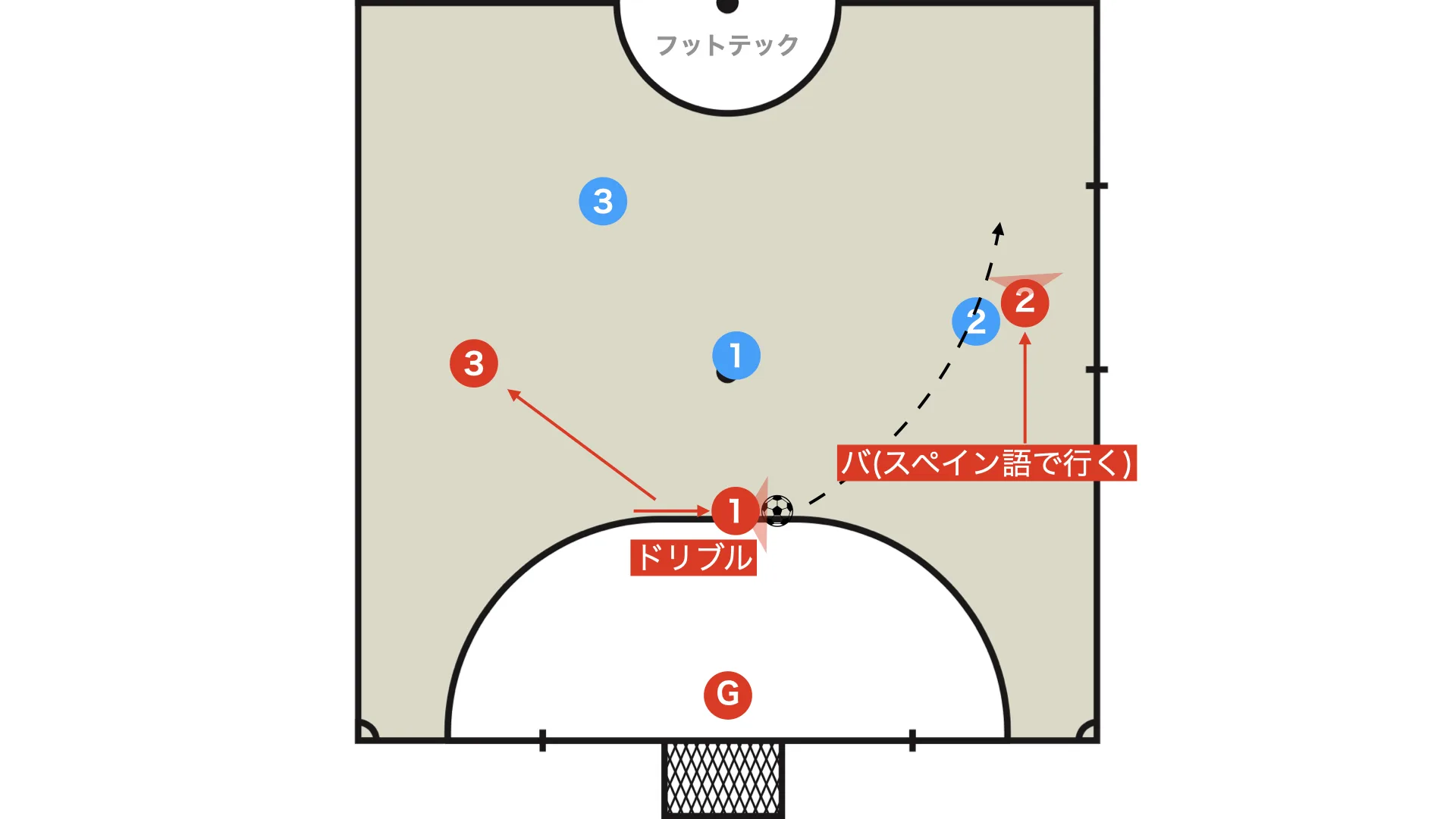
When the fixo (red 1) dribbles forward and, at the same time, the ala (red 2) attacks the space behind with a backdoor run, that action is called Va.
In practice, this can also happen in 3-1 situations, for example when the ala (red 1) receives the ball and dribbles diagonally into the center lane.
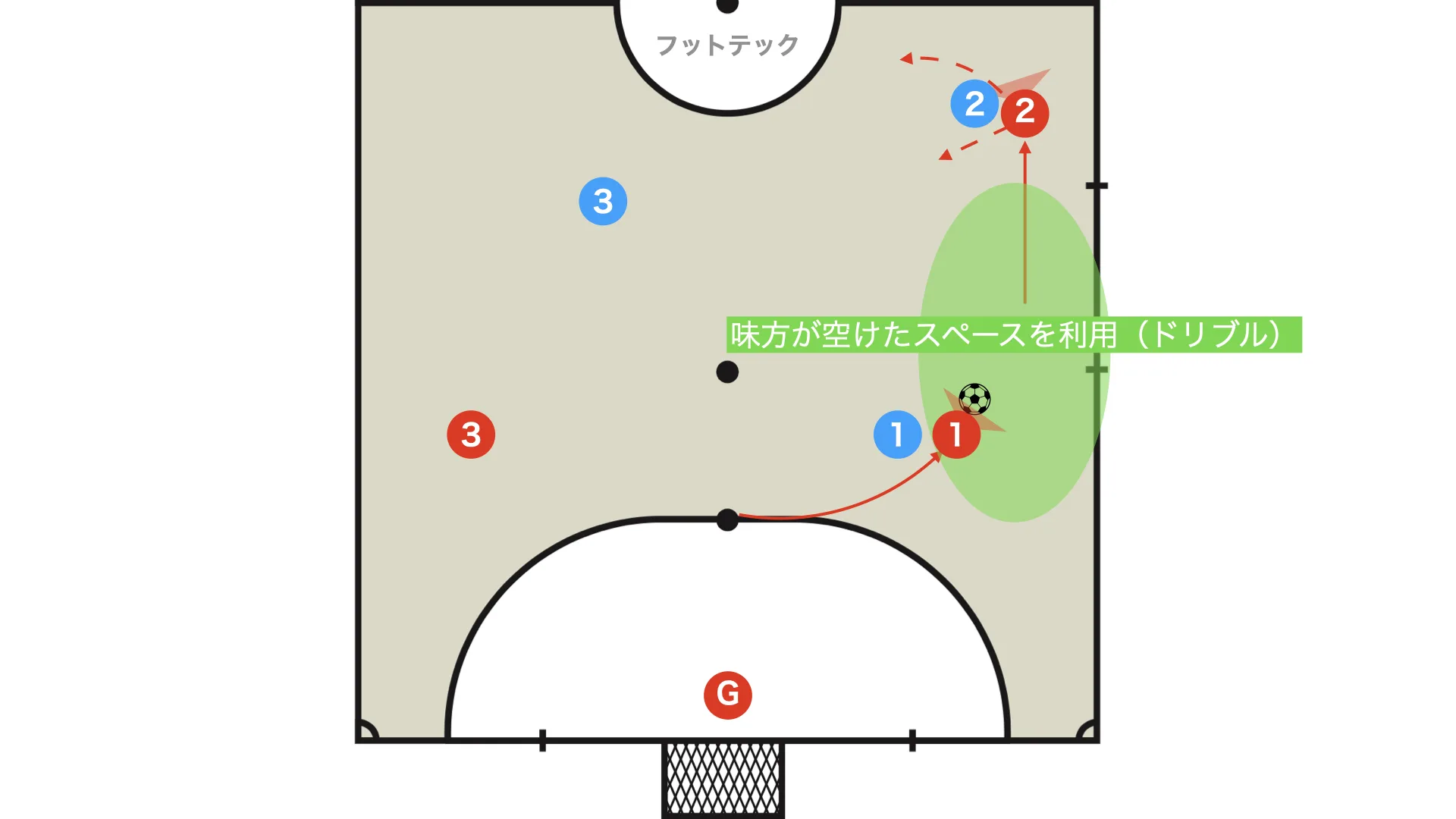
If the ala attacks in behind but the pass is not available, then keep dribbling into the space the ala has opened up.
At that moment, it is preferable for red 2 to bend their run inside (cut in) so red 1 keeps both the dribbling lane and the passing lane.
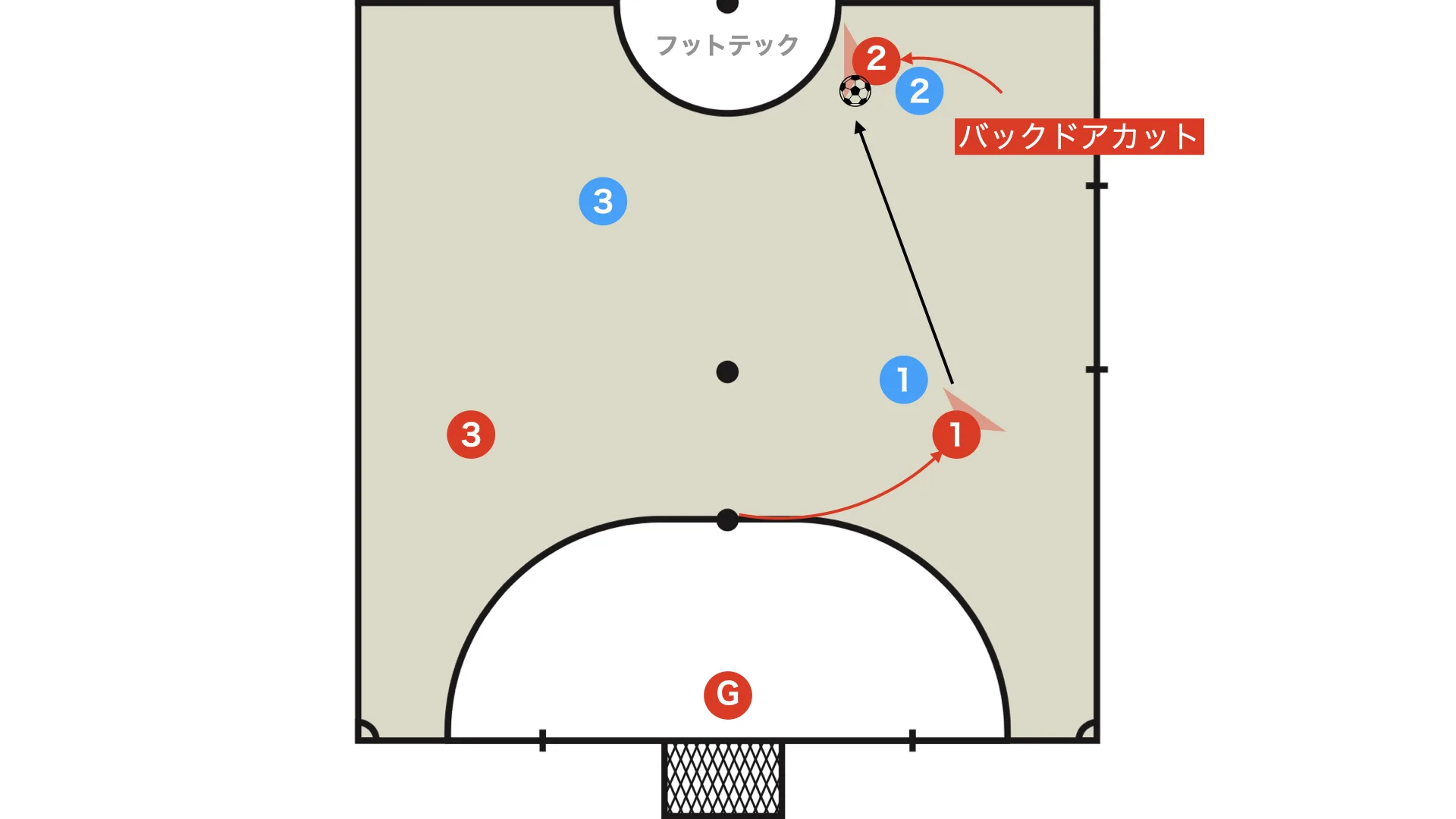
Receiving the ball inside after going around behind the defender is called a backdoor cut (puerta atras).
The act of crossing behind the defender is called a back cut, and when you then take the space behind them and receive the ball, it is called a backdoor cut.
In competitive futsal, it is more common for the pivot to make a backdoor cut behind the defender and finish the move with a shot.
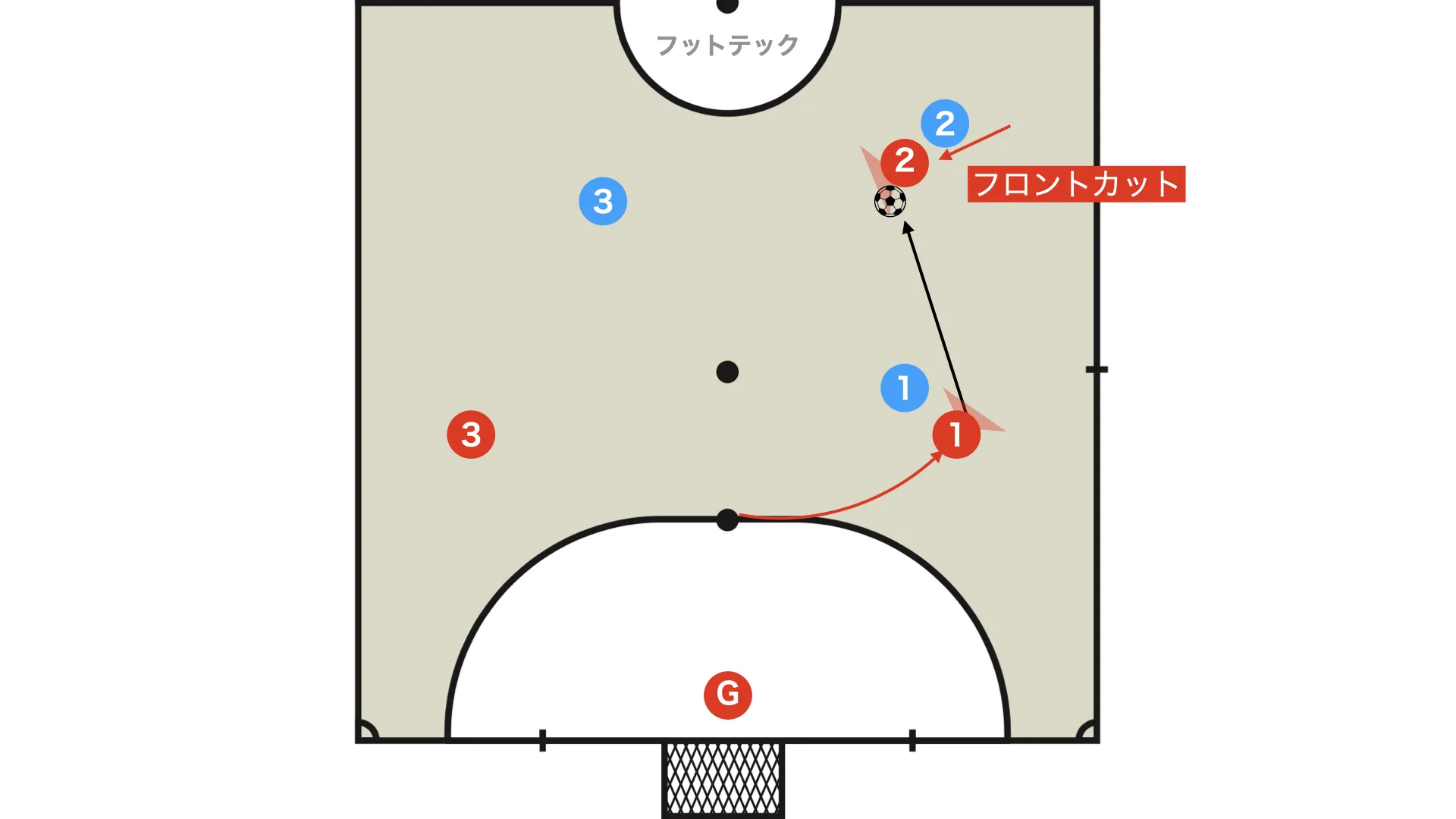
If the defender is focused on protecting the space behind, then coming to the ball with a la corta to receive on the defender's front side is extremely effective.
This kind of action, crossing in front of the defender, is called a front cut.
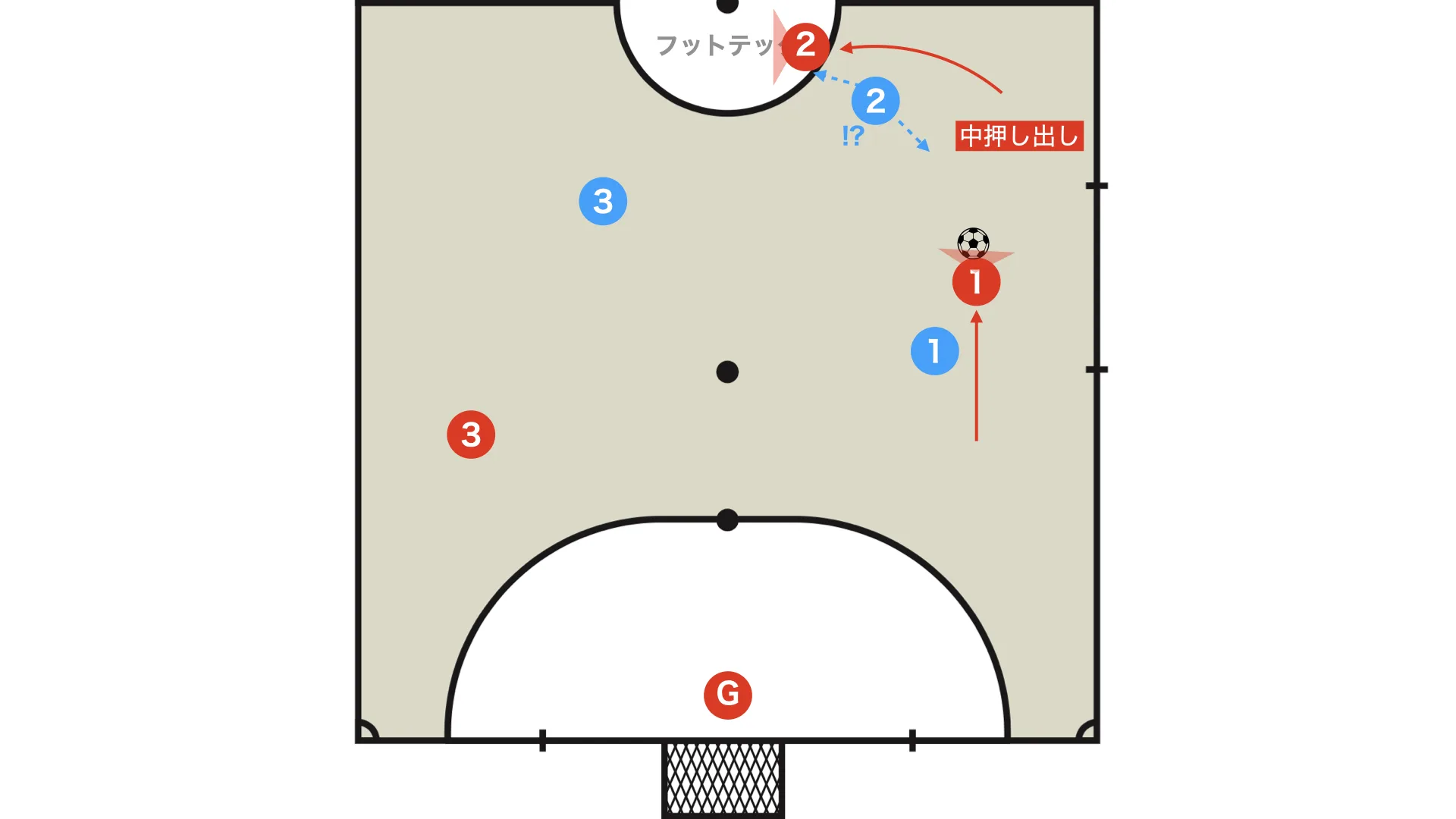
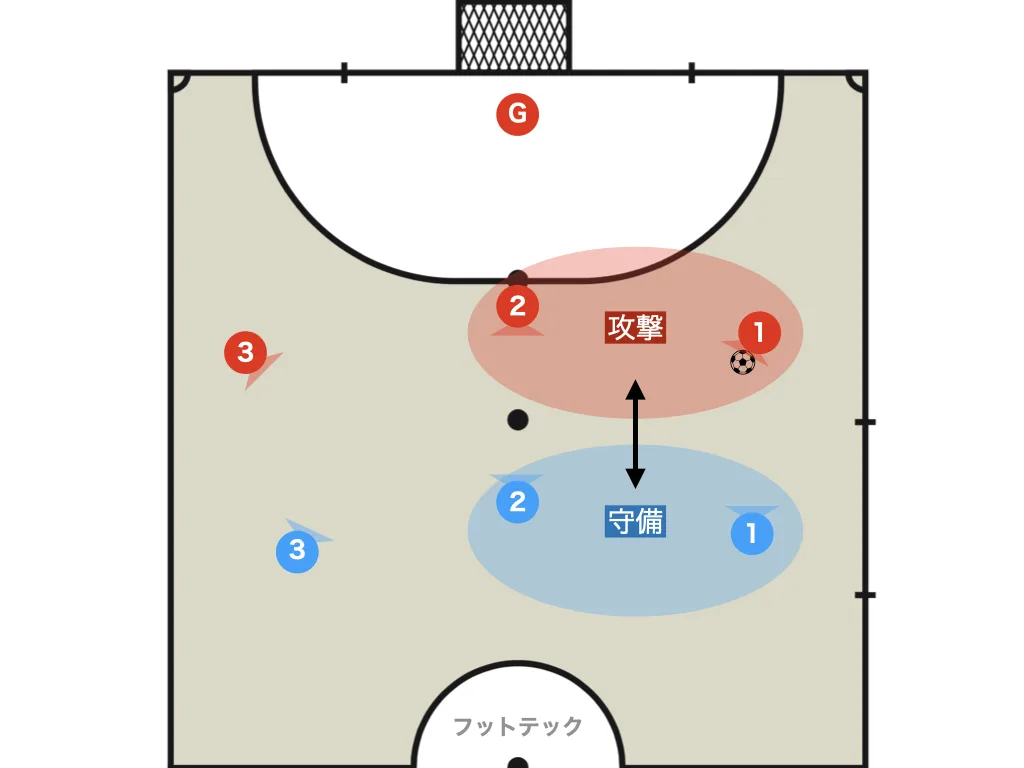
The two-player relationship where red 2 cuts inside and red 1 drives forward through the space that opens up is called the central push-out.
If red 1 can beat blue 1 on the dribble, they can create a numerical advantage and force hesitation from blue 2.
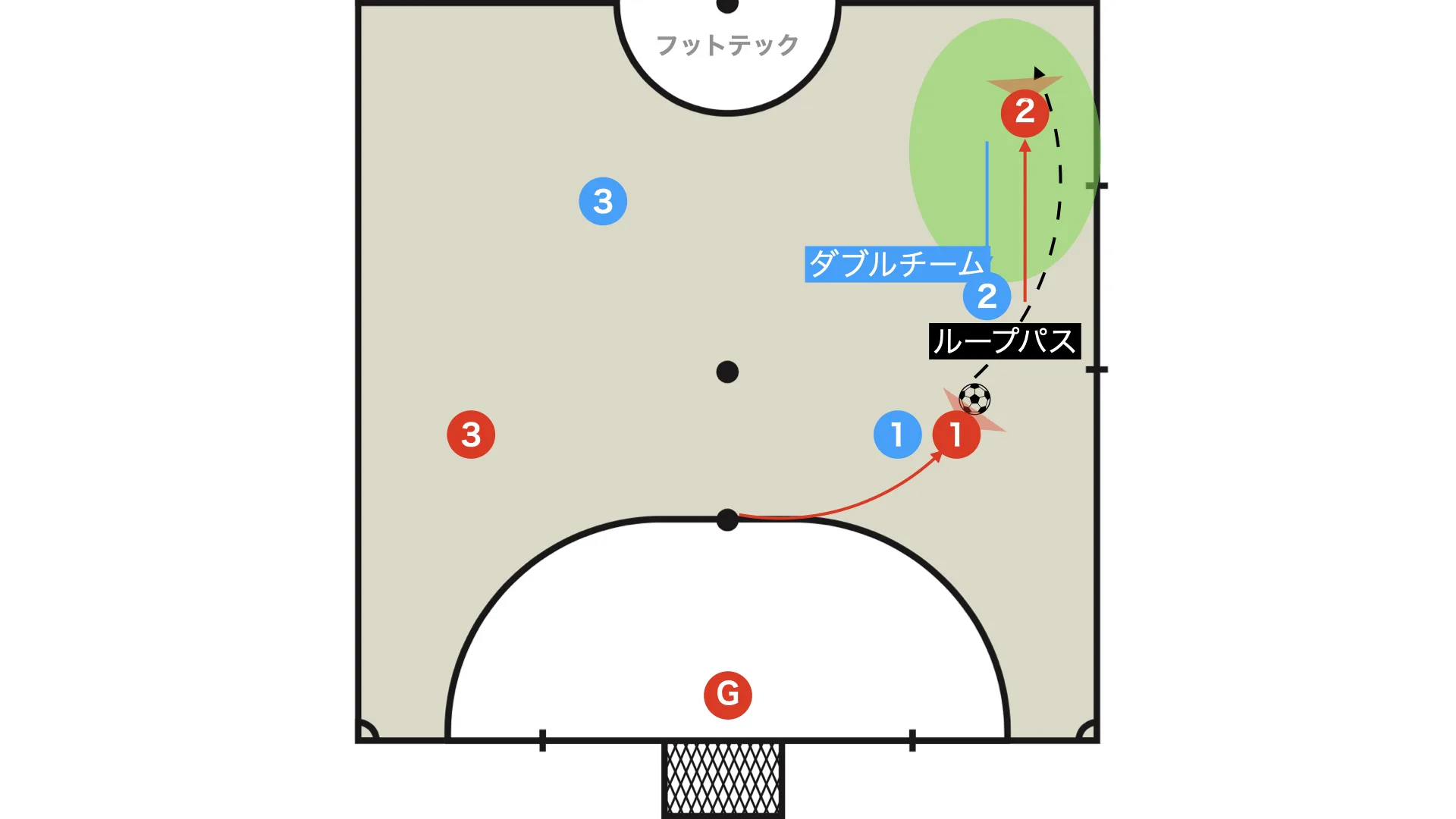
If the teammate is in the same lane, creating a vertical relationship, the defender will be positioned in front of them, so using a loop pass is the safest option. (If the defender's legs are open, a nutmeg pass is fine too.)
If the defender has closed down so much that even the loop pass is unavailable, then you should not force the pass and should play back outside.
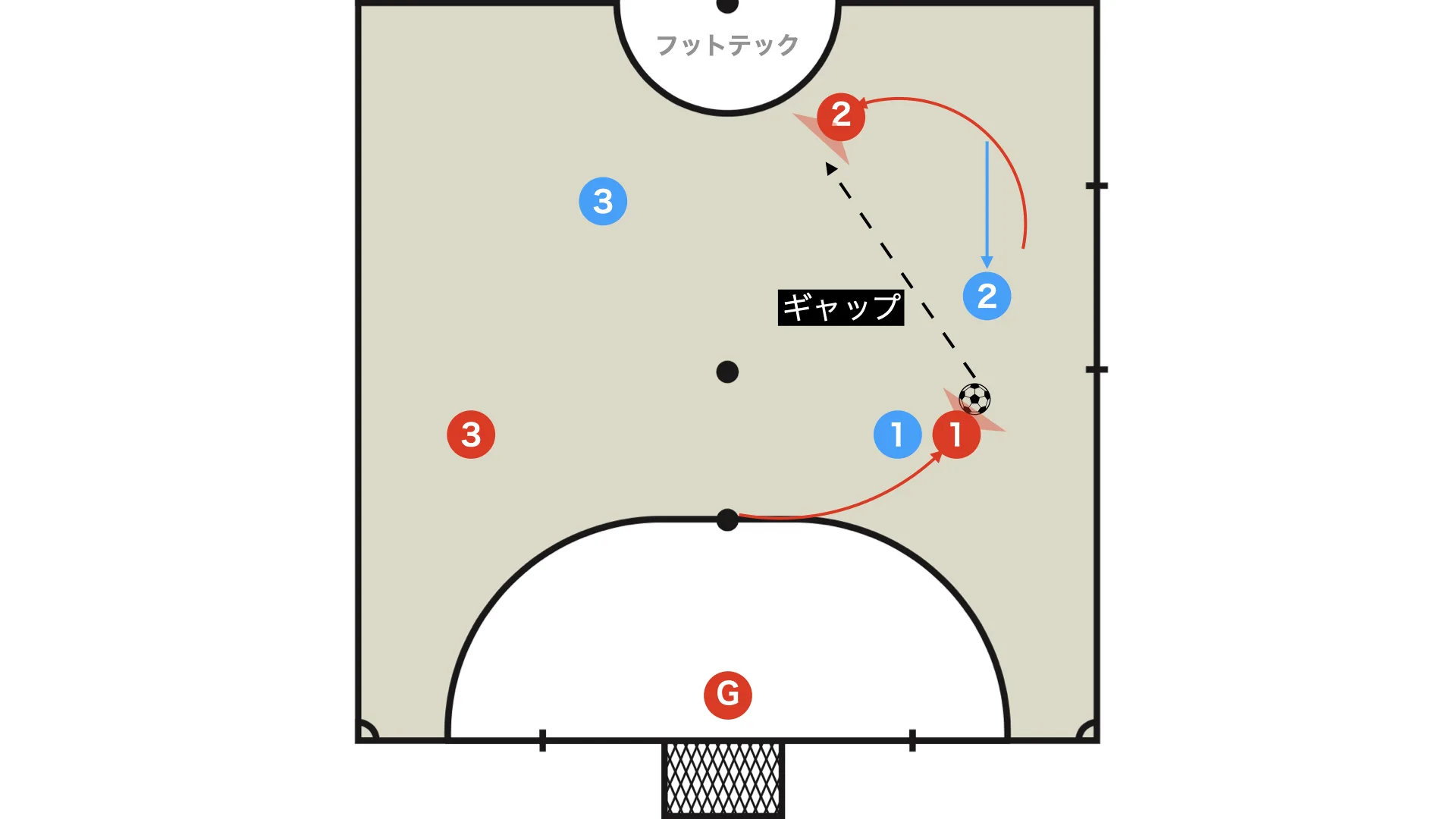
If the teammate has cut inside and the passing lane is secured, you can thread a grounded pass through the gap.
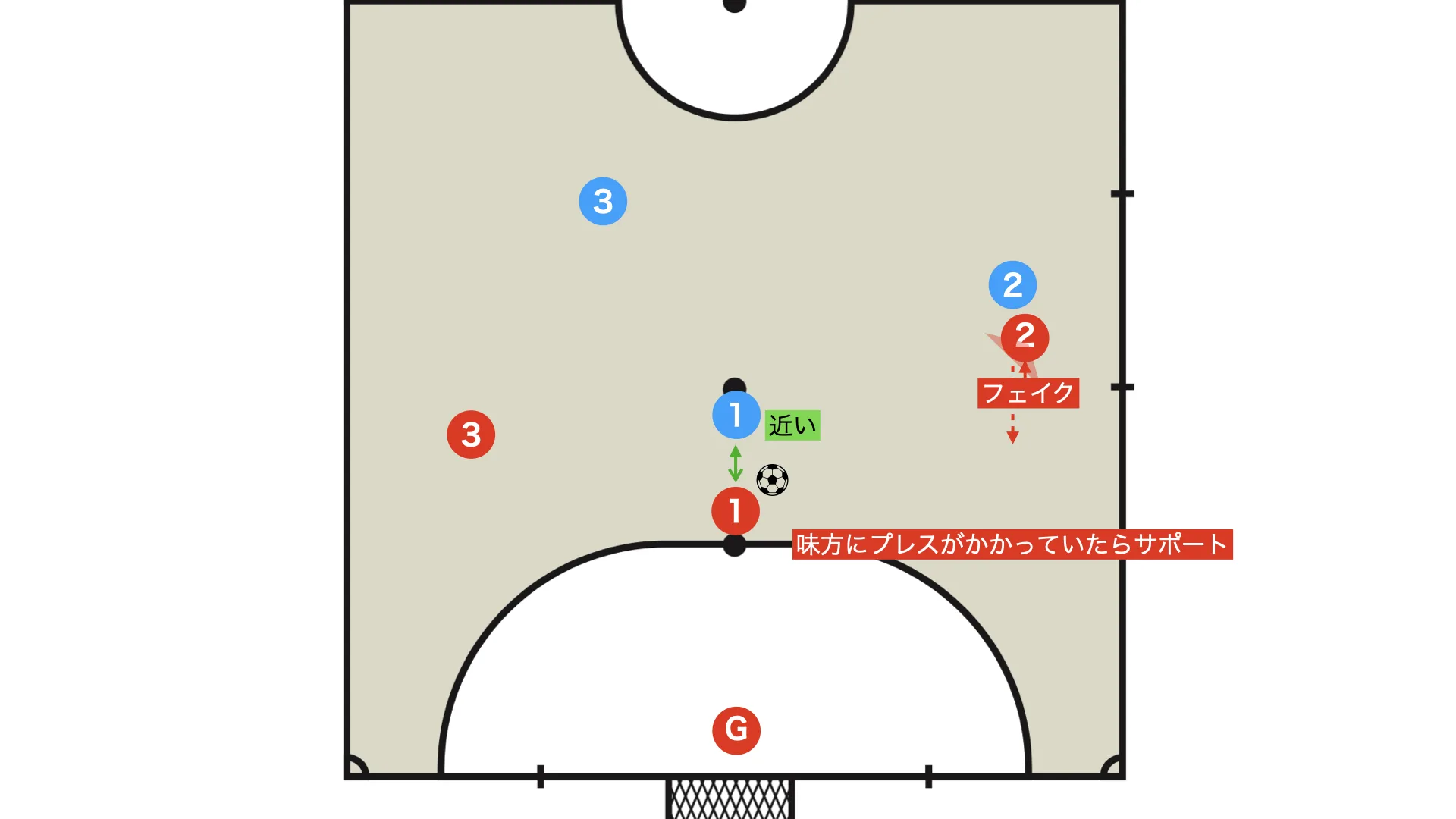
If the fixo (the ball holder) comes under pressure, then the ala will not be able to receive high up, so they should cancel the action and drop to support.
This whole process becomes a feint (finta) movement.
Sometimes people see the ala's tactical battle as an individual tactic, but it does not work unless the passer and receiver are fully on the same page, so it should never become a self-centered movement by the ala alone.
In other words, as shown in the diagram above, it is crucial for both the passer and the receiver to read not only the defender, but also the condition of their teammate.