Parallel in Futsal: 3 Key Points and 4 Types of Runs
Published: 2021.10.25Updated: 2026.05.03
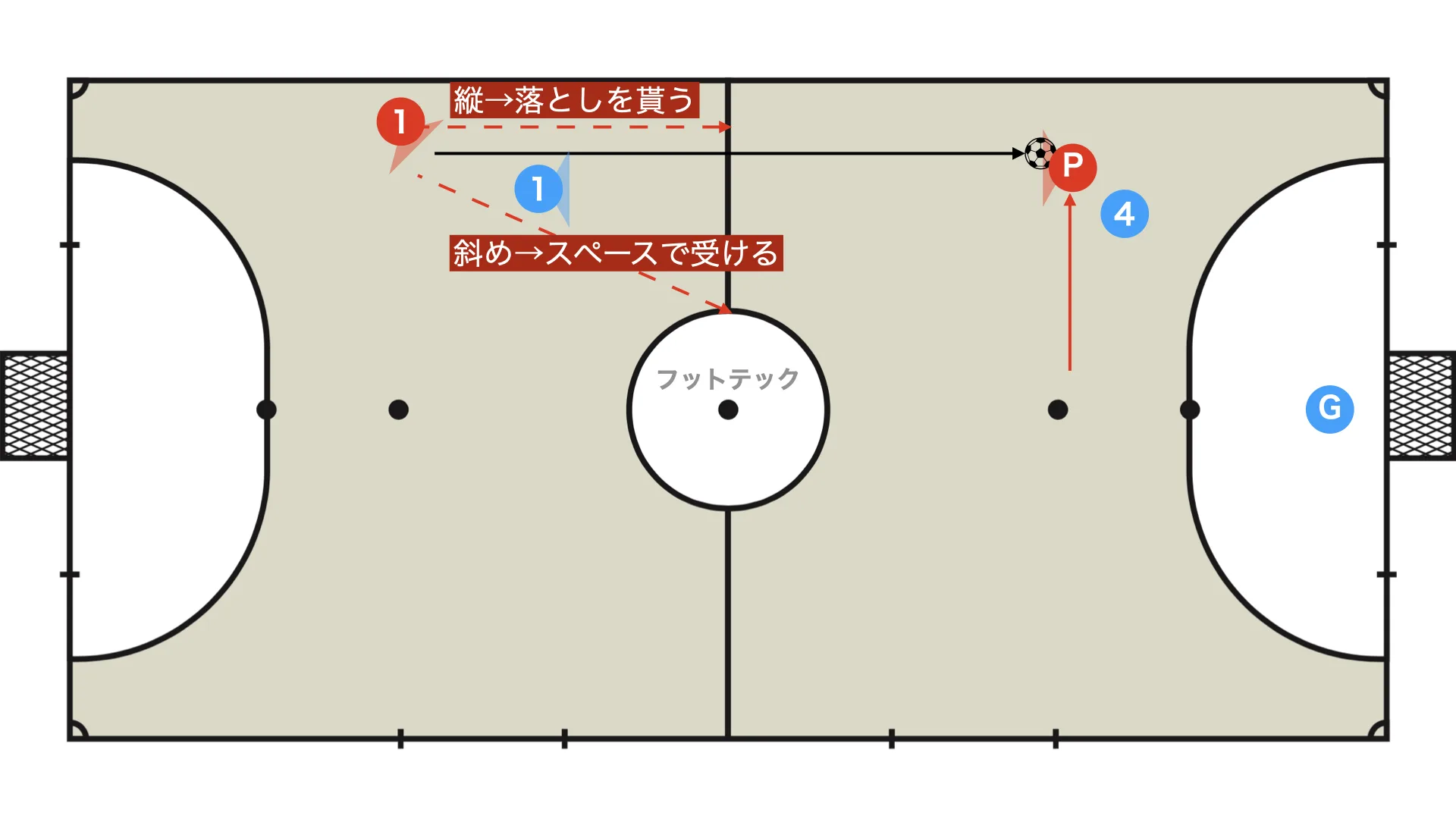
In Spanish, "parallel" means parallel. In futsal, a parallel is a two-player action in which a pass is played parallel to the touchline to break beyond the defensive line, as shown below.
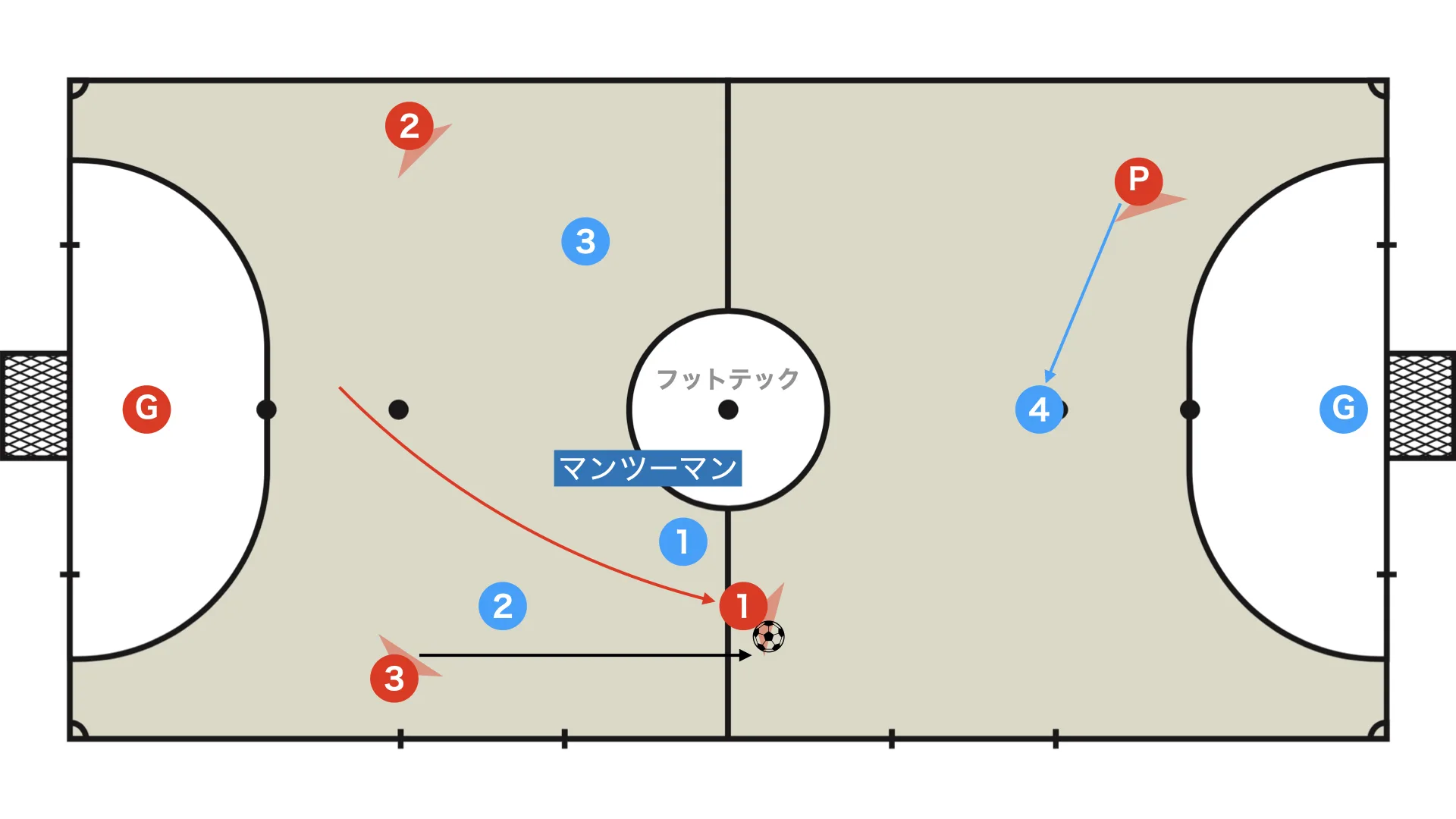
At first glance, the parallel may look simple, but it is actually a very deep tactical concept.
This article gives a thorough explanation of the key points for using the parallel and all of its main variations.
- awareness of space and strong foot
- understanding the relationship between the two players (passer and receiver)
- recognizing how the defence is reacting
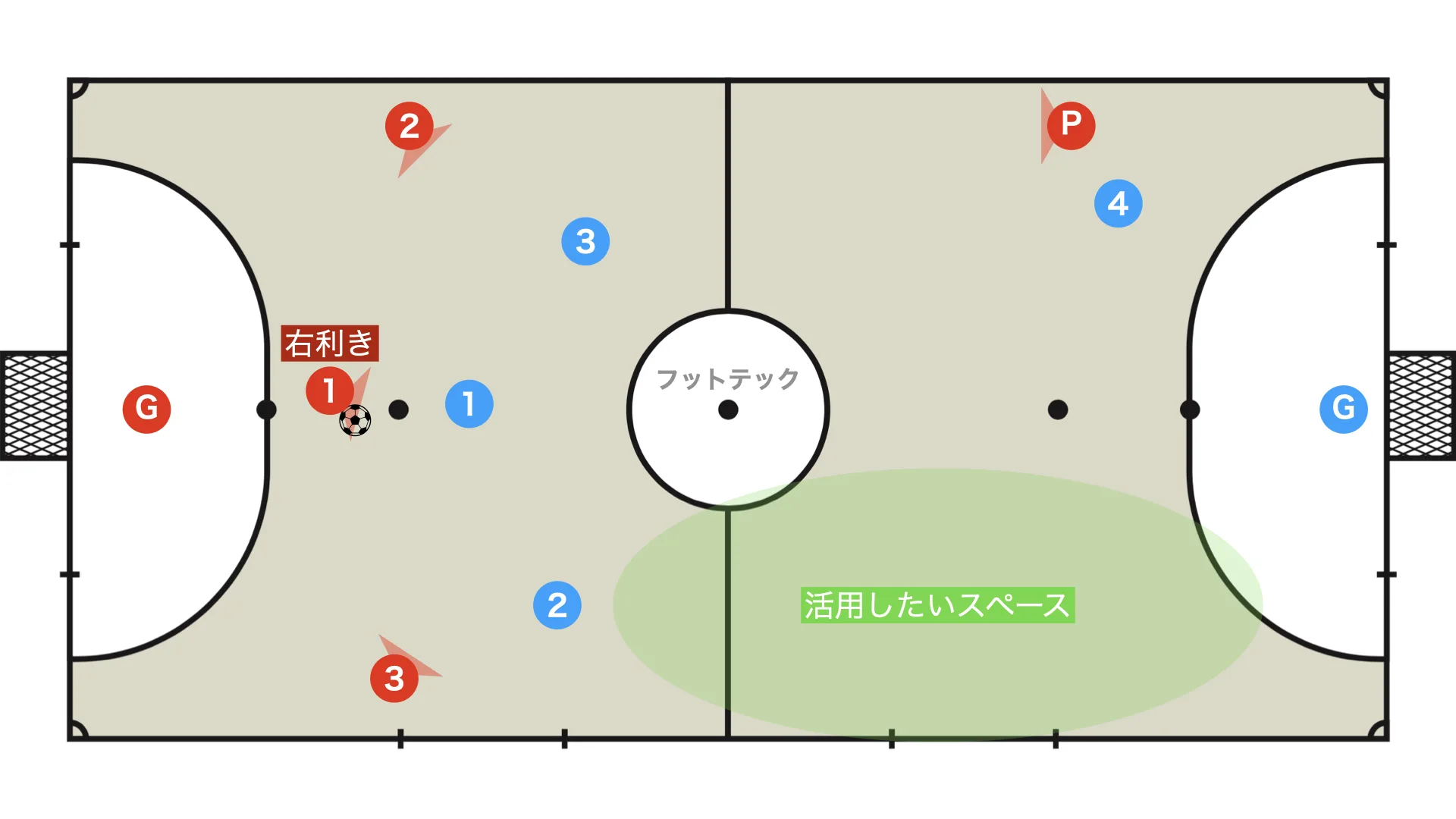
If you try a parallel where there is no space, the defence will simply cover it, so it is important to recognize in advance which space you want to use.
If you want the move to lead all the way to a finish after the parallel succeeds, it helps if the receiver's strong foot matches the side you want to attack.
In the diagram above, after receiving the parallel, red 1 can continue through to the finish on his stronger right foot.
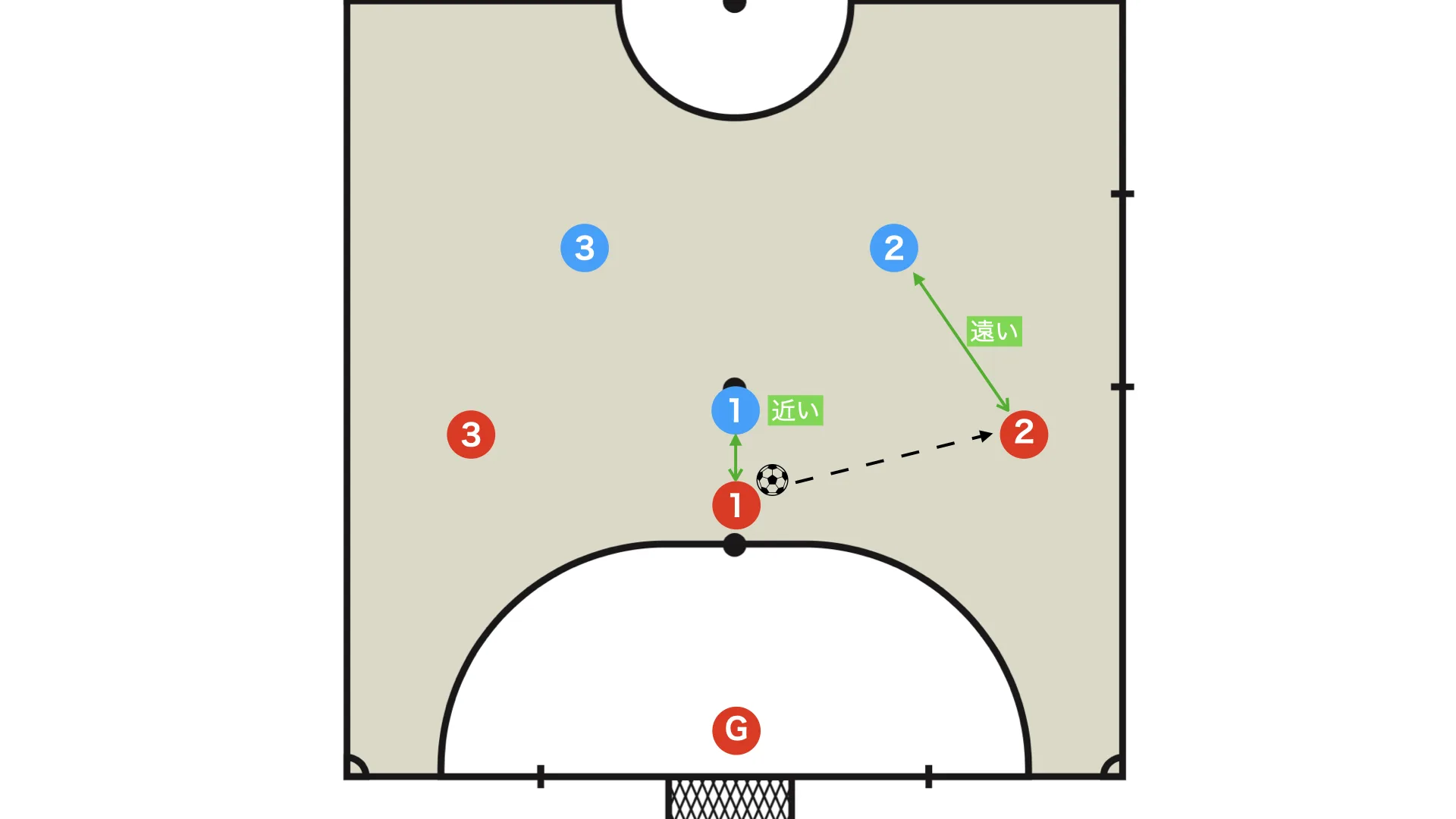
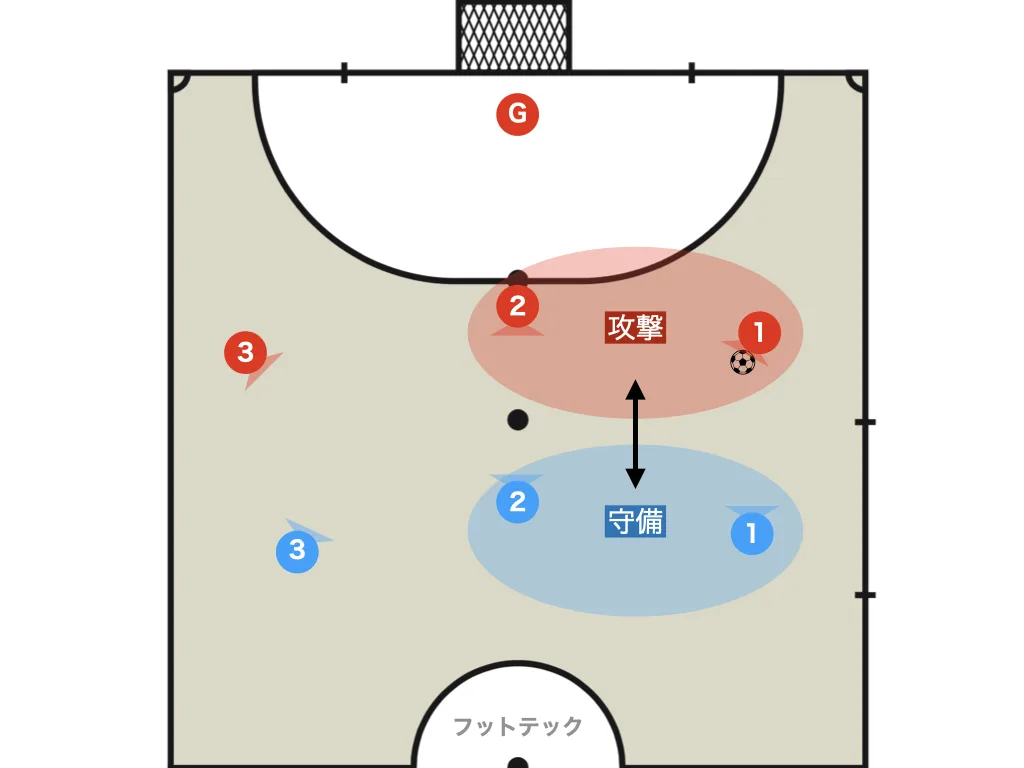
In terms of the two-player relationship, you need to create a near player (receiver) and a far player (passer).
関連記事
Overview: Two-Player Combinations in Futsal
An overview article explaining two-player combinations in futsal. It organizes the relationships and…
続きを読む →More specifically, there are two conditions for a parallel to work:
- the vertical lane for the passer is open
- the receiver has shaken free of their marker
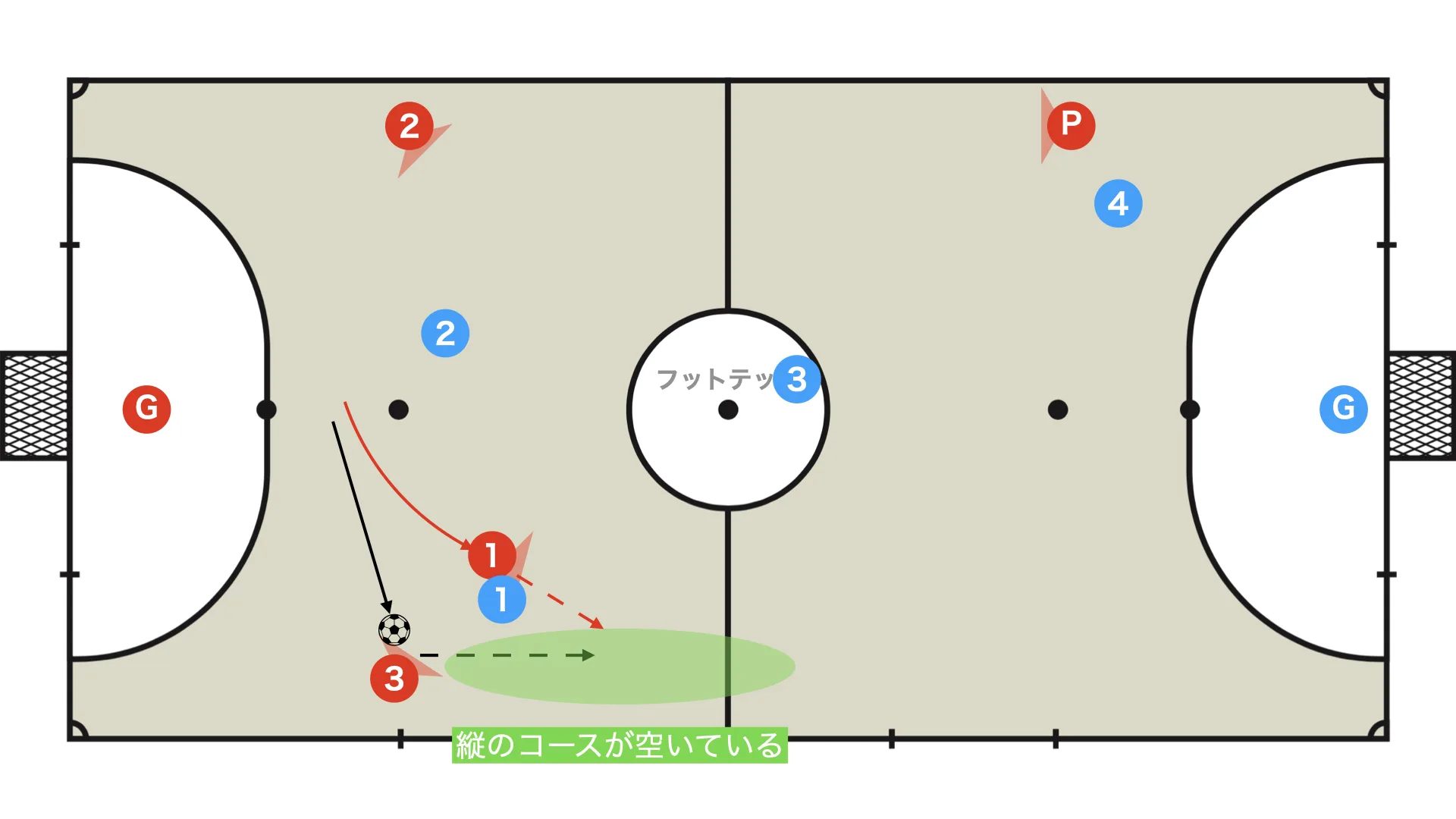
Unless both of these factors are present, the parallel will not work. On top of that, you also need to pay attention to the timing between the receiver and passer and the weight and trajectory of the ball (the pass).
Trying to force a parallel pass through when the vertical lane is blocked is very risky and often leads to a turnover. In that case, it is better to dribble inside and look for a different passing lane.
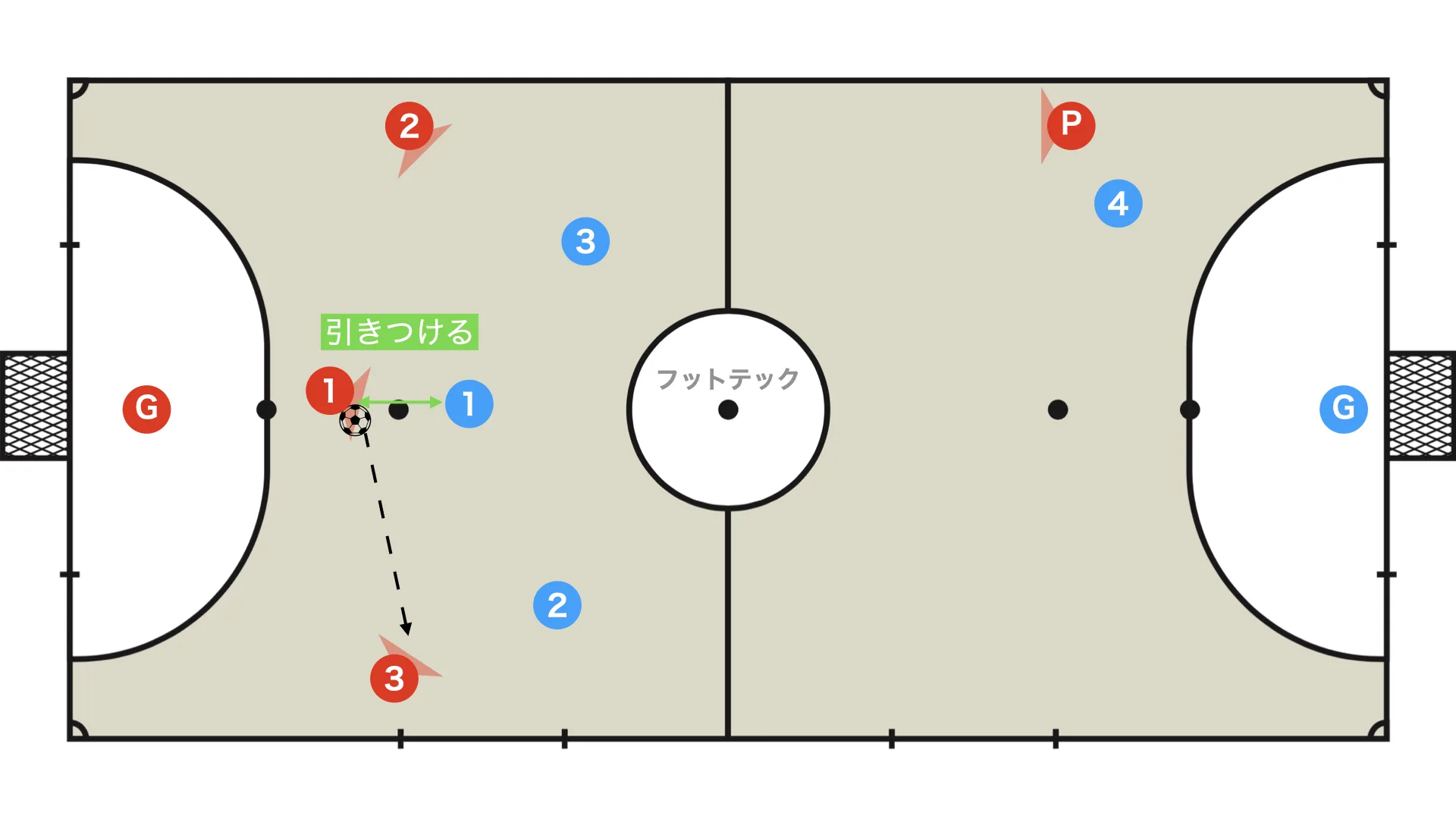
If there is too much distance between the receiver (red 1) and the defender (blue 1), intentionally drawing the defender in makes it easier to attack the space behind.
Even at the top level, it is common to see a parallel where the ball is exposed to the defender until the last moment, then played wide to the ala with the outside of the foot before the runner goes through.
Broadly speaking, you need to distinguish between man-to-man defending and more zone-oriented defending that builds multiple lines. Recognizing which defensive system the opponent is using is extremely important.
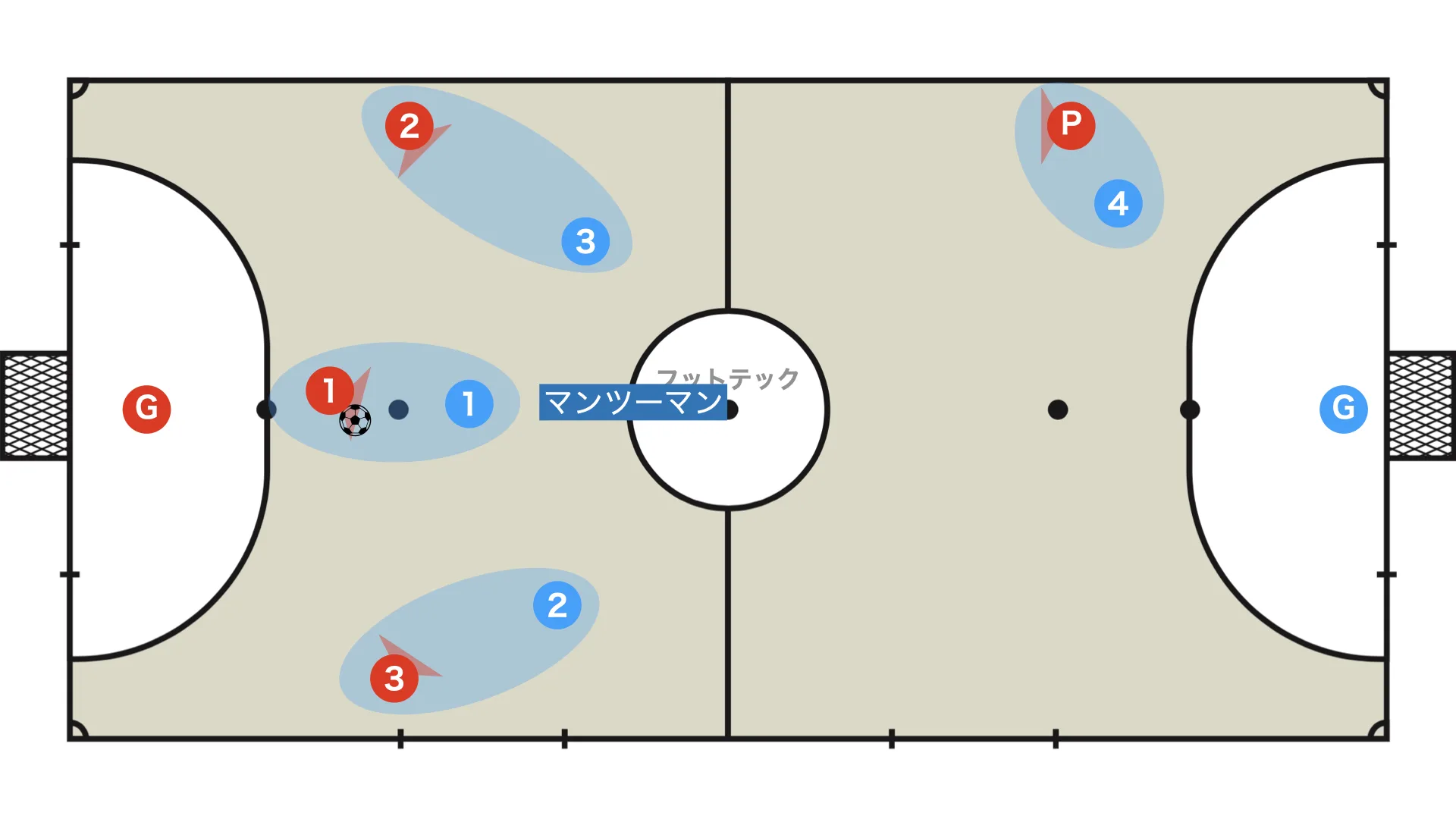
If the opponent is defending man-to-man, beating your own marker can create a huge chance.
In a 3-1 shape like the one above, you can create a 2v1 in the attacking half and reach the finish quite easily.
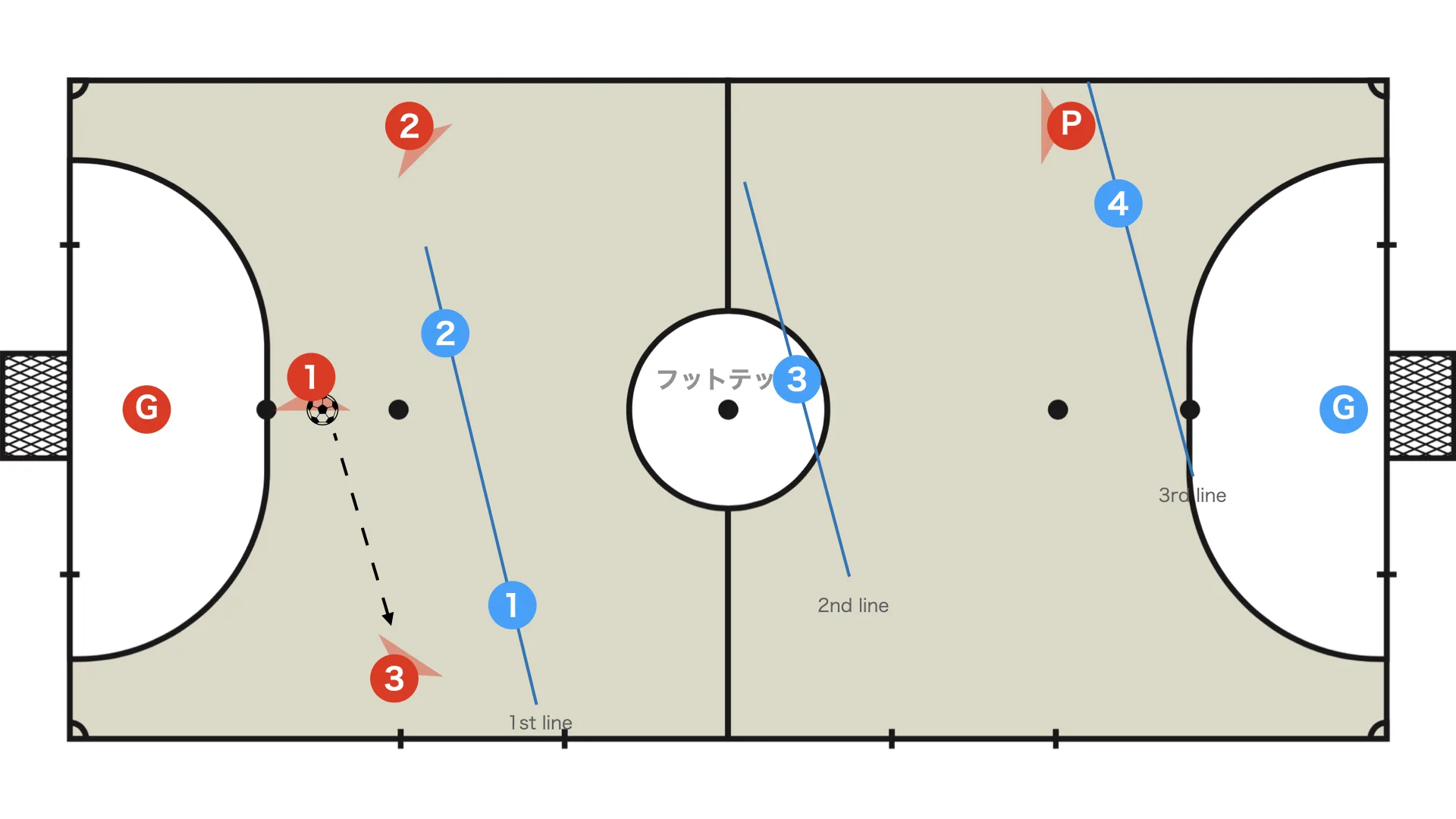
Against a defence that builds multiple lines, a successful parallel does not always create a huge chance by itself, but it can force three defenders into indecision.
- 2nd defender: should they pass the mark on?
- 3rd defender: should they cover the mini-parallel?
- 4th defender: should they cover the long parallel?
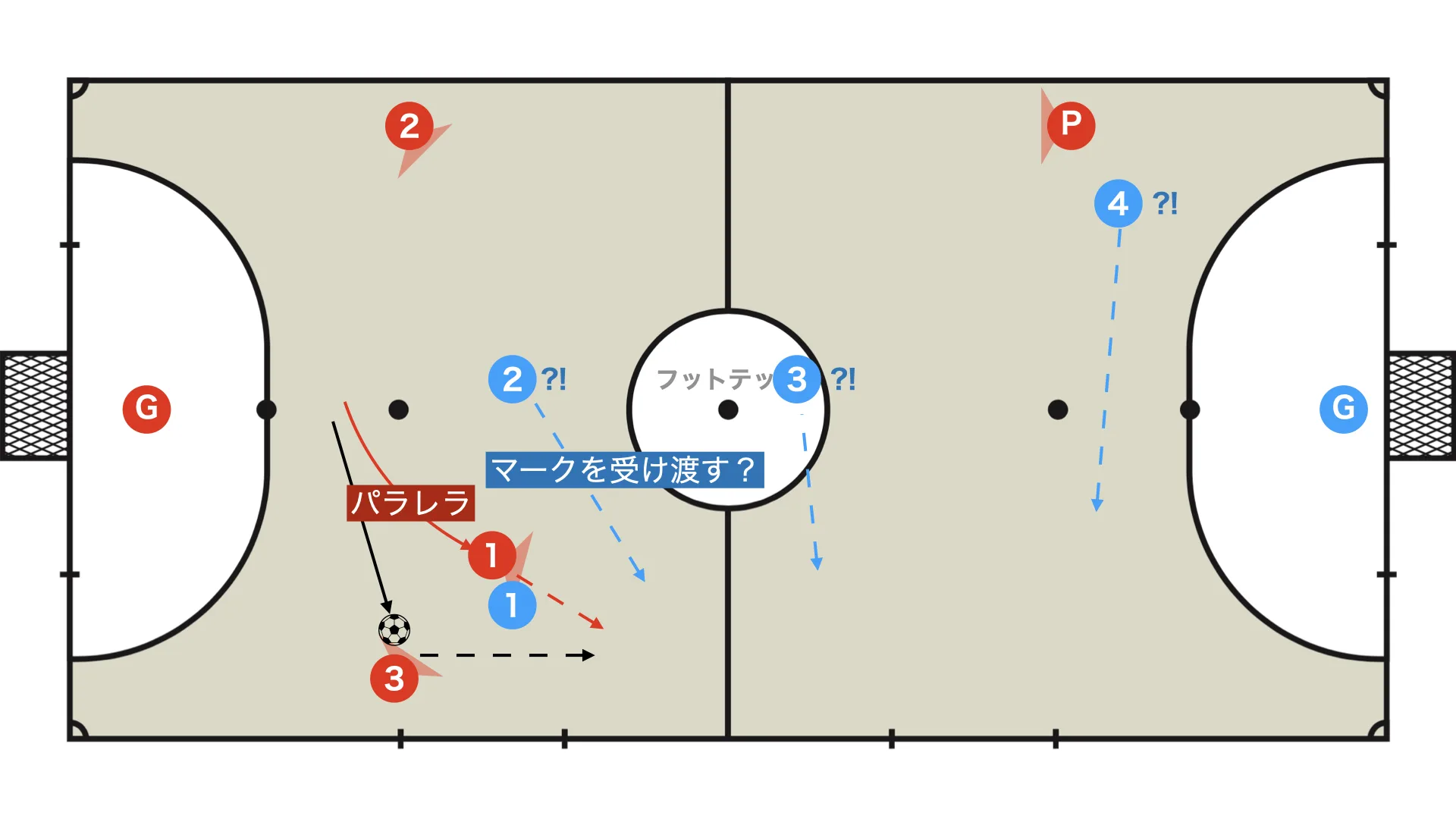
If the execution of the parallel is sharp enough, you can still create a 2v1 in the attacking half just as you can against man-to-man defending.
- a timing that lets your teammate face forward and carry speed
- a way of passing that avoids your own defender's foot
Do not choose a lofted pass blindly. On a parallel, you need to choose between a lofted pass and a ground pass depending on the situation.
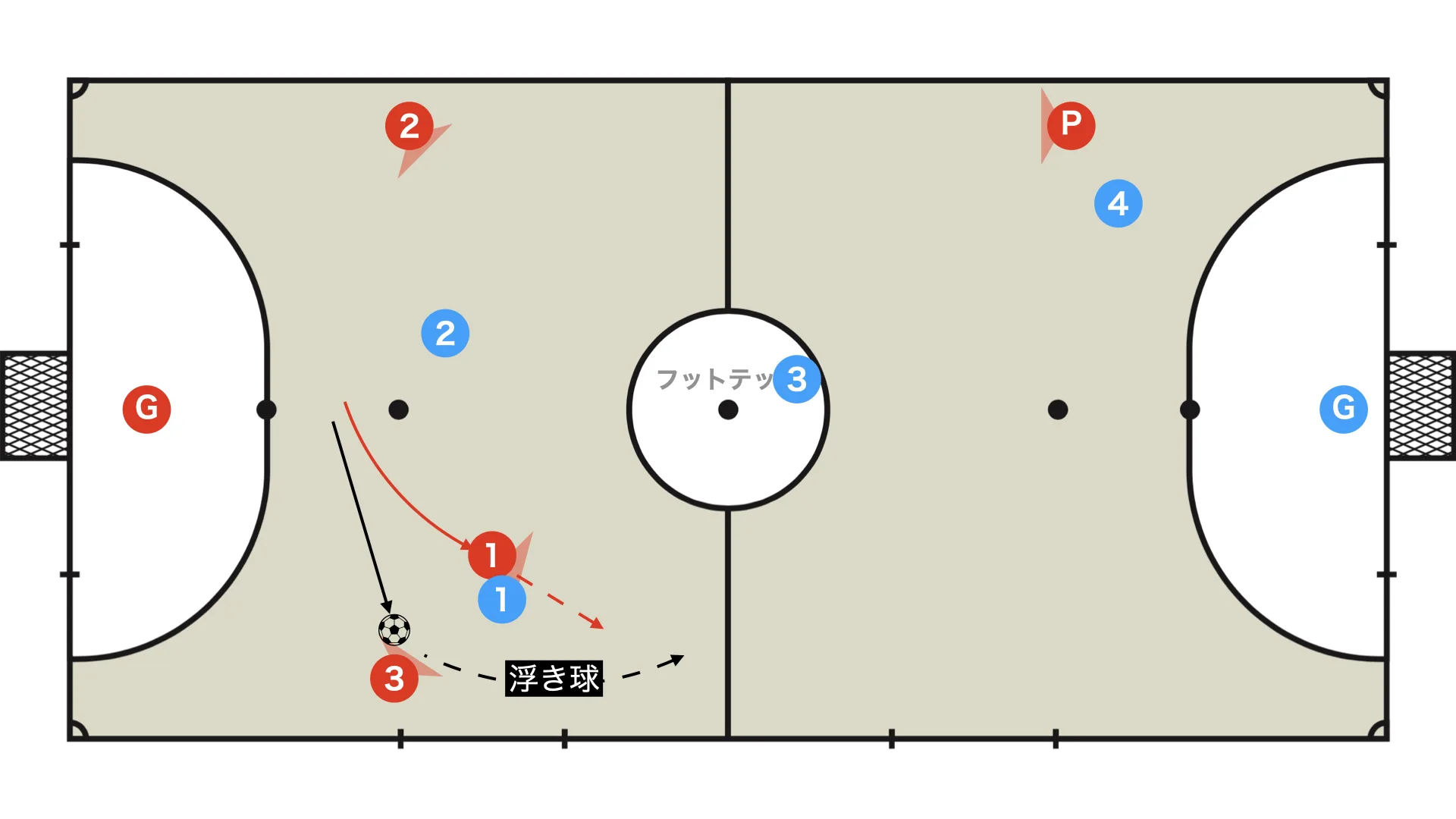
If the receiver has not fully broken through yet, it is best to play a lofted pass that drops into the space.
(A lofted ball is more likely to stop in the space.)
If you play it along the ground, the ball may keep running and give the covering defender time to deal with it.
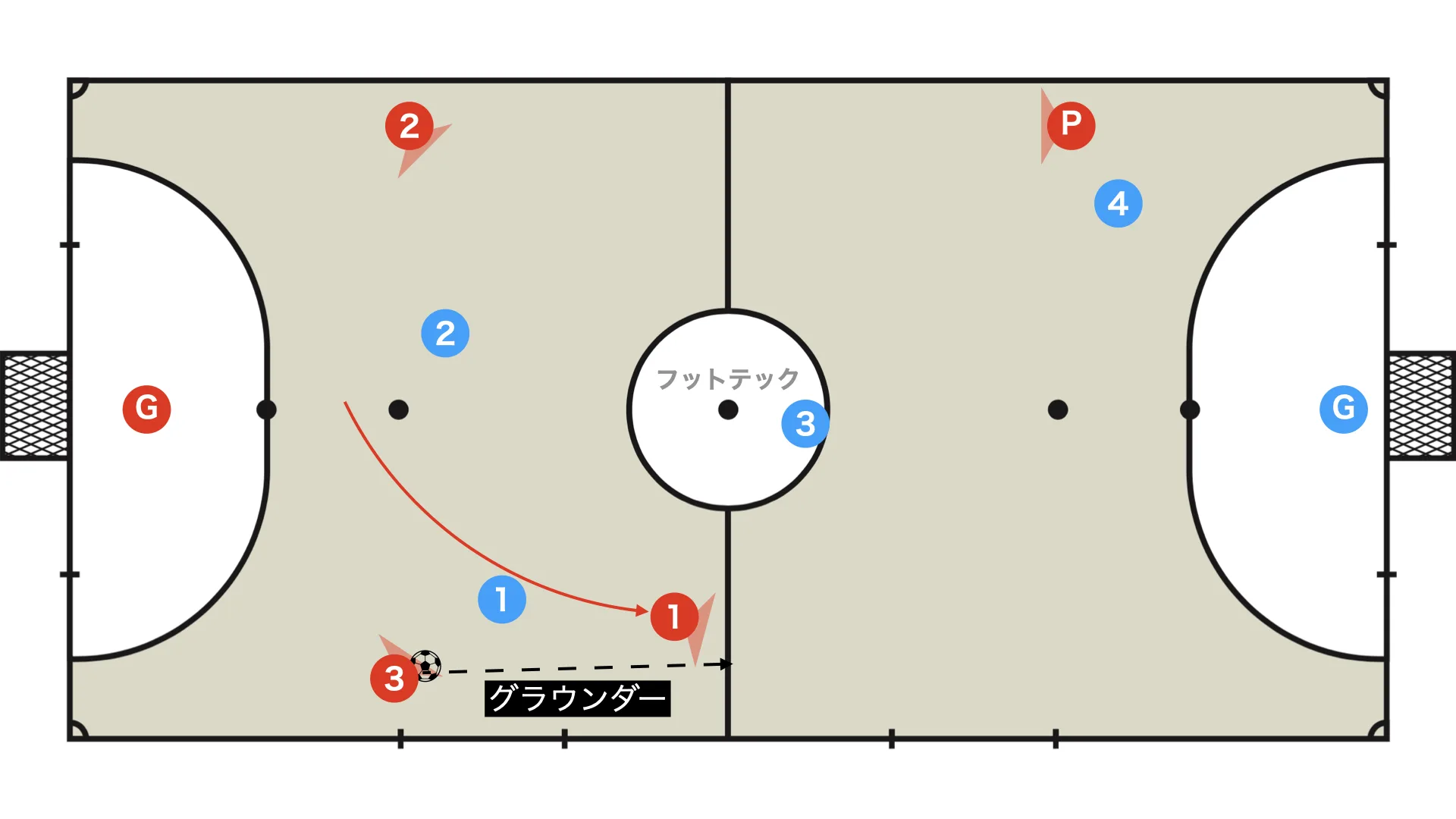
If the receiver has already broken through, the best option is a ground pass into the feet so you do not kill their speed.
When there is clear distance from the defender and the vertical lane is obviously open, both lofted balls and ground passes can get through.
When the distance is tight, ground passes are less likely to work, so using a lofted ball is the standard solution.
The video below explains passing technique for this in detail.
The parallel can broadly be divided by pass length into long parallels and short parallels.
What counts as "long" or "short" can vary from person to person, but here the definition is based on how many defensive lines of the opponent are bypassed.
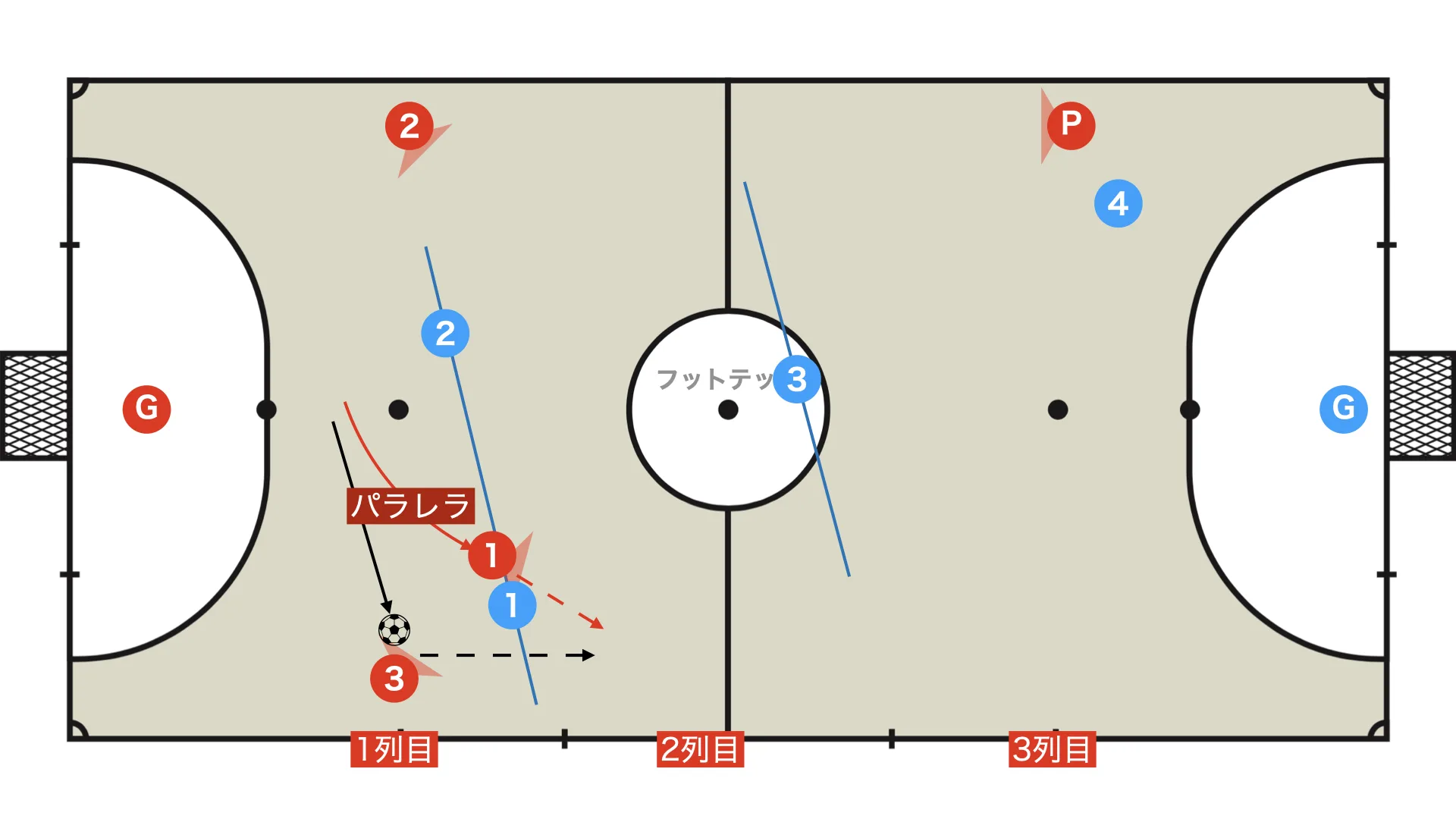
As in the diagram above, this is a parallel that breaks through one defensive line, such as a pass from the 1st line to the 2nd line.
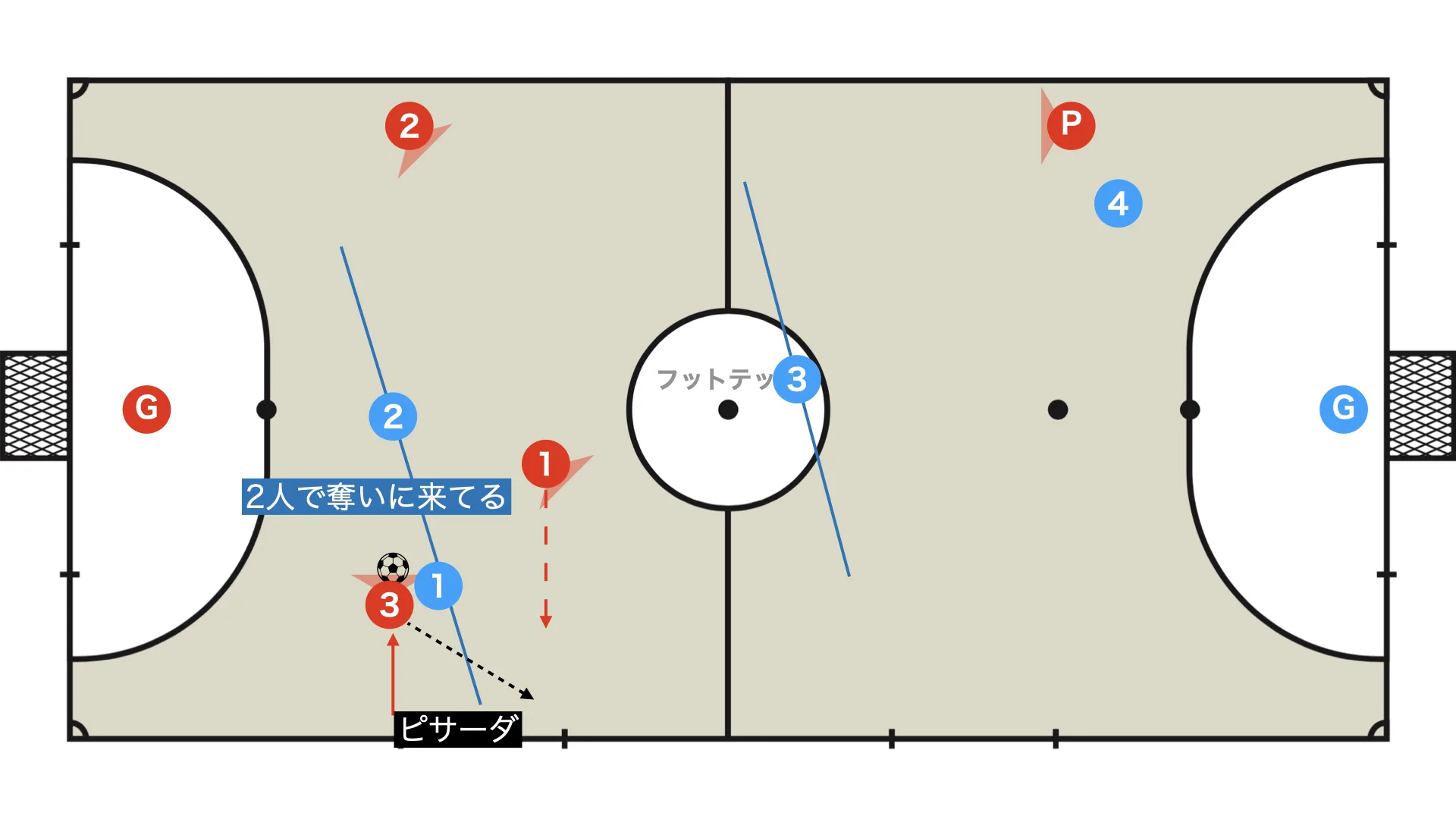
Against defending where the 1st and 2nd defenders try to trap and win the ball with two players, carrying the ball slightly inside often opens the space behind them.
A very short-distance short parallel like this, often using a pisada and similar actions, is sometimes called a mini-parallel.
(A mini-parallel is one type of short parallel.)
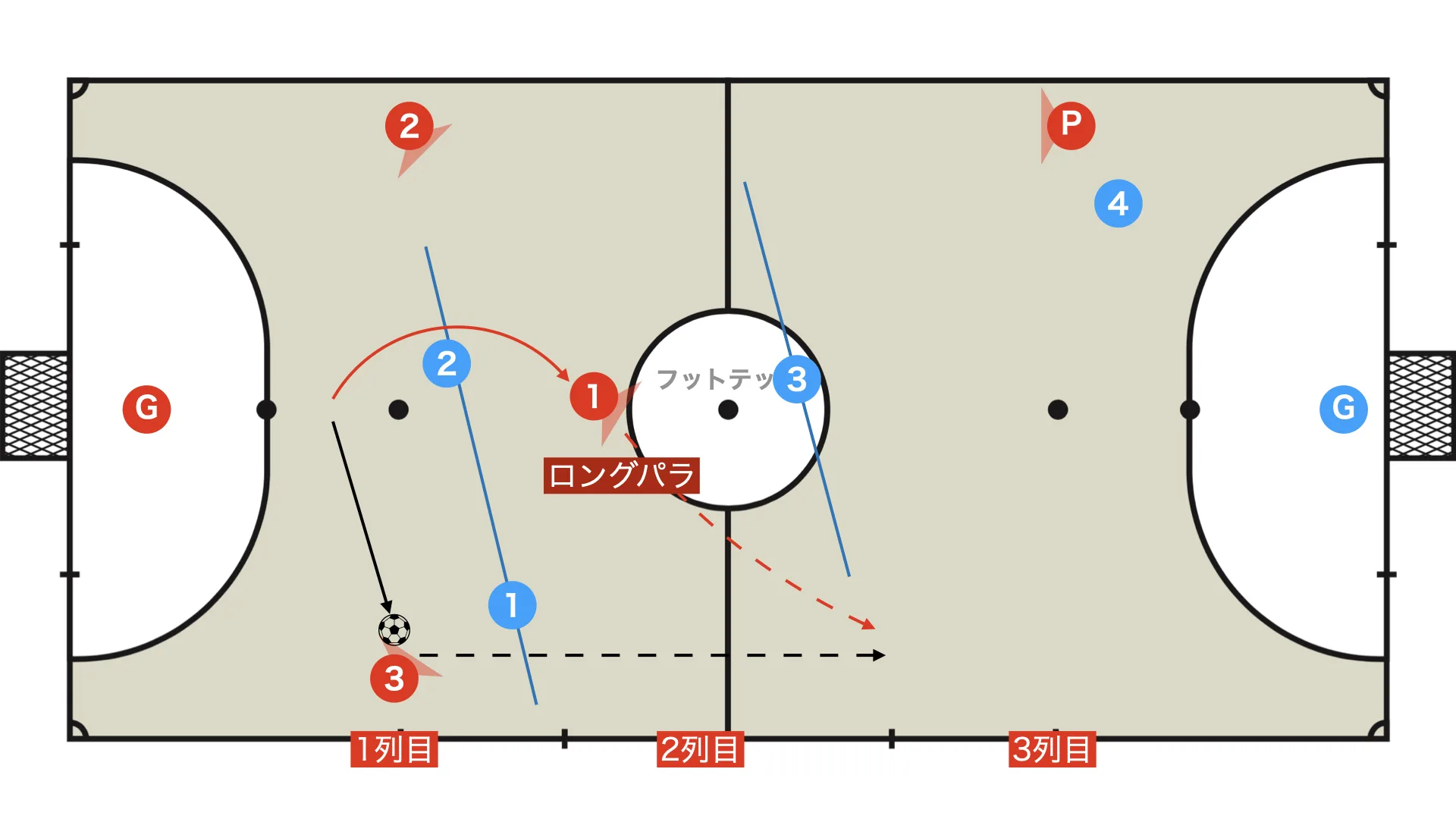
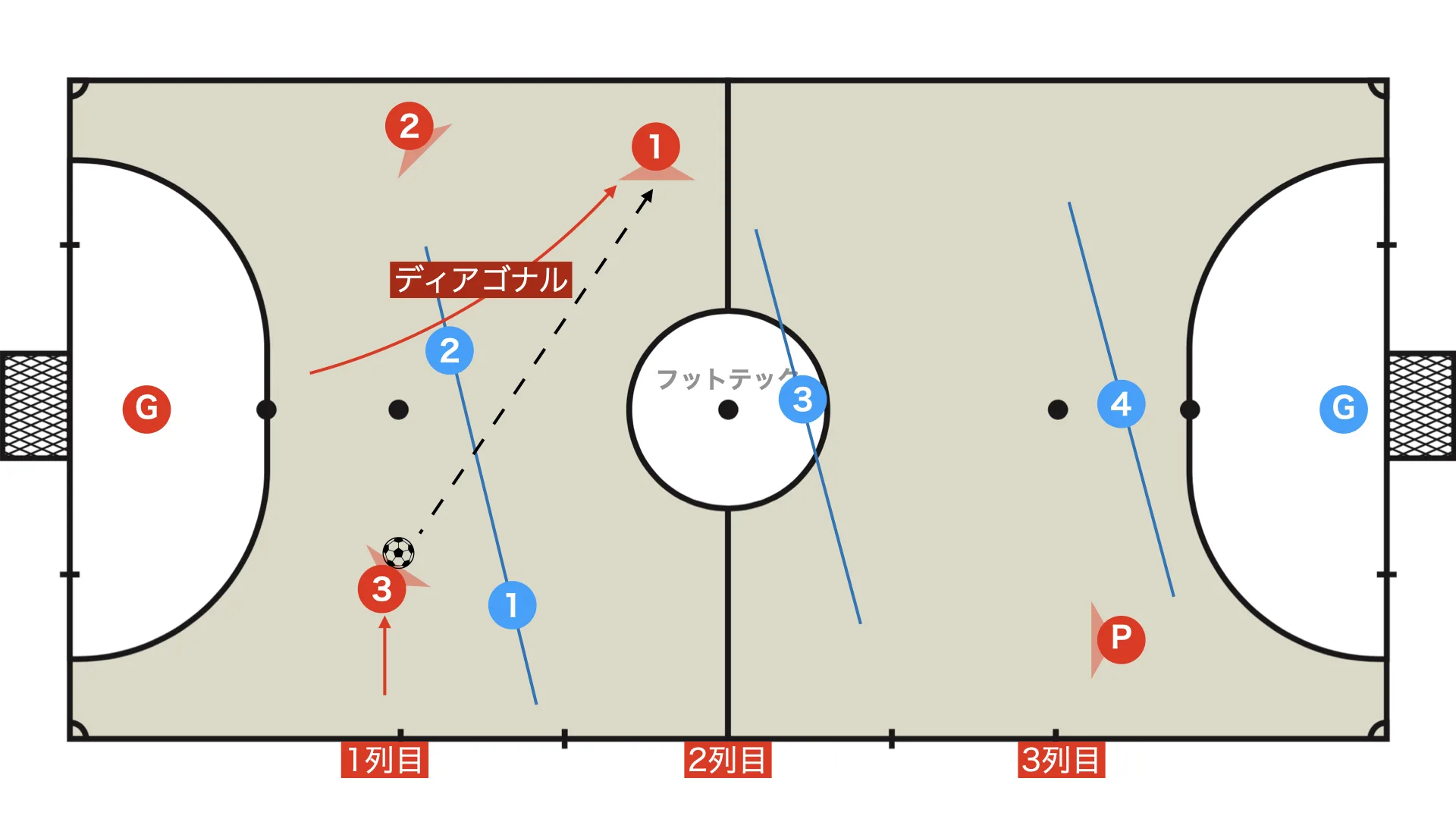
A long parallel is a parallel that breaks through two or more defensive lines.
In the diagram above, the fixo (red 1), who started in the 1st line, runs around behind blue 2, becomes free between the lines for an instant, and then bursts through into the 3rd line.
Broadly speaking, these can be divided into four types:
- direct
- change of direction
- change of pace
- curved run
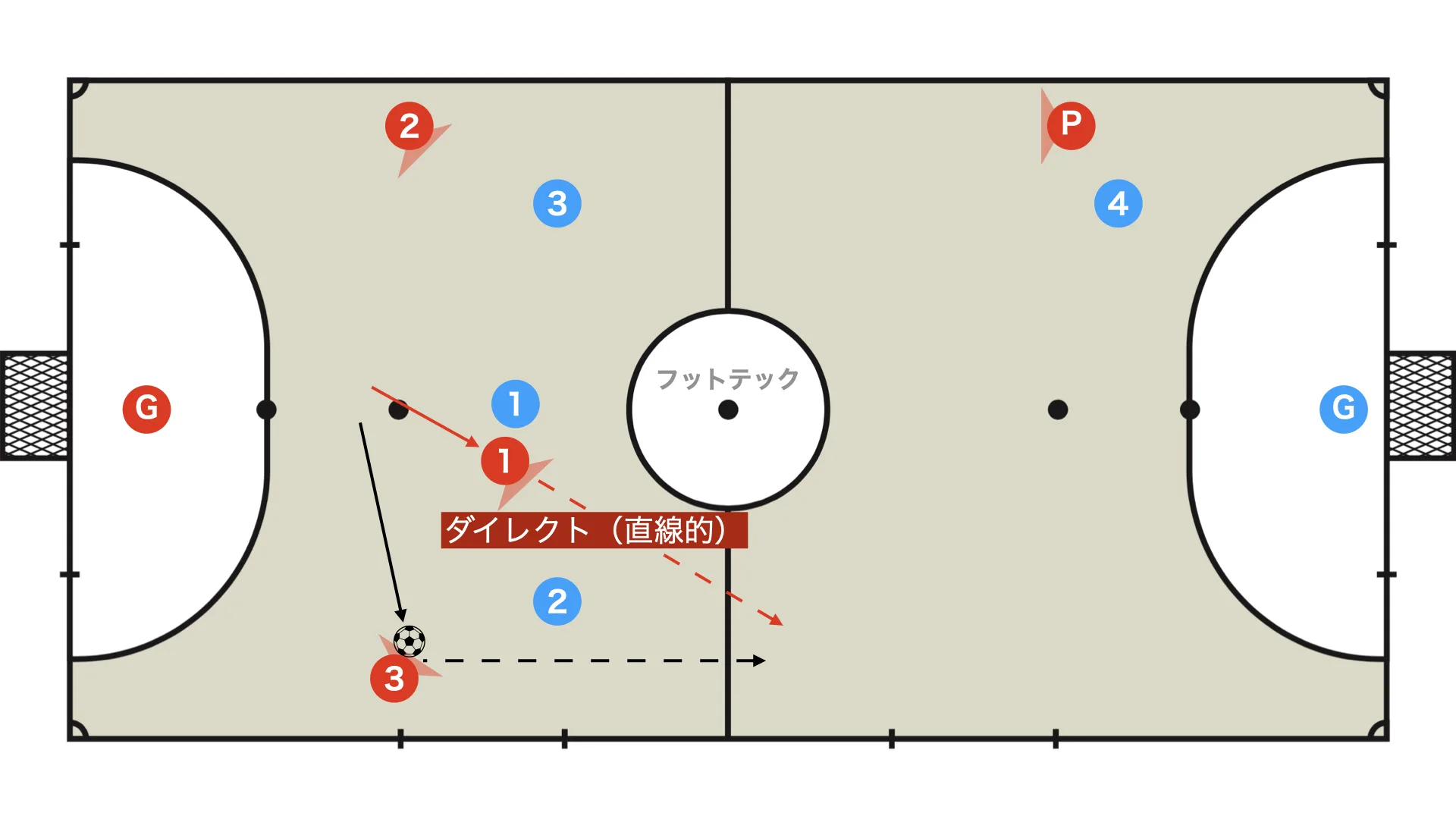
This is a straight-line parallel run that works well for fast players.
Because there is a risk that the runner enters in front of the ball too early, the passer needs to release the pass quickly.
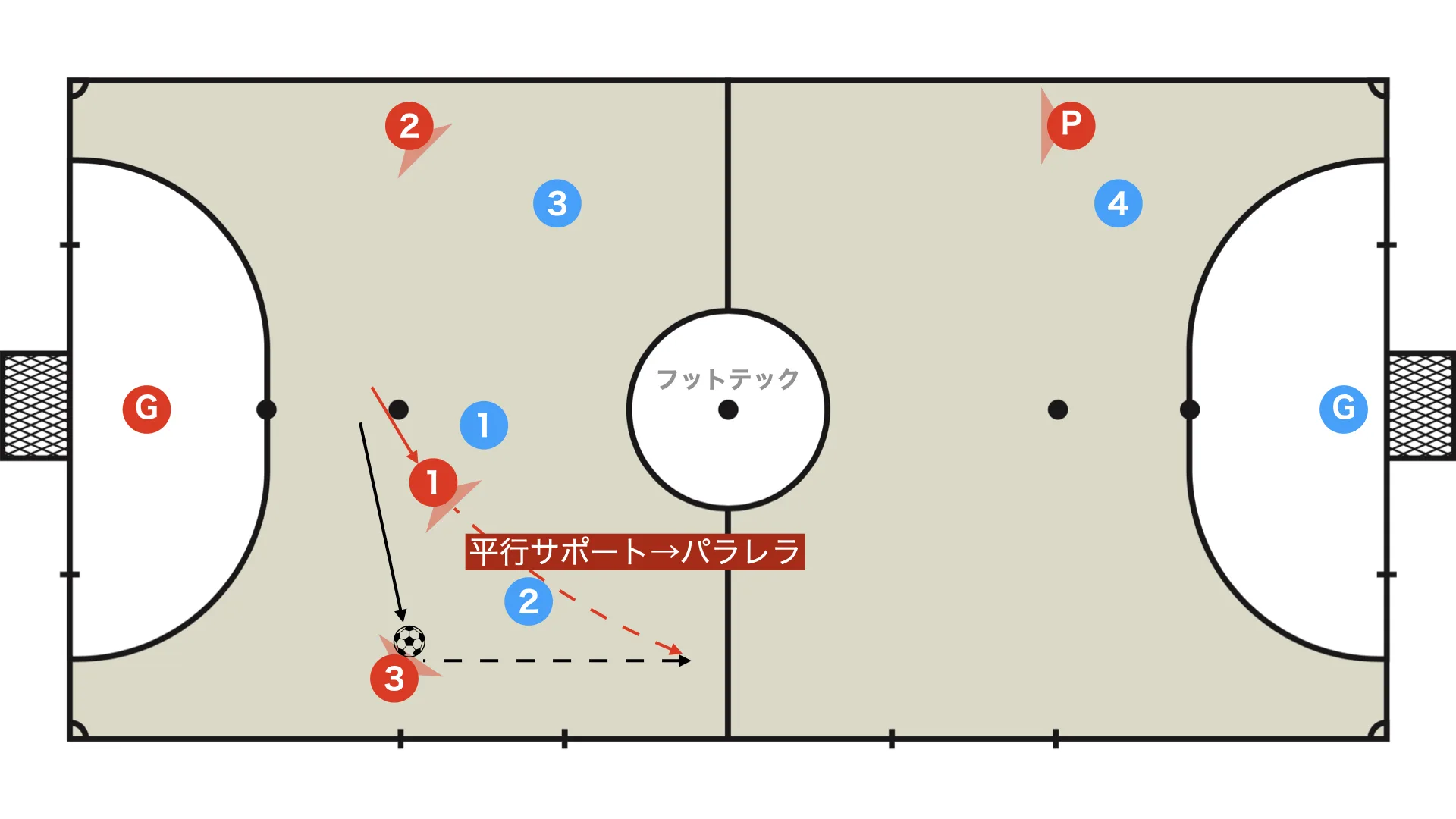
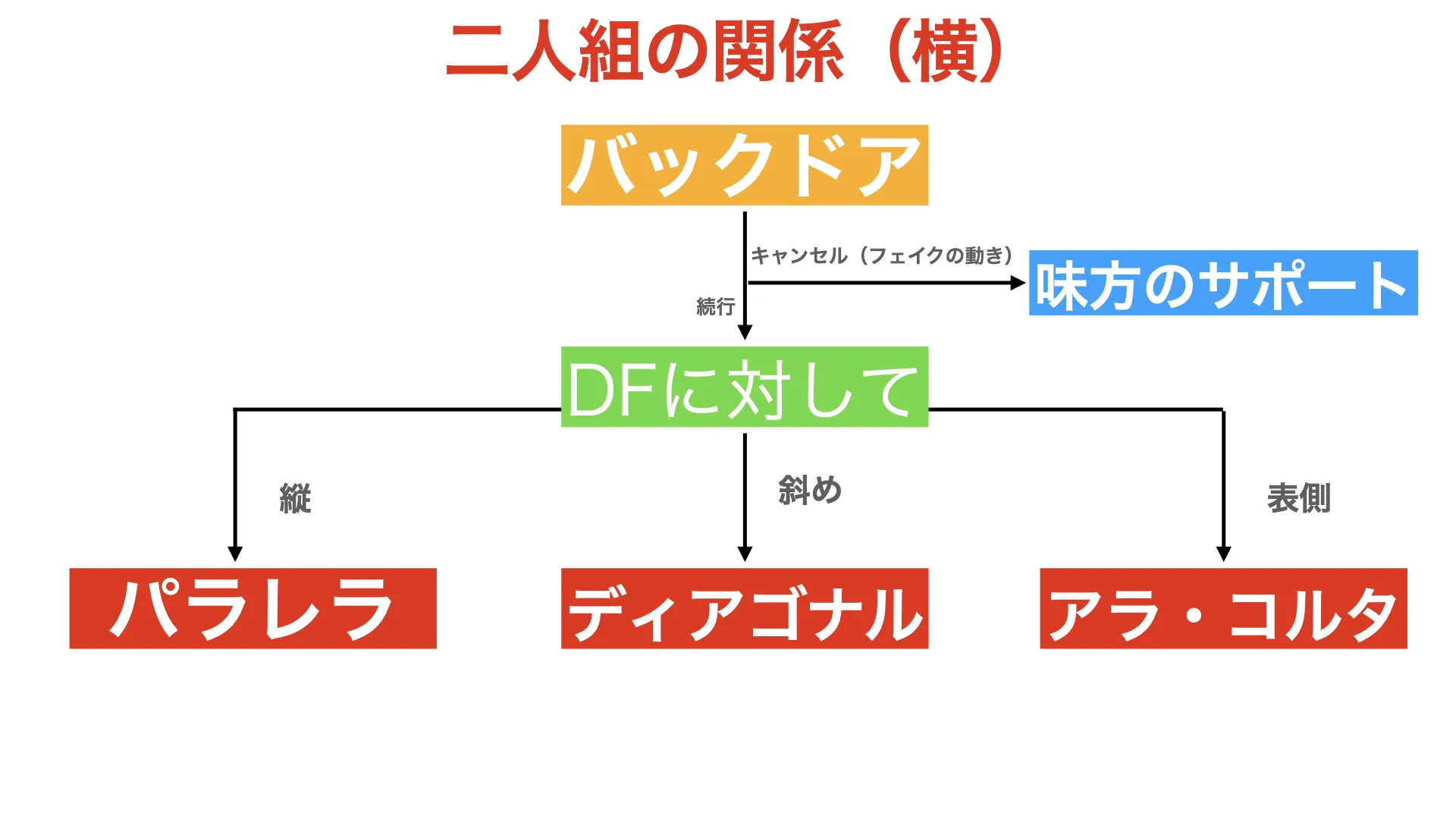
The runner moves close to the ball carrier, cancels the horizontal support option (one-two, block, curtain), and then goes into the parallel.
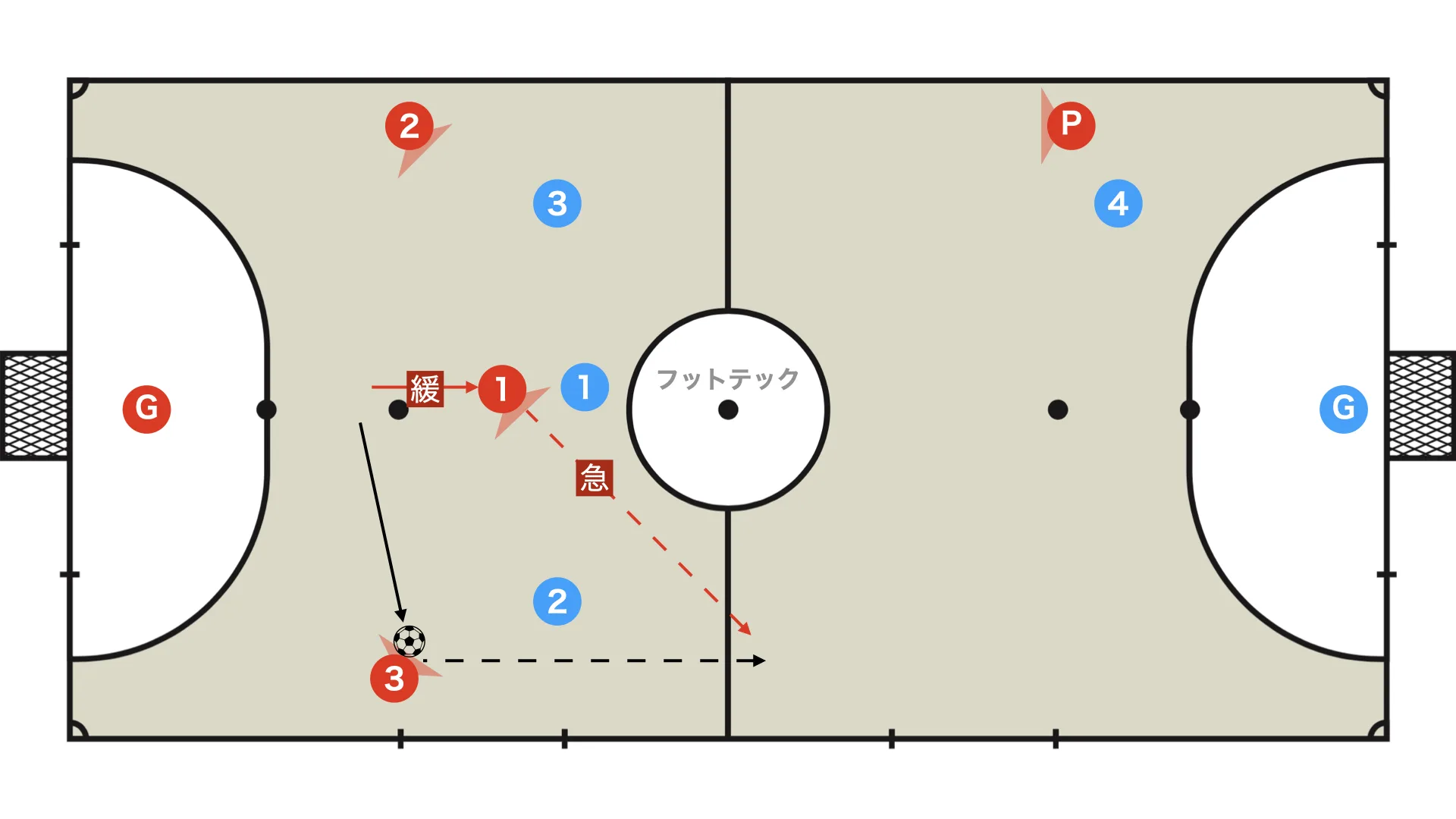
This is not easy, because if the passer tries to play a one-two at the exact moment the fixo (red 1) is starting the parallel run, it can create a major danger for your own team.
This is something Kensuke Nakai is especially good at.
The player first gives the impression that they are not interested in receiving, then suddenly shifts gears.
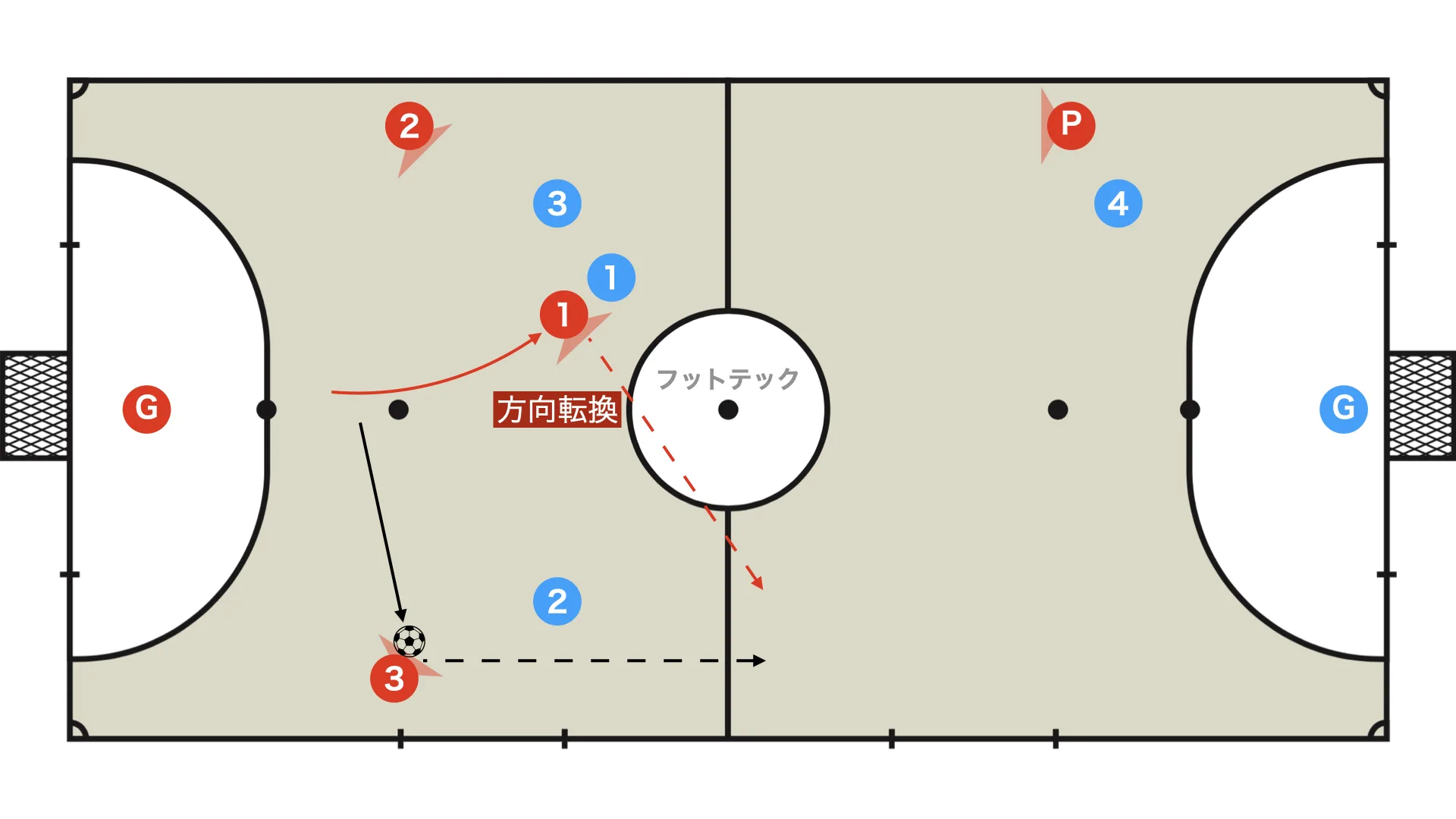
The runner fakes a run to break through with a diagonal, then changes direction and breaks through with a parallel.
Because the battle is mostly decided in the feint before the change of direction, this kind of parallel is recommended for players who do not rely on speed.
In futsal, this kind of sharp cut or break in movement is called quebrar.