Everything Is Decided by Distance and Angle: Futsal Dribbling Theory
Published: 2021.09.12Updated: 2026.05.03
"When I beat my defender and when I do not, I cannot tell what the difference is." Have you ever felt that way?
In futsal, dribbling is not just about instinct. The right moment to attack is determined by three factors: distance, angle, and dominant foot. Knowing this theory is what separates players who can perform consistently from players whose level rises and falls from game to game.
This article explains dribbling in a logical way. If you want to expand your one-on-one tools, also take a look at Tonpa (Contrapie) and Pisada.
It may surprise you, but dribbling in futsal, or rather in football as a whole, has a real theory behind it.
To state the conclusion first, dribbling theory = timing against the defender (distance x angle) x technique.
So what exactly do distance and angle mean here?
This article gives a thorough explanation of dribbling theory, something every field player should know, with diagrams and video.
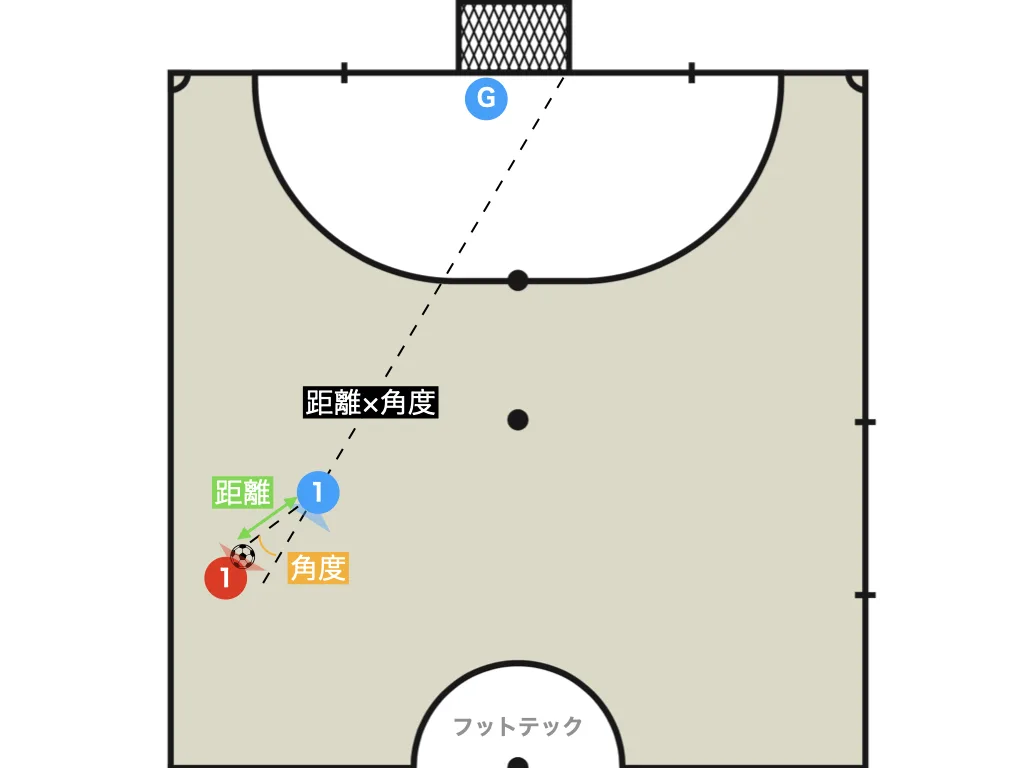
When people hear the word timing or spacing, they tend to think only about the simple distance between two players. But once you remember that football (soccer, futsal, 7-a-side, etc.) has a goal, that understanding is incomplete.
Timing against a defender is not just about distance between players. It is expressed as distance x angle, and the angle here means the angle created by the goal, the defender, and the attacker.
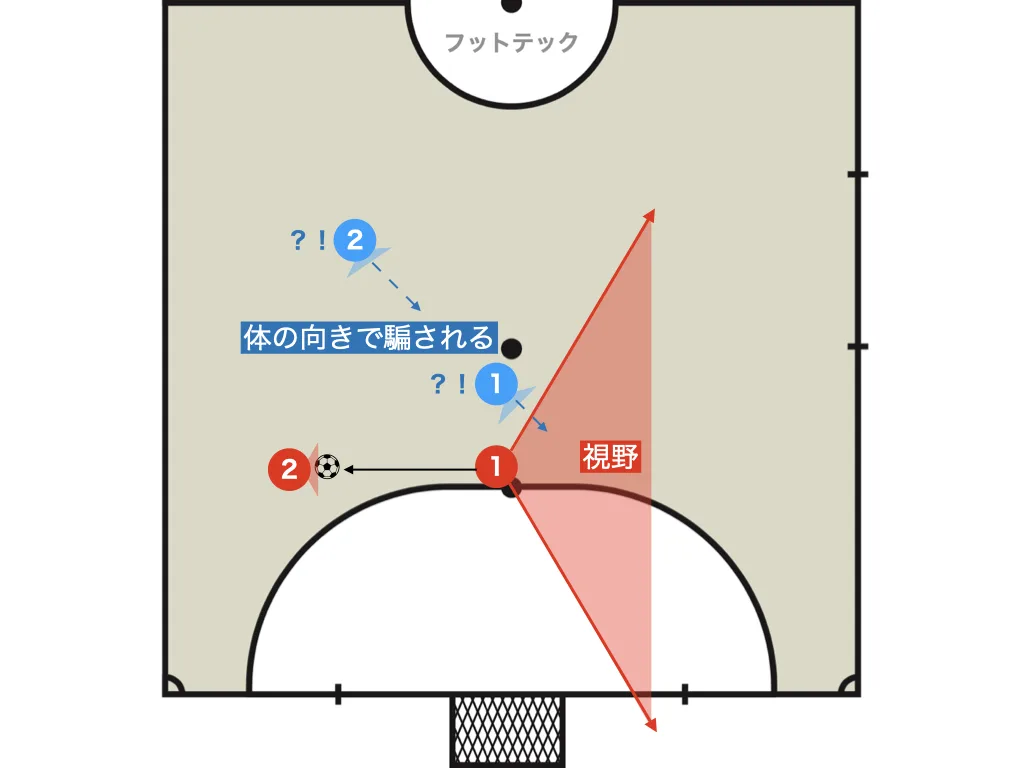
From a defensive perspective, the defender always has to keep the goal hidden in order to stop both the shot and the dribble. That is why it is important to defend while constantly being aware of keeping this angle at 180 degrees.
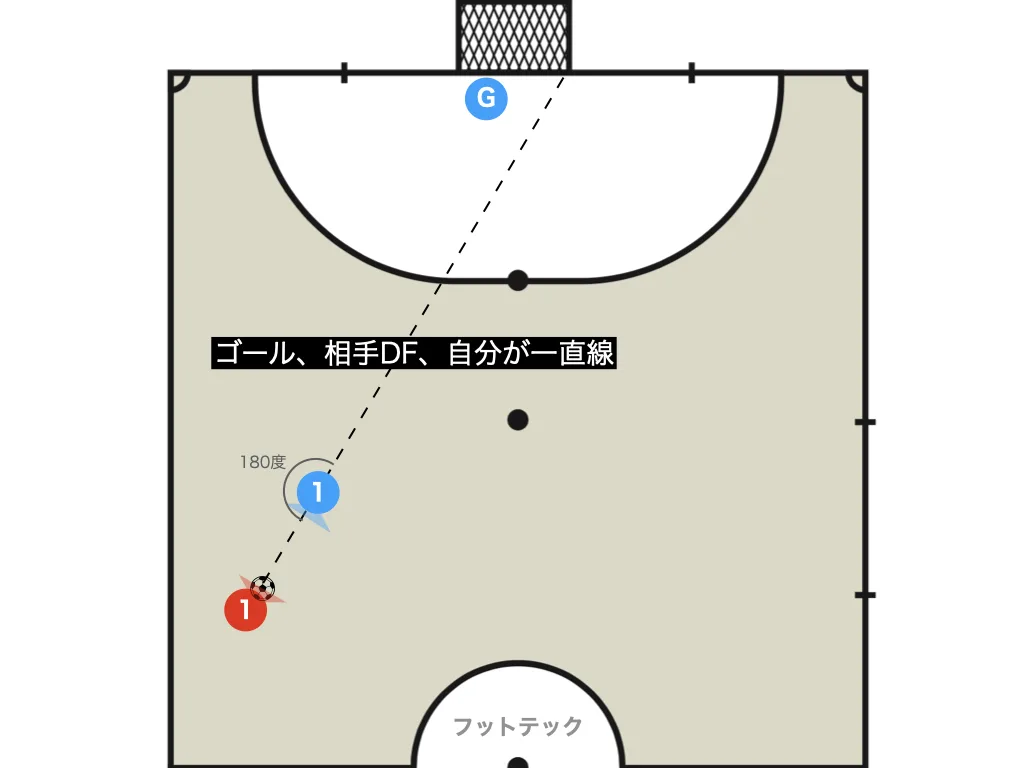
Also, on teams where the common rule is for the FP to block the far post and the goalkeeper to protect the near post, it is usually safest to use the second post as the reference point for the goal.
Next, let us dig a little deeper into distance and angle.
Timing against the defender = distance x angle
- Distance: what prevents the ball from being taken away
- Angle: what lets you beat the defender
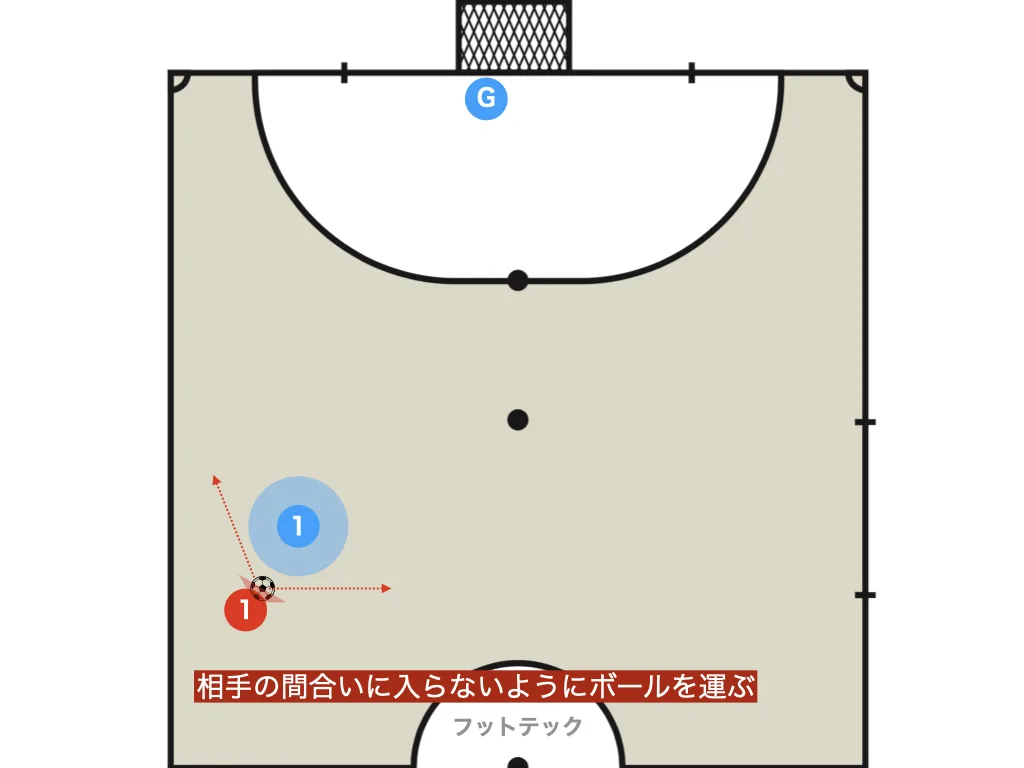
When you lose the ball, it can broadly be divided into the following three situations.
When you lose the ball and how to improve it
- You make your own mistake: improve the mental side
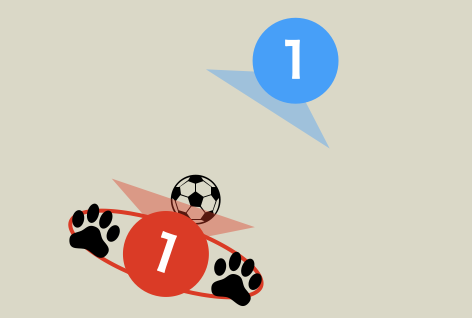
- The defender touches the ball: keep a distance the defender cannot reach even if they stretch their leg as far as possible
- The defender touches your body: keep a distance the defender cannot reach even if they stretch their leg as far as possible
In other words, if none of those three things happens, you will not lose the ball.
If you keep a distance where the opponent cannot touch you and avoid careless mistakes, you should be able to keep possession.
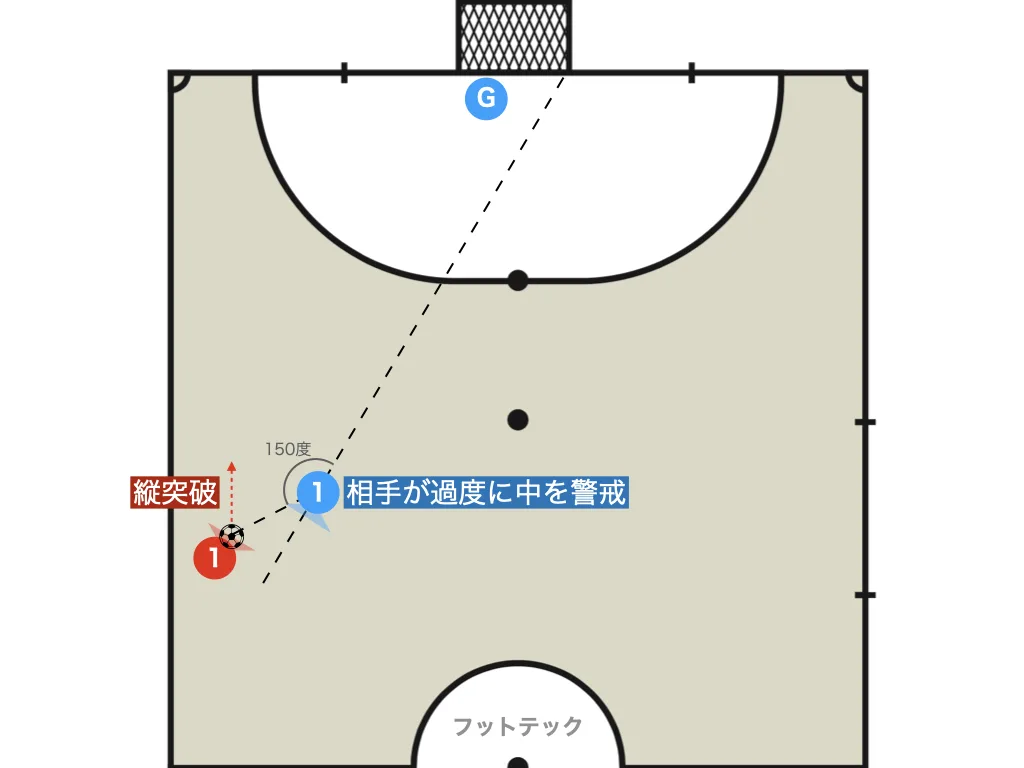
- 180 degrees: goal, defender, and attacker are in a straight line
- 165 to 135 degrees: an angle where you can take them on if you trust yourself
- 90 degrees: a high chance of pulling away in a straight race (the defender is not really set)
- 0 degrees: you are completely past the defender
The key is to keep a distance where the defender cannot reach the ball, while gradually changing the angle without making it obvious, until you bring it to an angle where you can beat them completely.
That beatable angle changes depending on the difference in quality between you and the opponent, so you need to practice beforehand and have a rough idea of the angle where you can get past.
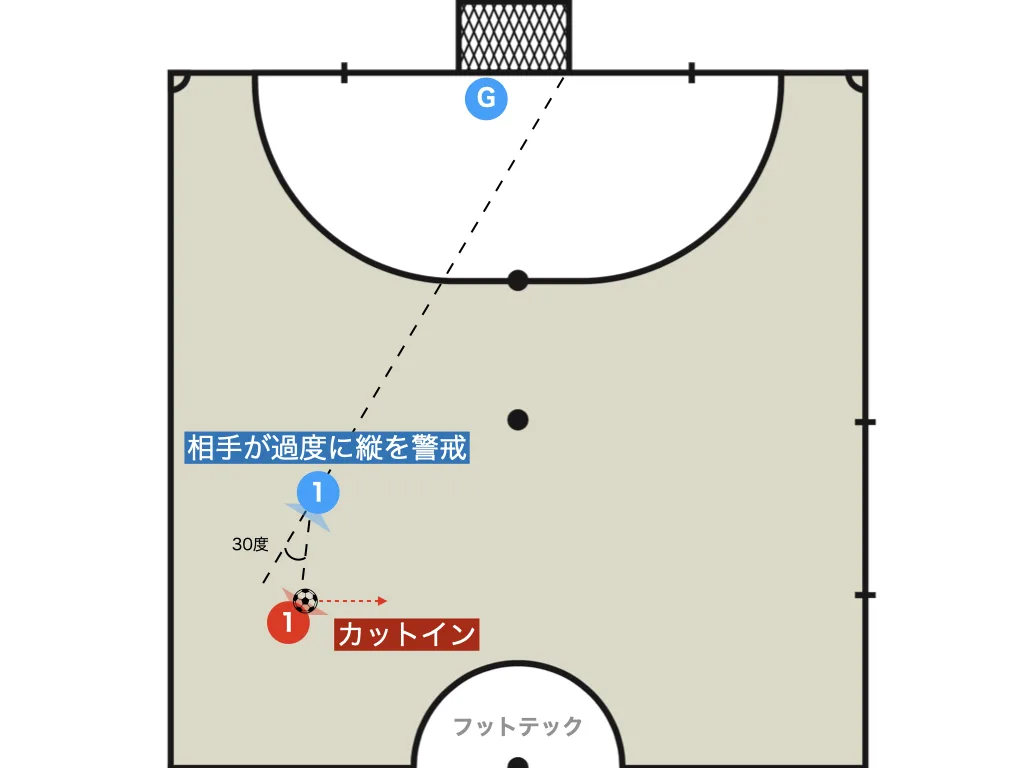
If the defender is overly worried about the line, choose the cut-in and turn it into a pass or shot.
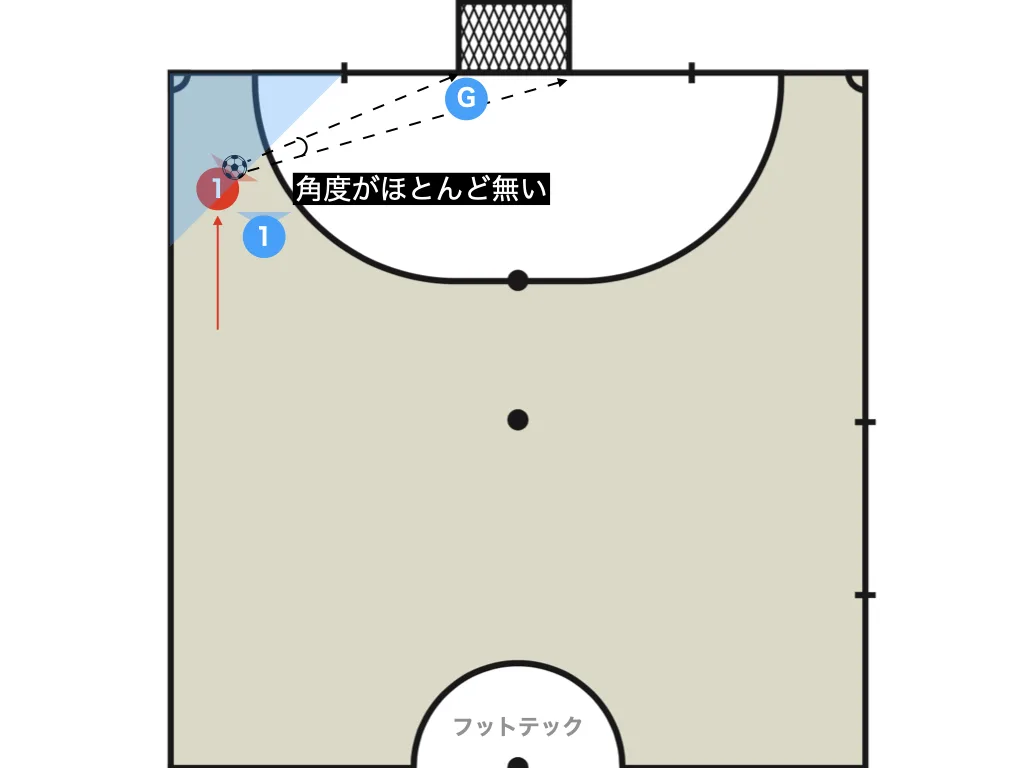
If you beat them down the line, you often lose your shooting angle to goal, so you need to be careful not to enter the zone near the corner-kick area.
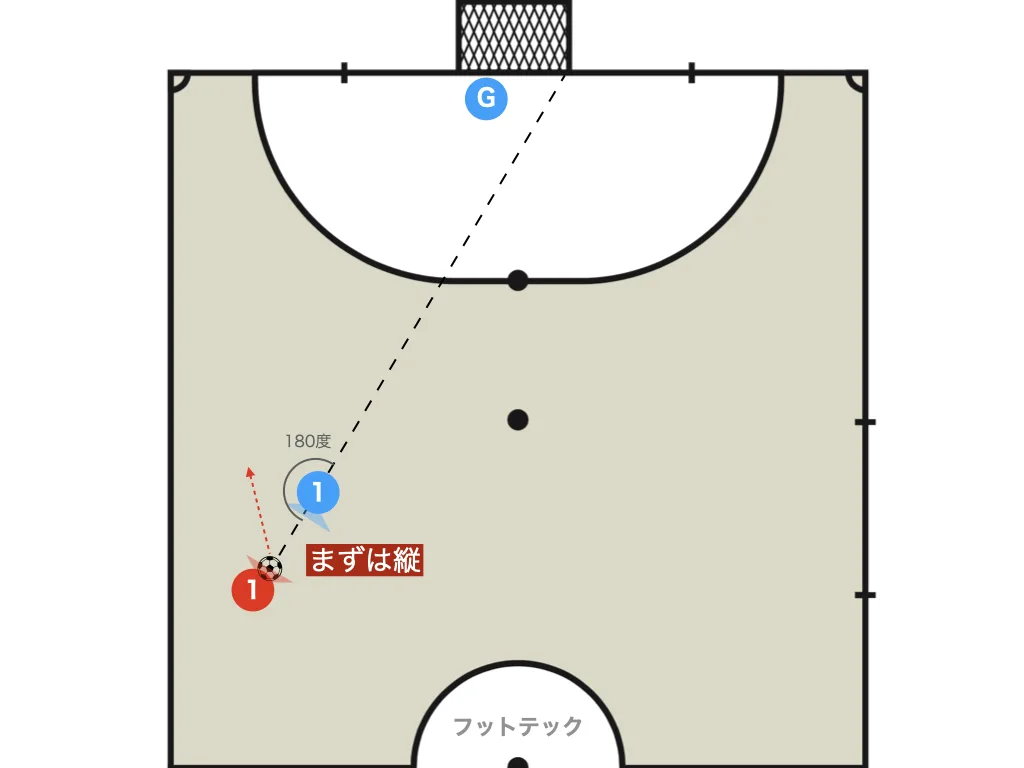
If you want to get closer to the opponent's goal faster, you need to choose the faster dribble.
Dribbling means running while touching the ball, so the speed of a dribble will never exceed the speed of a full sprint.
That is why it is obvious that a line dribble, which is closest to sprinting form, is the fastest and best way to carry the ball forward.
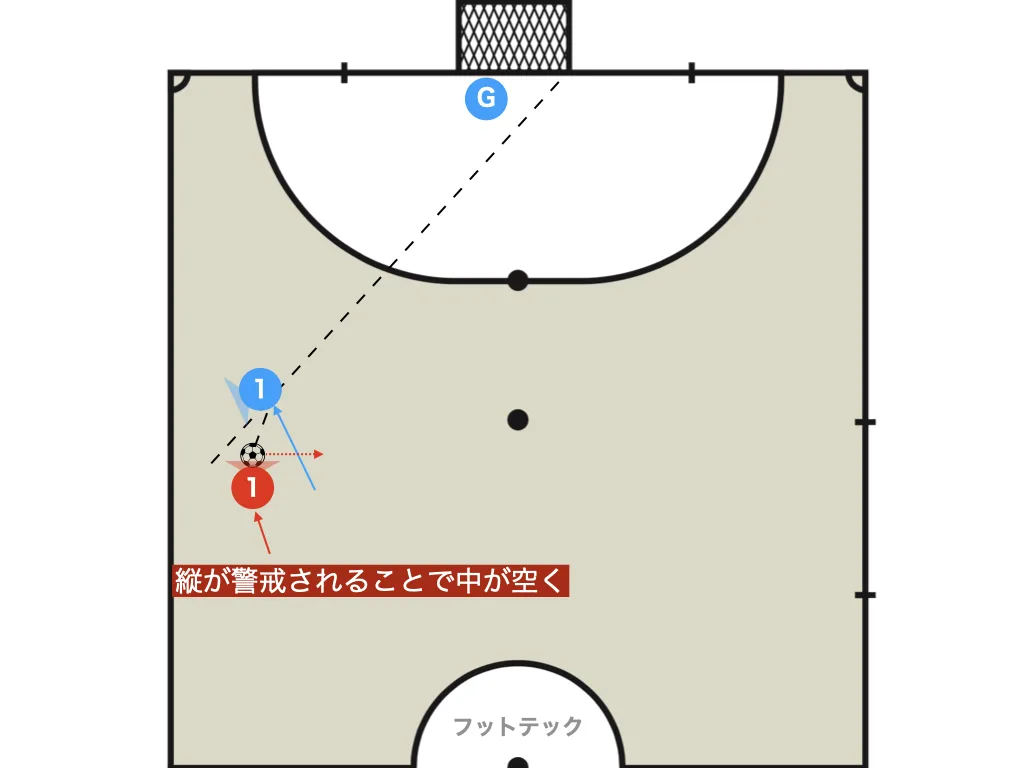
If you show the opponent the threat of going down the line, the defender becomes wary of it and their weight shifts slightly backward.
If you cancel that line dribble and cut inside, you can wrong-foot the defender.
The cut-in should not become a cut-in just for the sake of cutting in
Higher up the court, the cut-in is a very effective option because it opens up the shooting angle to goal and gives you a better chance of scoring with a mid-range shot than a simple line break does.
However, a cut-in without first showing the threat of the line is much easier for the defender to deal with.
That is why, when you cut in, you should always think of it together with the line option and use both to shift the defender's balance.
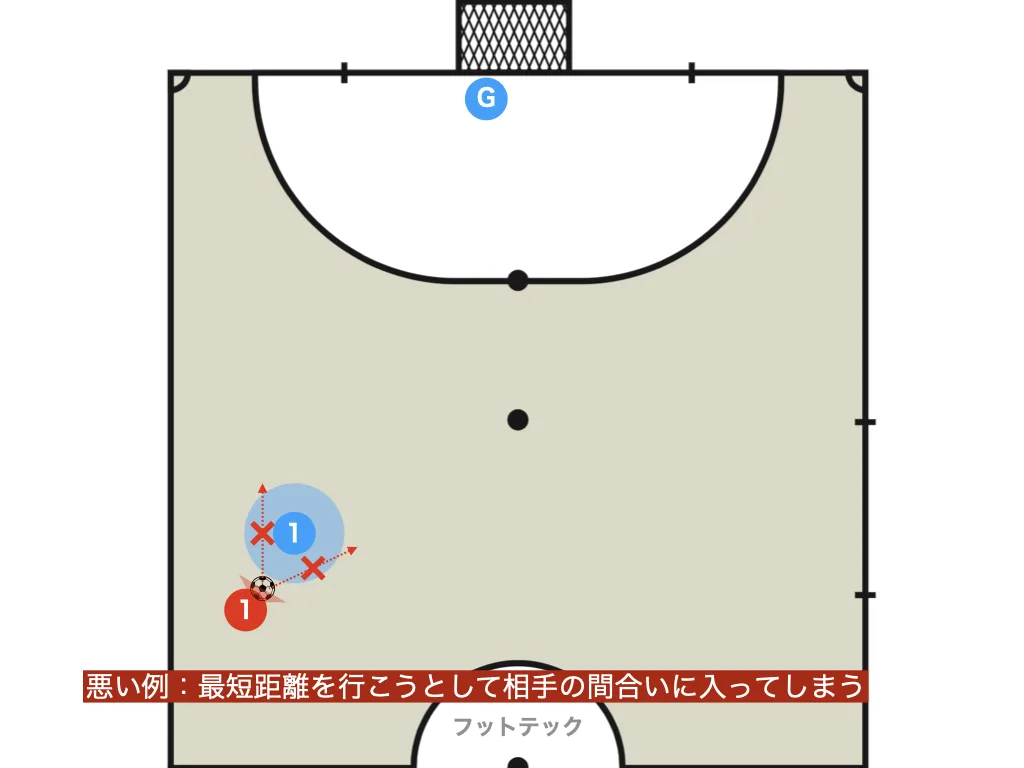
If the defender is close and you still try to attack goal by the shortest route, the defender can easily deal with it by simply sticking out a leg.
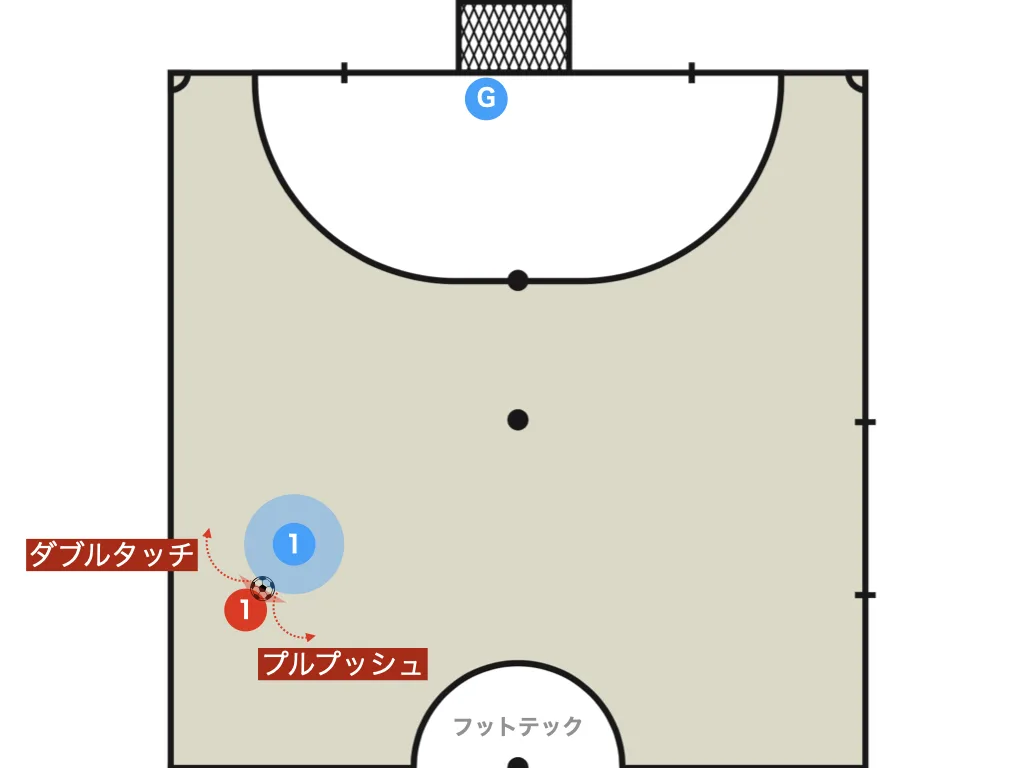
In that kind of situation, it is effective to choose an individual tactic that escapes the defender's range.
For beating them down the line, the double touch is very effective. For cutting inside, the pull-push is very effective.
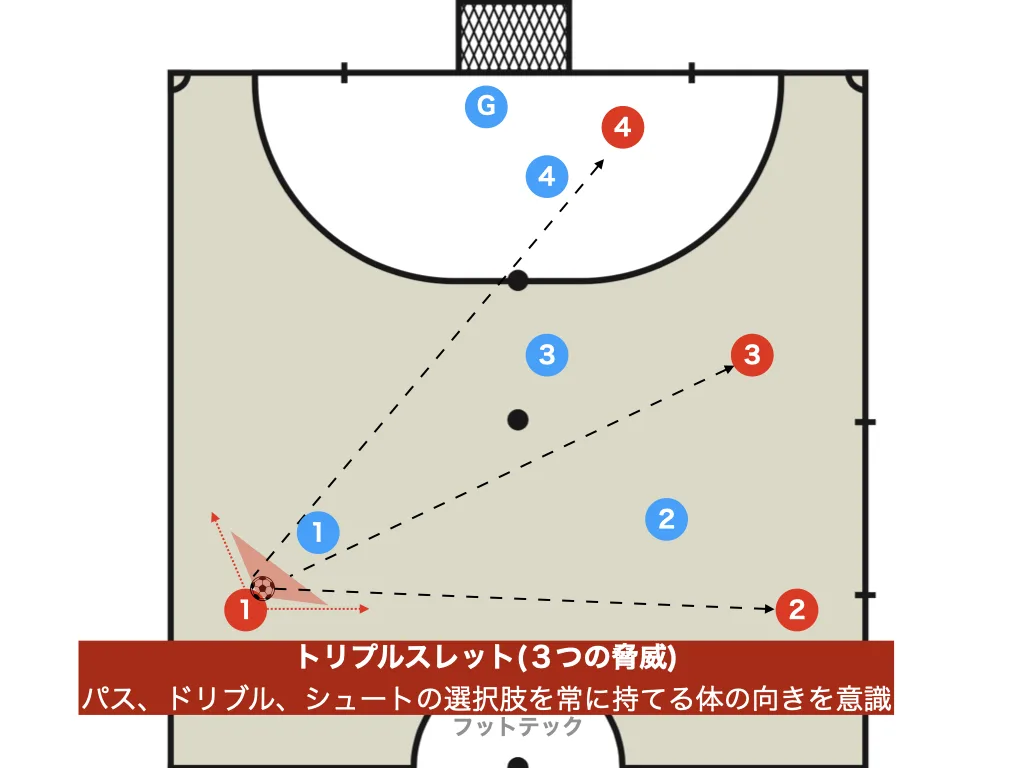
What is a triple threat?
- Pass
- Dribble
- Shot
Body orientation that always allows those three options
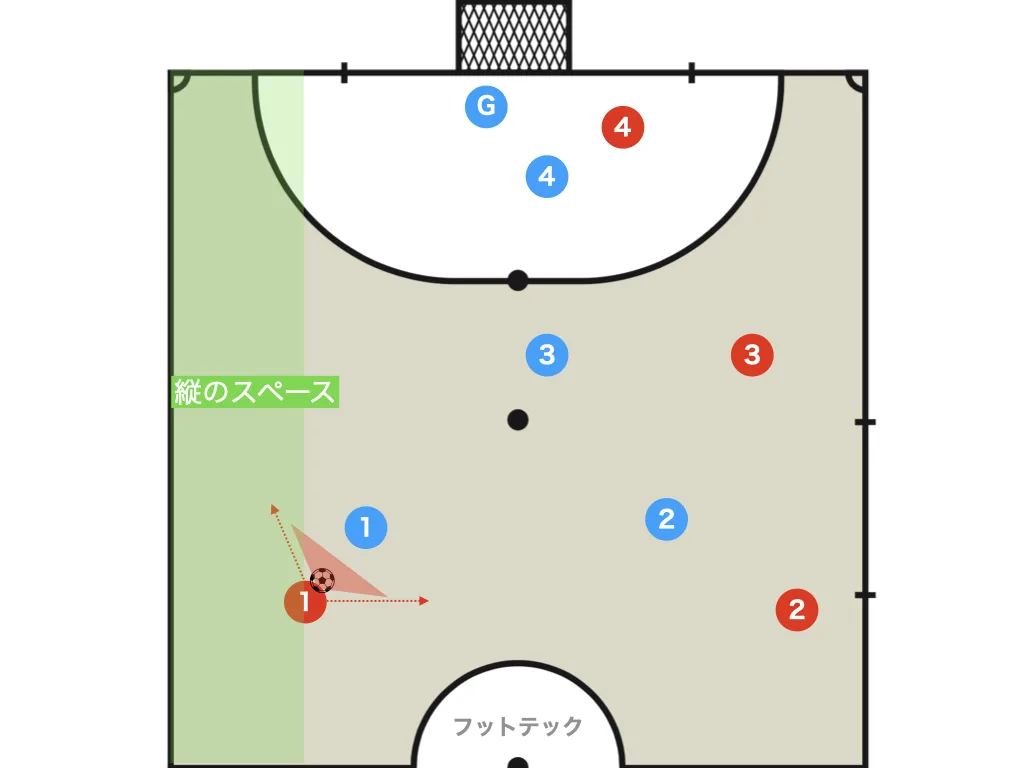
When thinking about dribbling, it is extremely important to always keep the option of going down the line.
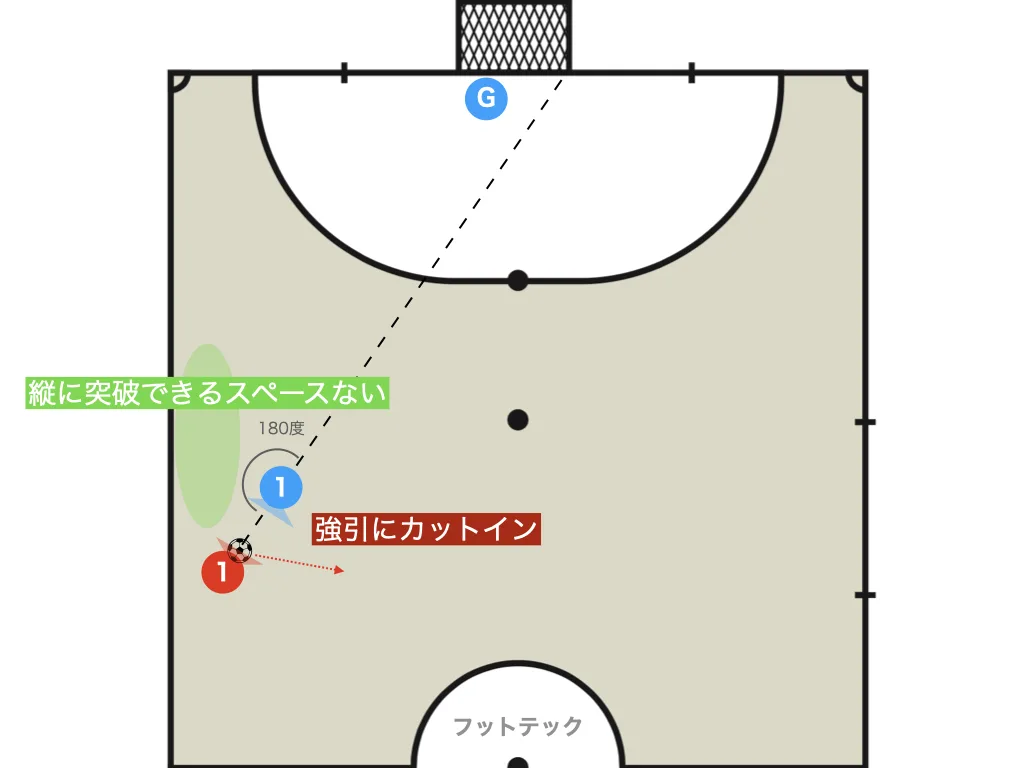
If there is no space down the line, the golden rule is to cut in decisively and carry the ball toward the center.
At that moment, if the defender is close, cut in on a slightly backward angle.
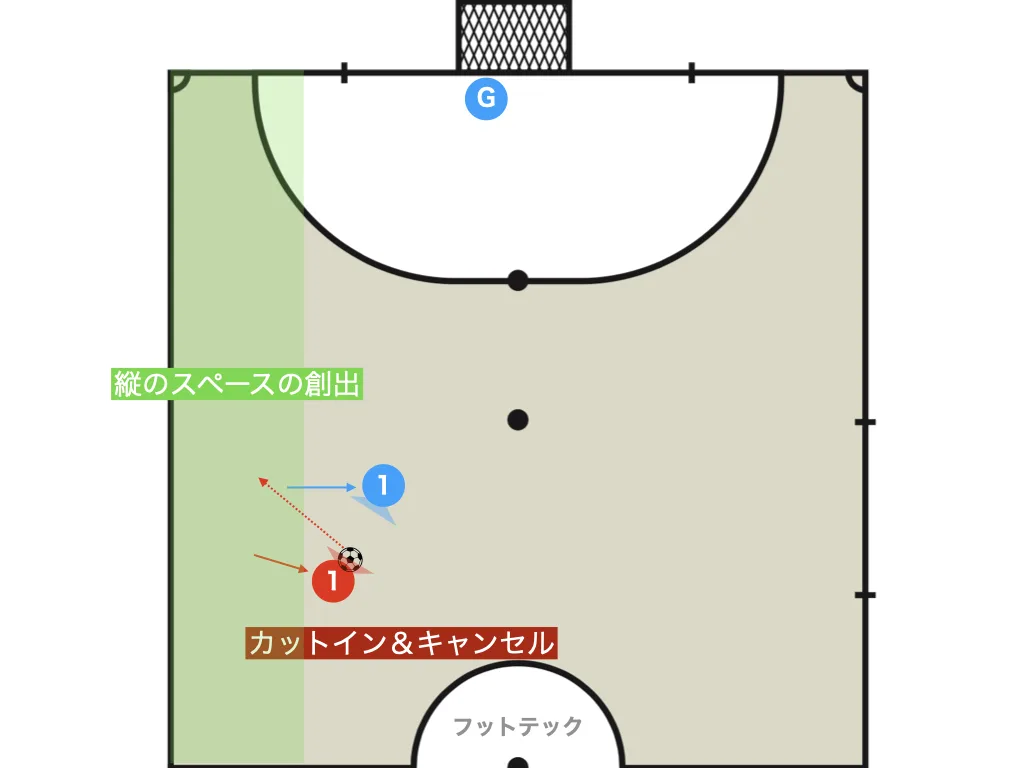
By cutting in and then cancelling the shot, you can make the defender bite.
If you then carry the ball down the line after the cancellation, you can use the space created by the cut-in effectively.
What did you think?
What you can learn from this blog is the logic. To express that logic in real play, you still need the minimum level of technique.
On the other hand, once you understand this logic, you can focus purely on practicing and acquiring the technique.
Try reviewing your own dribbling footage at least once while comparing it against this theory.