Power Play Basics: House Attack and Rotating Square Defence
Published: 2021.08.09Updated: 2026.05.03
In this article, I will explain the absolute basics of the house-shaped attack and the rotating square defence, which are the first things beginners should work on in power plays.
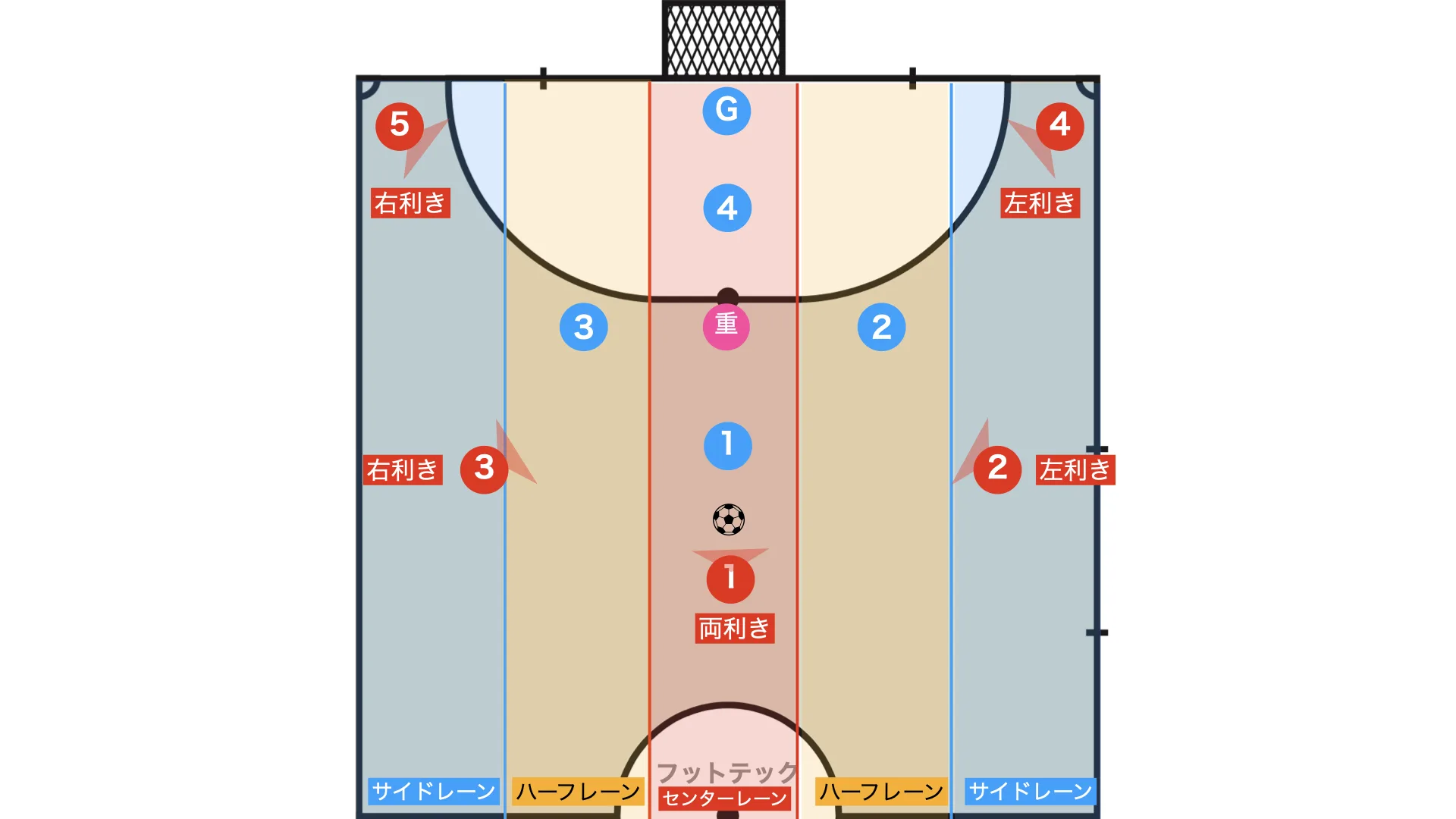
- Use the full width with five lanes in mind
- Position players on the side opposite their stronger foot
- Face the centre of the pentagon
Because power plays have limited mobility, the shape of the team is extremely important.
If you count the goalkeeper as the fifth outfield player, the team attacks with five players, so it is important to think of the court as being split vertically into five lanes and build the shape around that.
The five players are positioned as follows:
- Front line (red 4 and 5): near the corners
- Second line (red 2 and 3): near the boundary between the side lane and the half-space
- Back line (red 1): in the centre lane
This idea applies to all attacking situations, including special phases, but in general it is best to position players on the side opposite their dominant foot.
This is the safest area in terms of losing the ball, so it is often where the team can settle possession and create time.
The basic strategy is to move the ball quickly with the back three while waiting for a delay in the defence's rotation and response.
The attacking team should focus on the following four points:
- Look for skip passes
- Increase pass speed
- Use one-touch passes
- Reduce the time between the first touch and the pass
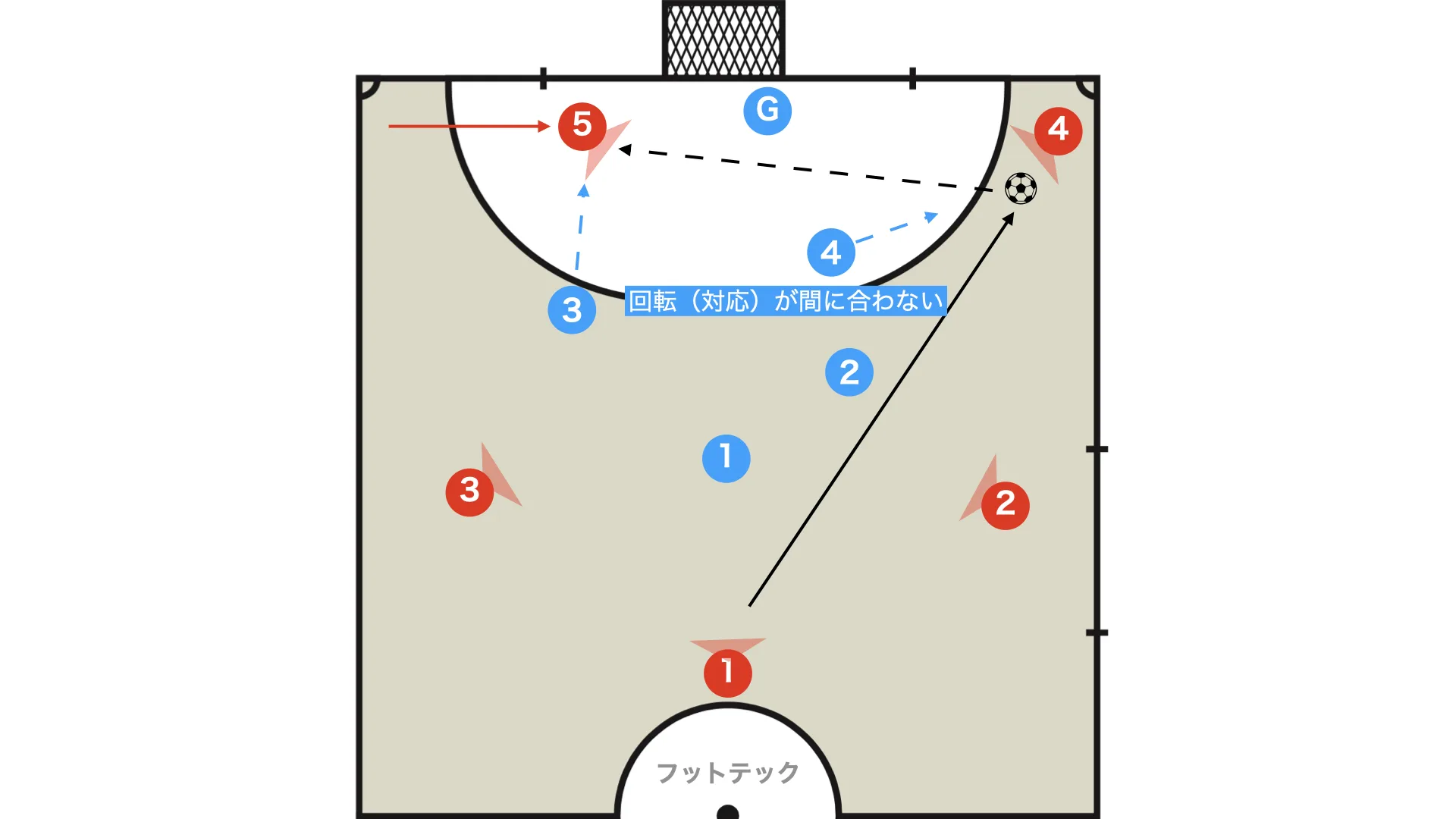
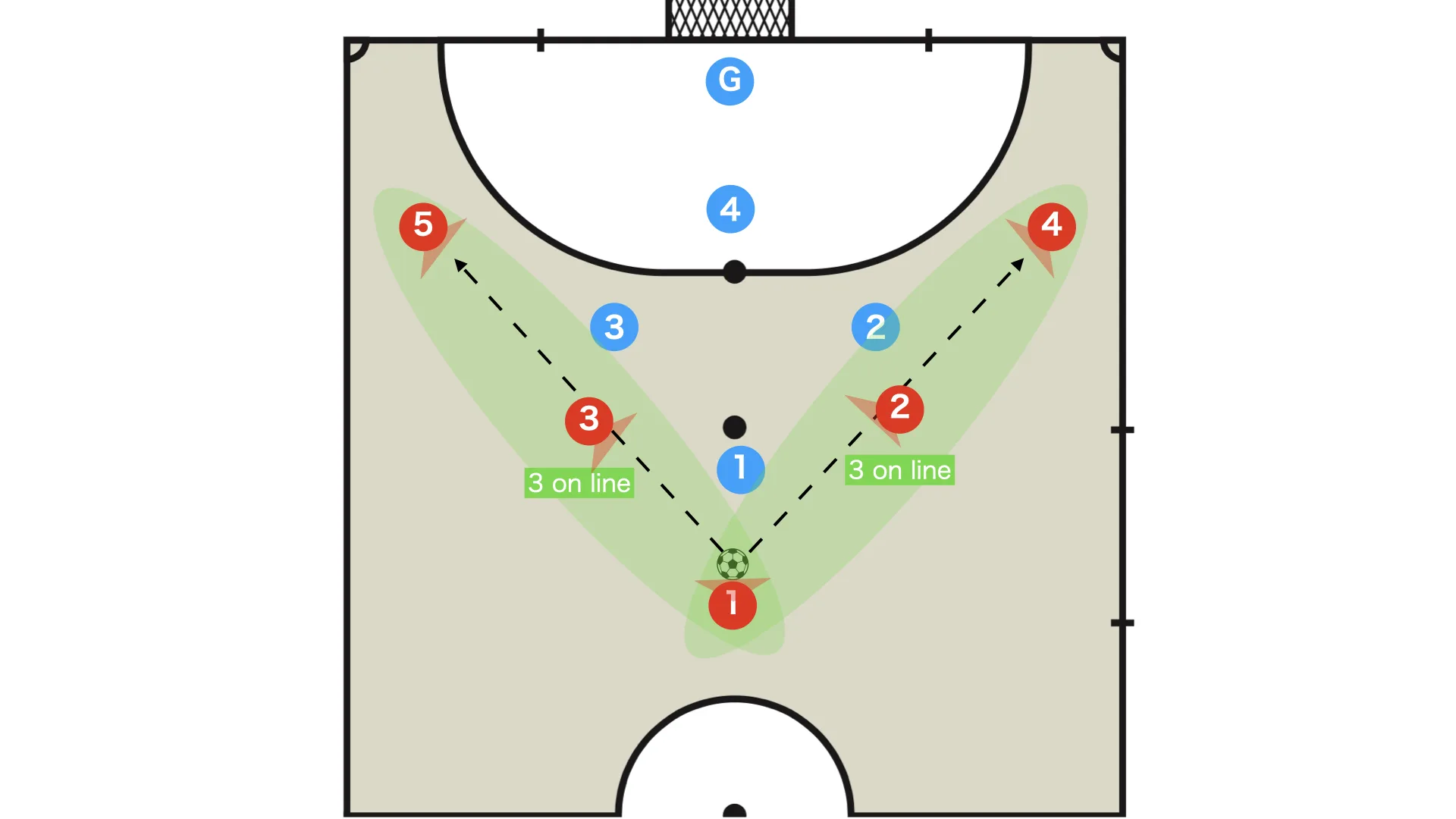
If the defence is late to rotate, play the skip pass as shown above.
If that pass gets through, the defence will usually not recover in time to cover the far-post option, so if the next pass reaches the second post accurately, the chance of scoring is very high.
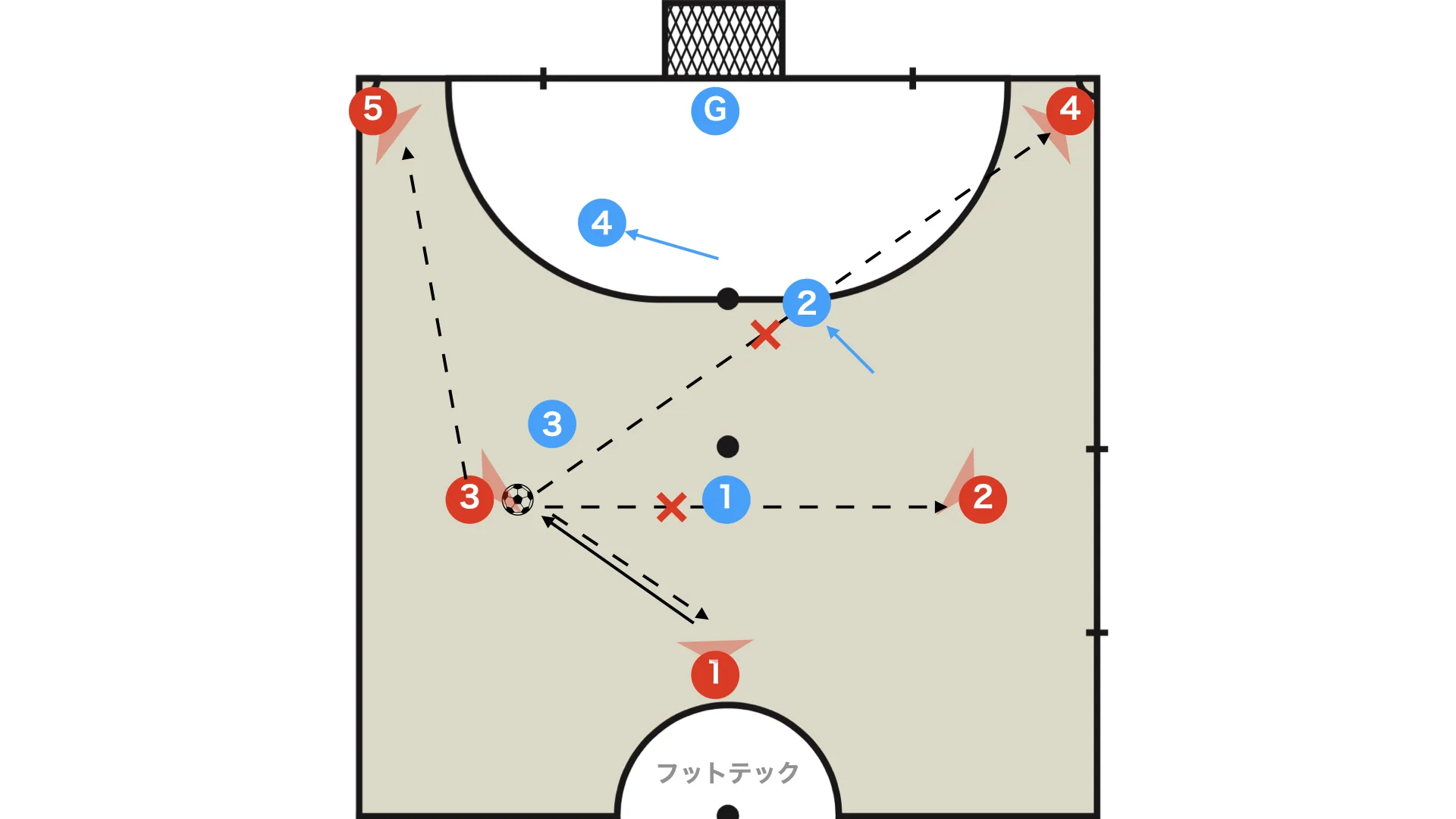
Players in the second line need a wide field of vision and strong decision-making, because the angle is only just enough to keep all four teammates in view at once.
Not only in the house shape, but in any power play, the second-line players are a crucial key.
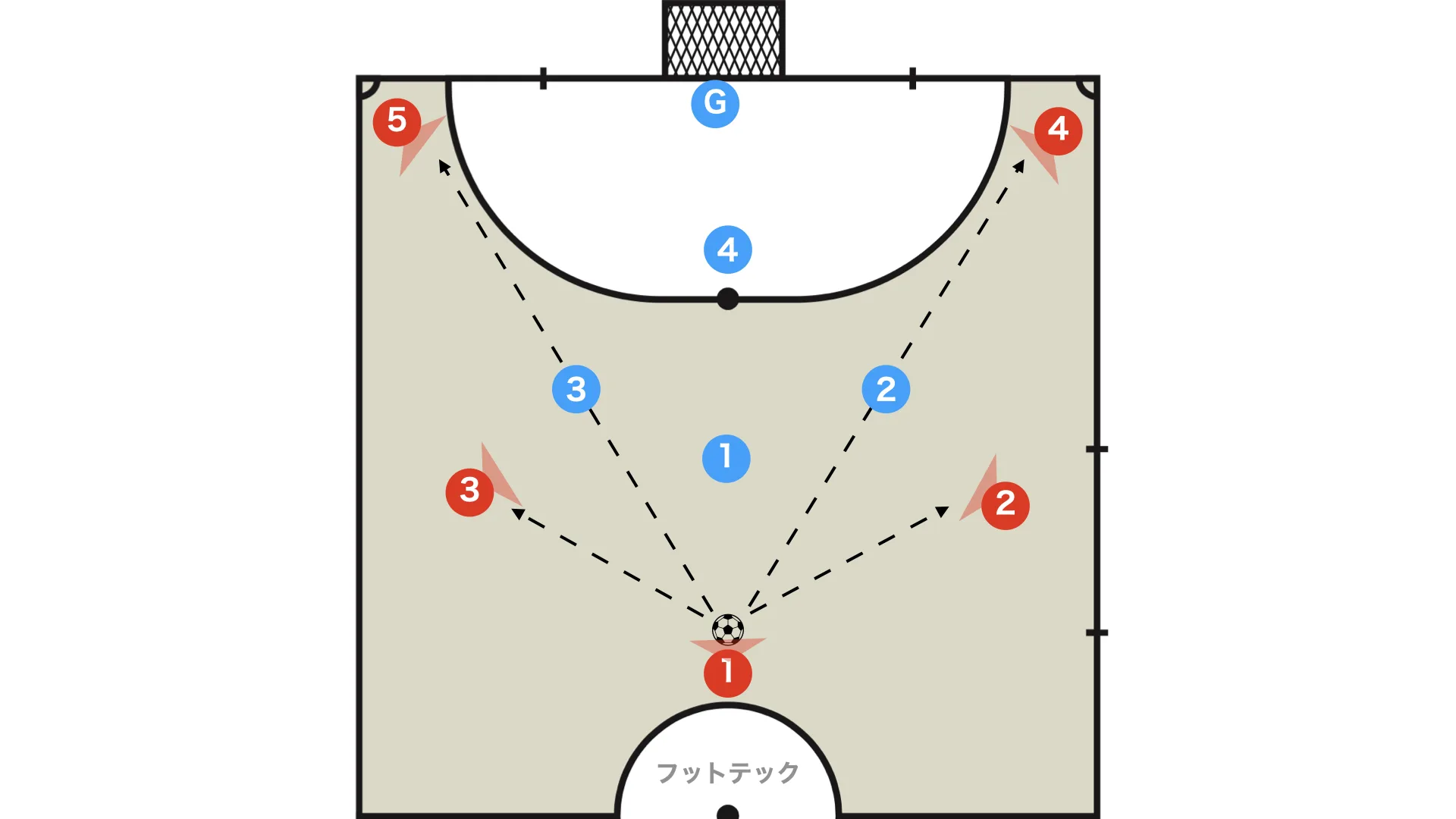
Defensively, as shown above, the priority is to cut the skip passes to red 4 and red 2, so the attack cannot switch the ball across too easily, while continuing to maintain a compact square.
The concept of rotating the defence while keeping a compact square is almost the same as the rotating square used by the half in positional defence.
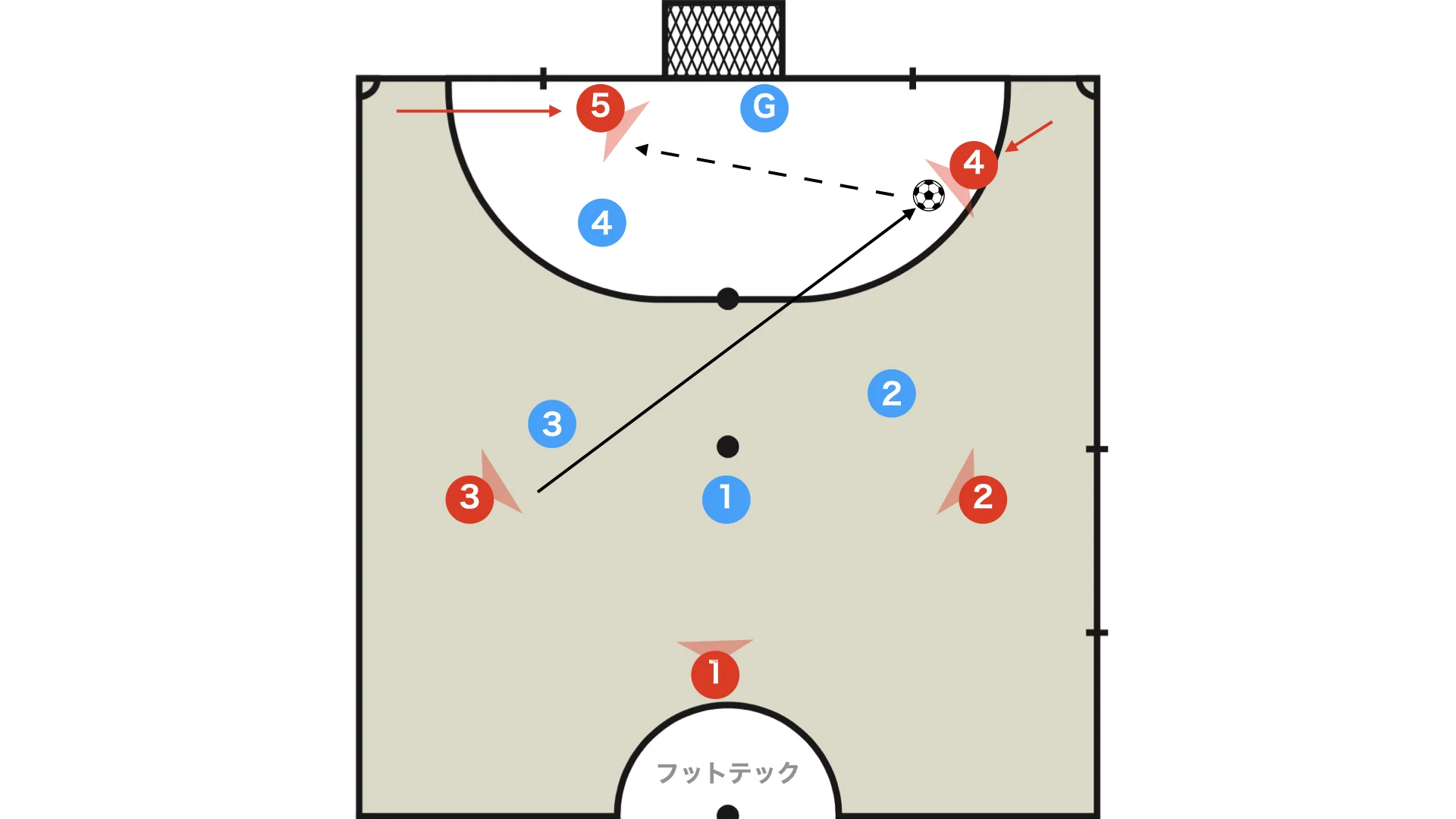
If the defenders fail to move together and leave the skip pass open, the attack can connect the play all the way to the finish in one move, as shown above.
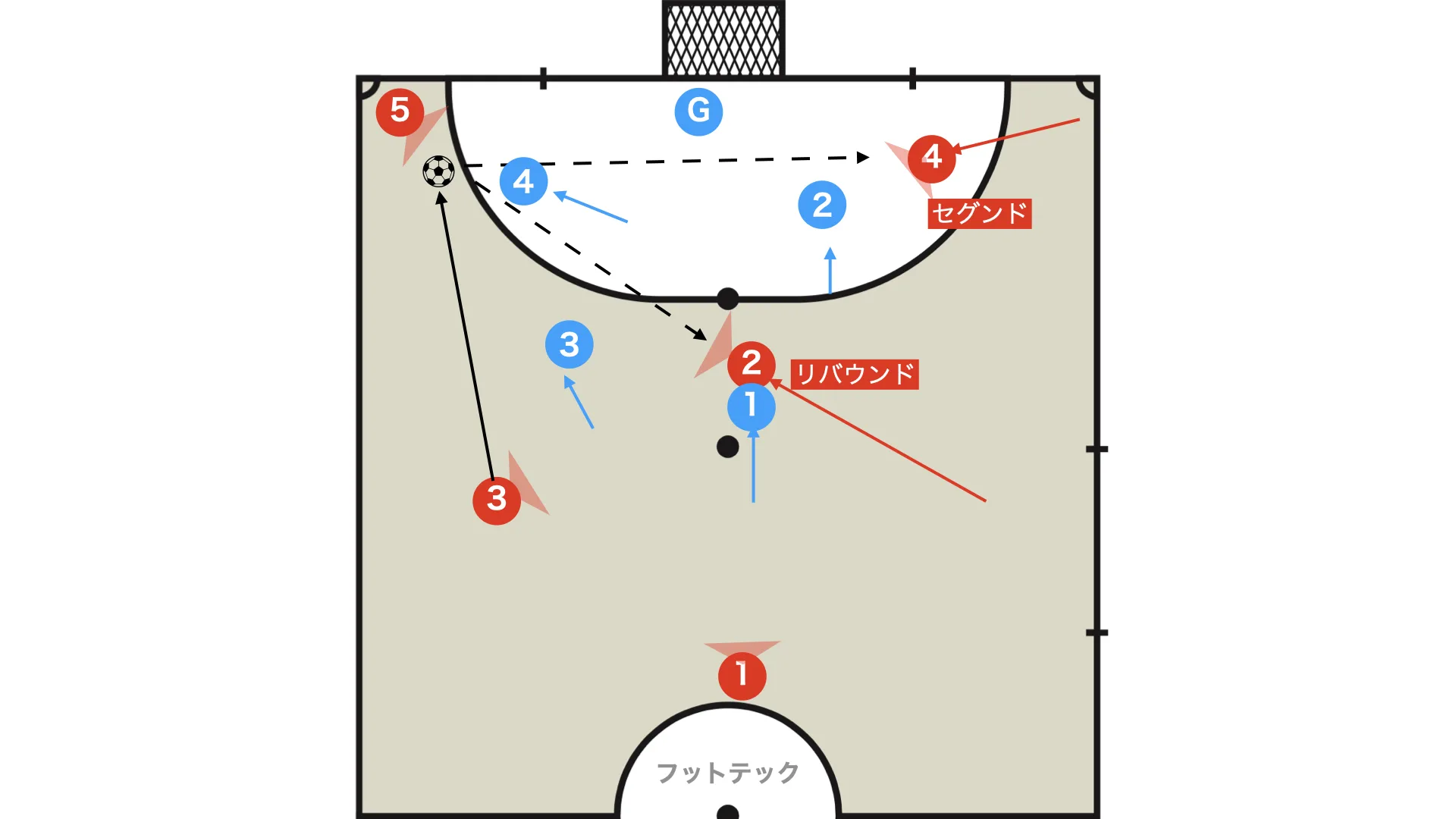
Once the ball reaches the front line, the golden rule is to finish by cutting it back either to the second post or to the rebound area.
For that reason, someone must always arrive in the rebound position to create a finish triangle.
If the pass inside is not available, play it back once more to red 3.
Note
The player who arrives in the rebound position is often the diagonal player, red 2, because of body orientation, but if the team has agreed on it in advance, another player can fill that role as well.
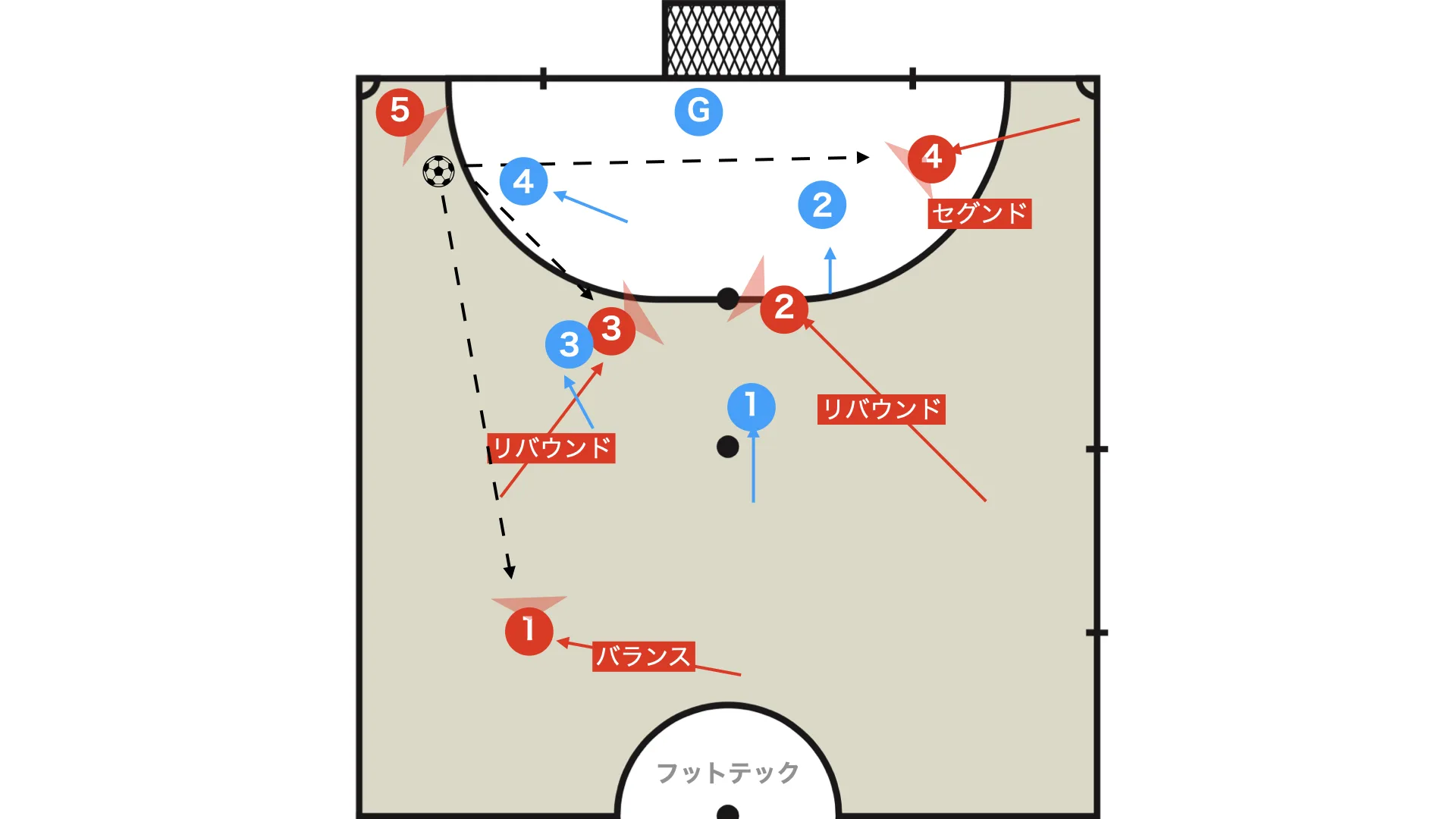
Because a power play uses five outfield players, it is also very effective to create a finish rectangle with two players in the rebound positions.
When the ball is cut back, there is a very high chance that it spills loose in front of goal, so placing two players on the rebound also helps prevent the counterattack after a failed power play.
If red 3 goes into the rebound area, the backward passing lane disappears, so it is important for red 1 behind the ball to hold a proper balance position and move into a spot where they can receive.
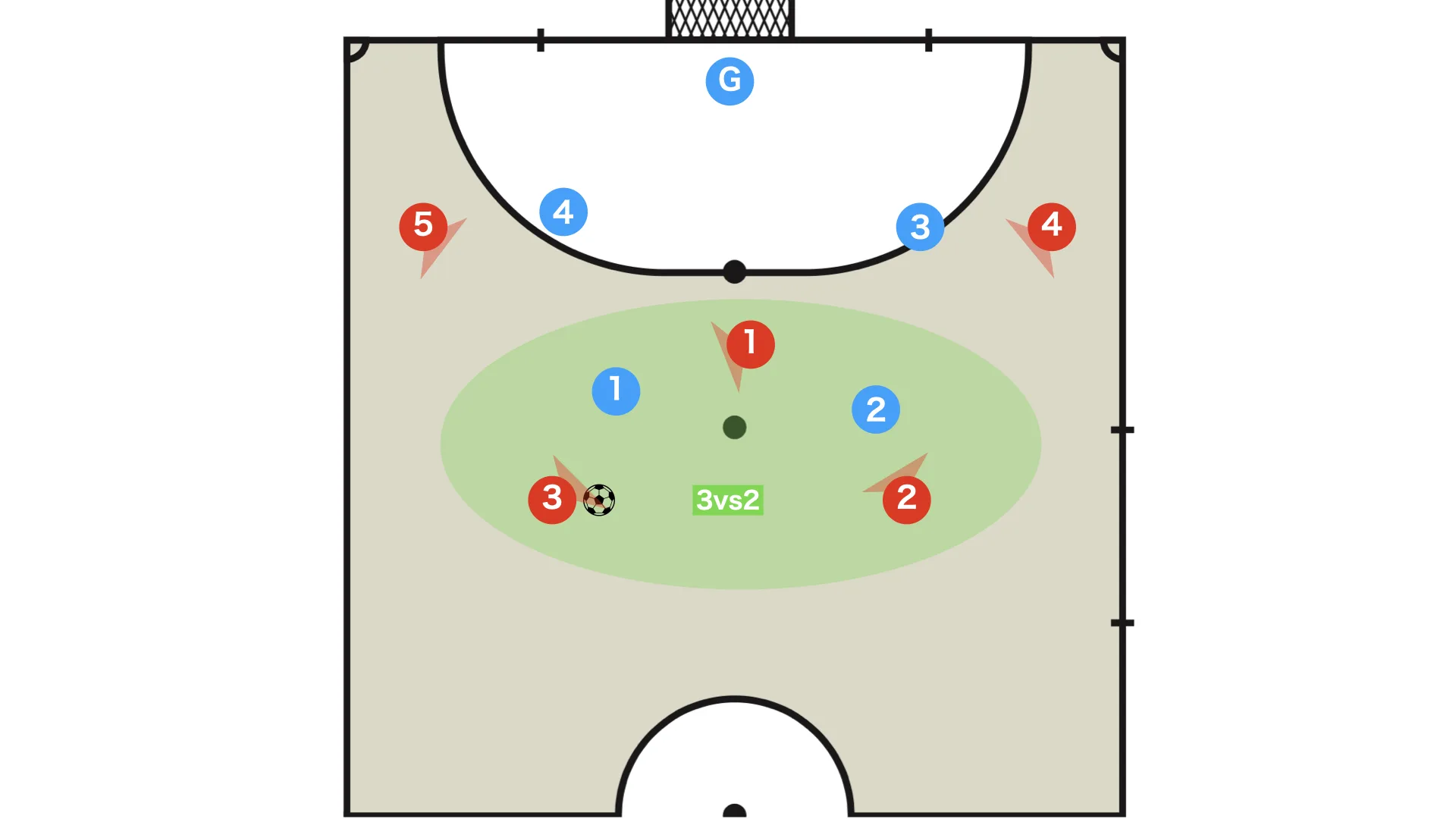
In power-play defence, deciding how high to set the pressing line is extremely important.
Most teams set it around the second penalty mark, but when a team is behind and defending against a power play, it may also need to consider pressing aggressively from higher up.
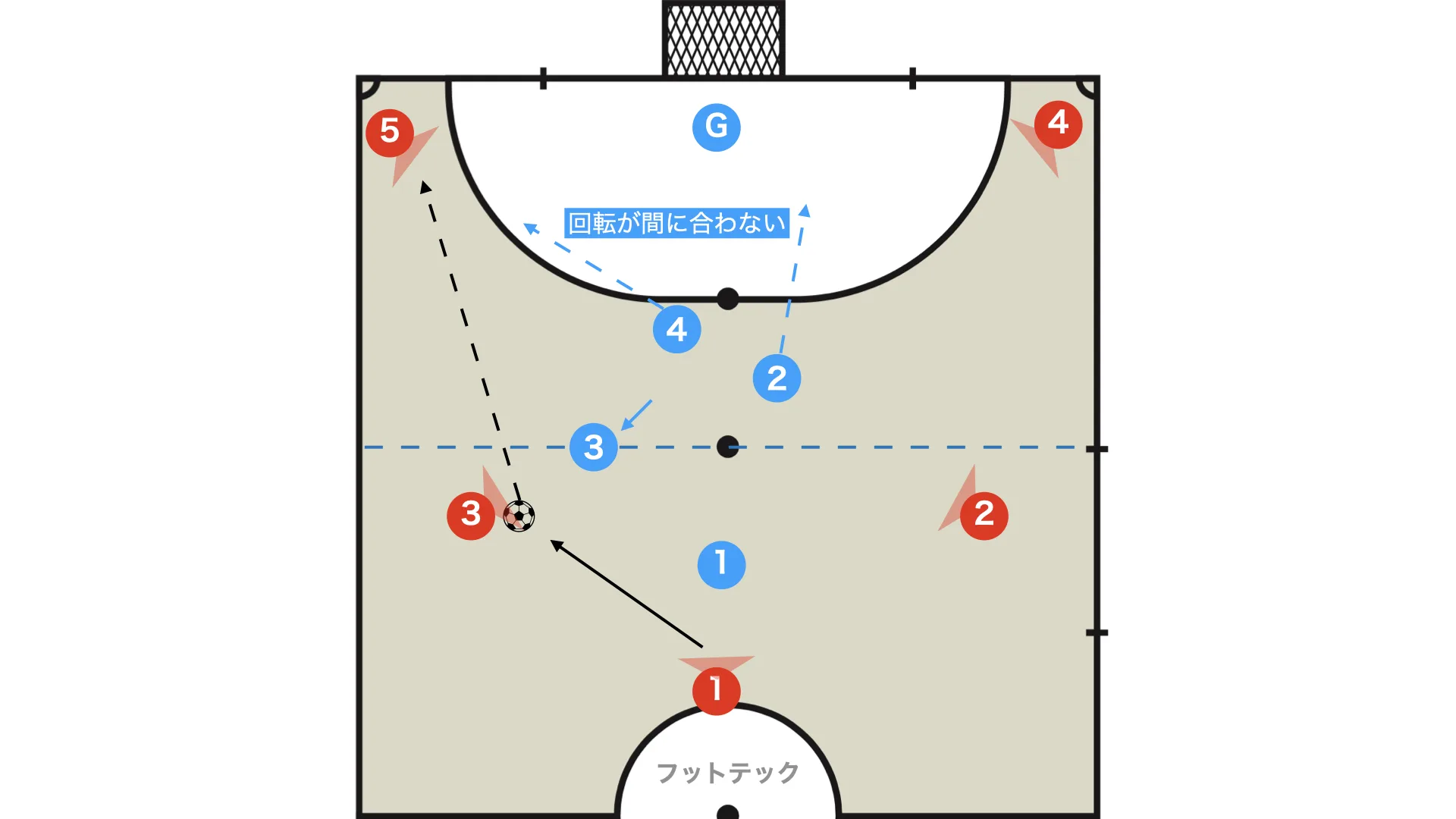
Setting a high pressing line gives the team the advantage of being able to win the ball aggressively, but it also has the disadvantage that if the opponent moves the ball quickly to the back, the defence may not rotate in time.
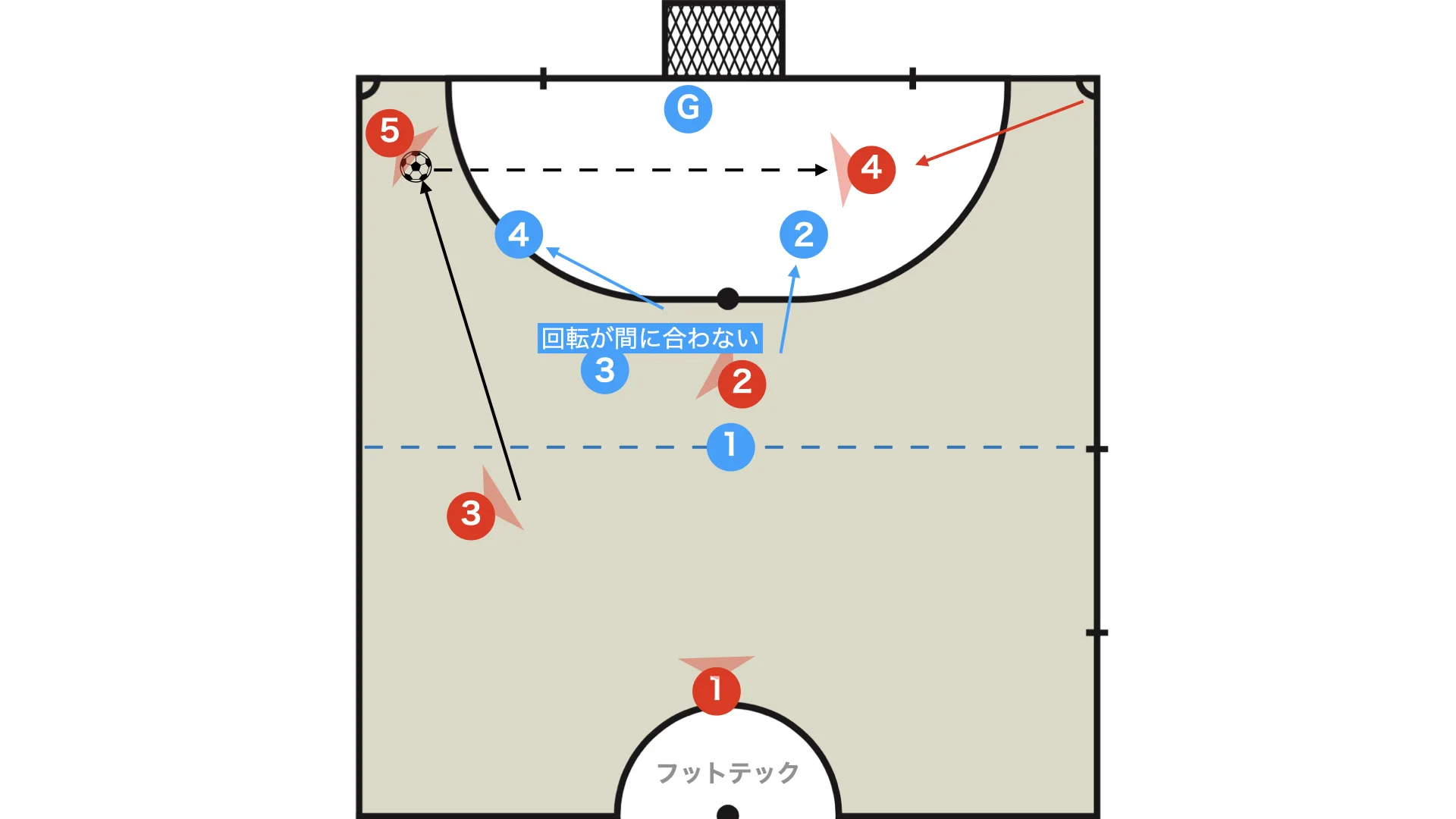
As shown above, this can lead to conceding too easily, so the basic defensive principle is to set the pressing line around the second penalty mark and maintain a compact square.
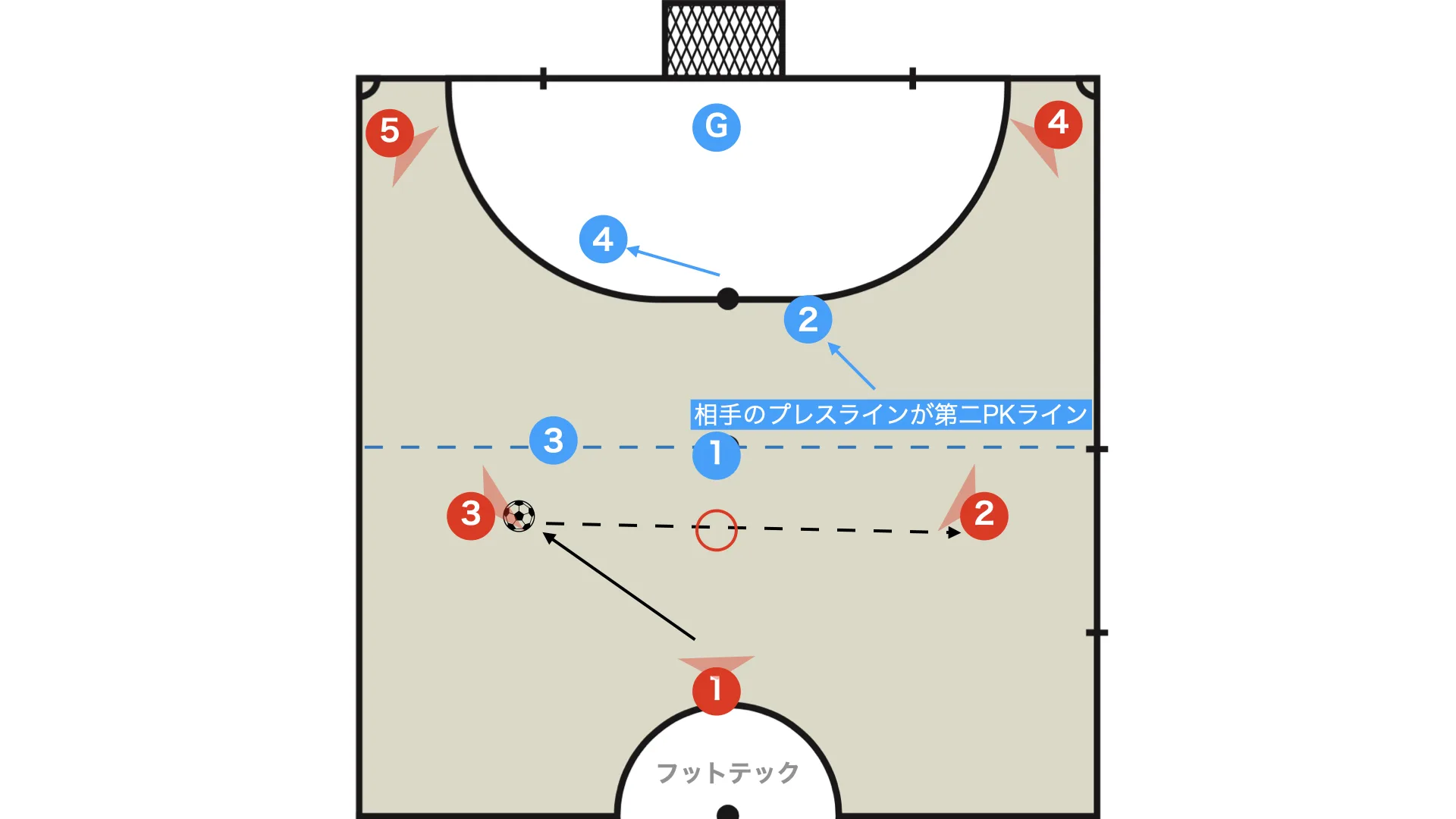
On the other hand, if the pressing line is set around the second penalty mark, the attack is more likely to be allowed skip passes between the two second-line players.
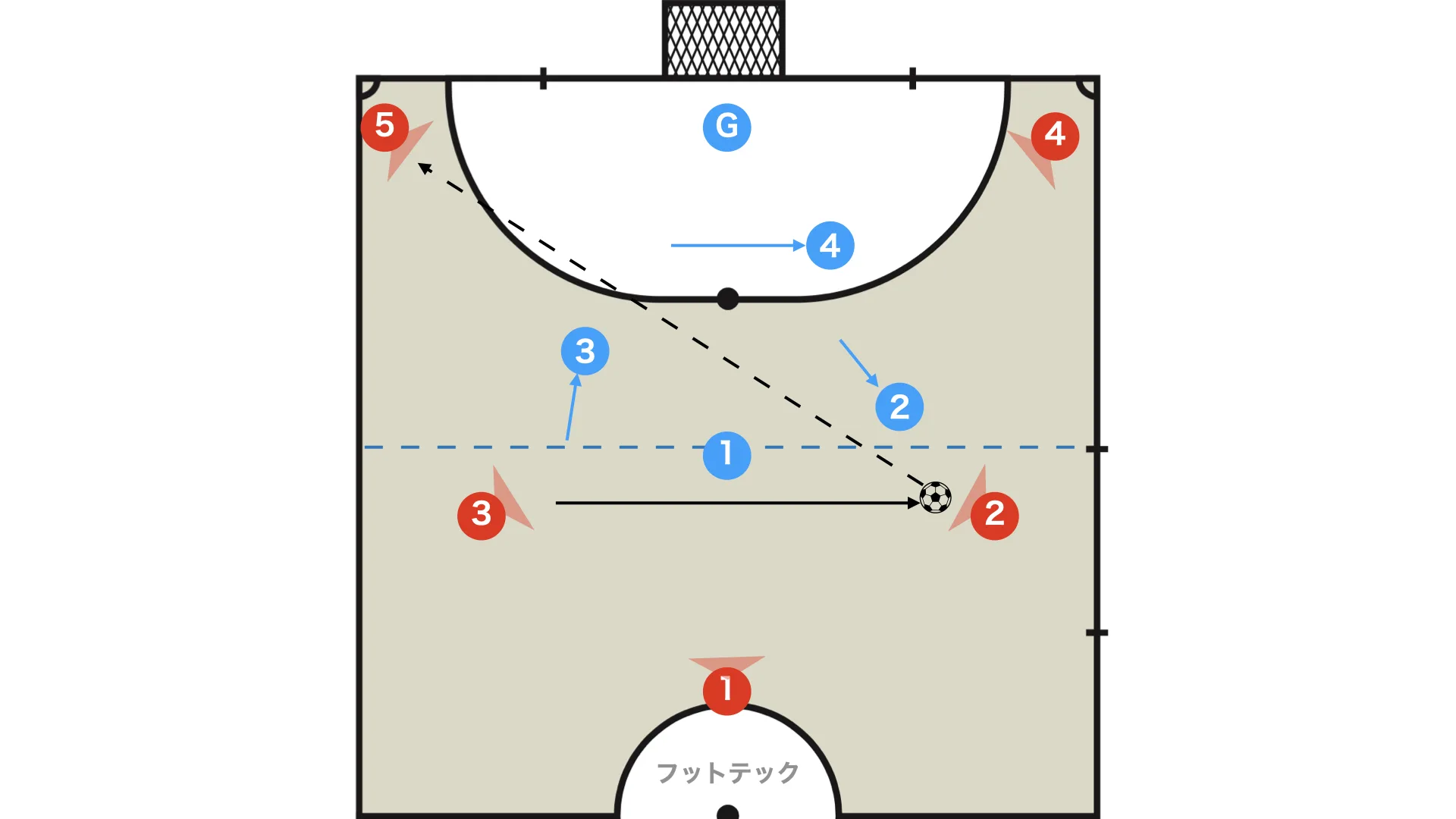
The attack wants to take advantage of the delay in defensive rotation created by that horizontal skip pass.
The attacking and defensive patterns introduced here are the most basic of all power-play concepts, and mastering this shape will make it easier to understand the others as well.
The best approach is to build it gradually in team training first, then test it in matches and turn it into real output.
Related posts