Futsal Defensive Basics: How to Press, Bilateral Defending, and Defending Against the Strong Foot
Published: 2021.09.23Updated: 2026.05.03
"I always get beaten in 1v1 defending." "I do not know when to go and press." If that sounds familiar, this article is for you.
No matter how organized a team defence is, it ultimately depends on the quality of each player's 1v1 defending. Just by mastering three basics, how to press, how to deal with the opponent's strong foot, and bilateral defending, you can start conceding fewer goals.
This article explains the theory of individual defending as the 1st defender. If you want to develop this into two-player defending, read Challenge and Cover as well.
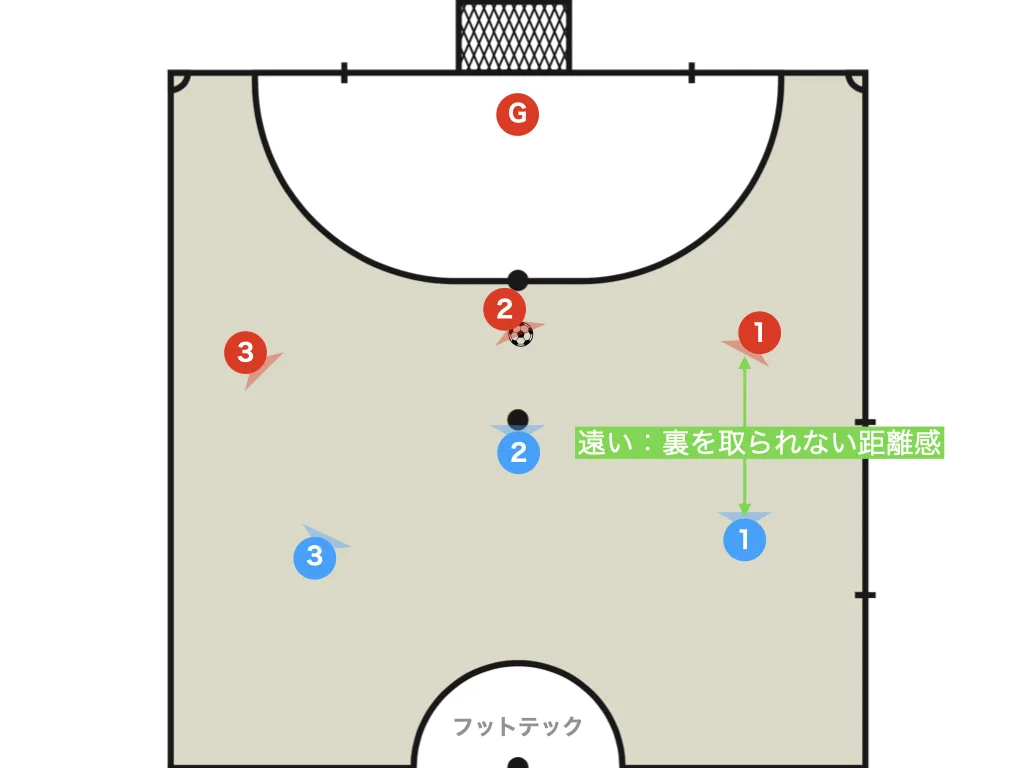
Being aware of your starting position when you begin to apply pressure is extremely important.
You want to be close to the opponent while not allowing them in behind. In other words, maintain the right distance: not too close, not too far.
That is because if you are too close, the opponent can easily take you in behind with a backdoor run, and if you are too far away, you cannot apply coordinated pressure.
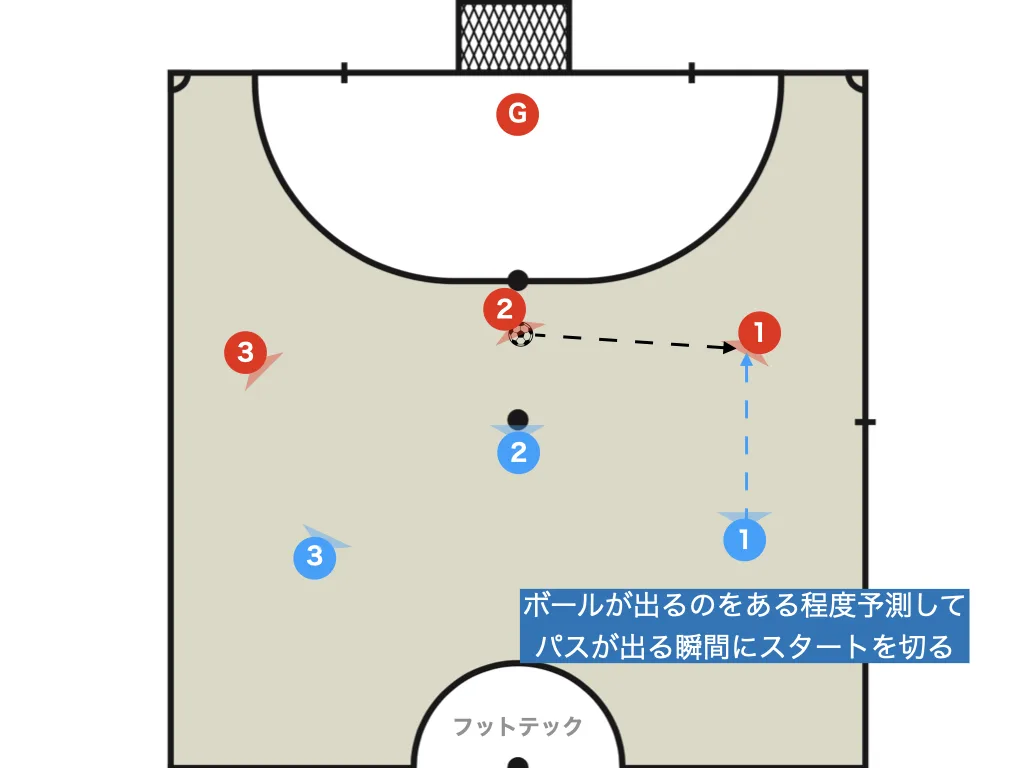
Anticipate to some extent when the ball carrier is about to pass, and start your movement at the moment the pass is played.
At this point, if your anticipation is too early, the opponent can use it against you and get in behind. The key is to read the opponent's movement as deeply as possible.
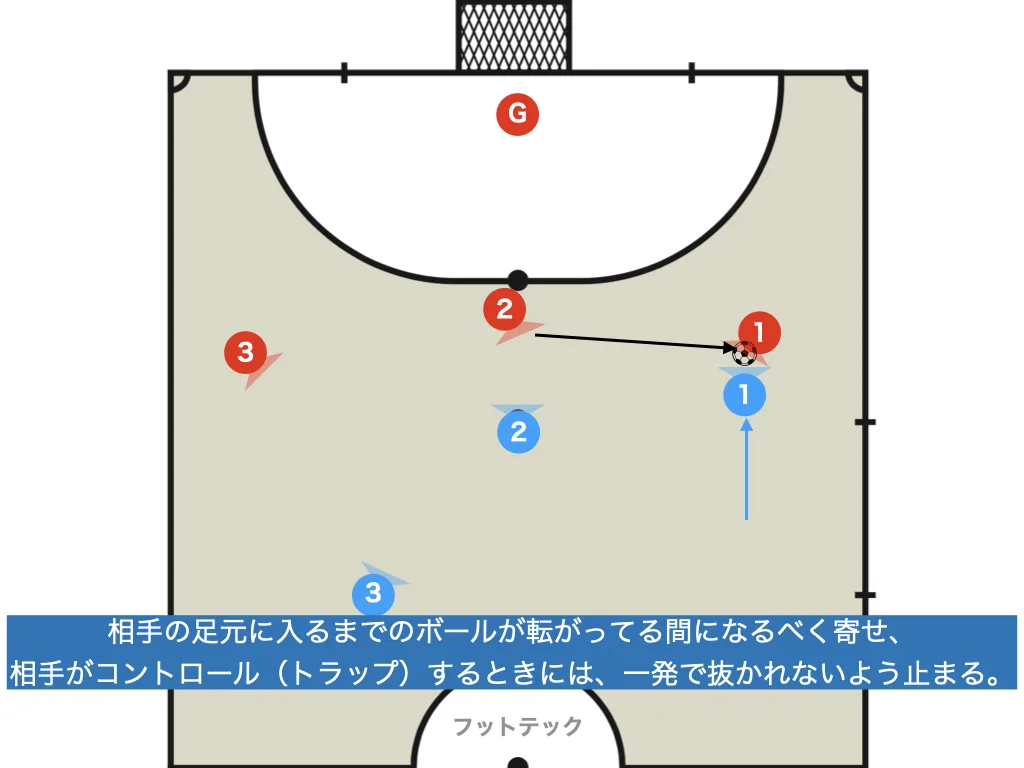
While the ball is rolling, it will keep moving on a predictable path unless someone else touches it, so close down at full speed and then stop when the opponent controls it, so you do not get beaten in one move.
If you do not come to a complete stop here and put yourself in a position to respond to anything the opponent does, they can easily get in behind with a one-two or a contrapie.
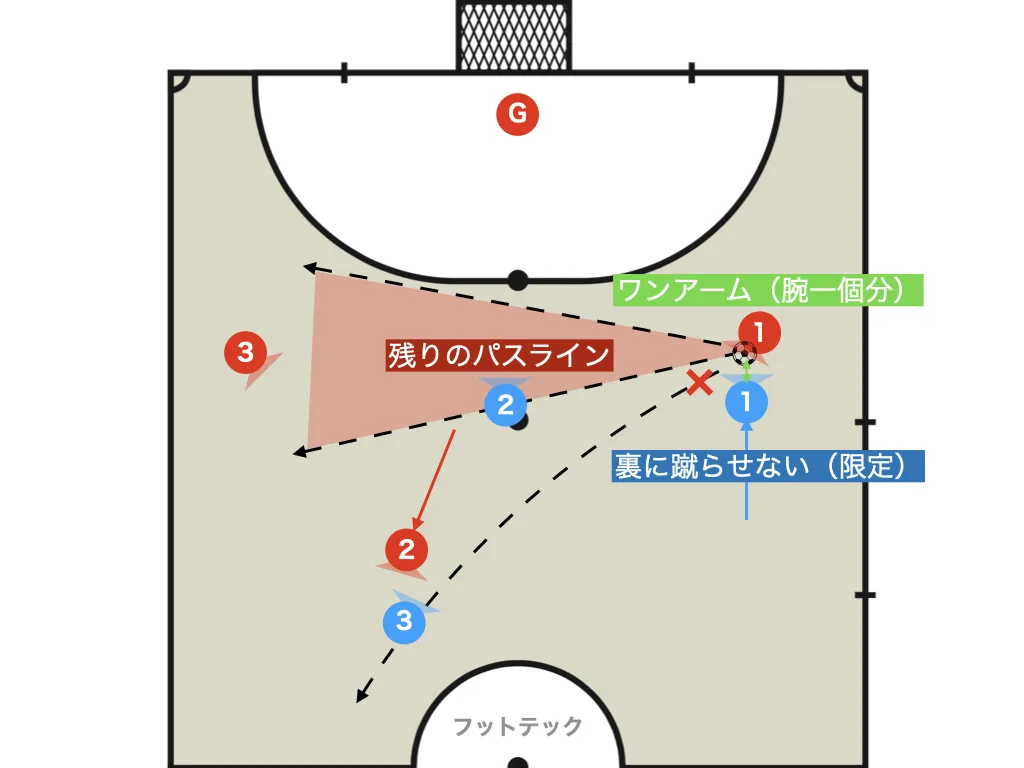
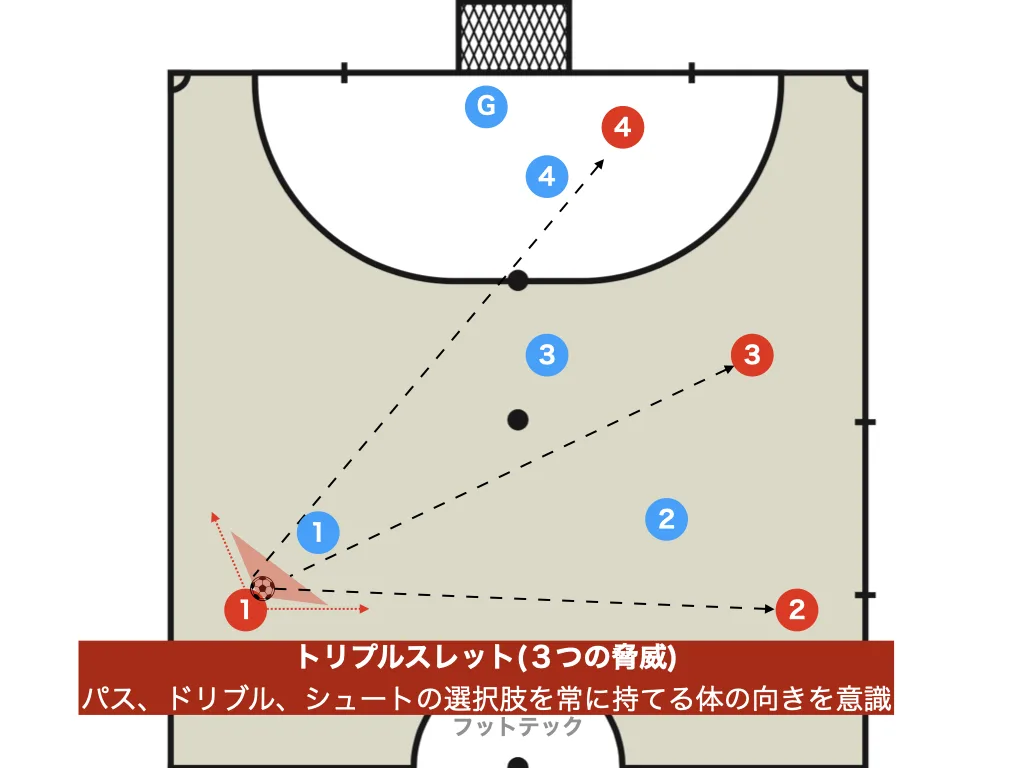
The main tactical role of the 1st defender is to limit the opponent's available actions.
Do not just close down and feel satisfied. Get to within one arm's length and make sure the opponent cannot kick the ball into the space behind you.
At all times, it is a basic rule of defending to be aware of the ball carrier's stronger foot.
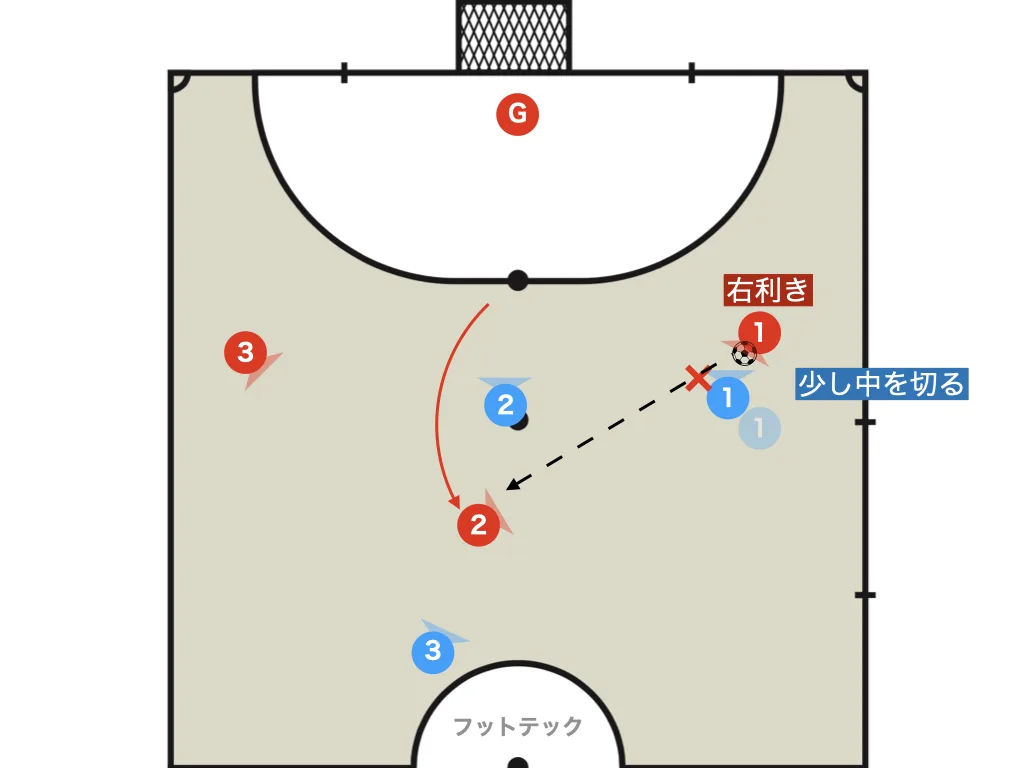
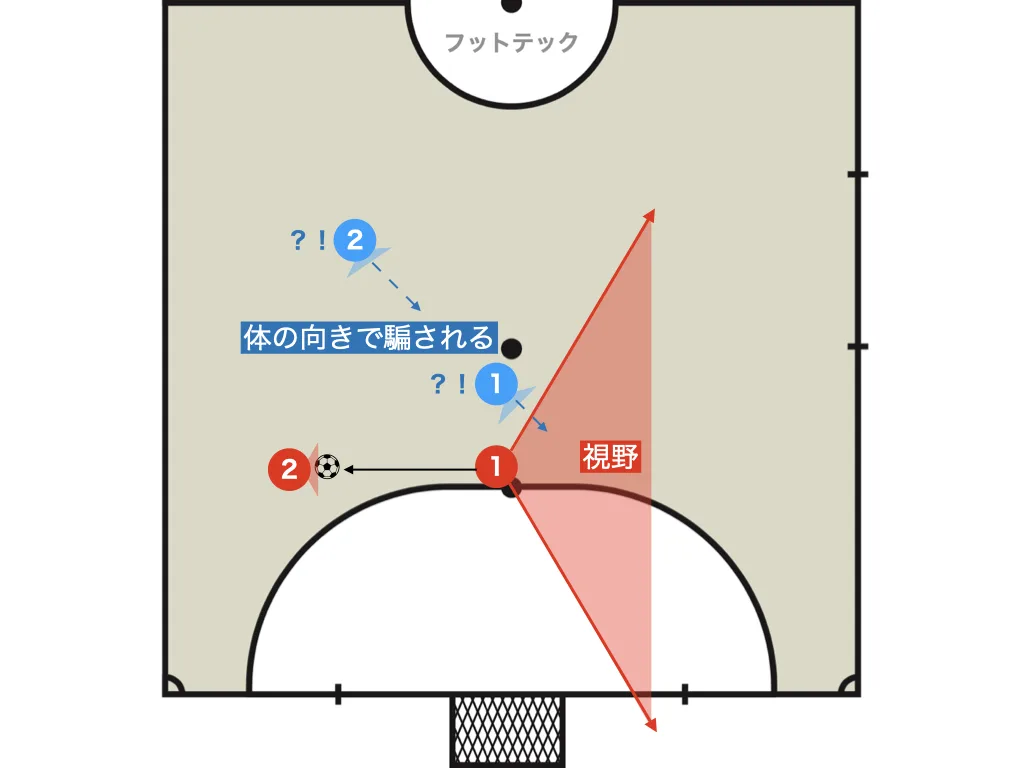
When the ball carrier is on the opposite side from their strong foot, their body tends to face inward, so the key is to slightly block the inside lane.
In the diagram above, the 1st defender slightly blocks the inside and closes the passing lane into the space between the lines.
That allows the 2nd defender to focus fully on screening the horizontal pass lane without needing to worry about the space between the lines.
関連記事
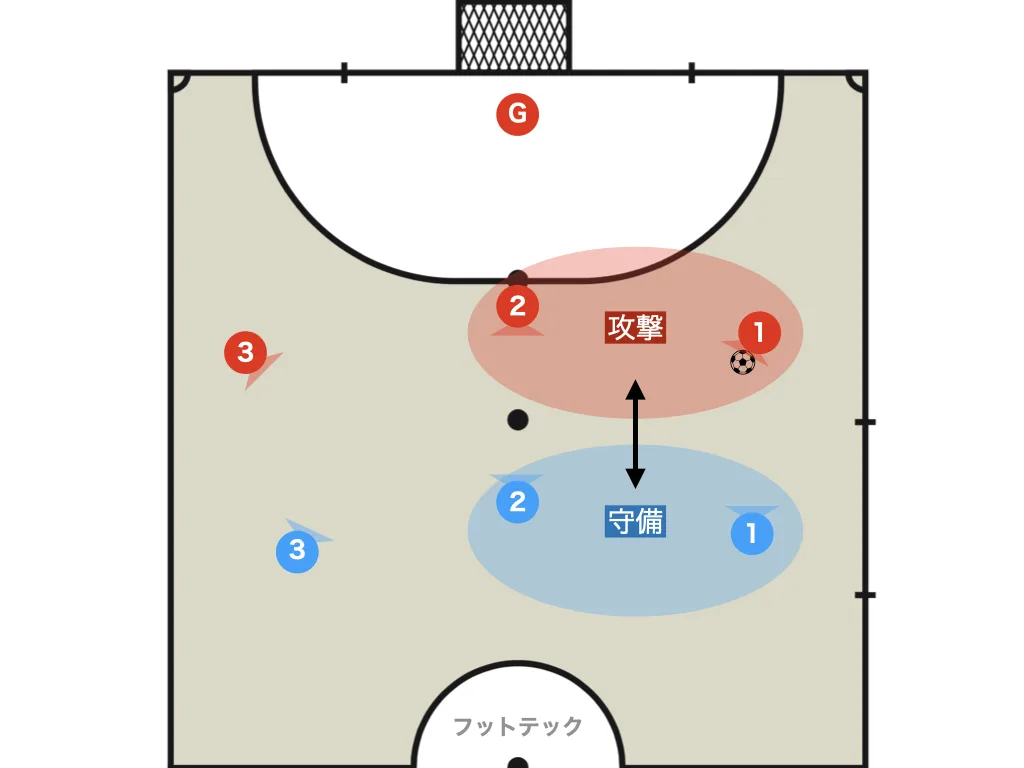
Challenge and Cover: The Defensive Pair (1st and 2nd Defender)
An explanation of the futsal defensive pair known as challenge and cover. This article organizes the…
続きを読む →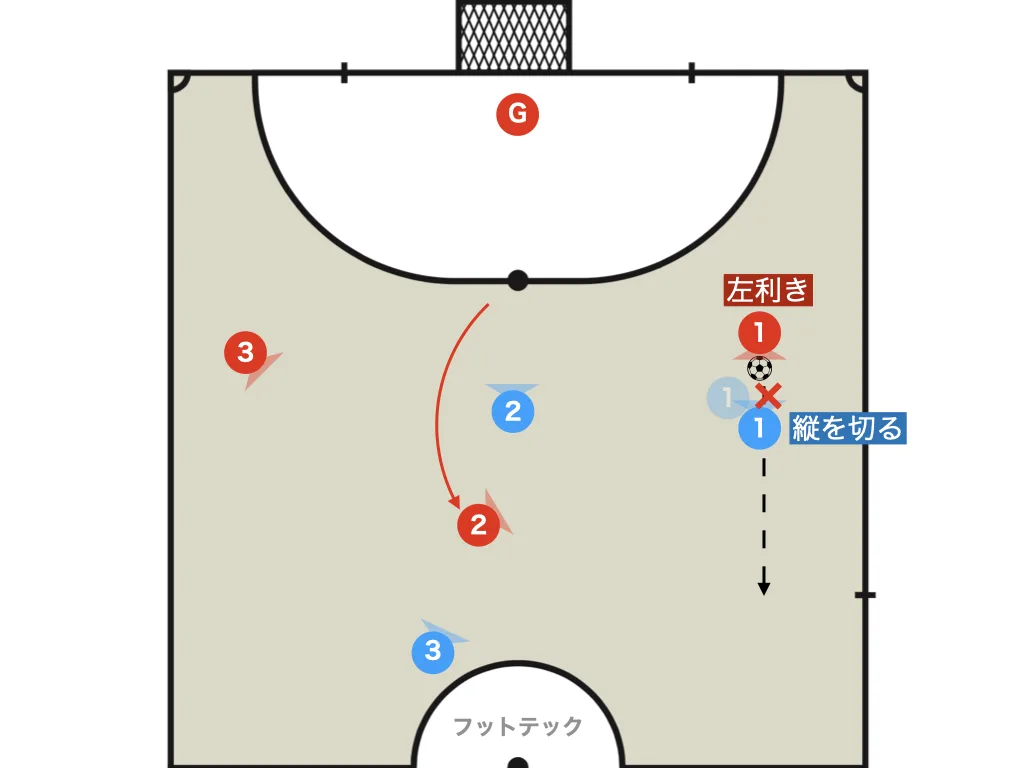
When the ball carrier is on the same side as their strong foot, their body tends to face vertically, so block the path down the line.
This kind of defending based on the opponent's strong foot is especially important in defensive transition.
Supplement
The explanation here follows the basic principles of defending against the opponent's strong foot. However, if your team intentionally has rules such as showing the opponent inside and guiding them vertically, or blocking the line and guiding them inside, in other words, a defined play model, follow that first.
If your team does not have those kinds of rules, then following these principles is the most rational approach.
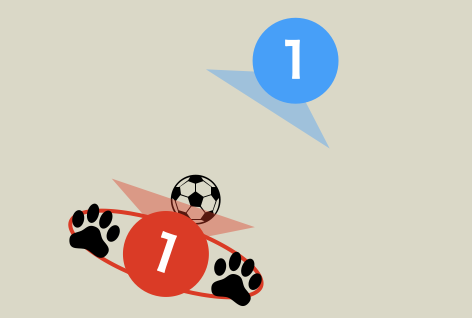
- Defend using the foot that is closer to the opponent's ball-carrying foot or the direction their body is facing
- Do not defend using only your own dominant foot
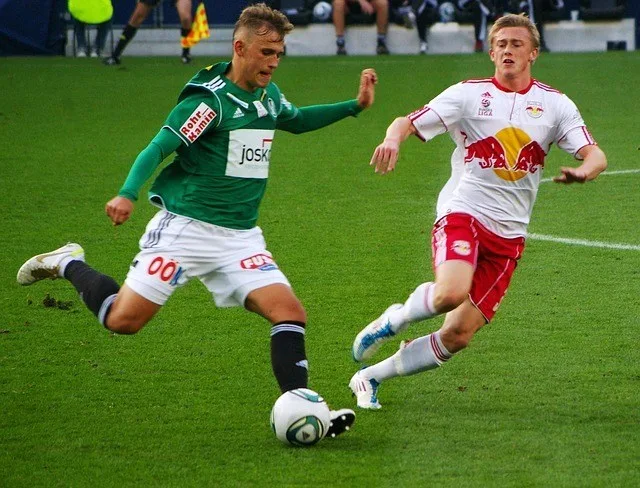
- Defend without crossing your feet and turning your body backward
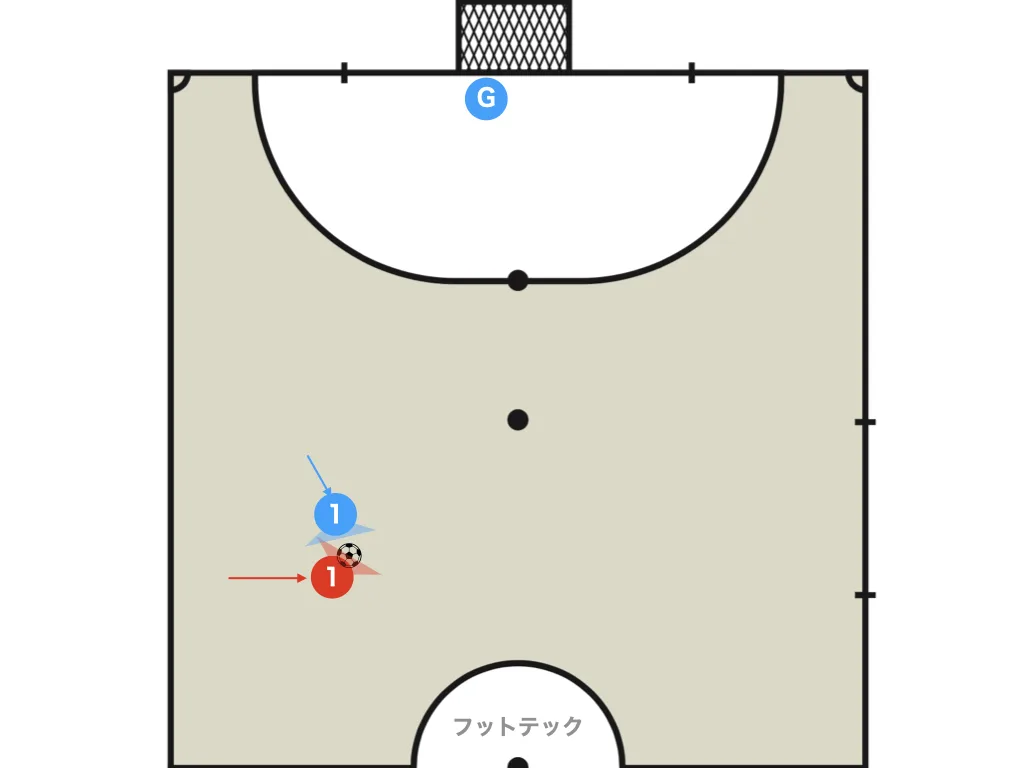
If you win the ball with your body oriented like this, you can move straight into transition attack while still facing the goal.
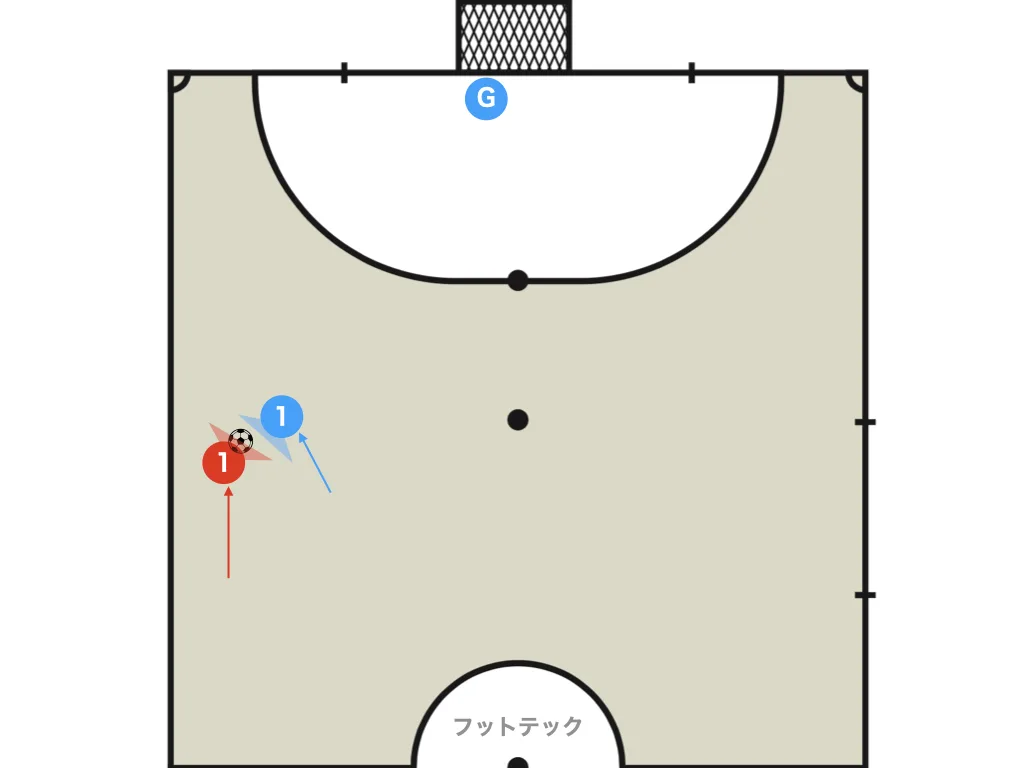
With light, one-shot defending, players often end up with this kind of body shape, but you should not confuse light defending with bilateral defending that uses both feet.
It is important to keep stepping in sync with the opponent's movement, stay with them to the end, and look for the moment to attack the ball.
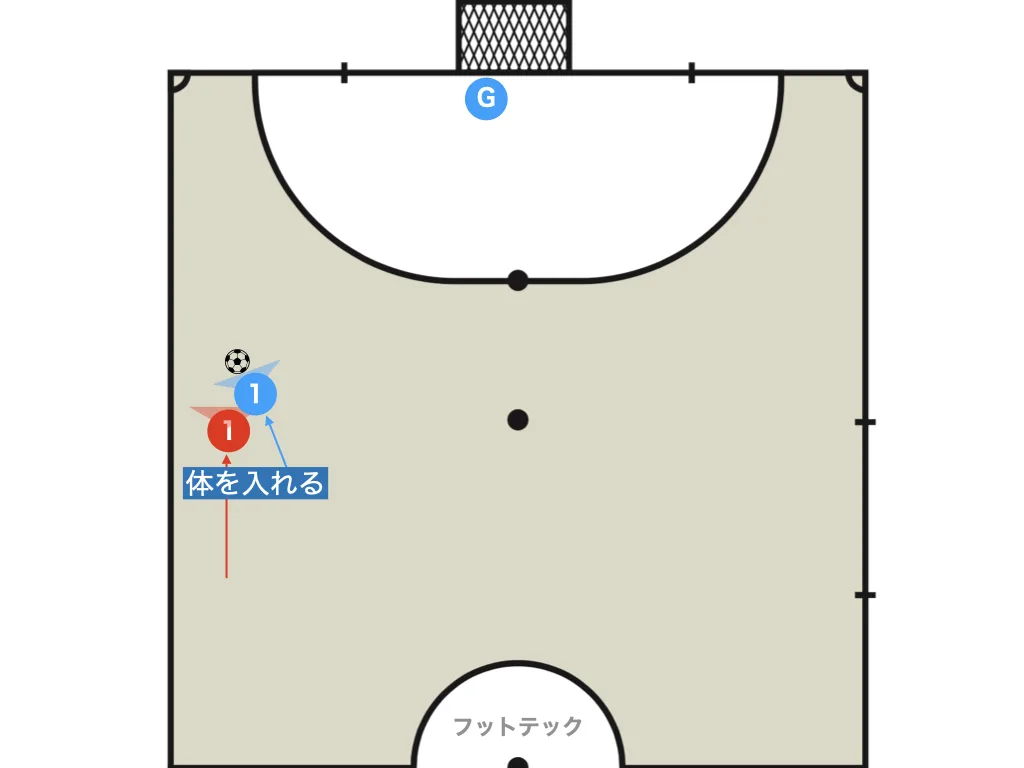 This kind of defending used to be considered good in soccer, but in futsal it is not considered good defending.
Even if you win the ball, your body is facing your own goal, so your only option is a back pass.
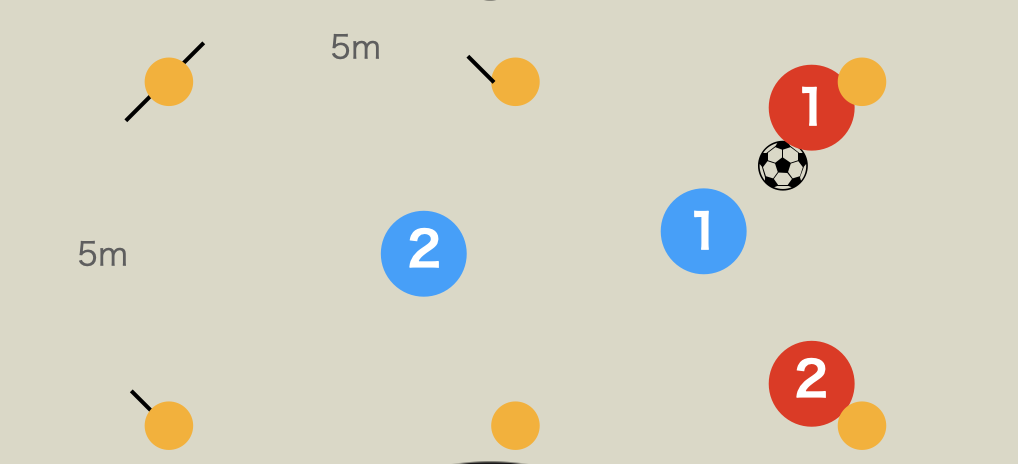
- Defenders can only defend inside their assigned box (5m x 5m)
- Attackers are limited to three touches or fewer
- Defenders lose if they turn their back to the opponent -> focus on bilateral defending
- Attackers win if they cross the deepest line, and defenders stay on
This drill is already well known as a practice for pairs and decision-making, but it is also effective as defensive training for developing bilateral defending.
When the defence has been completely broken down and you are facing a dangerous situation, intentionally stopping the play with a professional foul can be very effective.
However, it is important not to foul recklessly. Commit the foul while being aware of the foul count and the time remaining in the match.
Also, hooking the opponent's legs from behind can lead to serious injury, so aim for safe professional fouls such as pulling the shirt or holding the waist.