Futsal Sai: Pivo-Ala and the 3-on-Line Pattern
Published: 2021.09.20Updated: 2026.05.04
If you play futsal, you probably hear the word "sai" quite often, but if someone asks you to explain what it is, many people would probably hesitate.
In practice, my impression is that quite a lot of people use the term "sai" incorrectly.
To put the conclusion first, "sai" is a Portuguese word meaning "move" or "get out of the way." It is used toward another player with the nuance of: " you are in the way, clear out."
However, in Japan it is very rare for "sai" to be used with that literal meaning of "move, you are in the way." In Japan, "sai" is more often used to refer to a group tactic called pivo-ala.
In this article, I will thoroughly explain the three-man tactical pattern often referred to as pivo-ala using sai. Read through to the end.
Supplement
"Sai" is Portuguese. In Spain, the term commonly used is "limpiar," the Spanish word meaning "to clean out."
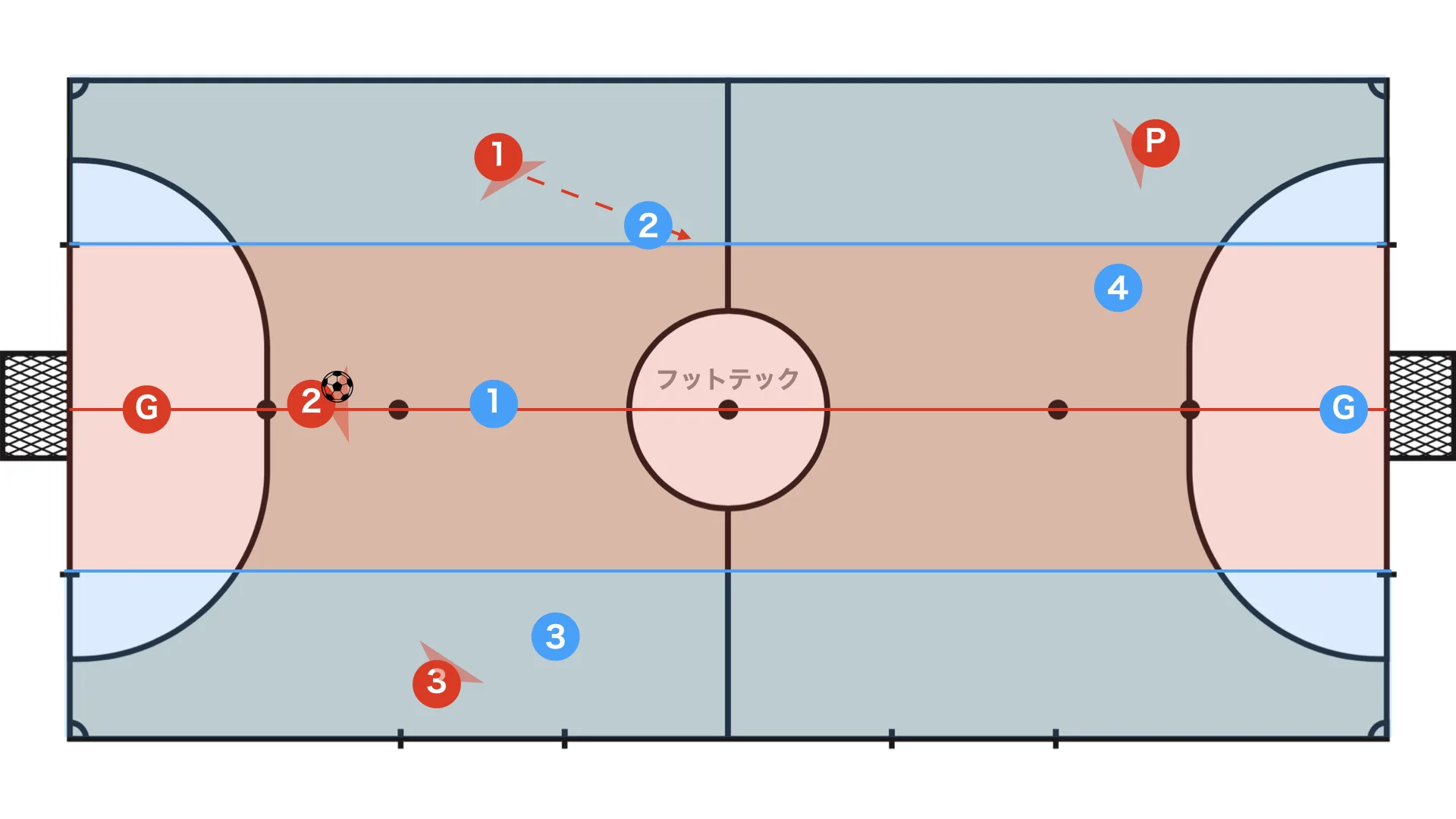
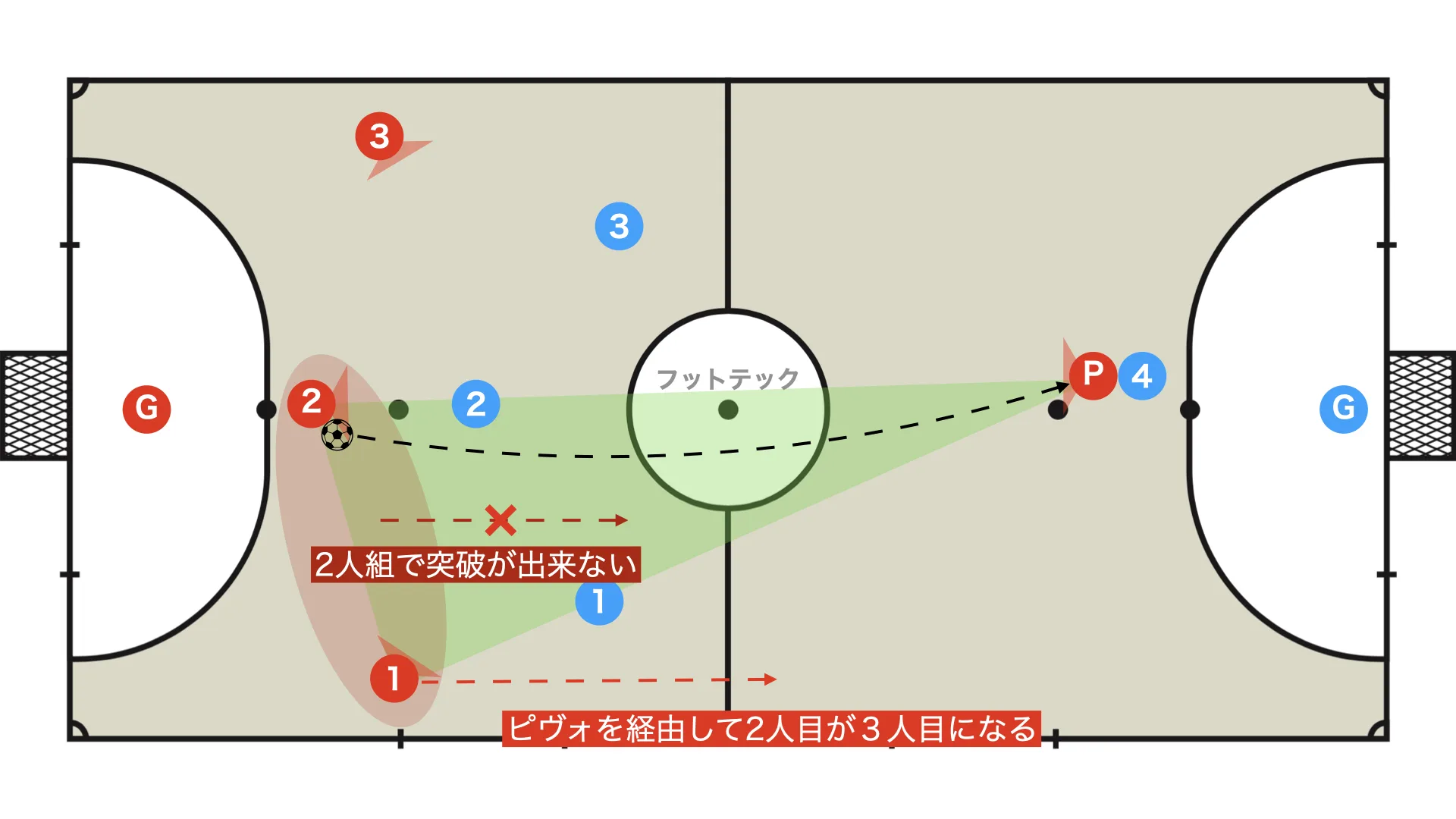
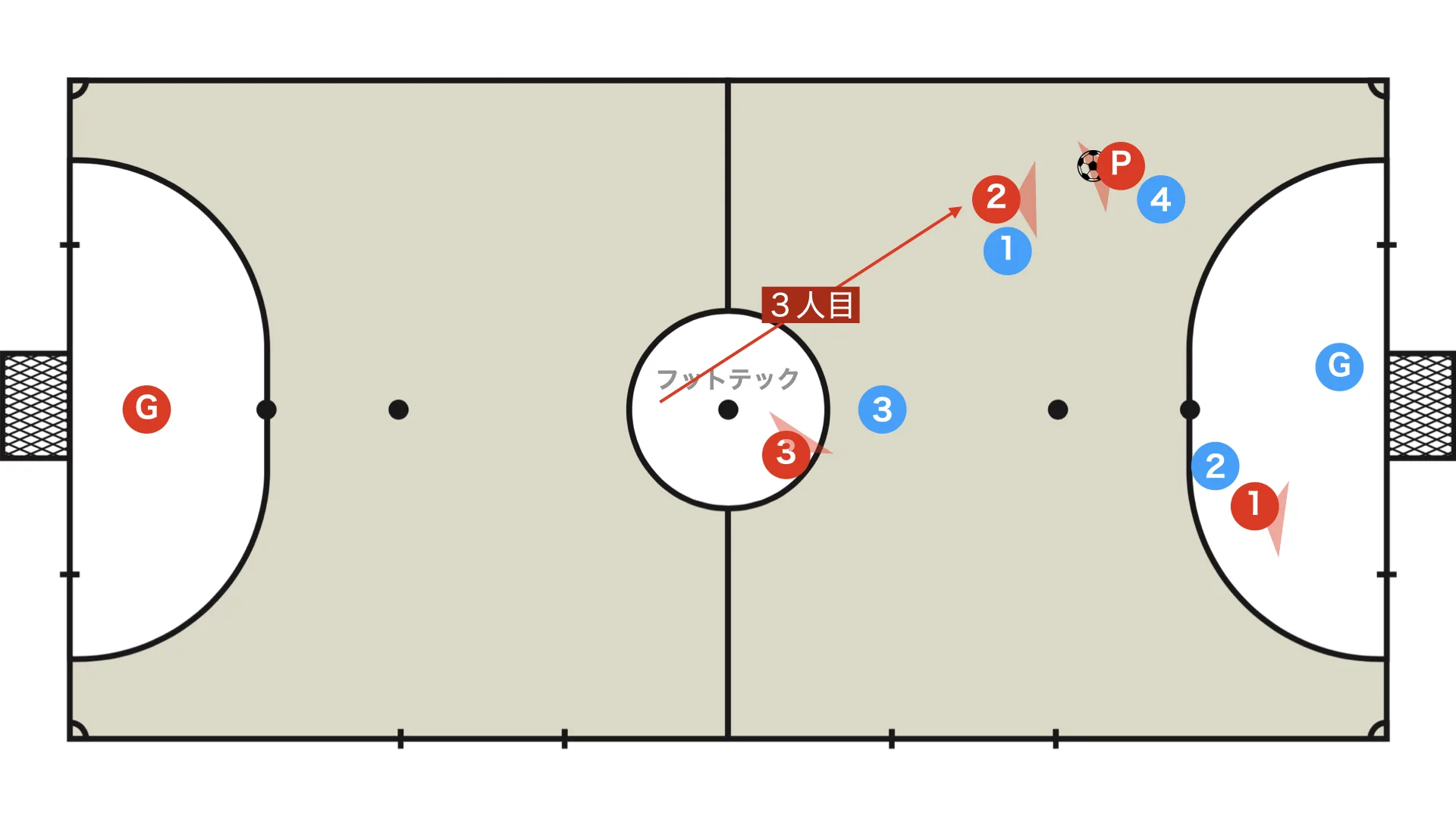
Pivo-ala is often used when the team is in a false-pivo 3-1 shape like the diagram above, with the pivo drifting to the side.
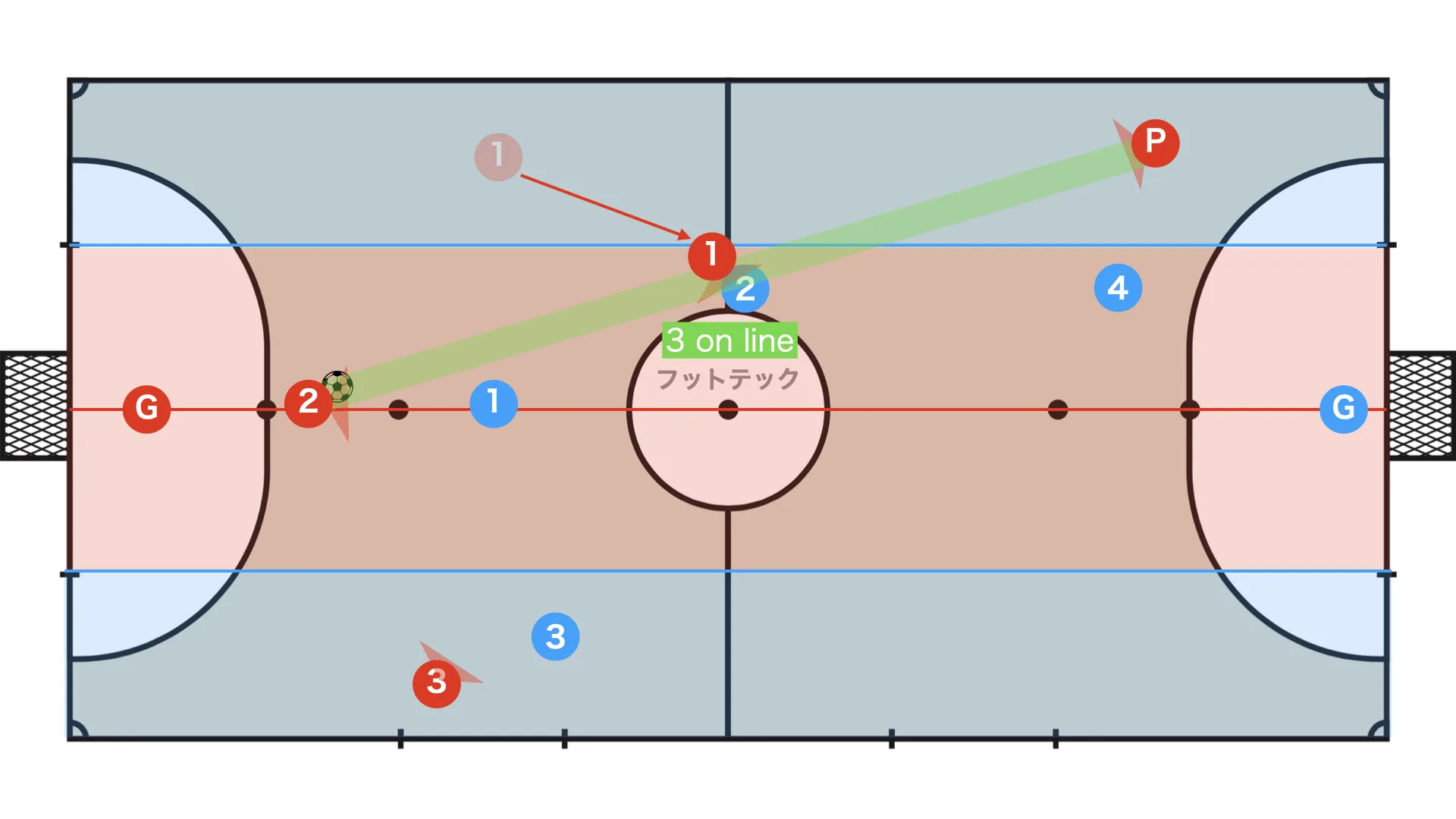
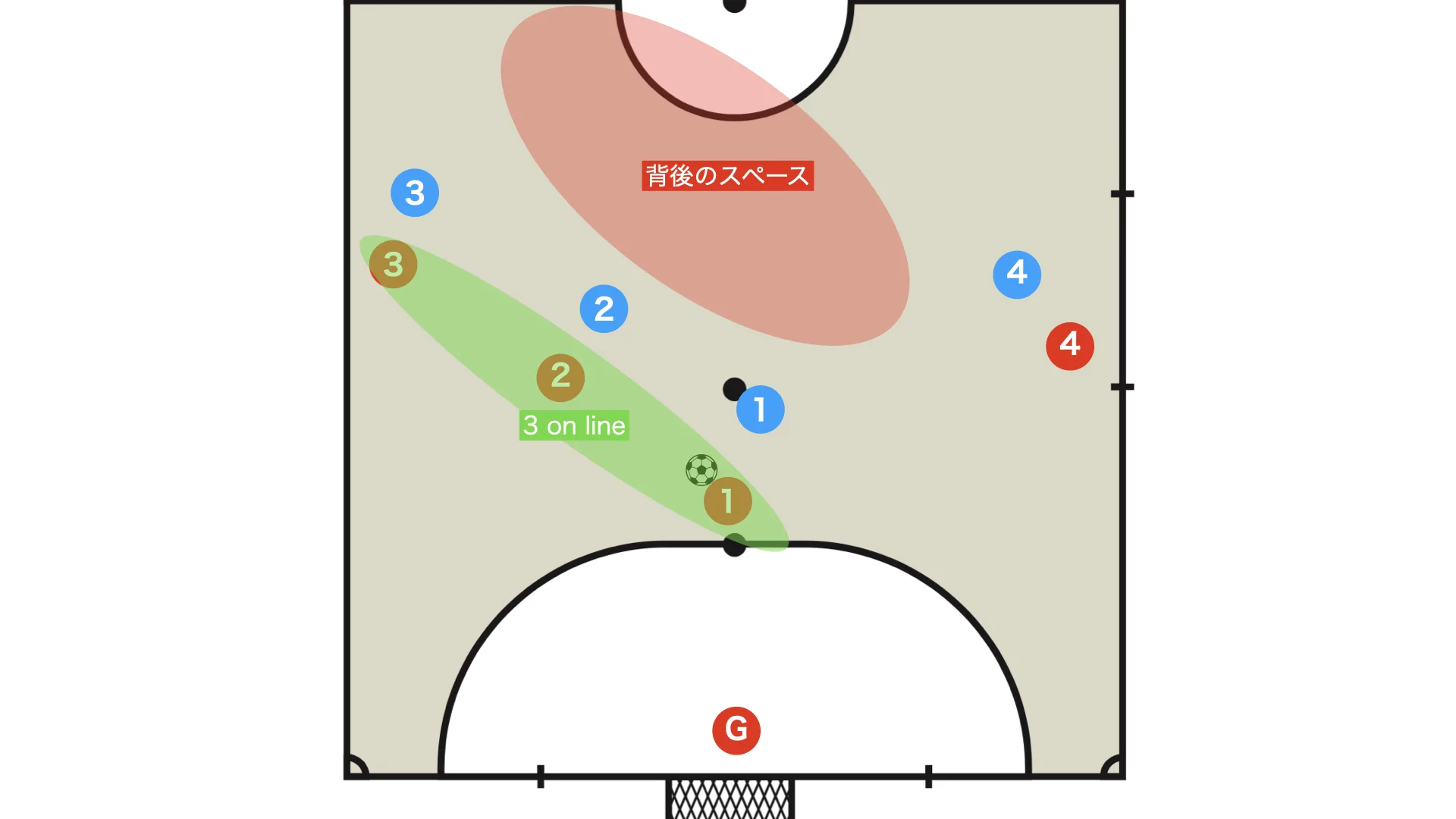
The ala (red no. 1) takes a high position to create a 3 on line.
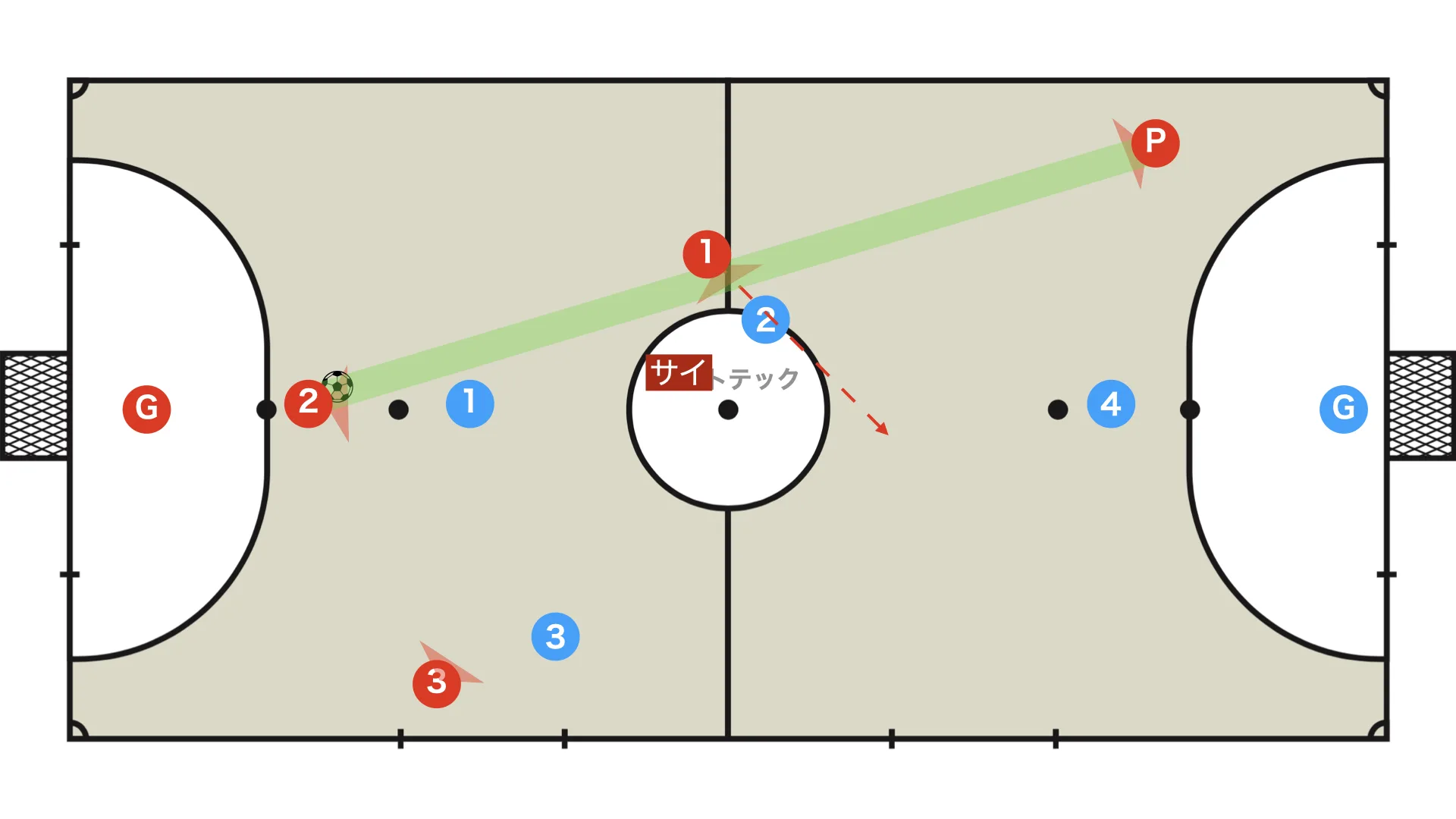
When the middle player of the 3 on line clears out like this and creates a skip-pass lane, that tactical action is called sai.
In particular, when the ala uses sai in this way to create a passing lane into the pivo, it is called pivo-ala.
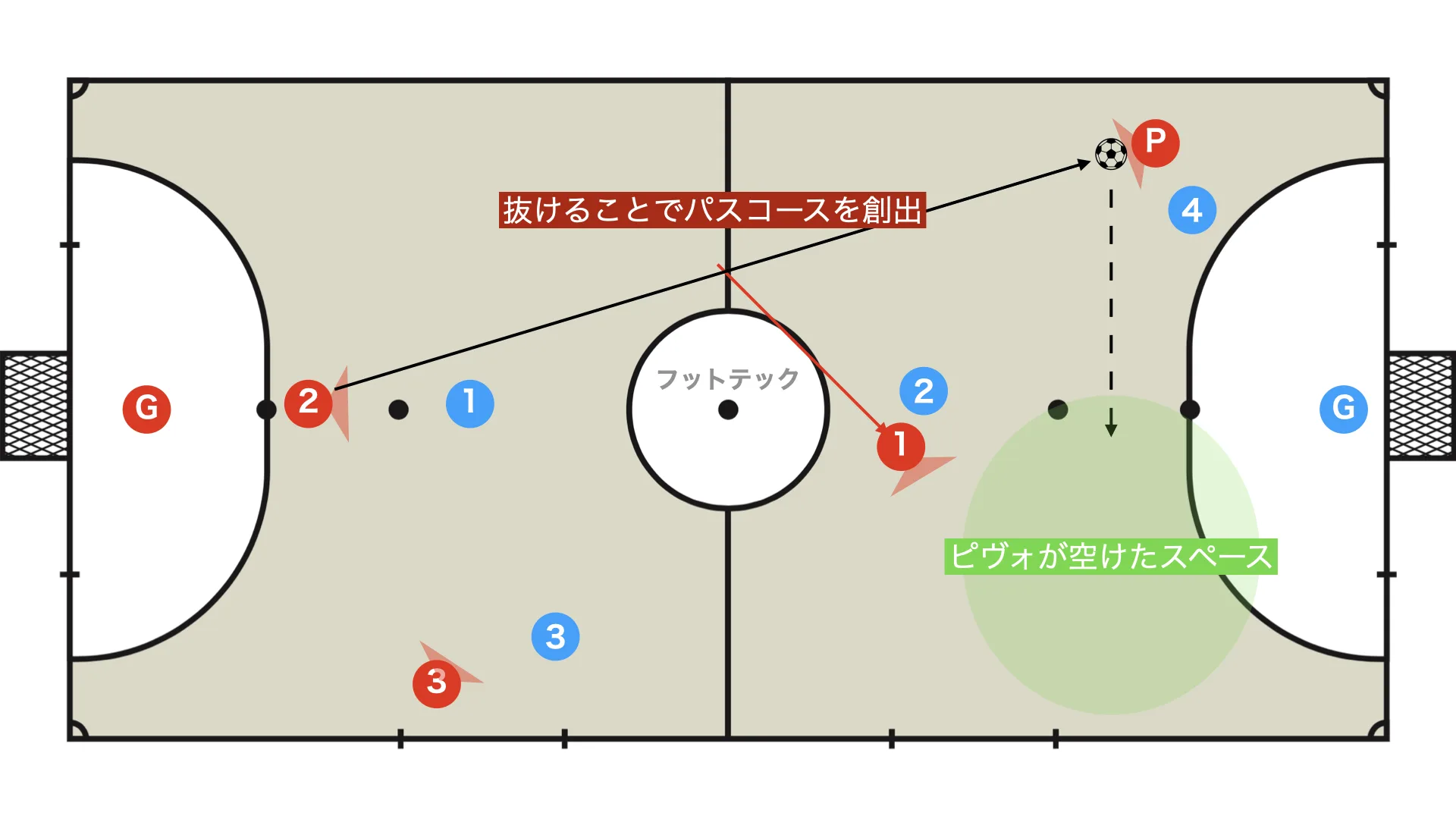
This three-man pattern is very powerful: the ala who made the sai run receives the ball in the space opened up by the pivo and immediately finishes the move with a shot.
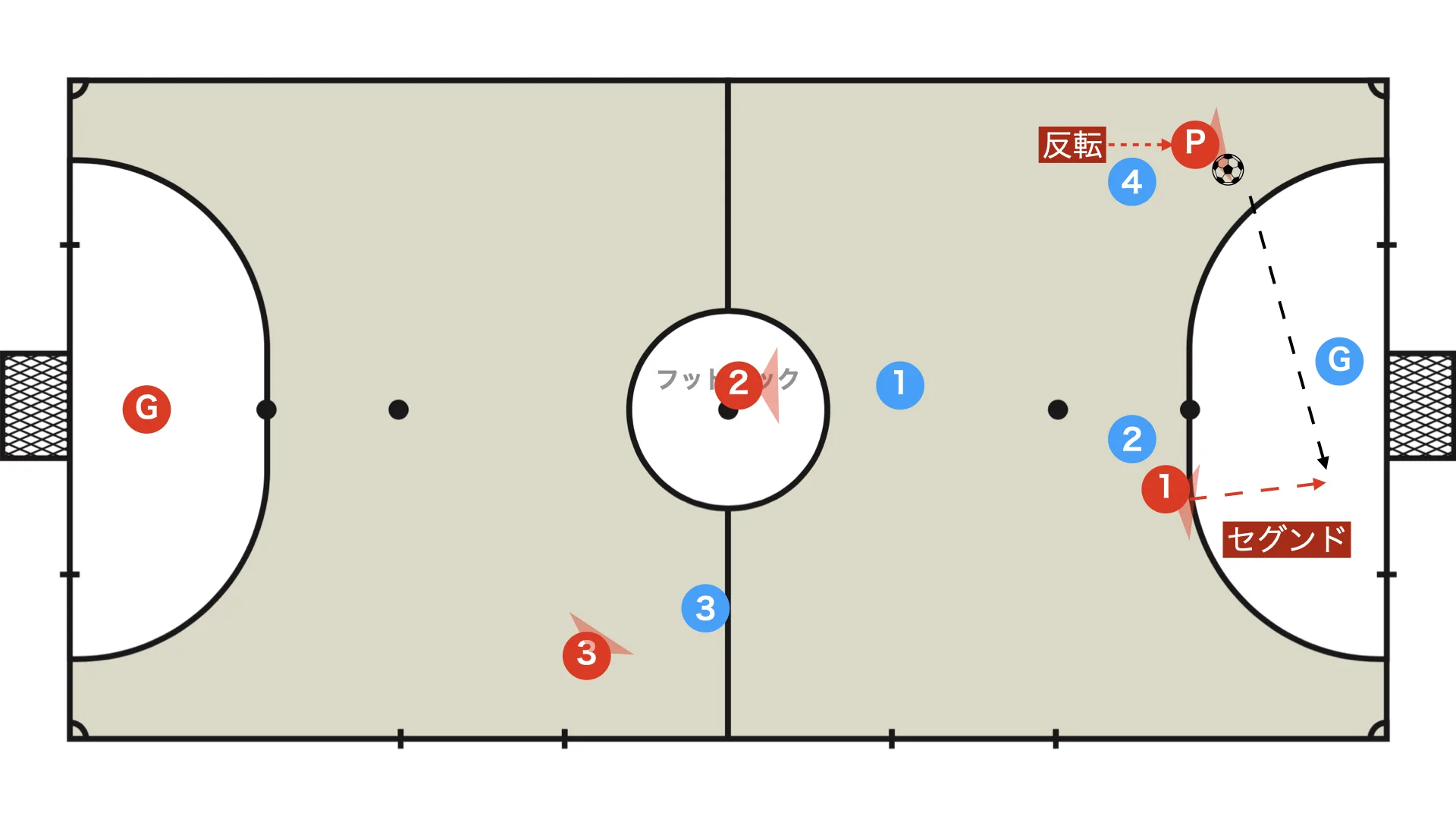
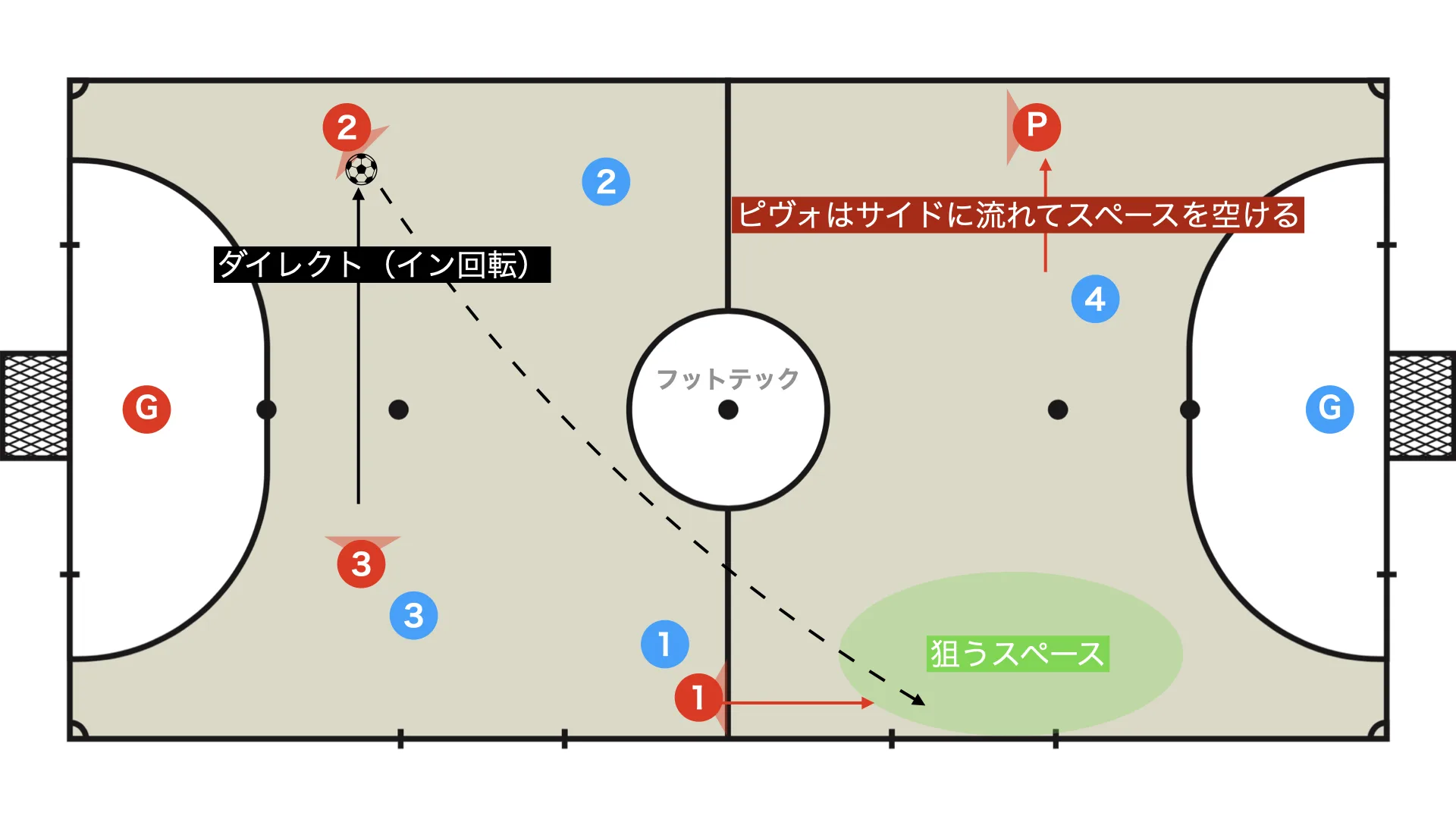
If the opponent's defender protects the inside and you cannot play the pass to the ala who cleared out with sai, then the pivo turning is effective.
If even the turn is not available, keep the ball and buy time until the fixo (the third man) can get involved with the pivo.
The attacking variations from there overlap with the three-man pattern called L, so I will omit them here.
関連記事
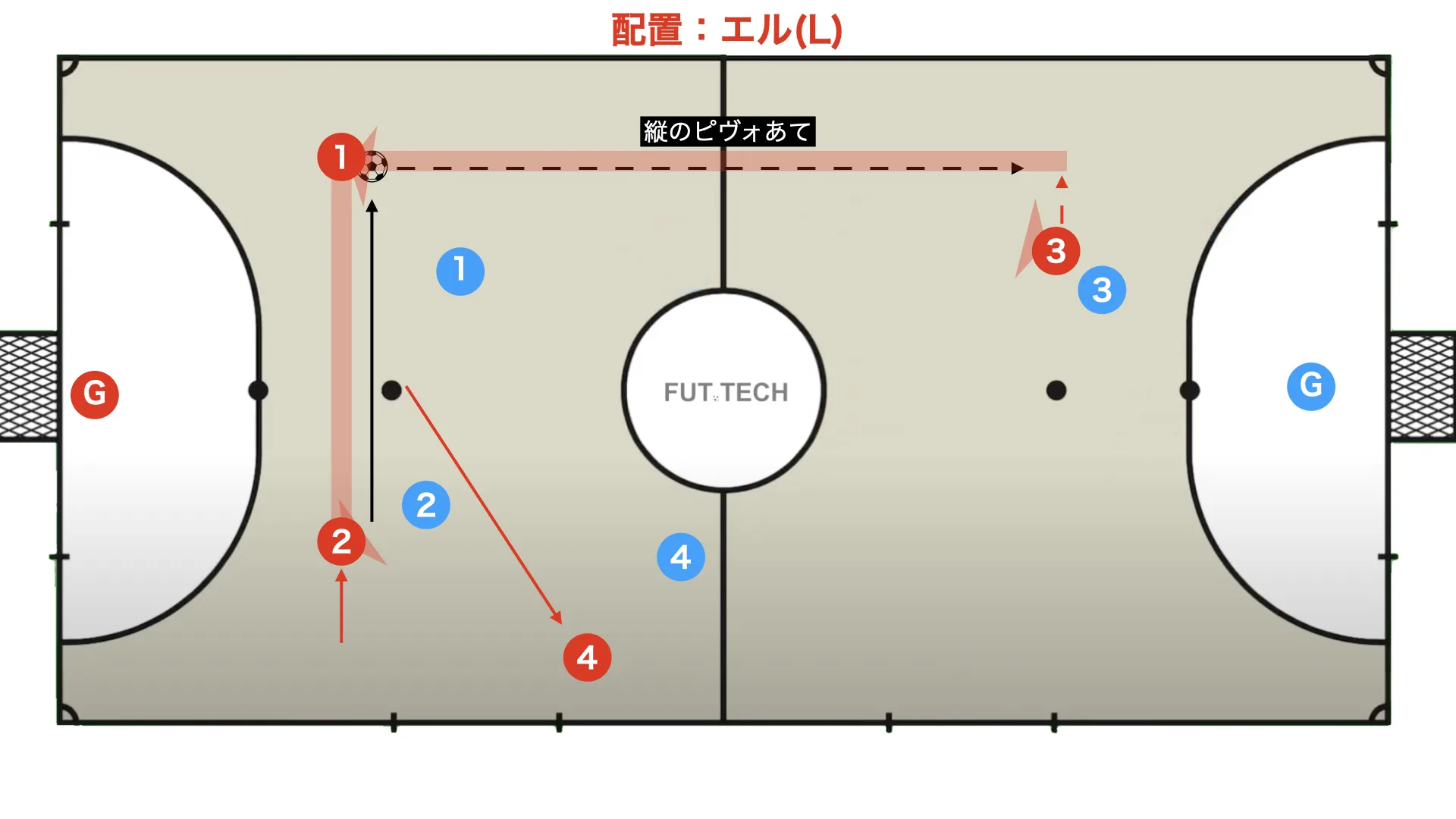
Most Players Miss the Point: A Complete Breakdown of the L Pattern, Pivot Passes, and the Third-Man Run
A complete breakdown of the basic futsal pattern known as the L, built around the pivot pass and the…
続きを読む →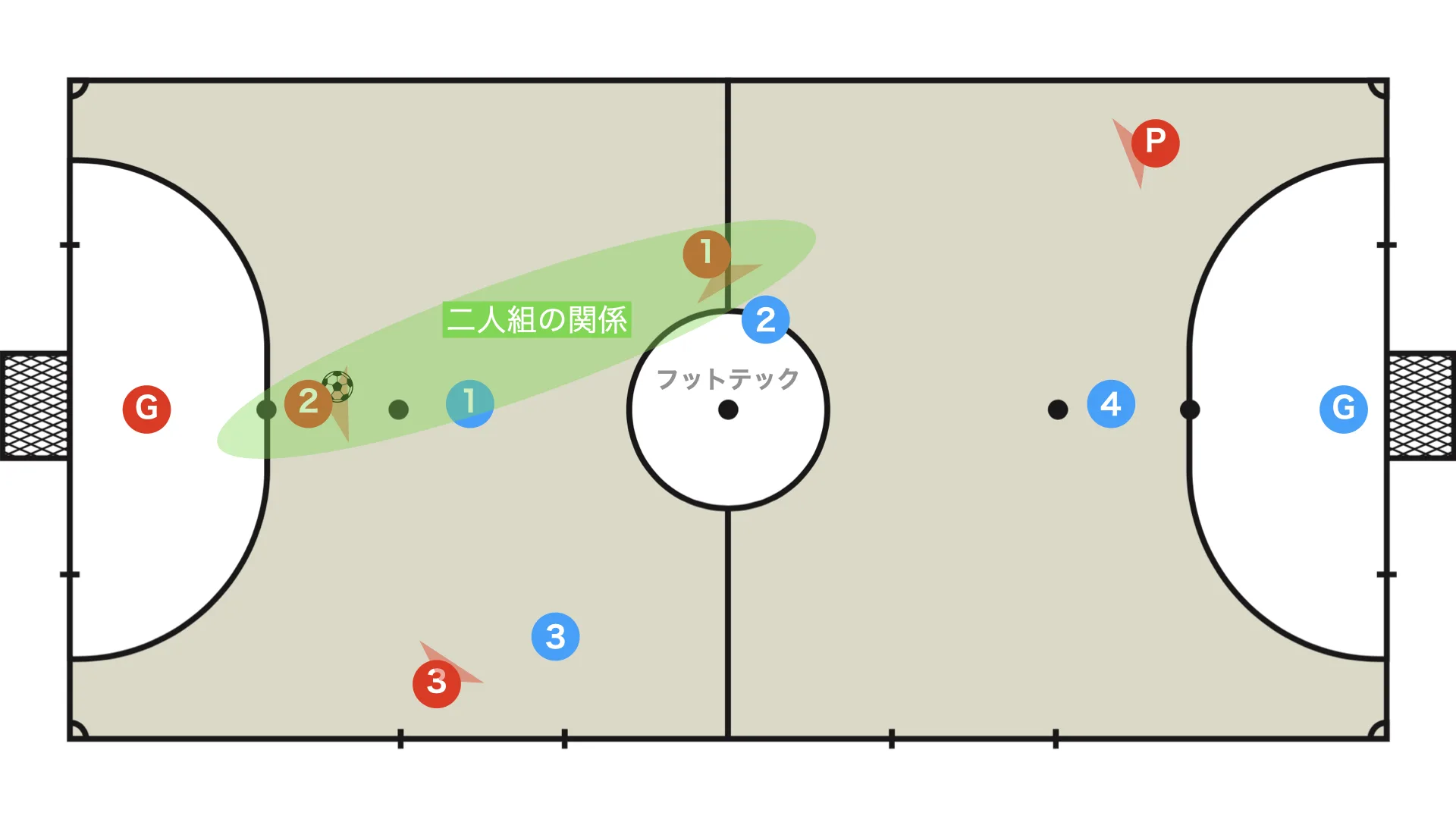
Rather than blindly making the sai run every time, you can respond flexibly to the opponent's defending by being aware of the two-player relationship between the fixo and the ala.
関連記事
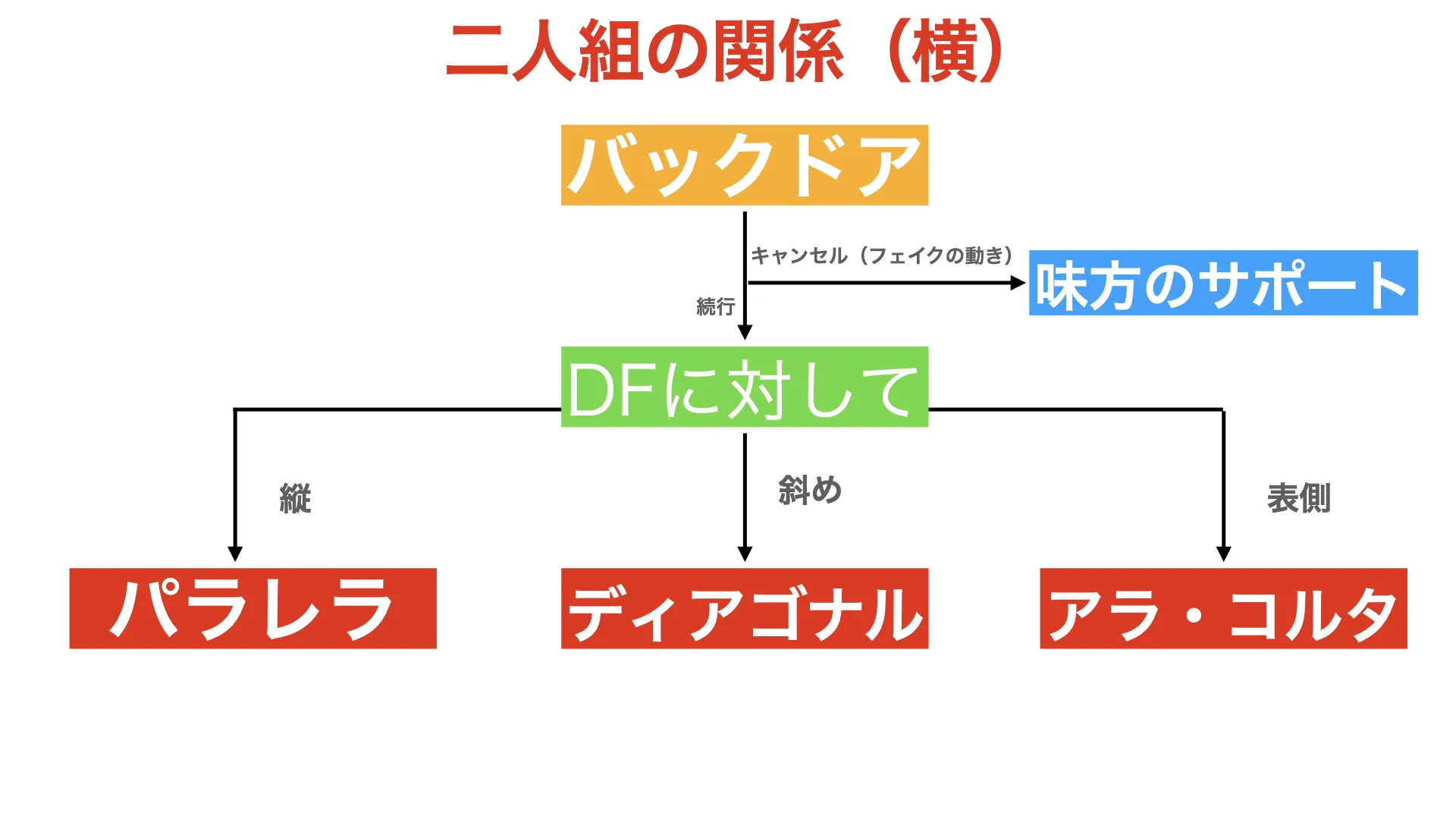
Overview: Two-Player Combinations in Futsal
An overview article explaining two-player combinations in futsal. It organizes the relationships and…
続きを読む →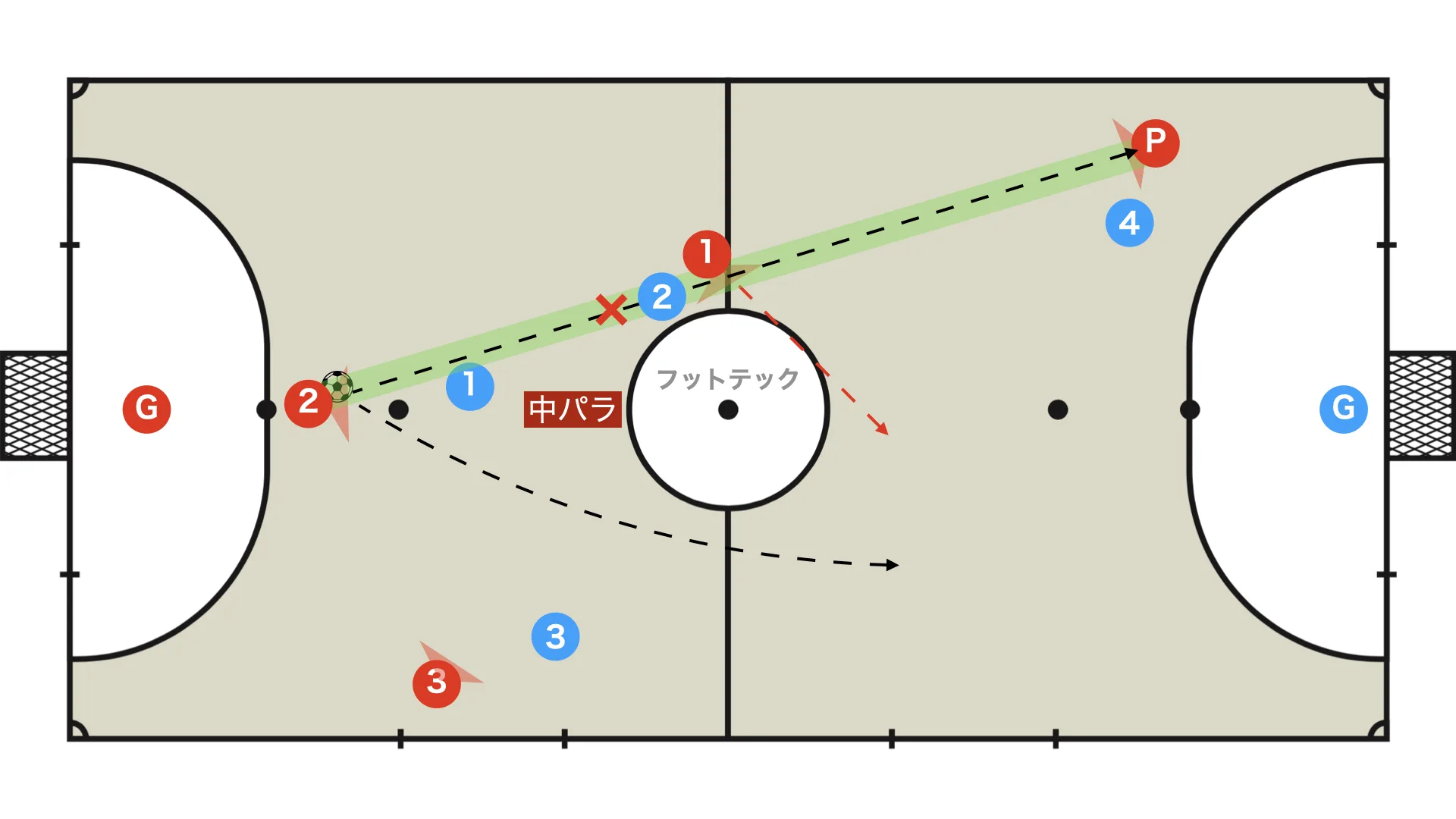
If the opponent's defender is focused on the 3-on-line passing lane, space opens up behind them, so you can target a central parallel (parallel in the center lane).
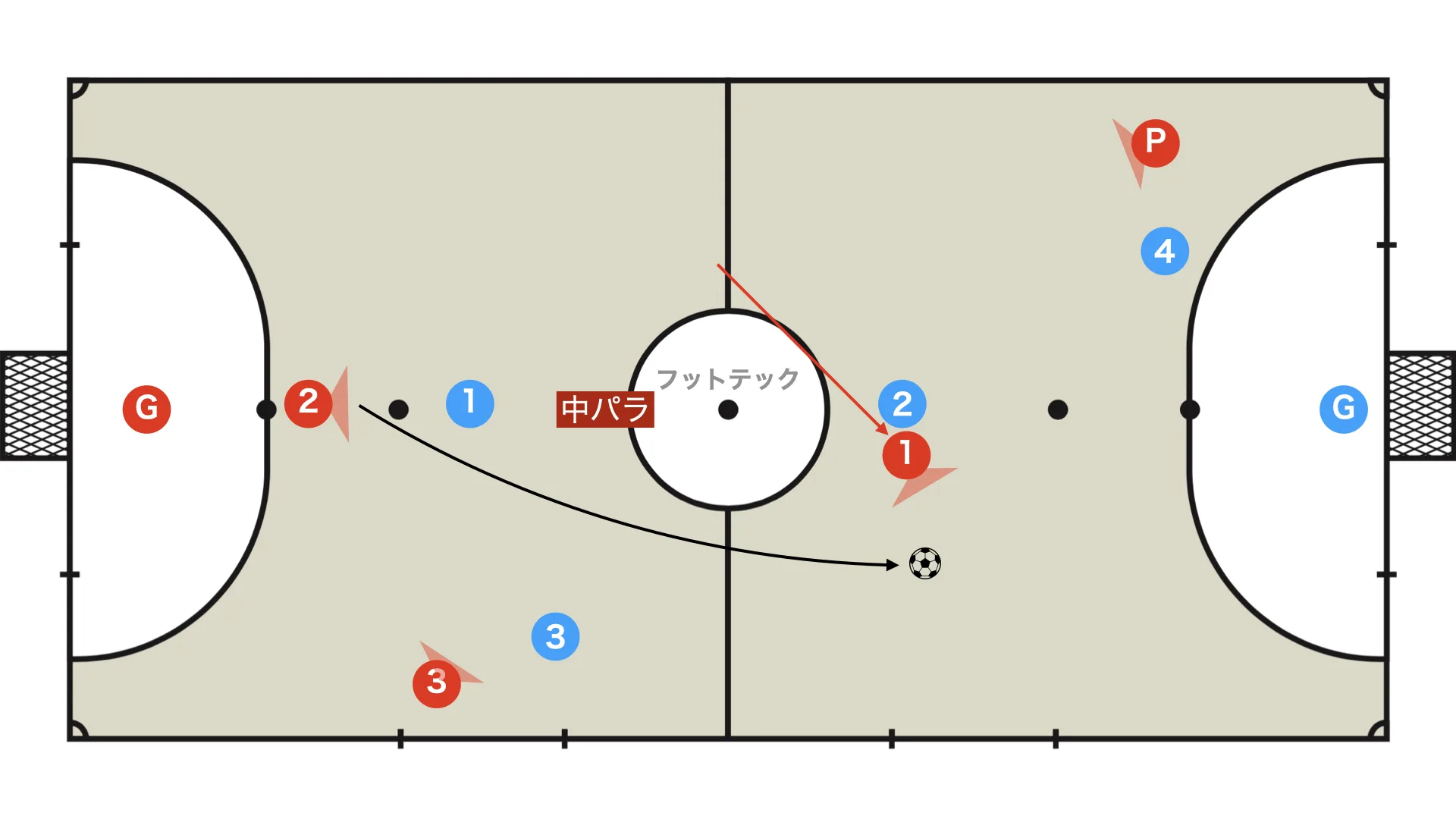
It is a somewhat difficult tactic in terms of angle, but if it comes off, you can immediately create a 1-v-1 with the goalkeeper.
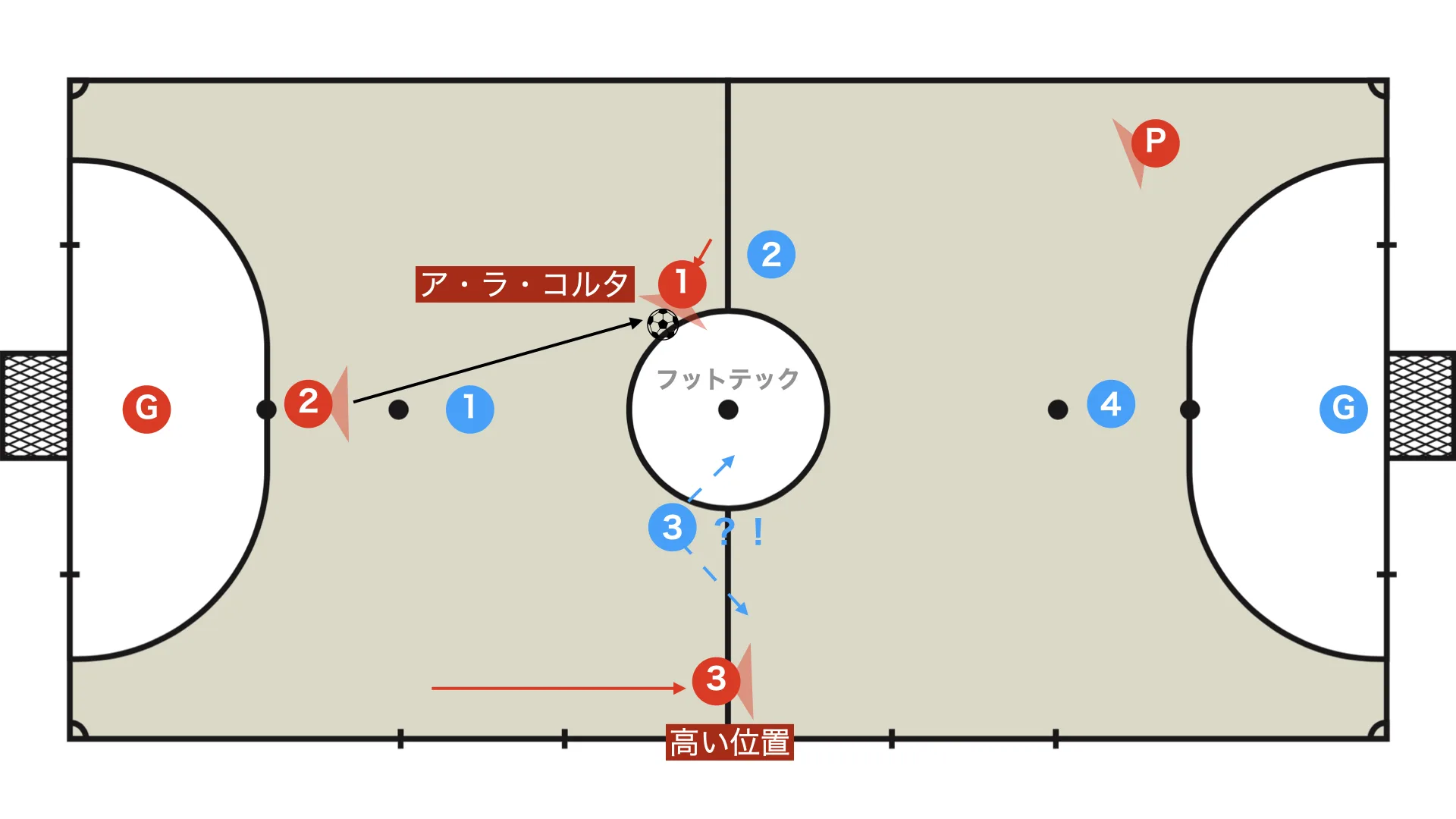
If the opponent is obviously standing to protect the space behind and shutting off the lane into the pivo, use ala corta to cut inside across them and leave the defender behind.
At that moment, red no. 3 on the weak side can create hesitation in the opposing defender (blue no. 3) by holding a high position.
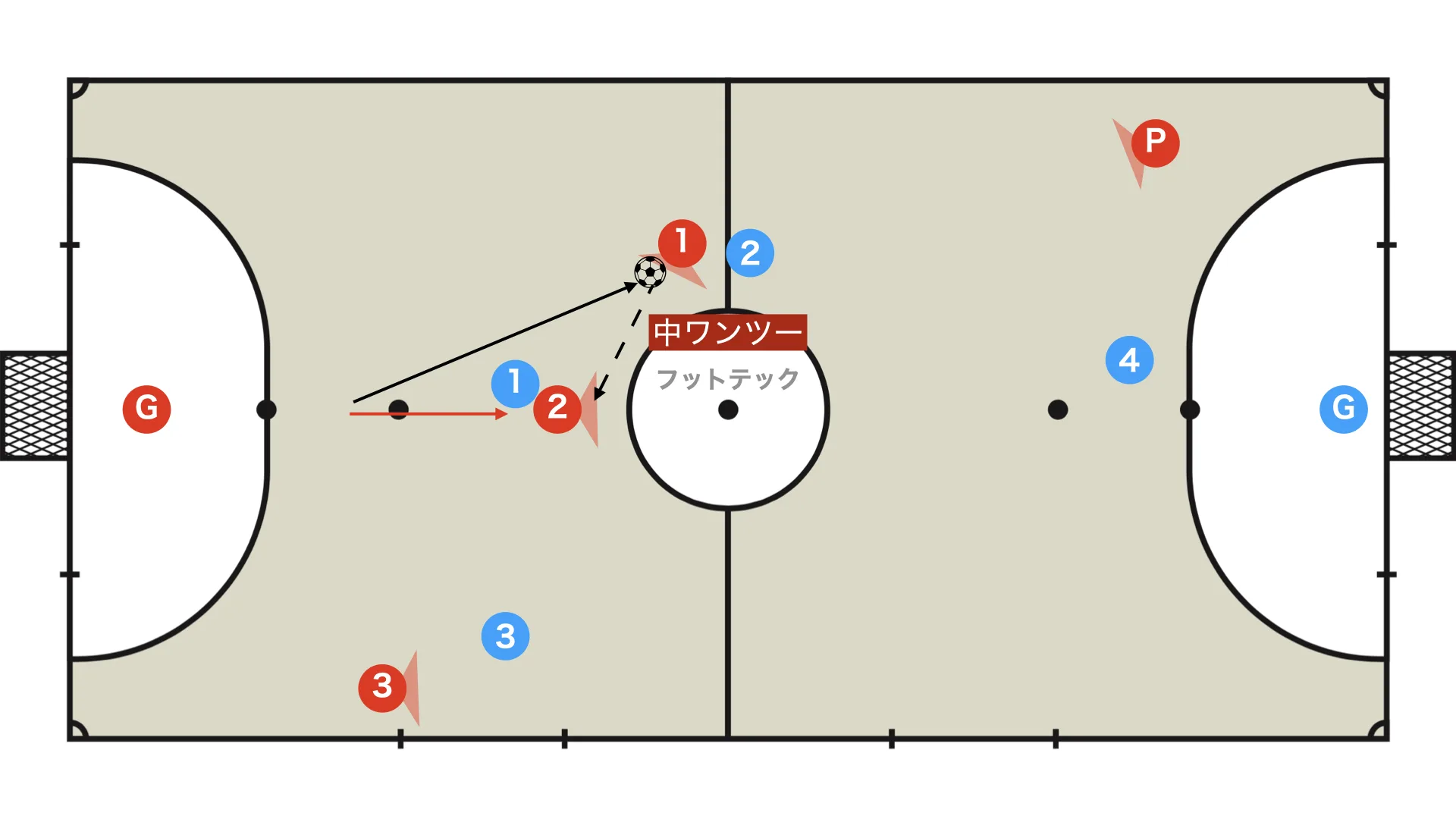
If the fixo can attack the space behind the opponent, then look for a central one-two (a one-two in the center lane).
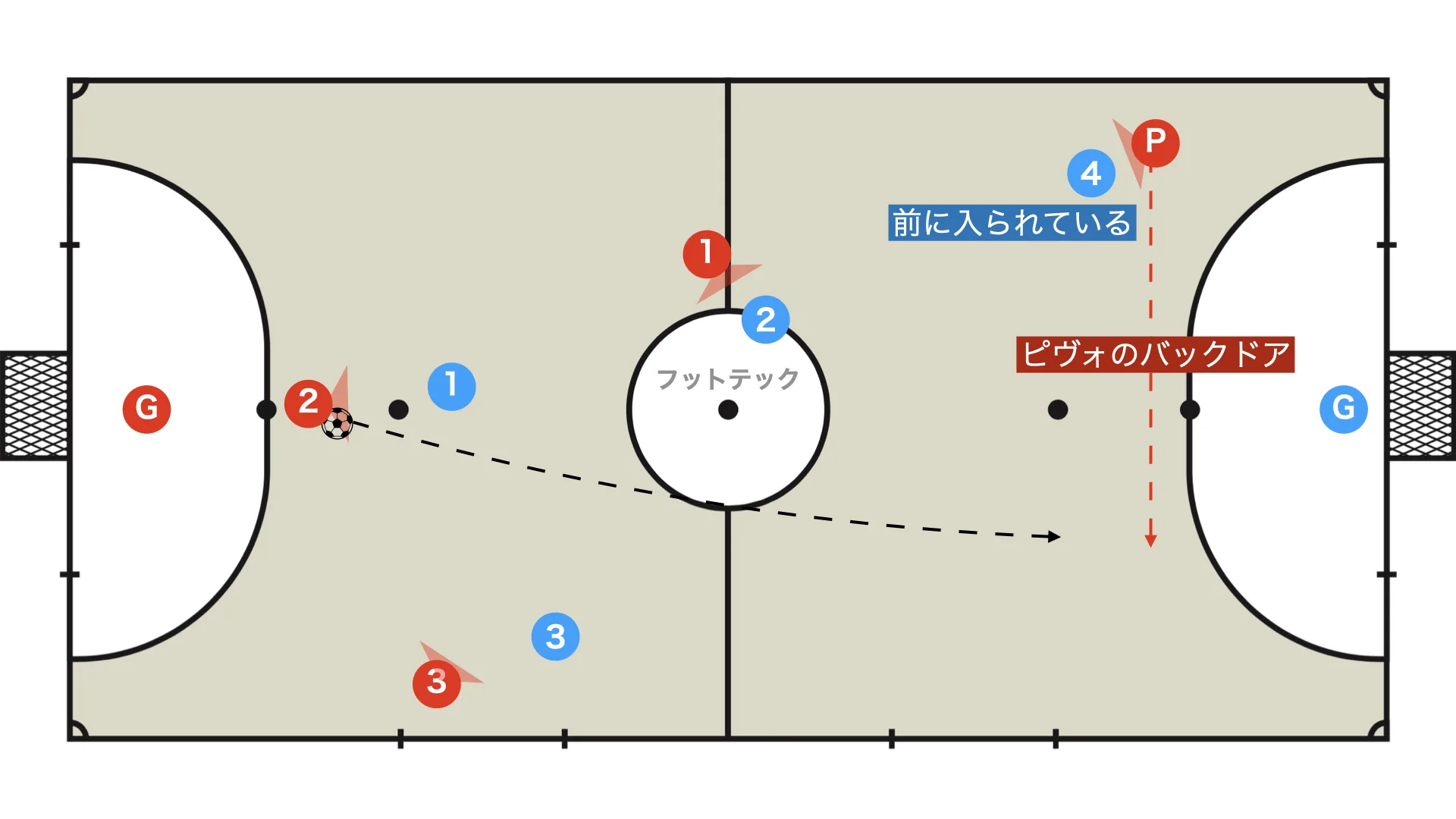
If the opponent's fixo steps in front of the pivo, it is effective for the pivo to compete behind them and receive the ball with a backdoor run.