Diagonal 3-on-Line (1-Line) Explained: How to Collapse Multiple Defensive Lines
Published: 2021.07.15Updated: 2026.05.03
Once players start moving beyond the complete beginner stage in futsal, they usually come across the 3 on line tactic, where three players line up across the pitch.
In reality, most players only know the shape of this tactic and do not really understand its essence.
This article gives a thorough breakdown of the tactical purpose of the diagonal 3-on-line created by the ala, fixo, and fixo in quatro, along with every attacking variation that can come out of it.
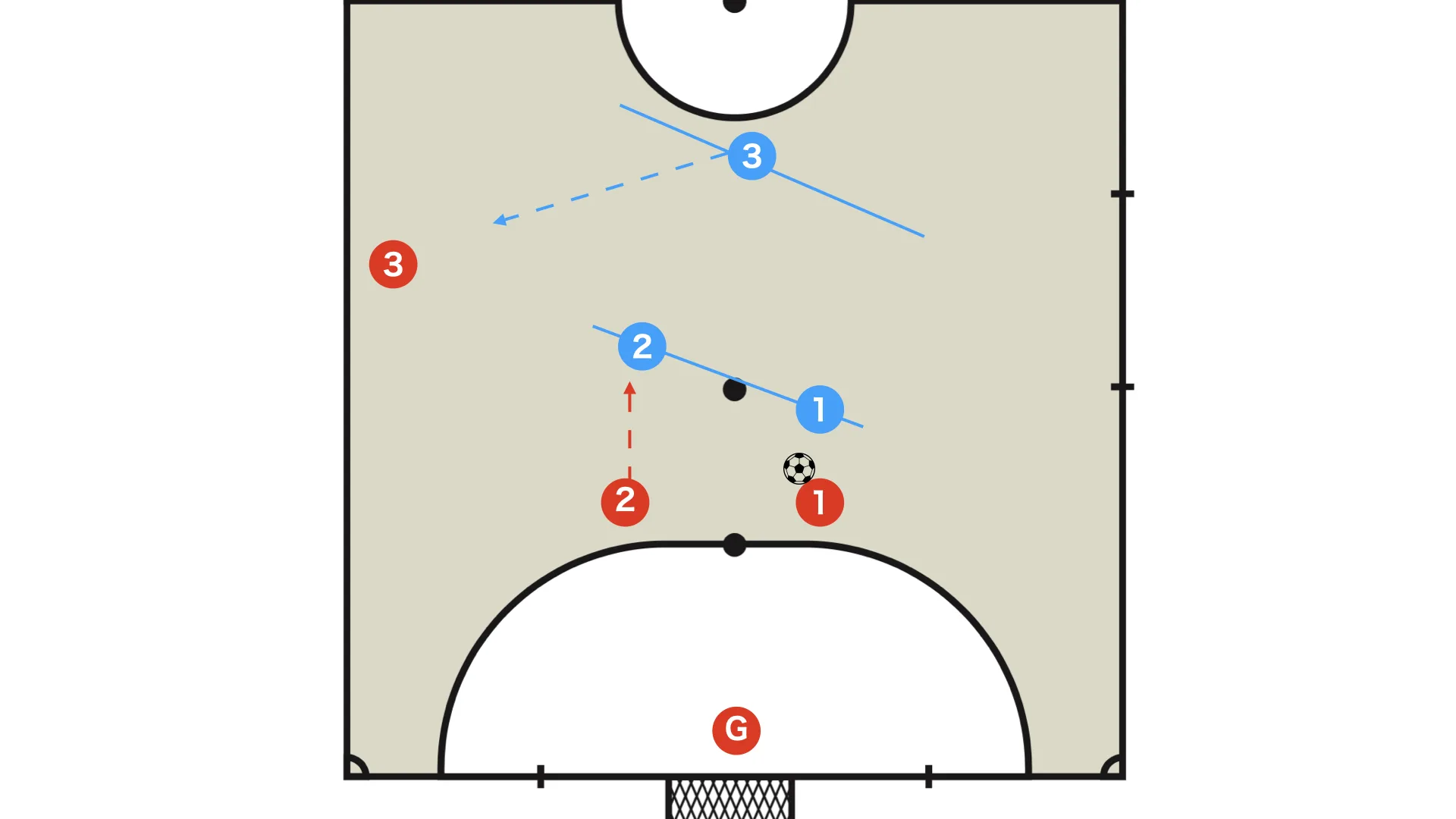
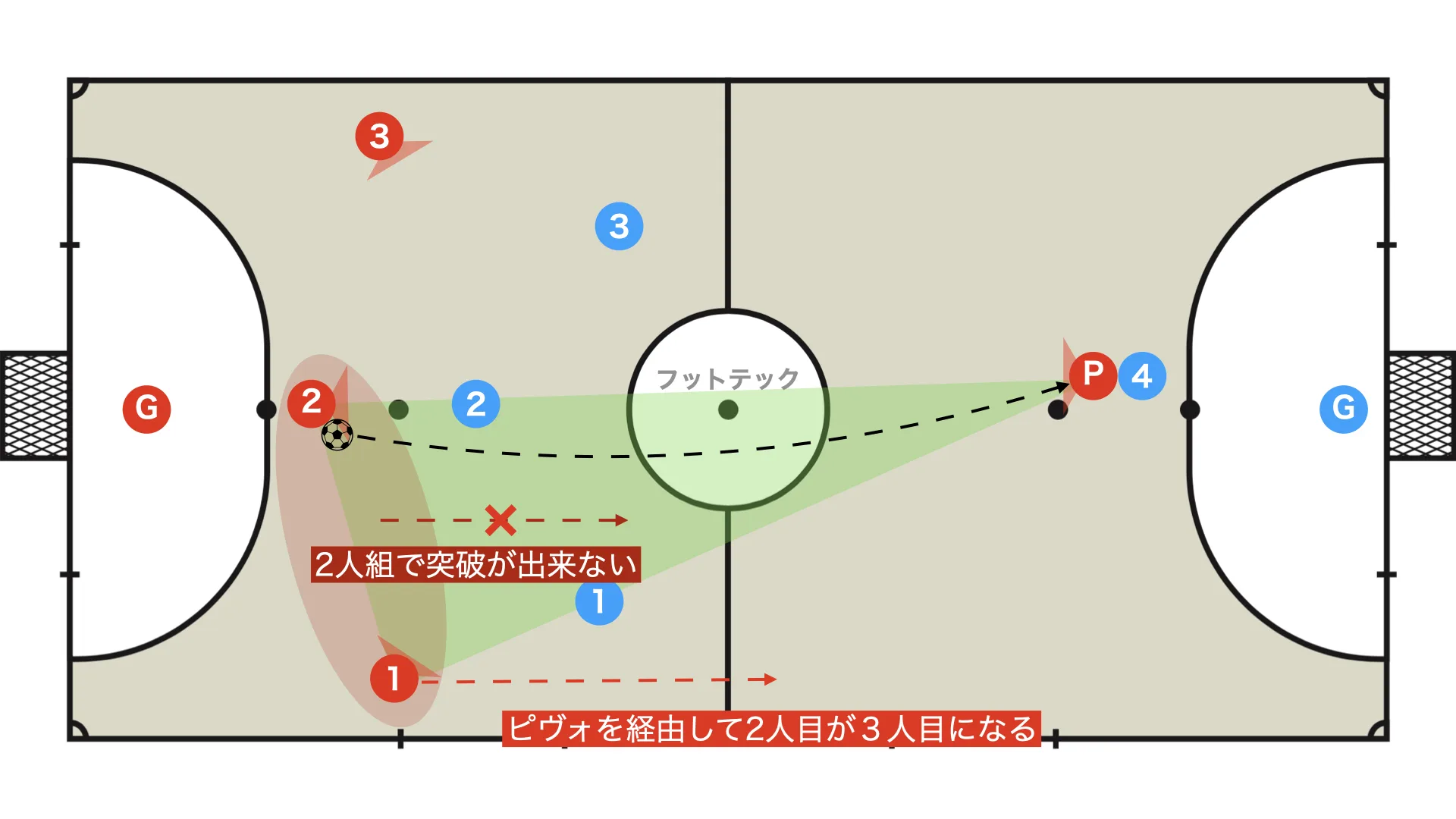
In principle, the defence tries to build multiple lines as shown above in order to take away attacking space.
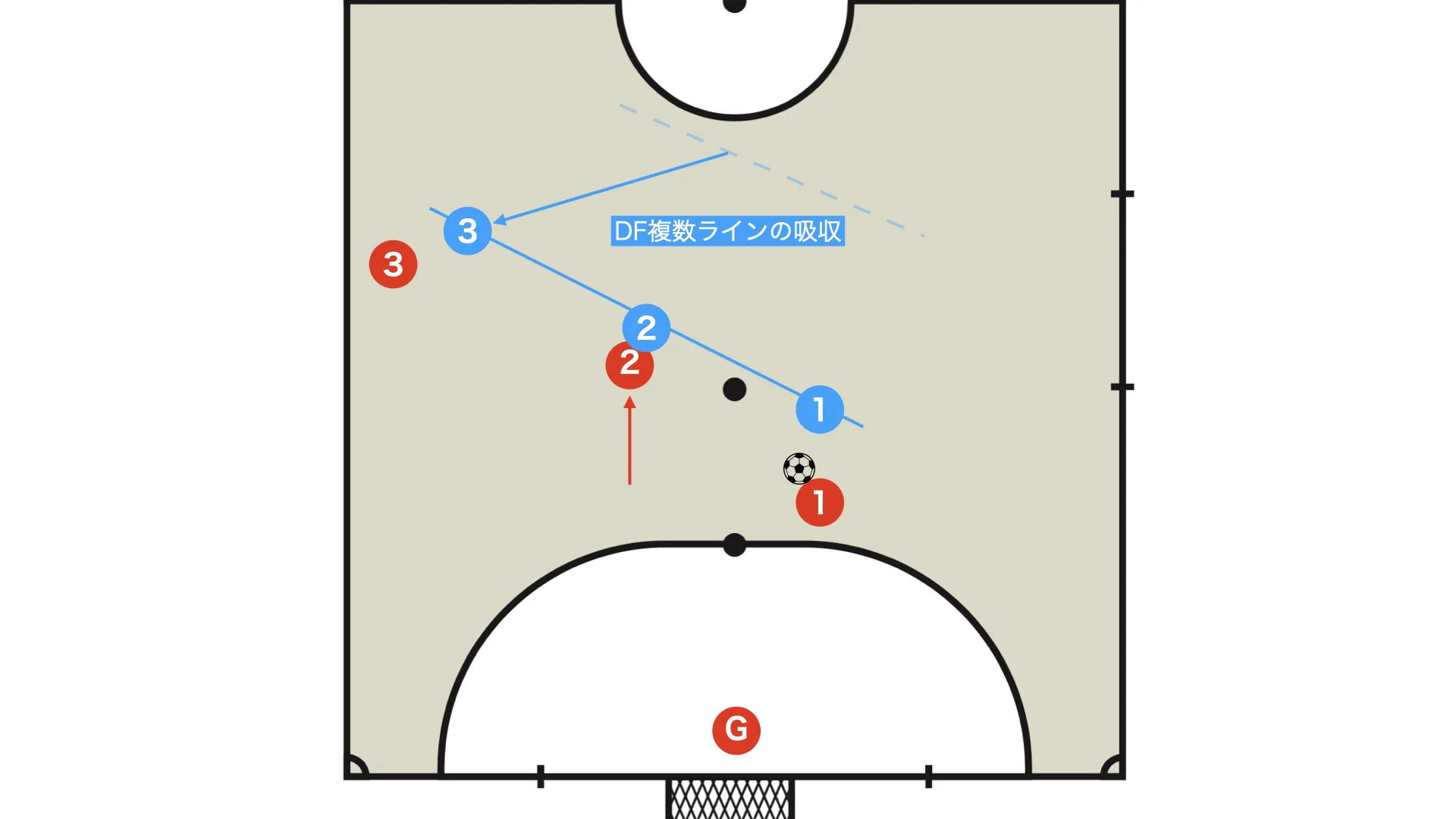
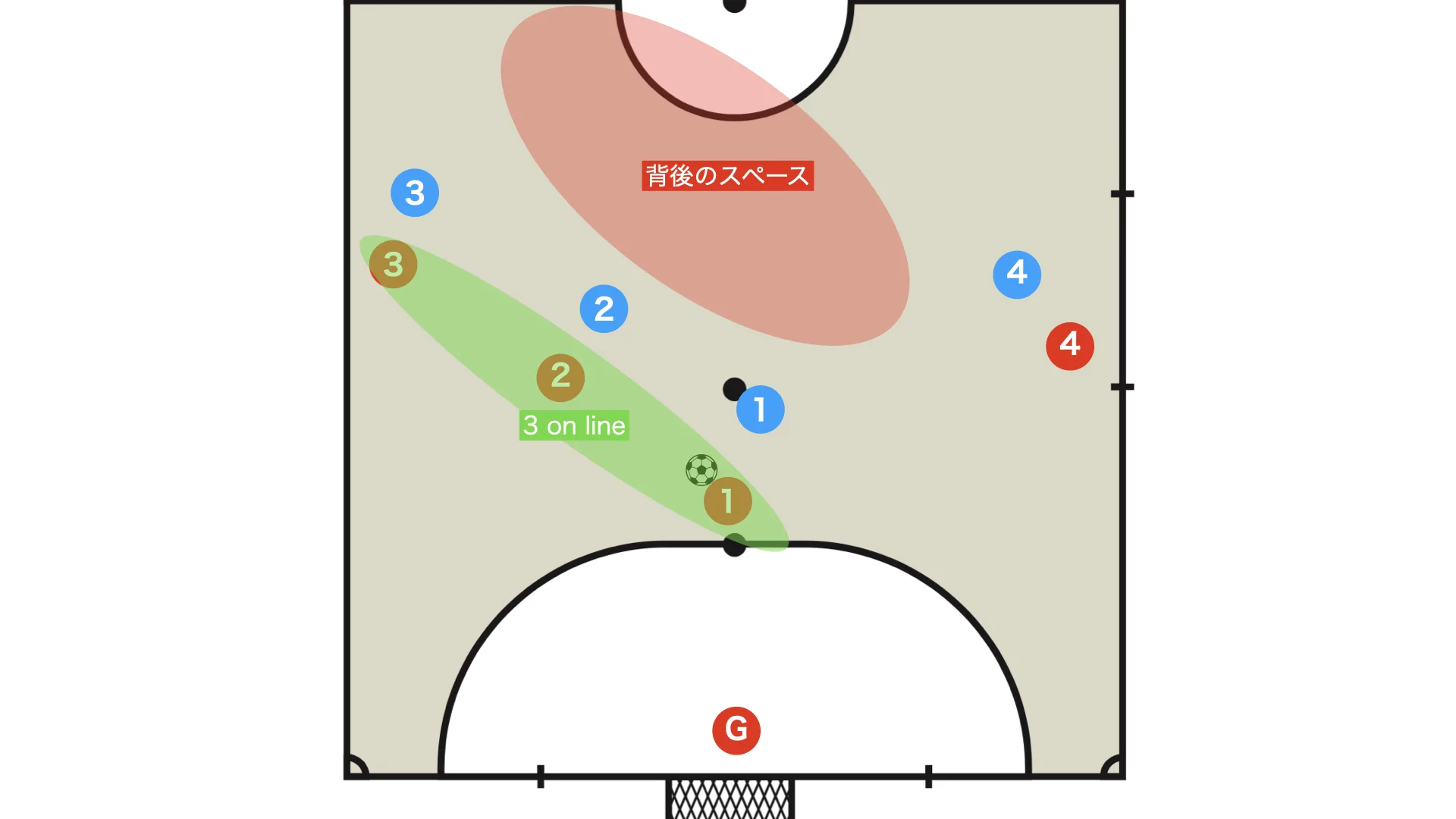
The aim of forming a 3 on line is to flatten the opposing defenders into one line, turning two defensive lines into one and effectively absorbing multiple defensive lines.
As a result, space opens up behind the defence, and the attacking objective is to make effective use of that space.
There are three types of 3 on line: vertical, diagonal, and horizontal. This article uses the diagonal type as its example.
The essence is basically the same in every type.
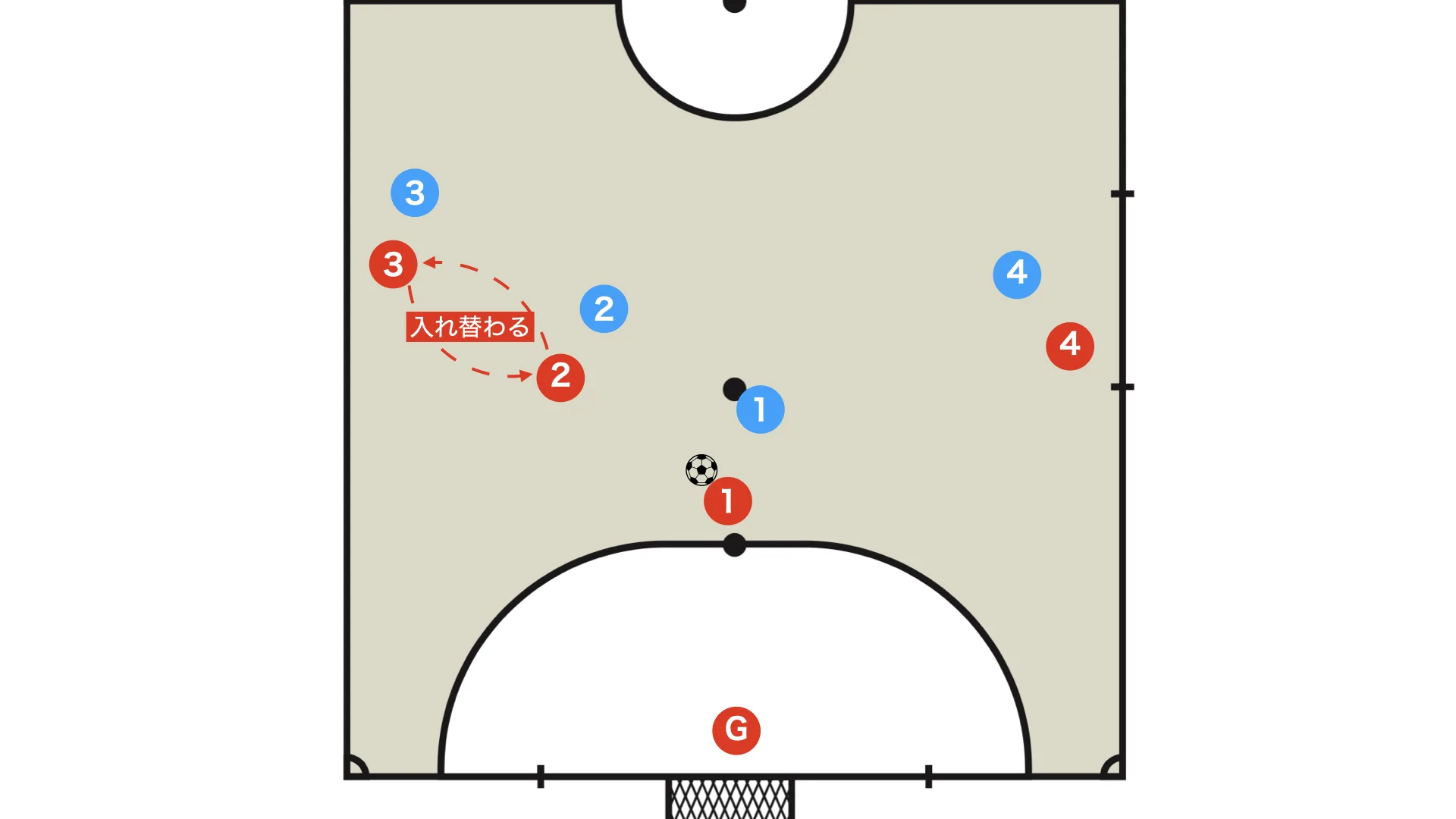
When the two off-ball players rotate and swap places, it creates the following two effects:
- It forces a defensive handoff and creates a momentary free player.
- It changes the positioning to better match the players' strengths.
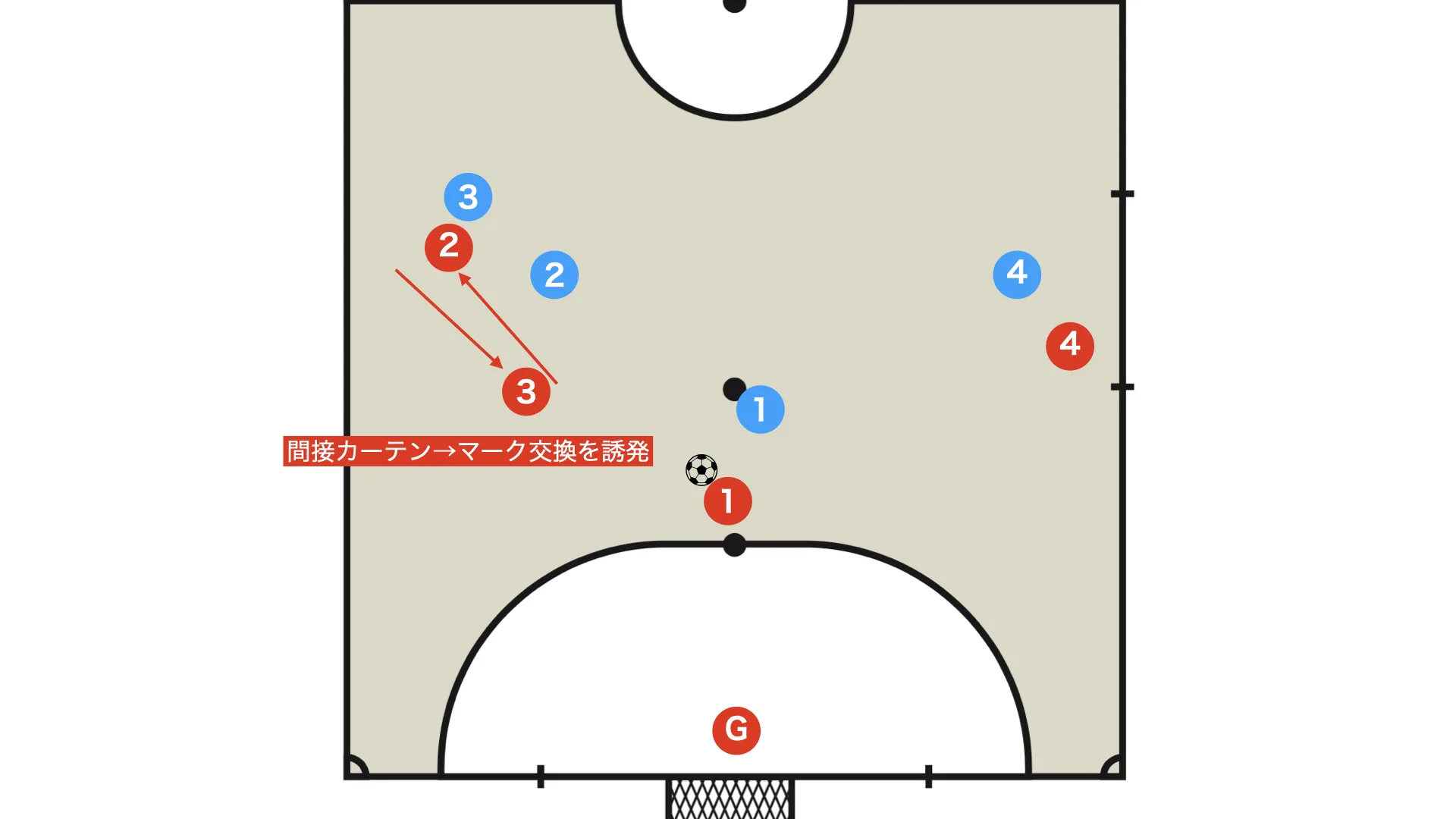
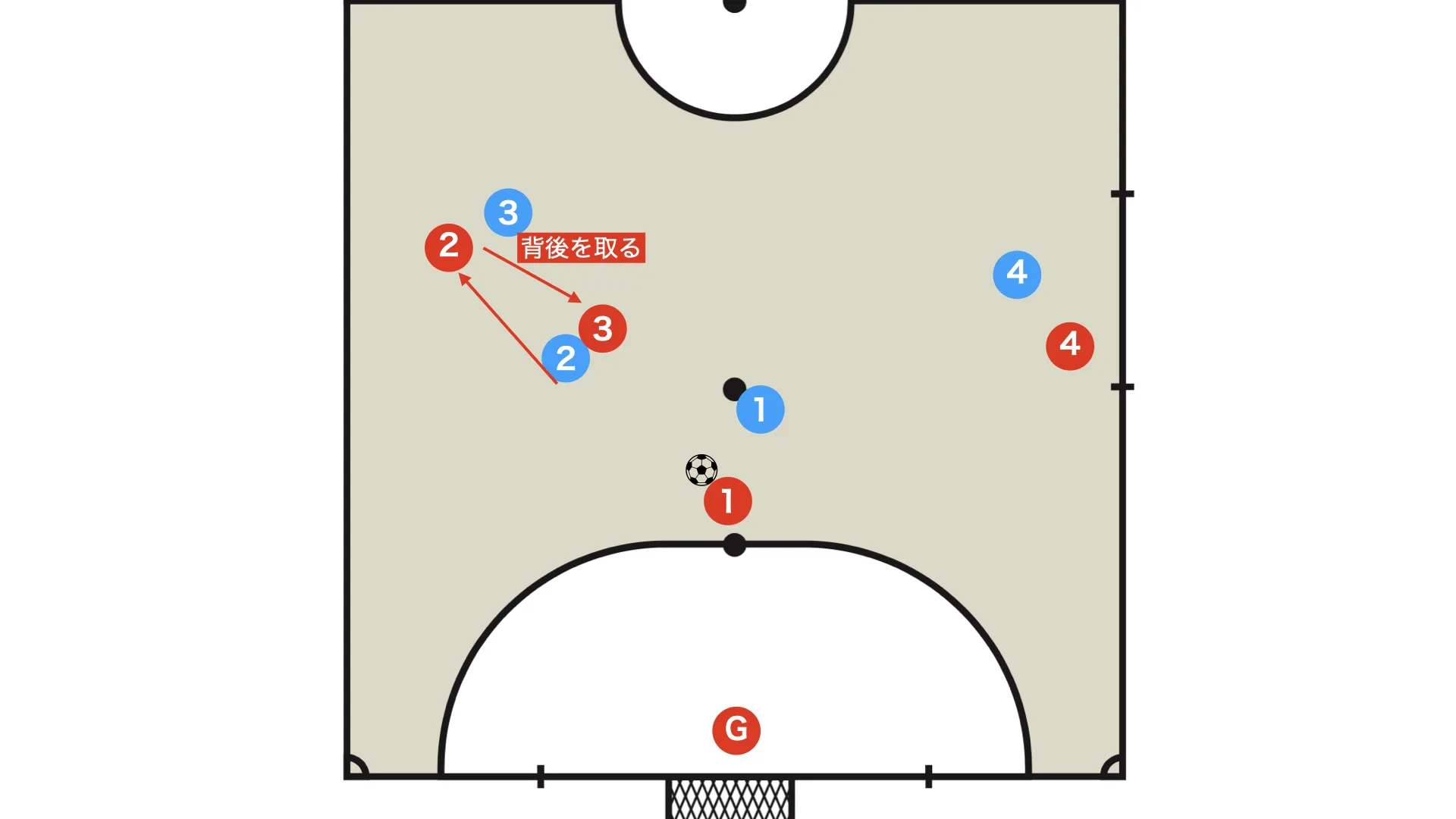
If the opponent switches markers and defends in more of a zonal way, it is effective to get in behind and use the space between the lines.
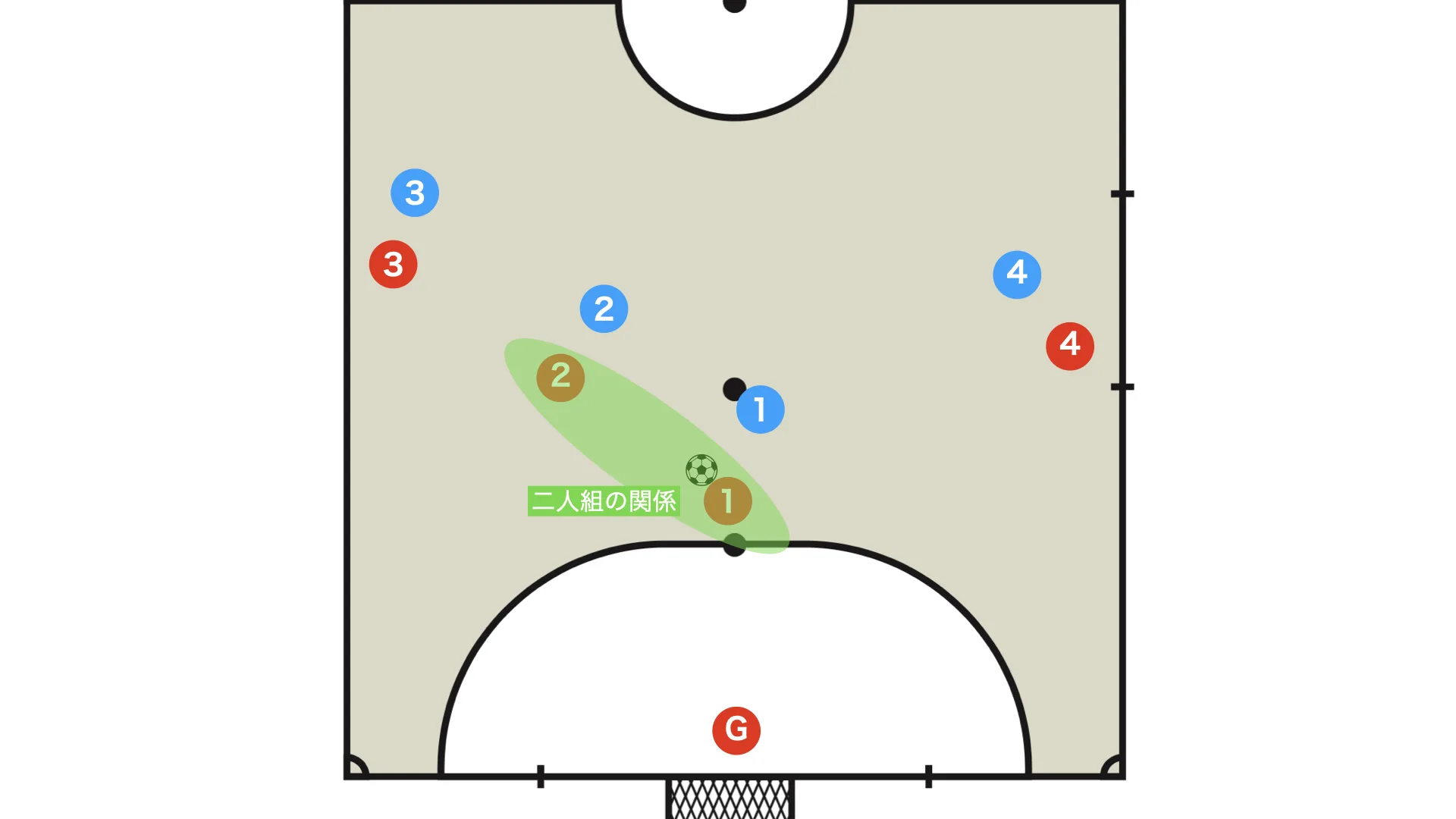
When people hear 3 on line, they tend to focus only on attacking through the deeper player (red 3). But the basic principle is to break the defence first with the ball holder and the nearest supporting player.
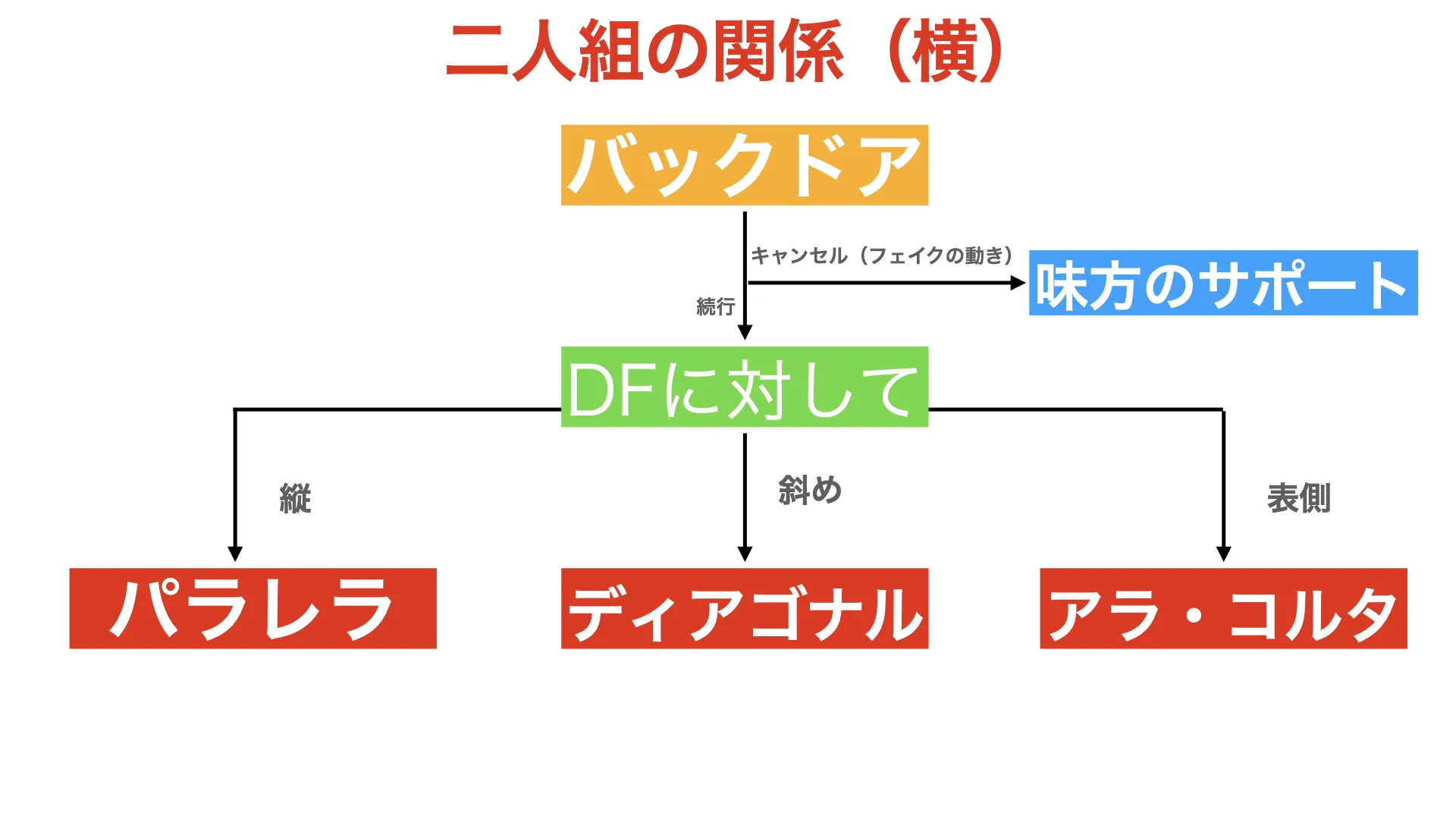
The relationship between the two fixos is no different from an ordinary two-player relationship.
This article will go through them one by one.
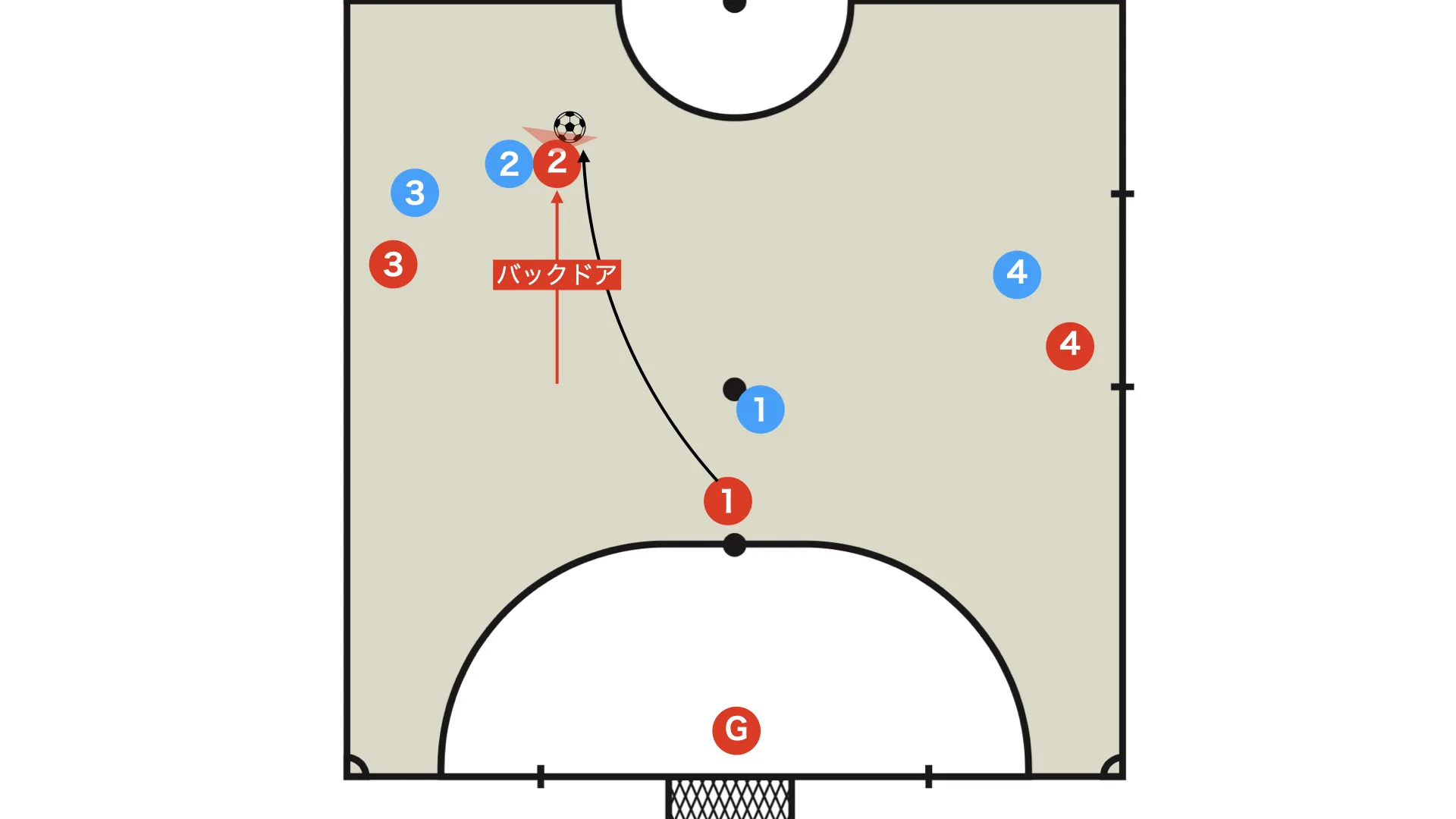
If the space in behind is simply available, look for the backdoor.
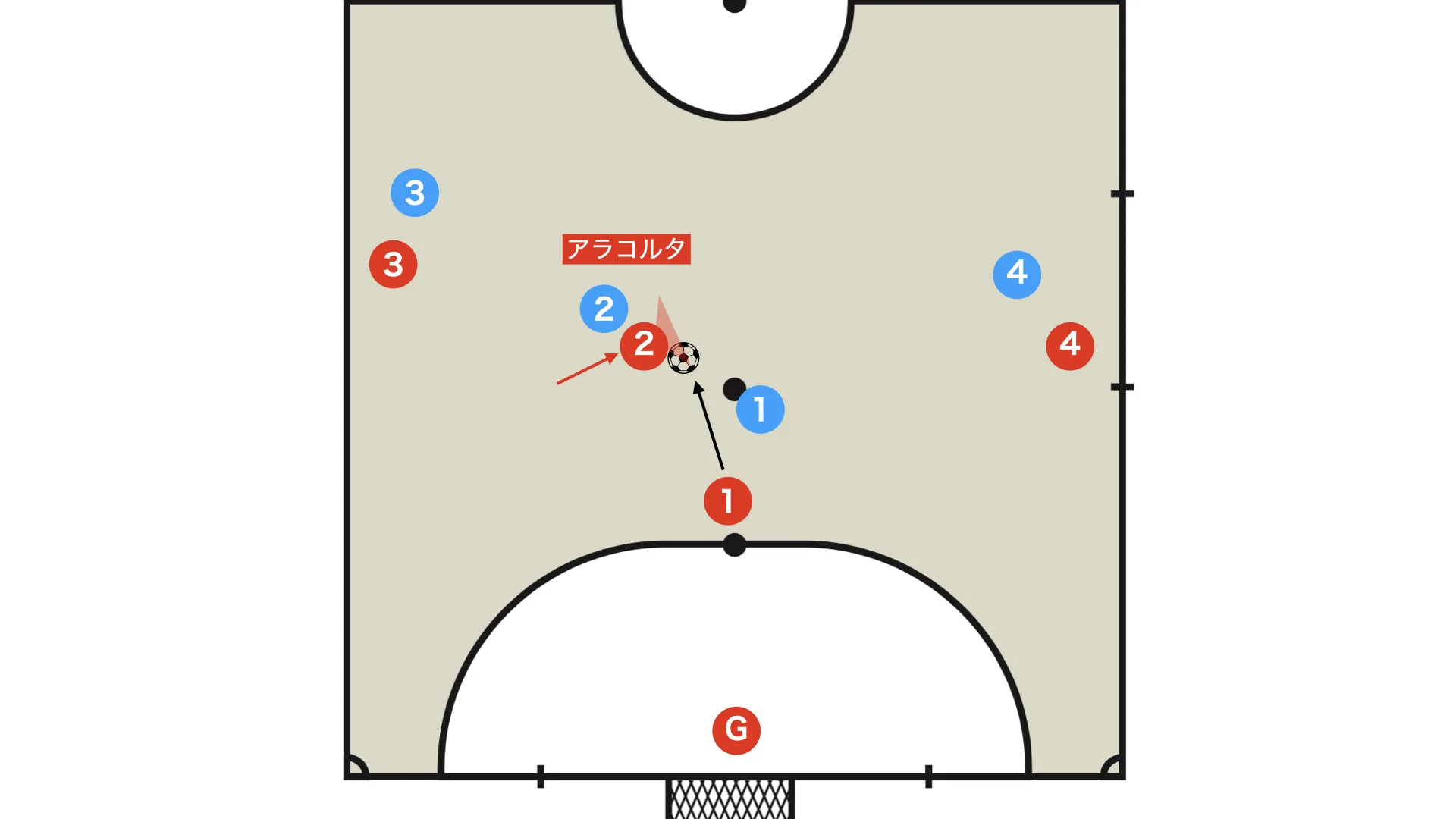
Using an ala corta to beat one defender and move forward is quite difficult, but even if the defender is not beaten, the red 4 can at least form a two-player relationship.
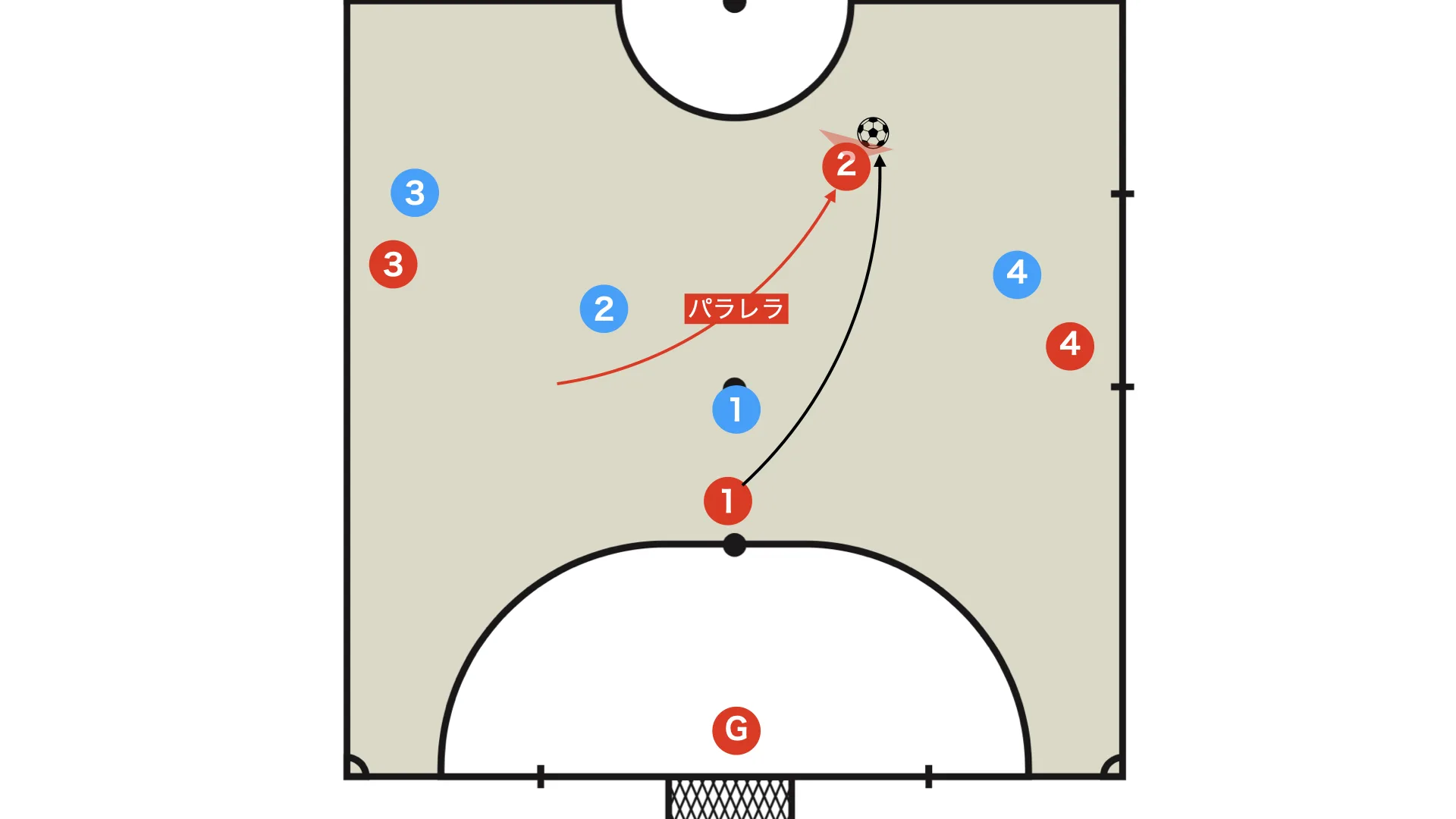
In the center lane, this parallel movement is called naka-para.
Play a sideways pass with the feeling of making a parallel pass.
It is a highly advanced technique, but it is used at top levels to break down multiple defensive lines.
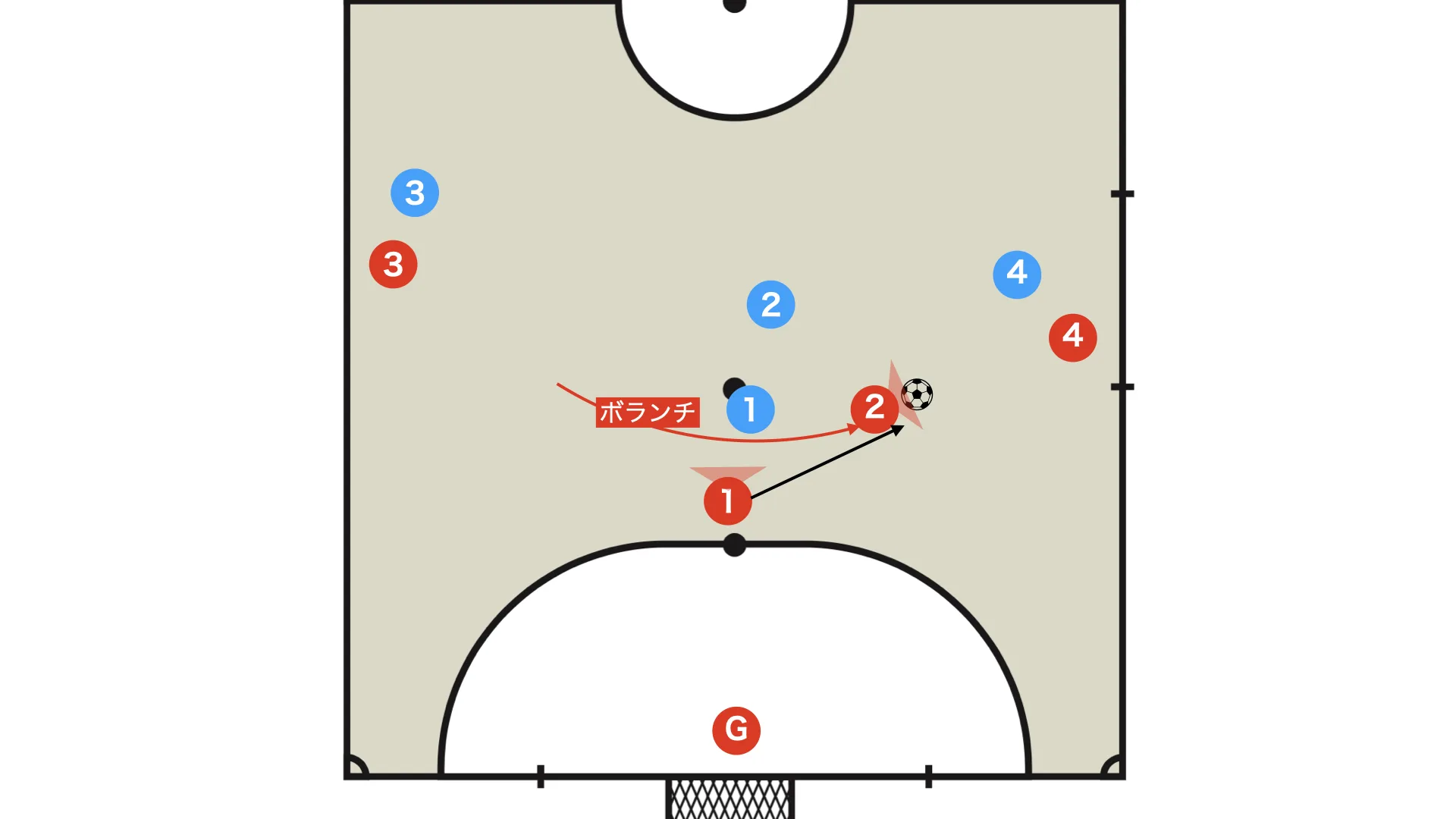
As shown above, one major strength is that it allows another 3 on line to be created on the right side.
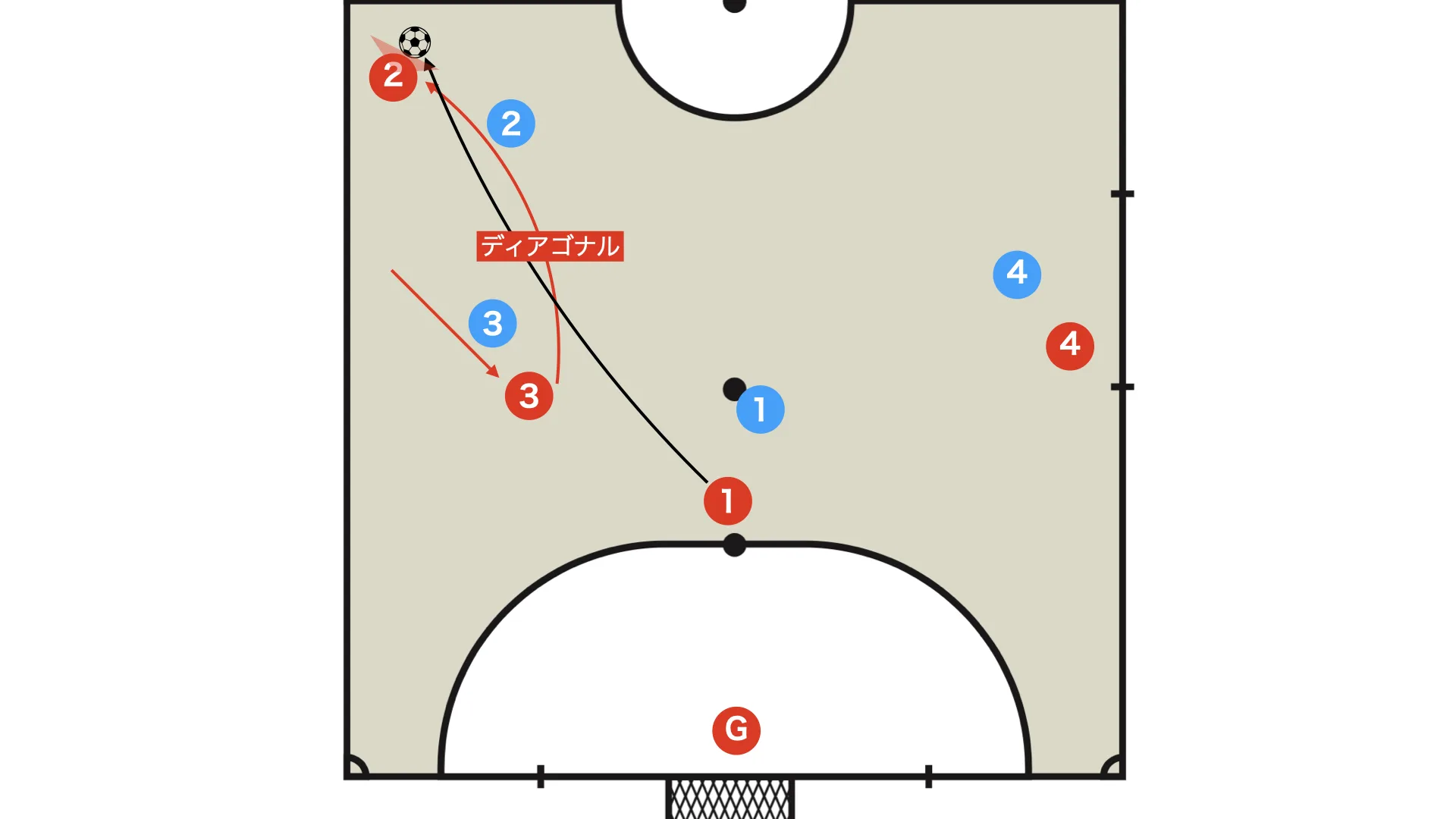
This is a very common way to break the defence in quatro.
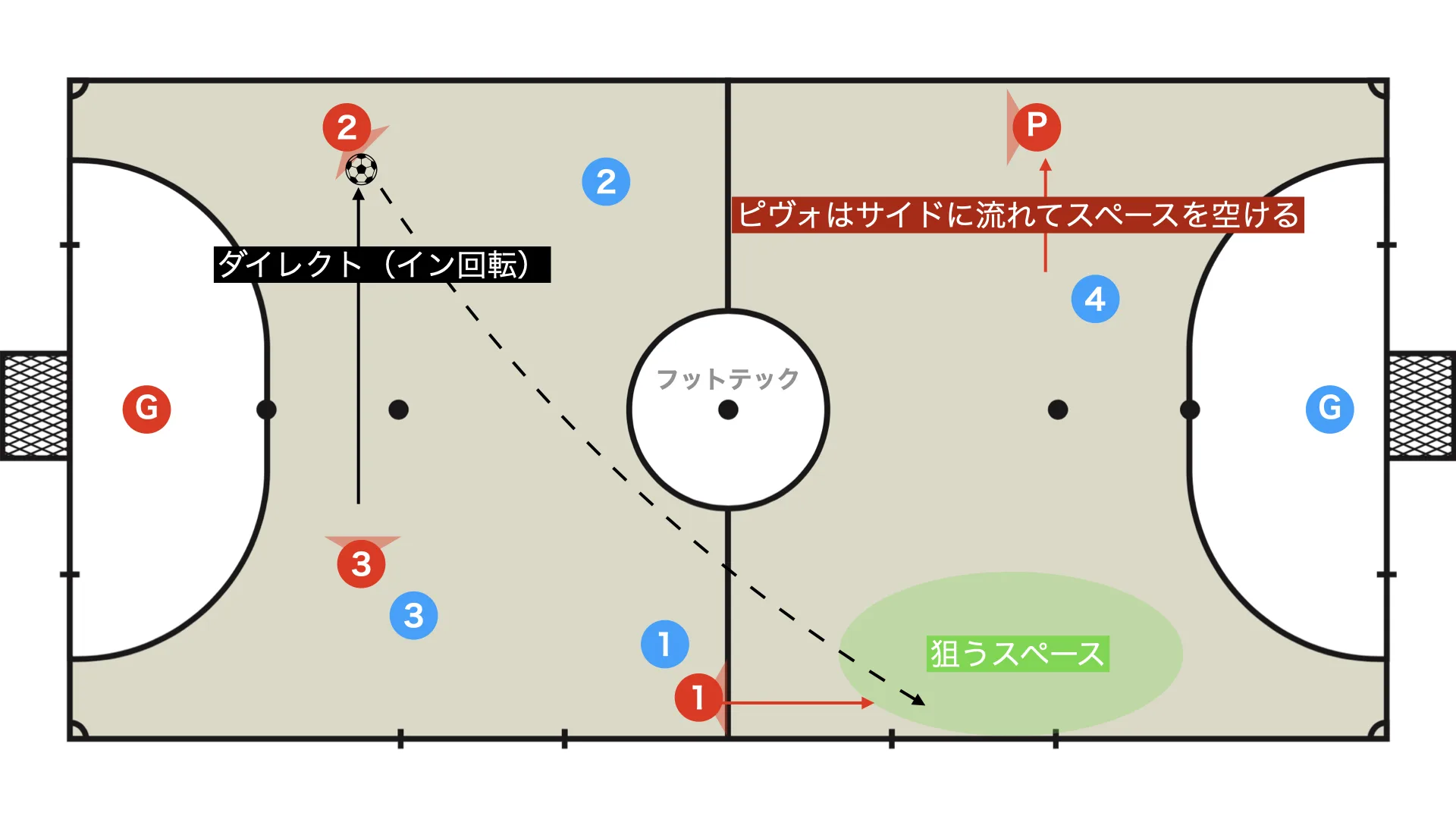
If the near-side player (red 2) makes a diagonal run, the far-side player (red 3) drops into the space red 2 originally occupied in order to restore floor balance.
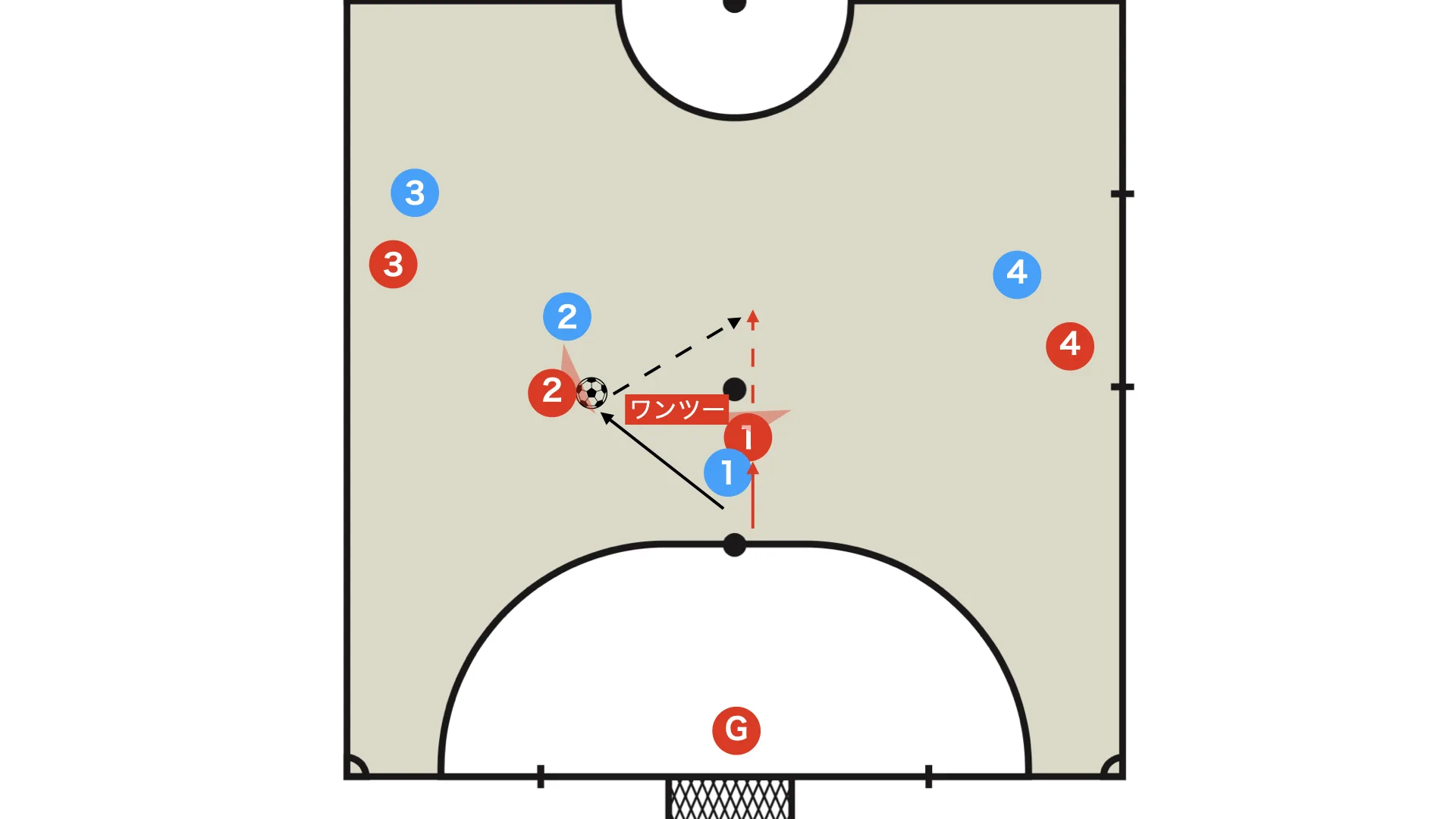
If the ball holder is under pressure, it is effective for the deepest fixo to make a backdoor run and combine in a one-two.
If the pass from red 1 to red 2 gets through, it will succeed at a high rate.
This kind of one-two between the two fixos in the center lane is called naka one-two, and it is one of the main breaking patterns in quatro.
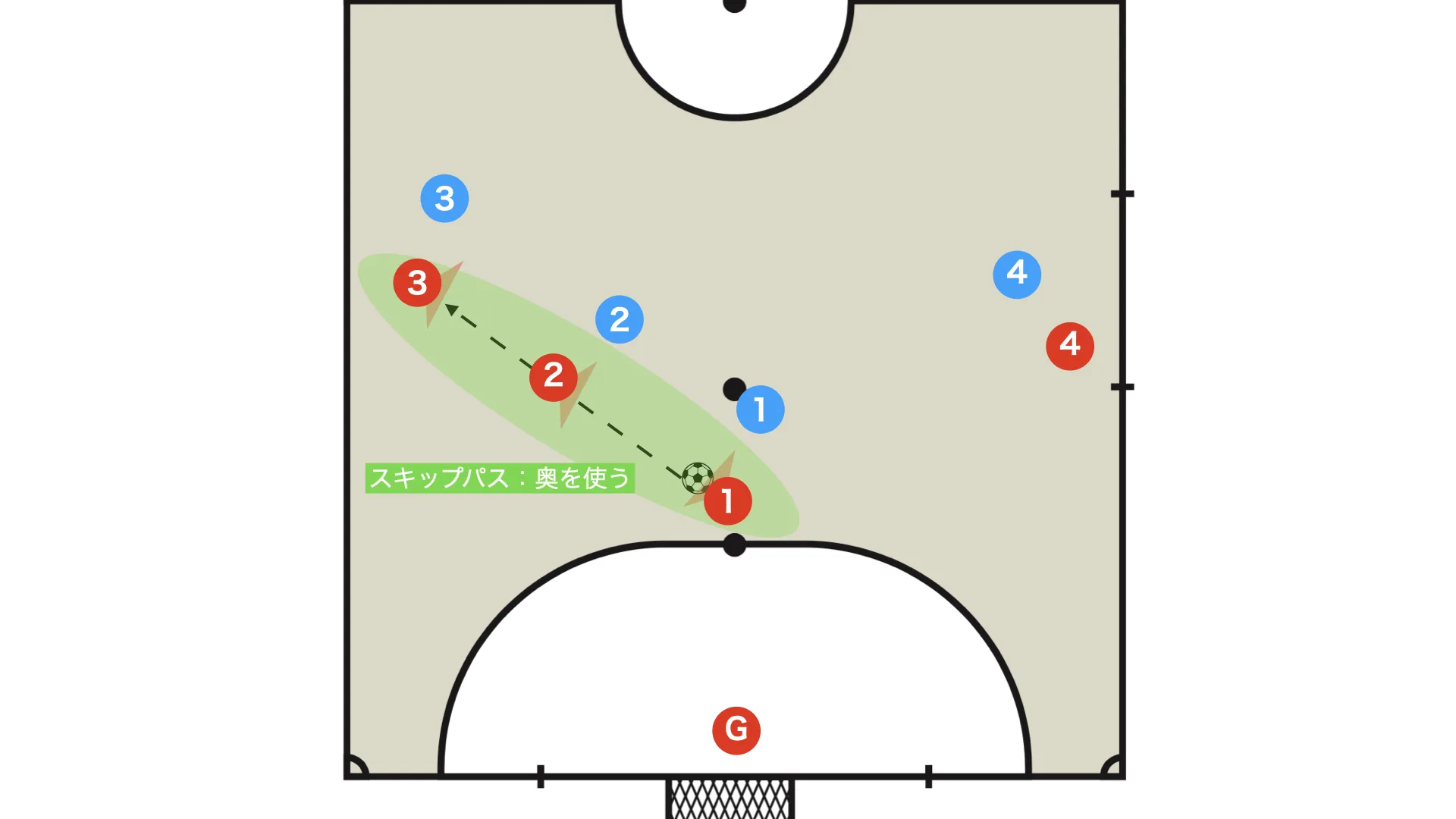
Among the many attacking patterns that come from 3 on line, this is the most classic one.
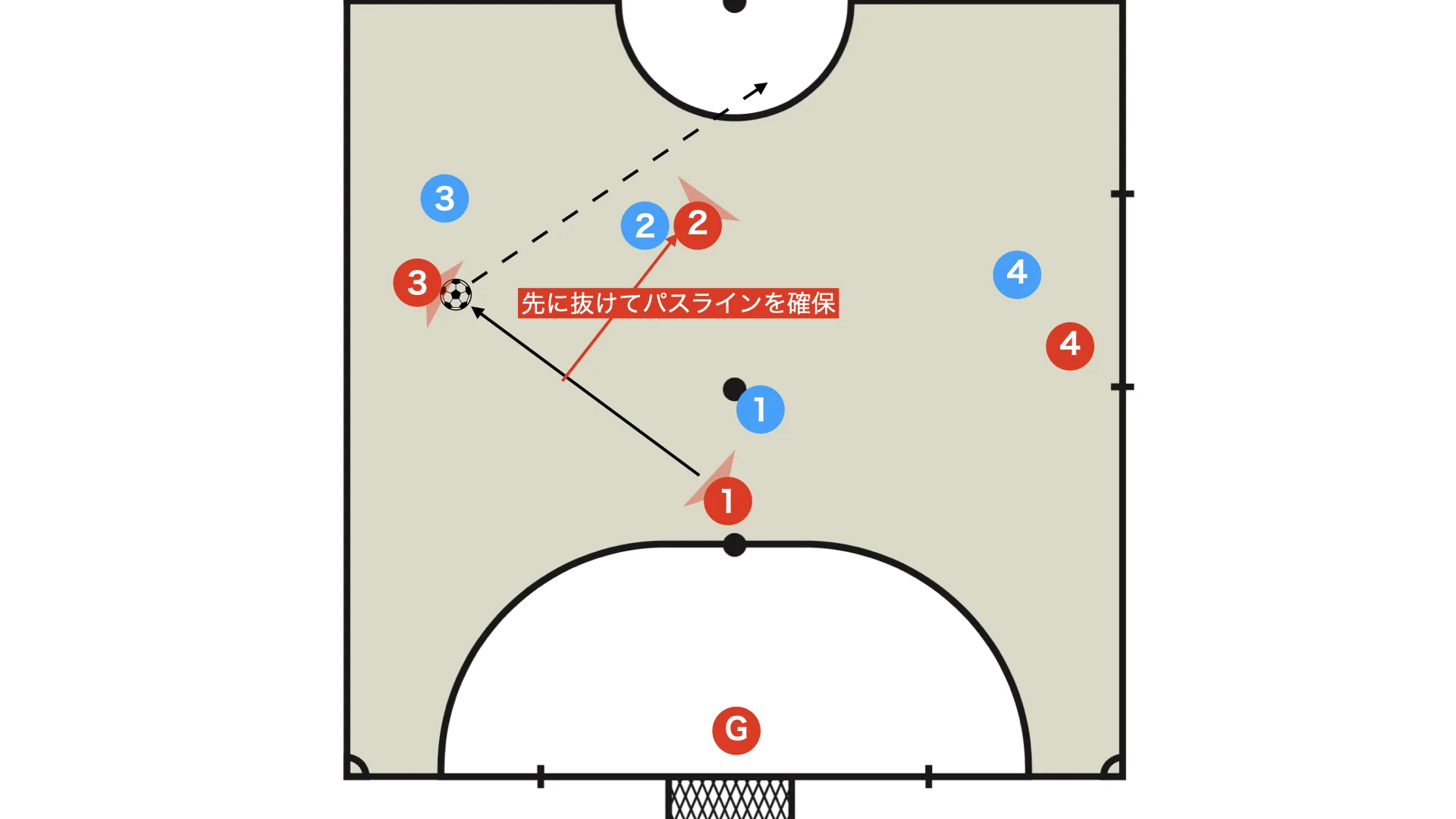
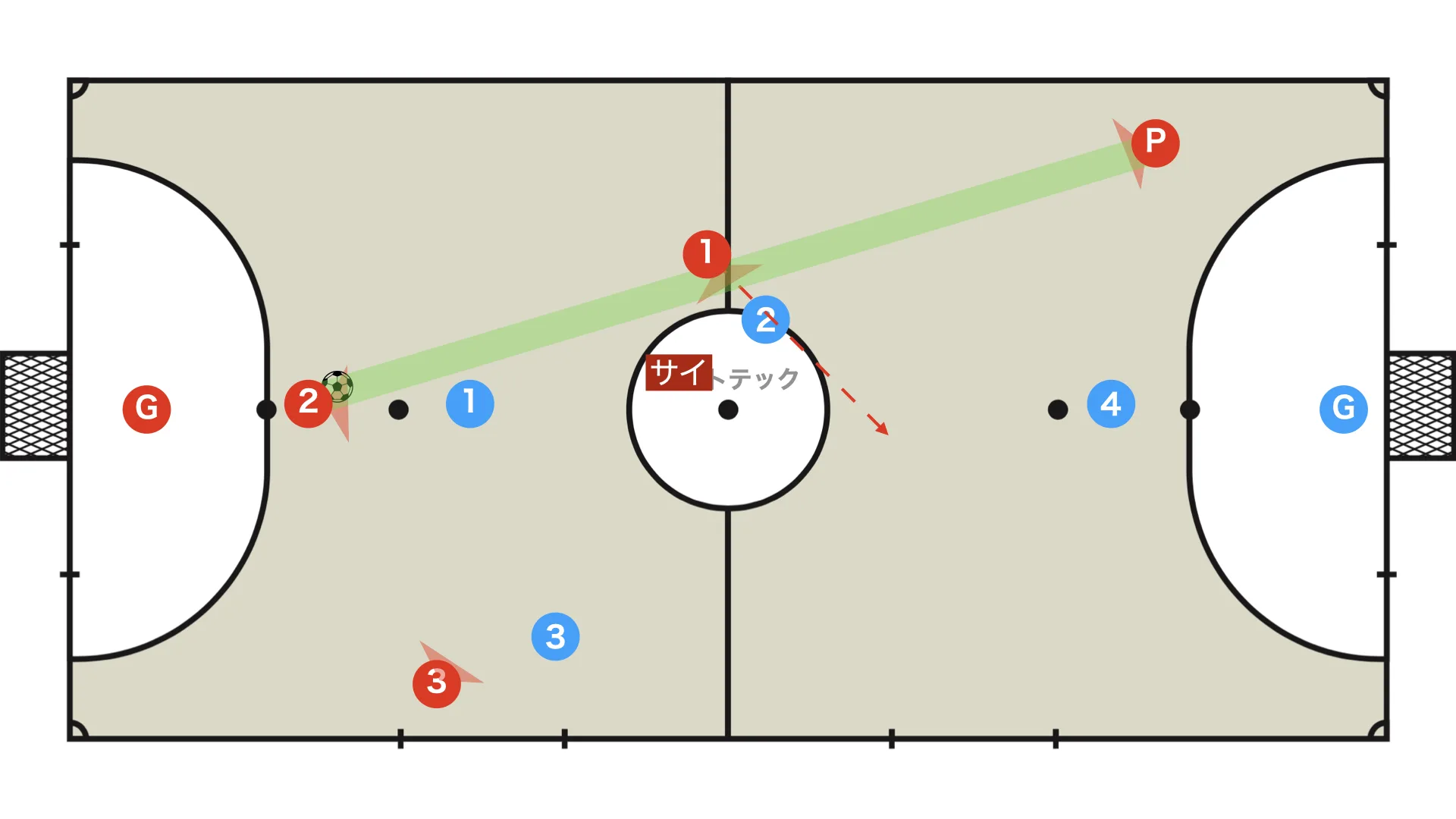
Sai means "move" in Spanish, and refers to a tactic where the central player vacates the lane to open the passing route for a skip pass.
Limpiar, which means "to clean out," is used in the same sense, but in Japan, sai is the more common term.
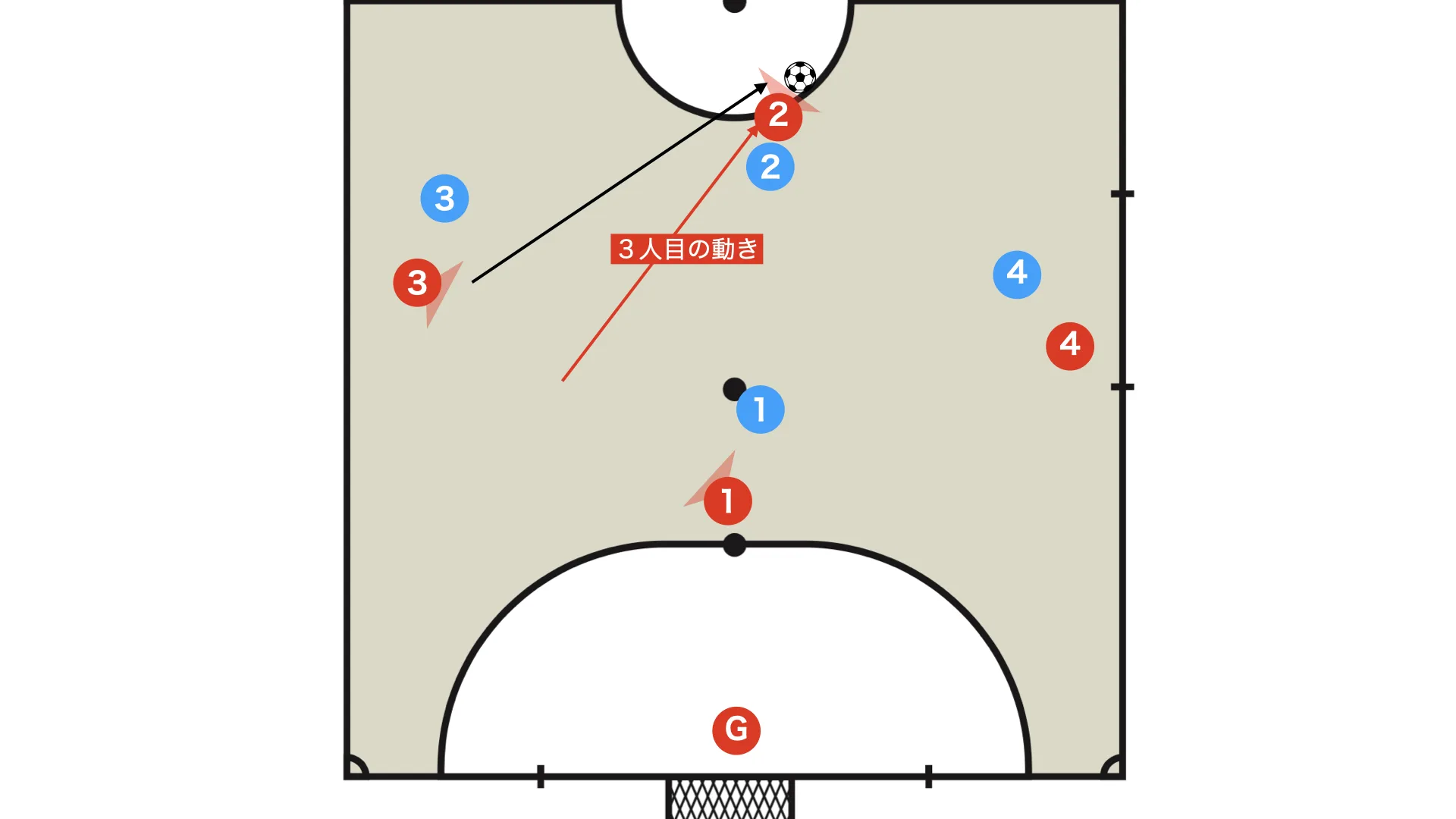
Red 3 passes with two touches or fewer, ideally first time, into the path of red 2 after the run into the space behind.
As a result, red 2, who ran out with the sai movement, becomes the third-man run.
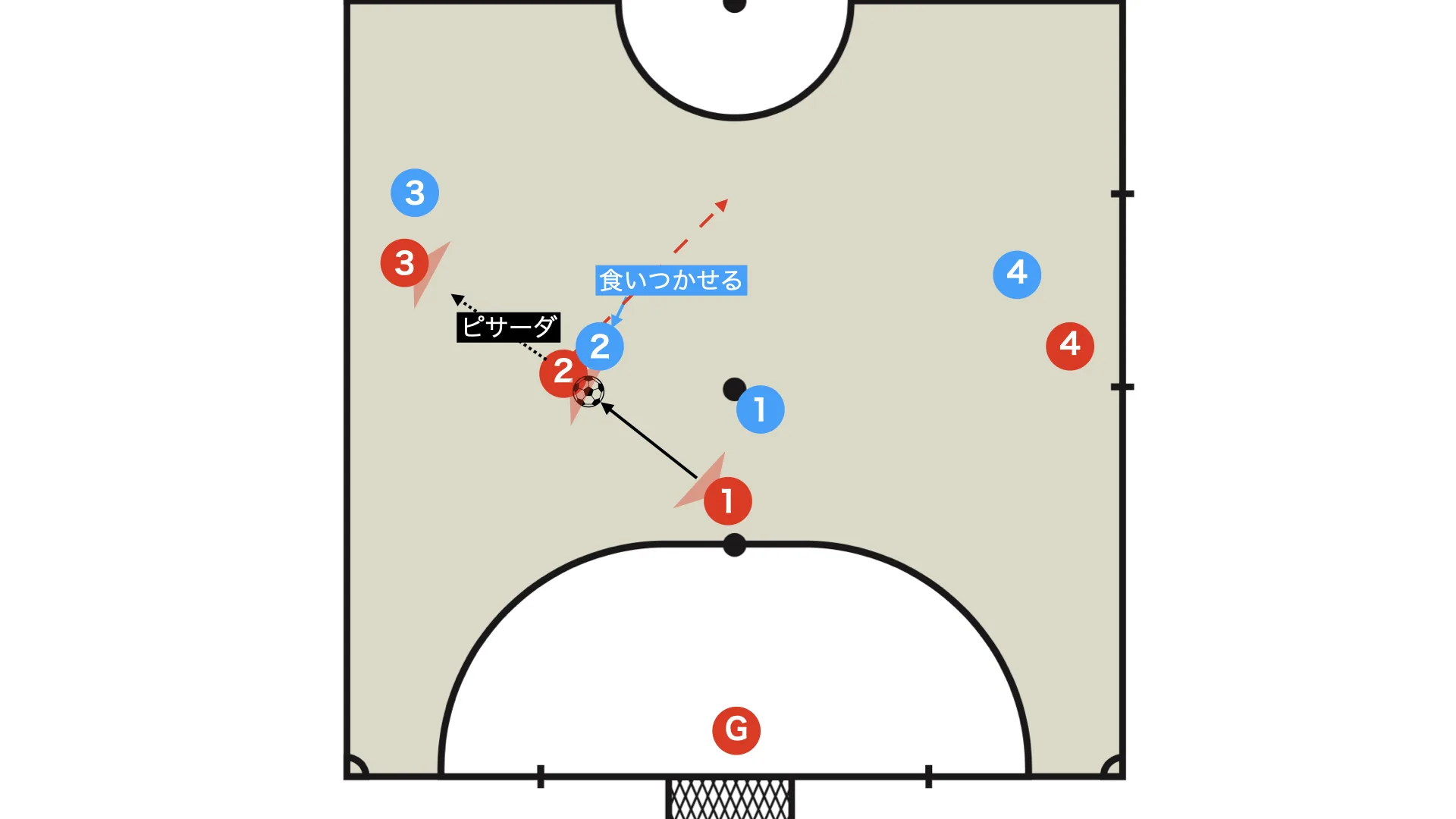
If the opponent has not committed, simply running out will not let you get in behind. So instead, trap the ball once on purpose, draw the defender in, and then break out with a pisada.
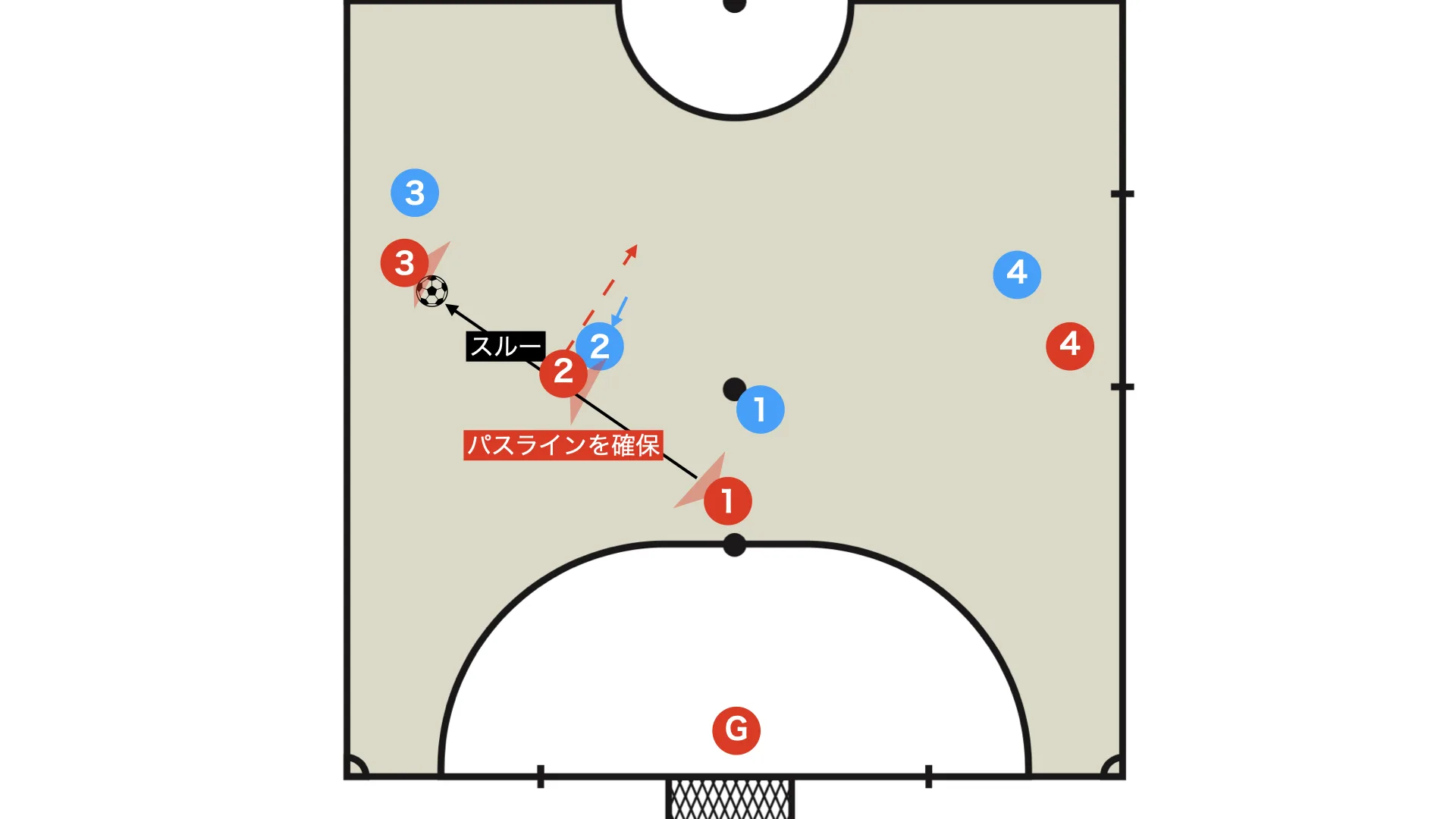
If the defender (blue 2) steps in to win the ball by intercepting, get your body into the passing lane to secure it, then break out only after the ball has passed near red 2.
If necessary, use contact on the defender (blue 2) so the pass cannot be intercepted.
It is also effective to fake a trap and then let the ball run through.
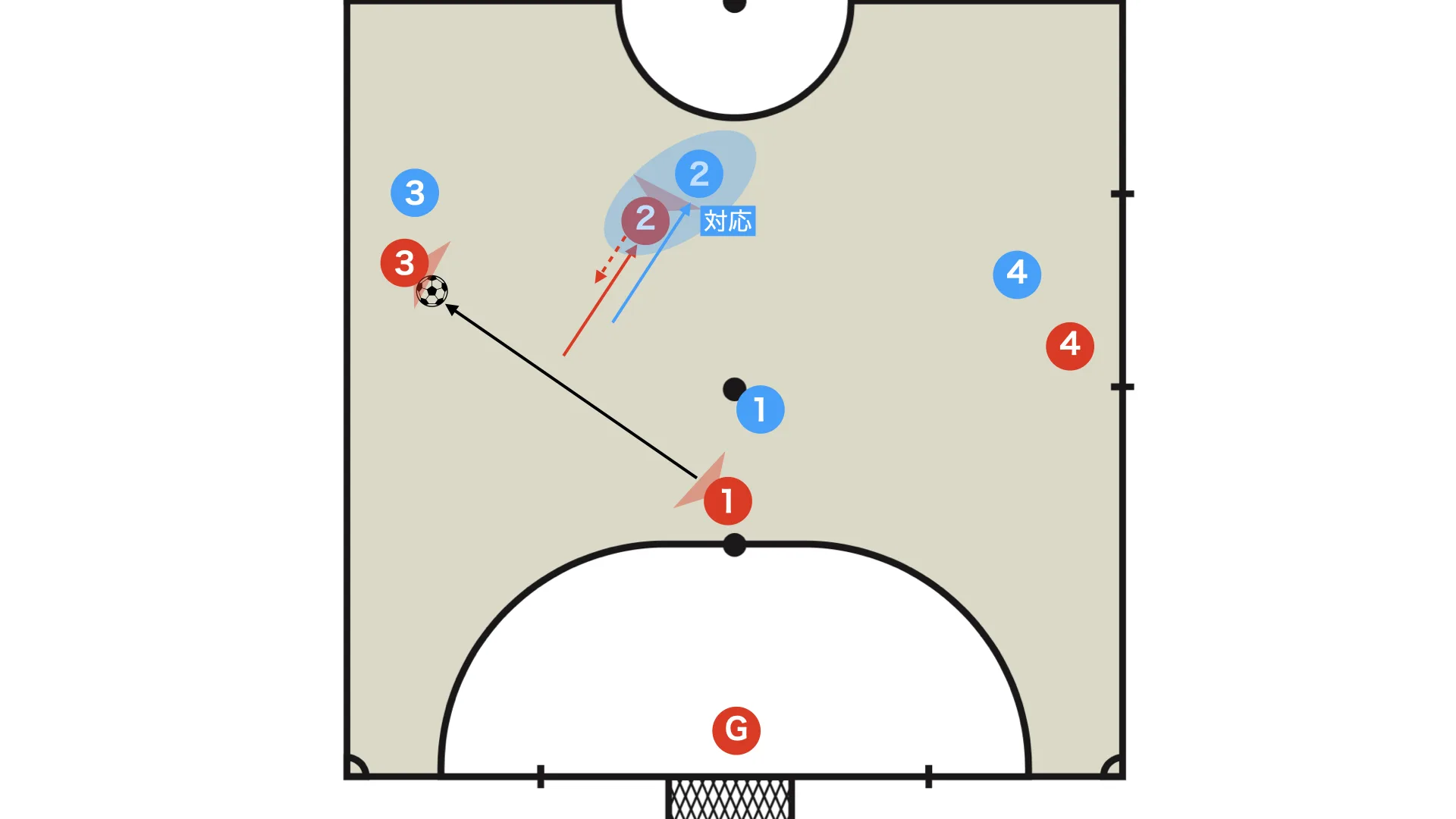
If red 2 tries to attack the space in behind but the defender follows, then continuing the run all the way through will isolate red 3.
(If the goal is to intentionally create an isolation, then continuing the run is fine.)
In this case, red 2 should provide horizontal support to red 3 and create a two-player relationship.
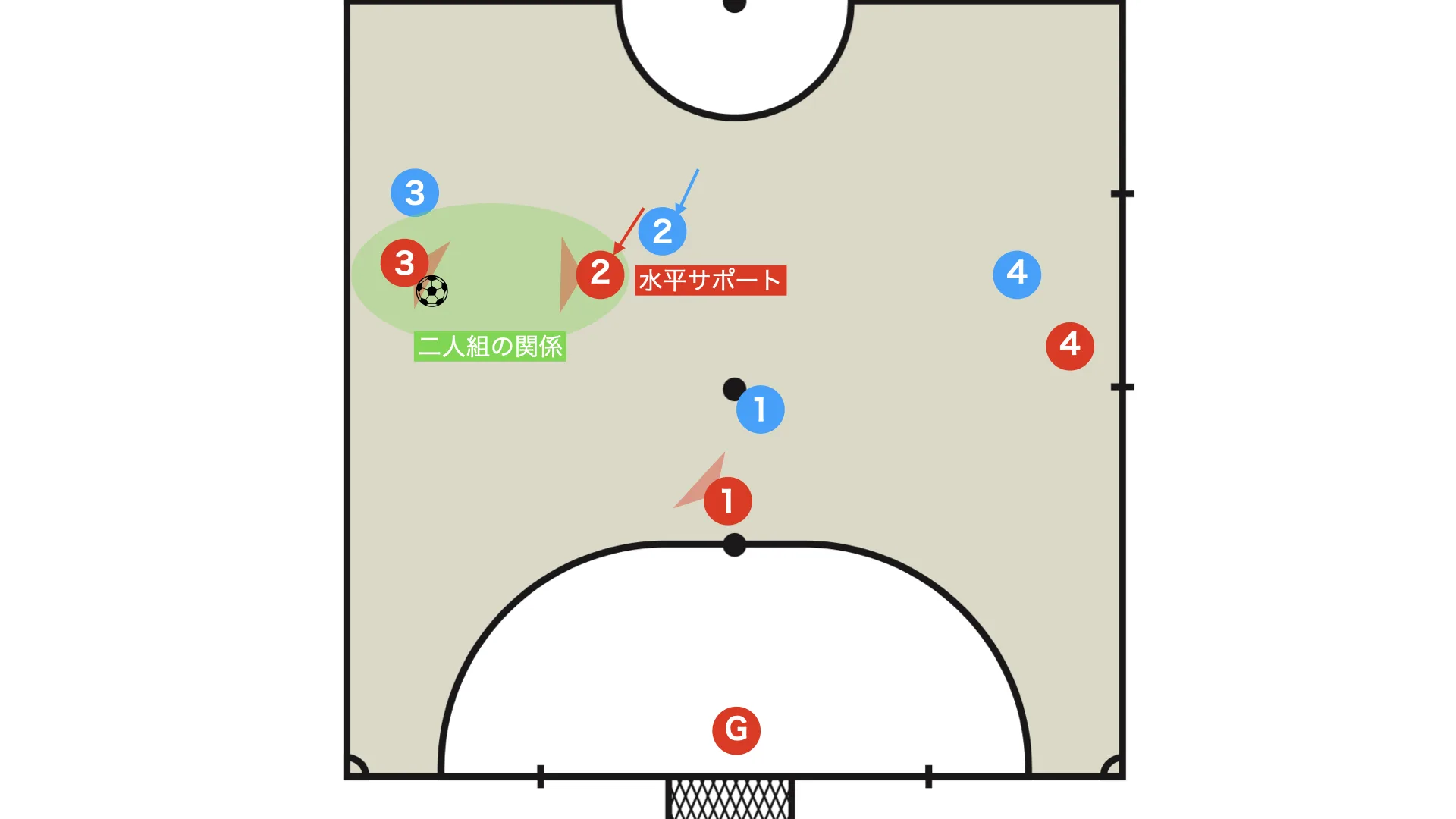
The available ways to break the defence from this two-player relationship are the same as usual.
For clarity, they are listed below.
- backdoor, one-two
- parallel
- diagonal
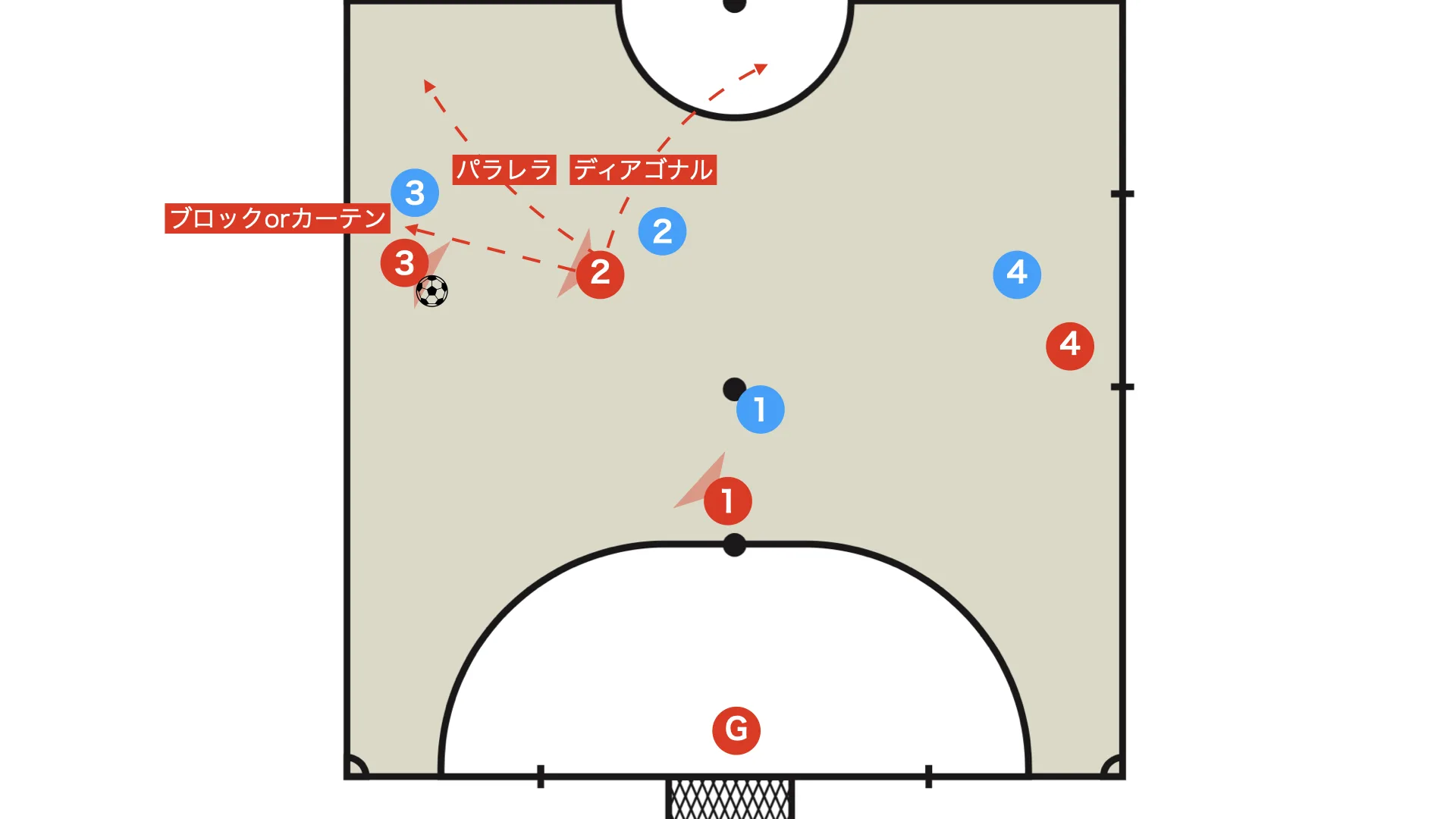
It is hard to call this a pure two-player relationship, but even individual tactics such as the tompa can break through here.
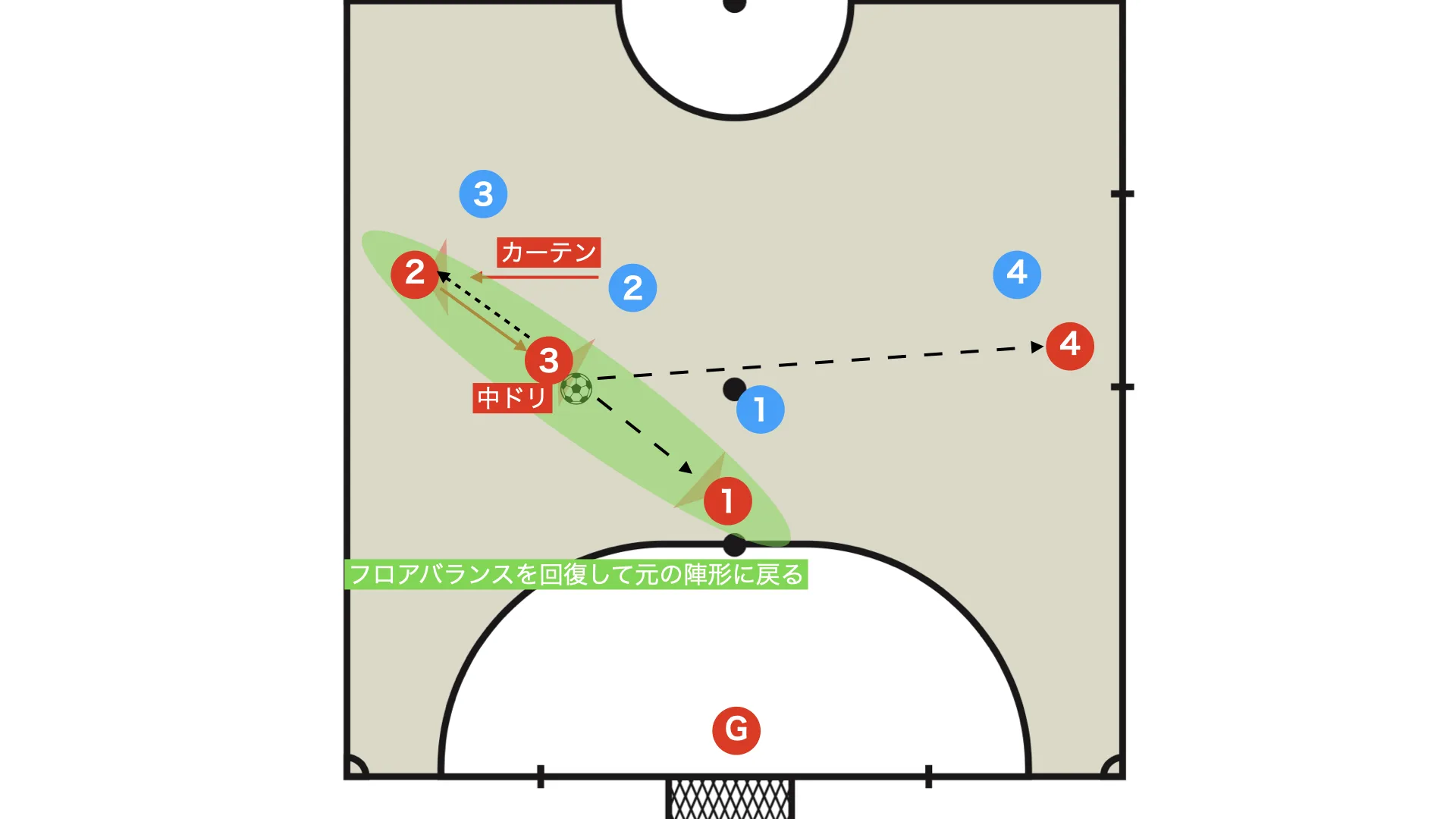
If the pair cannot break the defence, use a block or curtain to allow a slightly backward central dribble and restore floor balance.
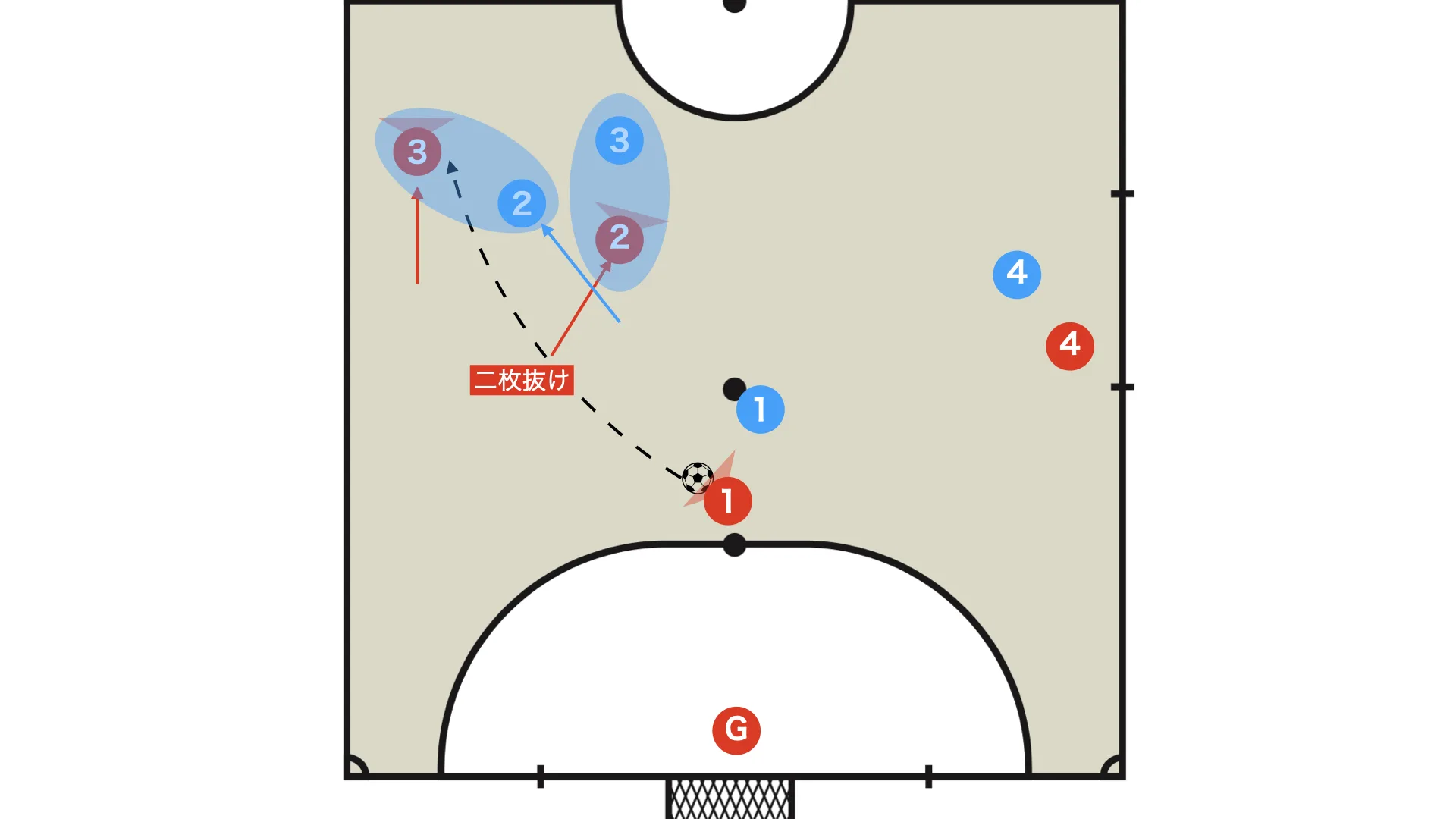
When the defence tries to keep multiple lines against 3 on line, it often responds to red 2's run by switching markers.
Using that handoff against the defence and sending two players out at the same time makes the backdoor by red 3, shown above, extremely effective.
Even if the player in the middle of the 3 on line does not run out, the backdoor still works if the action triggers a marker handoff between the lines, as in the video.
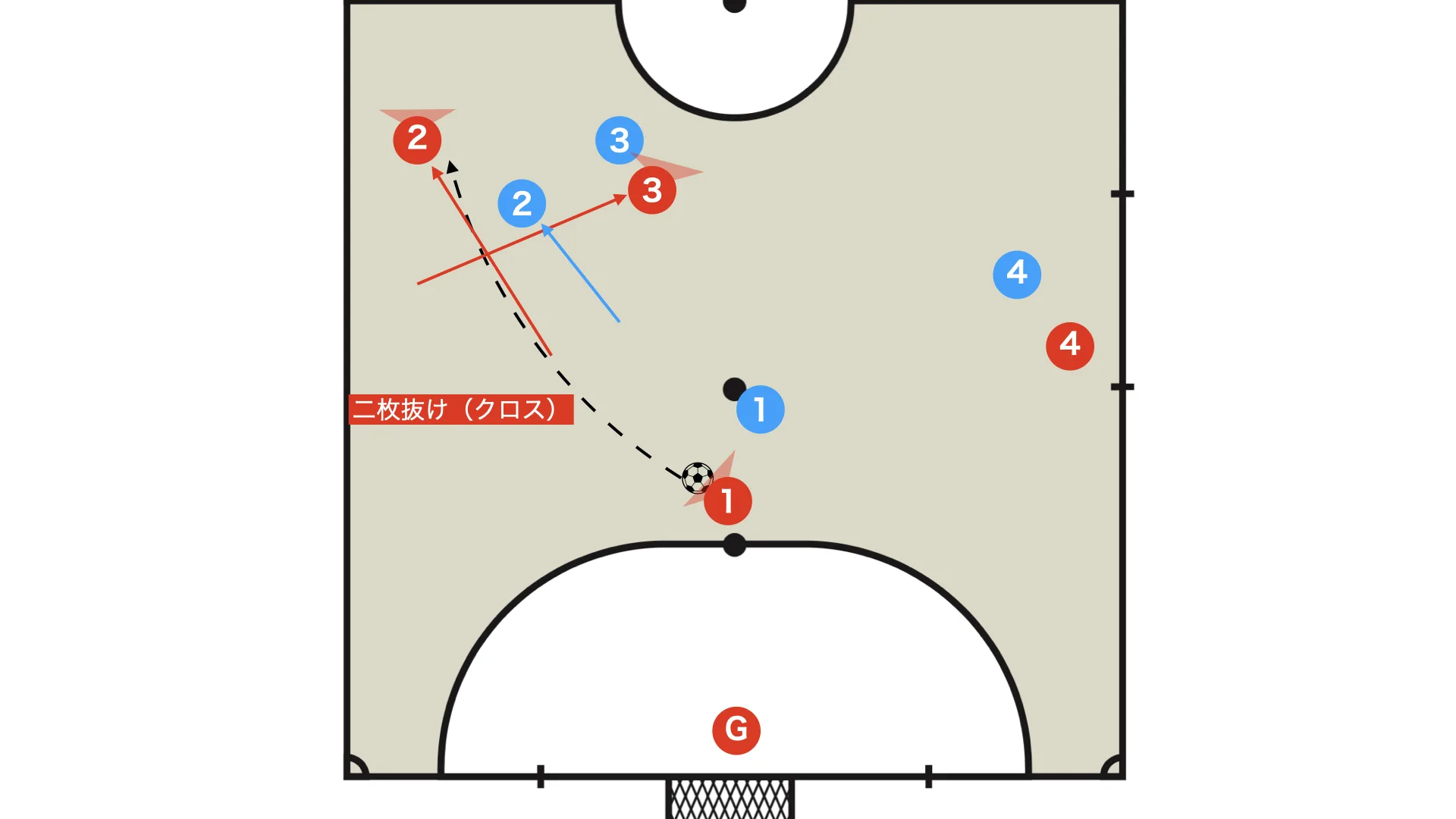
Red 2 makes a diagonal run and red 3 makes a parallel run, crossing over each other to confuse the defensive marking.
3 on line is a tactic used by many teams in futsal.
Do not stop at just knowing the shape of 3 on line. By understanding its tactical purpose and the many variations that come from it, you can apply it more effectively in your next game.