Essential for 3-1: Pivo Passes and the Third-Man Run (Two-Player Unit + Pivo)
Published: 2021.09.24Updated: 2026.05.04
The 3-1 (diamond) shape with a pivo is the most common tactical setup in futsal. It is a simple but powerful system used at every level, including national teams around the world.
Even so, many players probably run into a question like this once they start playing 3-1:
"How do we create a more layered attack using the pivo?"
In this article, I will thoroughly explain, with diagrams and video, how to think about three-player relationships built around the pivo in a 3-1 and how to break the opposition down in concrete ways.
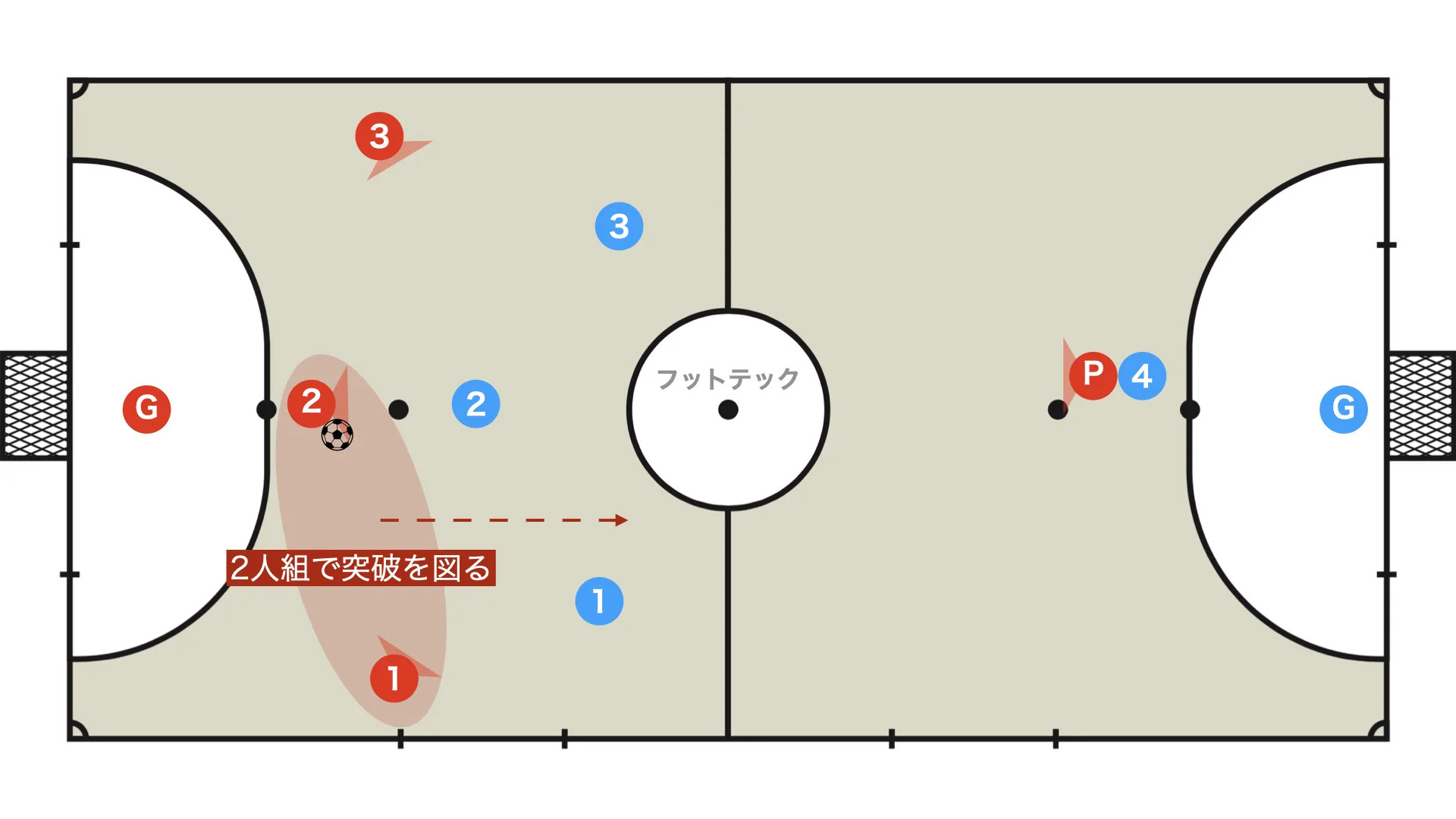
Rather than forcing pivo passes blindly, first look to break through by being aware of the horizontal two-player relationship (fixo-ala).
Actions to aim for in the two-player relationship:
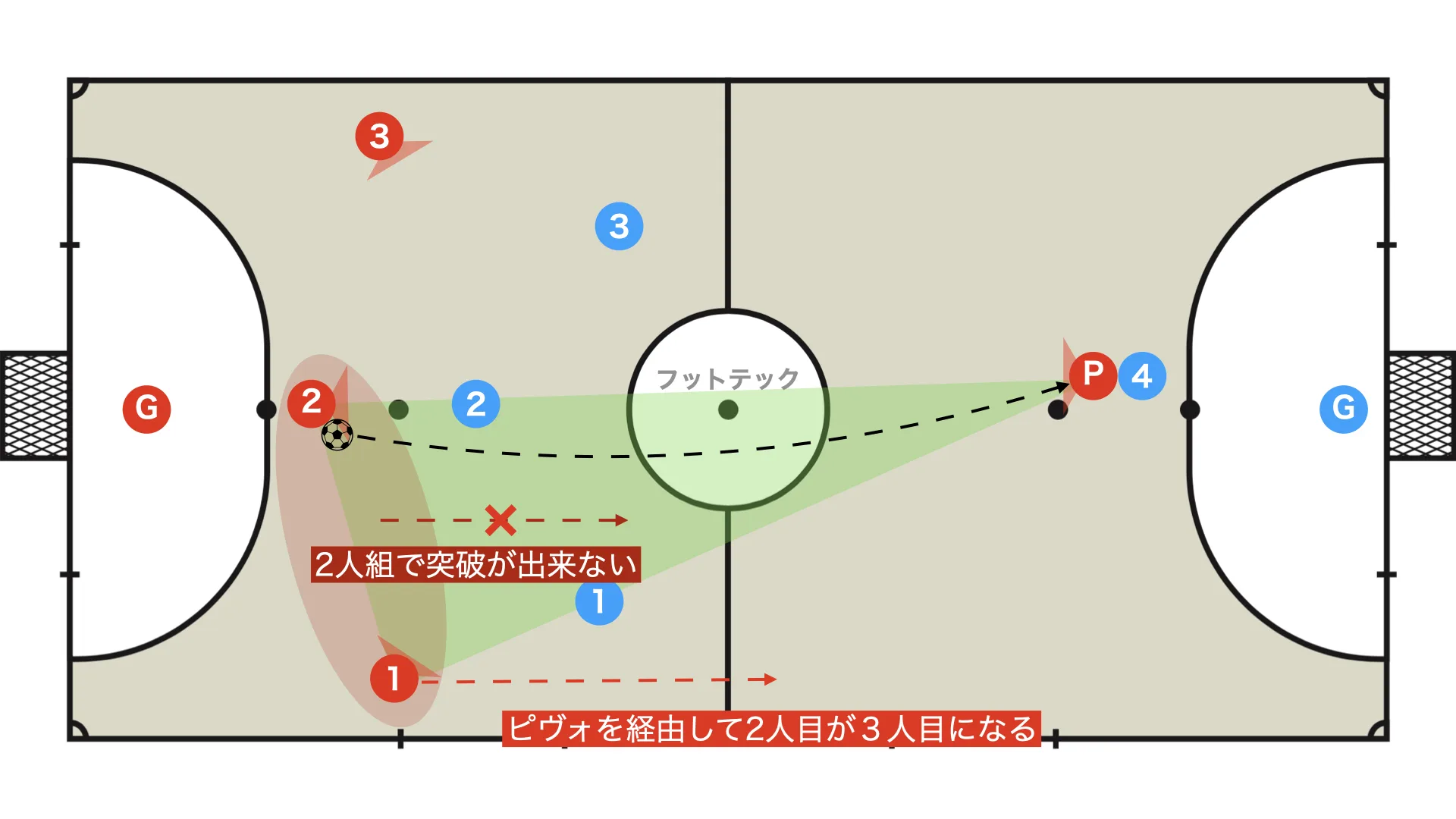
Ideally, you can break the defence with just the two-player relationship. But if the opposition deals with it and you cannot break them down that way, cancel the two-player action, play into the pivo, and attack through the pivo instead.
At the same time, the second player, meaning the off-ball player in the two-player unit, becomes the third player, which creates a more layered attack involving the third man.
Because opposition defenders often become ball watchers and lose sight of their own mark, this kind of three-player combination can be even more powerful than a simple two-player action.
That probably still sounds a bit abstract, so let me explain it with specific examples.
Situations where the opponent is dealing with the action:
- your marker has not been shaken off
- there is cover behind
- the passing lane is blocked
In those cases, it is preferable to cancel the two-player breakthrough.
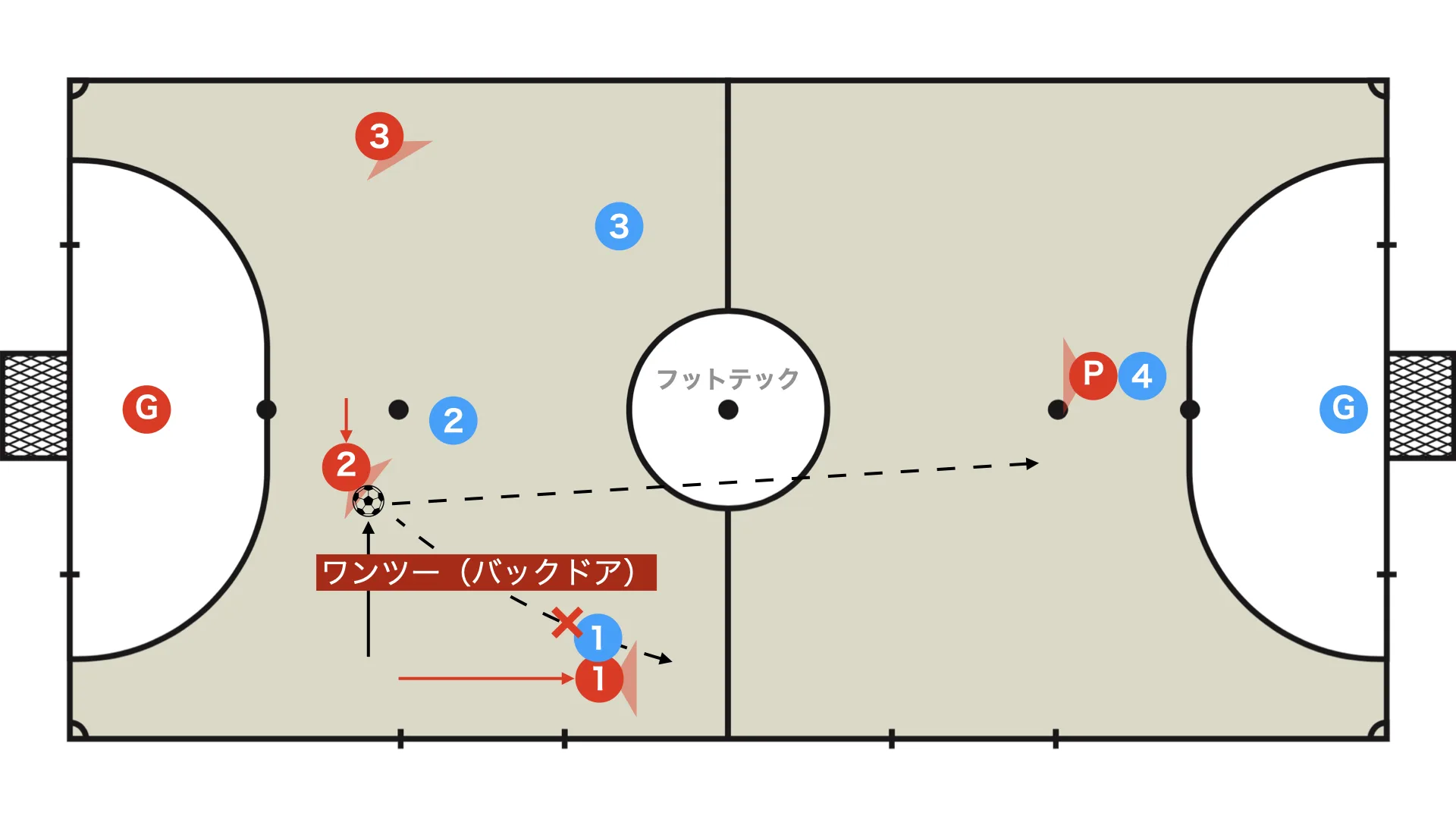
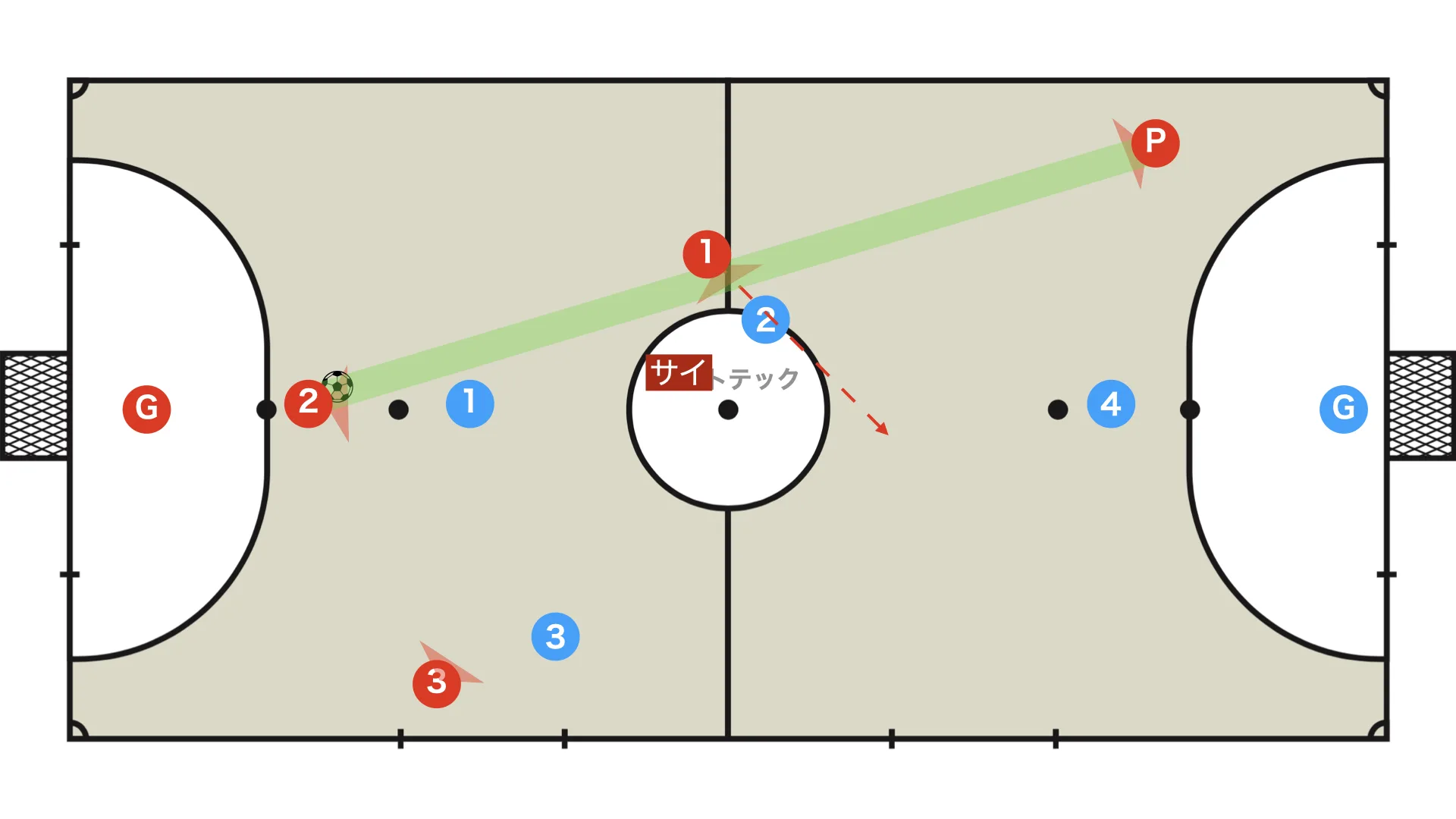
You try a simple one-two to break forward, but the defender deals with it, so you choose to play into the pivo instead.
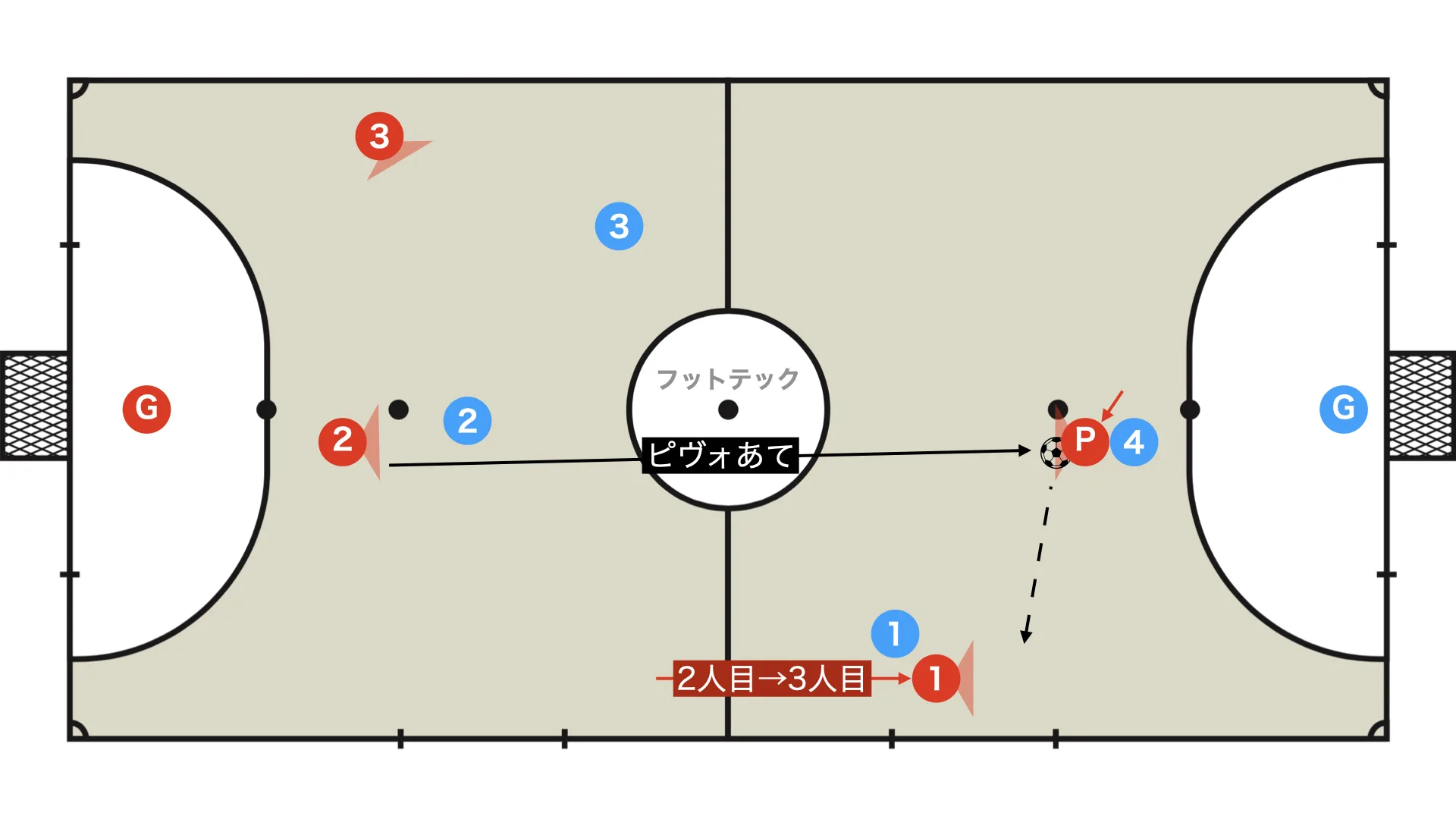
After the pivo pass, the second player who made the one-two run becomes the third player and receives the ball in a good position.
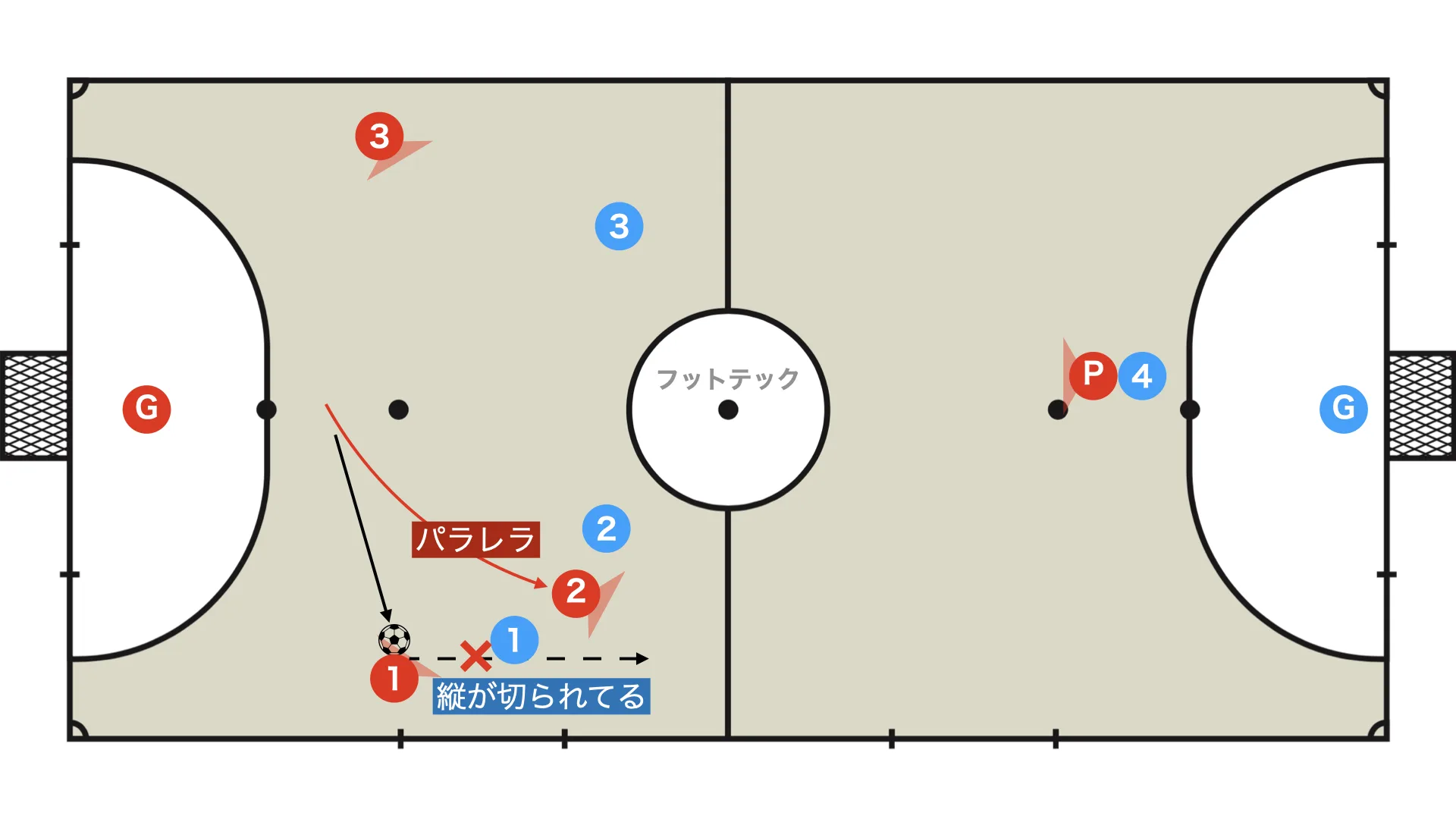
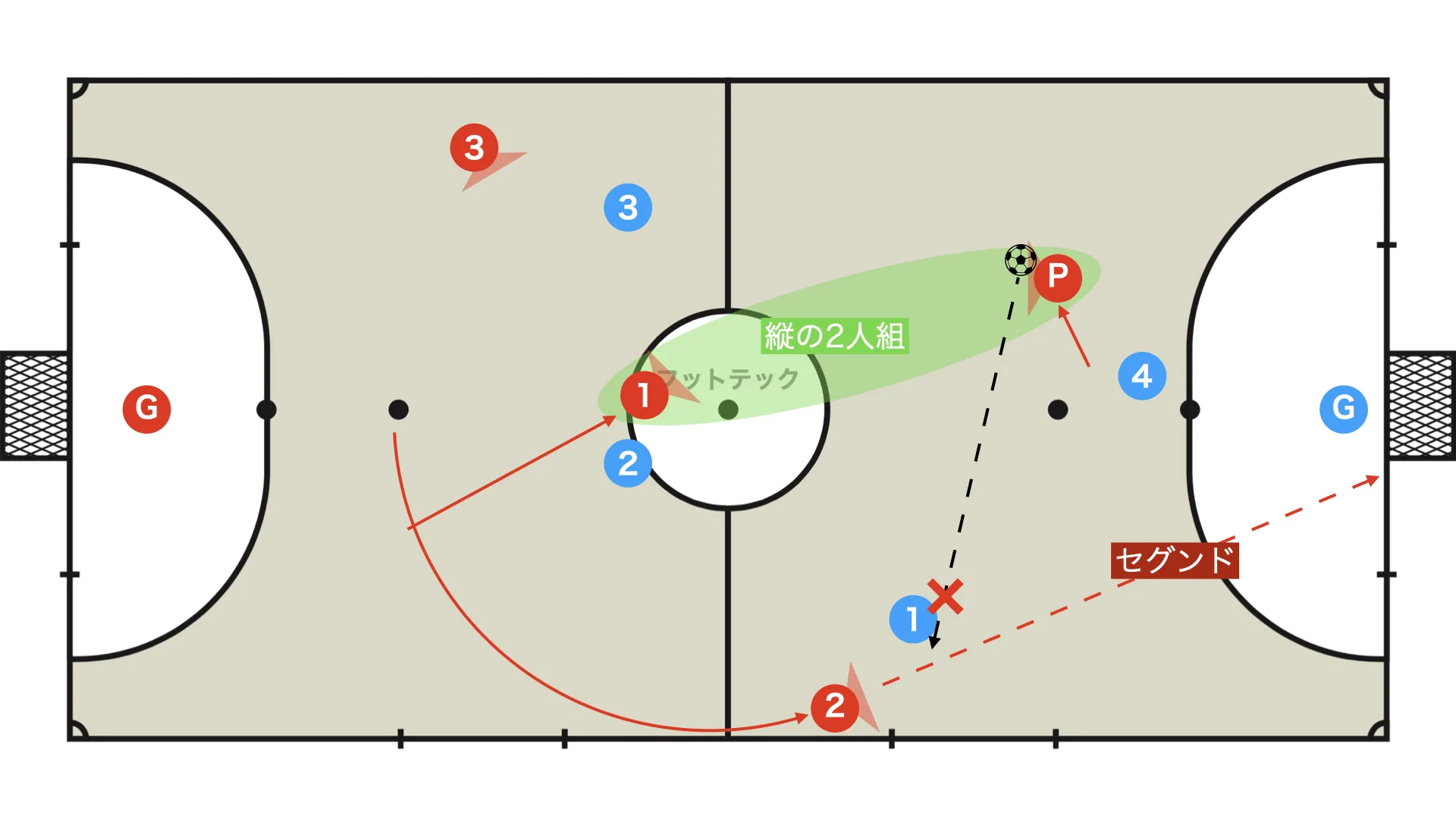
The fixo makes a parallel run, but the opposition defender (blue no. 1) cuts off the vertical lane, so the pass cannot be played, or blue no. 2 is firmly covering it.
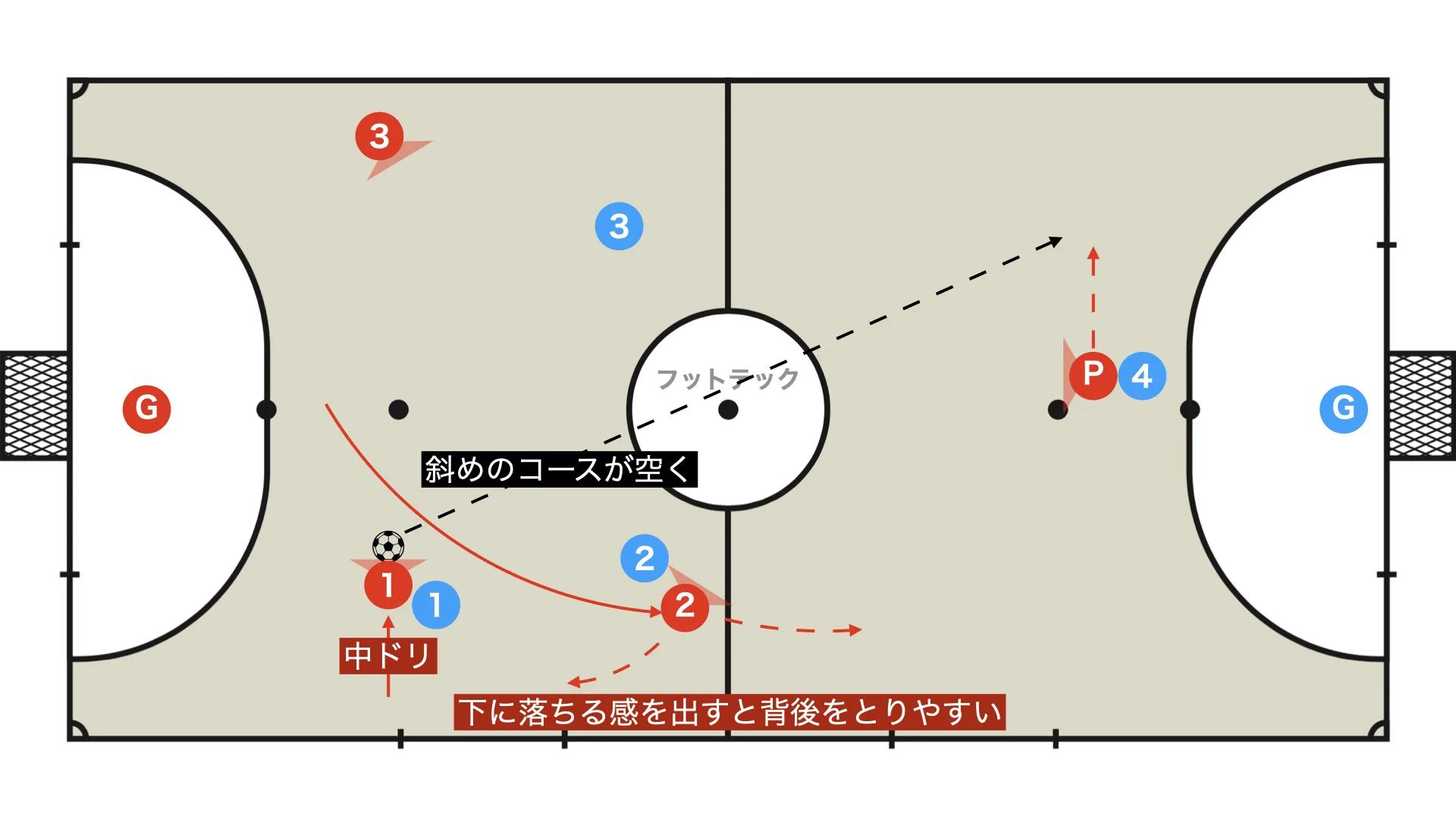
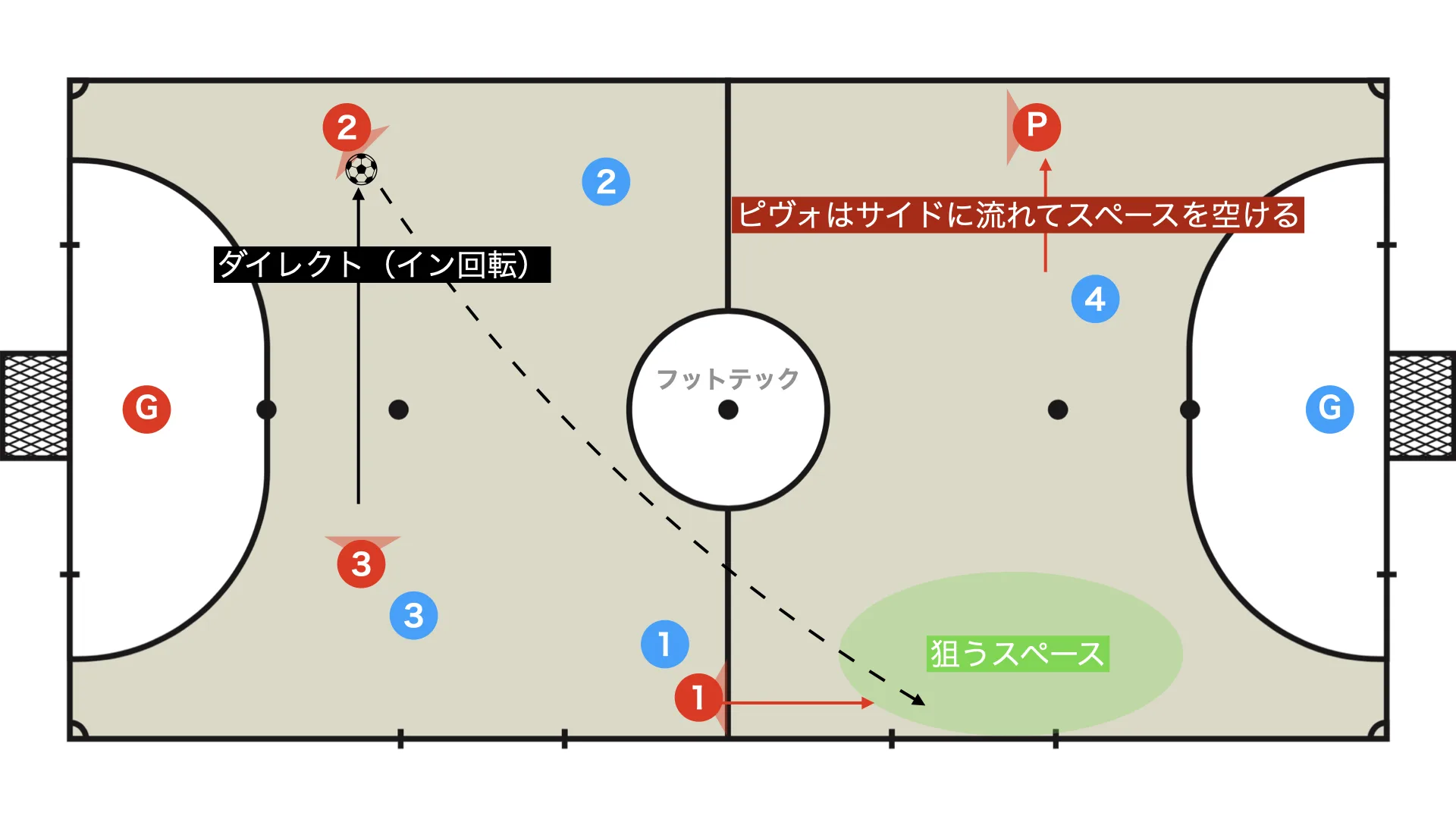
In situations where the parallel pass is not on, you can usually create a passing lane into the pivo by dribbling the ball slightly inside.
At this moment, if the player who made the parallel run gives the impression of dropping slightly deeper, it becomes easier to get behind the defender.
Also, if the pivo pass is not available, you can reset the 3-1 by playing back again.
関連記事
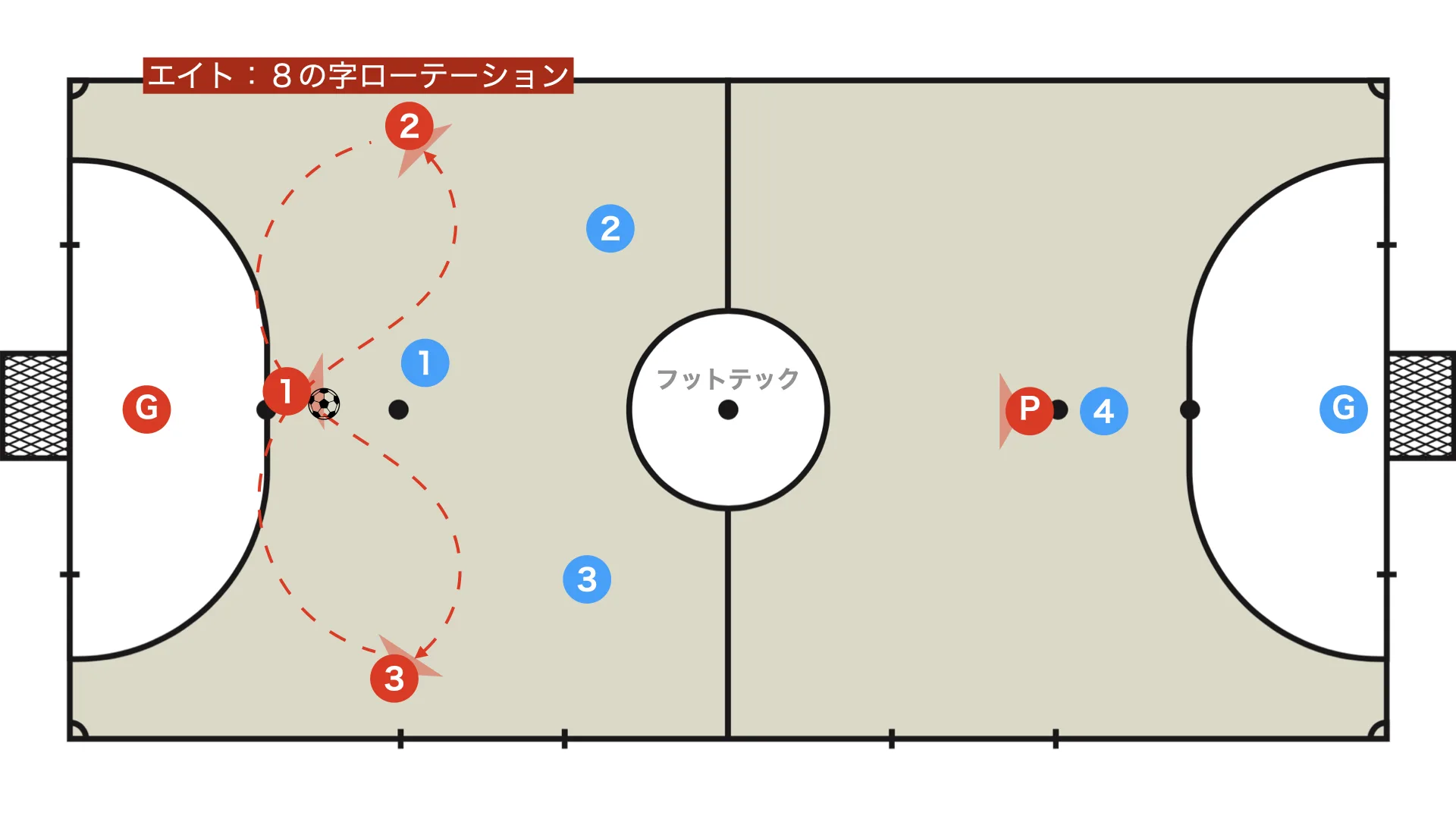
Do You Really Understand It? The Essence of the Figure-Eight Rotation
An explanation of the essence of futsal's signature tactic, the figure-eight rotation. This article …
続きを読む →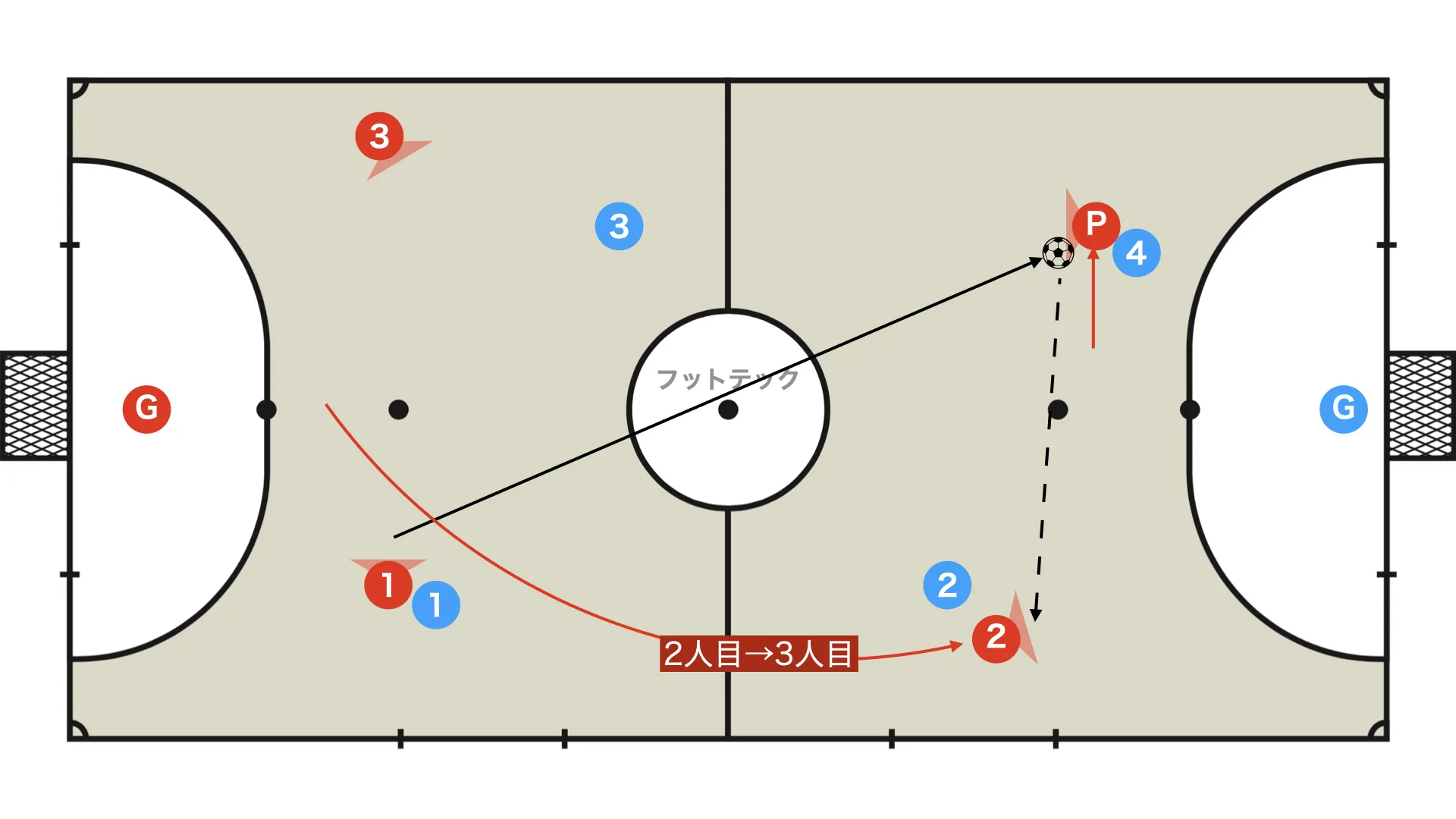
The player who made the parallel run becomes the third player.
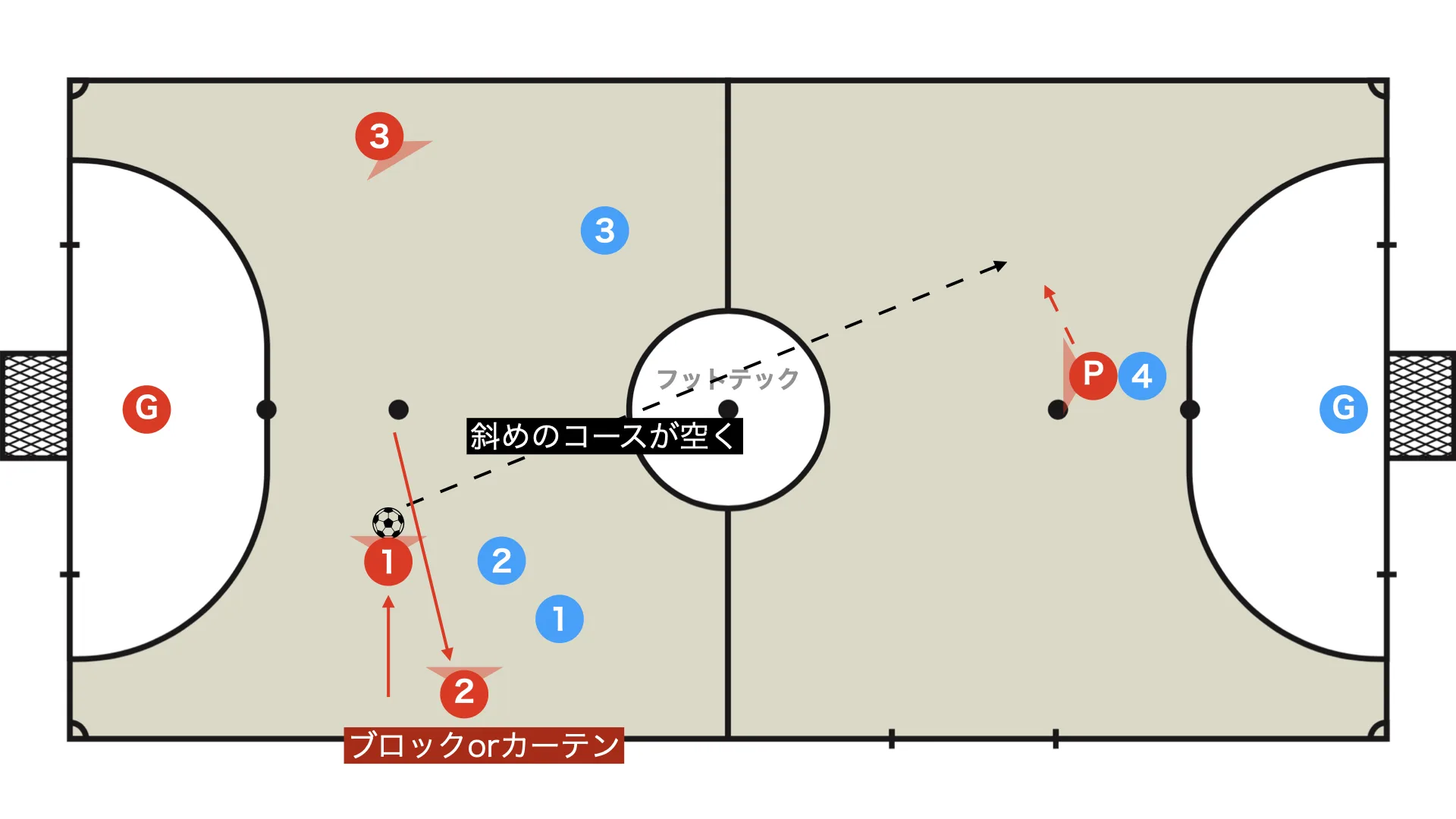
When you support the ball carrier with a block or curtain, the pressure on the ball carrier (red no. 1) drops for a moment, which makes it easier to play into the pivo in a good situation.
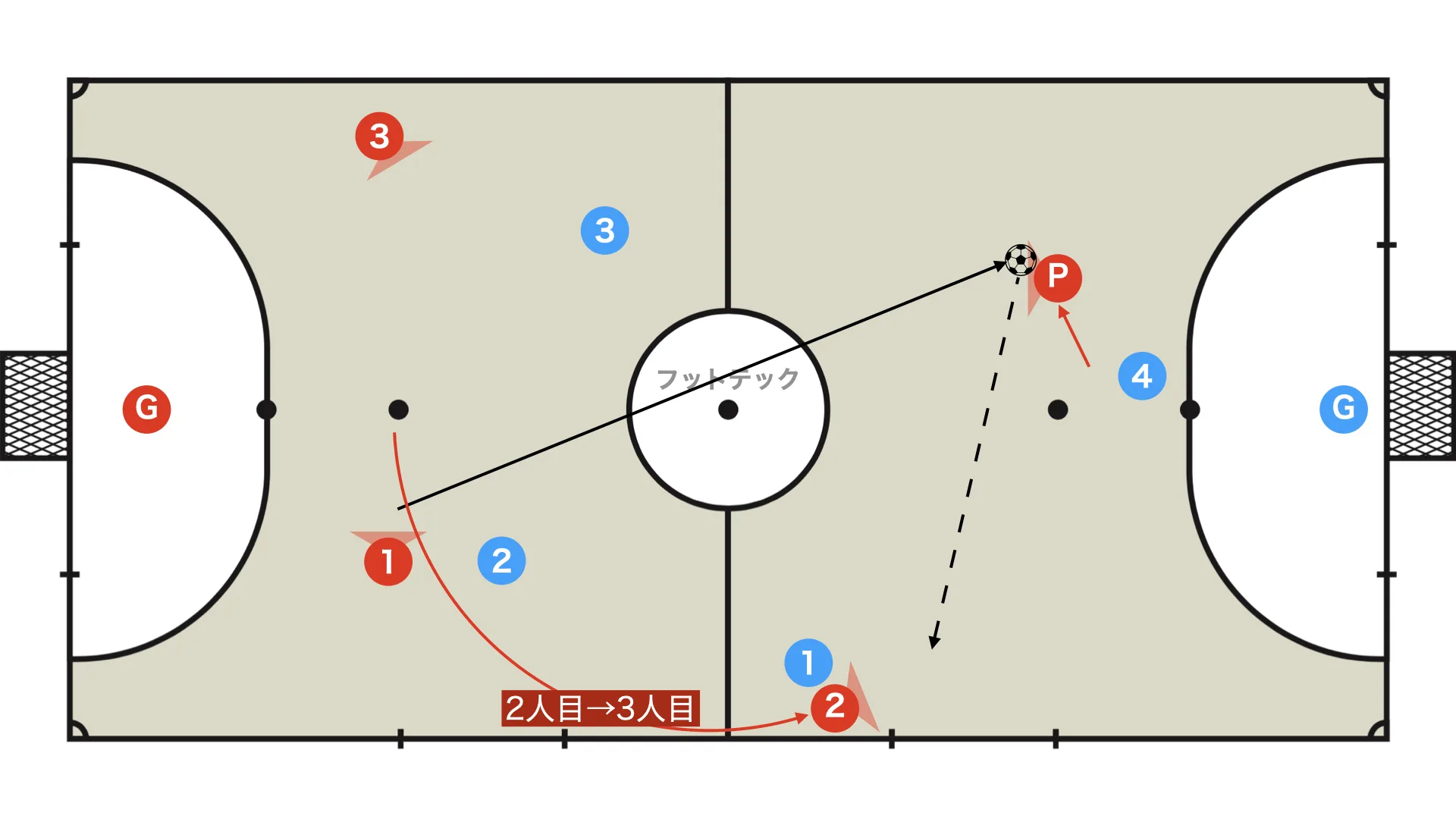
The player who set the block or curtain becomes the third player.
関連記事
Do You Actually Know the Difference? Block vs Curtain, plus Indirect Curtain and Indirect Block
A thorough explanation of the difference between blocks and curtains in futsal. This article sorts o…
続きを読む →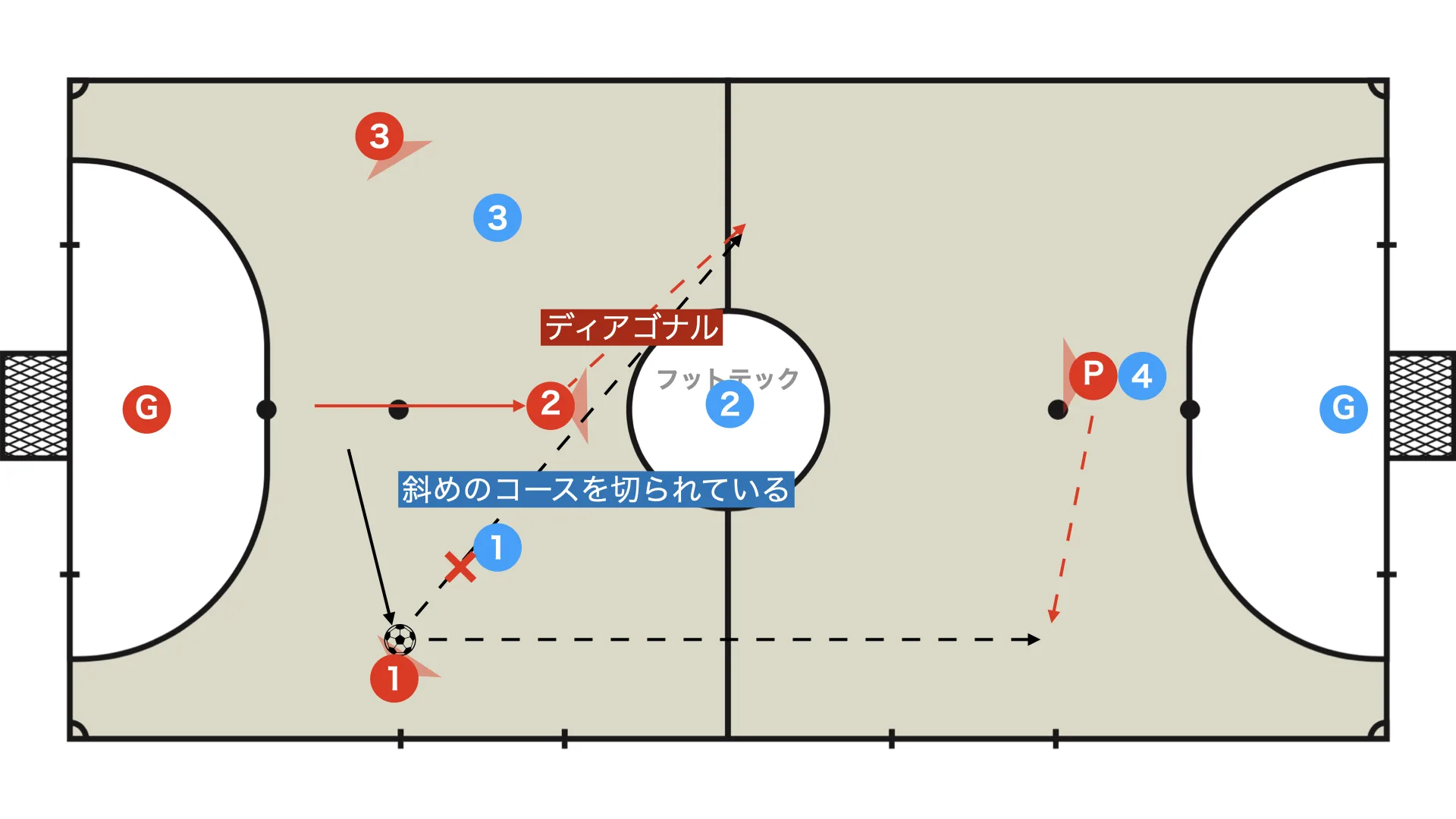
If the diagonal pass is not available, a vertical passing lane usually opens up, so look to play a vertical pass into the pivo.
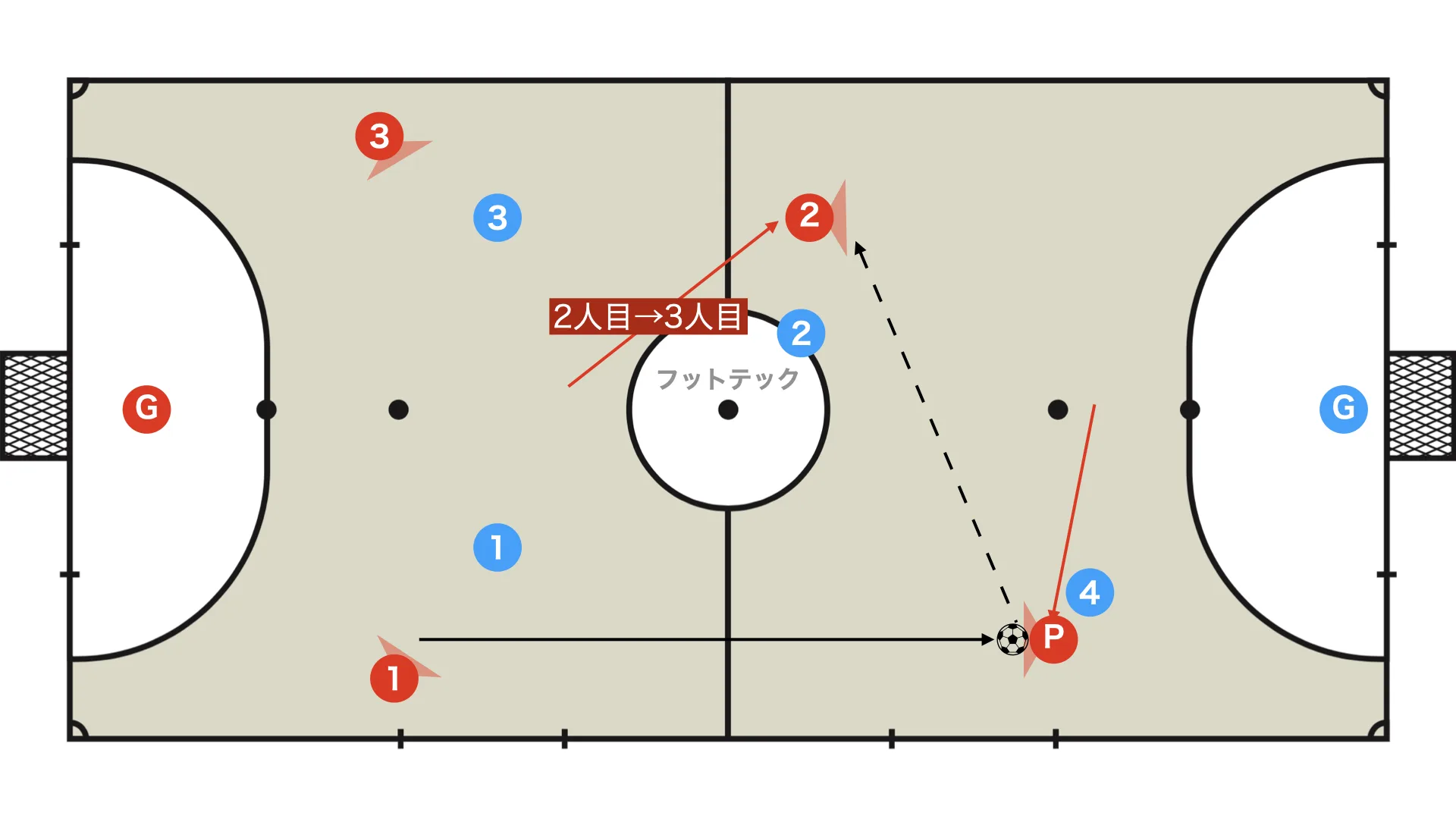
The player who made the diagonal run becomes the third player.
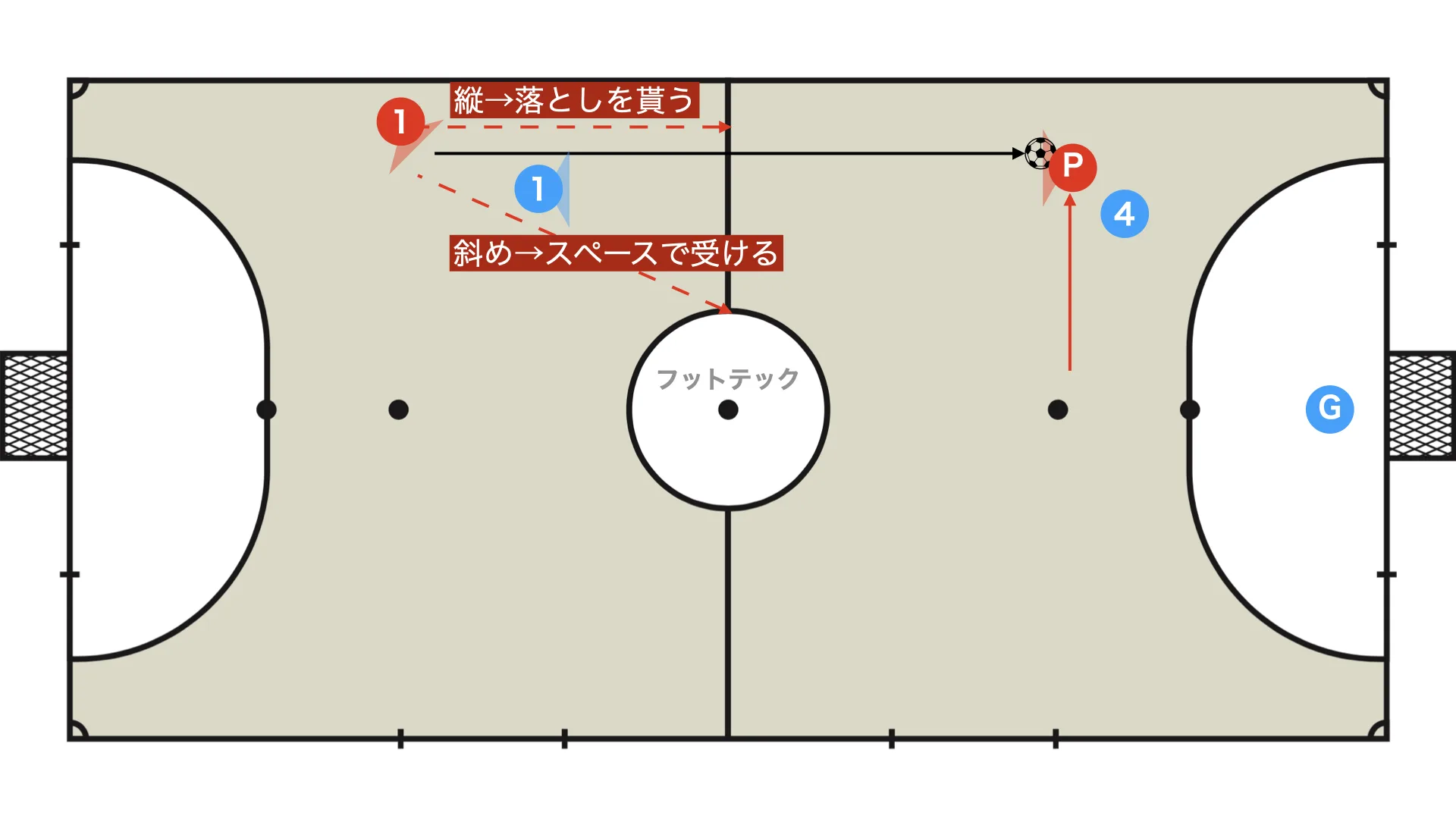
If the player who became the third man from the second-player role cannot be used, then the player who passed into the pivo, or the player closest to the pivo, should get involved and create a vertical two-player relationship (fixo-pivo).
Vertical two-player relationship (fixo-pivo):
- turn
- layoff
- overlap and pisada
関連記事
Targeting the Pivo and Losing Your Marker: The Vertical Two-Player Combination (Fixo-Pivo)
An explanation of the vertical fixo-pivo two-player combination. This article organizes when it is e…
続きを読む →What did you think?
Wasn't it simpler and easier than you expected?
Rather than overcomplicating three-player tactics, you can understand them much more smoothly by factoring them into a two-player relationship plus one.
On the other hand, if the quality of your two-player relationships is low, you will never be able to build high-quality three-player combinations.
Try to work on both two-player and three-player relationships consciously in your daily training.
関連記事
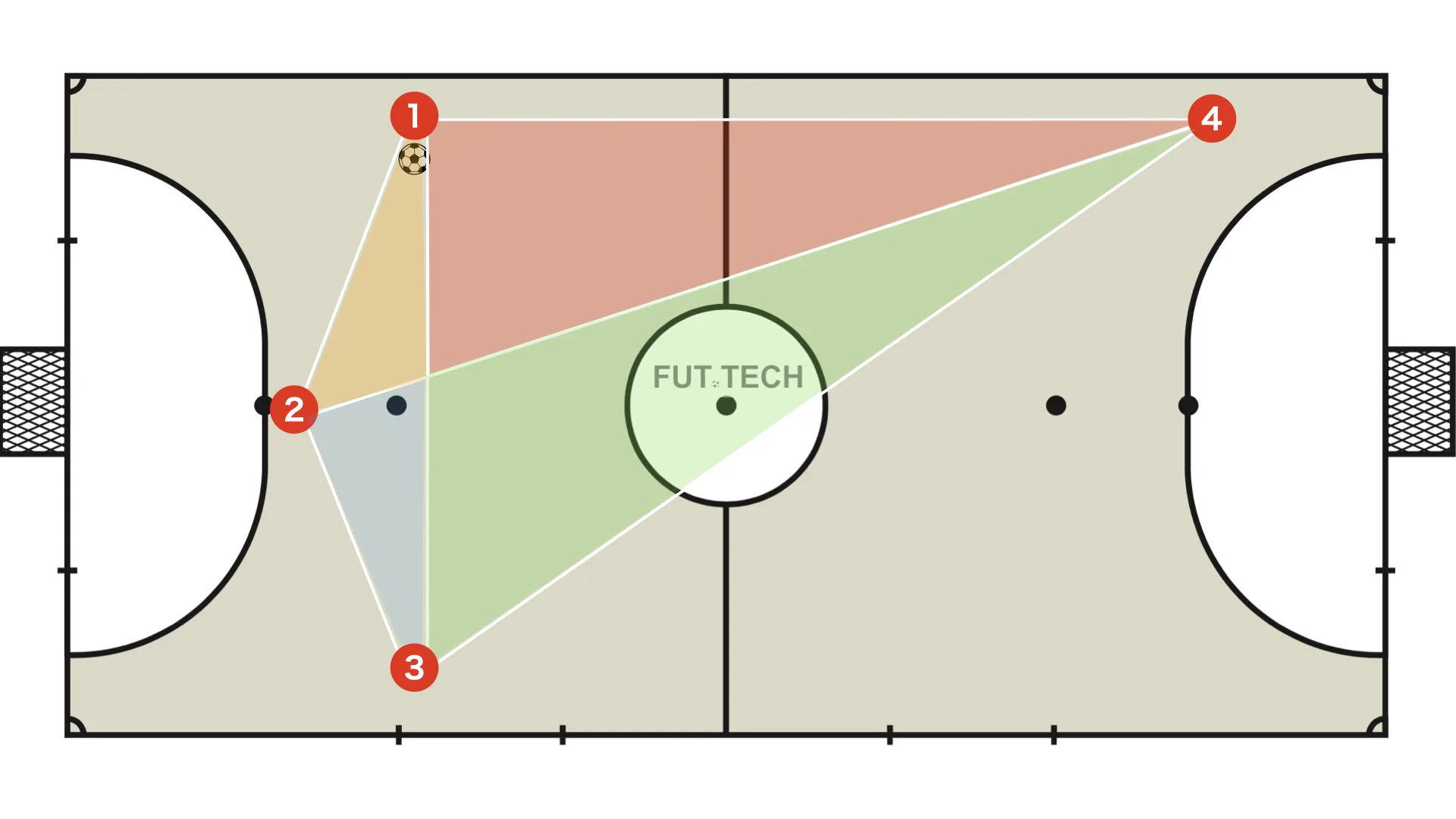
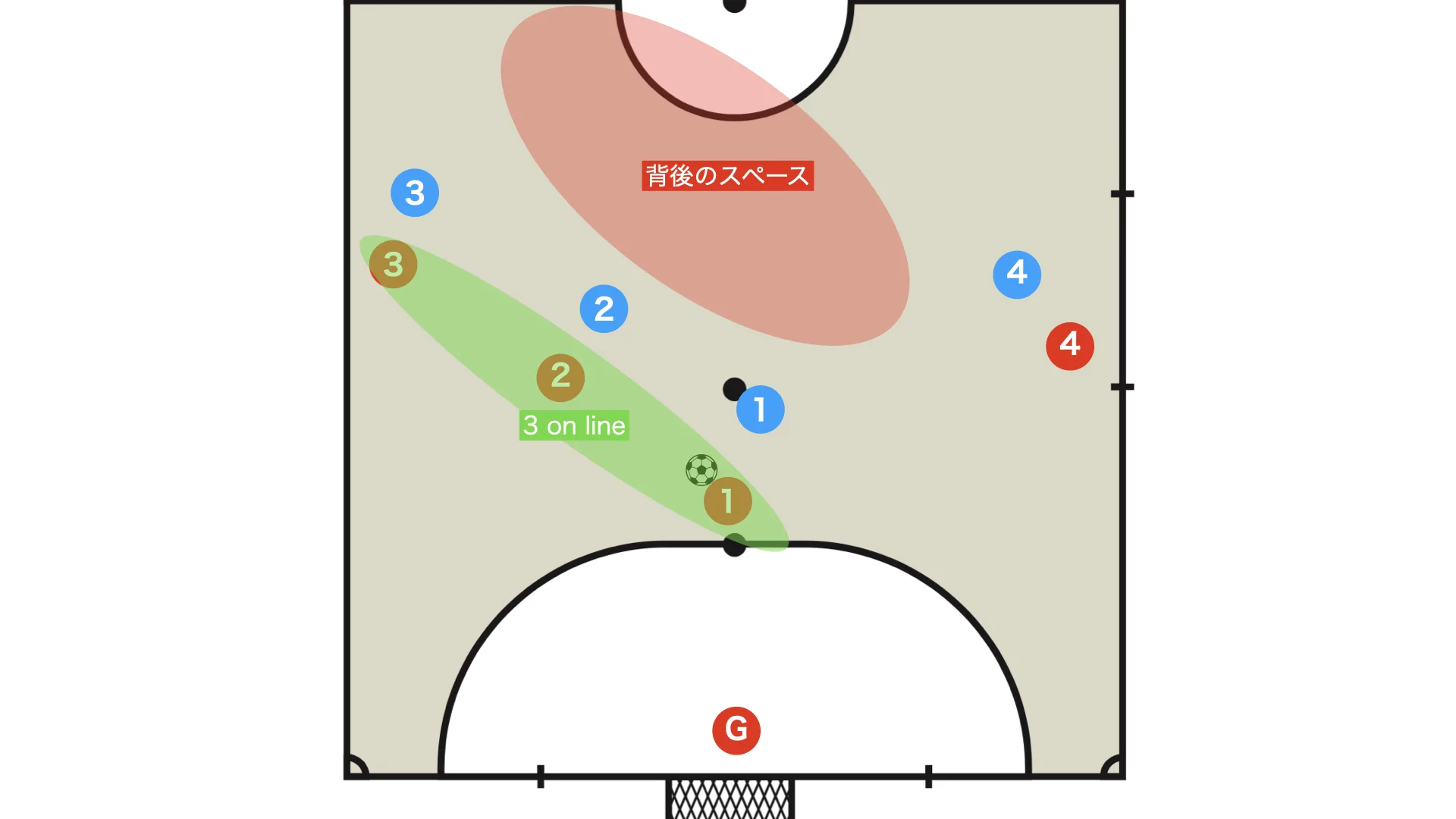
Overview of Futsal Three-Player Relationships: 3 on Line and the Triangle
An overview of three-player tactical relationships in futsal. This article organizes the two key str…
続きを読む →