Do You Really Understand It? The Essence of the Figure-Eight Rotation
Published: 2021.07.18Updated: 2026.05.04
When people start playing competitive futsal, a great many of them probably begin by learning a tactic called the "figure-eight."
At first glance, this tactic looks very simple and easy to understand. But if you interpret it incorrectly, it becomes extremely weak and completely ineffective, and can even end up holding your team back as a tactical liability.
Also, there are very few national teams or club teams that actually use the figure-eight, so it goes without saying that it is a very limited tactic.
Even so, it is not a bad play model for futsal beginners to learn as an introduction. What matters is understanding its essence, then building on top of it and scaling it with additional layers.
This article explains in detail, with diagrams, what the figure-eight specifically is as a tactic and what its aim and essence really are.
In futsal, one of the most important questions for using space effectively is: who should be positioned where?
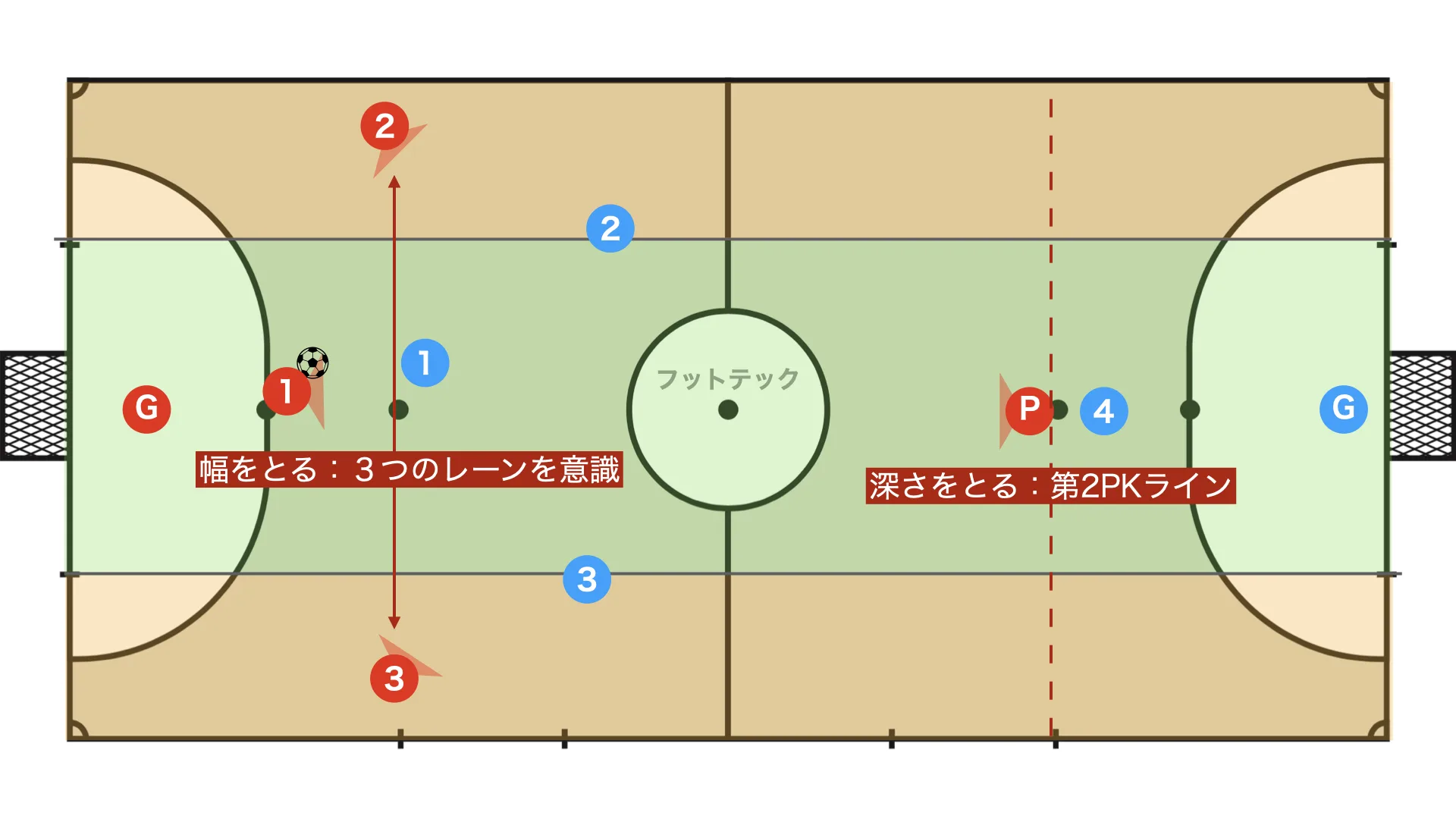
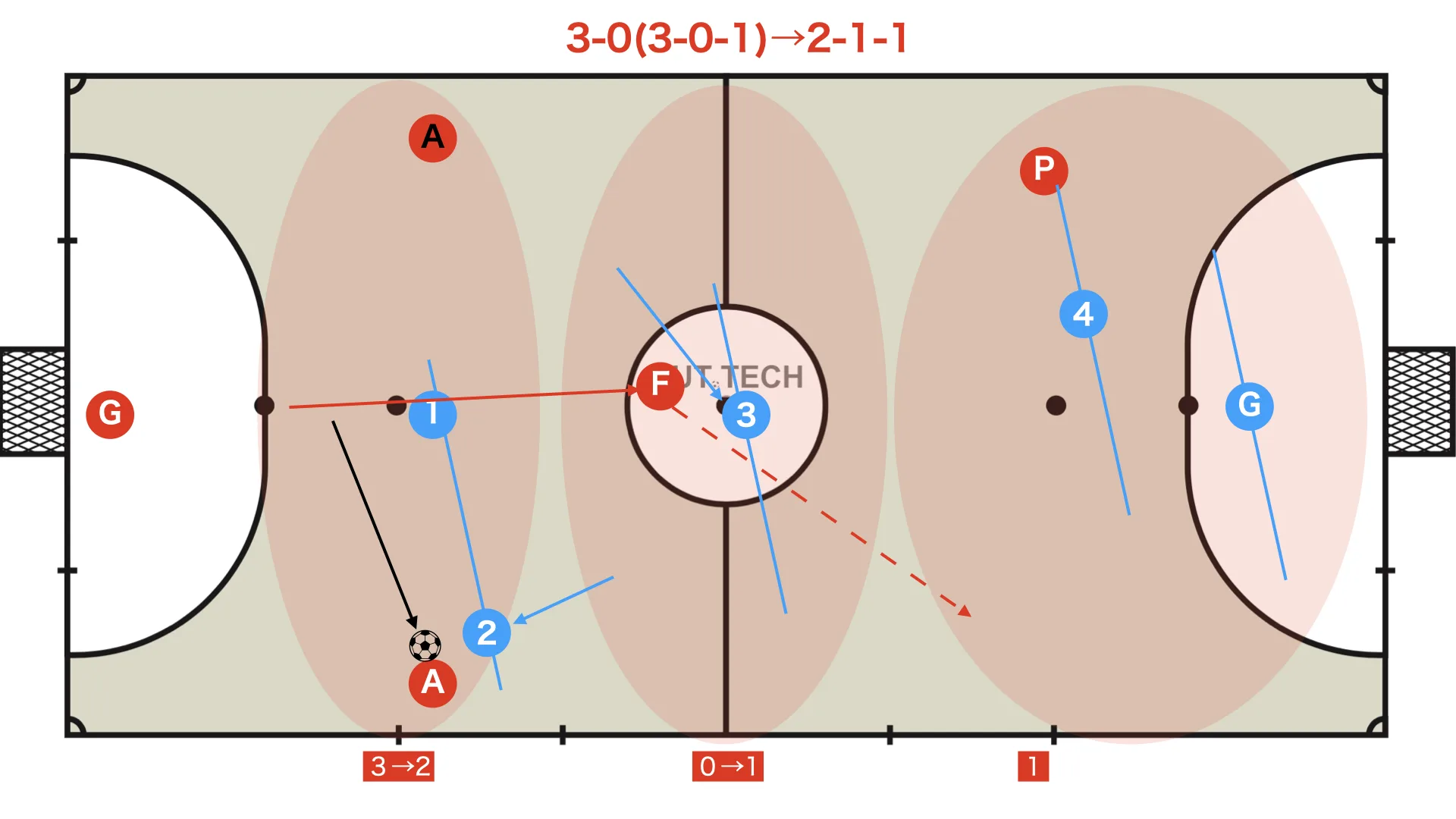
In a 3-1, the basic principle is for the back three to occupy separate lanes, while the pivot provides depth up to around the second penalty-mark line.
If you simply stay aware of this positioning, the ball will naturally move well even without forcing the idea of rotation.
関連記事
Positional Attack: How to Think About Formations and Rotations
A structured guide to formations and rotations in futsal positional attack. This article explains th…
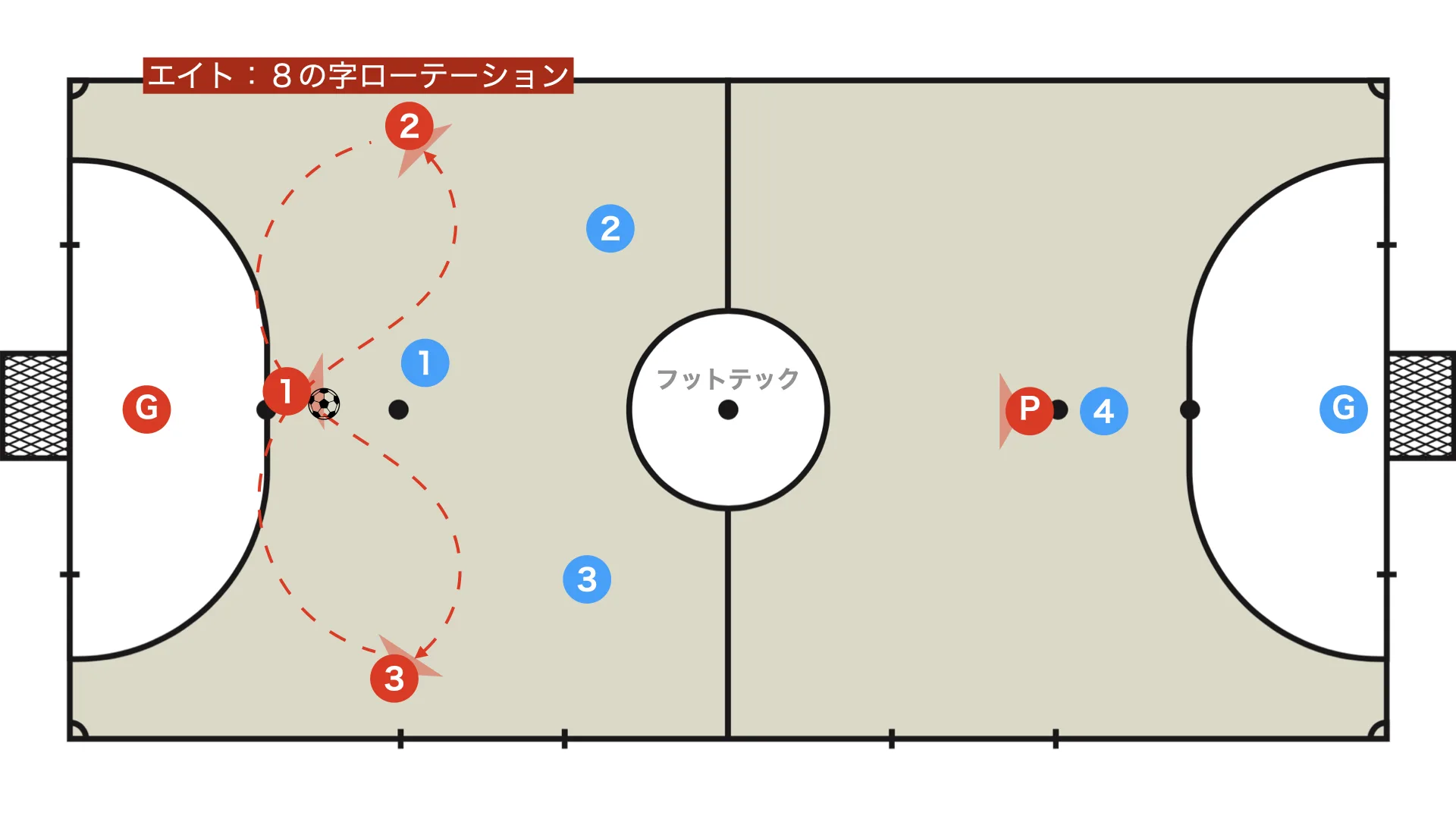
続きを読む →As shown above, it is called the "figure-eight" because the back three keep circling as if drawing the shape of an 8.
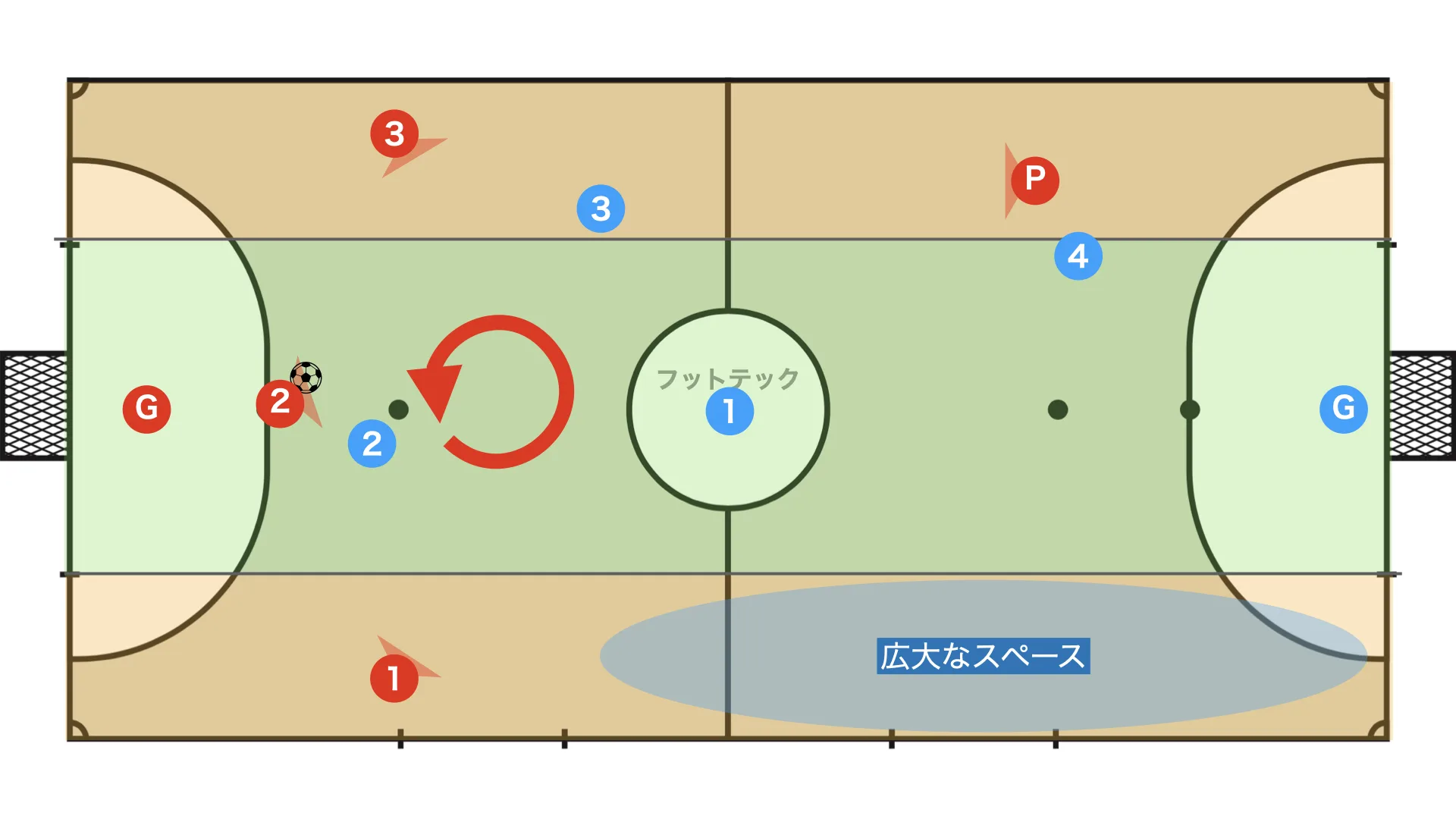
Besides the figure-eight, another rotation method is the spinning rotation, and the three-man spin with a false pivot is a very well-known tactic.
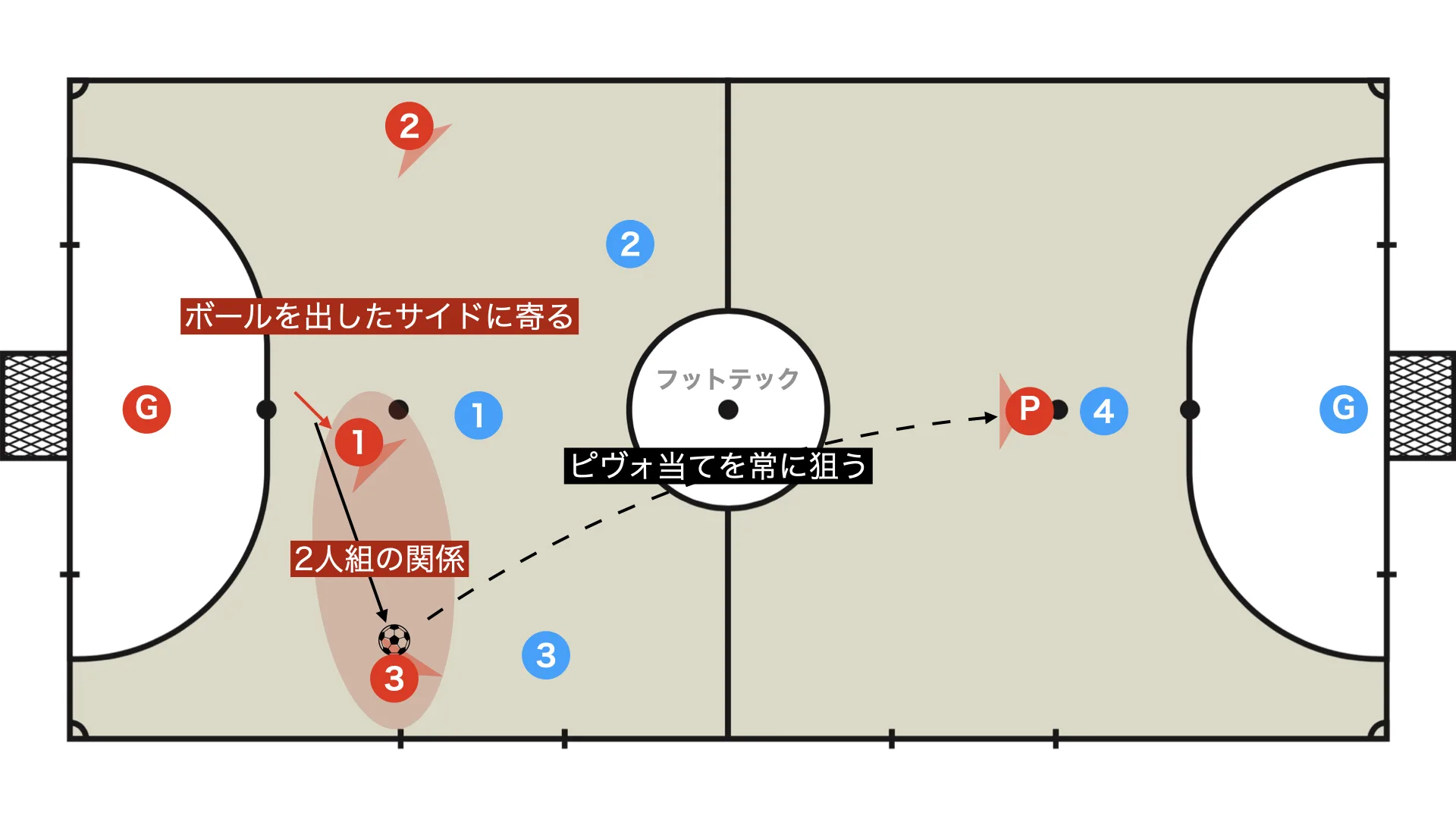
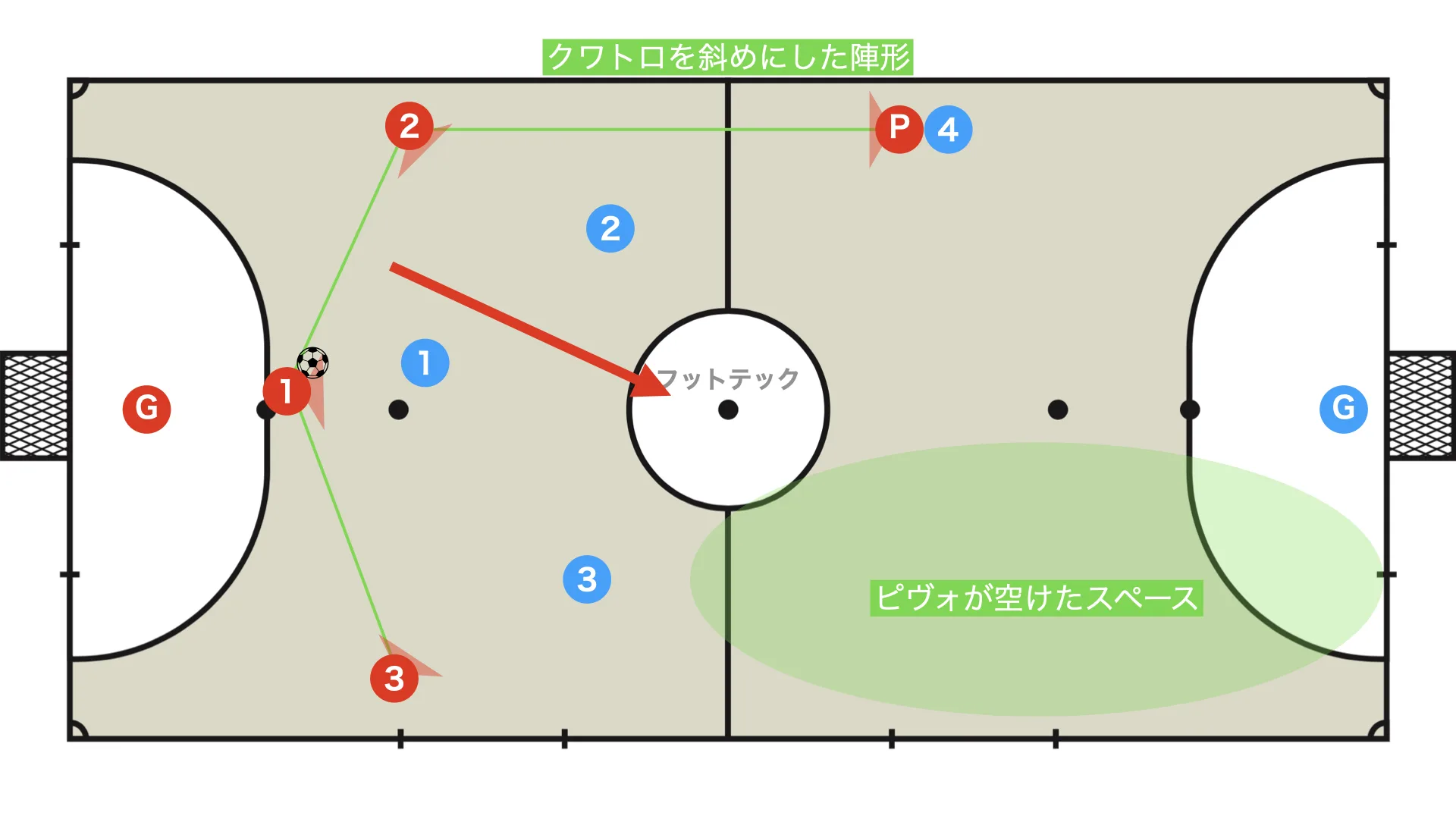
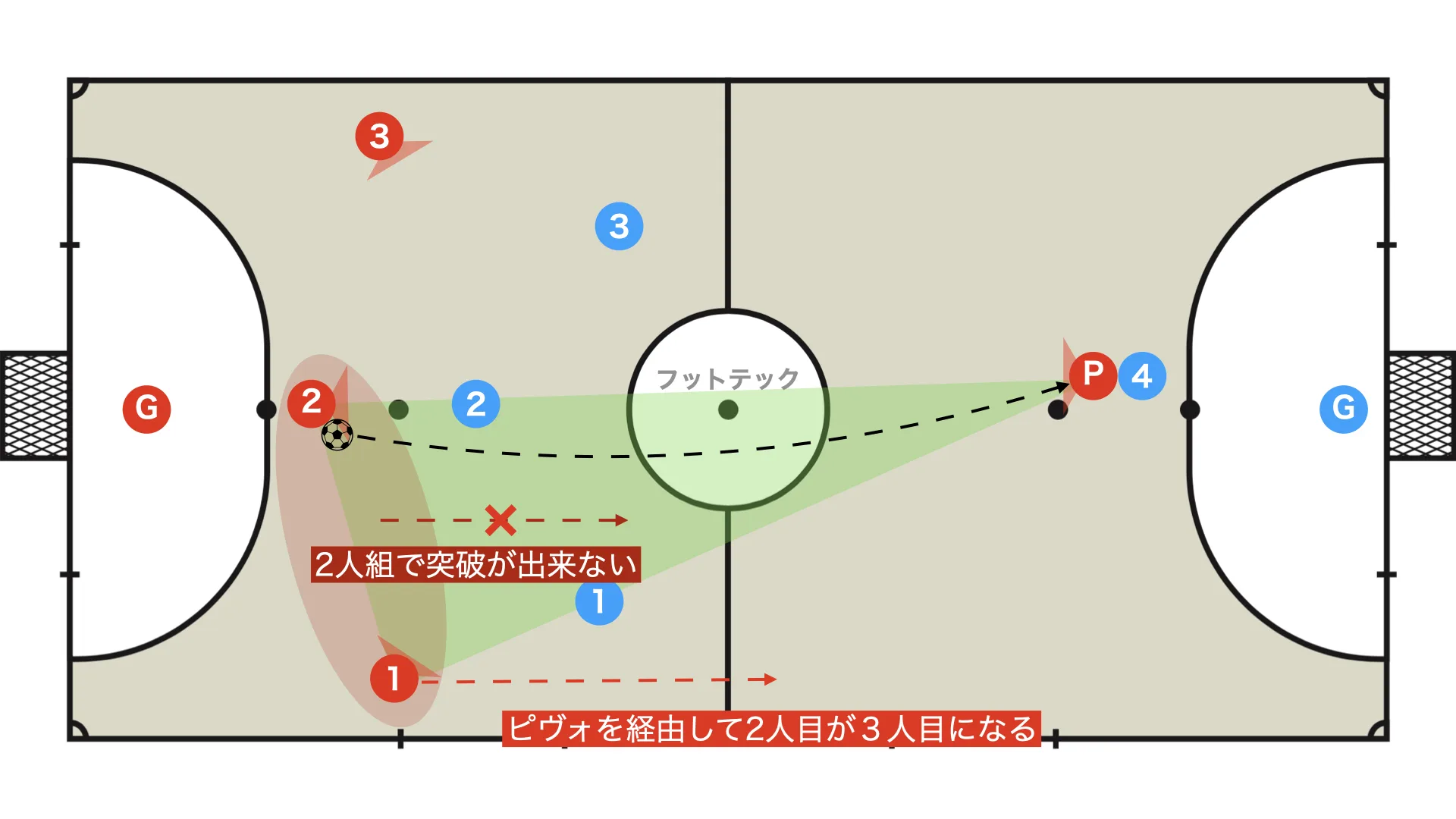
The essence of the figure-eight is to continuously create horizontal two-player relationships in order to break down the opponent's defensive structure.
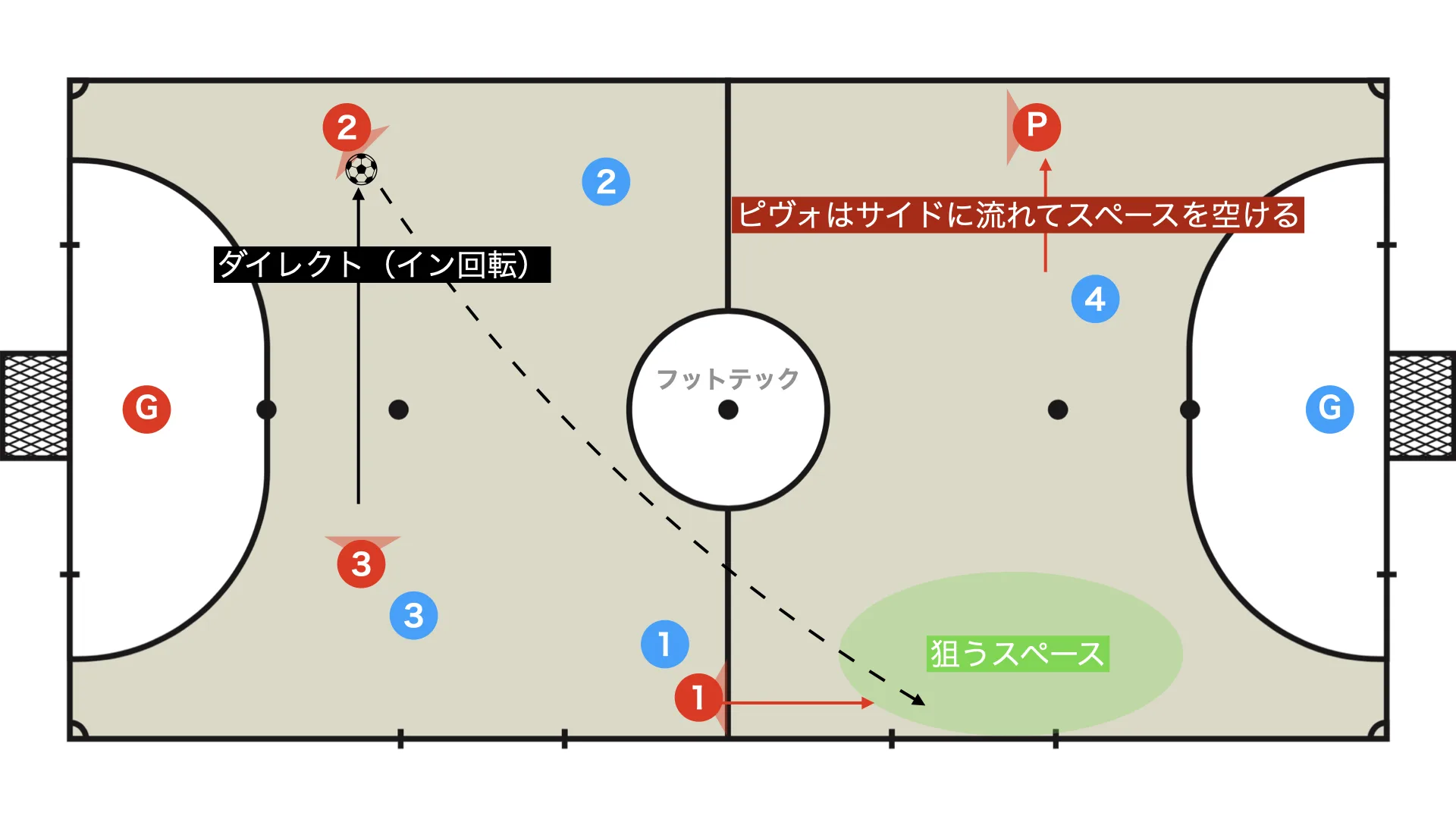
However, if the runner goes through with a diagonal, it causes the figure-eight rotation itself to collapse. Because of that, if a player is going to run through, the only option is a parallel.
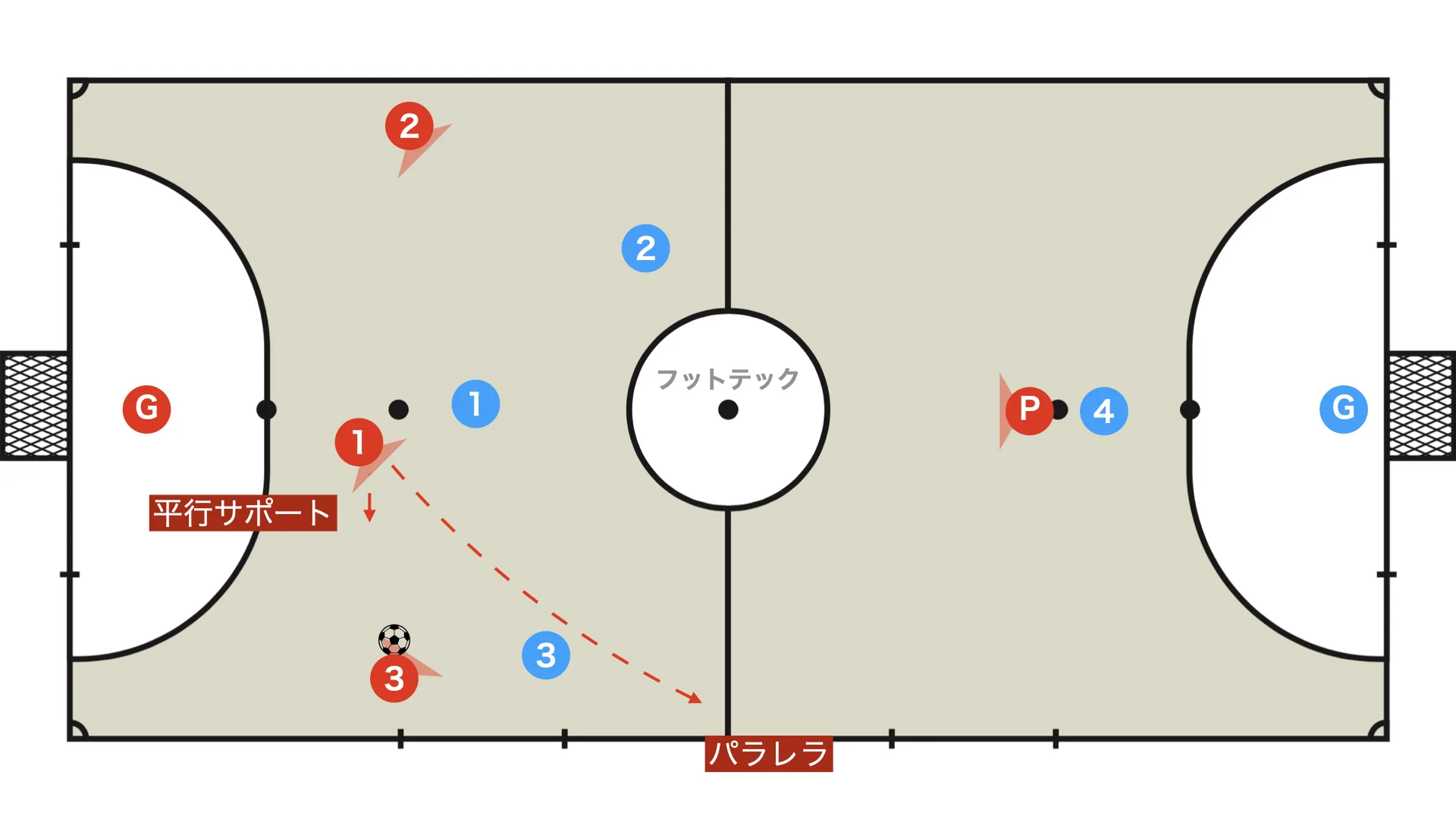
The workflow after the fixo plays the ball:
- If the ball holder is not under pressure: run through with a parallel
- If the ball holder is under pressure: give parallel support (one-two, block or curtain, etc.)
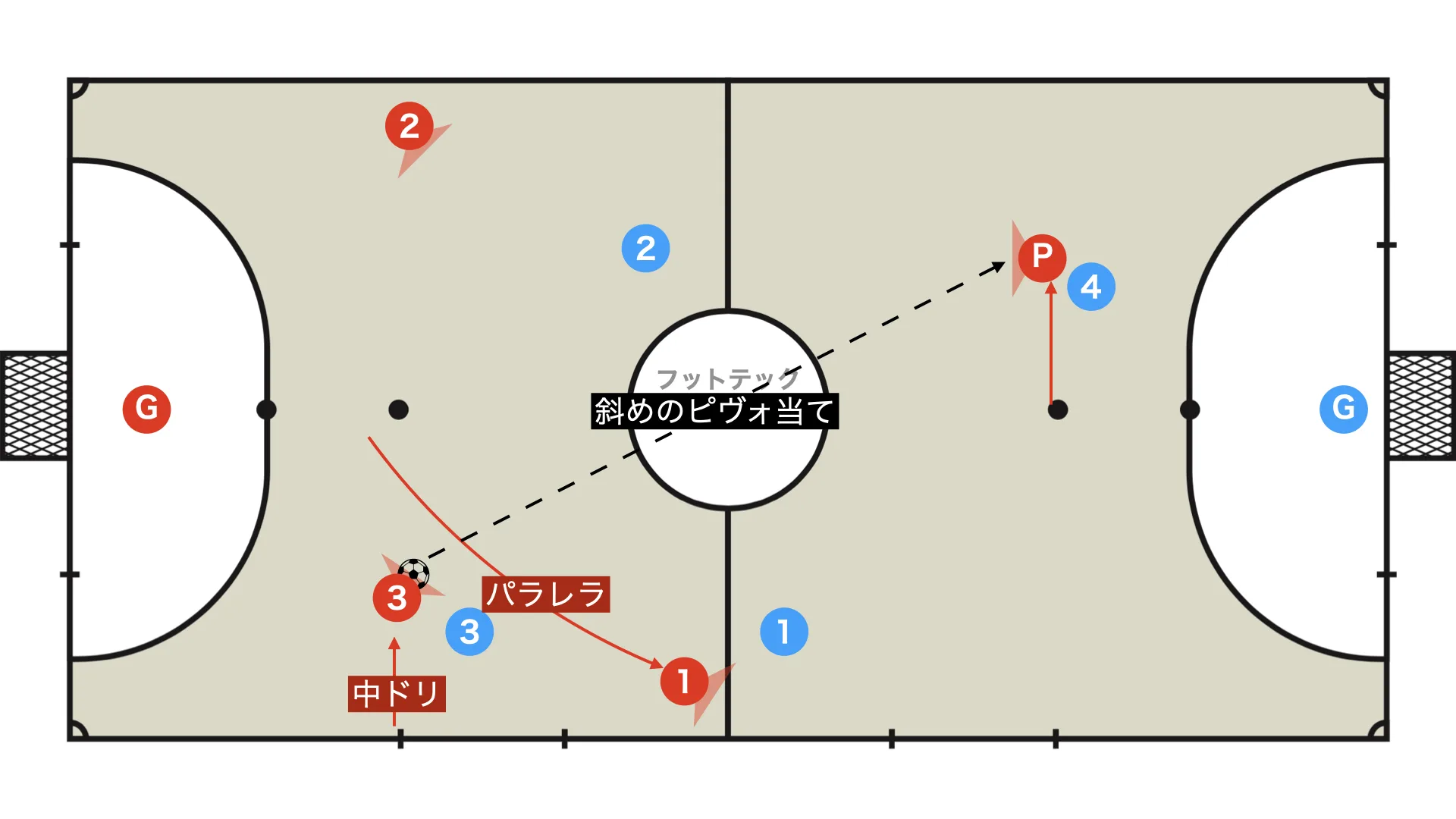
If you cannot break the defence with a simple parallel, the next option is a central dribble and then a pass into the pivot.
How to break the defence after playing into the pivot is explained in the following article, so I will omit it here.
関連記事
Essential for 3-1: Pivo Passes and the Third-Man Run (Two-Player Unit + Pivo)
A breakdown of pivo passes and the third-man run, the core of the 3-1 system. This article clearly e…
続きを読む →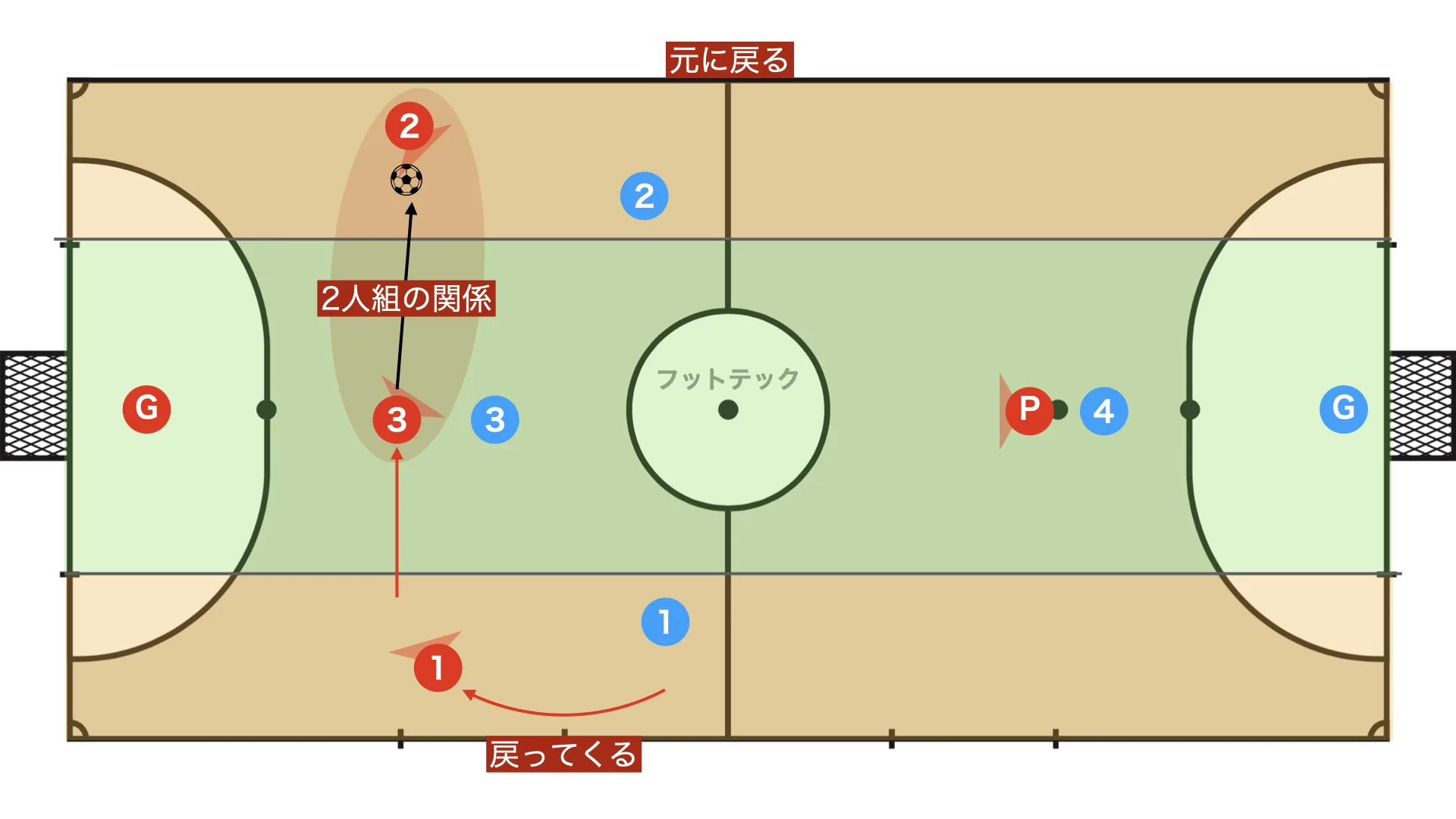
Sometimes you see players who run through on a parallel and never come back, but if you want to keep playing in a 3-1, they absolutely have to drop back again.
If, on the other hand, you want to shift from a 3-1 into a 2-2, there is no problem with that player simply staying as the pivot.
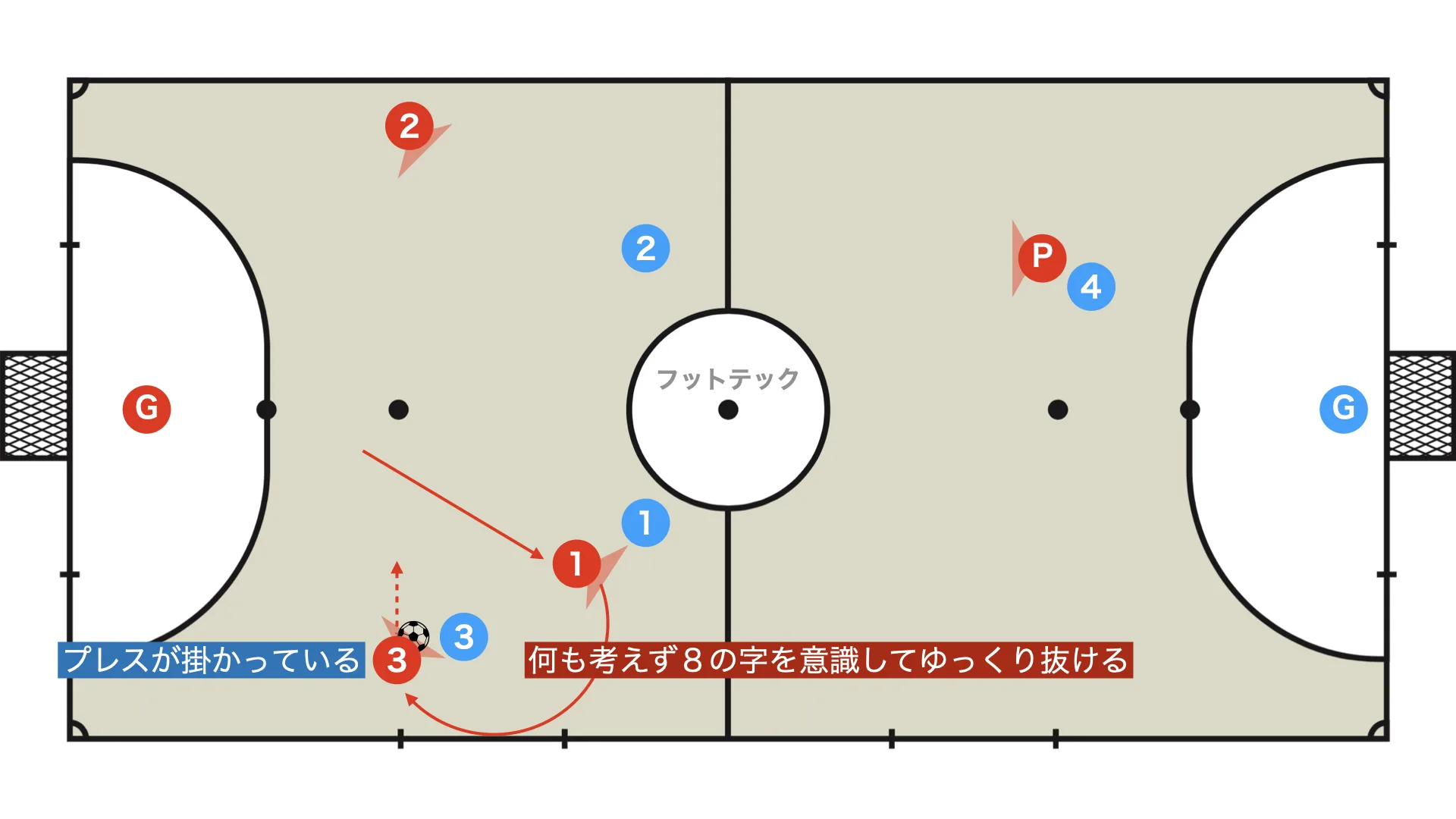
A common anti-pattern among futsal beginners is blindly running through even when the ball holder is under pressure.
But if you always stay aware of the two-player relationship, a play like this should never even come to mind.
This is a typical anti-pattern from players who mistakenly think rotation exists for its own sake, turning the means into the end.
In this kind of situation, instead of running through, it is preferable to give parallel support to the ball holder.
(If you are going to run through, the iron rule is to use a parallel with a change of pace.)
Next, I will explain what parallel support actually means.
Types of parallel support:
- Receive with the fixo again -> one-two, pass into the pivot, or a pass to the far-side ala
- Block or curtain -> let the ball holder dribble centrally and rotate
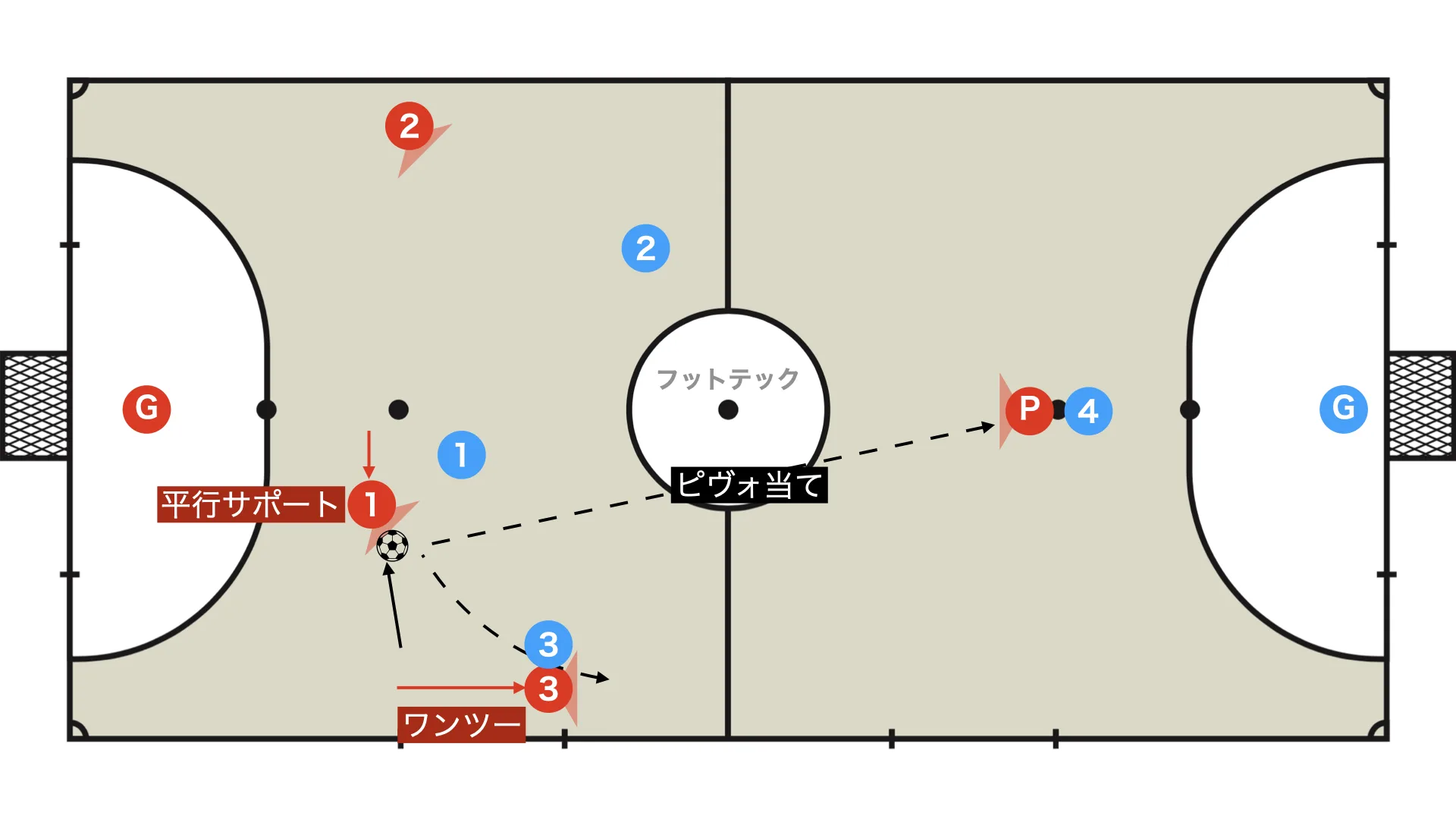
It is simple and very effective for the fixo to receive again and look for a one-two.
If the one-two is not available, then look to play into the pivot, after which red 3, who ran through on the one-two line, becomes the third man.
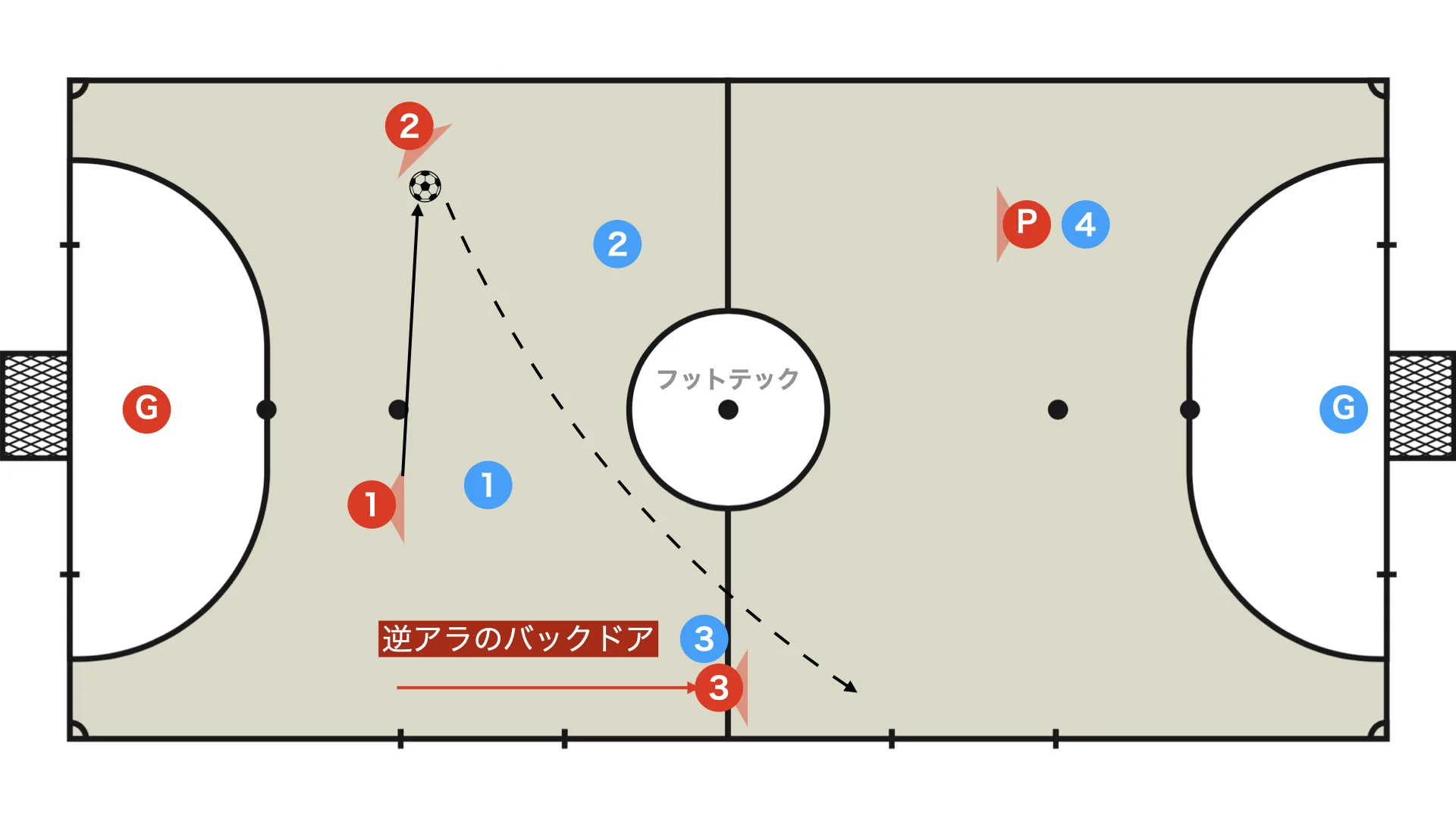
If neither the pivot pass nor the one-two is available, another option is to use a backdoor pattern through the far-side ala.
関連記事
Off-Ball Pairing: The Weak-Side Ala Backdoor
This article explains the weak-side ala backdoor, a useful option when a one-two or parallel move do…
続きを読む →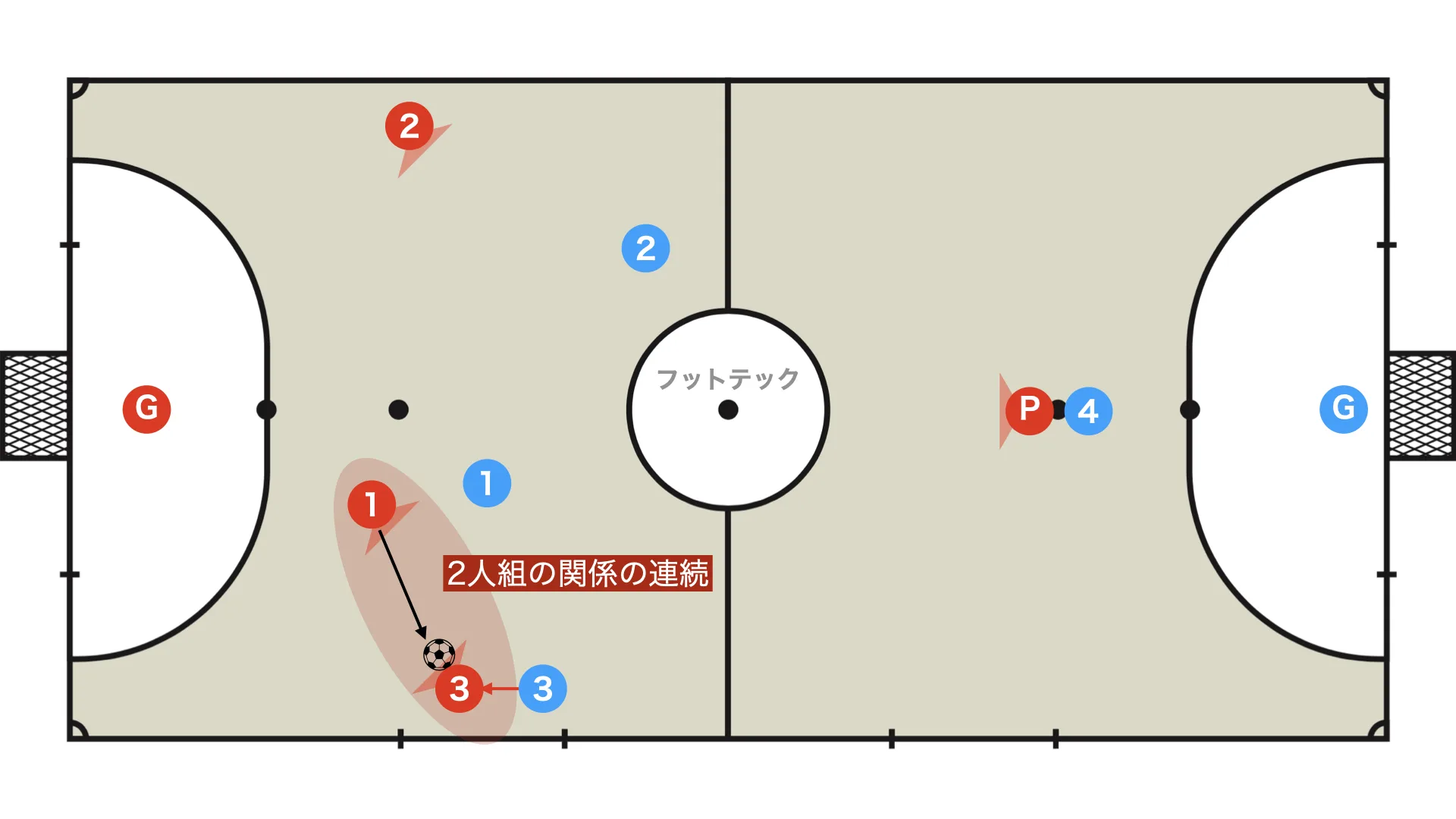
If there is no option to pass to the far-side ala, cancel the attempt to attack the space behind and receive to feet once more to continue the chain of two-player relationships.
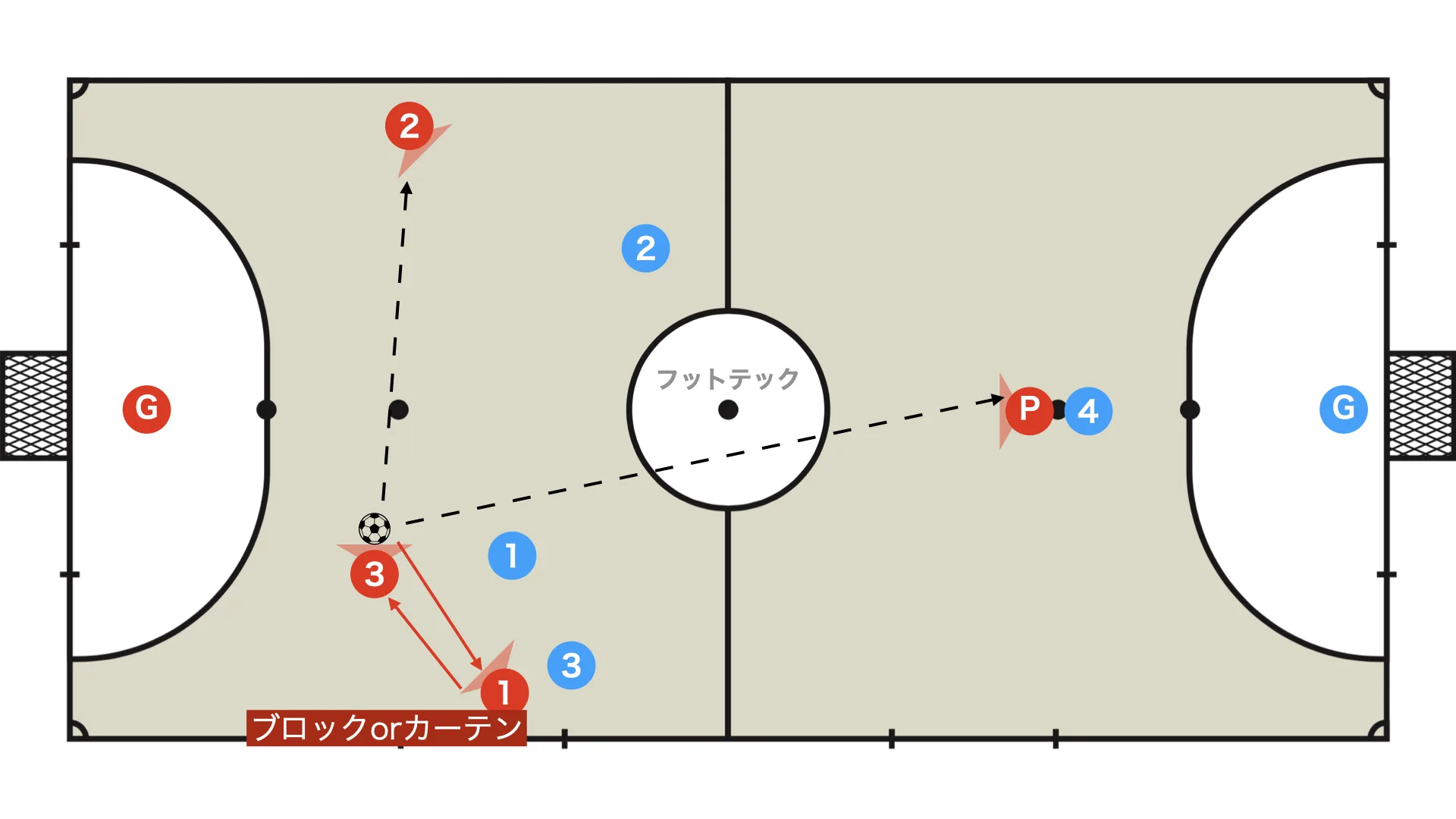
If you want your teammate to dribble centrally, set a block or curtain and return to the original positioning.
At this moment, the passing lane into the pivot tends to open up, so the basic rule is to look for the pivot pass.
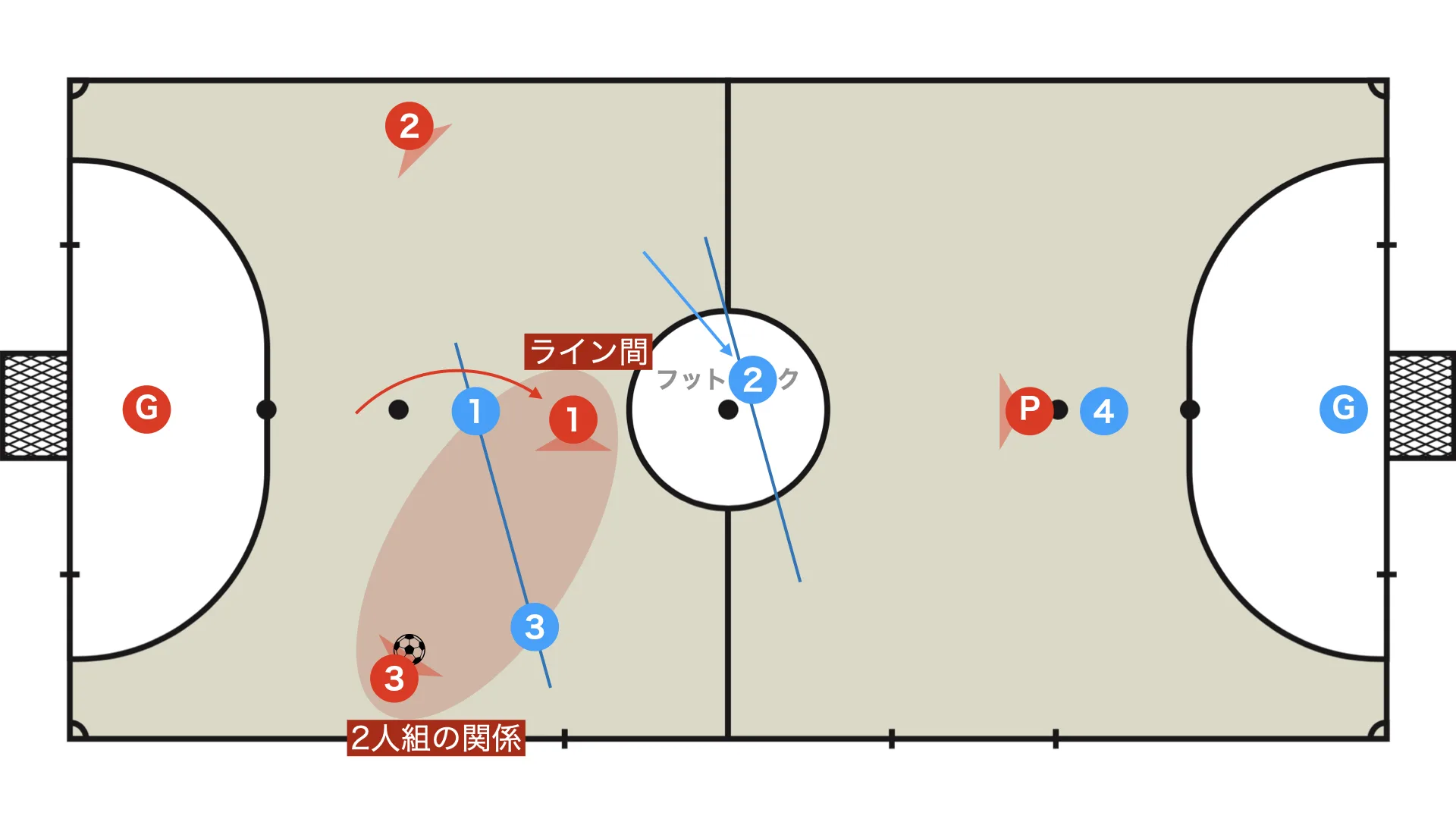
If the opponent is somewhat zone-oriented and builds multiple lines, the parallel will not function effectively.
In that case, rather than blindly running through, it is better to break them down with turns between the lines and two-player relationships.
関連記事
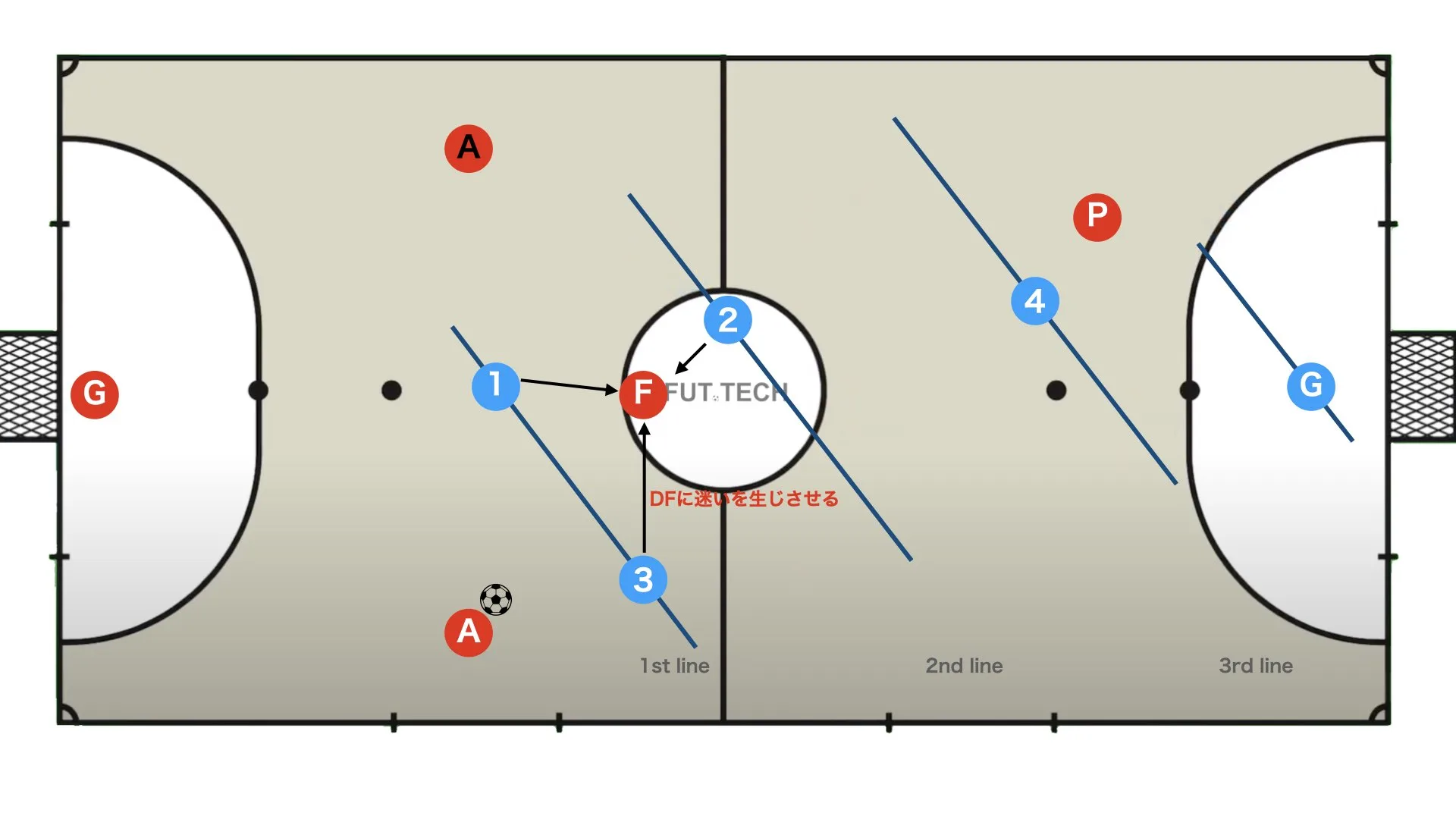
How to Use the Space Between the Lines to Break Down Zone Defence
A guide to using the space between defensive lines in futsal to attack zone defence. This article ex…
続きを読む →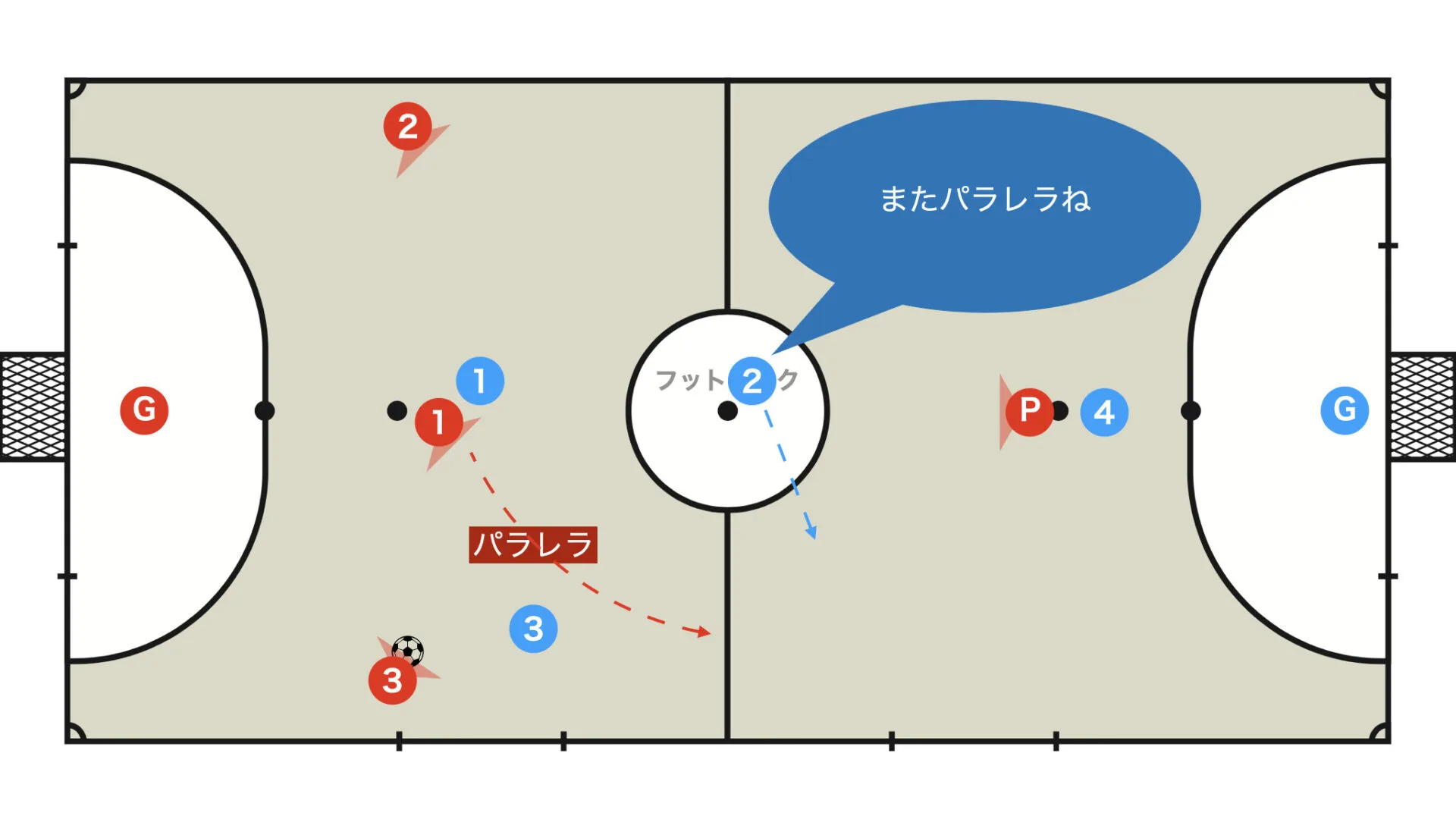
If you look at national teams around the world and club teams as well, there are very few that use the "figure-eight."
The reason is that it is a very weak tactic that is easy for the defence to read.
If the runner has only the parallel as an option, the defence can handle it easily.