Positional Attack: How to Think About Formations and Rotations
Published: 2021.07.10Updated: 2026.05.04
Many futsal players struggle with the same question: "I want to change our formation, but I do not know what criteria to use when choosing one."
Positional attack is the deepest and most complex of the four major phases of futsal. But once you understand the principles of player positioning and the purpose of rotations, it becomes much easier to see how to choose and switch shapes according to the situation.
In this article, I will explain in a structured way the characteristics of the 4-0, 3-1, 2-2, and 1-3, as well as the criteria for deciding when to switch between them.
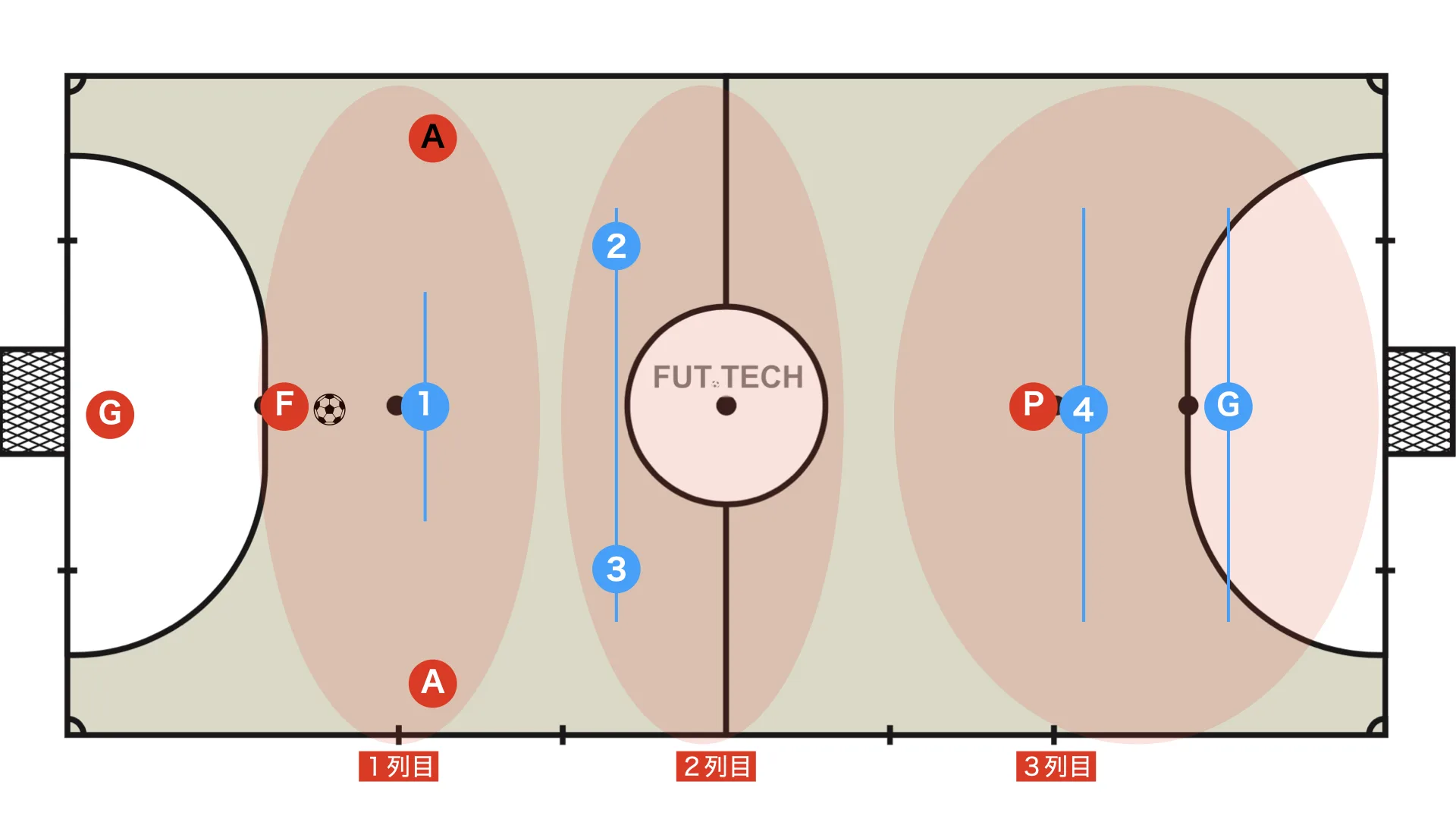
Take the deepest outfield player, excluding the goalkeeper, as your reference point, and roughly divide the court up to the deep attacking area into three zones. The shape is then determined by how many players are placed in each zone, and in theory there are as many types of shape as there are possible patterns.
Using this way of thinking, there are ten possible ways to distribute the four outfield players across the three vertical zones (ignoring horizontal division). Among them, the five best-known shapes in competitive futsal are the following (eight patterns grouped into five types):
- Quatro zero (4-0-0, 3-1-0, 2-2-0, 1-3-0)
- 3-1 (3-0-1)
- 2-1-1
- 2-2 (2-0-2)
- 1-3 (1-0-3)
I will leave out 1-1-2 (inverted Y) and 1-2-1 (diamond), because they are extremely minor shapes and are rarely seen at the top level.
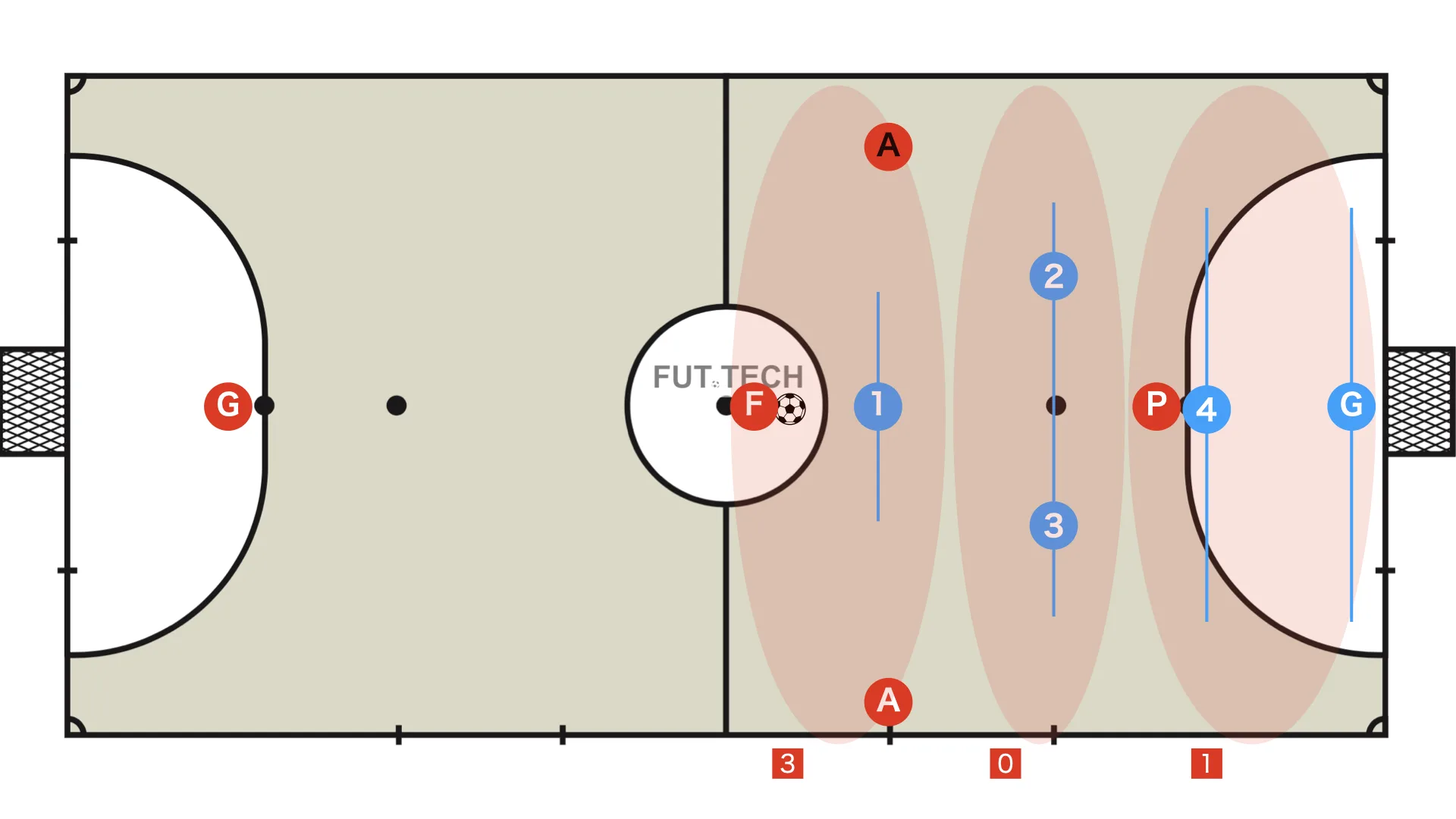
The same way of thinking also applies in the attacking half, which can likewise be divided into three zones as shown above.
Also, rather than focusing blindly on the shape alone, you must always think about which player should be placed in which area.
- Place players on the side opposite their stronger foot -> their body orientation gives them a wider field of view
- Put a player who can hold off defenders up front -> pivot
- Put players who can win 1v1s or have pace on the sides -> ala
- Put a player with tactical awareness, the ability to organize from the back, and a solid technical level in deeper positions -> fixo
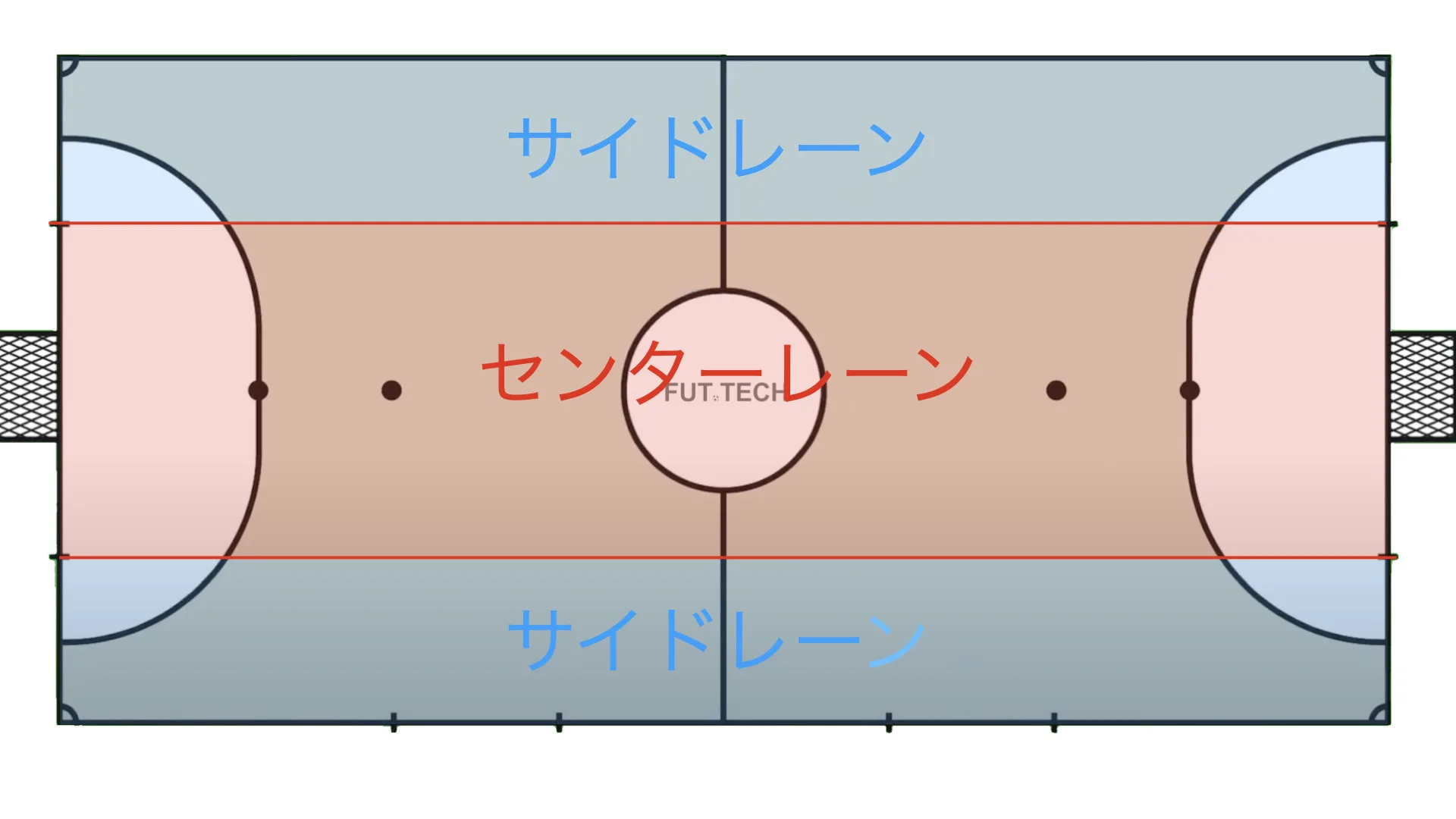
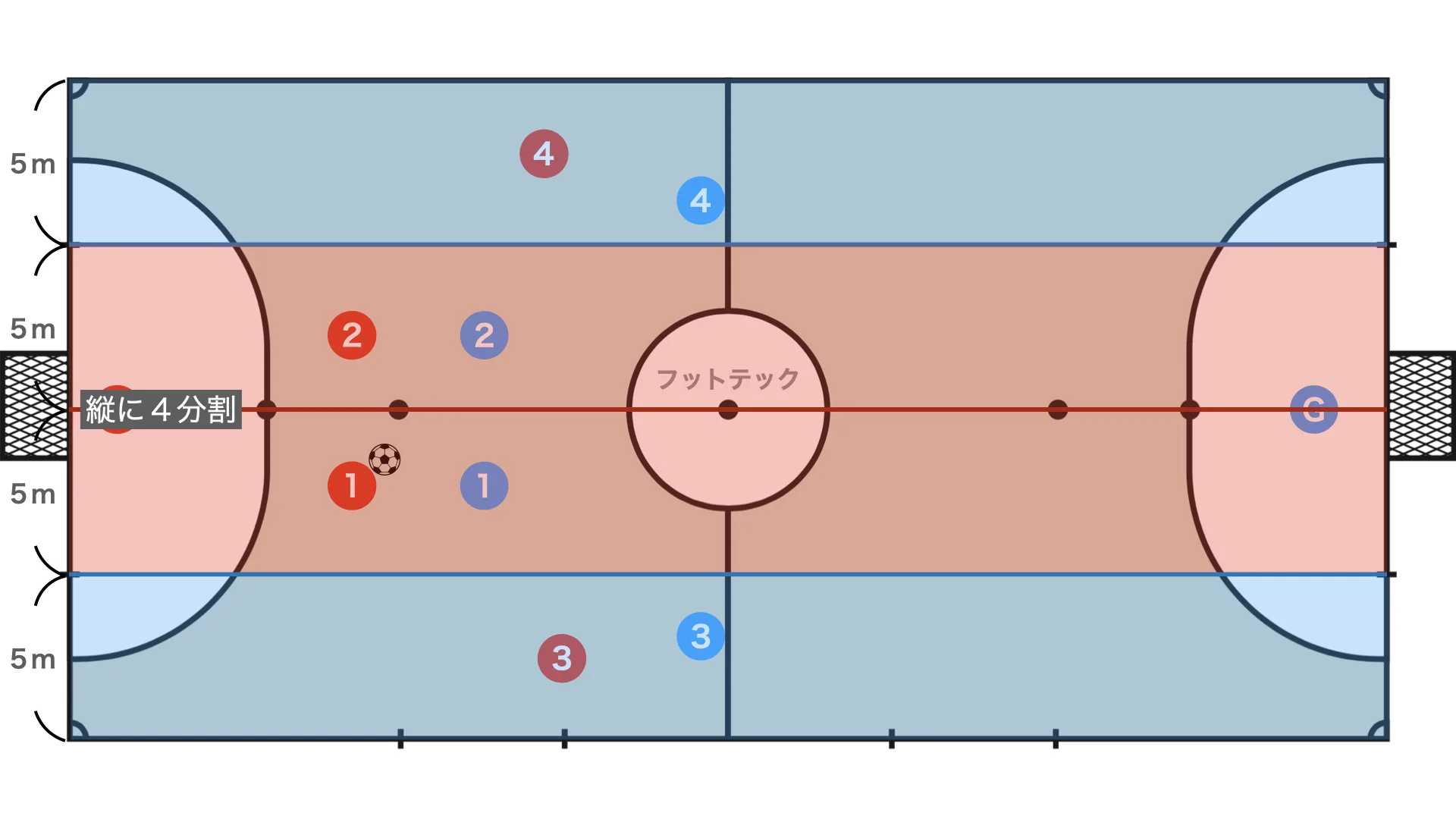
I will not go into detail here, but you also need to think not only about horizontal division, but vertical division as well.
Even with the same 2-1-1 arrangement, simply taking horizontal division into account increases the number of patterns to four or more.
関連記事
The Complete Guide to Quatro (4-0) in Futsal: Purpose, Movement, and Training
A complete explanation of the 4-0 (quatro) rotation in futsal. From four-lane theory to 2-player, 3-…
続きを読む →Quatro means four in Portuguese, and the idea is for the four players in the first and second lines to move the ball with few touches while attacking the space behind the defence.
Because there is no pivot, it is harder to maintain a constant vertical reference point for forward passes, but the absence of a pivot also makes it easier to use the space that opens up as a result.
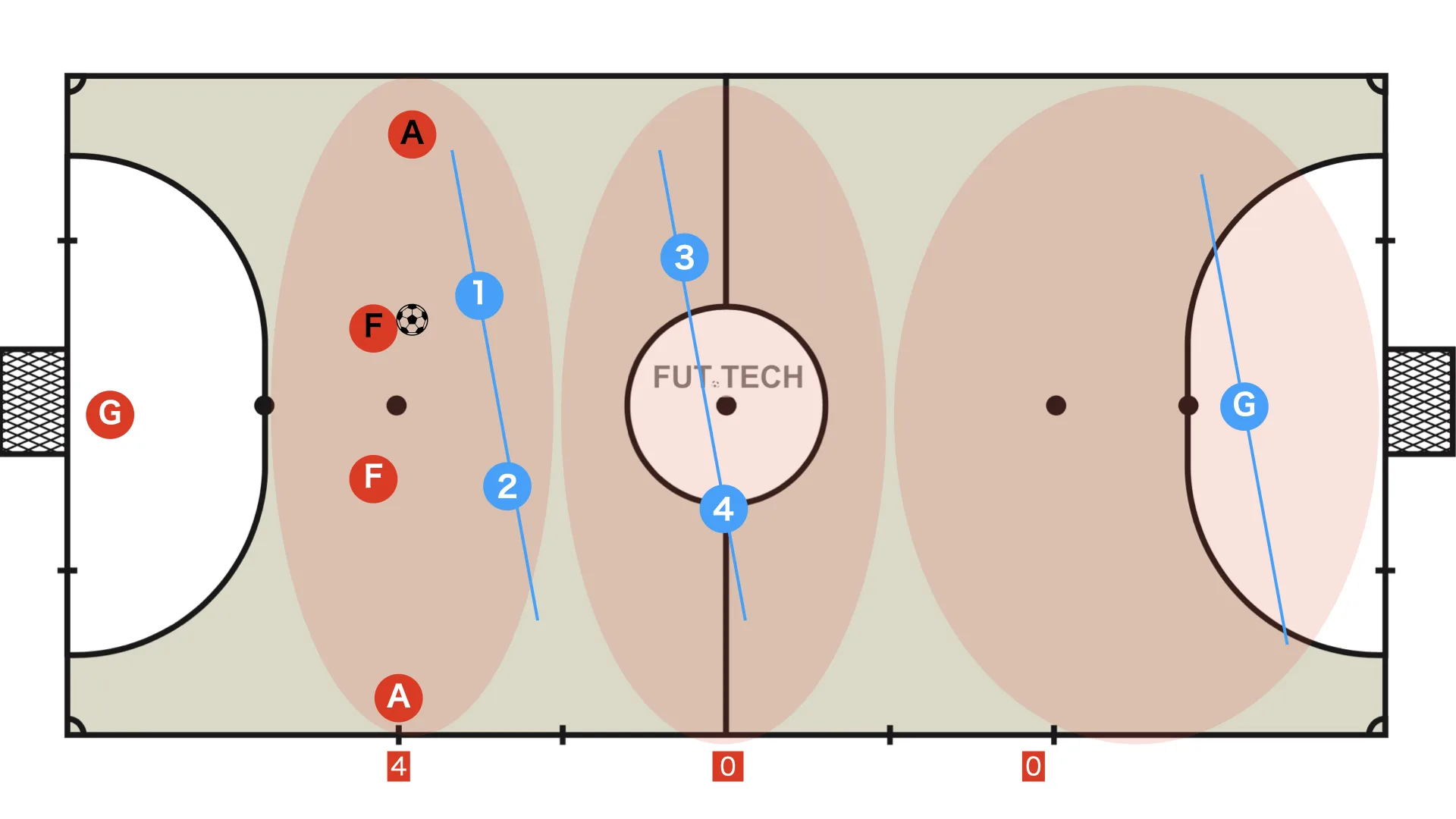
A shape that forms a horizontal 4 on line.
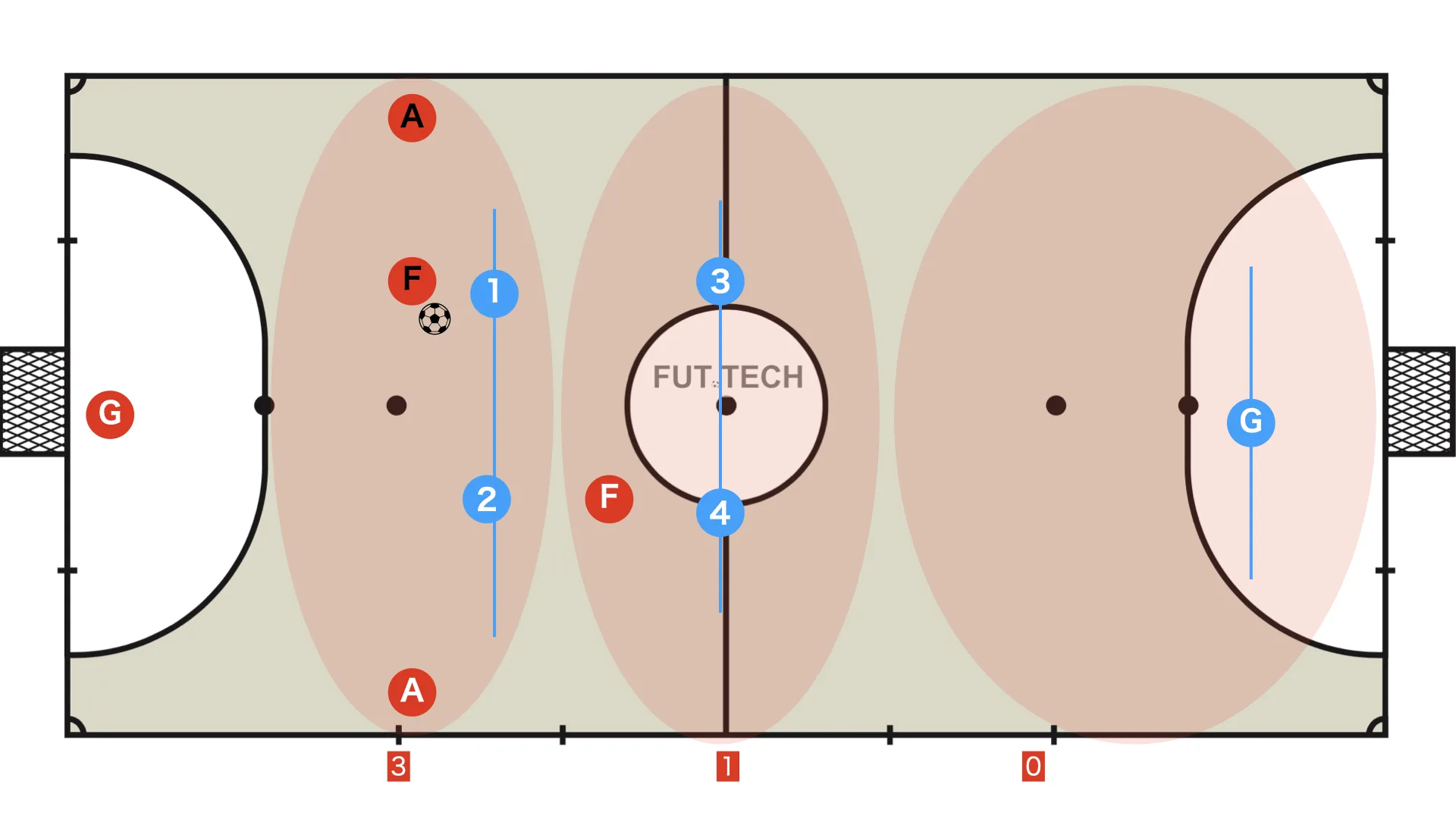
A horizontal 3 on line + 1 shape.
The key point is that once the ball is played between the lines, both sides can take high positions, and the ball holder can use a pisada to pass to a teammate making a run beyond.
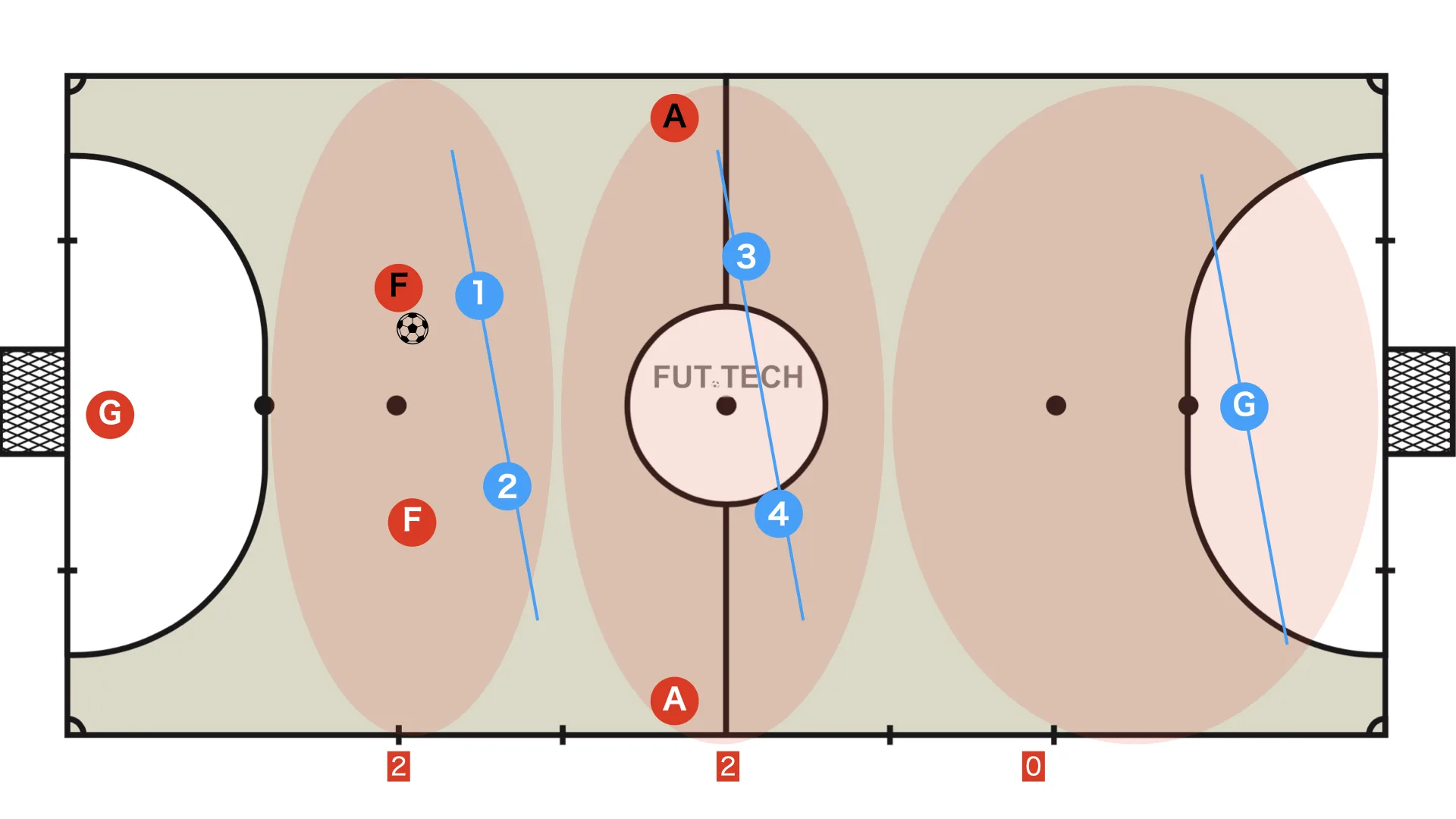
The bowl-shaped quatro structure you probably see most often.
Its advantage is that it is easier to maintain stable passing lanes.
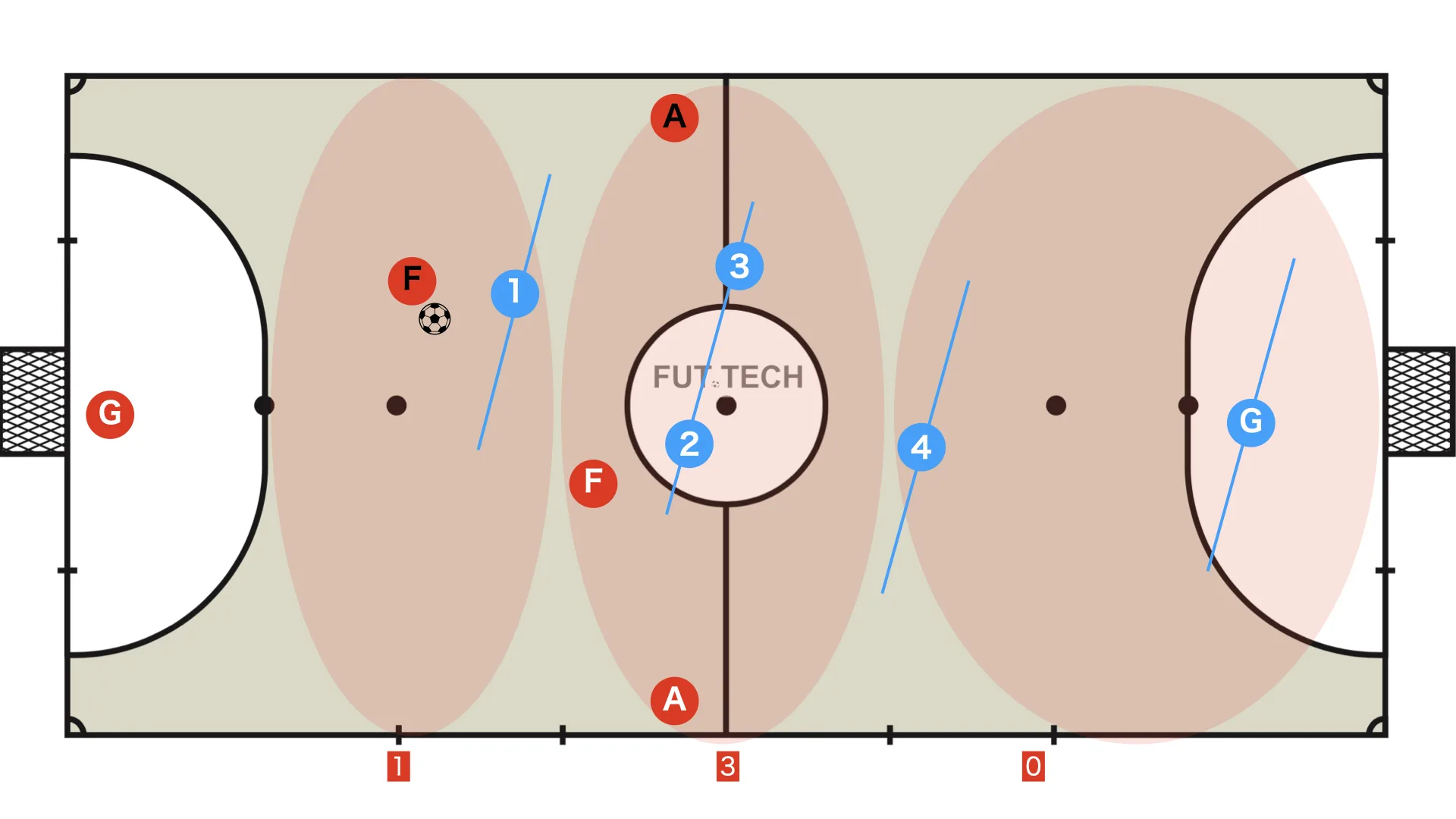
A shape often called a structured quatro.
The single deeper fixo stays in place while the front three rotate.
Its advantage is that it can continually create a diagonal 3 on line + 1 and triangle + 1 structure.
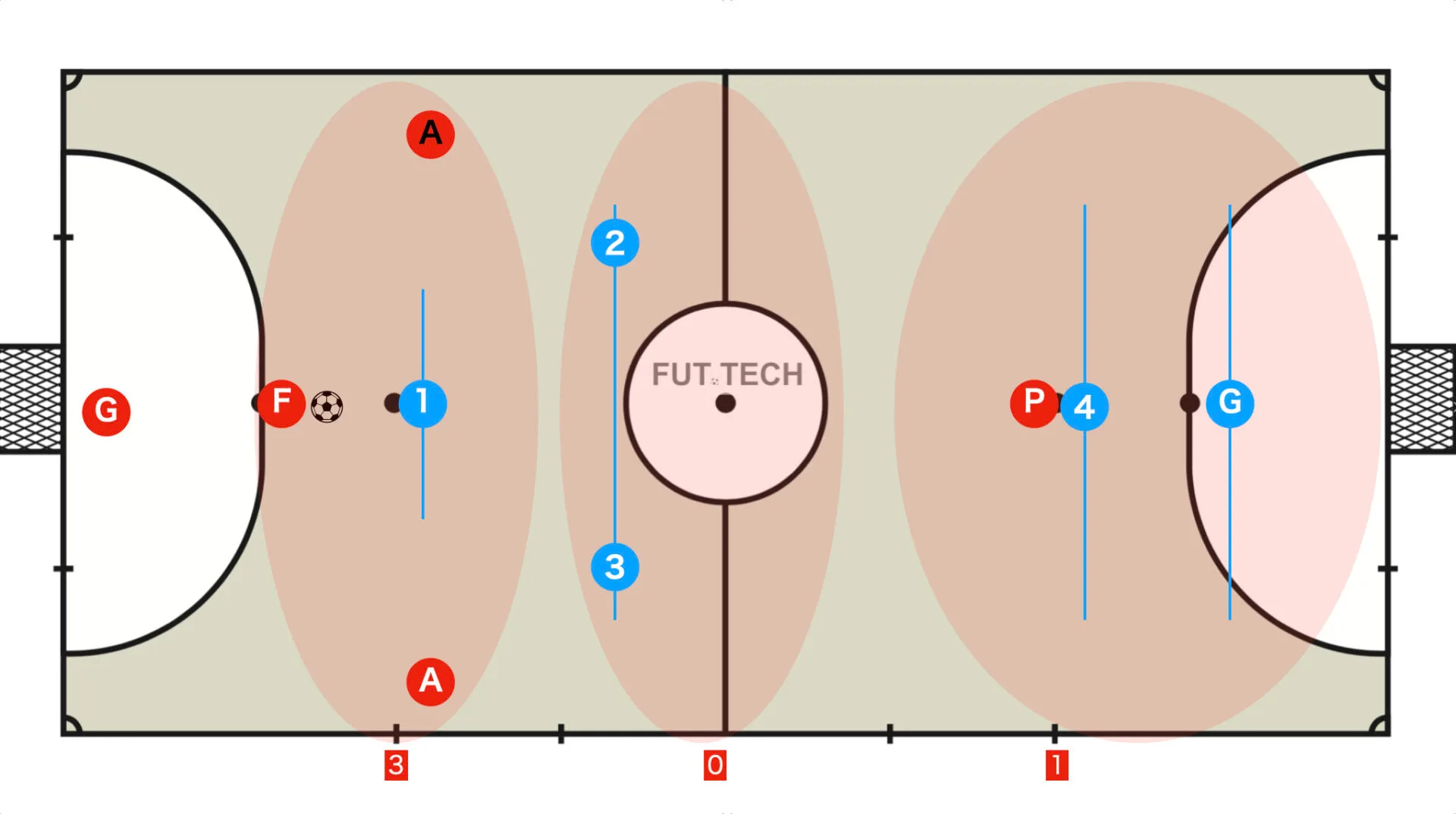
The most orthodox shape, with a pivot positioned up front.
Because it makes effective use of the length of the futsal court, it is the most widely used formation.
関連記事
3-1 in Depth: Rotations and Formation Changes
A detailed breakdown of futsal's most common positional attack shape, the 3-1. This article explains…
続きを読む →This is a shape in which the middle player in the three-line structure holds the key. If that player runs through, the shape can change into a 2-2; if the player drops a line, it can change into a 3-0 (3-0-1).
A vertical 3 on line + 1 (ala) shape.
It is used as a way to isolate one ala and let that player break through using qualitative superiority.
Also, if the second-line player drops a line, the shape can change into a horizontal 3 on line + 1 (pivot).
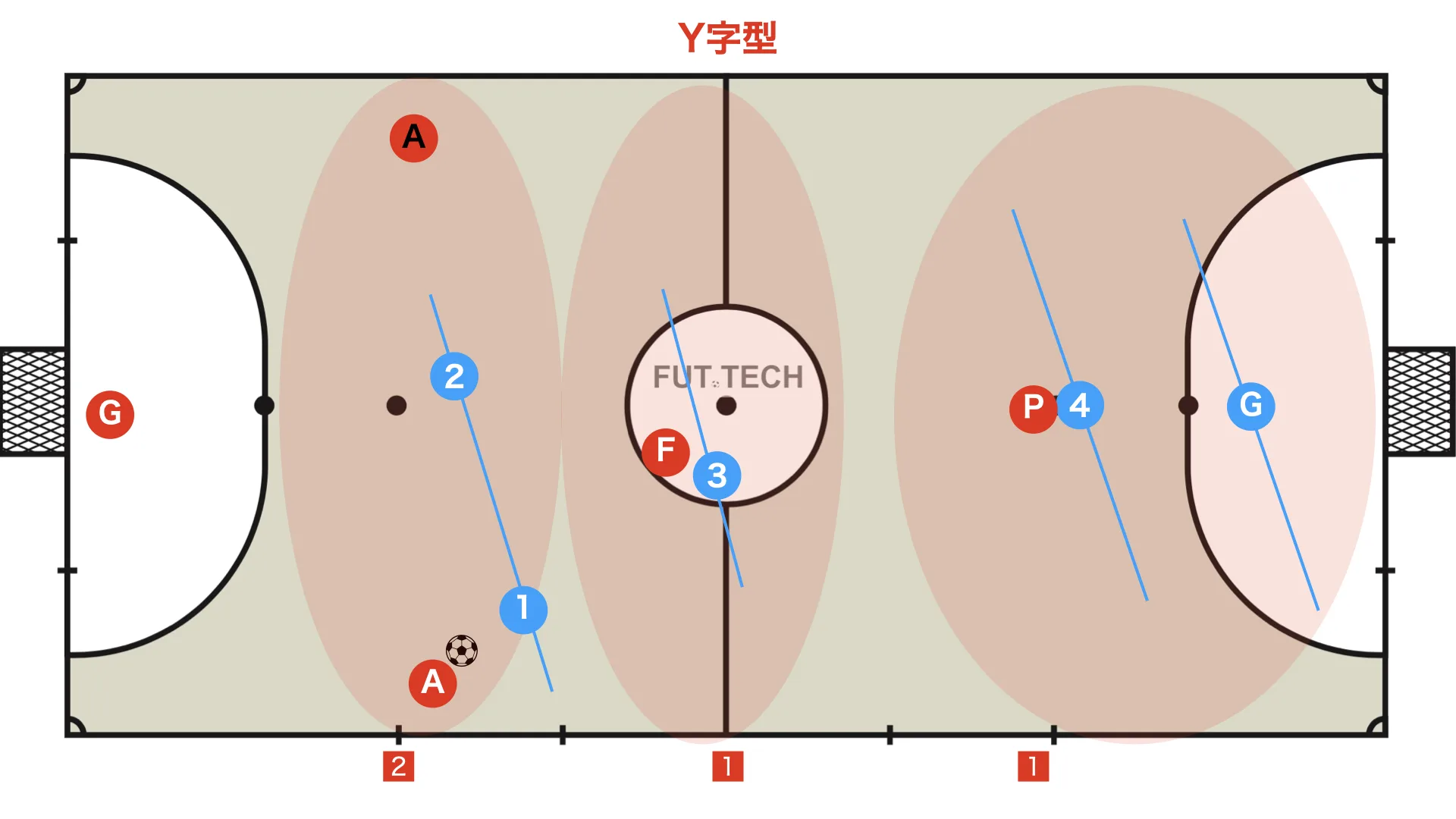
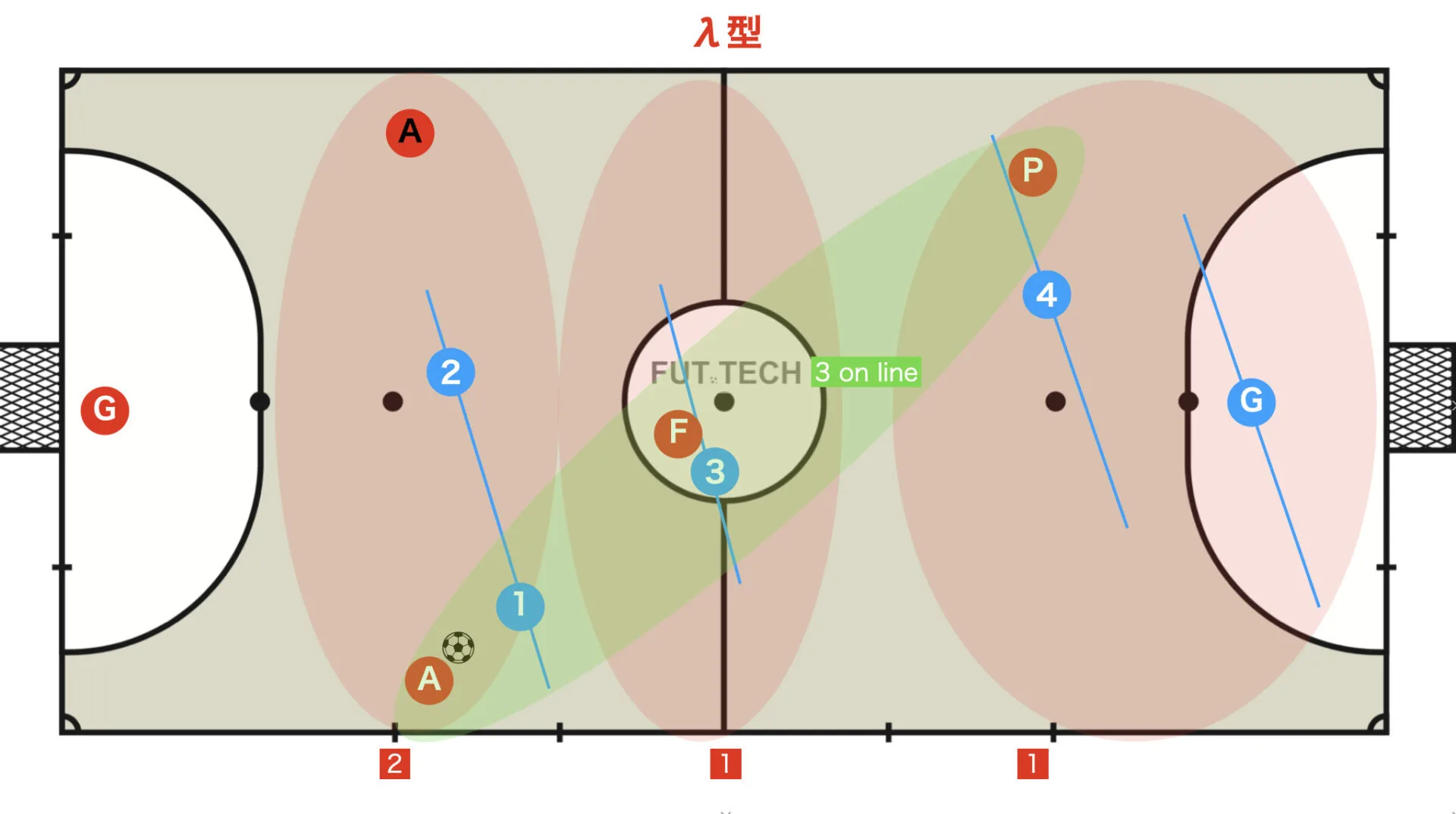
The aim here is to use entre lineas by positioning the second-line player between the lines.
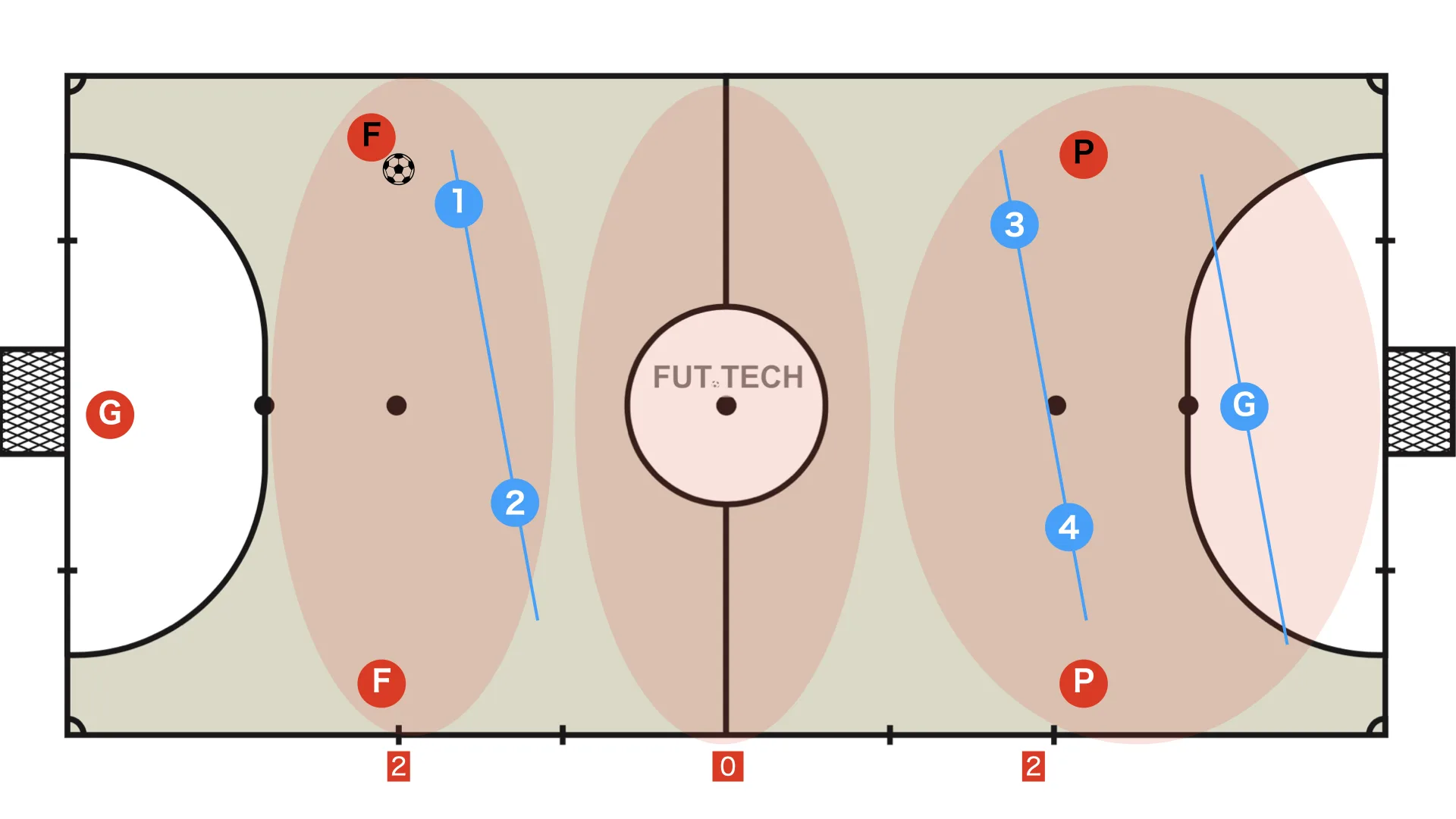
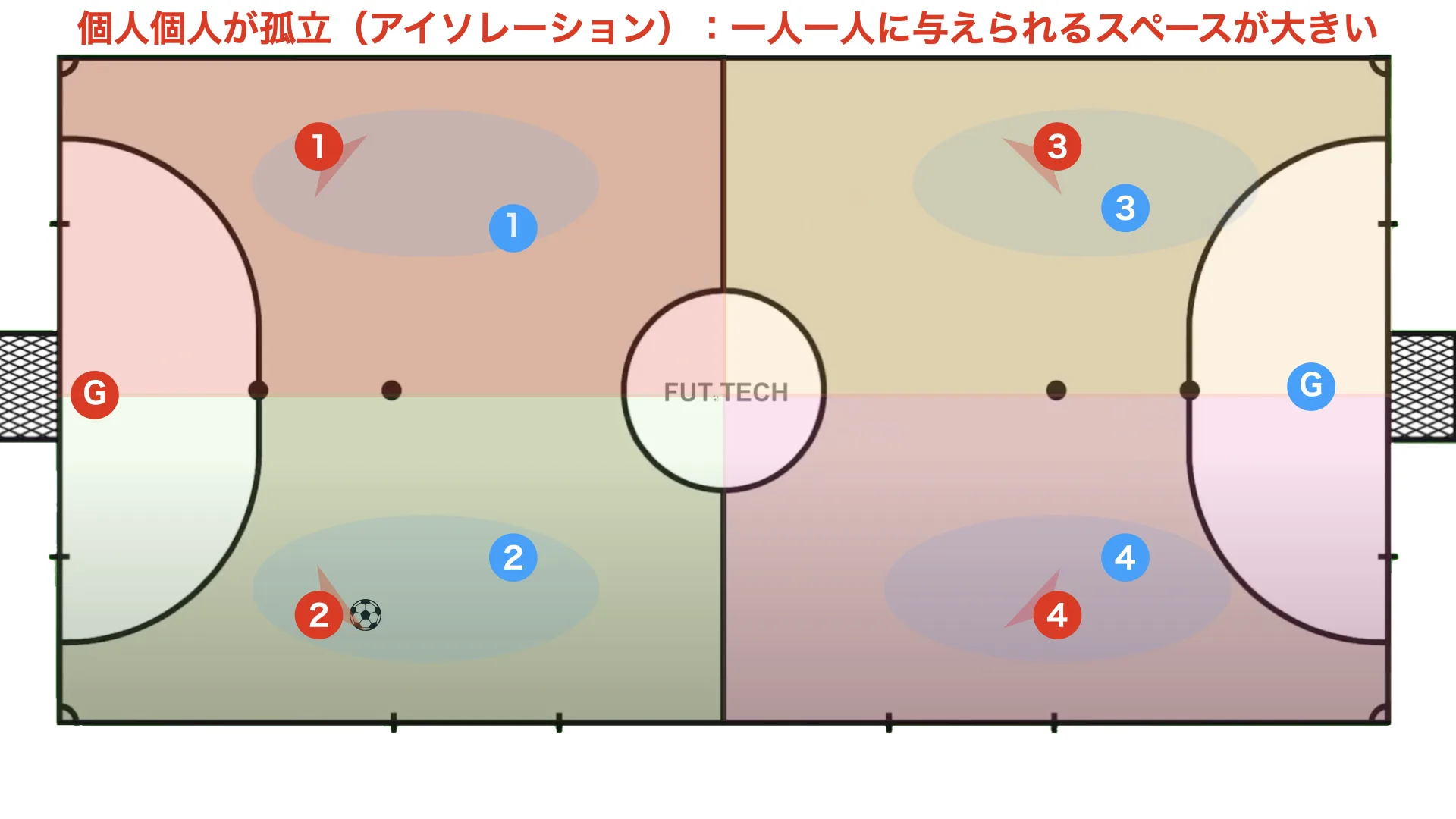
This shape has the advantage of always creating vertical and diagonal passing lanes because two pivots are positioned high up the court. But because the distances between players tend to become large, it is also a formation that can easily become dependent on individual quality.
In recent years, Nagoya Oceans have also used this shape. It is especially well suited to teams with strong individual ability, like a very athletic football side.
関連記事
The Ideal System for Maximizing Individual Ability: The Box Shape (2-2) with Two Pivots
An explanation of positional attack in the box-shaped 2-2 system with two pivots. This article clear…
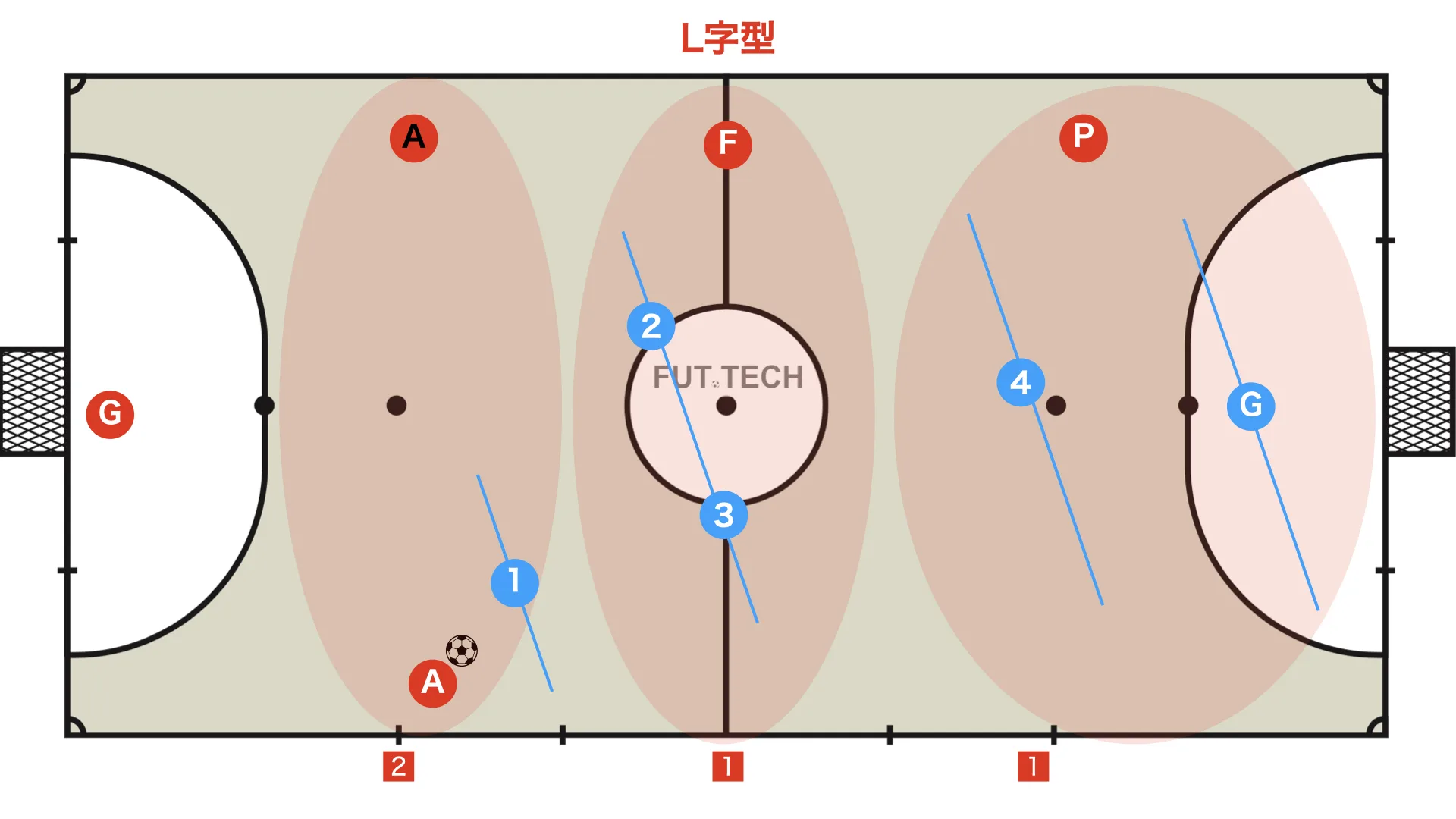
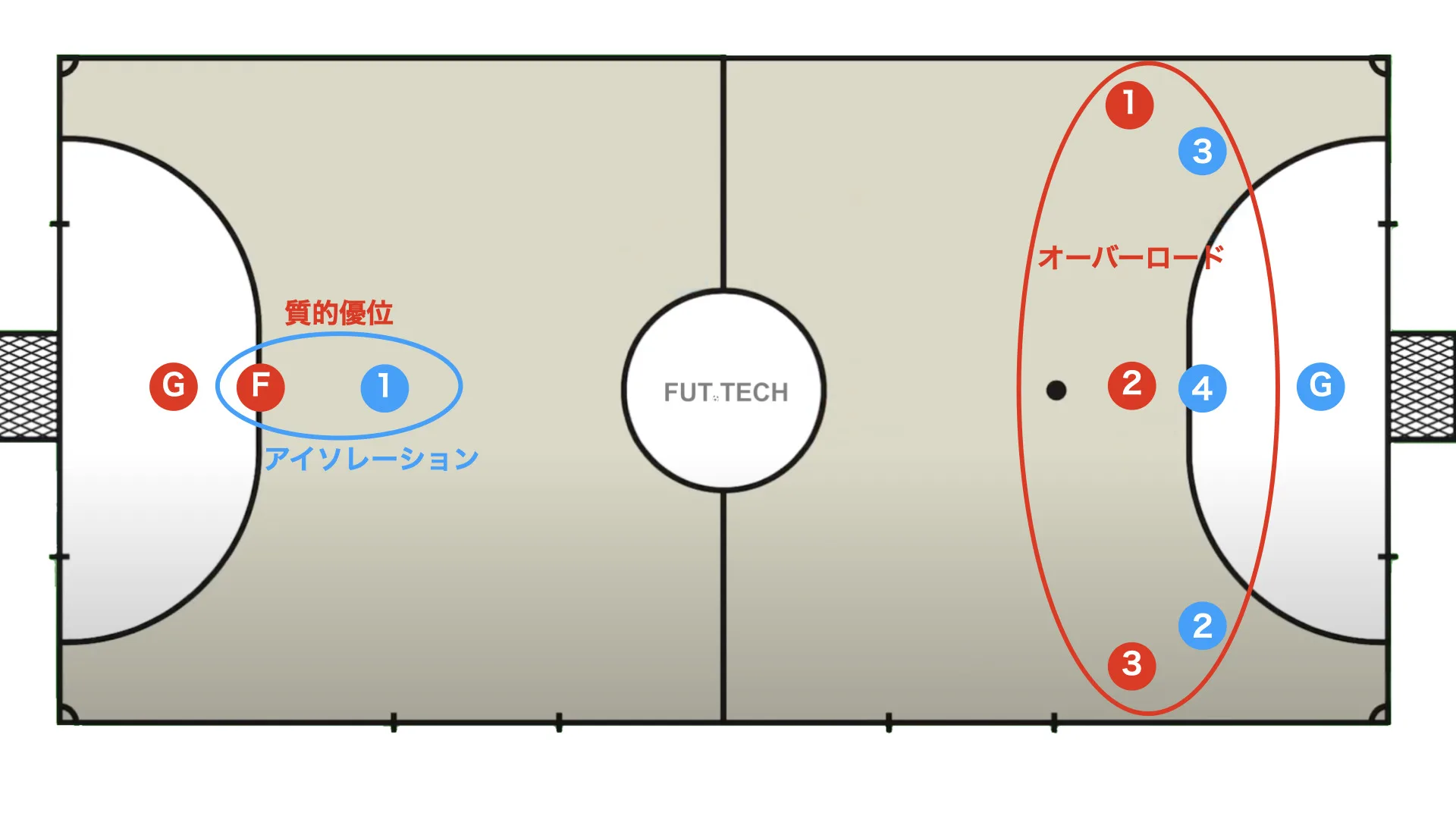
続きを読む →This is a shape in which three pivots crowd together up front in an overload, while the fixo is isolated.
It is an effective tactic when you have a fixo with strong individual quality, because the aim is to exploit the huge space that appears between the fixo and the pivots.
関連記事
Developing a New Tactic: 1-3 Fixo Isolation and the Goalkeeper Joining the Attack
A detailed breakdown of the 1-3 structure built around fixo isolation. This article introduces a new…
続きを読む →Once you choose a shape, if the same players stay fixed in the same spots, the defence will press and the ball will not circulate well.
That is why it is important for players to move fluidly and rotate in order to unsettle the opposing defence.
Rotation must not become rotation for its own sake
One common trap for futsal beginners is that the rotation itself, such as the eight, becomes the objective. But no matter how beautiful the rotation is, if all you do is keep the ball forever, you still will not win the match. It is better to approach it with the understanding that rotation is a result of trying to score and break down the opposing defensive structure.
When a certain number of players (from two to five) rotate around in the same direction (clockwise or counterclockwise), that rotation is called circular rotation (redondo).
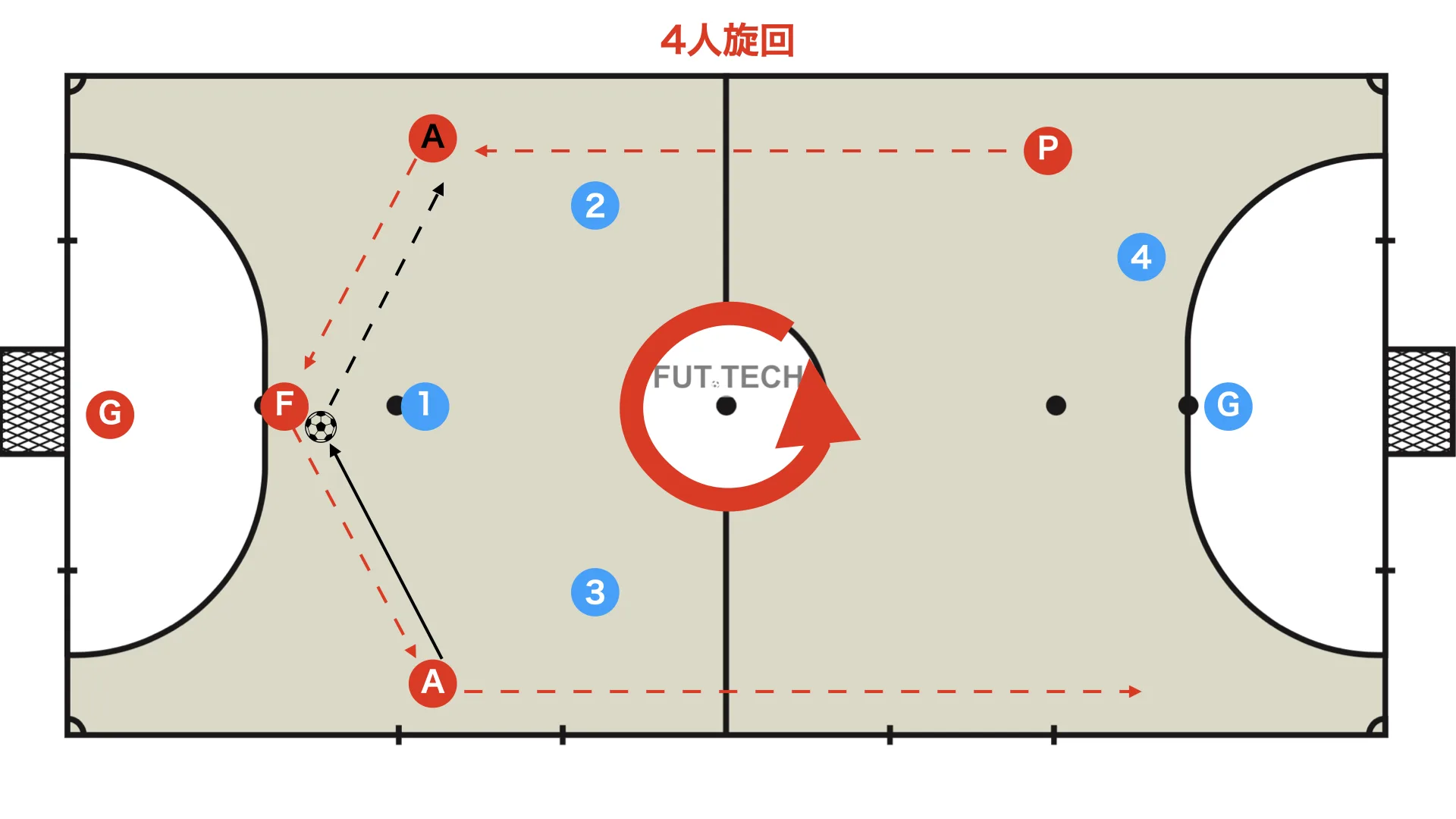
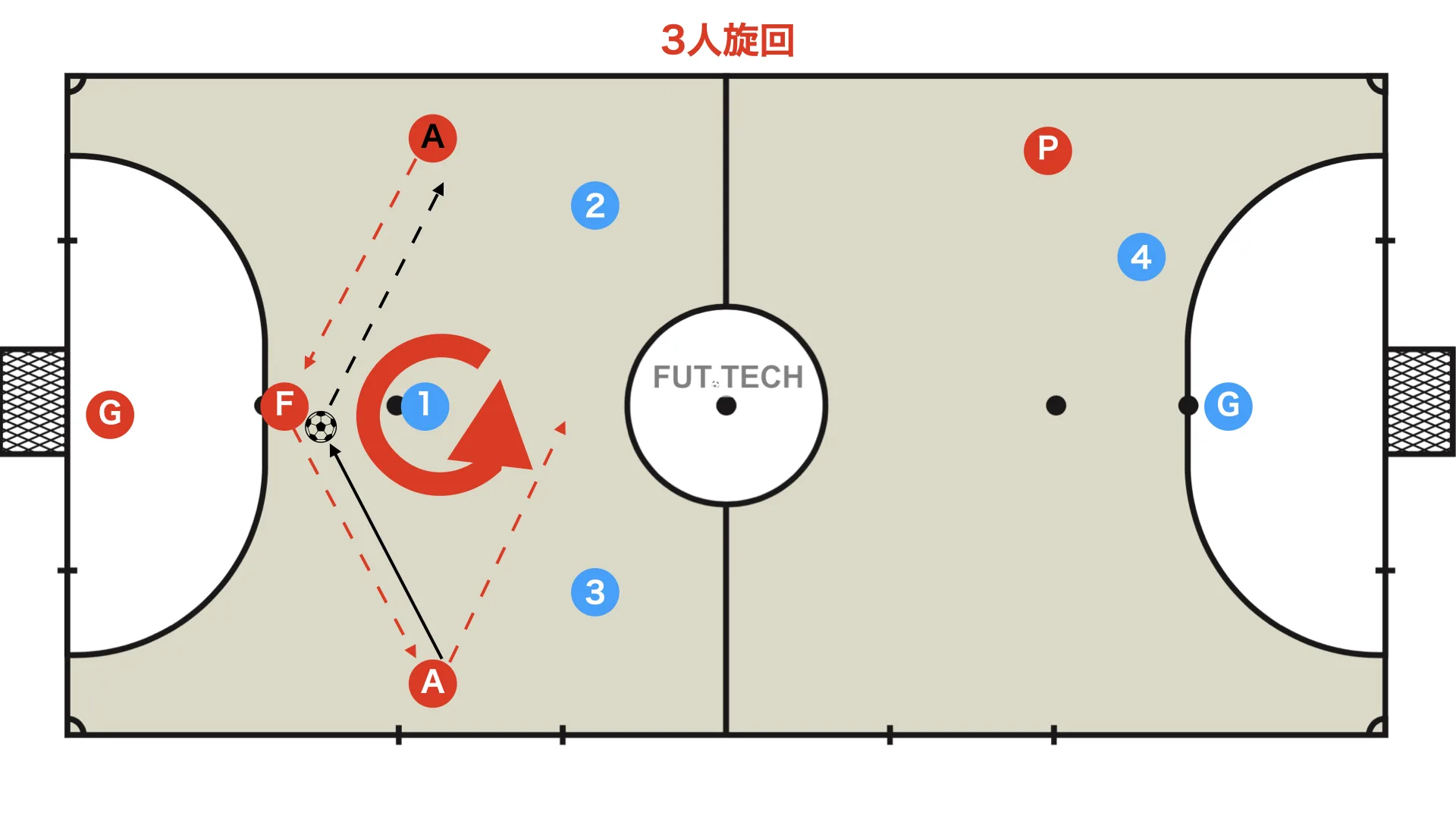
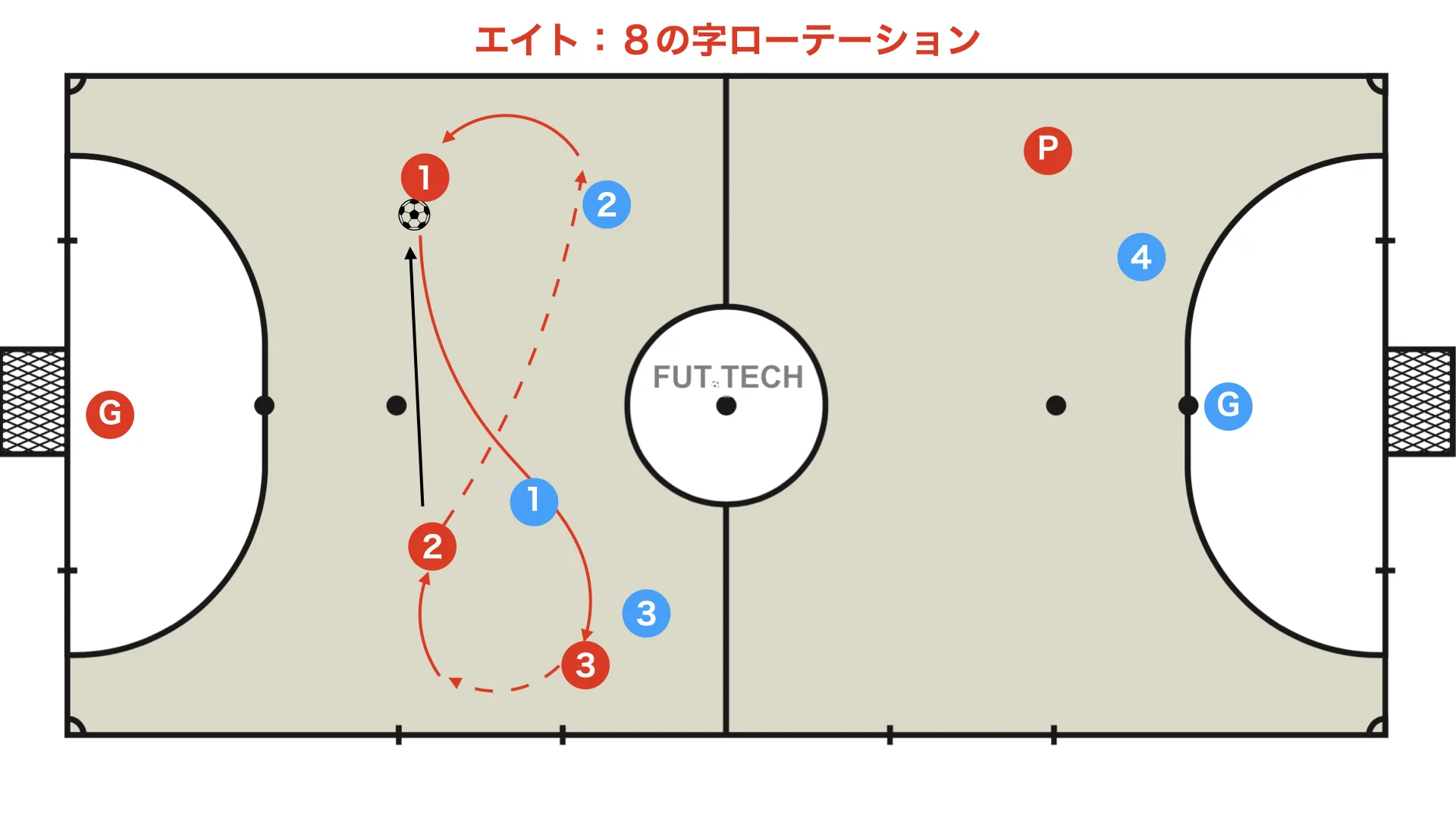
In a 3-1, when the back three rotate in a figure-eight pattern, it is widely called the eight.
It is important not to be locked into a single shape. By changing formation according to the situation, you can confuse the opposing defence.
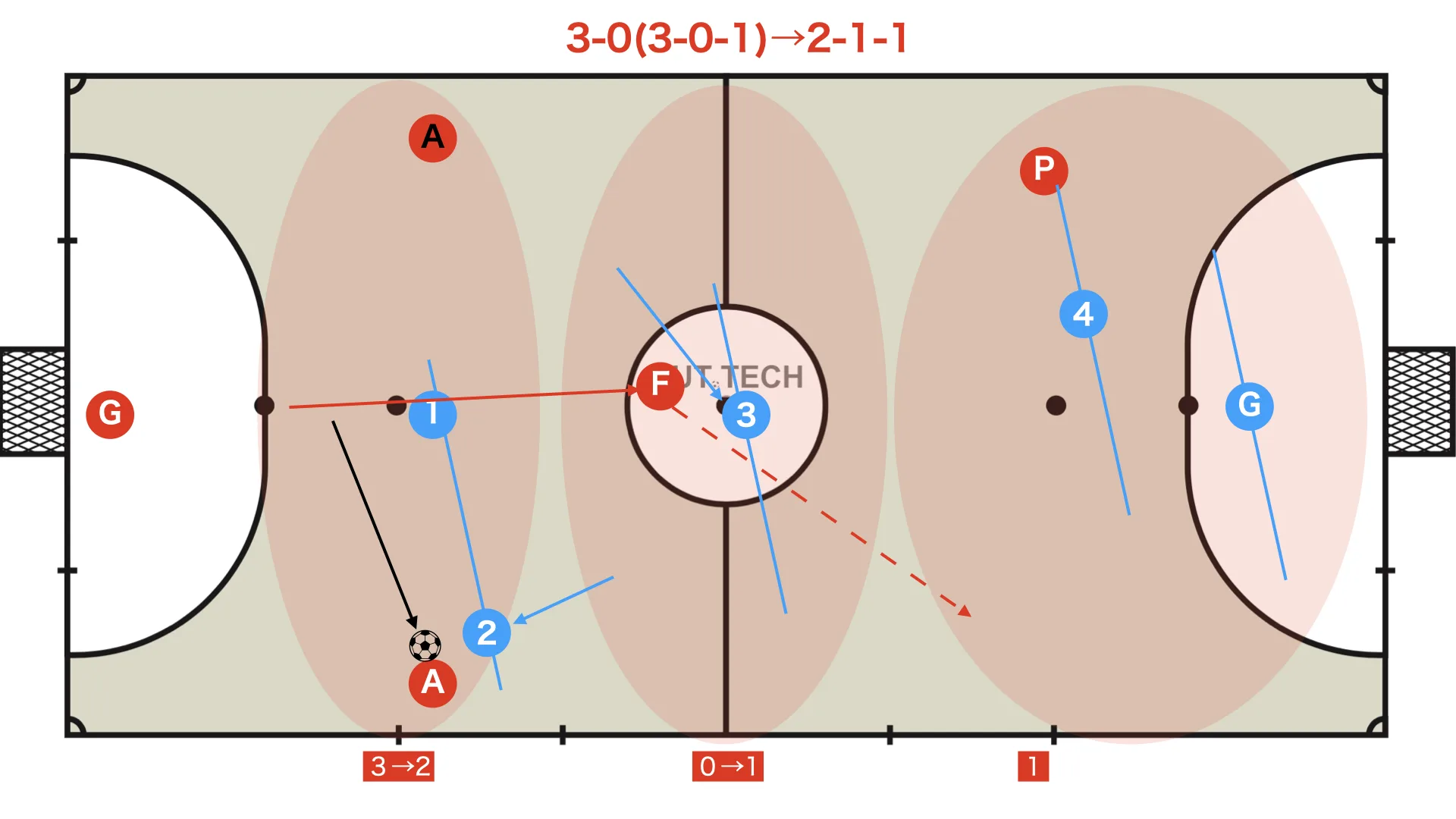
If the fixo passes to the ala and then runs through into the second line (entre lineas), the shape becomes 2-1-1.
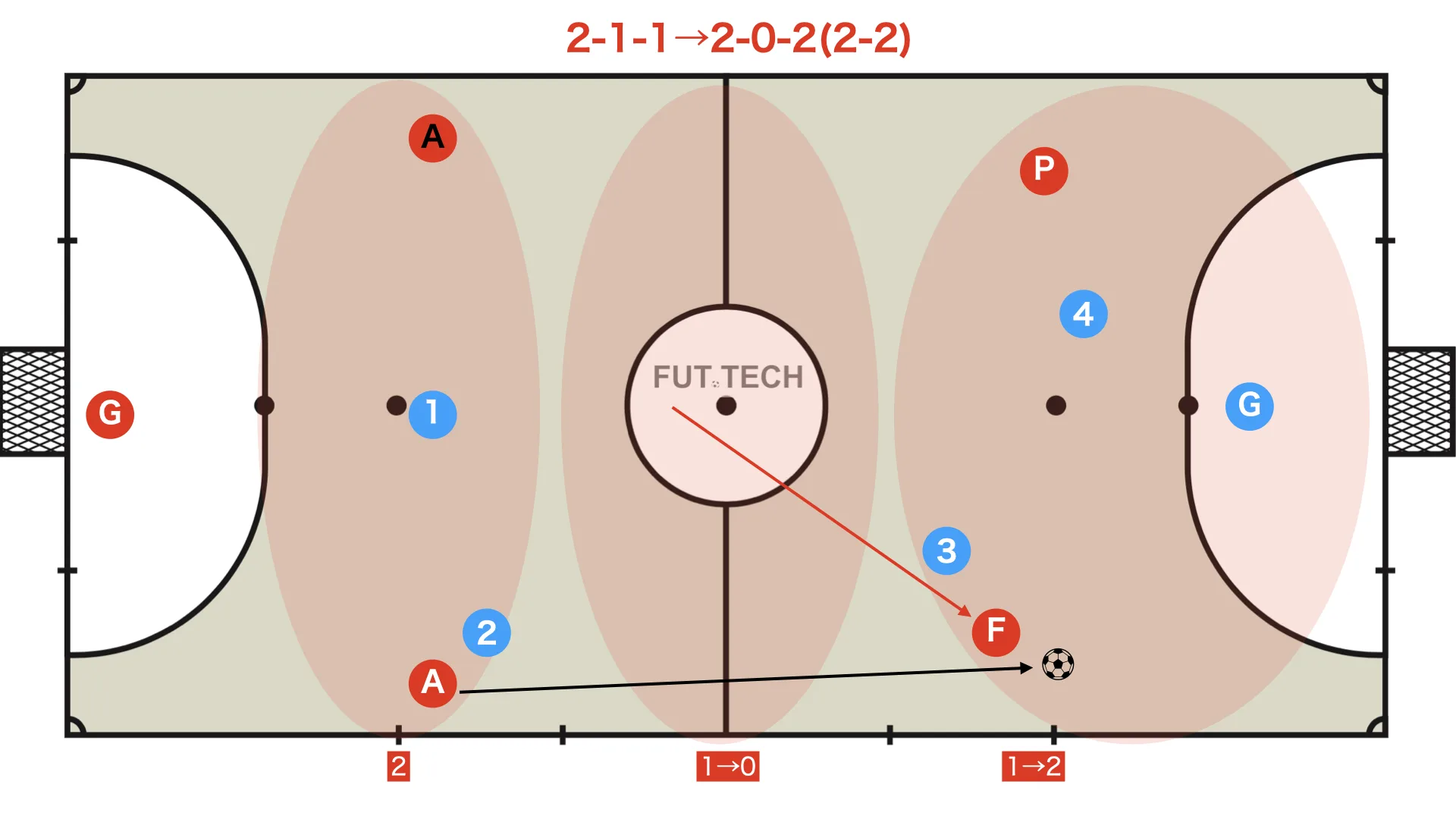
If the second-line player in the 2-1-1 breaks into the third line, the shape changes into 2-0-2 (2-2).
Unlike a 2-0-2 with two pivots threatening with their backs to goal, this player receives facing forward.
Even though the body orientation is different, in positional terms it is still a 2-0-2.
This whole sequence of play up to this point is called a long parallel.
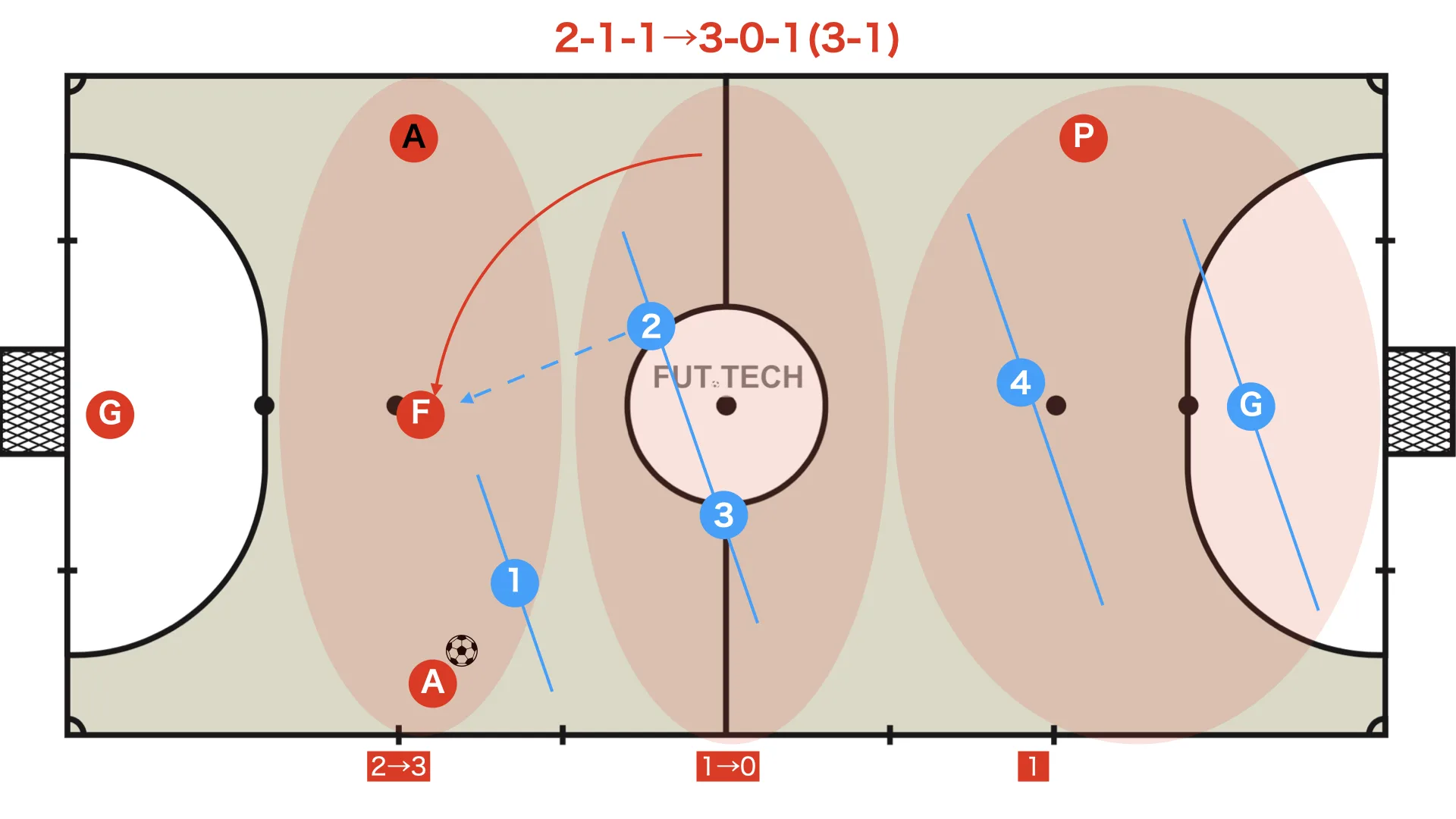
From a 2-1-1 shape, if the second-line player drops a line, the team can form a 3-0-1 (3-1).
This tactic was once part of the play model used by Shriker Osaka under coach Kogure.
If the pivot then makes a line cut from the 3-1, the shape changes into a quatro zero (4-0).
関連記事
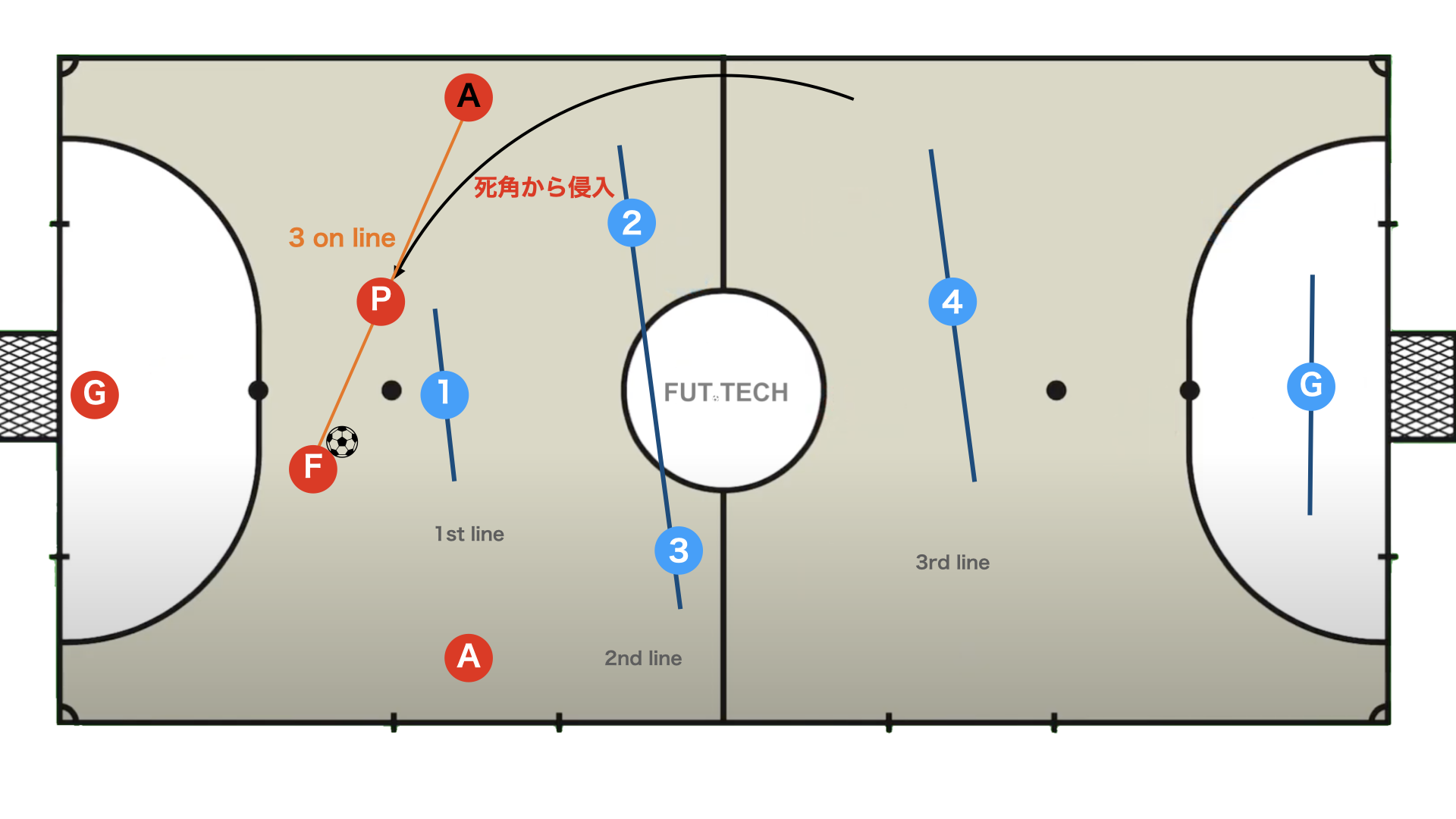
The Tactical Intent of the Line Cut: Three Advantages and Disadvantages
A tactical explanation of the line cut in futsal. This article organizes its definition, three advan…
続きを読む →