Developing a New Tactic: 1-3 Fixo Isolation and the Goalkeeper Joining the Attack
Published: 2021.03.06Updated: 2026.05.03
Do you think, "Isn't fixo isolation just a limited tactic that carries a lot of risk?"
The 1-3 is a structure with one fixo at the back and three players higher up. When it is used with the right shared understanding, it becomes a highly dangerous and versatile tactic. The Russian national team has used it as well, and when combined with the goalkeeper joining the attack, it can create situations that are very difficult for the opposing defence to solve.
This article explains in detail the tactical intent of the 1-3, how fixo isolation works, and the specific attacking patterns it creates.
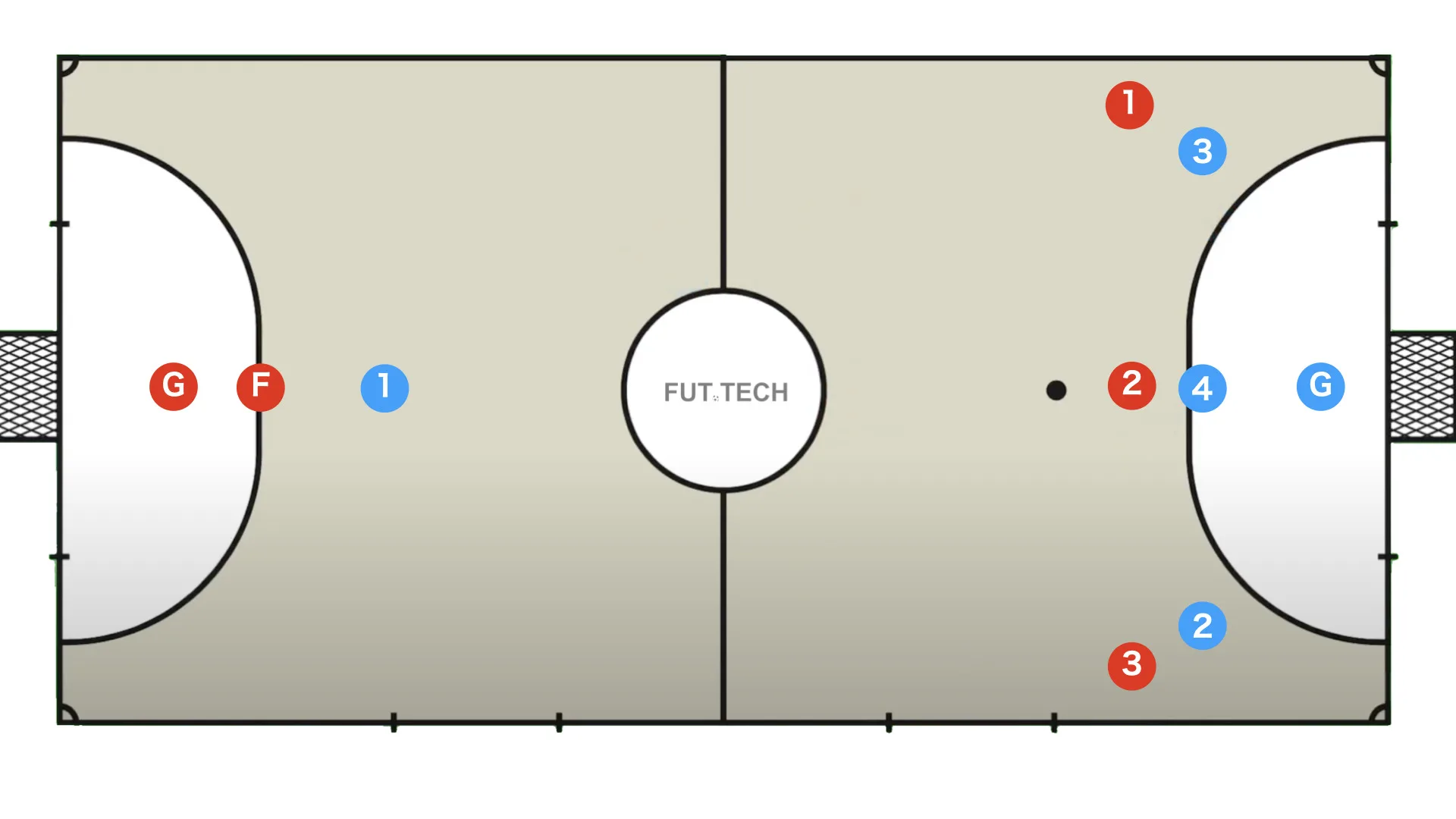
The 1-3 (fixo isolation) is a structure with one fixo positioned deeper and three players positioned higher up.
The tactical intent of the 1-3 (fixo isolation) mainly consists of the following five points:
- forcing the opponent into man-to-man defending
- beating man-to-man defending through the qualitative superiority created by the isolated fixo
- using the huge space between the lines
- progressing up the court through passes into the pivot from the fixo (press resistance)
- creating local numerical superiority through the goalkeeper joining the attack
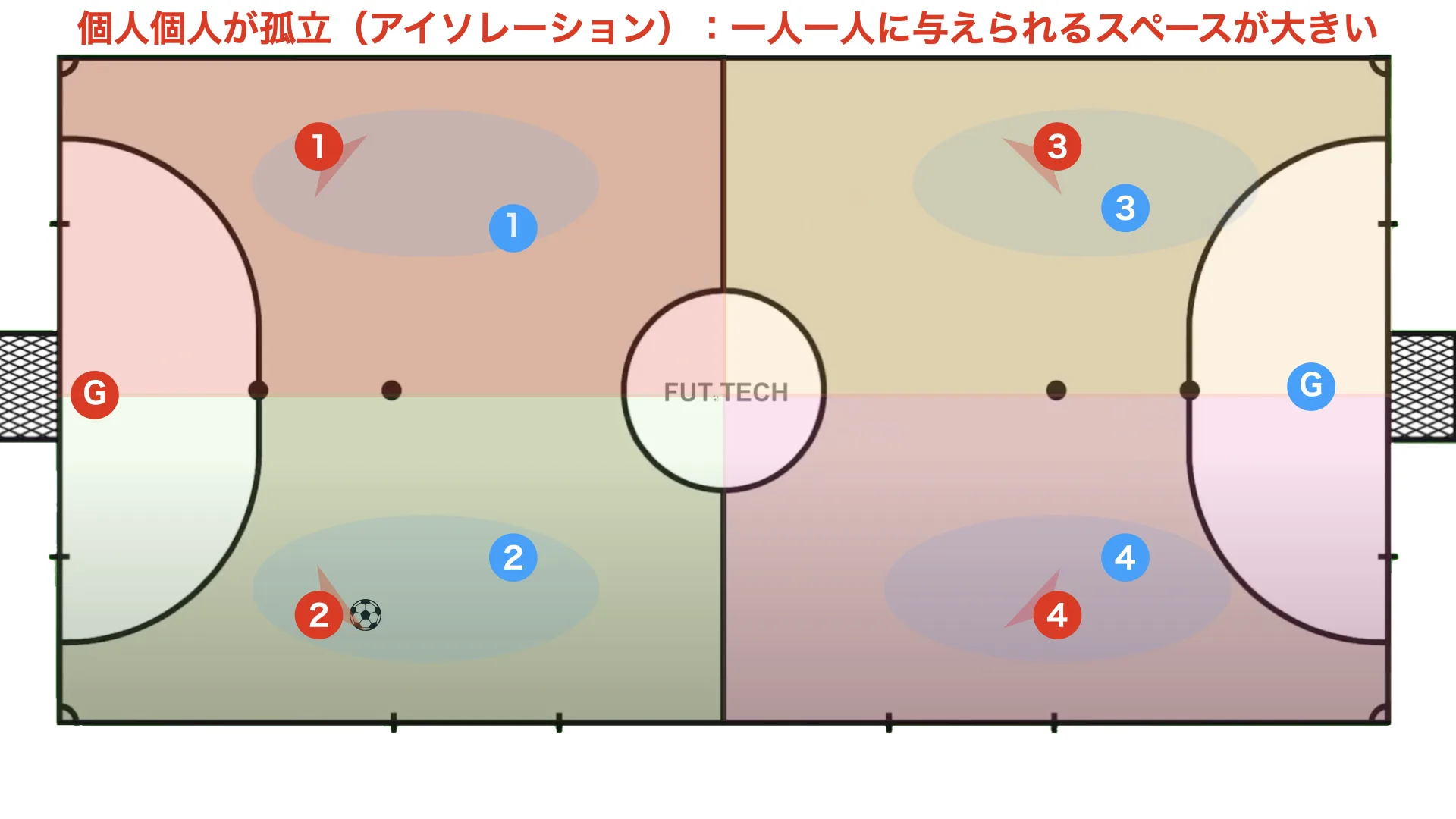
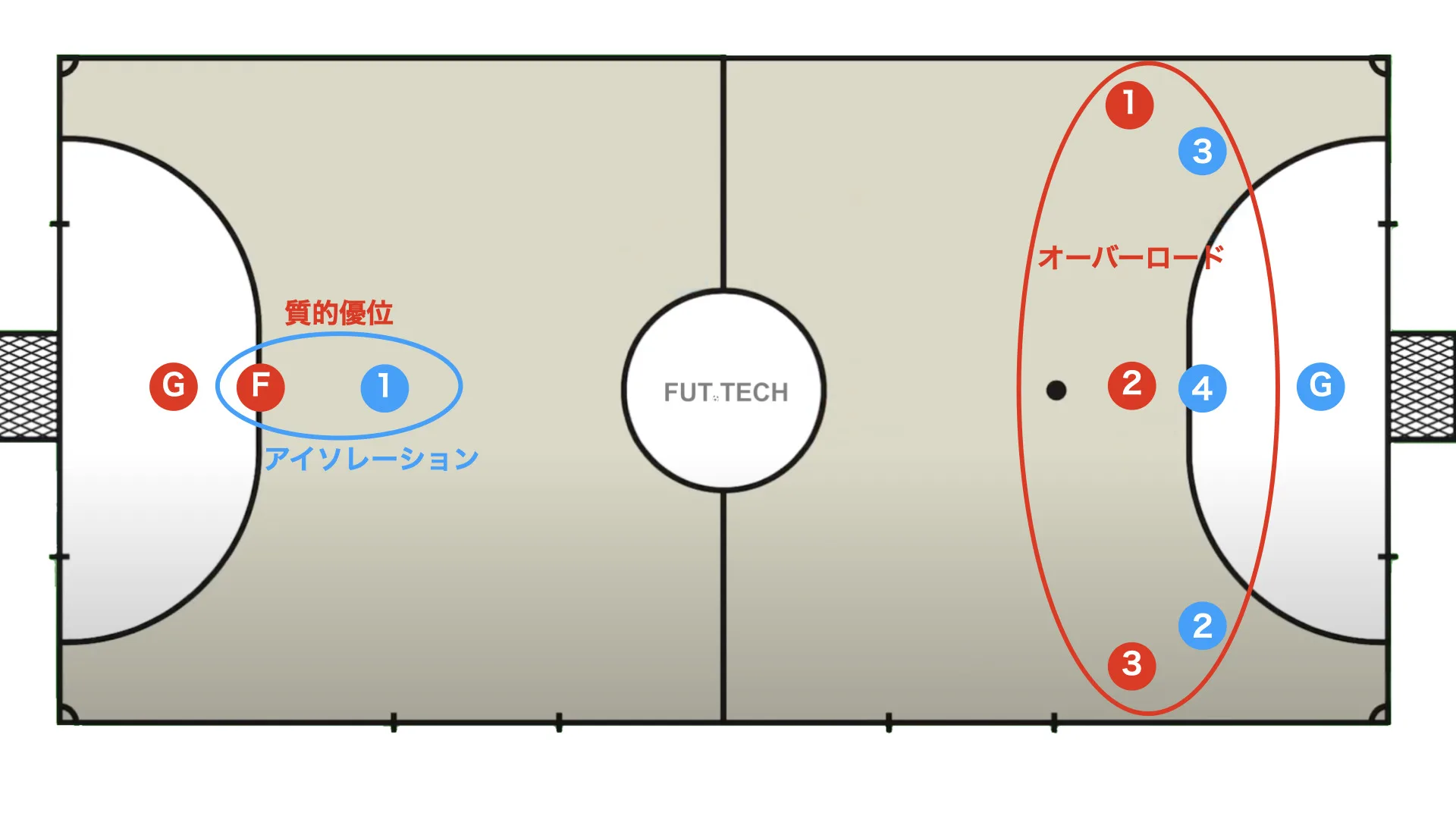
The 1-3 setup isolates the fixo at the back while concentrating the pivots higher up in an overload. It is a tactic that places a player with both dribbling technique and speed at fixo and uses that player's individual quality to outperform the opponent (qualitative superiority) and beat the defence.
関連記事
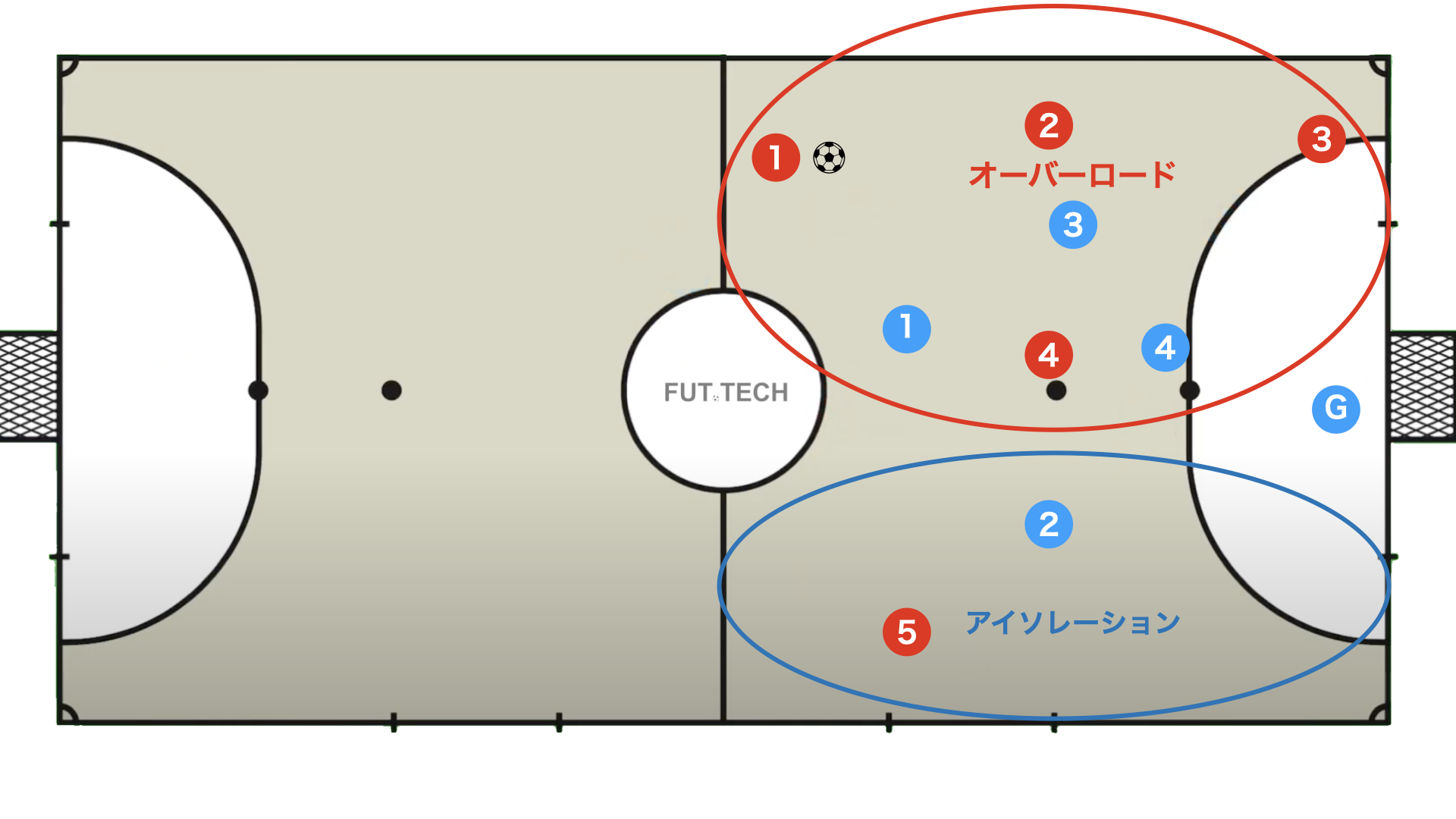
Futsal Tactics: Overload and Isolation
An explanation of two key futsal concepts: overload and isolation. This article clarifies the differ…
続きを読む →Because an isolation tactic depends on having a quality advantage over the player you are matched up against, it is important to identify the weak matchup in advance and prepare to target that player. Doing so increases your chances of winning the duel.
By rotating through 3-1 or 4-0 structures, you can force a defensive switch, and the moment the ideal matchup appears, everyone except the fixo vacates their positions to move into the 1-3.
If the opponent is basically defending man-to-man and never switches marks at all, use blocks and screens to force the switch anyway.
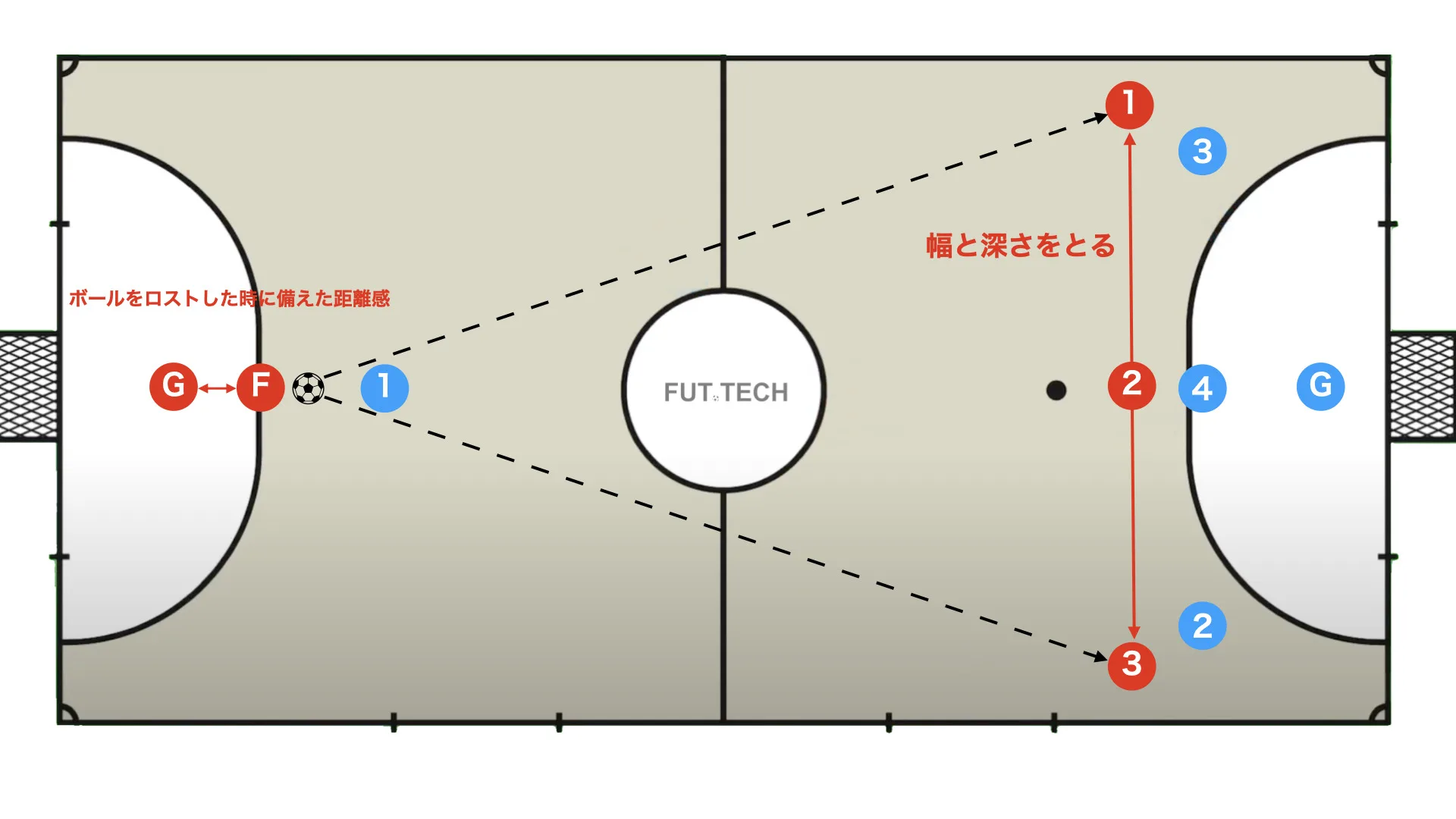
If you want progression through passes into the pivot to be one of the aims of this structure, you should place as many true pivots as possible in the front line.
Ideally, all three front players are pivots. If you only have two pivots, it is best to place them on both sides. If you have only one, it is best to place that pivot on the side of the fixo's stronger foot.
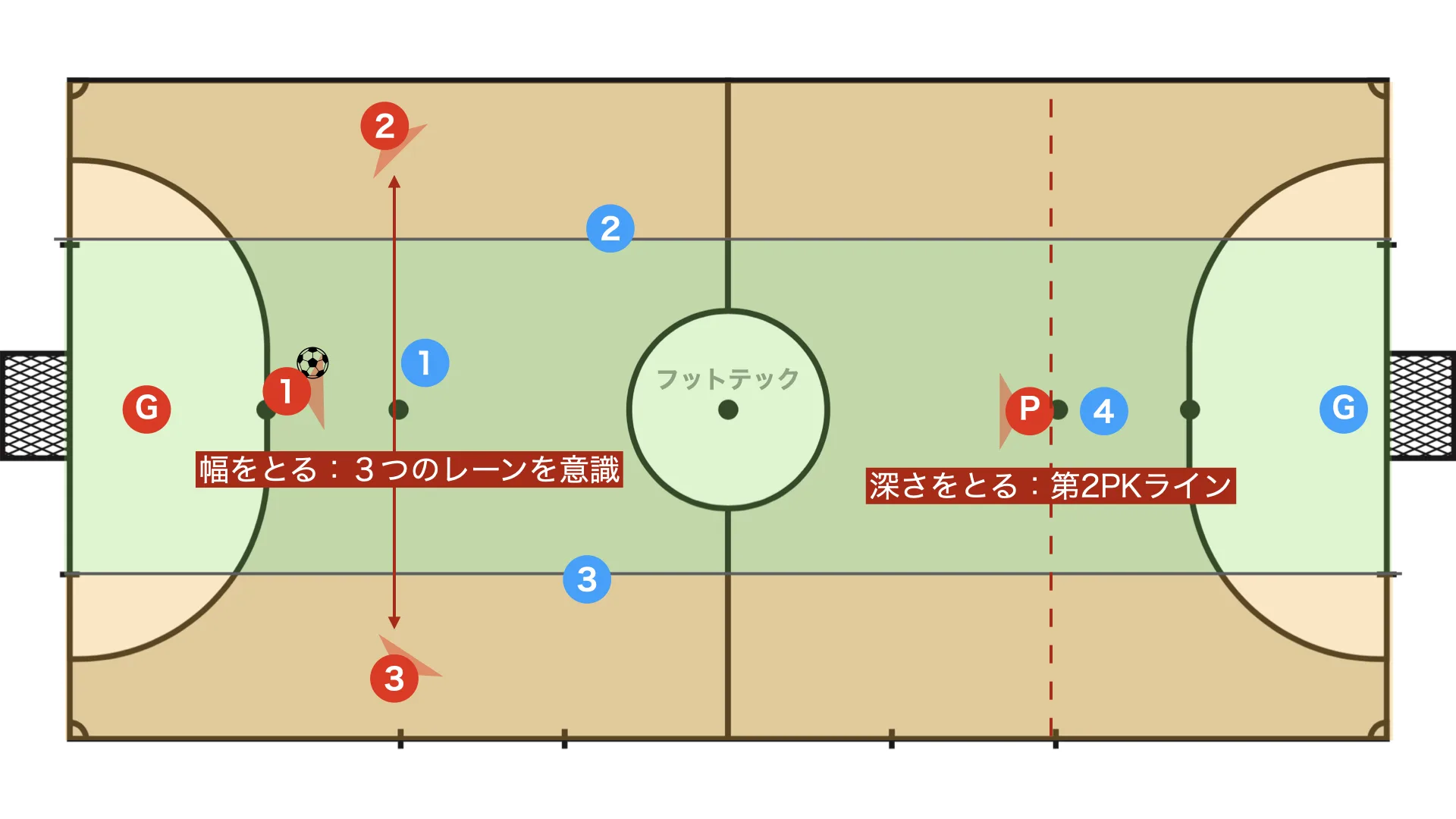
The side pivots should take proper width and be conscious of the angle that makes the passing lane from the fixo easier to create.
First take depth, then as the pass is played, drop to receive around the second-penalty-mark line.
If they try to receive while standing still, the opposing defender is more likely to intercept, leading to a dangerous counterattack.
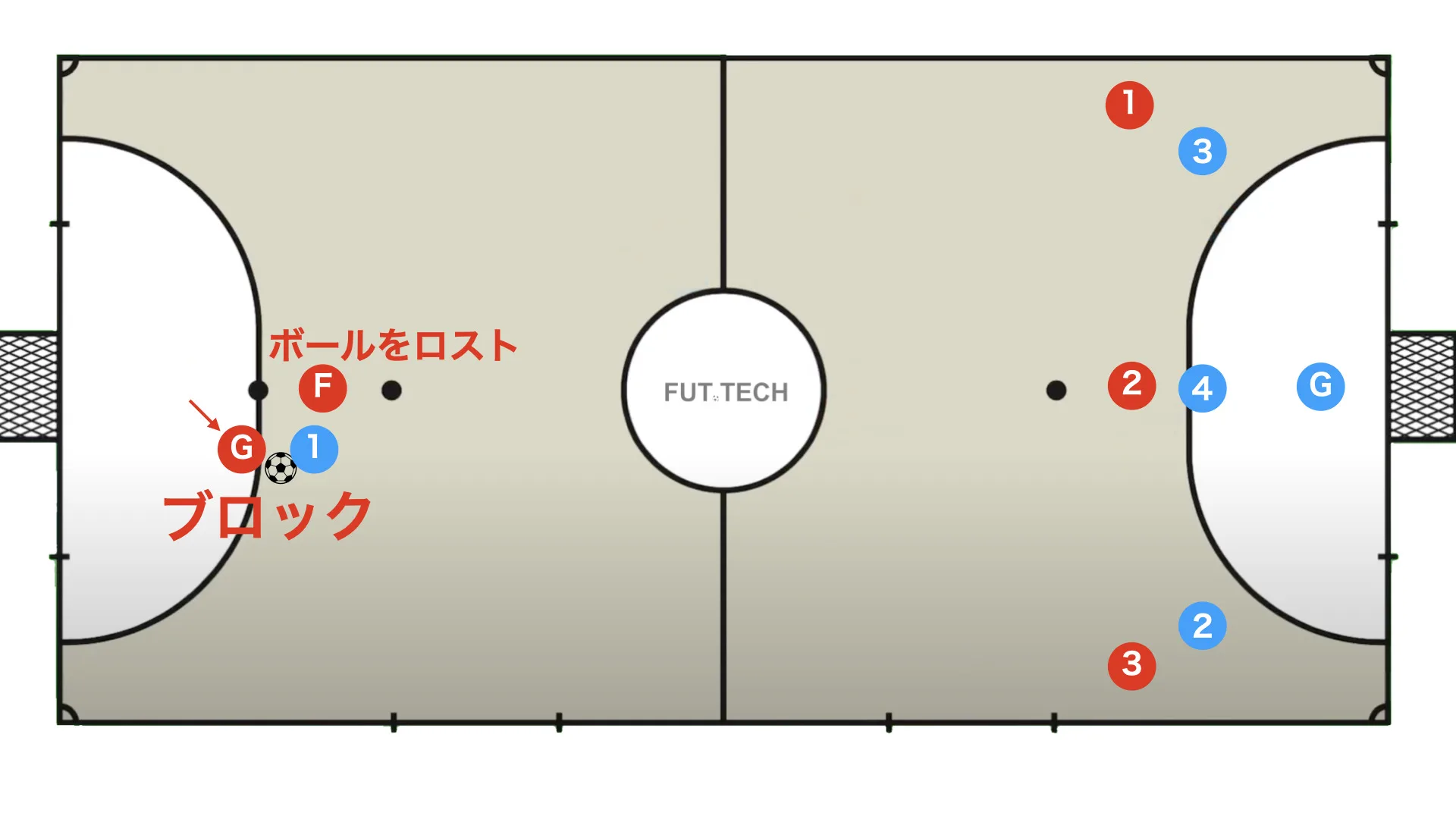
The goalkeeper should anticipate the possibility of the fixo losing the ball and be ready to step in and block immediately.
With that awareness of risk management alone, the idea that fixo isolation is simply a "risky tactic" largely disappears.
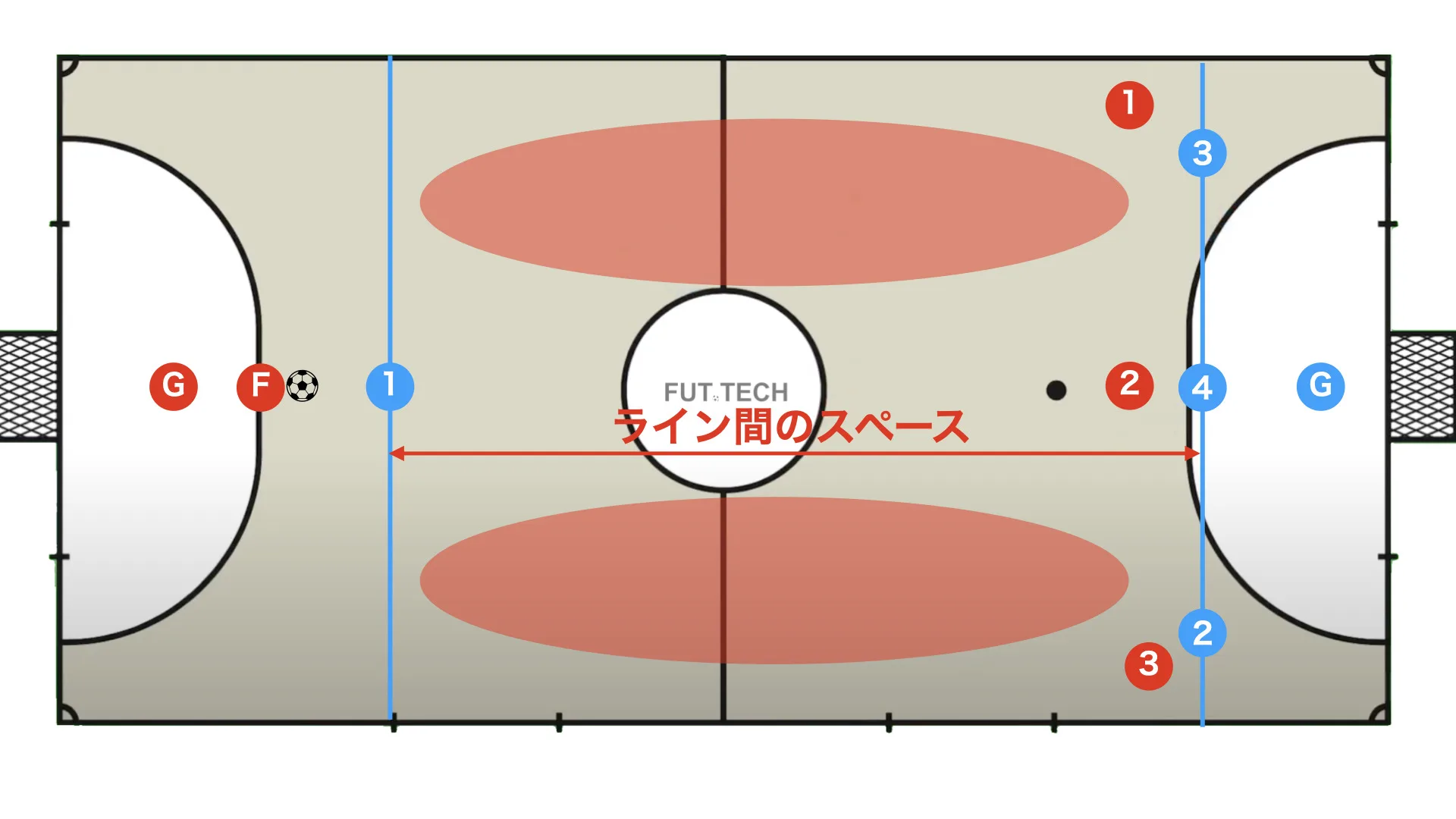
Most teams respond to the 1-3 with man-to-man defending, so if the front players take depth as shown above, a huge space opens up between the opponent's 1st line and 2nd line.
When using this tactic, it is extremely important to make effective use of that space.
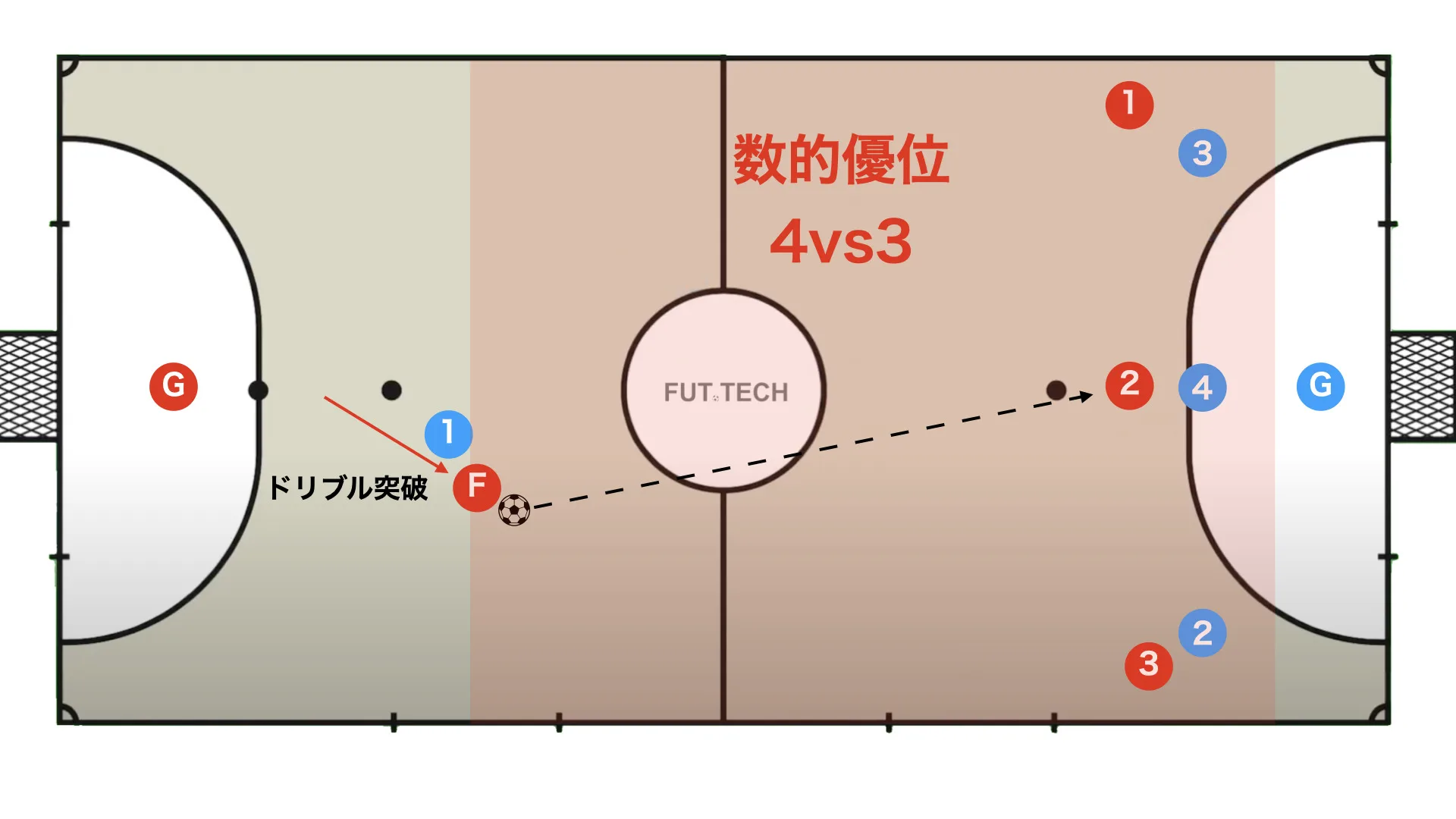
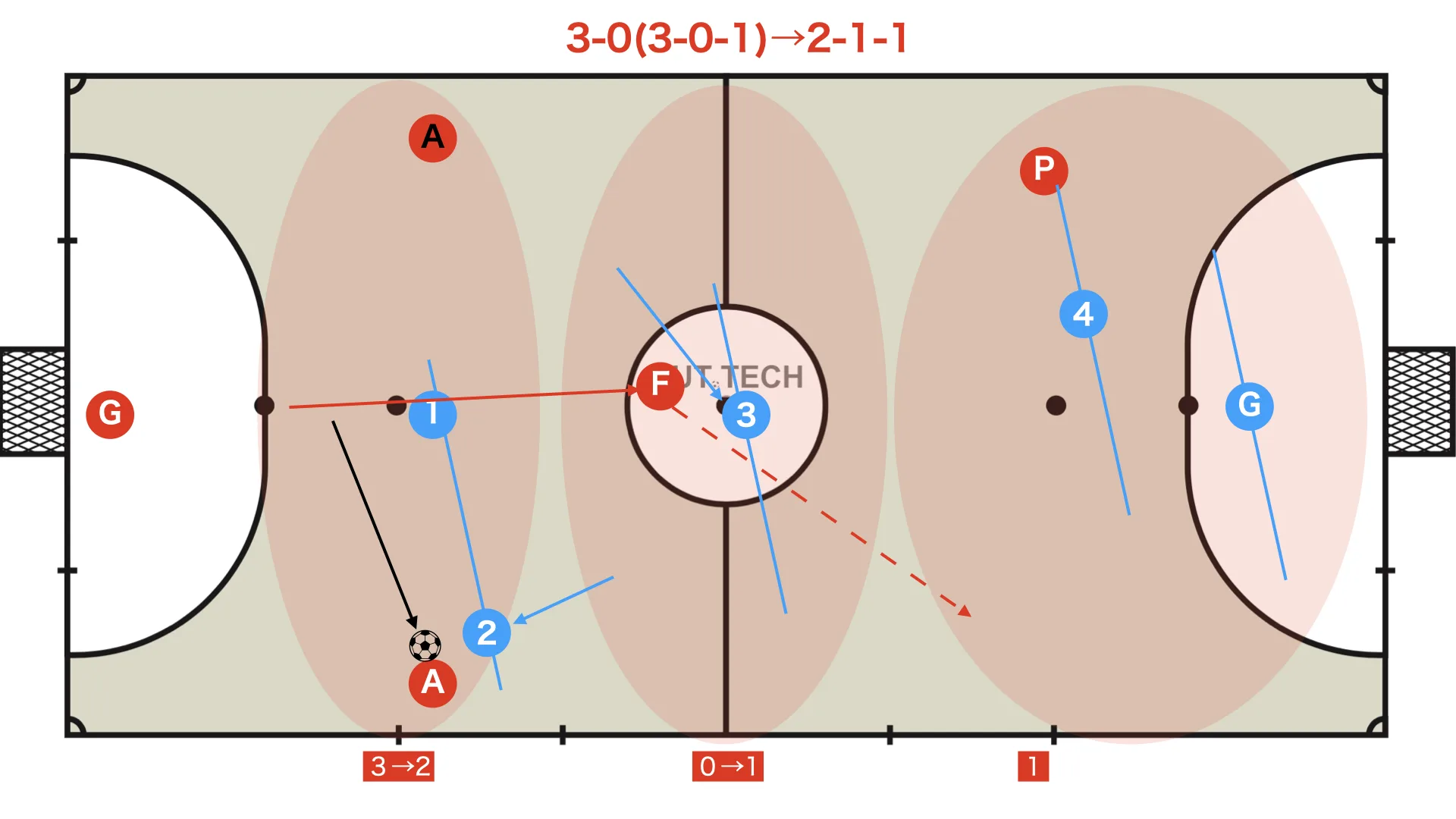
This is the most common opening in fixo isolation.
Because there is space between the lines, long touches out of the feet that take advantage of pace are highly effective.
If the fixo can leave the opposing defender behind, they should drive into the opponent's half and finish the attack in the same way as a 4v3 transition or a red-card numerical-up situation.
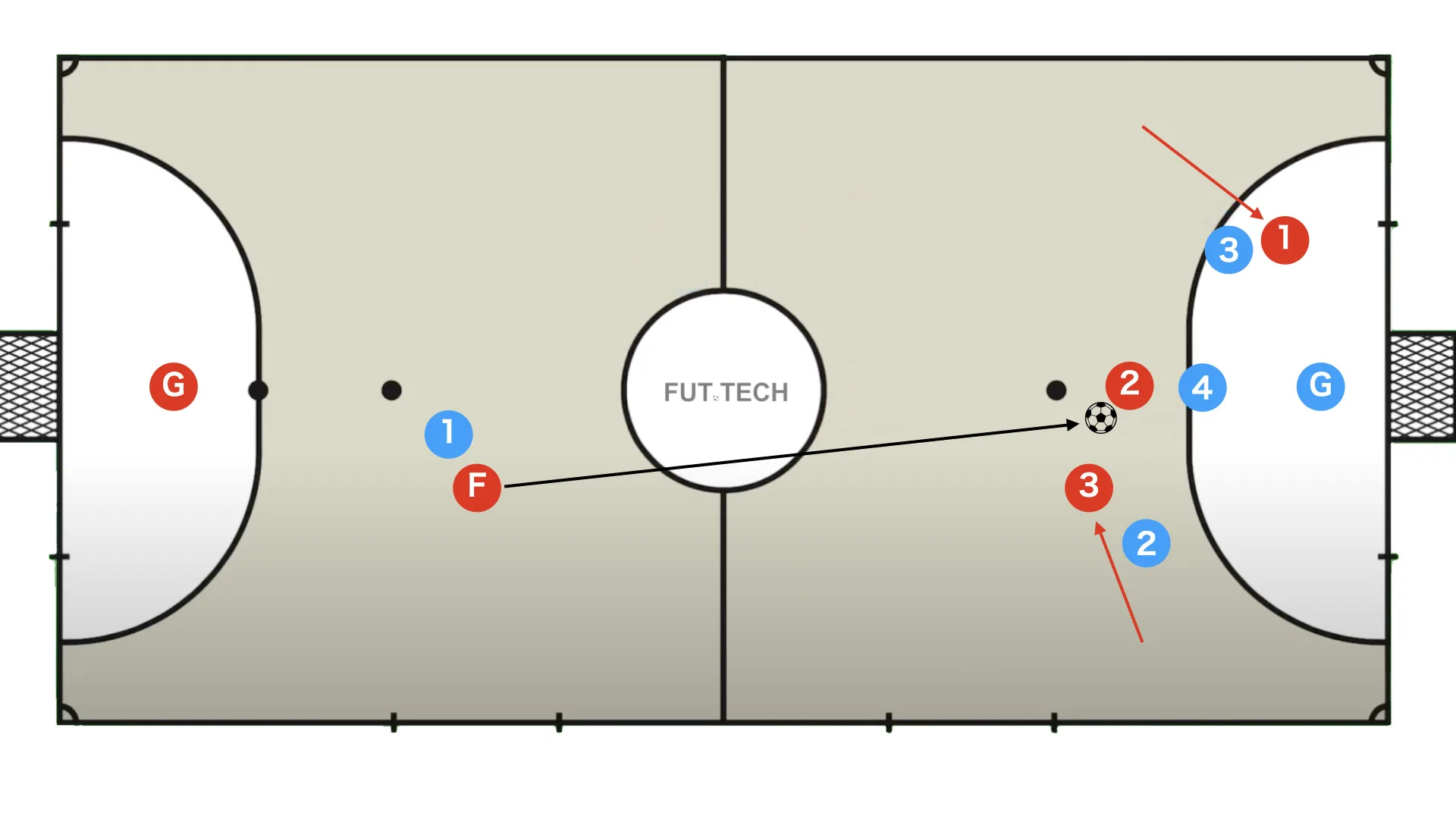
If the defender who was beaten can recover in time, choose the pass into the pivot.
Reposition things so that a player who can hold off pressure is in the centre as much as possible, then play into the pivot.
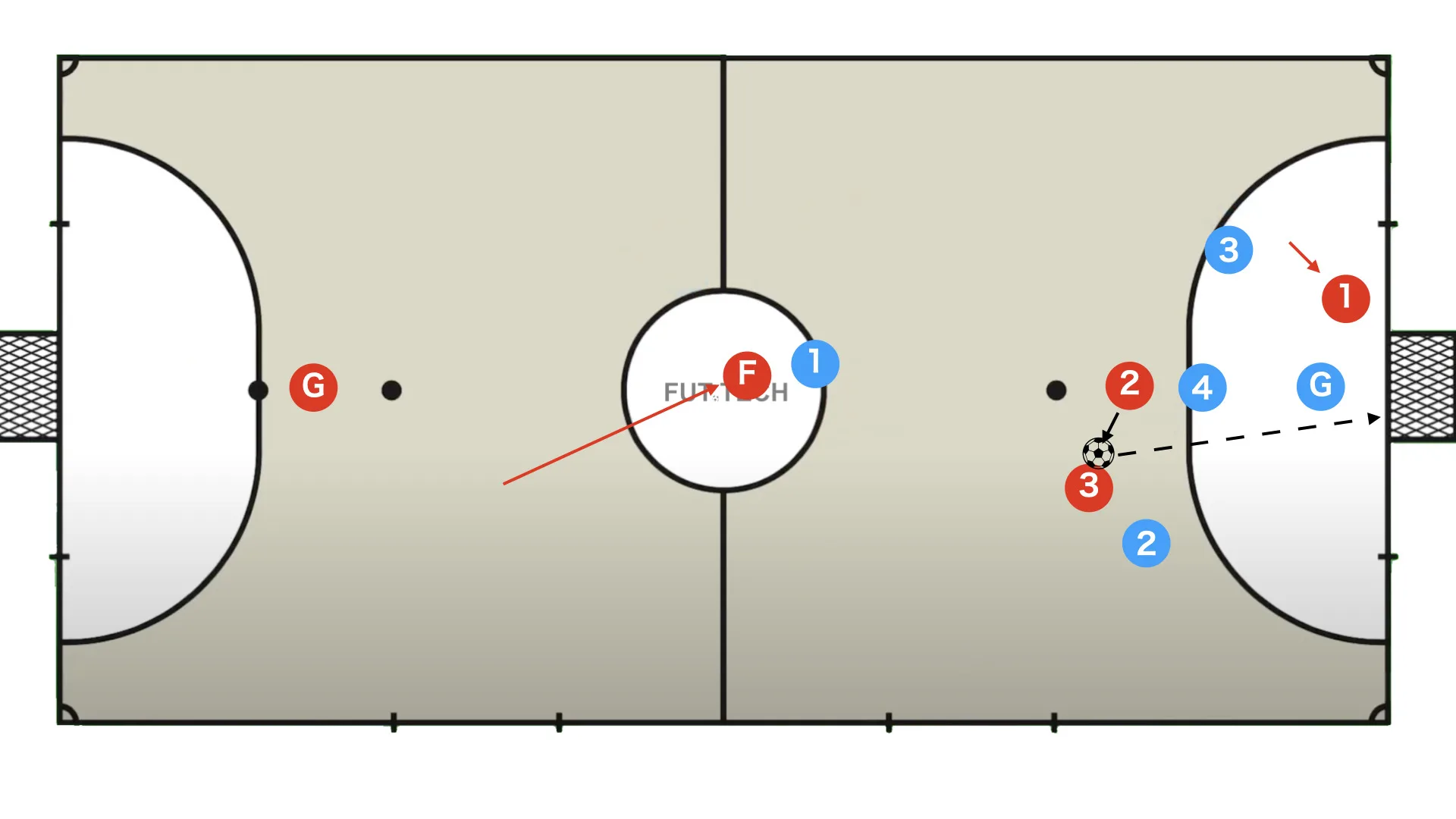
The fixo stays deeper in the opponent's half as part of the risk management, while the front three attack as a unit with the finishing triangle in mind and complete the move by themselves.
関連記事
A Famous Set Play: Pivot Feed and Indirect Block Starting from Fixo Isolation
An explanation of the famous futsal set play that uses fixo isolation to create a pivot feed and an …
続きを読む →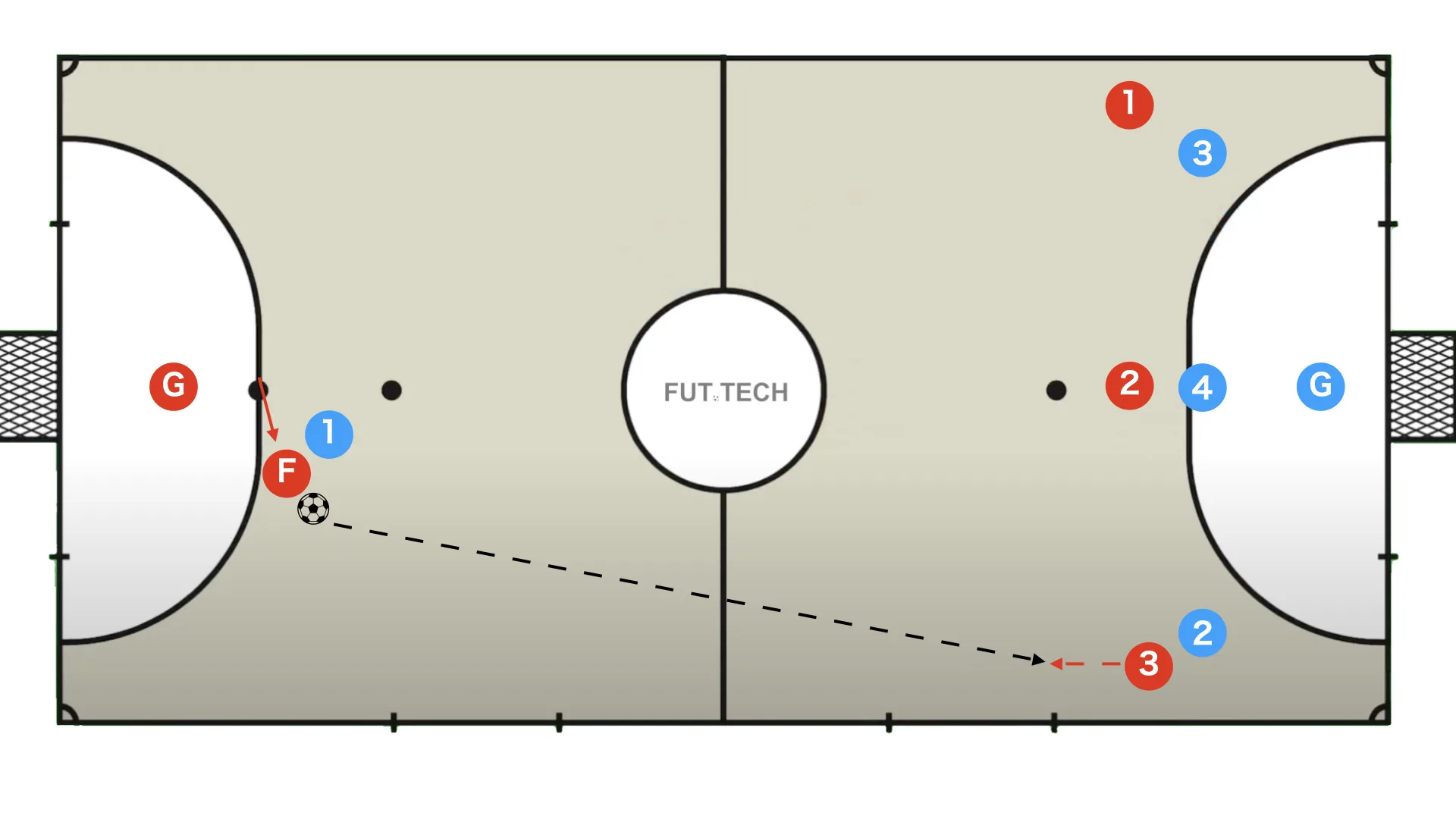
If it does not look possible to beat the defender completely, use the dribble to shift sideways and look for the pass into the pivot.
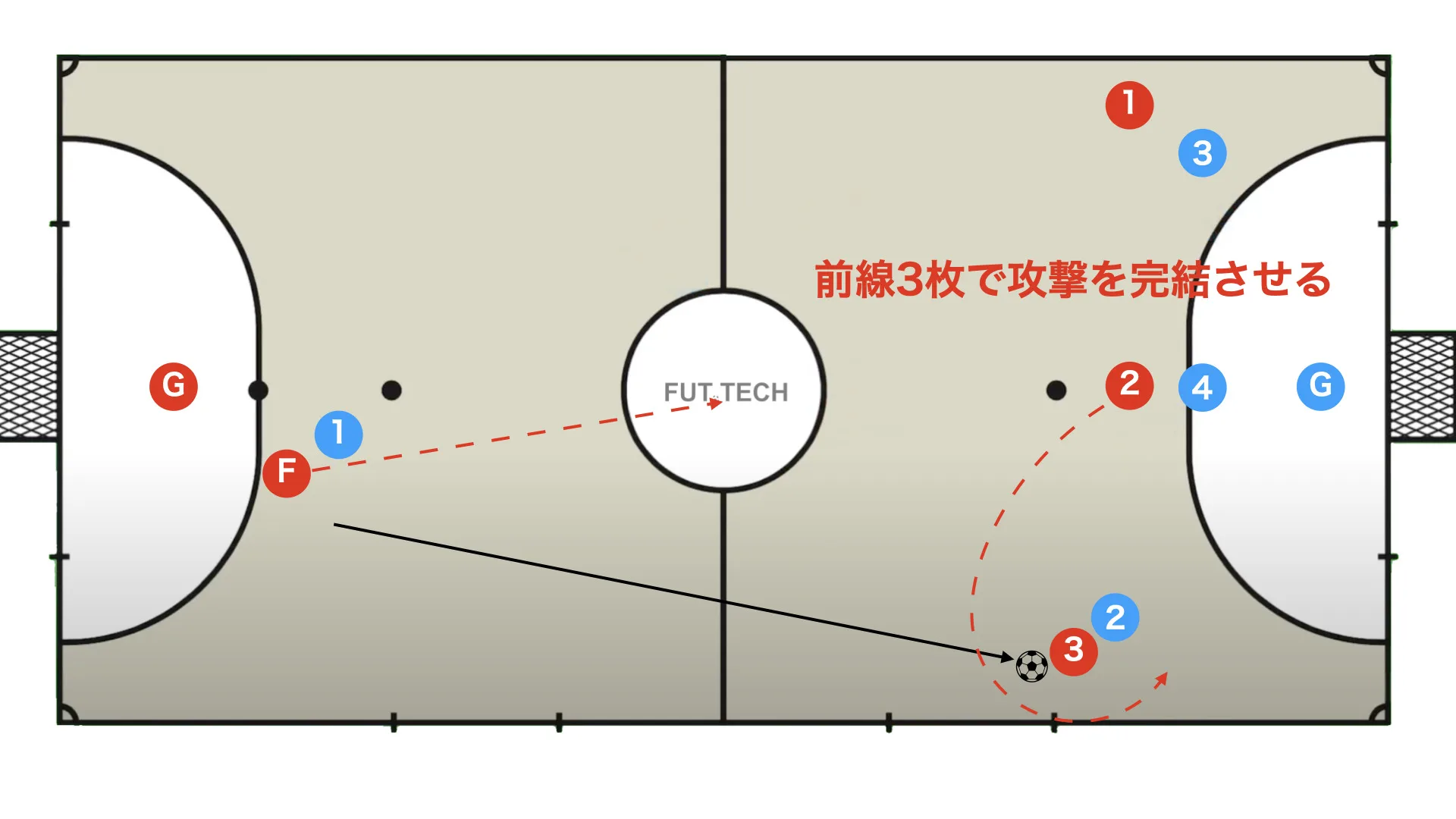
As before, the front three complete the attack by themselves.
There are countless variations from here, so the choice depends on the players' qualities and the team's play model.
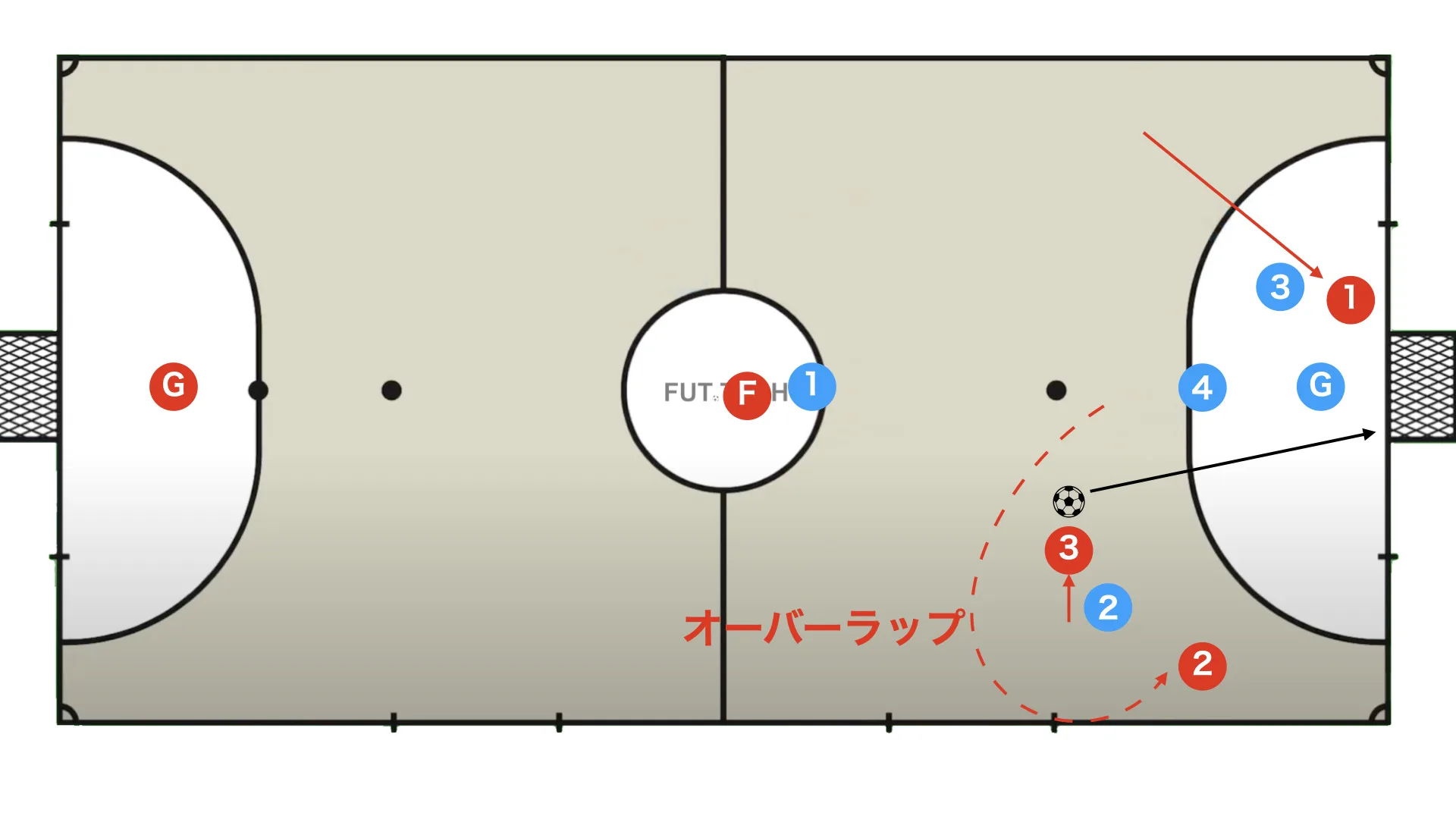
The standard pattern is to overlap around the pivot and create the decision for the defence between the pivot turning and the pass to the overlapping runner.
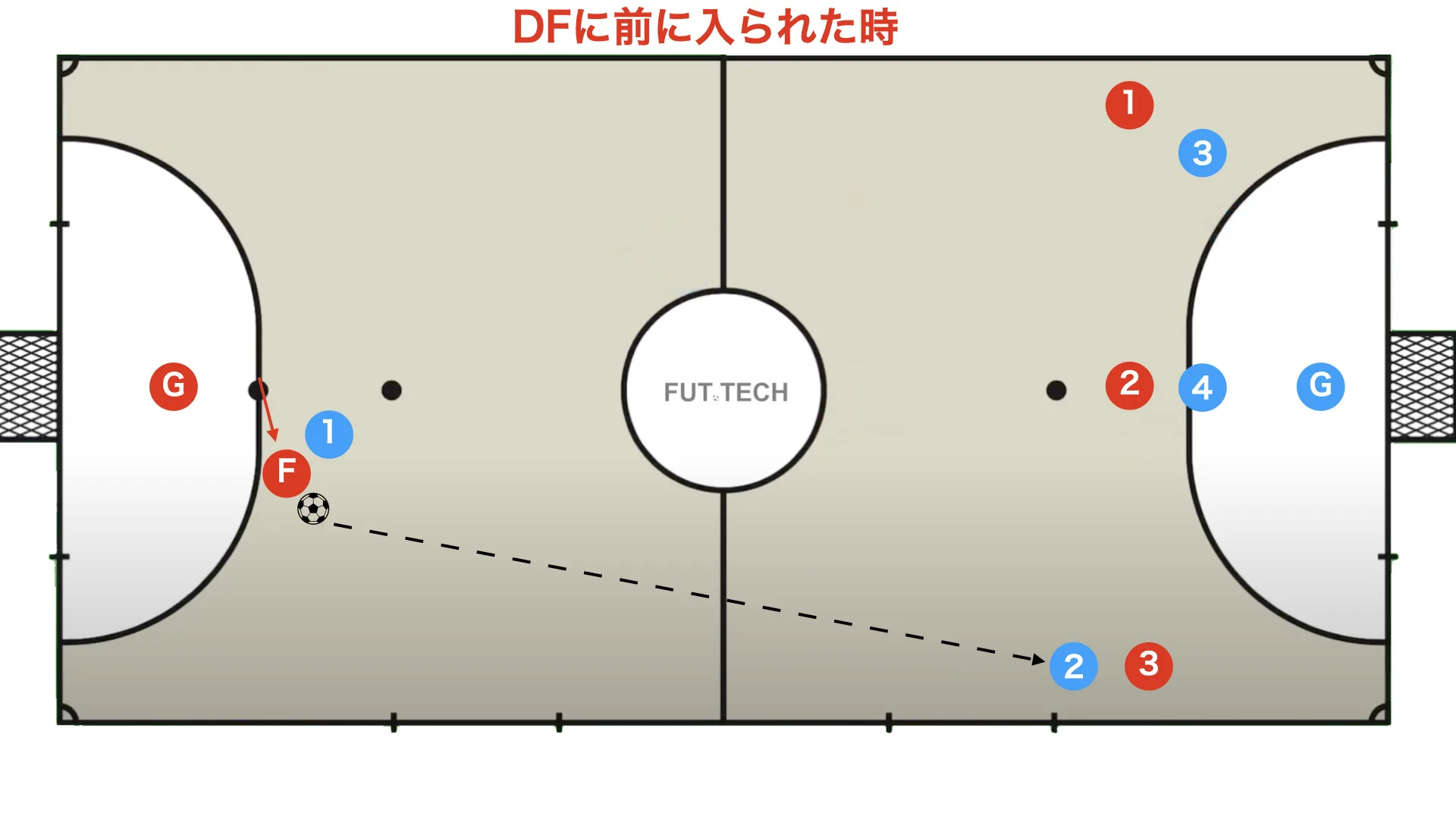
If progression through passes into the pivot becomes recognized as one of the main threats in this 1-3 tactic, then naturally the opponent will prepare a countermeasure.
The two main ways to stop that progression are:
- stepping in front of the pivot before the pass is played
- intercepting the pass
An interception is the most dangerous outcome, because it gives the opponent huge space and numerical superiority, so it must be guarded against above all else.
If the pass is intercepted, the pivot should stop the attack early with a professional foul. If that is not possible, the team should defend it the way it would defend a 1v2 transition.
Next, here is how to deal with the defender stepping in front of the pivot before the pass is played.
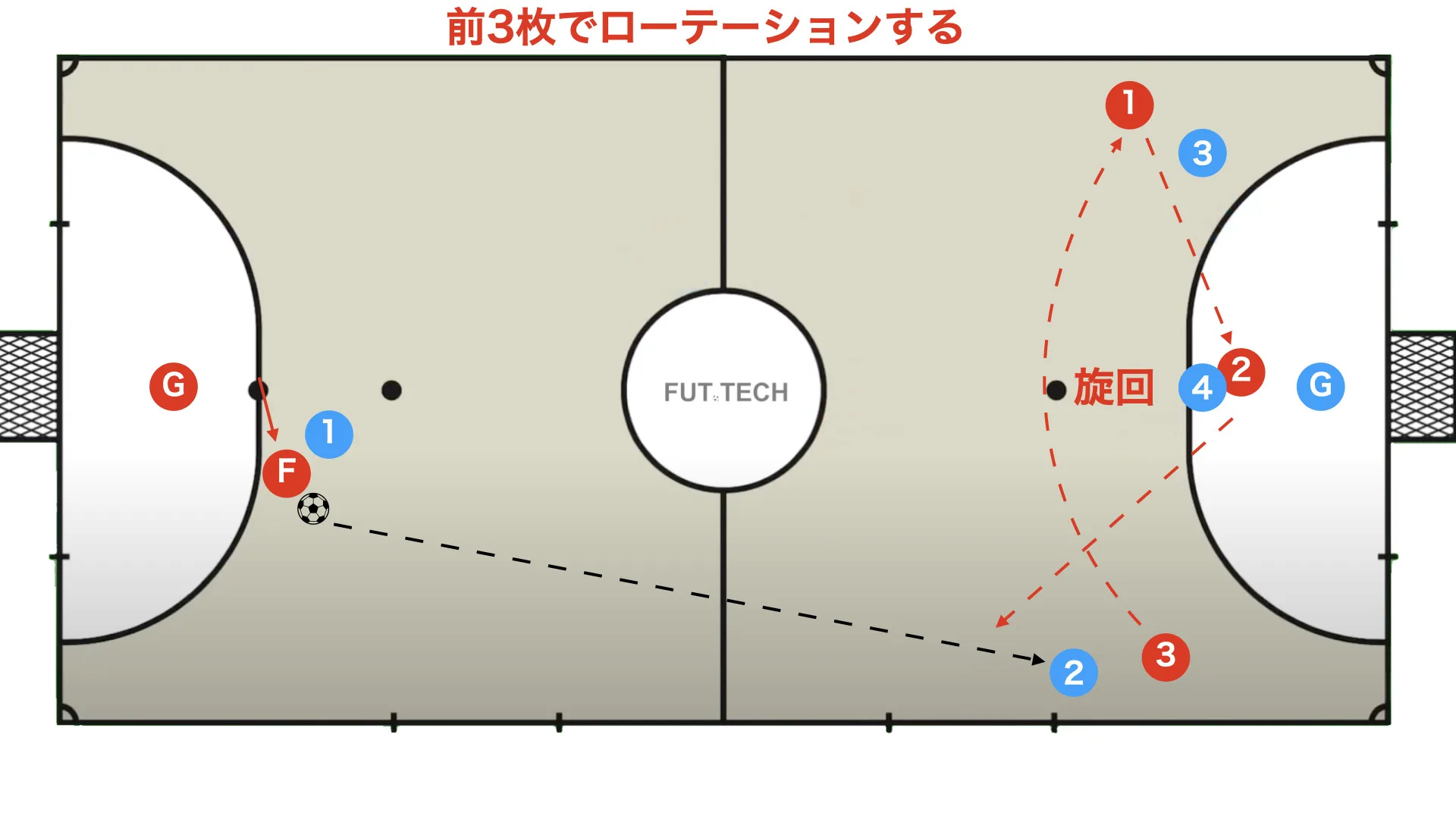
Rotating the front three can confuse the opponent's marking.
For defenders marking man-to-man, having players rotate behind them is extremely troublesome. They become wary of being beaten by a backdoor movement, which makes it harder for them to step in front of the pivot.
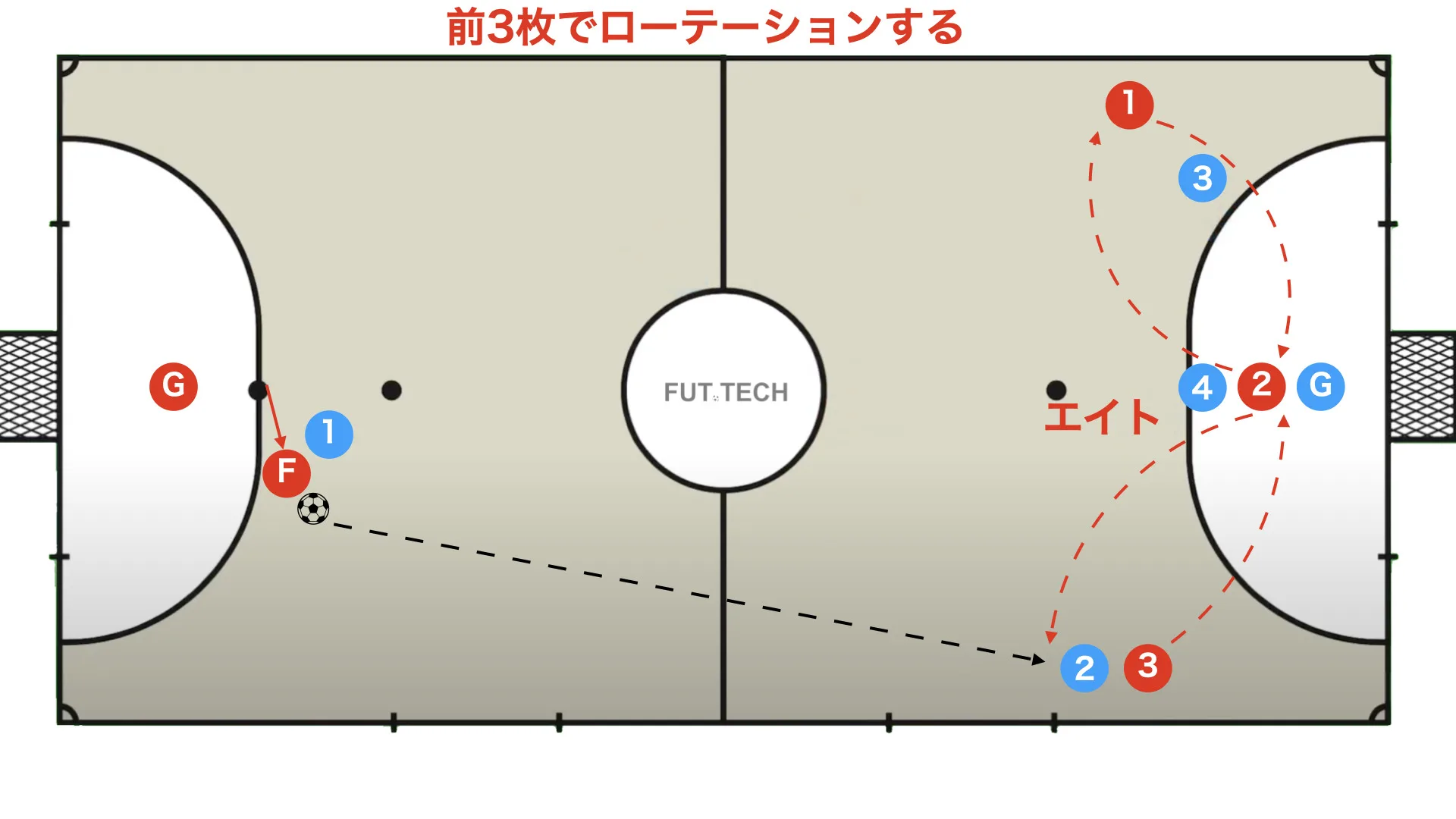
There are several ways to rotate, so the team needs to decide them in advance.
The basic thinking is the same as the back three in a 3-1 system, but the big difference is that all three players rotate off the ball.
Broadly speaking, there are two types: a circular rotation where all three move in the same direction (clockwise or counterclockwise), and an eight-pattern rotation where the player in the centre lane and the player in the side lane switch in turn.
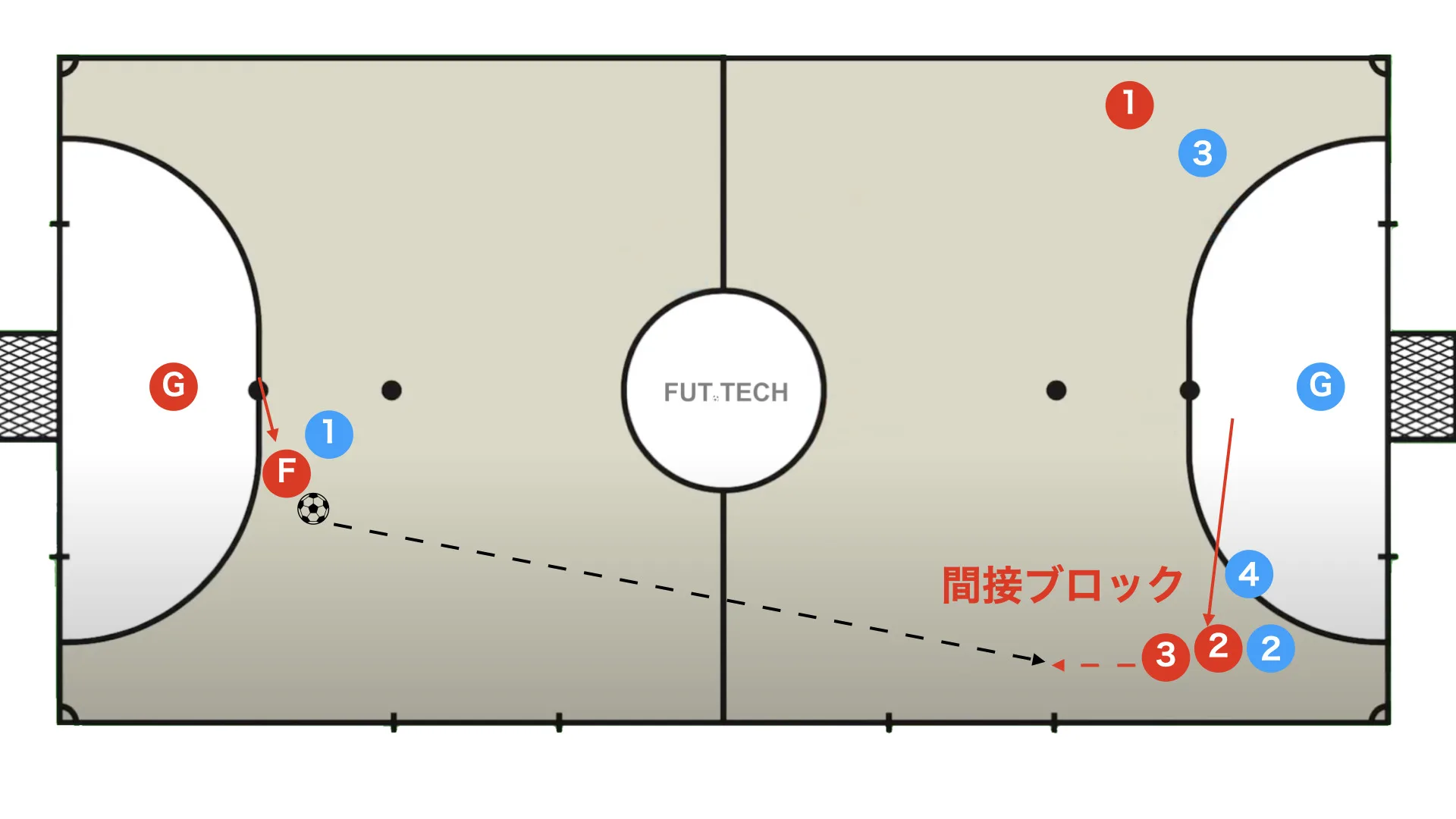
An indirect block is a block used to support a teammate by blocking the marker of an off-ball teammate.
As shown above, using an indirect block on the marker of the side pivot makes it possible for that player to receive the ball freely.