Futsal Tactics: Overload and Isolation
Published: 2021.02.04Updated: 2026.05.03
If you think, "Isolation just means 1v1, right?" that is half right and half wrong.
Isolation is an important concept in futsal tactical design, and it does not simply refer to beating someone off the dribble. Once you clear up that misunderstanding, it becomes much easier to see why a team's attack gets stuck.
In this article, I will explain the definition of isolation and overload, the difference between them, and how to use them in real matches. Afterward, if you read it together with Strong Side and Weak Side, your understanding of how to use the flanks will deepen.
There is also a power-play tactic called "overload," but my impression is that many people do not know the term in the first place.
The conclusion is simple: overload and isolation are opposite concepts, and they are phenomena that always occur at the same time.
In other words, these two terms are two sides of the same coin, so they need to be understood together.
This time, I will explain overload and isolation, two tactics that are considered important not only in futsal but also in other ball sports such as football and basketball.
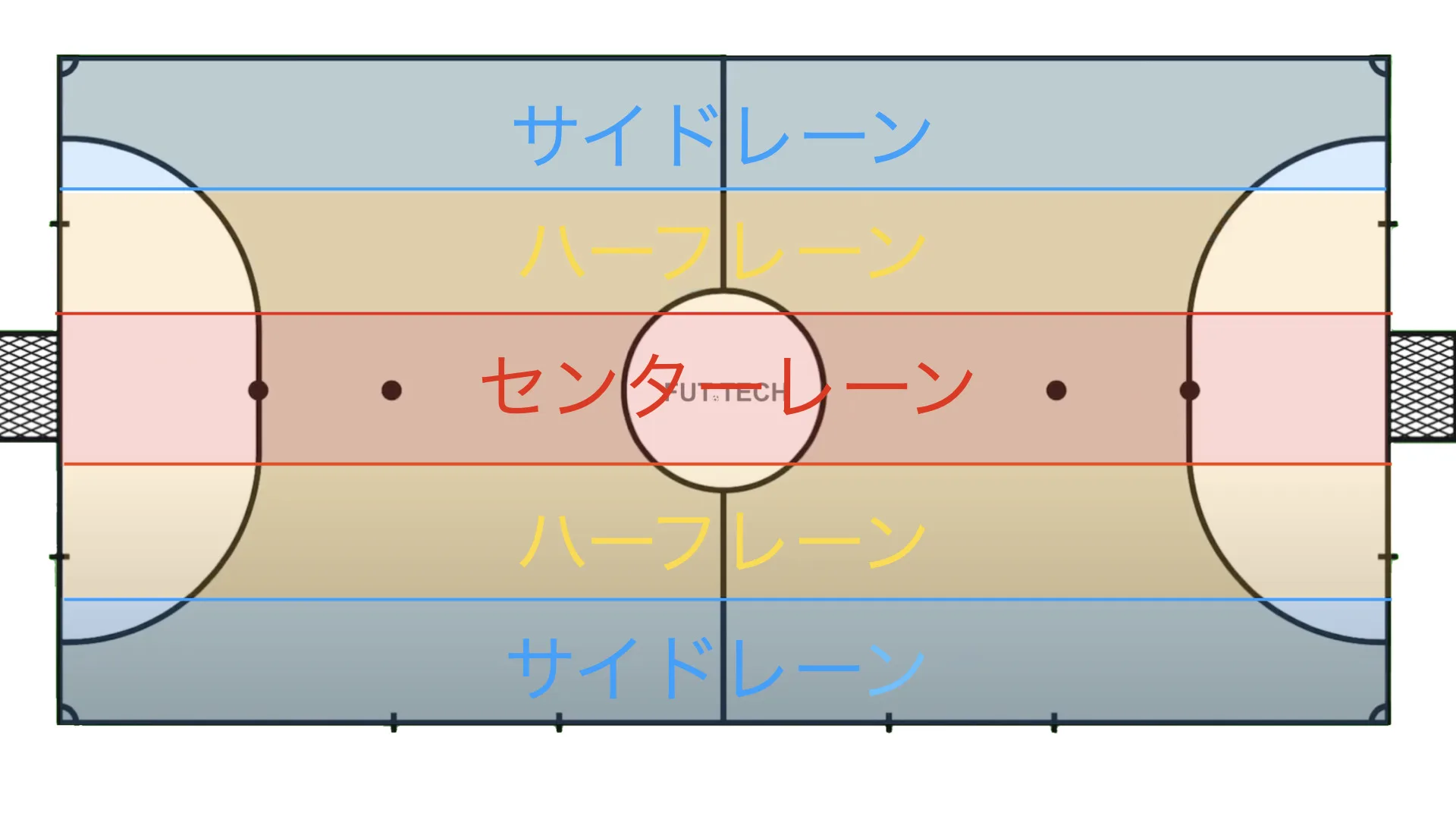
Overload means a state of excessive load, and in tactical terms it refers to concentrating players in a certain zone.
By contrast, isolation means a state of being isolated, and refers to leaving a player isolated in a certain zone.
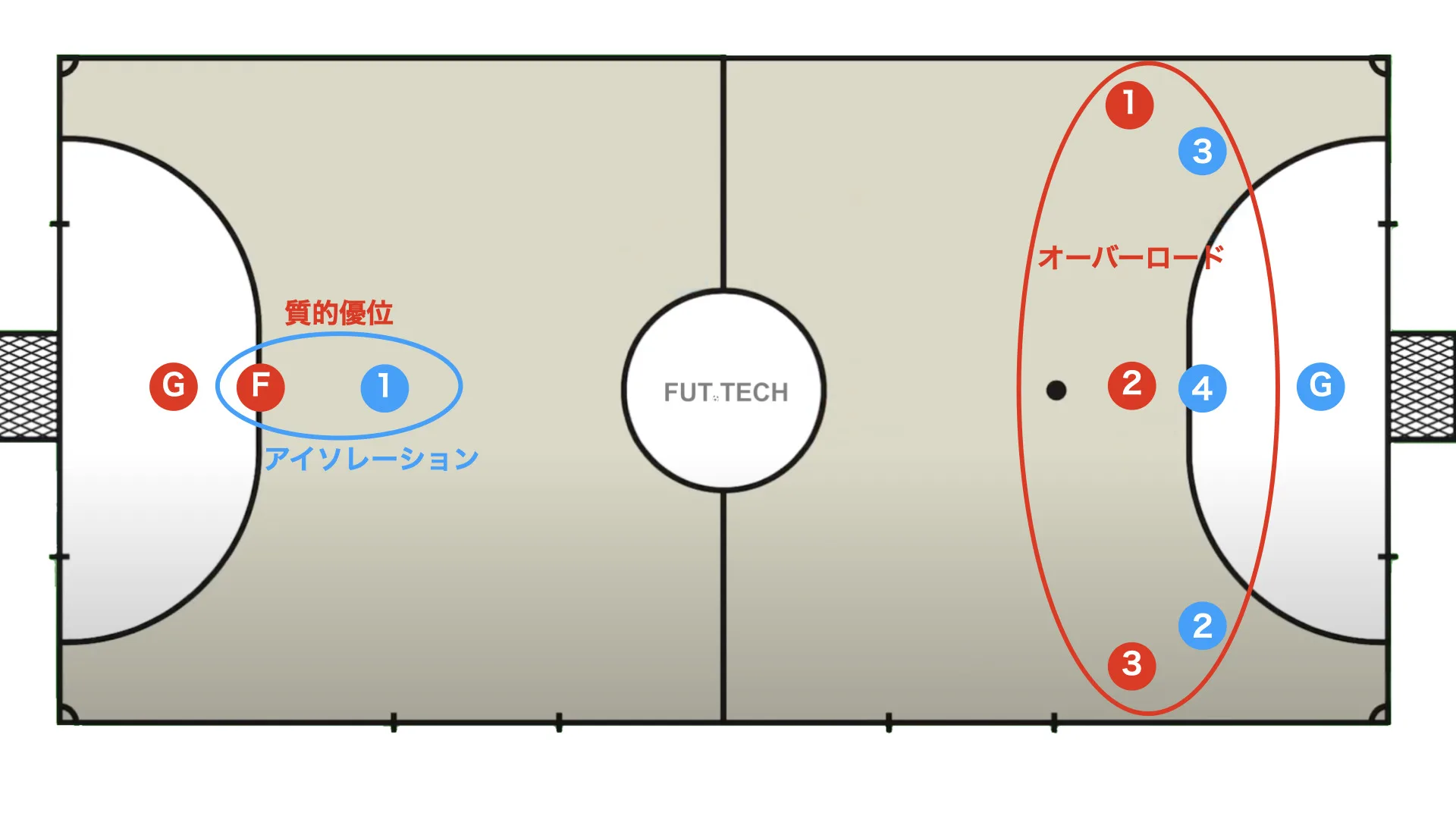
As shown above, overload and isolation occur simultaneously during a match, and depending on how you divide the zones, the way you interpret the overload and isolation in that moment can change.
In other words, whether a phase is seen as overload or isolation depends on the person looking at it.
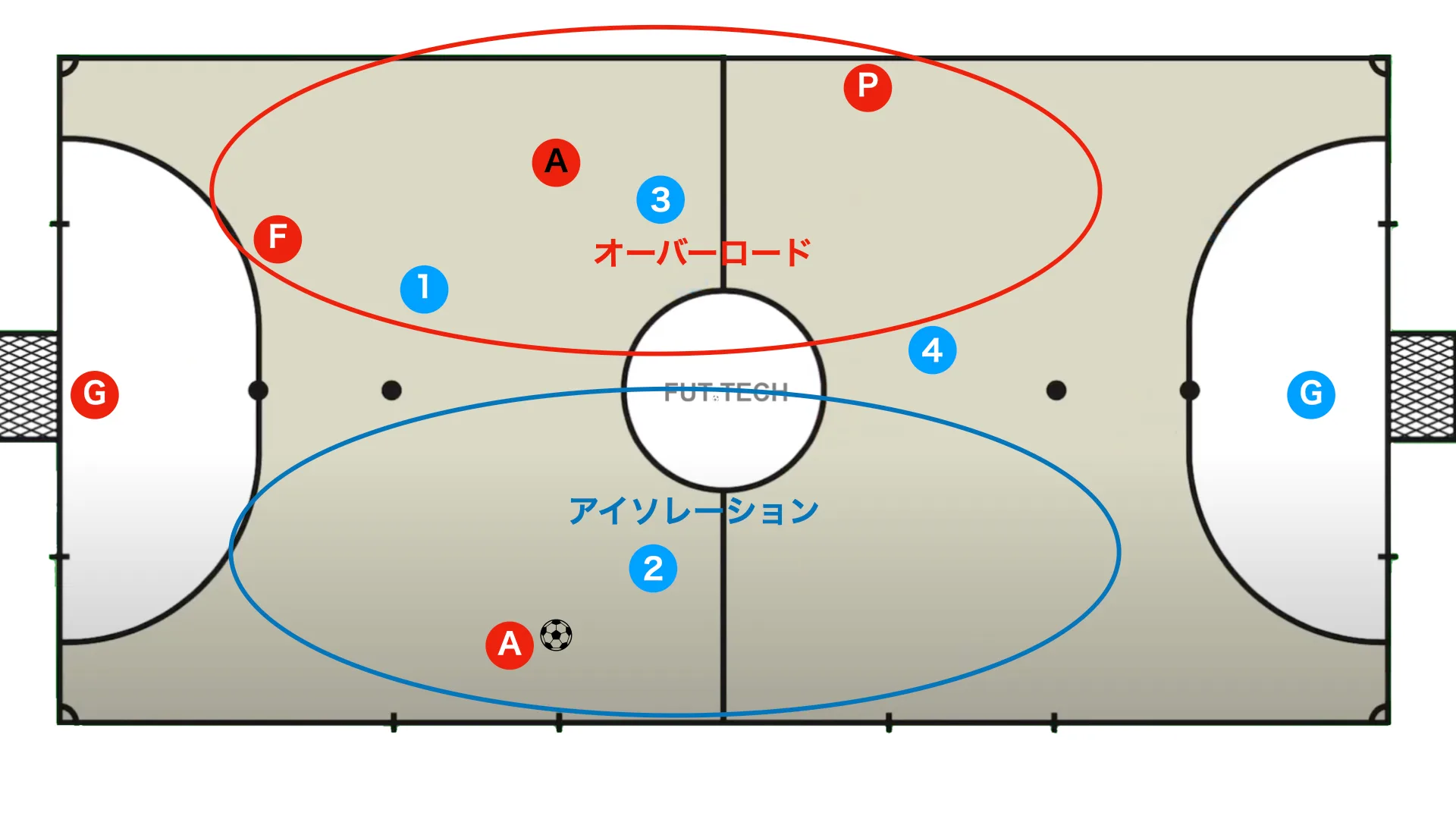
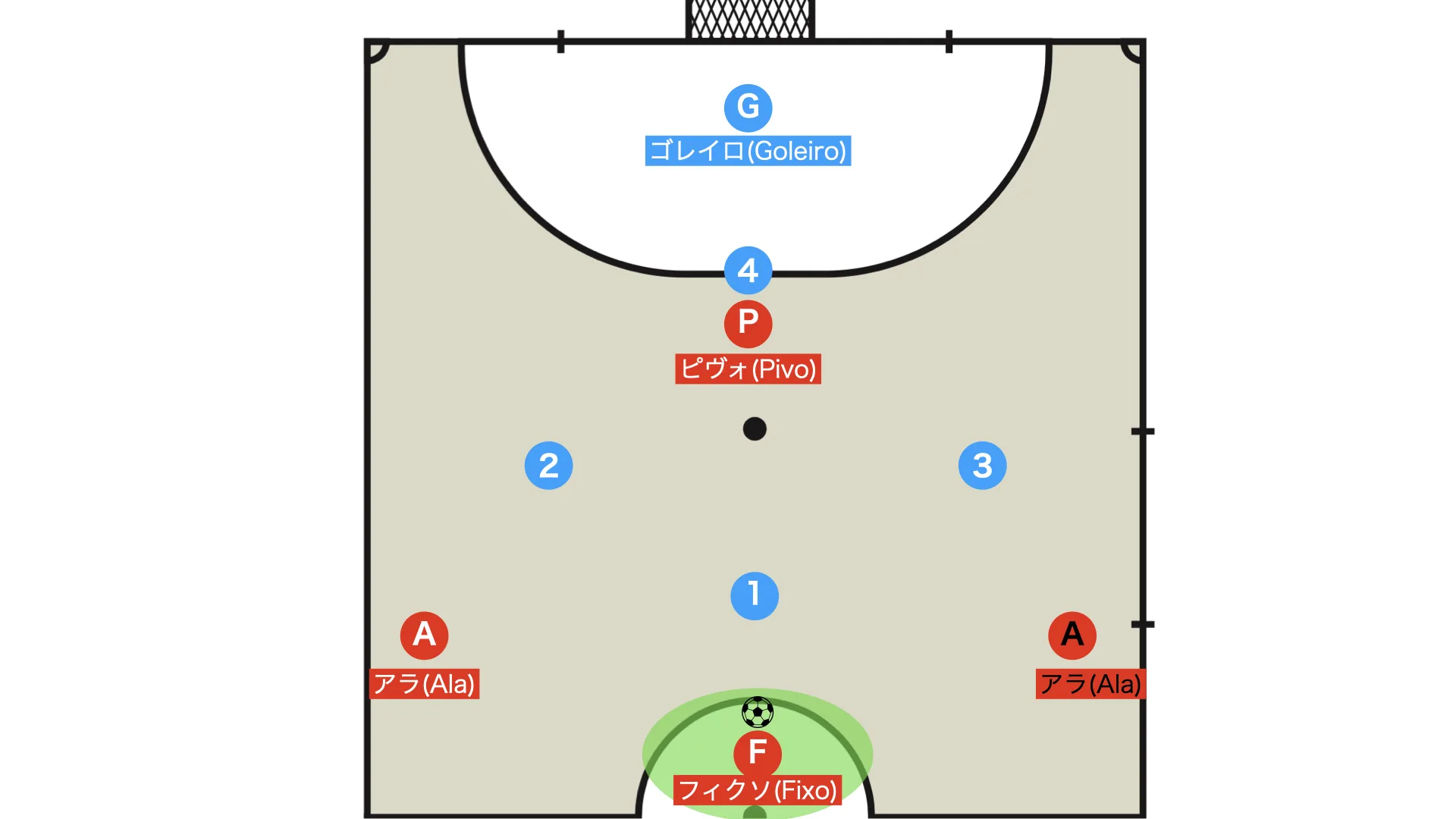
A 3 on line (1 line)+1 structure like this can also be viewed as a state of overload and isolation.
Because overload and isolation are inseparable opposites, it is very important to understand both, not just the tactical intent of one side.
That is because when the attack is not working, switching the ball into the zone that is in the opposite state can create a change and potentially cause cracks in the opponent's defence.
The four main aims of overload are as follows:
- create local numerical superiority
- shorten distances between players and make quick rondo-like passing possible
- switch play to the isolation side
- protect against counters after losing the ball
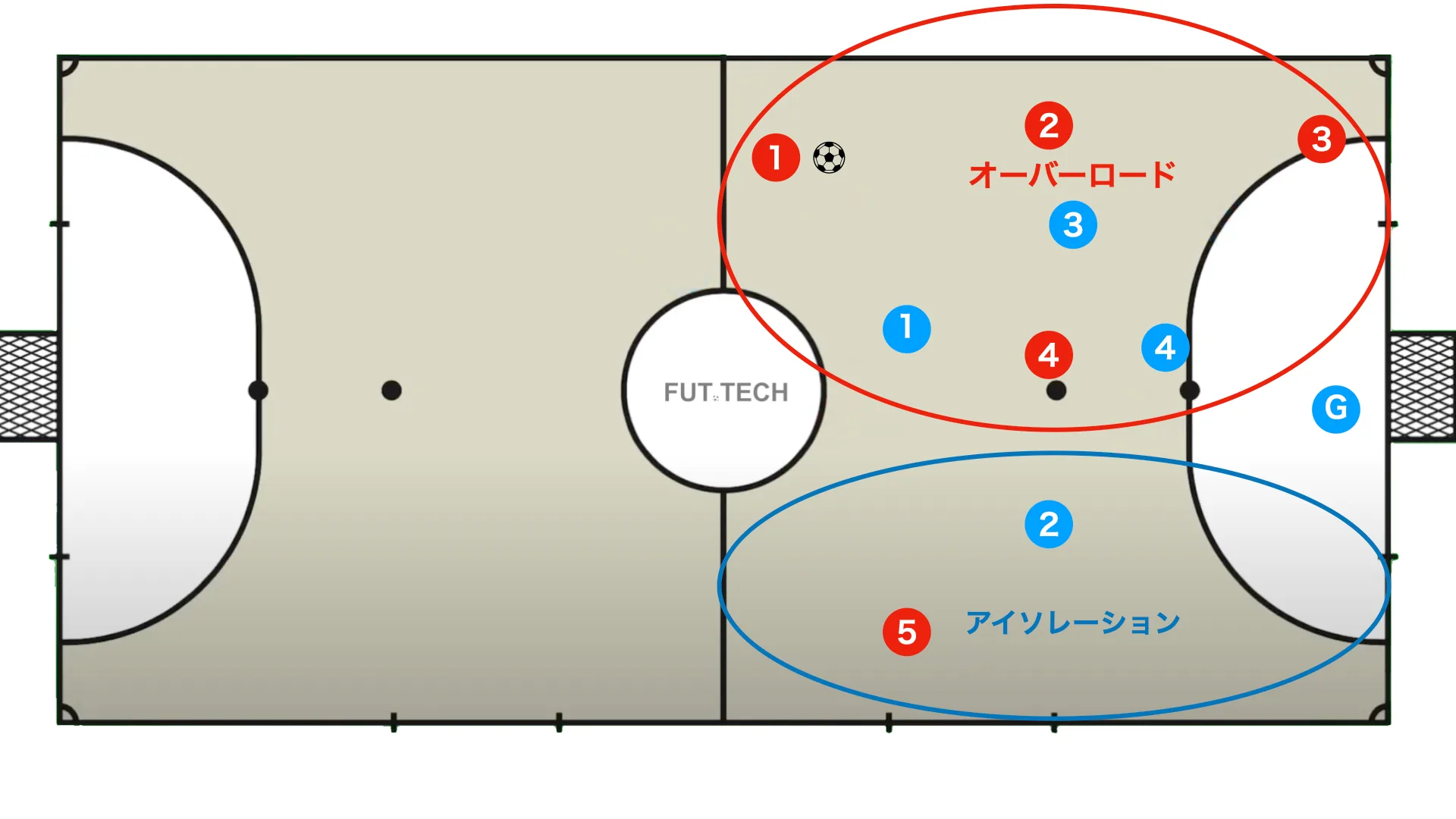
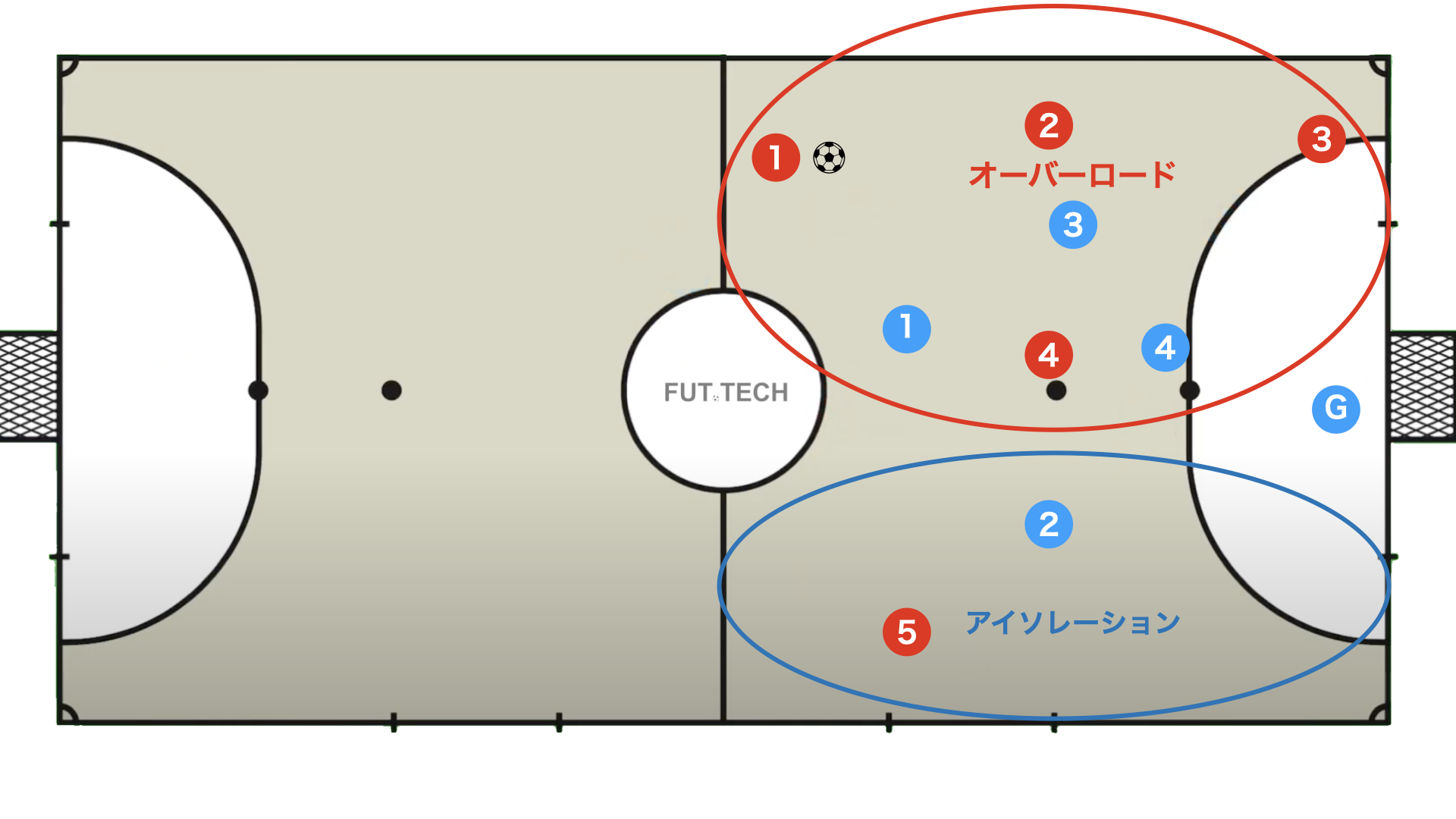
Overload is a tactic that becomes especially important in power plays like the one shown above.
The idea is to take advantage of the fact that overall numerical superiority (5v4) naturally creates local numerical superiority somewhere on the court.
You circulate the ball in a local superiority situation (4v3), almost like playing a rondo, while advancing toward goal.
If the defender on the weak side, that is, the isolation side (blue number 2), shifts over to protect the overload side or loses track of the mark by ball-watching, you can switch to the isolation side and create a one-on-one near goal.
In actual matches, this often leads to goals through a back-door run behind the defender and a finish at the far post.
In power plays, overload is often created not from the initial positioning but by having the weak-side player drift over using a set pattern or similar action.
Even if you lose the ball, you can counter-press immediately, so it also helps prevent a counter from the power play.
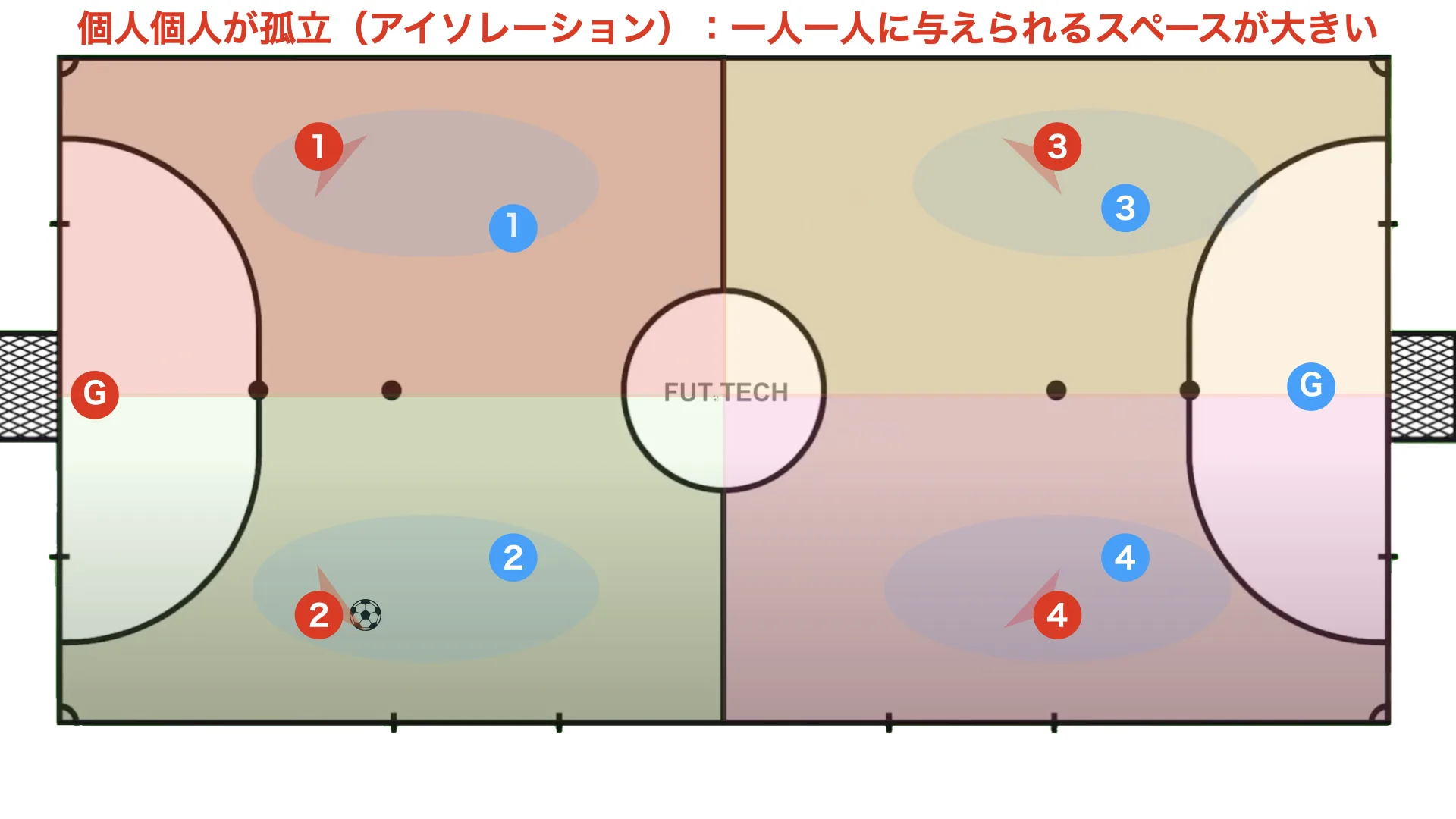
The tactical aim of isolation is to create space by leaving a player isolated in a certain area.
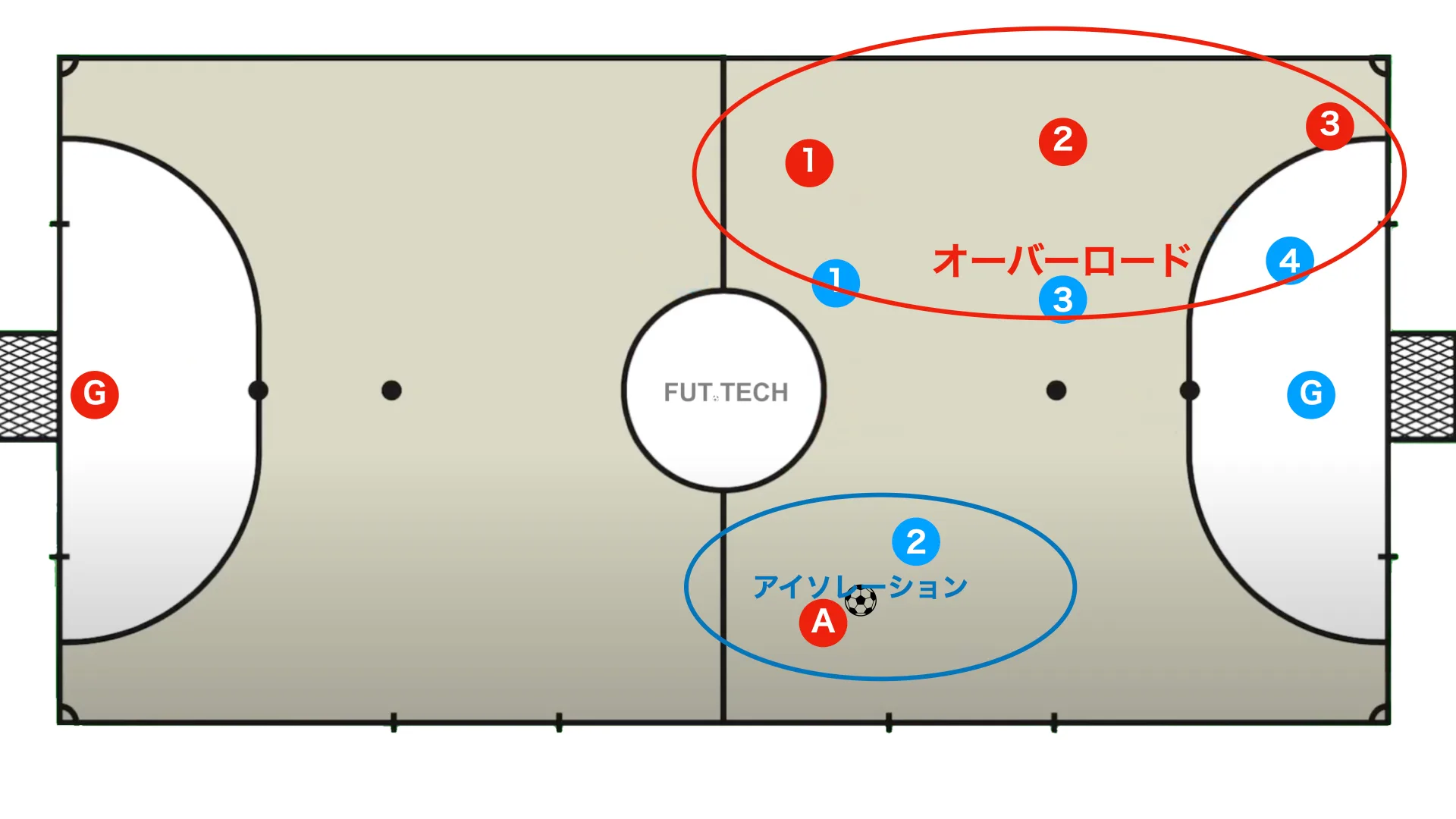
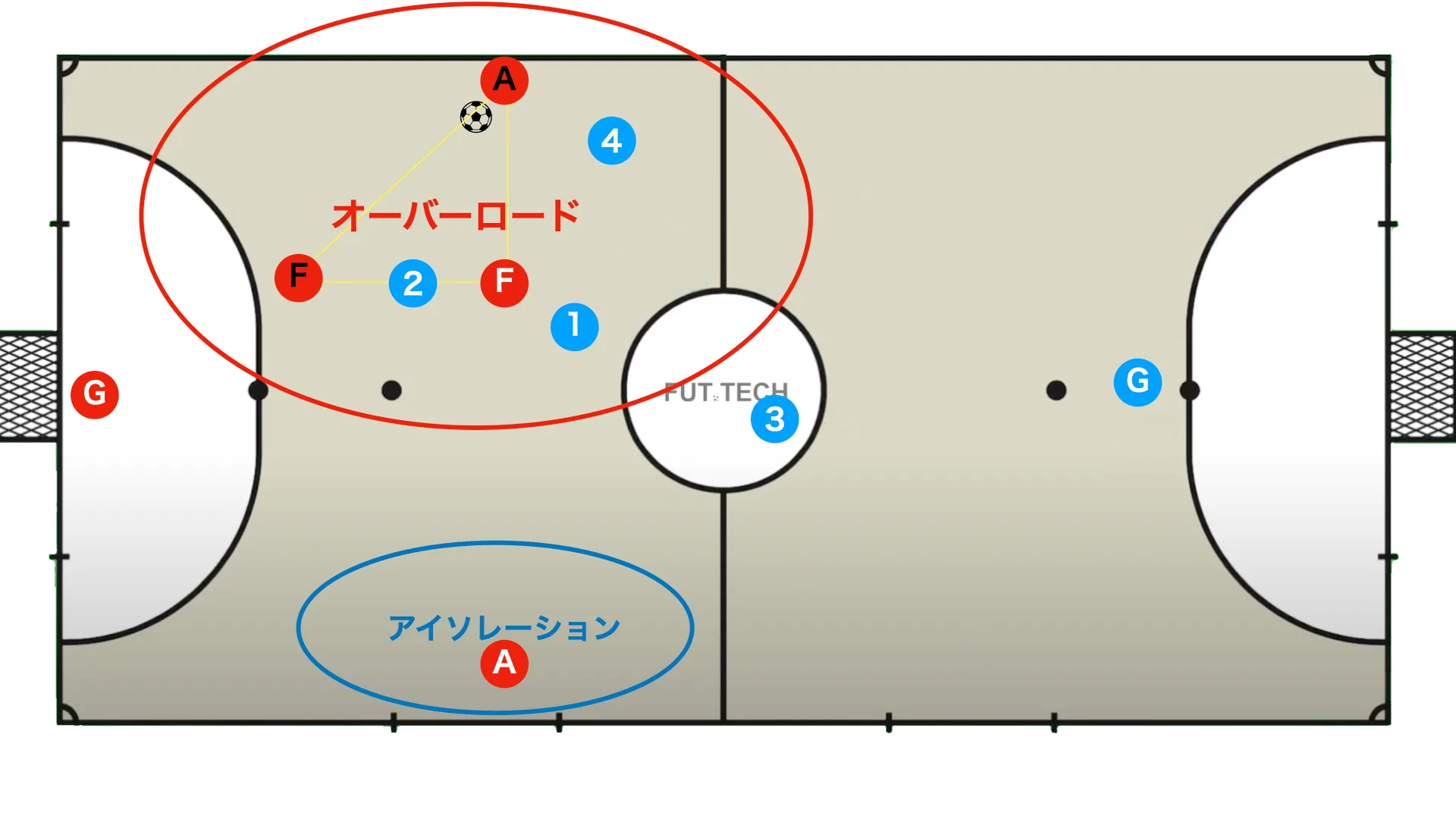
As shown above, a common idea is to clear players out to the far side, create space in front of the ball carrier, and set up a 1v1.
Isolation in positional attack can largely be divided into the following three types:
- ala isolation
- fixo isolation
- pivot isolation
The main shapes for ala isolation are 2-2 (2-0-2) and 2-1-1.
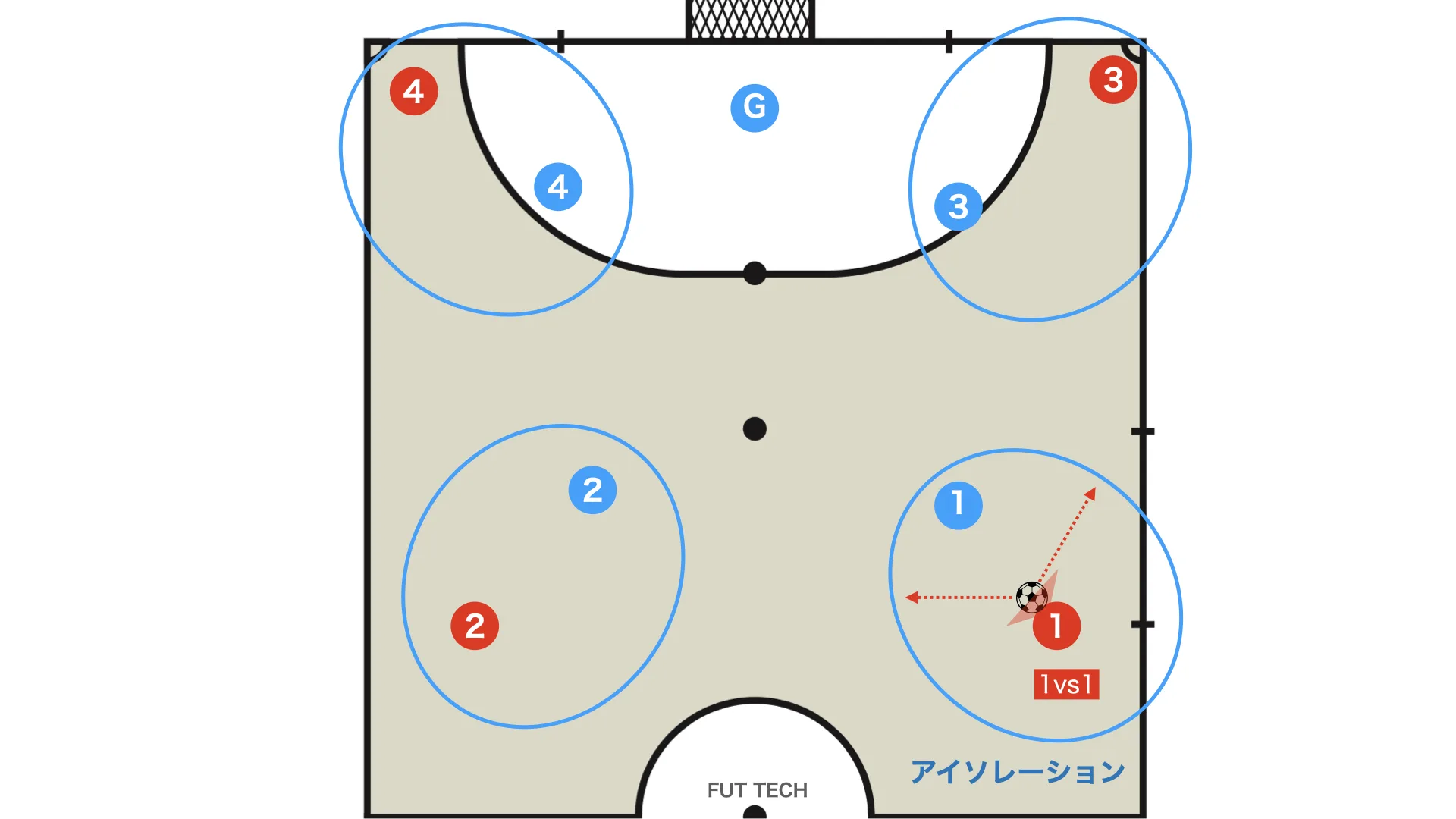
The 2-2 system is a special shape in which all four players are isolated.
関連記事
The Ideal System for Maximizing Individual Ability: The Box Shape (2-2) with Two Pivots
An explanation of positional attack in the box-shaped 2-2 system with two pivots. This article clear…
続きを読む →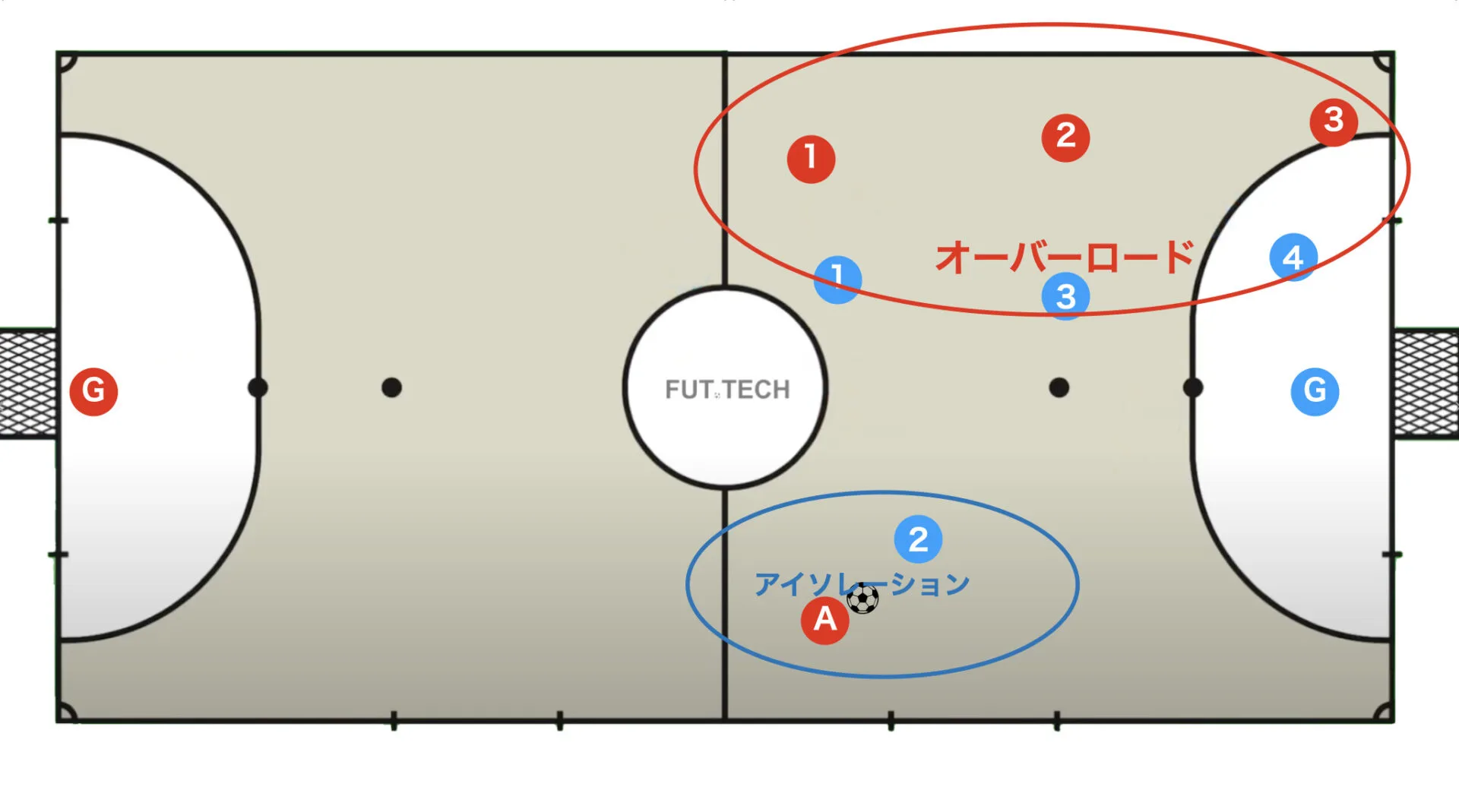
This is the most orthodox shape for ala isolation.
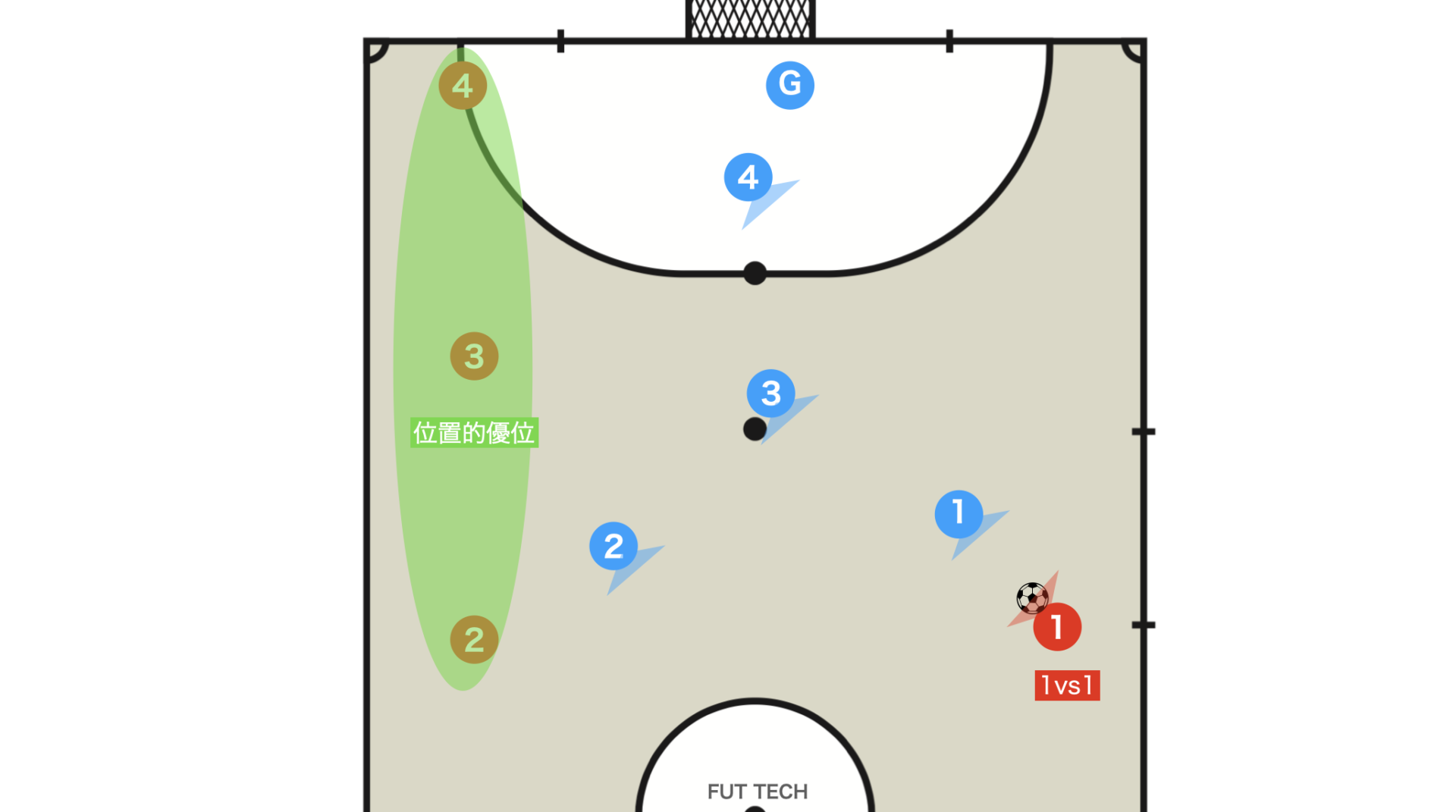
When the opponent is very aware of covering your isolated teammate, it is important for the three players on the overload side to take advantage of the positional superiority created by standing in the defender's blind side, that is, behind the defence.
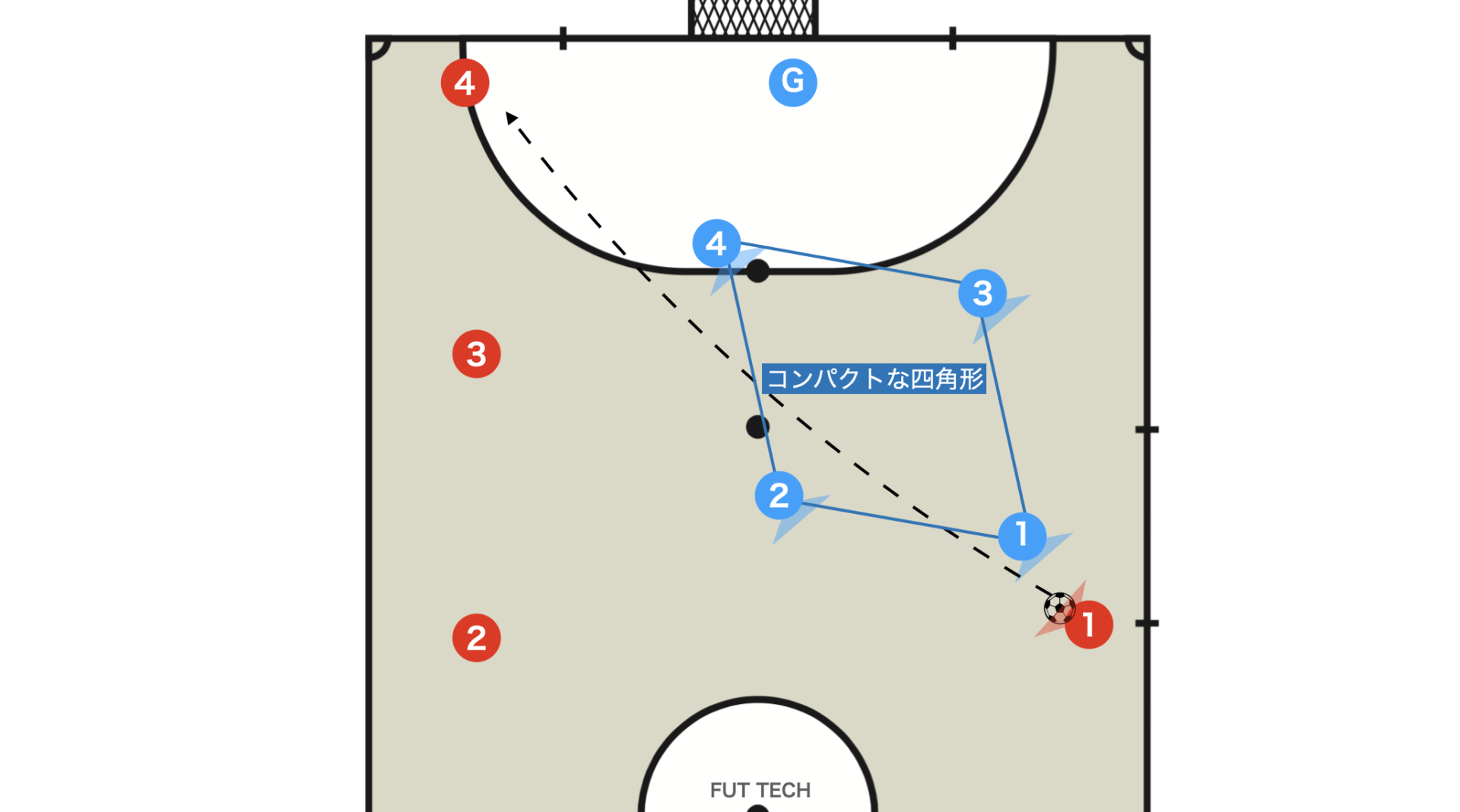
As shown above, if you can thread the ball into a teammate behind the defence, it quickly becomes a big chance.
The isolator needs the ability to play that diagonal pass.
In a 1-3 system, fixo isolation is extremely risky if you lose the ball, but it is effective when you have a player who can win 1v1s at a very high rate.
There are two patterns: the one shown above, where the fixo plays 1v1 deep in your own half, and another where the fixo goes 1v1 near the halfway line against an opponent defending in a mid block.
関連記事
Developing a New Tactic: 1-3 Fixo Isolation and the Goalkeeper Joining the Attack
A detailed breakdown of the 1-3 structure built around fixo isolation. This article introduces a new…
続きを読む →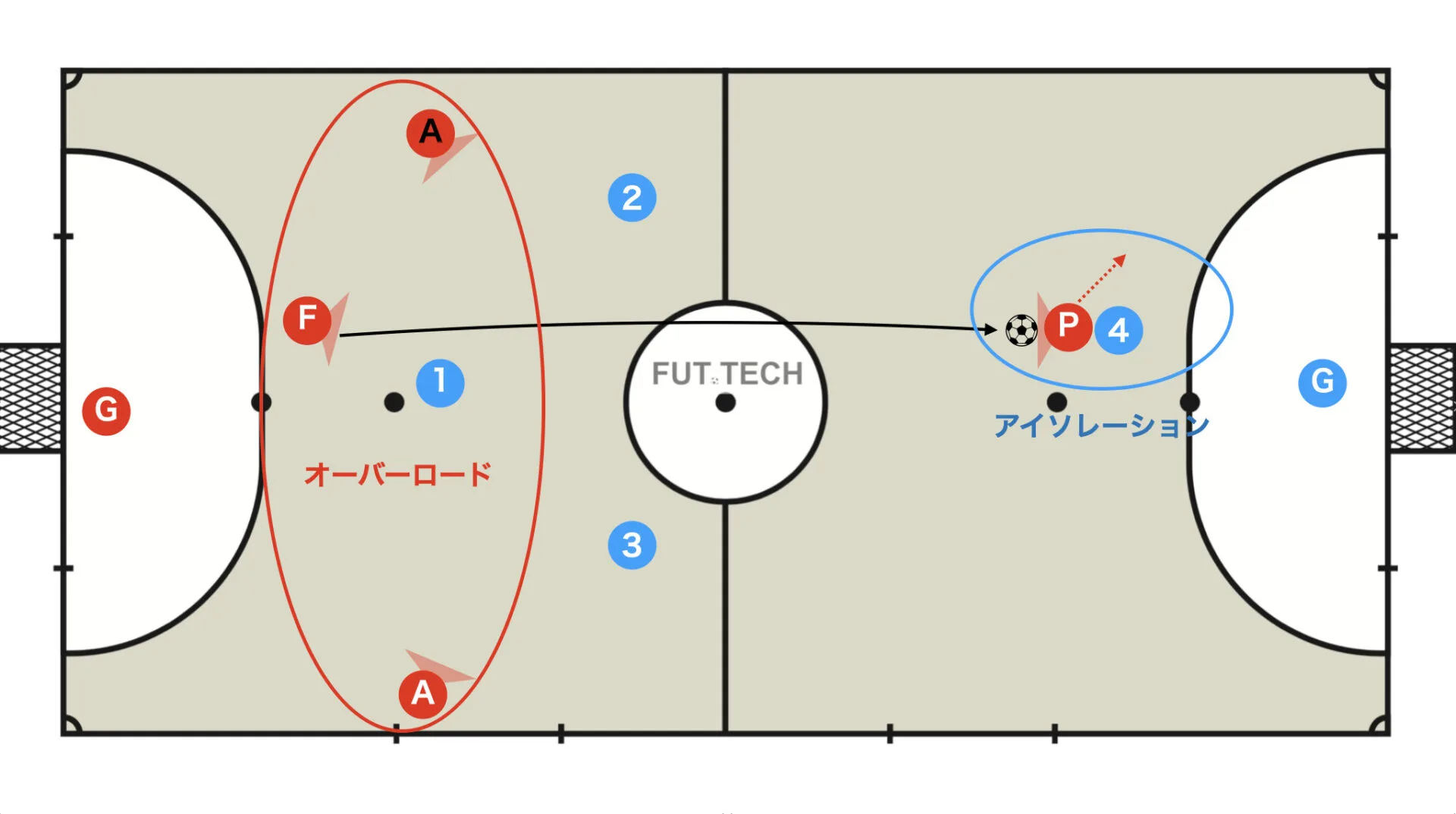
If you have a powerful pivot who can turn and shoot, it can also be effective in 3-1 (3-0-1) to play into the pivot and then intentionally leave that player isolated by not involving yourself further.
This time, I explained isolation and overload, two very famous tactical concepts that are used in ball sports beyond futsal as well.
First, make sure you understand the terms properly and grasp their tactical intent.
If you want to beat your defender off the dribble through isolation, it is extremely important that everyone understands the idea and takes positions that open up space.
Overload may feel like a slightly difficult concept, but in sports with more players, such as football, it is regarded as a concept just as important as isolation.
In any case, these two terms are opposites and two sides of the same coin, so the best approach is to understand them together.
関連記事
The Complete Futsal Glossary
A complete, keep-for-reference glossary covering the tactical terms used in futsal. This essential g…
続きを読む →