3-1 in Depth: Rotations and Formation Changes
Published: 2021.10.28Updated: 2026.05.02
If you play for a team that uses the 3-1, you may well have felt this way: "There are so many types of rotations that I do not even know what to learn first."
The two most important things in mastering the 3-1 are positional principles and the purpose of each rotation. Once you understand those two axes, even more advanced formation changes start to make sense naturally.
In this article, I will explain the overall picture of the 3-1, its main rotations, and how to switch into other shapes in a structured way.
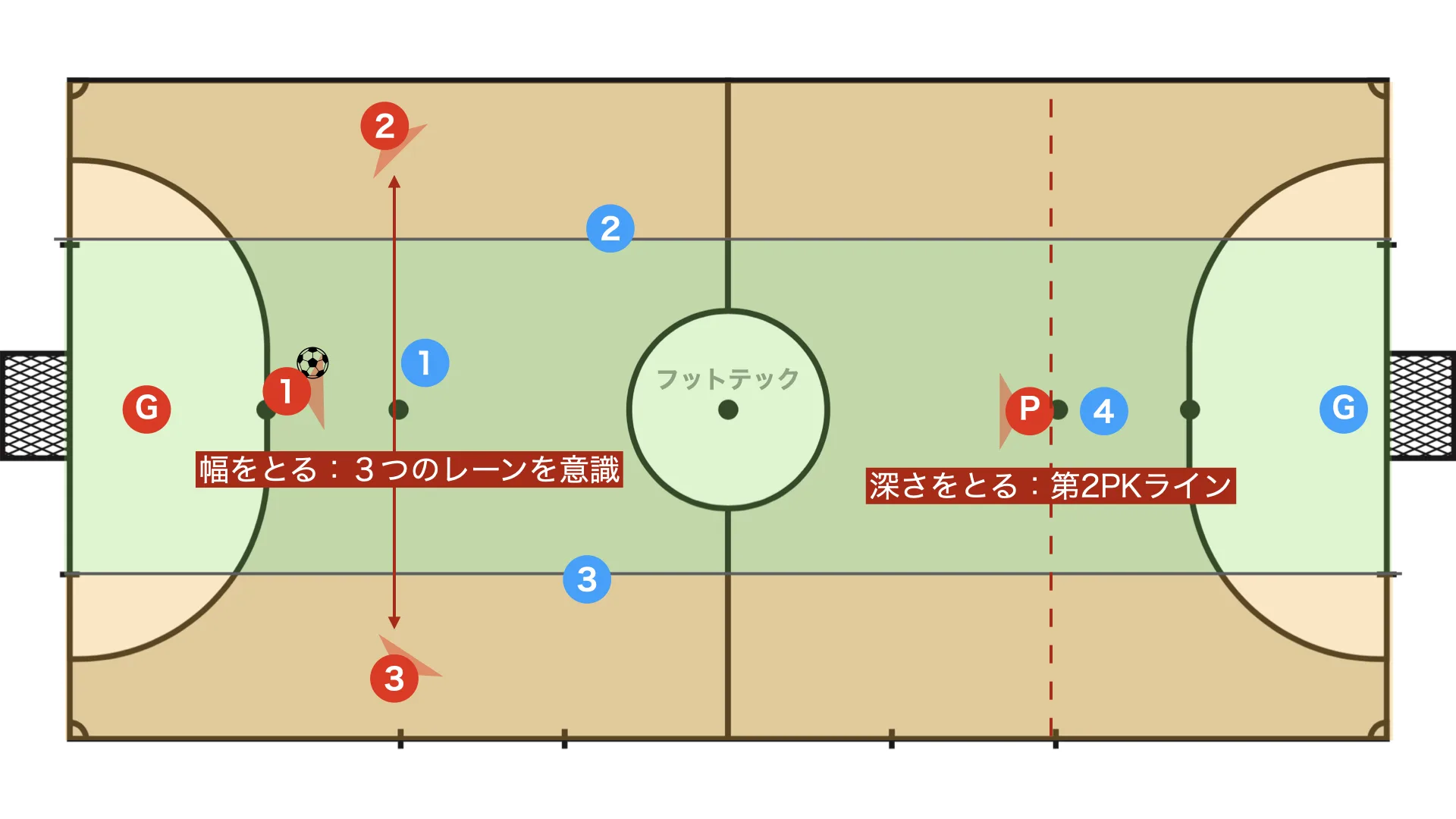
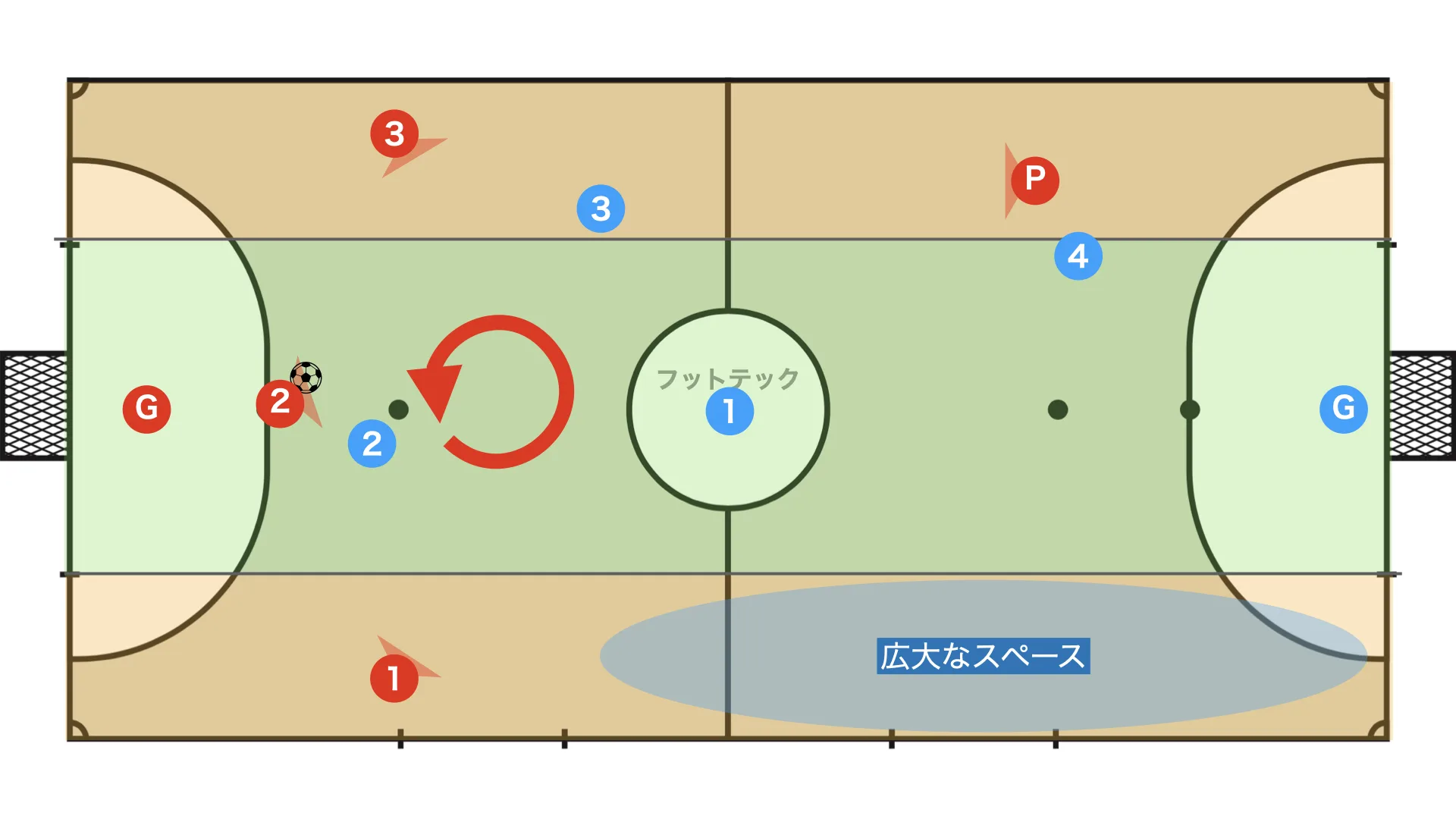
To use the futsal court widely and make effective use of space, the following two points are extremely important:
- The back three should be positioned with one player in each of the three lanes
- The pivot should provide depth up to the second penalty mark line
In every 3-1 system, if the shape (floor balance) breaks down, it is extremely important to restore the shape and recover that floor balance.
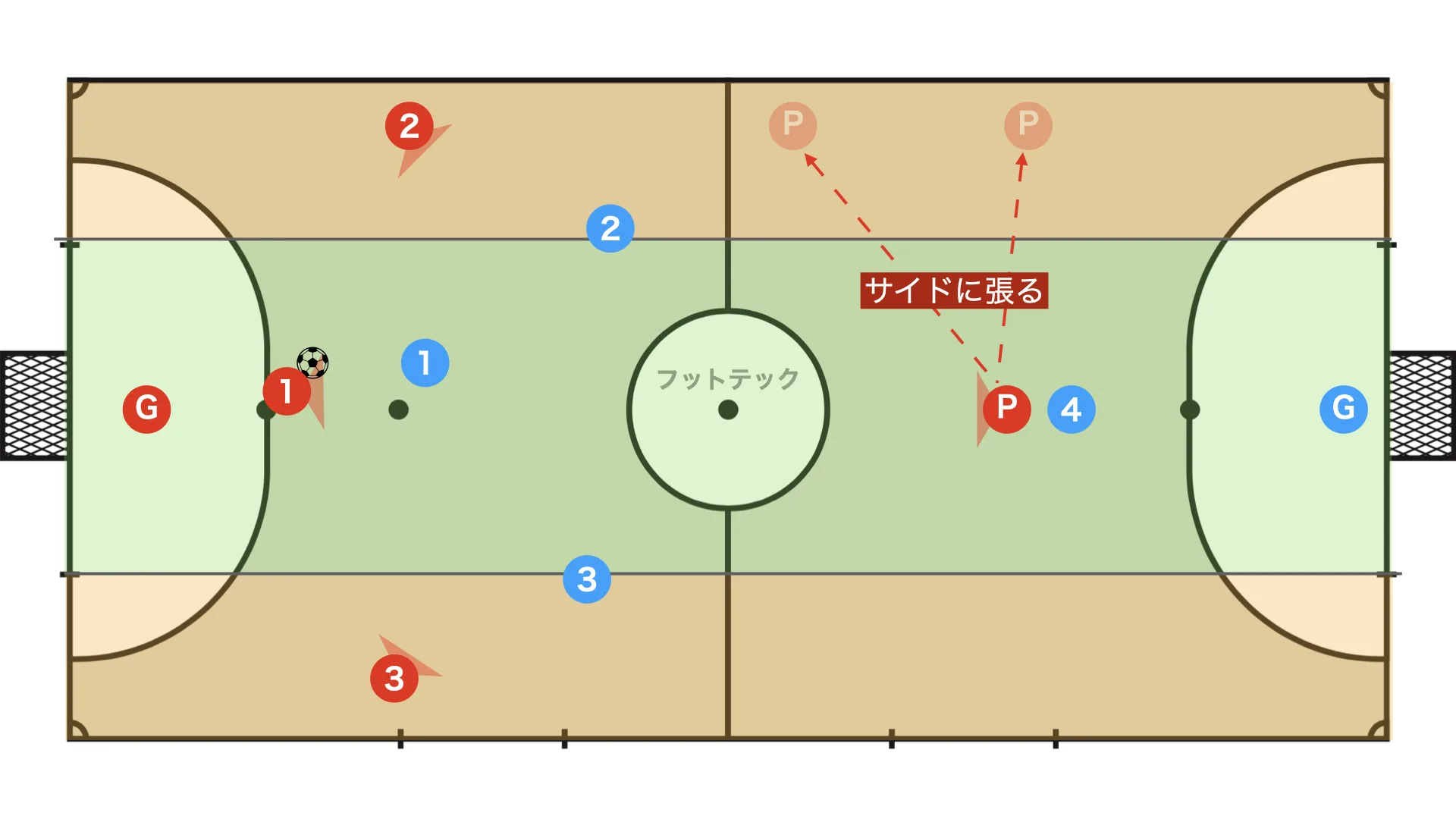
The pivot's original role is to create a focal point high up the court, but a pivot who drifts wide to open space is called a false pivot.
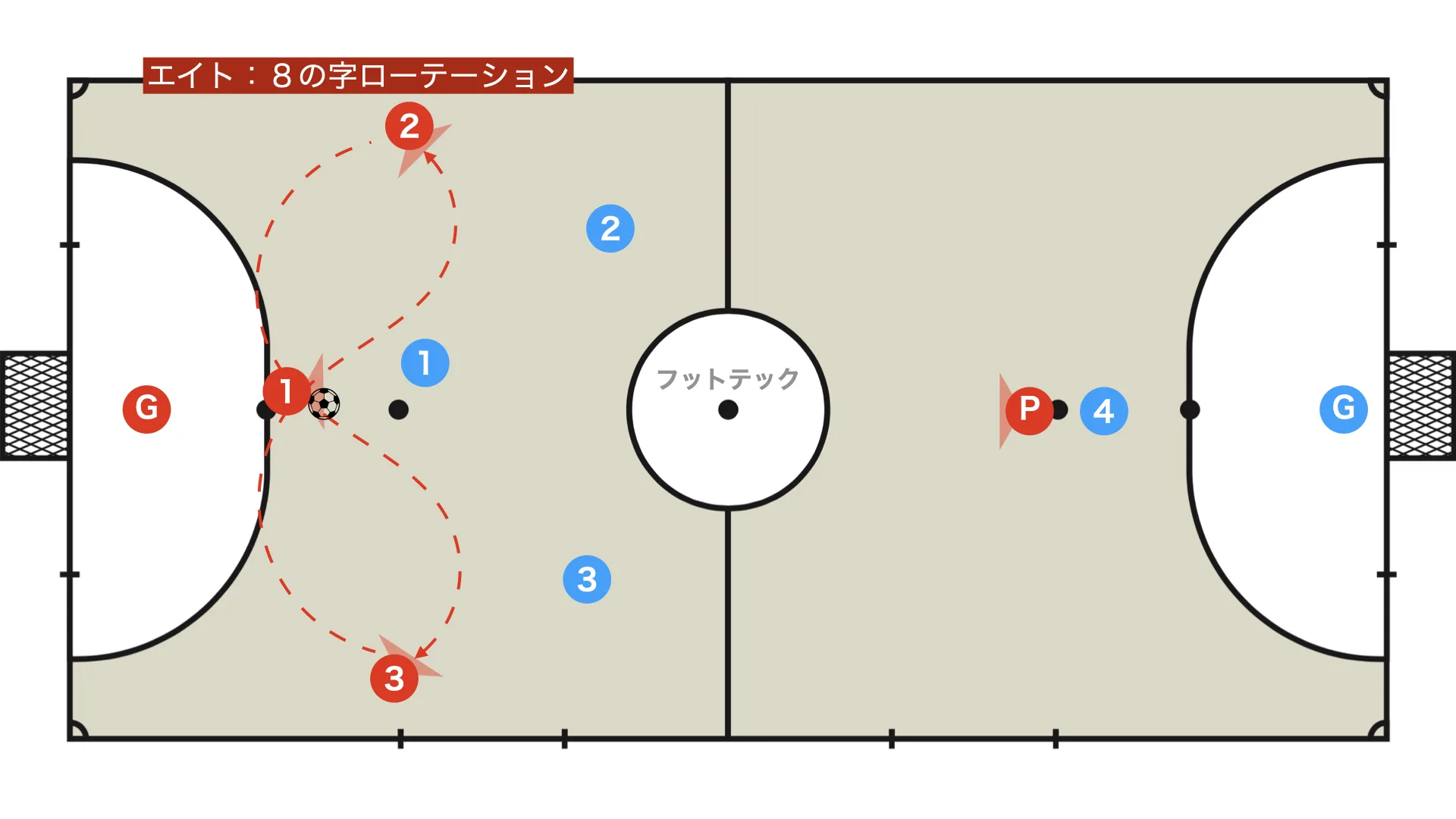
This is often the very first rotation that beginners try when learning the 3-1.
Because players move toward the ball carrier to offer support, it is simple and easy to understand. On the other hand, it tends to be easier for defenders to read because the number of attacking patterns is limited.
関連記事
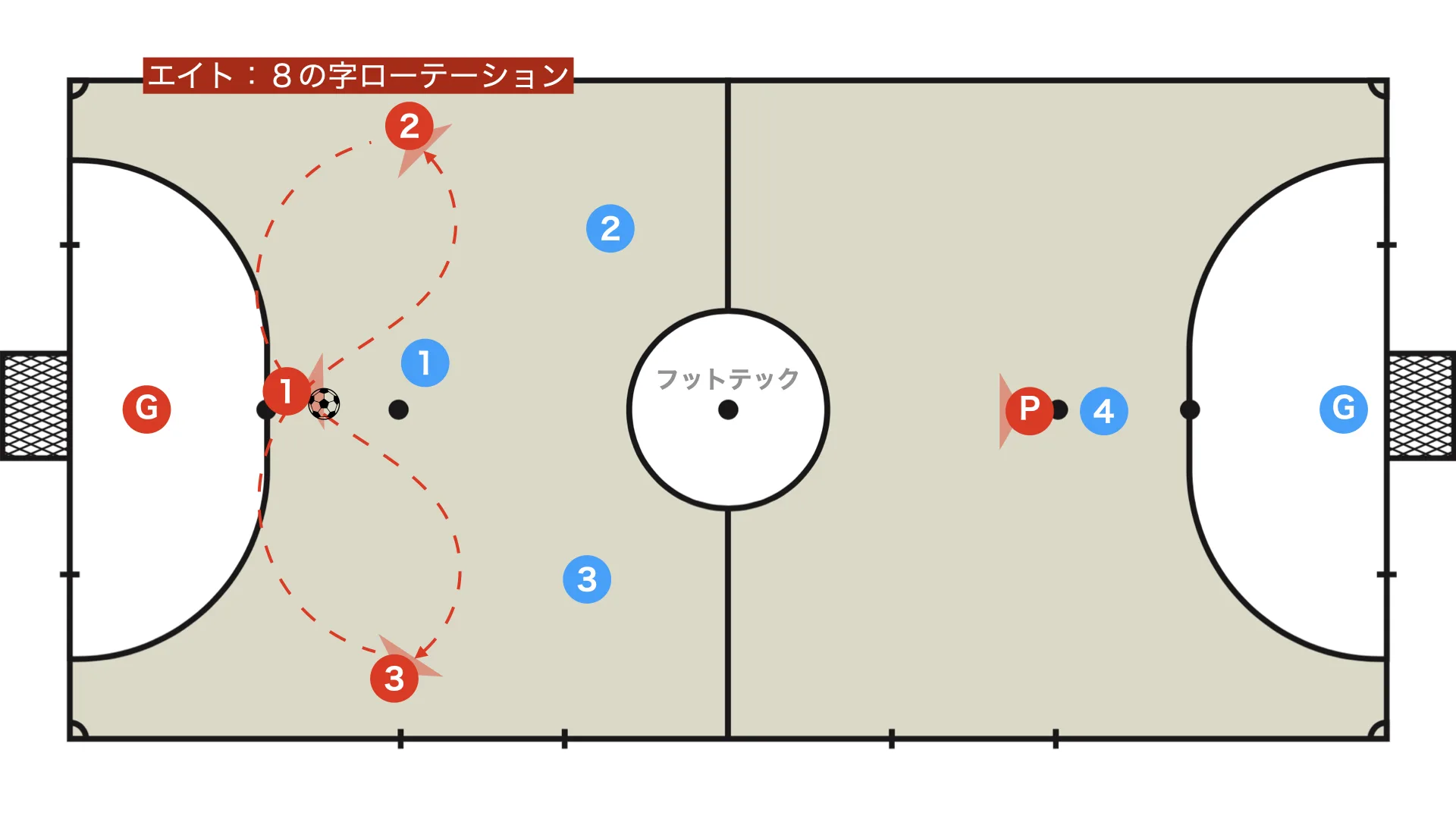
Do You Really Understand It? The Essence of the Figure-Eight Rotation
An explanation of the essence of futsal's signature tactic, the figure-eight rotation. This article …
続きを読む →This is an effective tactic against defences that build multiple lines.
When a player moves from a side lane into the central lane, arriving from the defender's blind side, it becomes easier to create hesitation in the opposing defence.
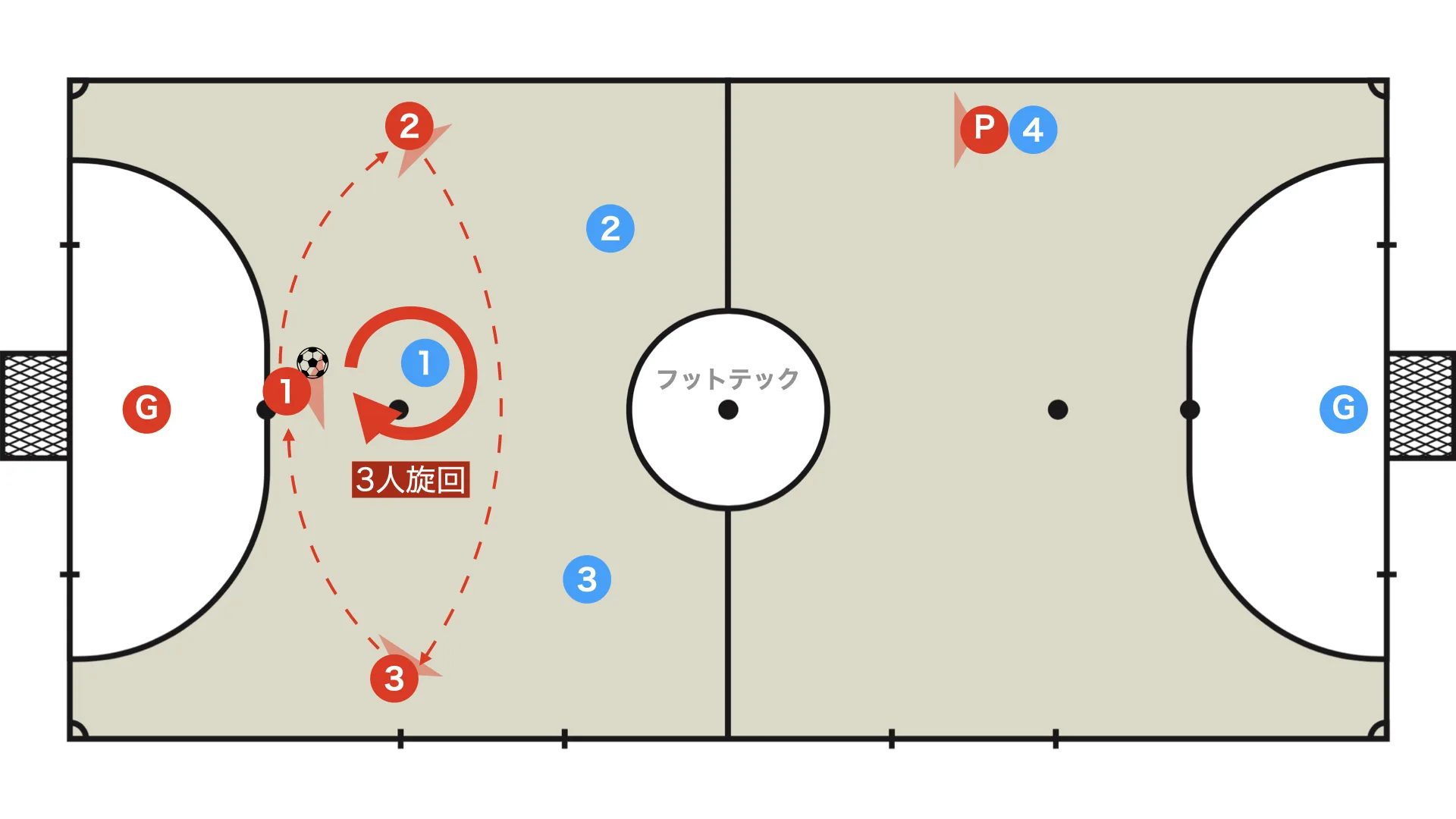
This is a tactic that feels like a halfway point between the quatro and the 3-1.
It is often used as a stepping stone for introducing the quatro.
関連記事
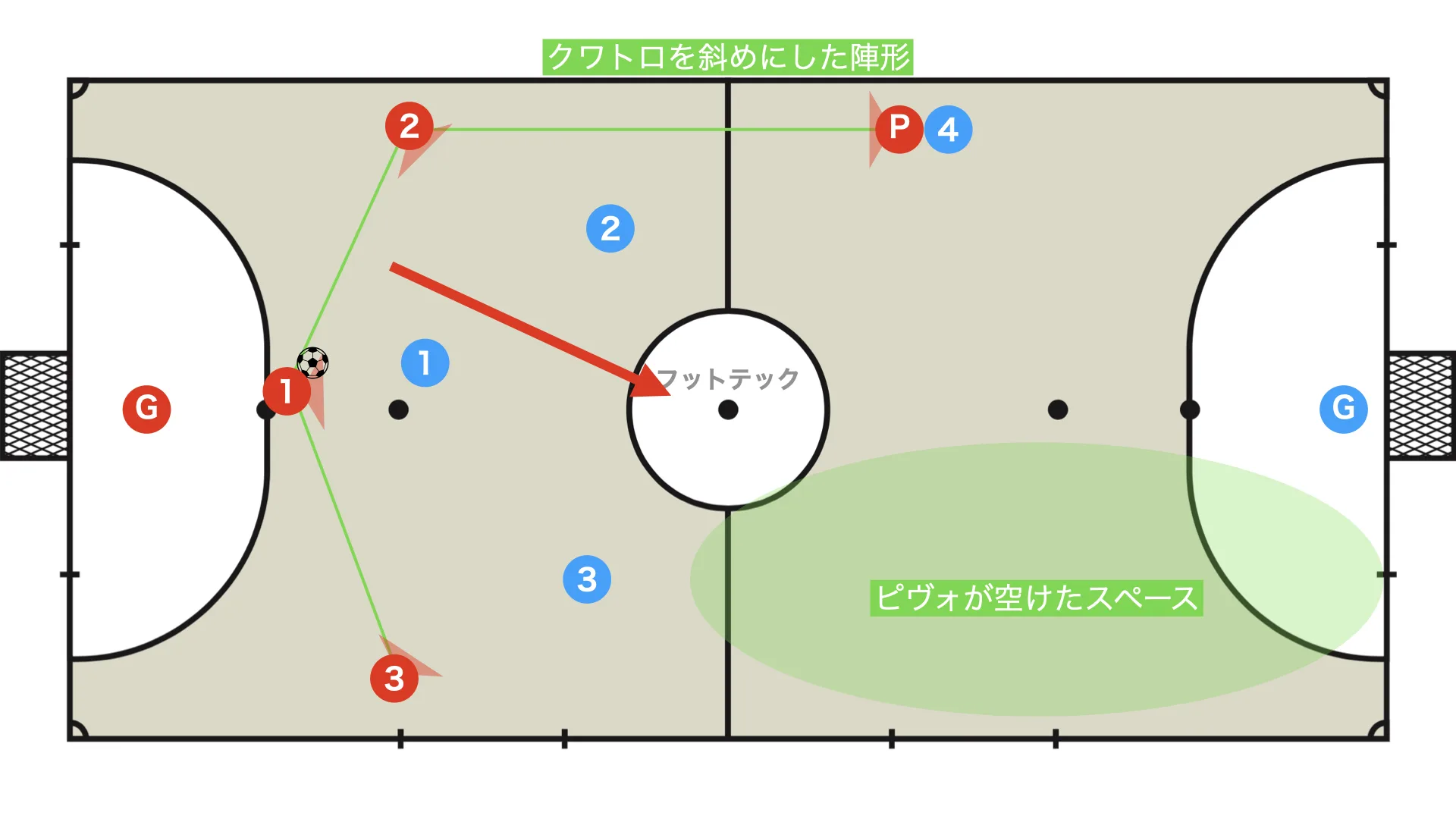
Breaking Down Zone Defence with the False Pivo Rotation (Redondo)
An explanation of the false pivo rotation (redondo) in futsal. This article uses diagrams to clearly…
続きを読む →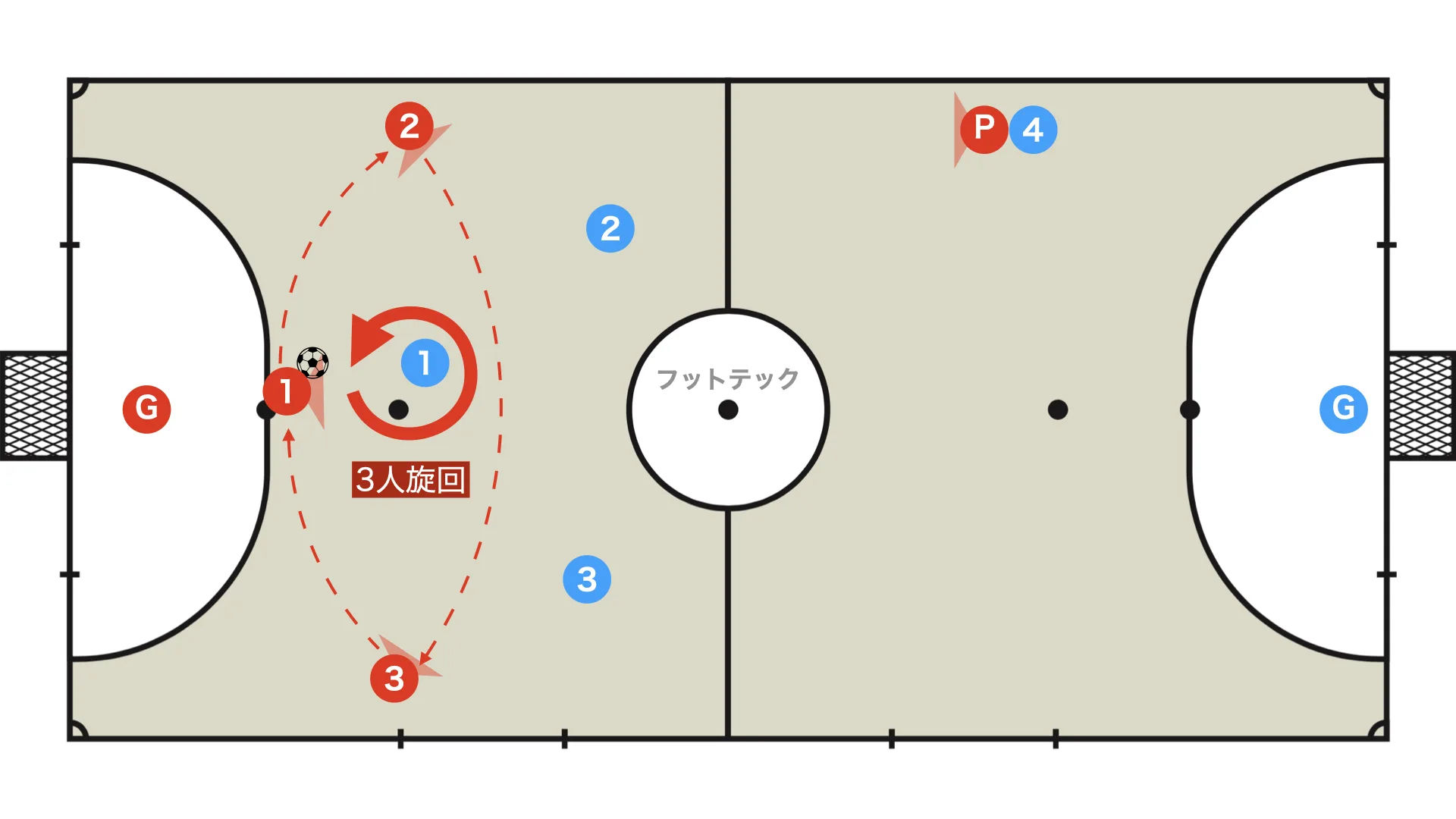
This is the same circular rotation as above, but in the opposite direction.
It is a very well-known play model used widely around the world.
関連記事
Redondo: A 3-1 Play Model Built Around Rotation
An explanation of a 3-1 play model that uses redondo (rotation). This article breaks down the princi…
続きを読む →If you have two or more players with the qualities to play pivot, it can be very effective to intentionally swap the pivot with one of the deeper players.
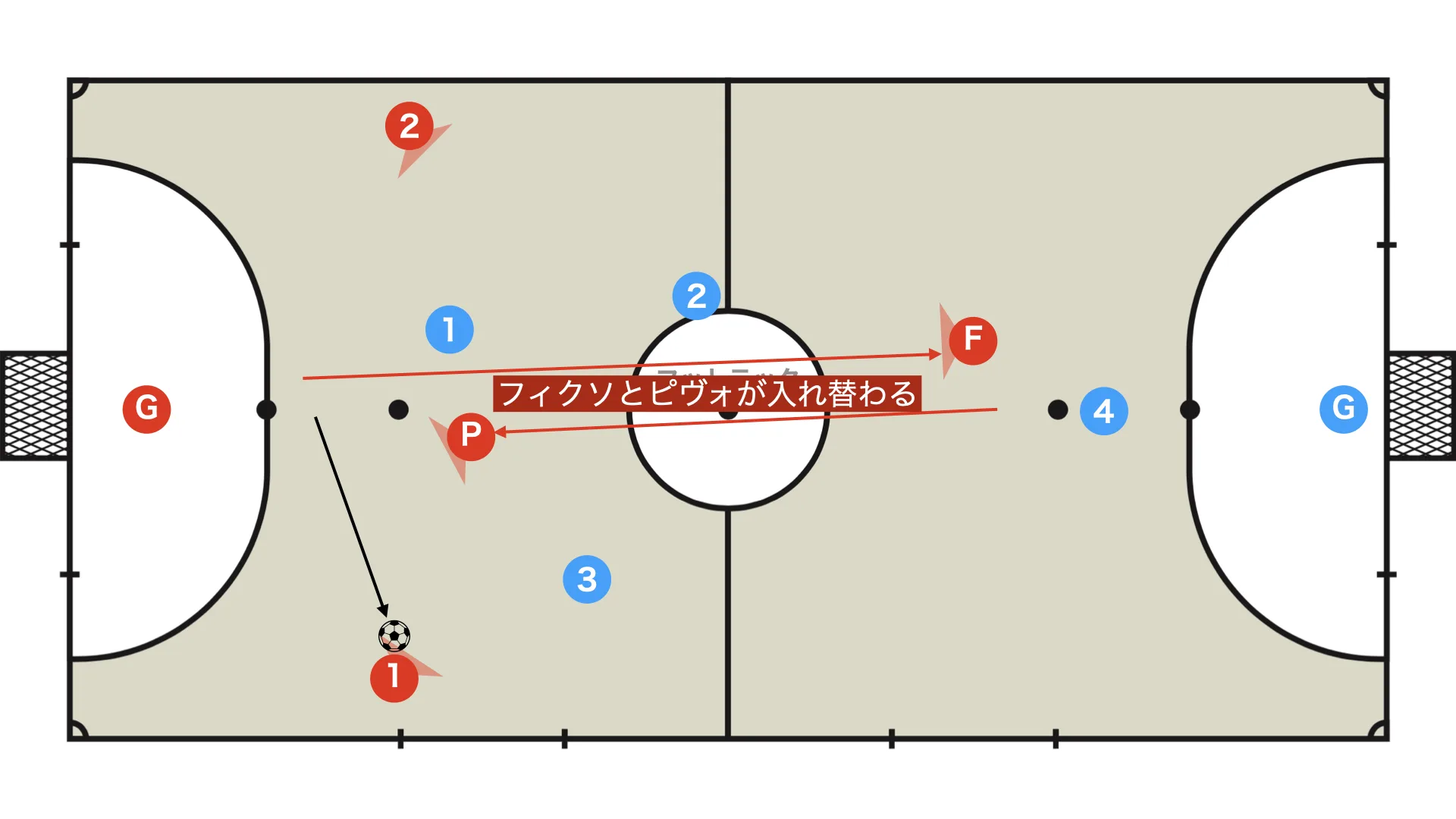
When the fixo and pivot switch places in the middle, it can force a defensive handoff. The pivot, dropping from the blind side, then has the advantage of becoming free for a moment.
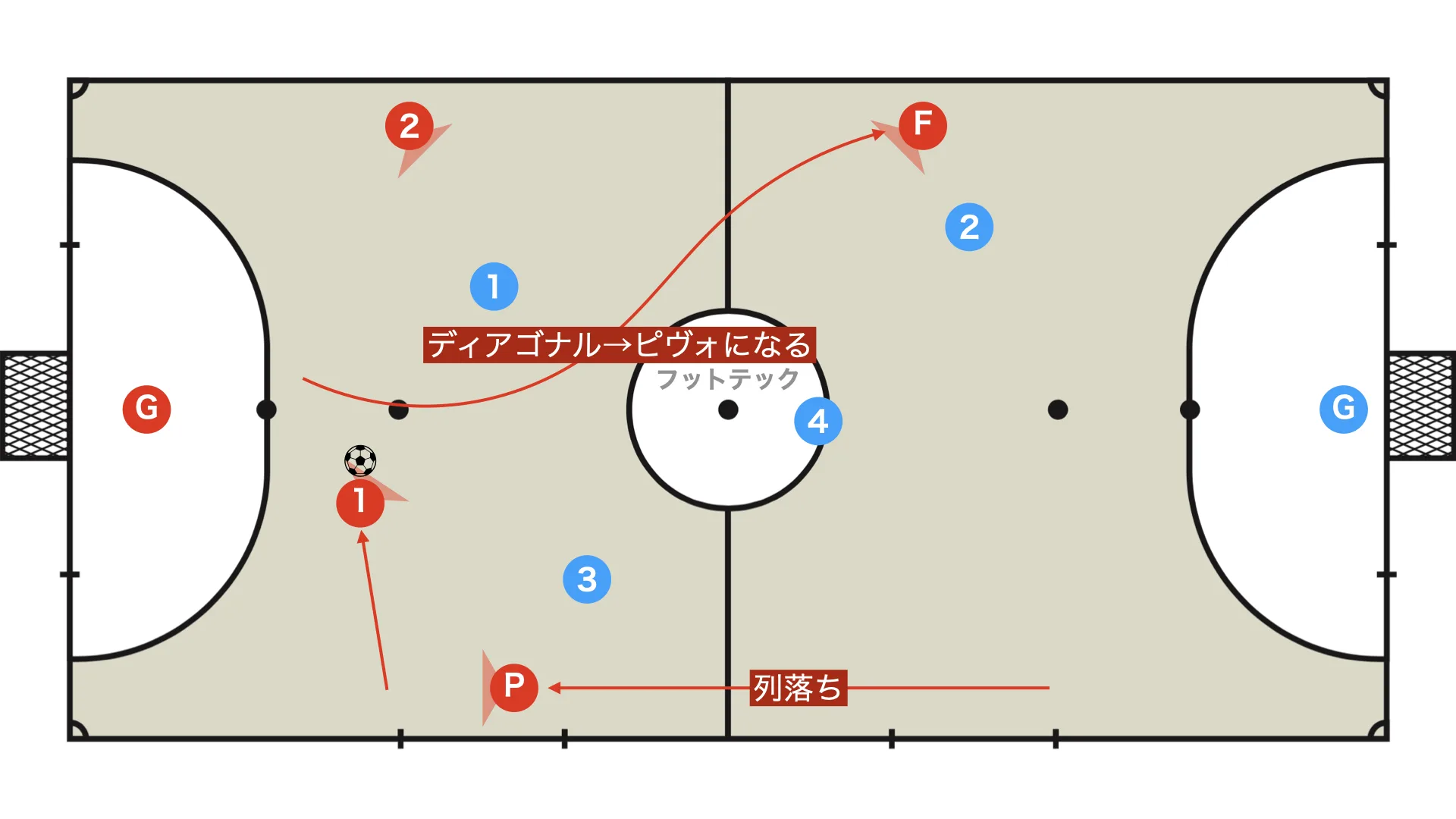
When a player makes a run using a diagonal, the pivot can drop on the opposite side, allowing the team to rotate while keeping the 3-1 shape clean and balanced.
By using runs in behind and dropping movements (line cuts), you can do more than just play in a 3-1. Combining it with various other formations makes it possible to unsettle the opposing defence.
When the shape changes, defenders also have to change their response each time, which makes hesitation more likely.
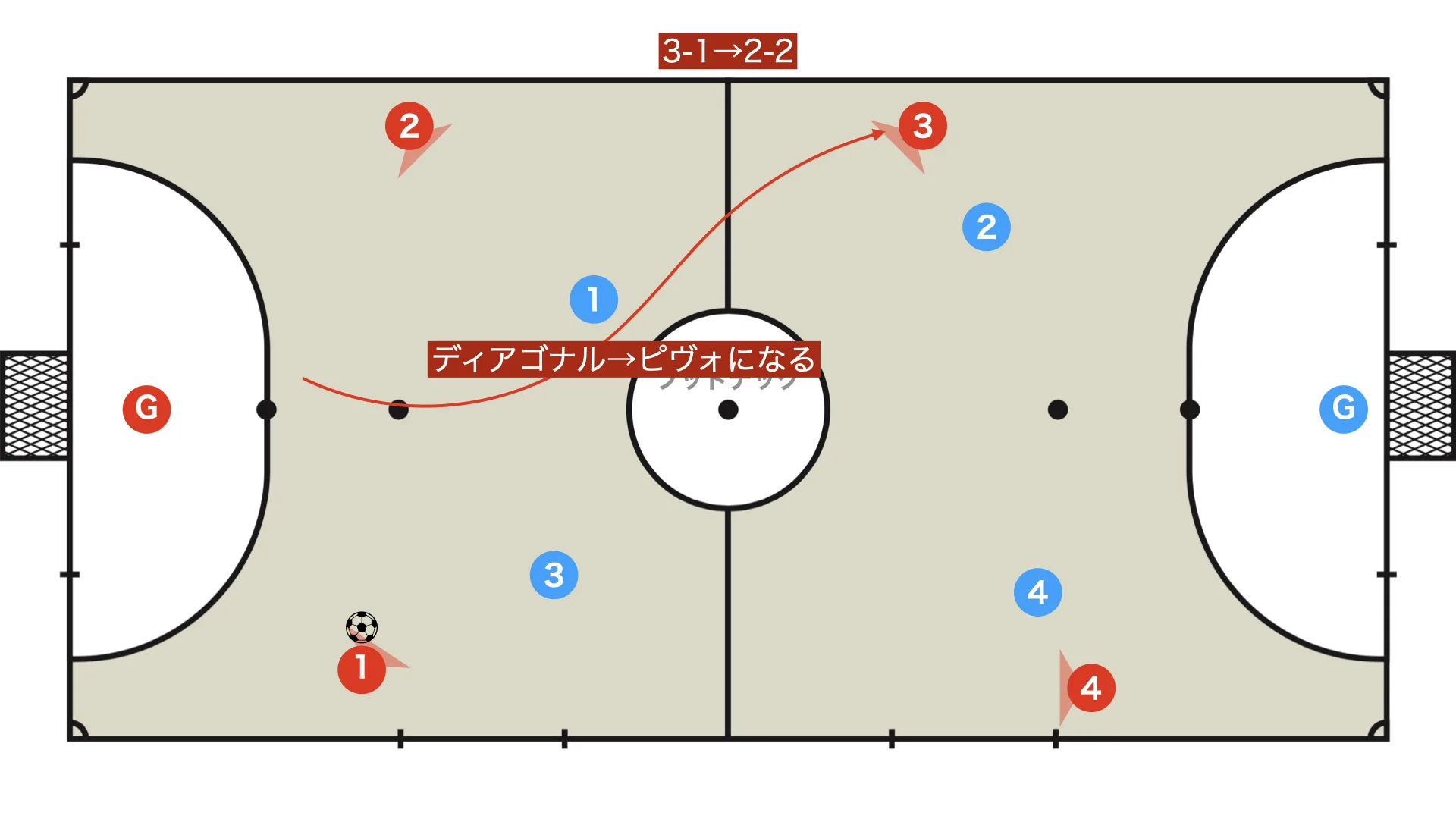
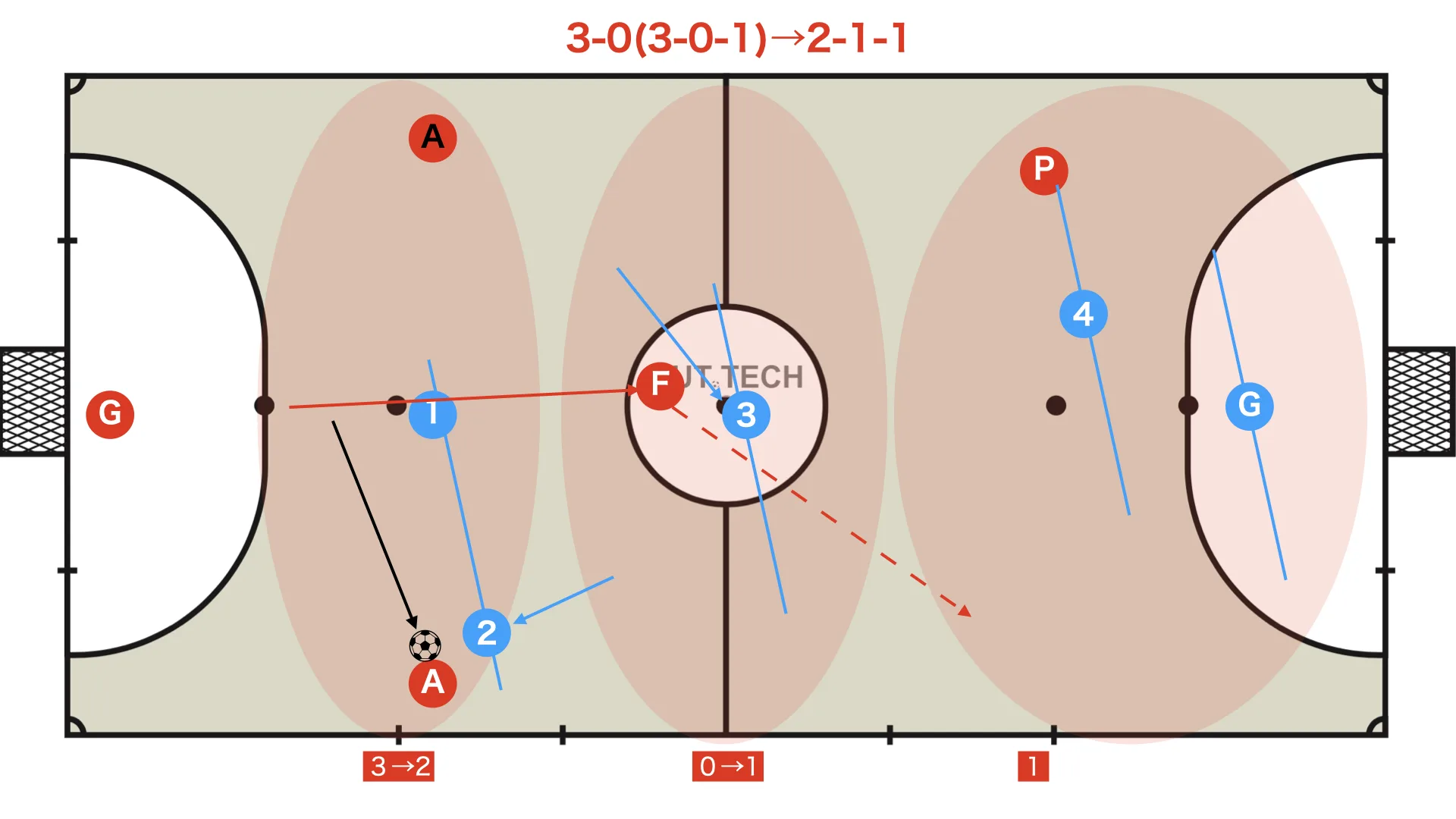
If one of the deeper players (the fixo) runs through and does not drop back again, the team can shift into a 2-2 formation.
関連記事
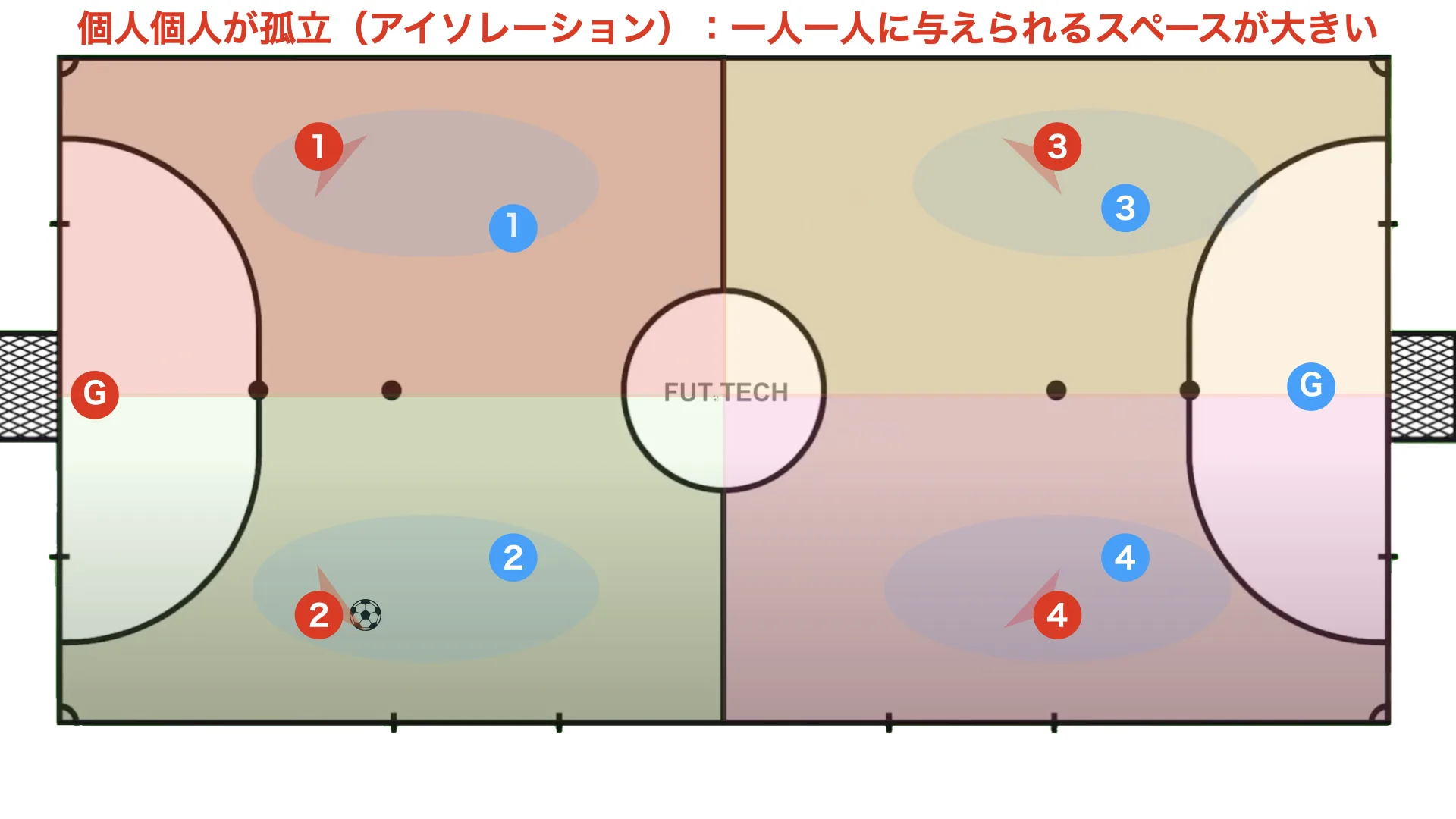
The Ideal System for Maximizing Individual Ability: The Box Shape (2-2) with Two Pivots
An explanation of positional attack in the box-shaped 2-2 system with two pivots. This article clear…
続きを読む →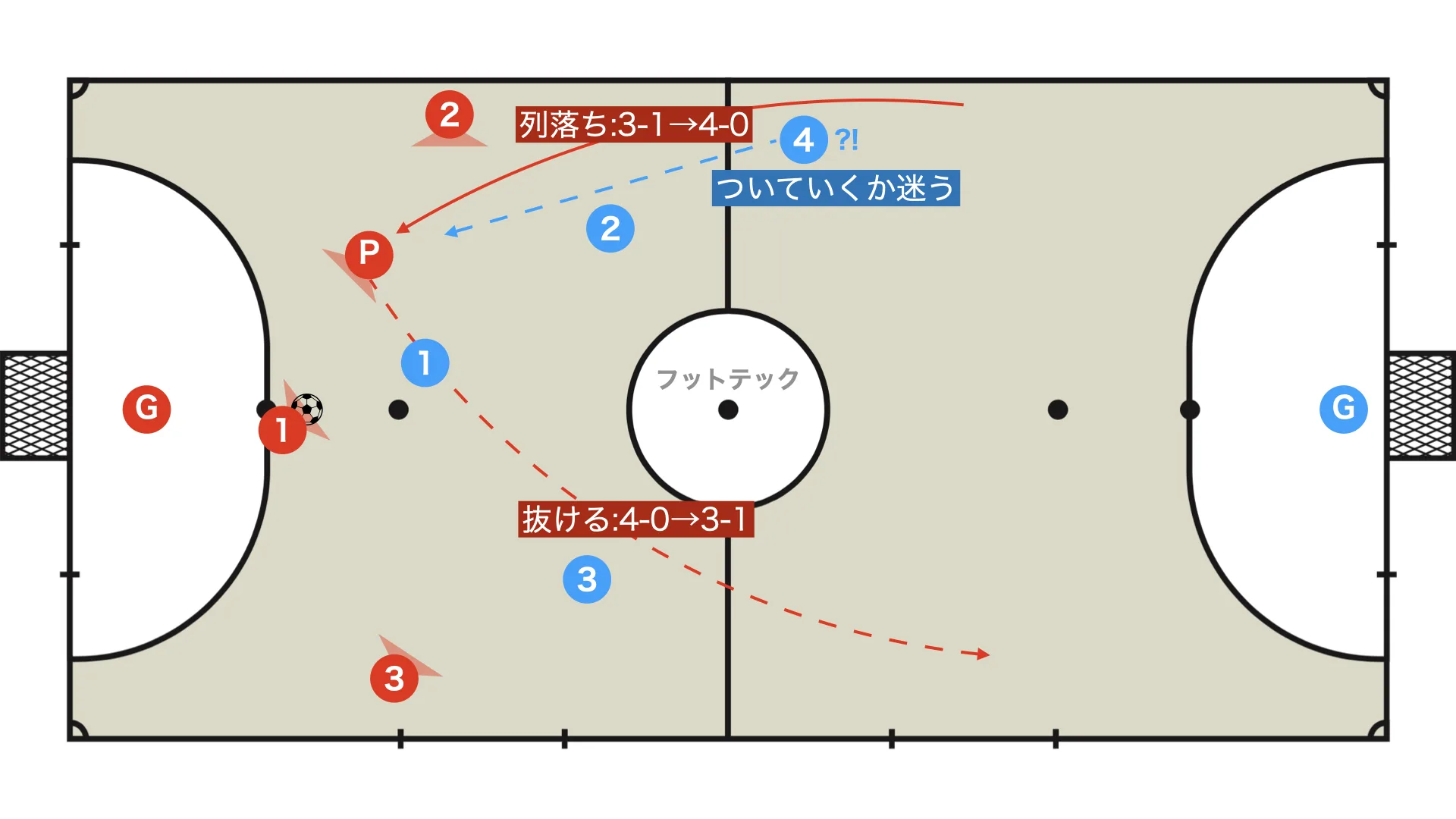
You sometimes see European teams combine 3-1 and 4-0 by using line cuts.
関連記事
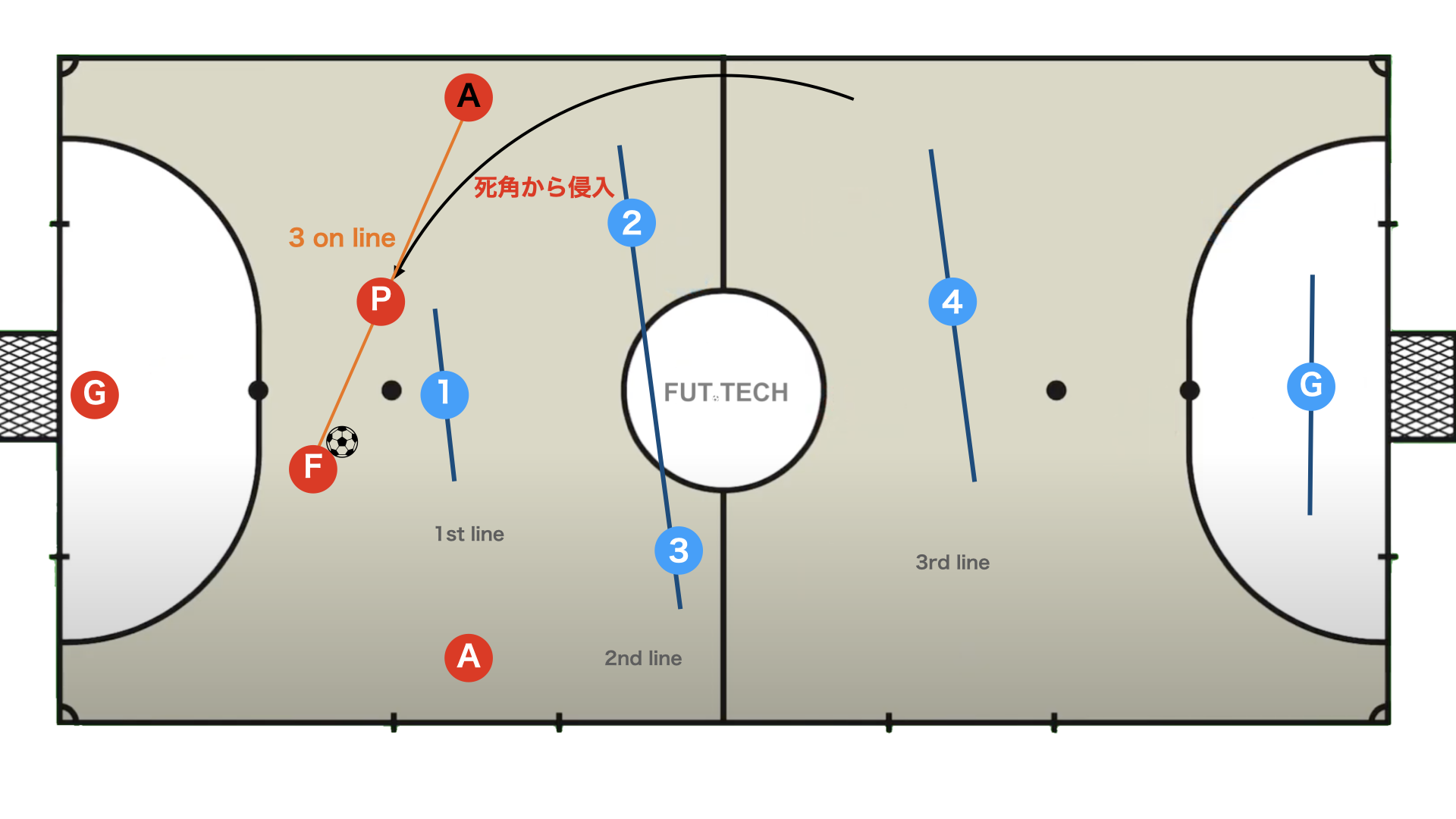
The Tactical Intent of the Line Cut: Three Advantages and Disadvantages
A tactical explanation of the line cut in futsal. This article organizes its definition, three advan…
続きを読む →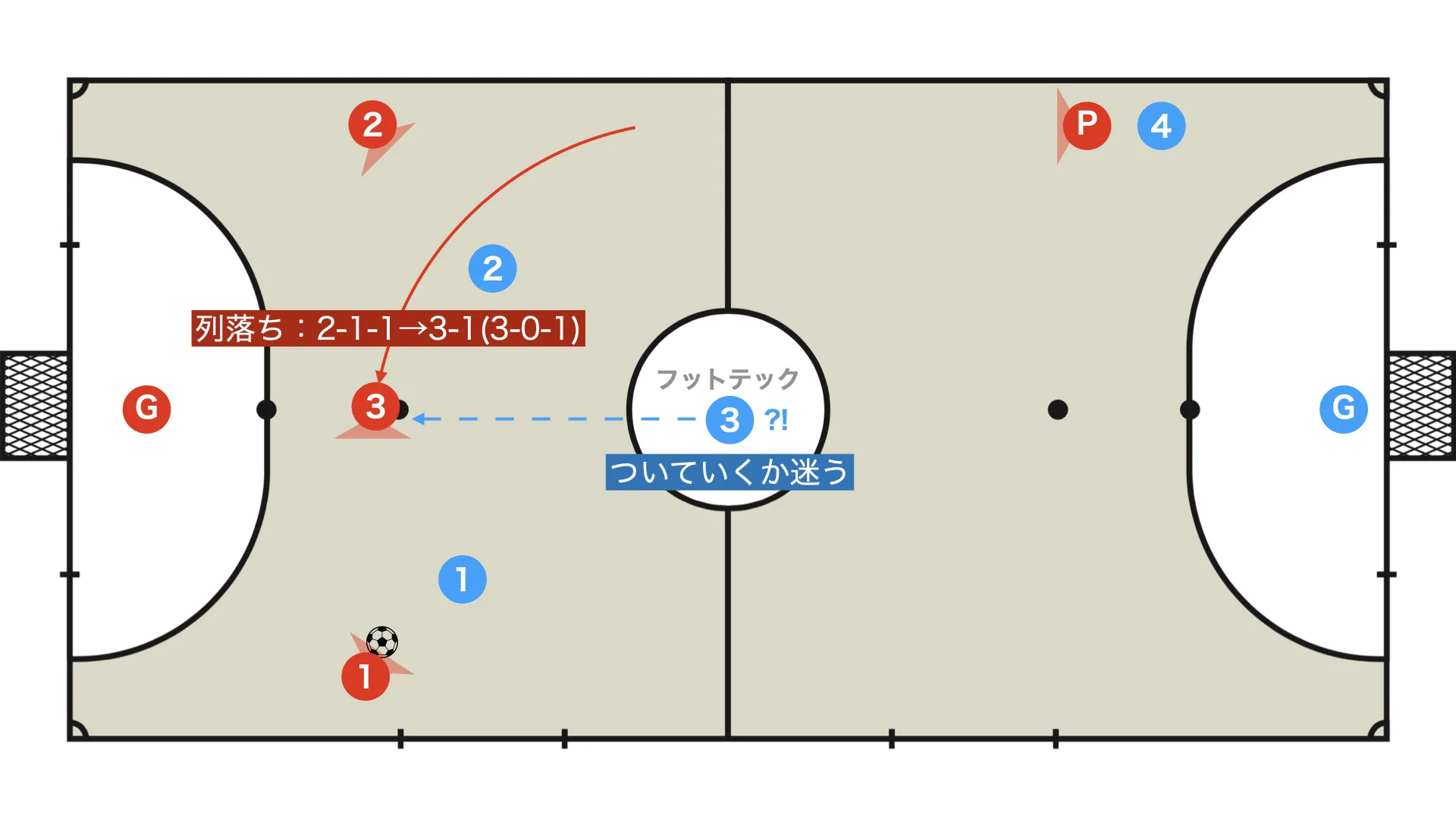
This was the main tactic used by Shriker Osaka when they won the title.
What did you think?
Positional attack has a lot of depth, with many different tactical options, but I recommend first learning one of them thoroughly.
As a player, it is usually enough to understand your own team's play model. But if you learn tactics in a more structured way, it becomes easier to scout opposing teams and much more enjoyable to watch matches such as the F.League.
Do not stop at just one. Try learning a variety of tactical systems in a structured way.
関連記事
Positional Attack: How to Think About Formations and Rotations
A structured guide to formations and rotations in futsal positional attack. This article explains th…
続きを読む →