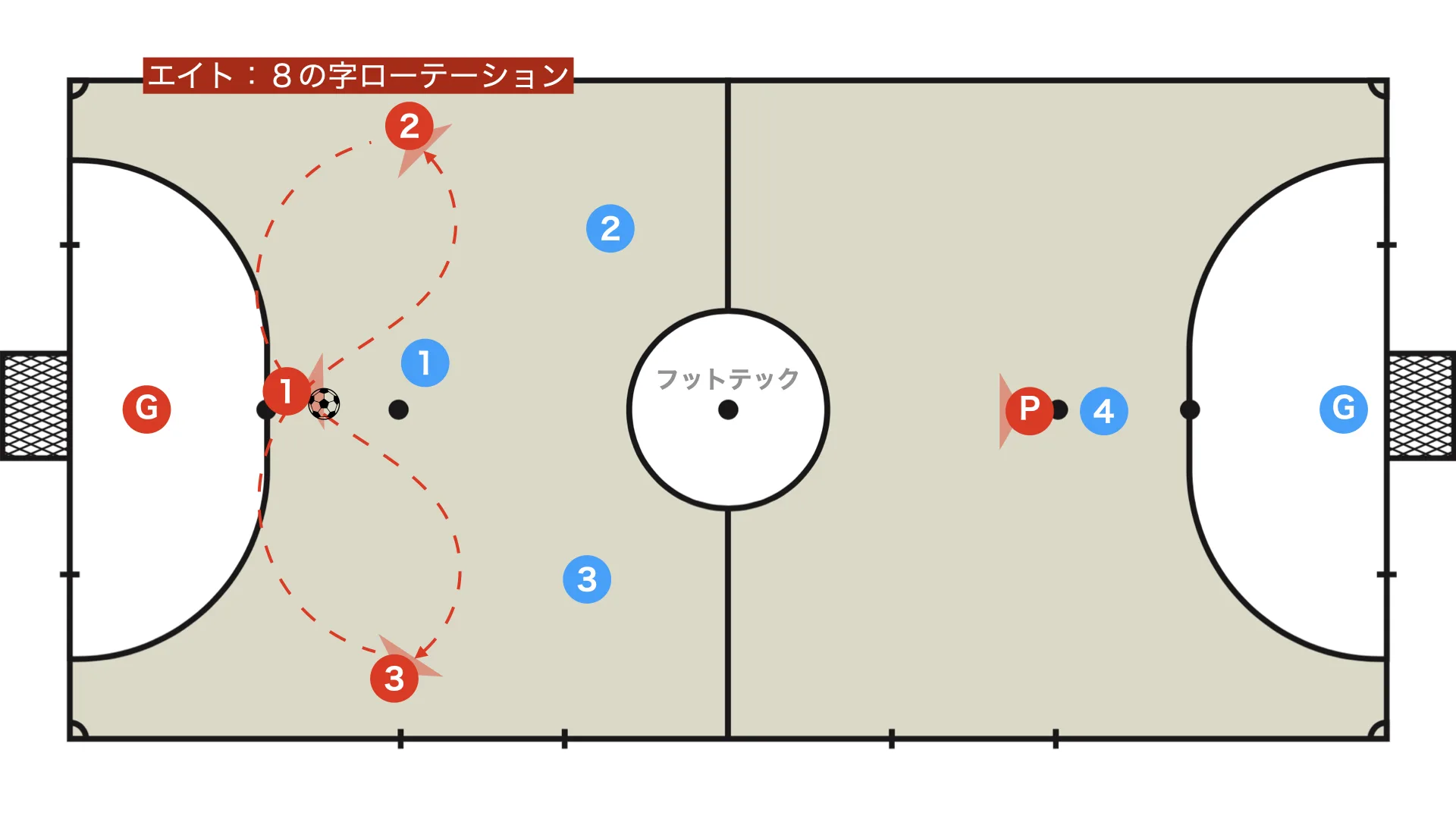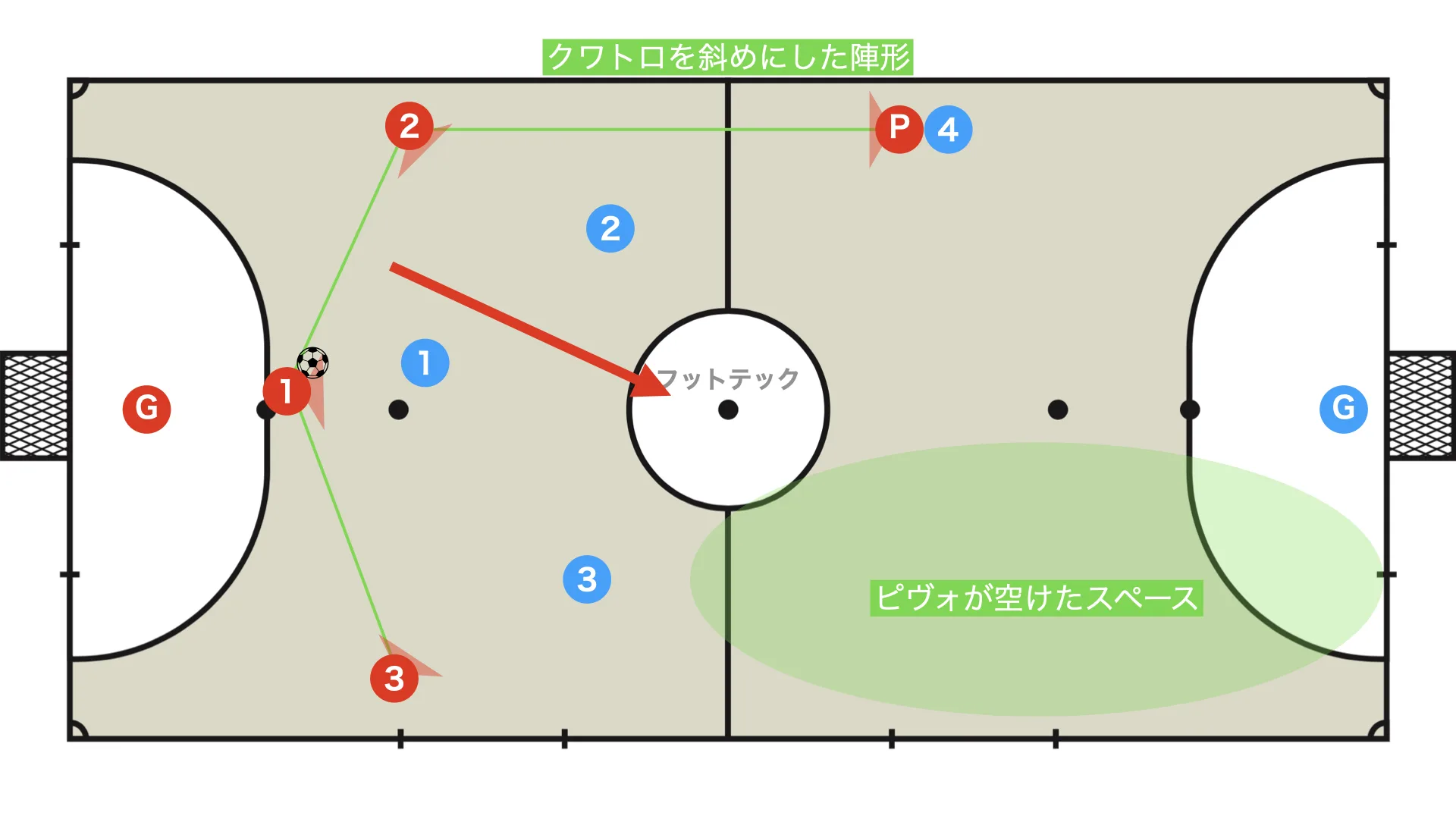
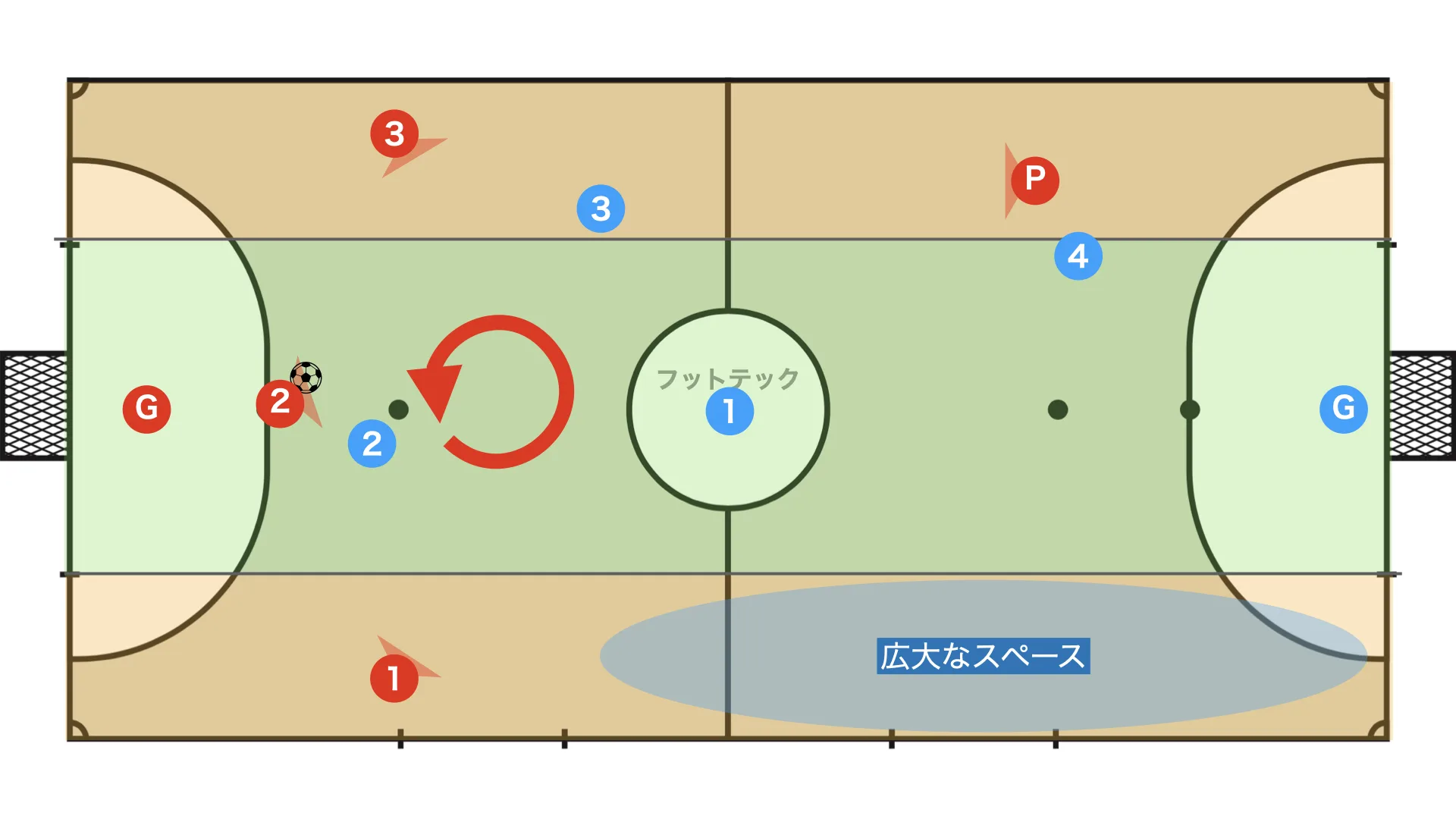
Redondo: A 3-1 Play Model Built Around Rotation
Published: 2021.10.27Updated: 2026.05.03
You have probably heard the term "rotation (redondo)," but many players still feel they have not clearly organized the principles behind how it works or when to use it.
Rotation (redondo) is a very effective way to break down a zone defence built on multiple lines, and it is a tactic used frequently in the F.League and top overseas competitions. Once you understand the mechanism by which multiple players combine around the pivot to break the defensive line, your attacking options expand significantly.
In this article, I will explain the principles and practical use of redondo through the example of the 3-1 play model used by Fuchu Athletic FC.
As a basic rule, it is safer for the pivot to receive on the side opposite to their dominant foot, so here we will assume the pivot is right-footed.
(If the pivot is left-footed, reverse everything left to right.)
In that case, the rotation here is counterclockwise. If you are interested in the opposite clockwise version, see the article below.
関連記事
Breaking Down Zone Defence with the False Pivo Rotation (Redondo)
An explanation of the false pivo rotation (redondo) in futsal. This article uses diagrams to clearly…
続きを読む →Tactical intent
- Use the space between the lines (entre lineas)
- Exploit the space opened by the pivot (weak-side ala backdoor, diagonal)
- Progress and finish through pivot entries on the pivot side
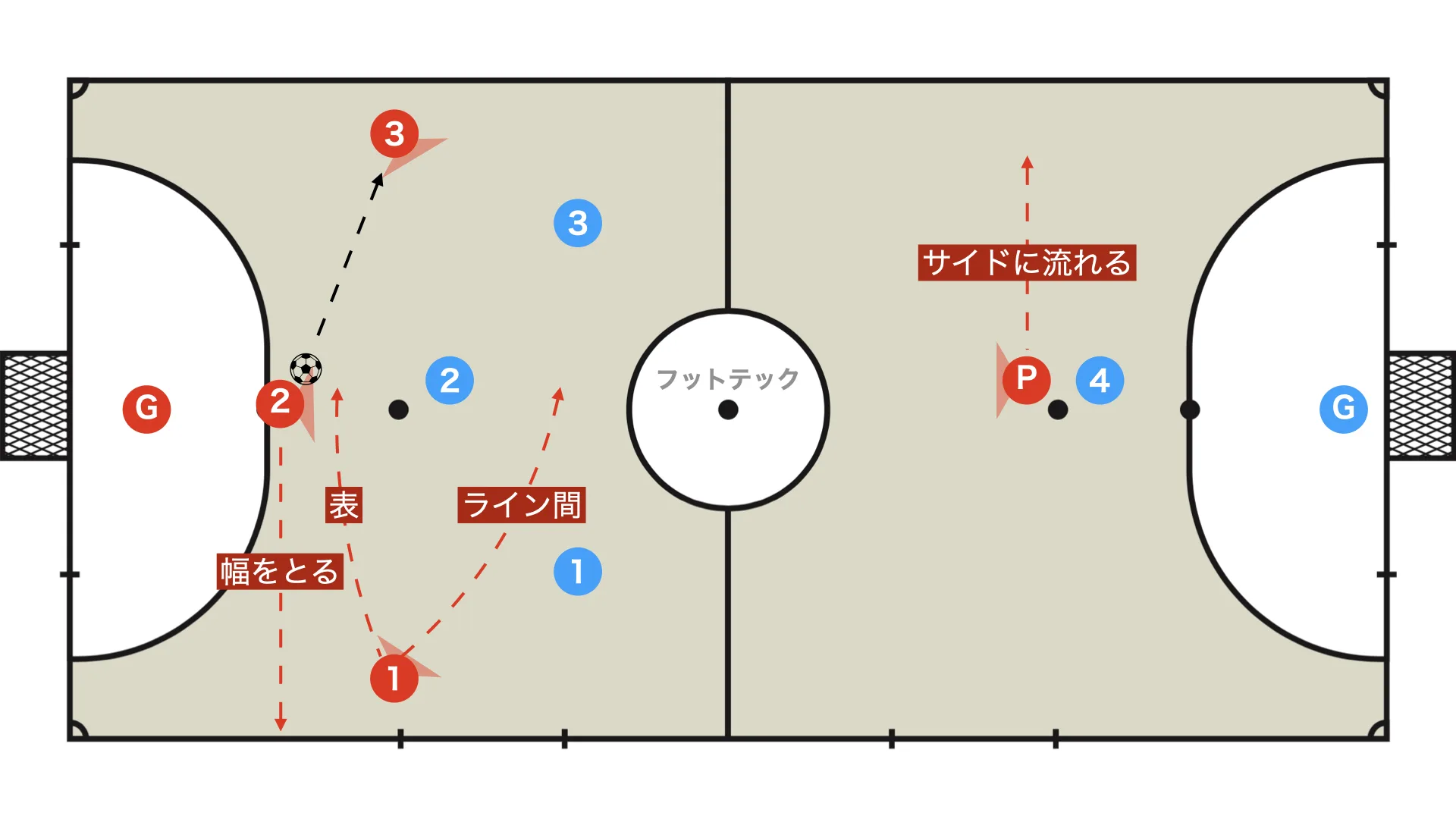
- The pivot drifts wide
- The fixo provides width
- The weak-side ala supports the ball carrier either between the lines or from the 1st line (front side)
Here, I will omit the tactic of using the front side to create a 3-on-line in the 1st line.
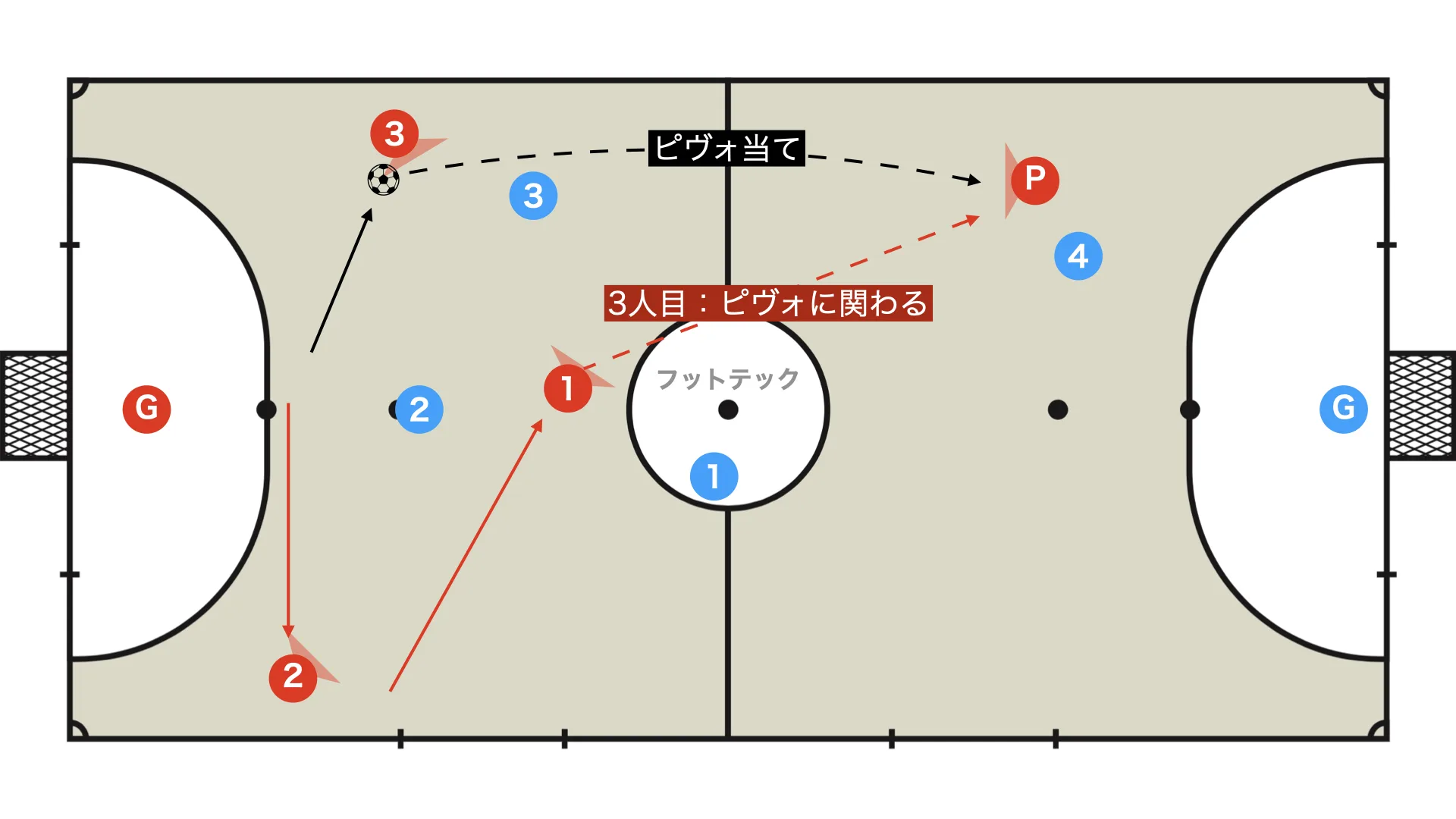
If the 1st defender's press is weak, look for a right-angle entry into the pivot.
After the pivot receives, the player positioned between the lines and closest to the pivot should immediately combine with the pivot and go simply to the finish.
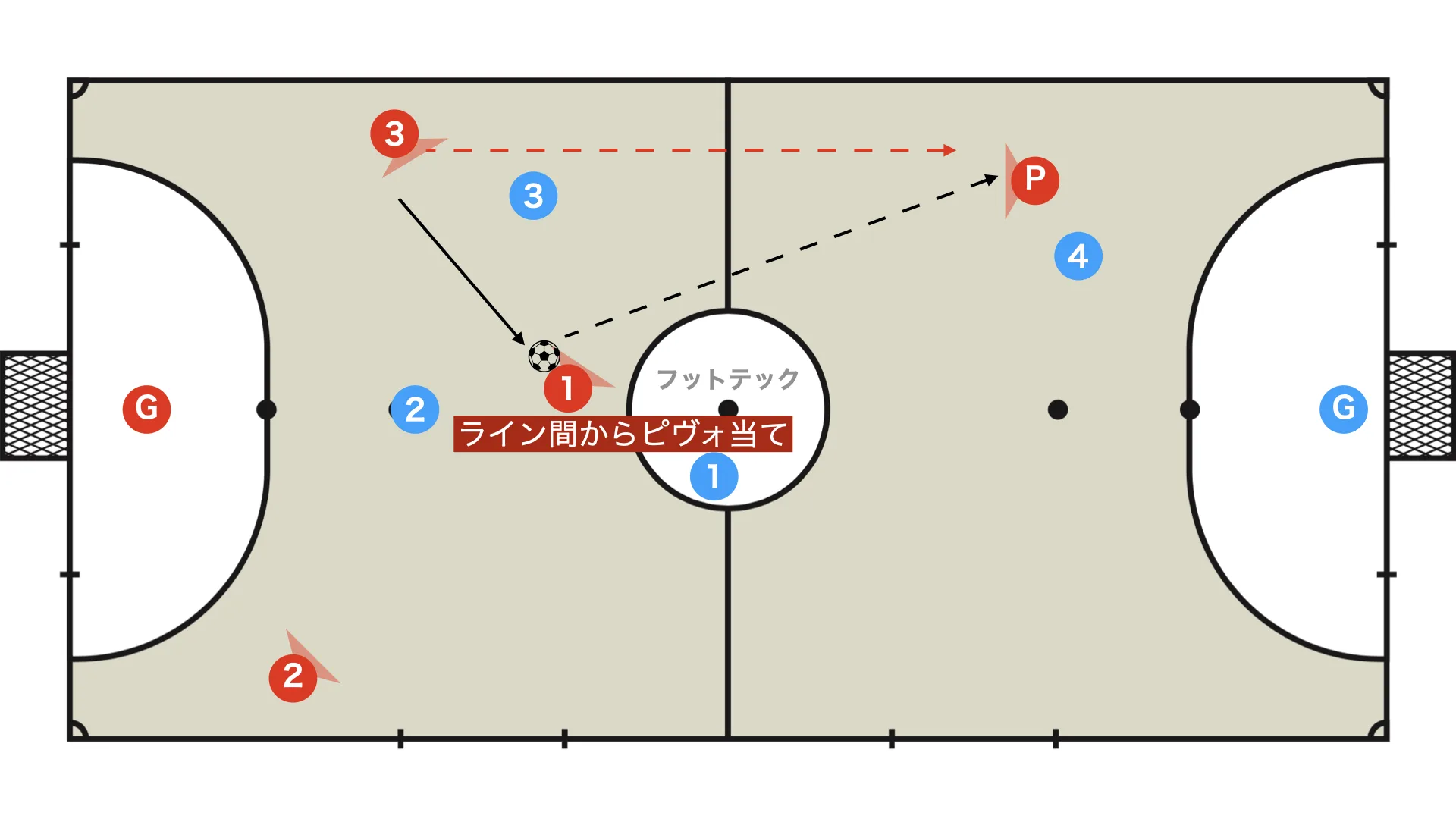
A pivot entry at an angle greater than 90 degrees requires a bit more technique, but ideally it should still be played directly.
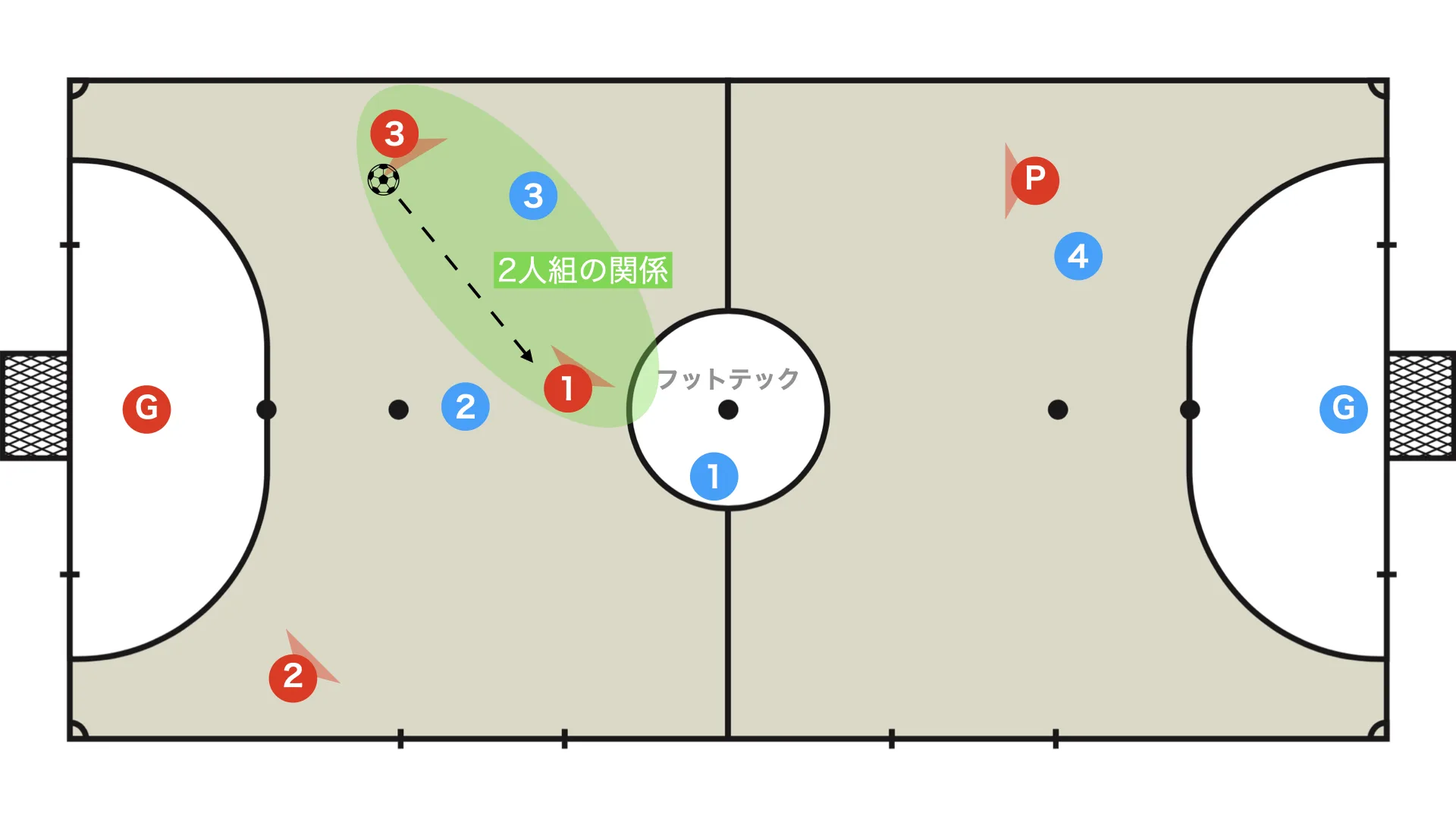
Effective options in this two-player relationship
- One-two
- Parallel (mini-parallel)
- Diagonal
- One-two without advancing -> weak-side ala backdoor
- Turn between the lines -> pass to the weak-side ala, etc.
Here, I will explain the most representative ways to break the defence among these options.
関連記事
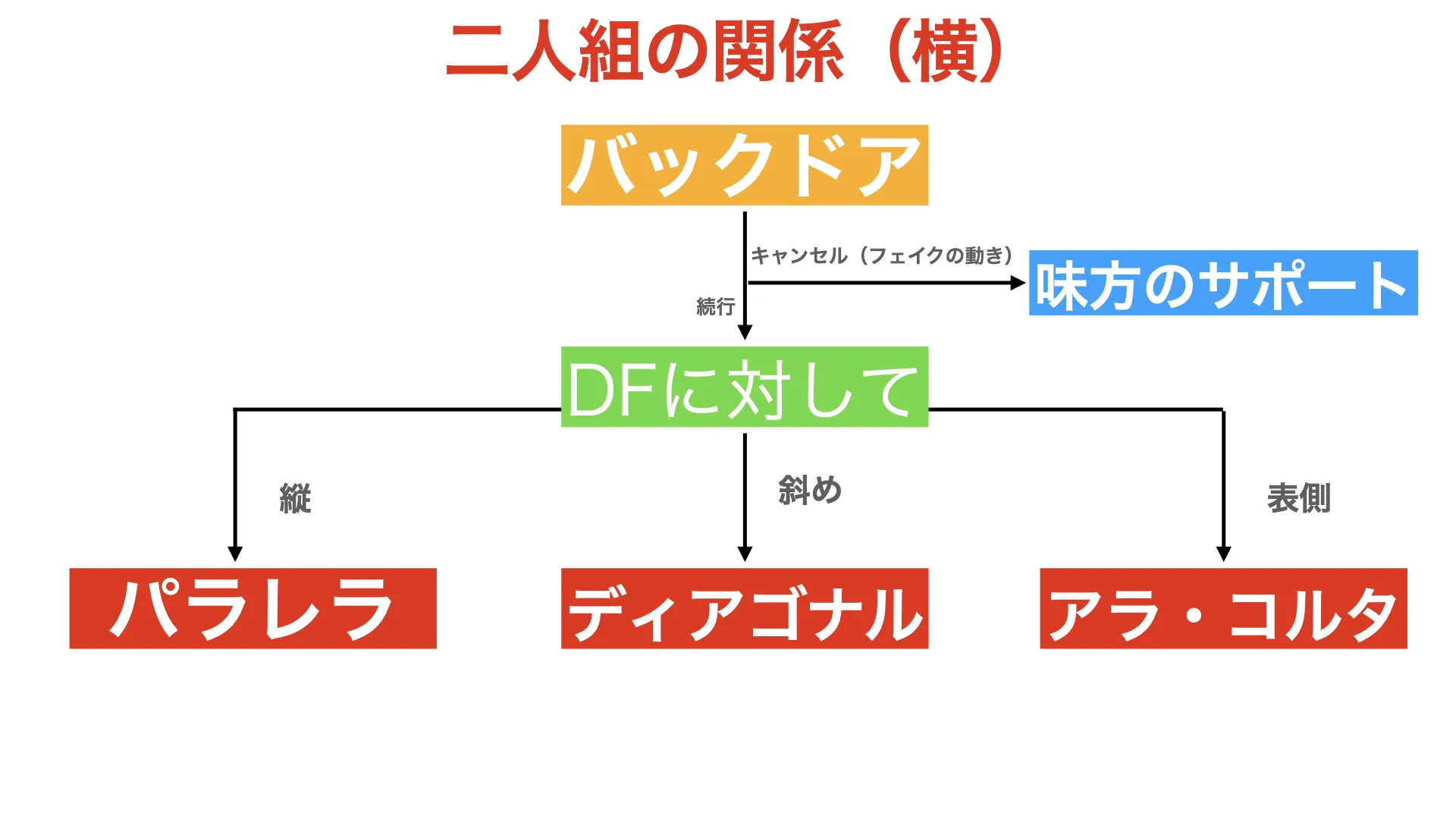
Overview: Two-Player Combinations in Futsal
An overview article explaining two-player combinations in futsal. It organizes the relationships and…
続きを読む →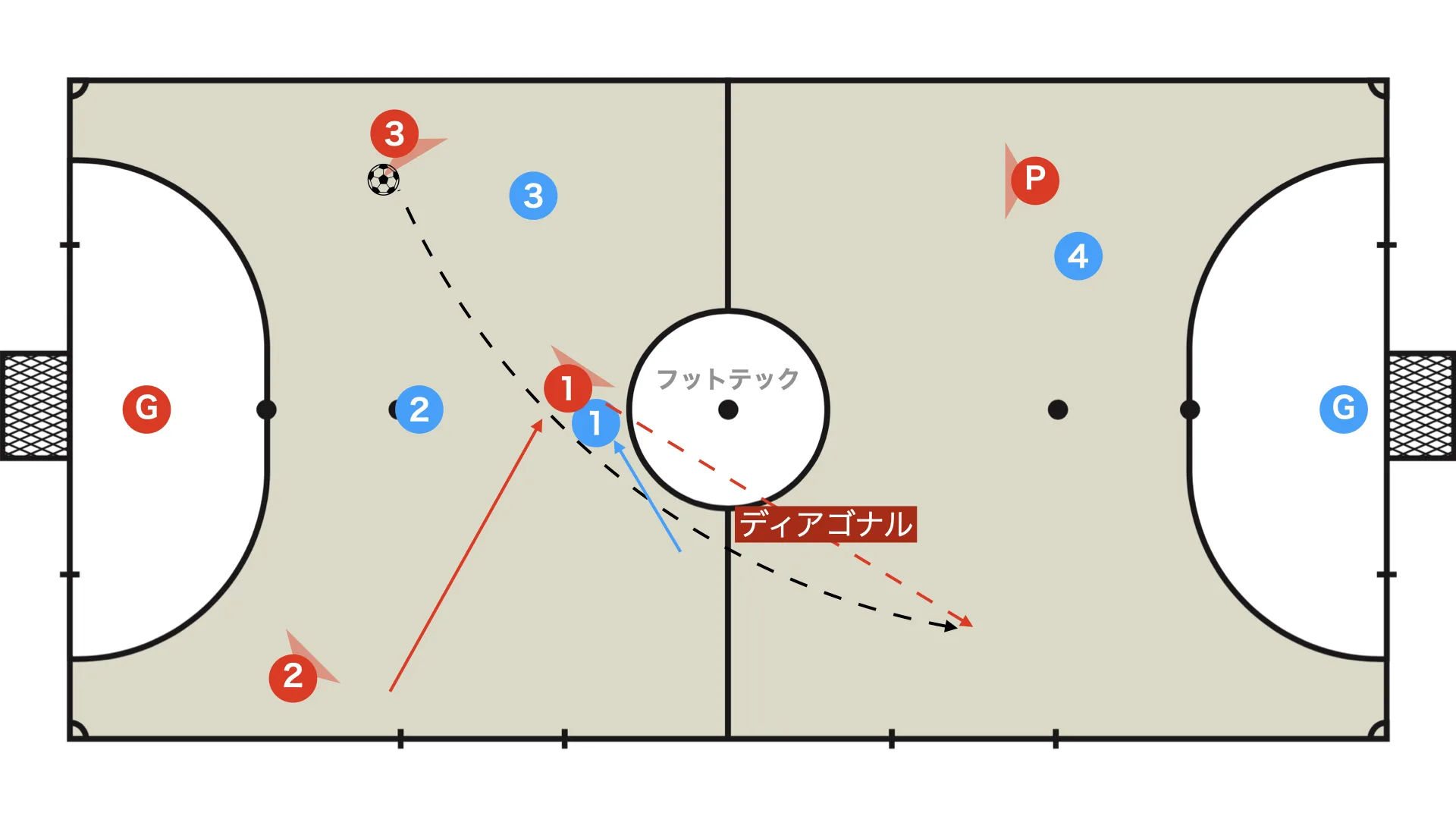
If the 2nd-line defender steps toward the player between the lines, it is effective to change direction sharply and break through with a diagonal run.
See the goal below for a model example.
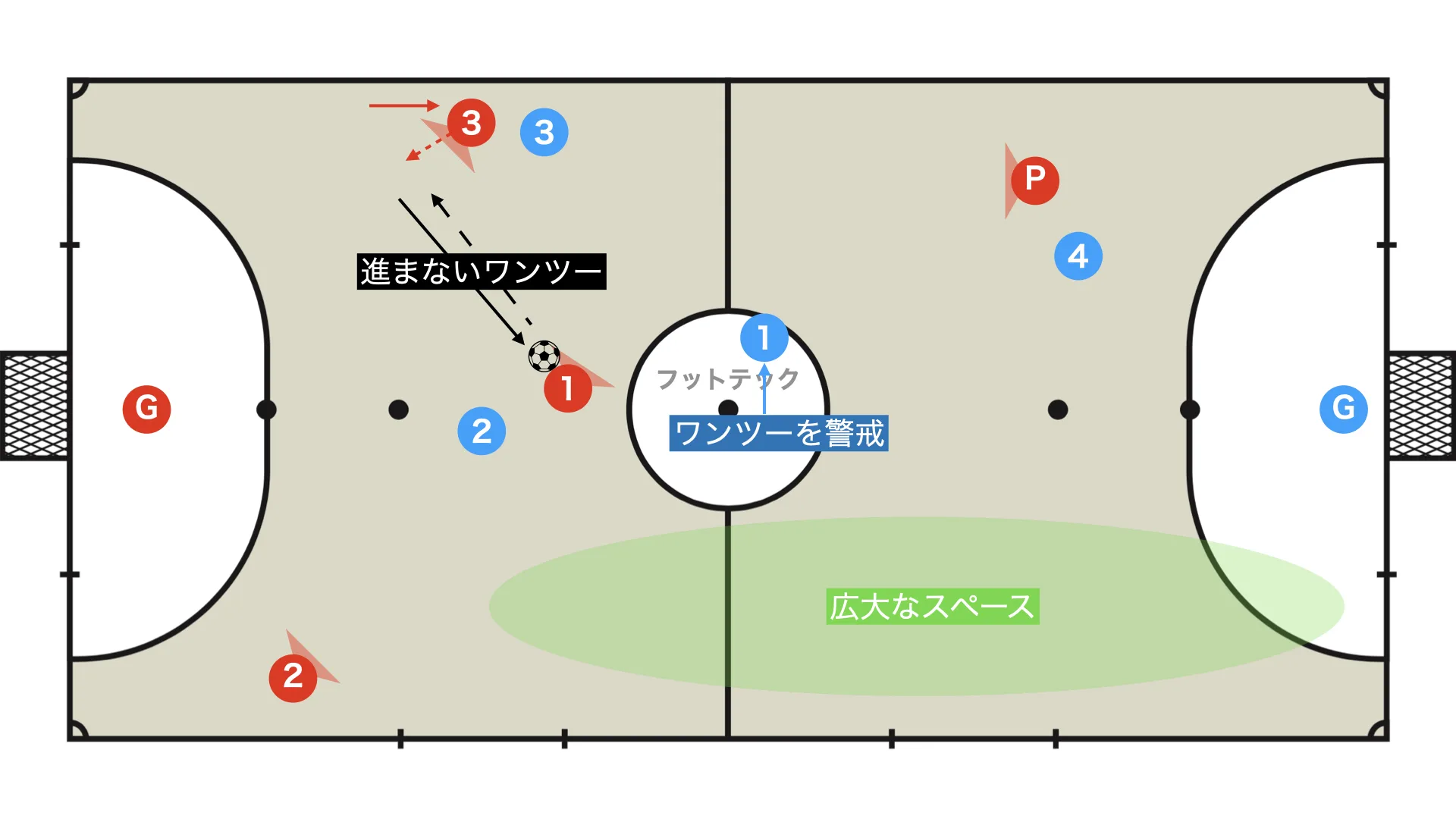
Playing a one-two without advancing has the benefit not only of weakening the opponent's press, but also of pulling the 3rd defender (blue no. 1) out of position and creating space on the weak side.
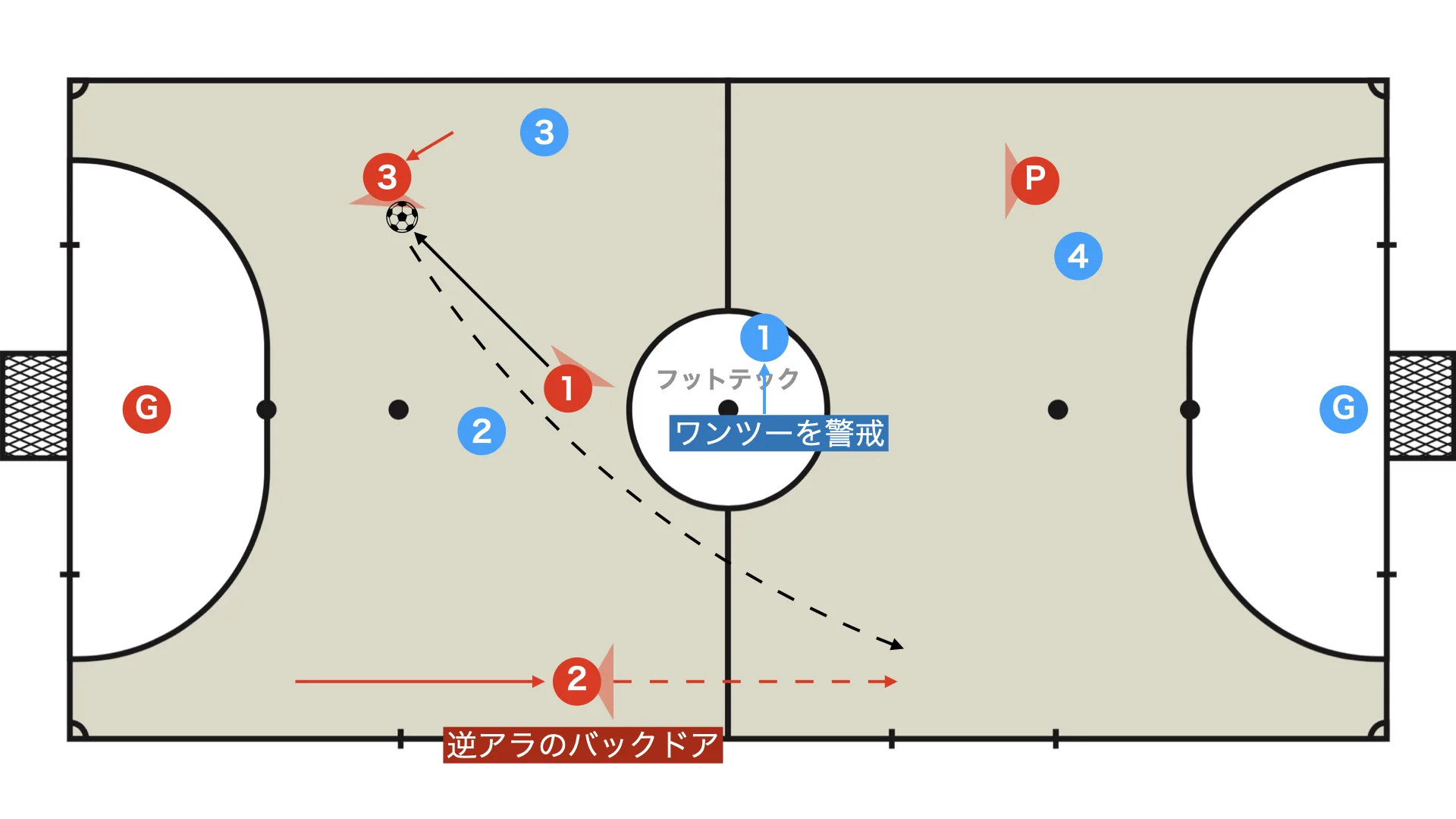
Many teams also use this entire behind-the-line movement as a set play from their own kick-in.
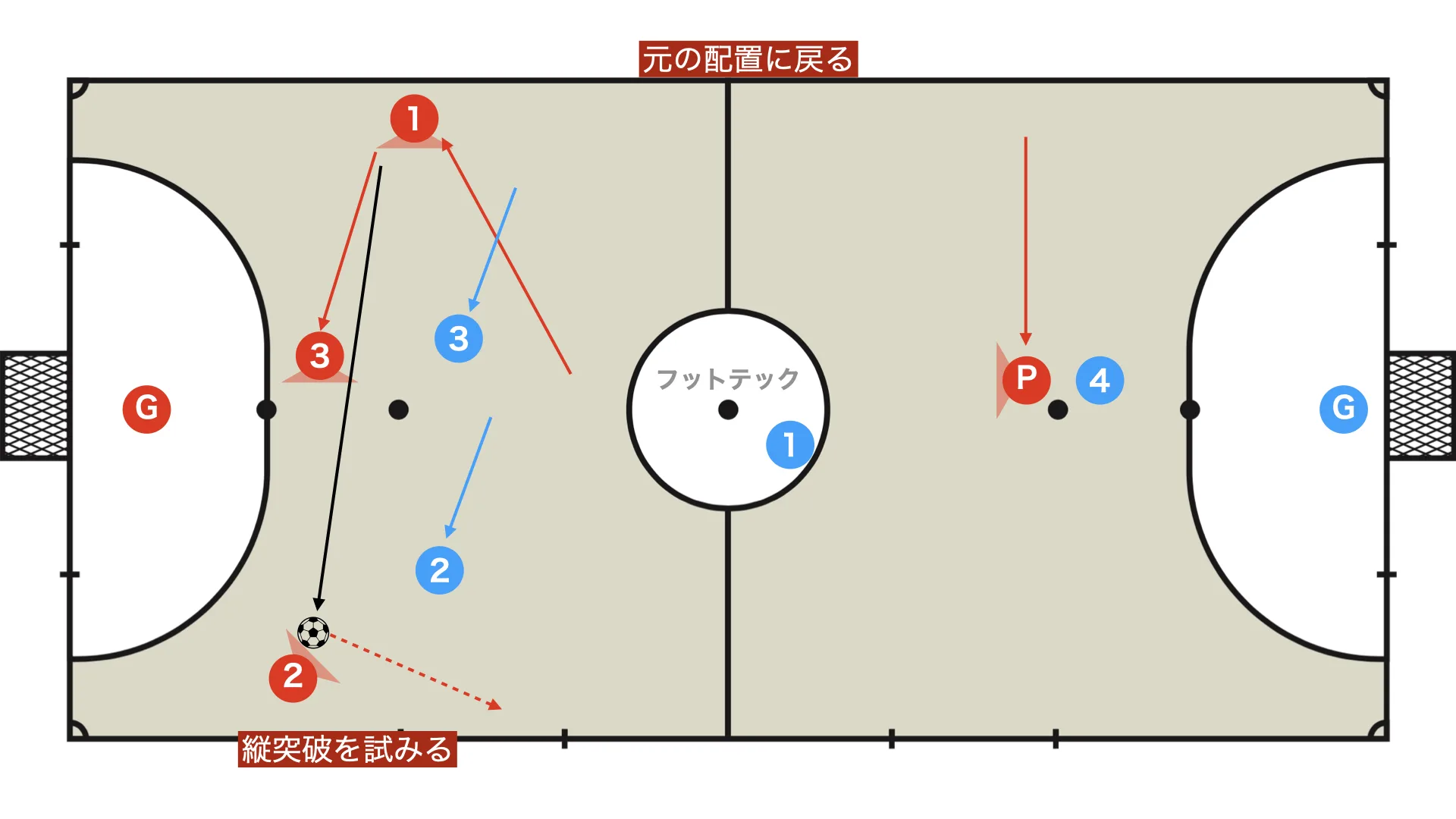
If the attack cannot break through on the pivot side, switch the ball to the weak side and return to the original structure.
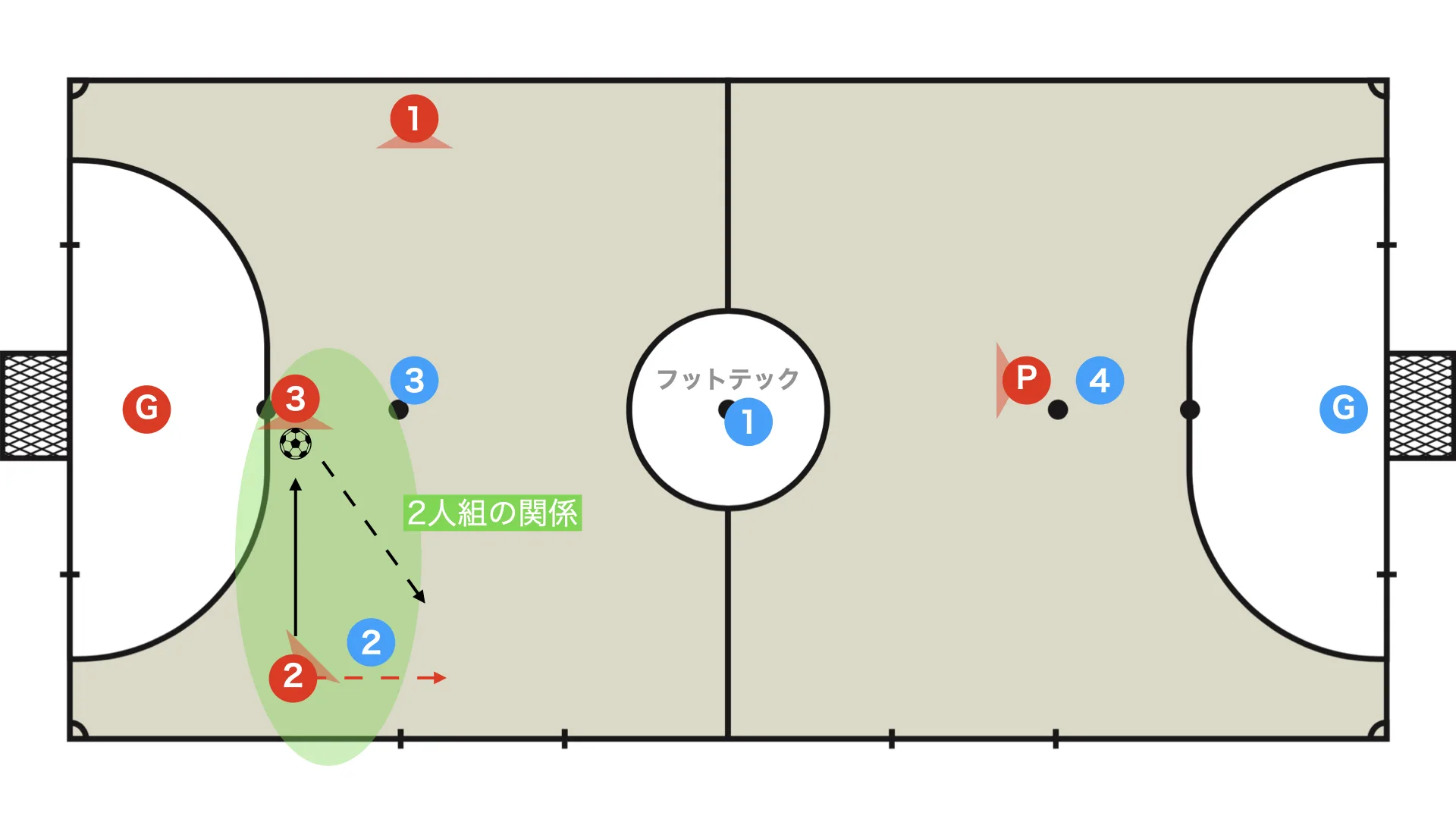
If the fixo is not being pressed, it is effective for the ala to attack the space behind the opponent and create a duel.
Two-player relationship (ala movements and duels)
- Backdoor
- A la corta
- Mini-diagonal
- Central push-out, etc.
Here, I will explain only a la corta.
If you want more detail on the others, read the article below.
関連記事
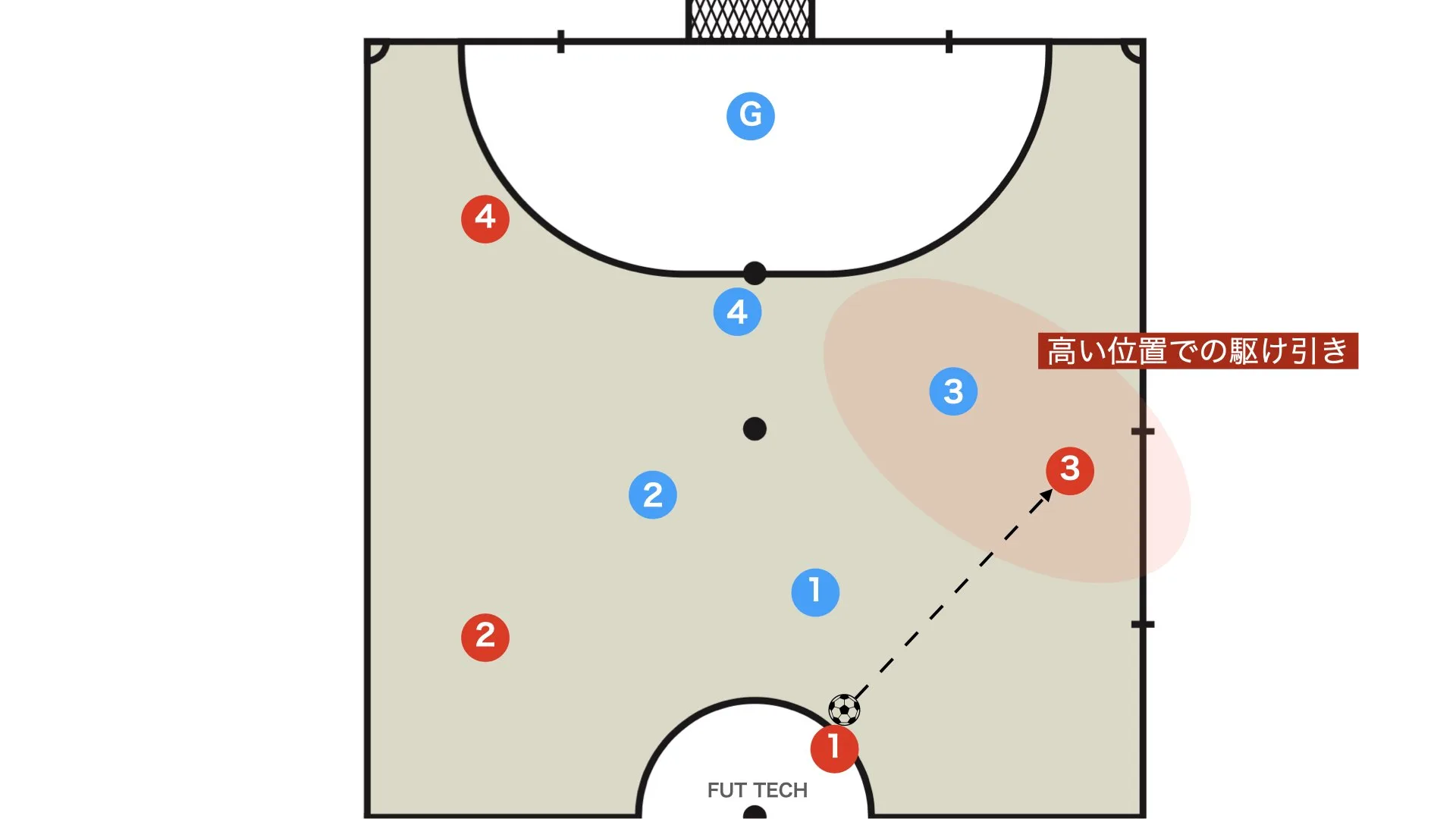
Two-Player Relationships: The Ala's Tactical Moves (A la Corta, Mini Diagonal, Central Push-Out)
An explanation of the tactical interplay between the fixo and the ala in two-player relationships. U…
続きを読む →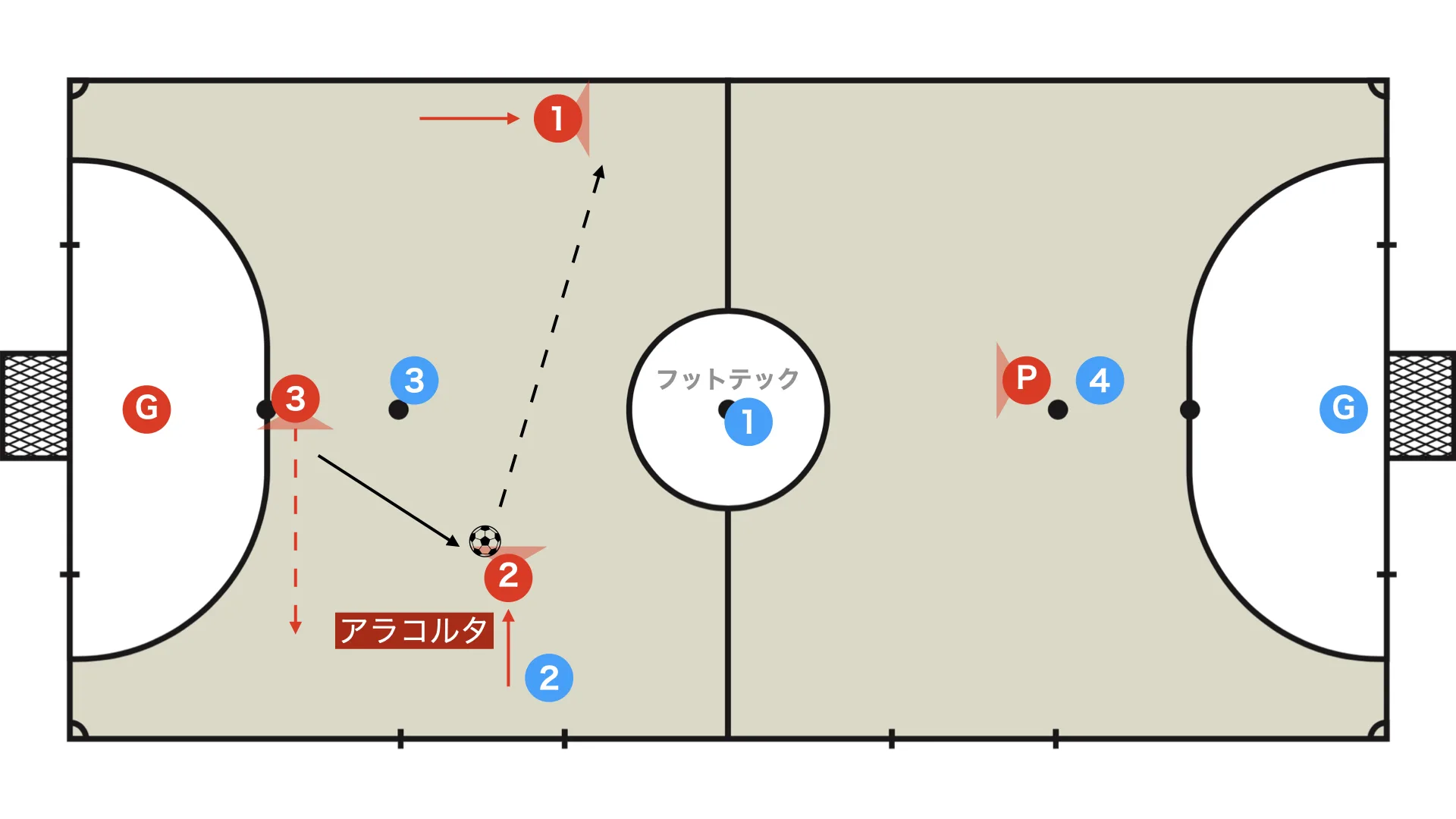
After the ala receives through a la corta, the following options are effective:
- Carry the ball forward off the dribble -> 3v2
- Switch to the weak side
- Play into the pivot
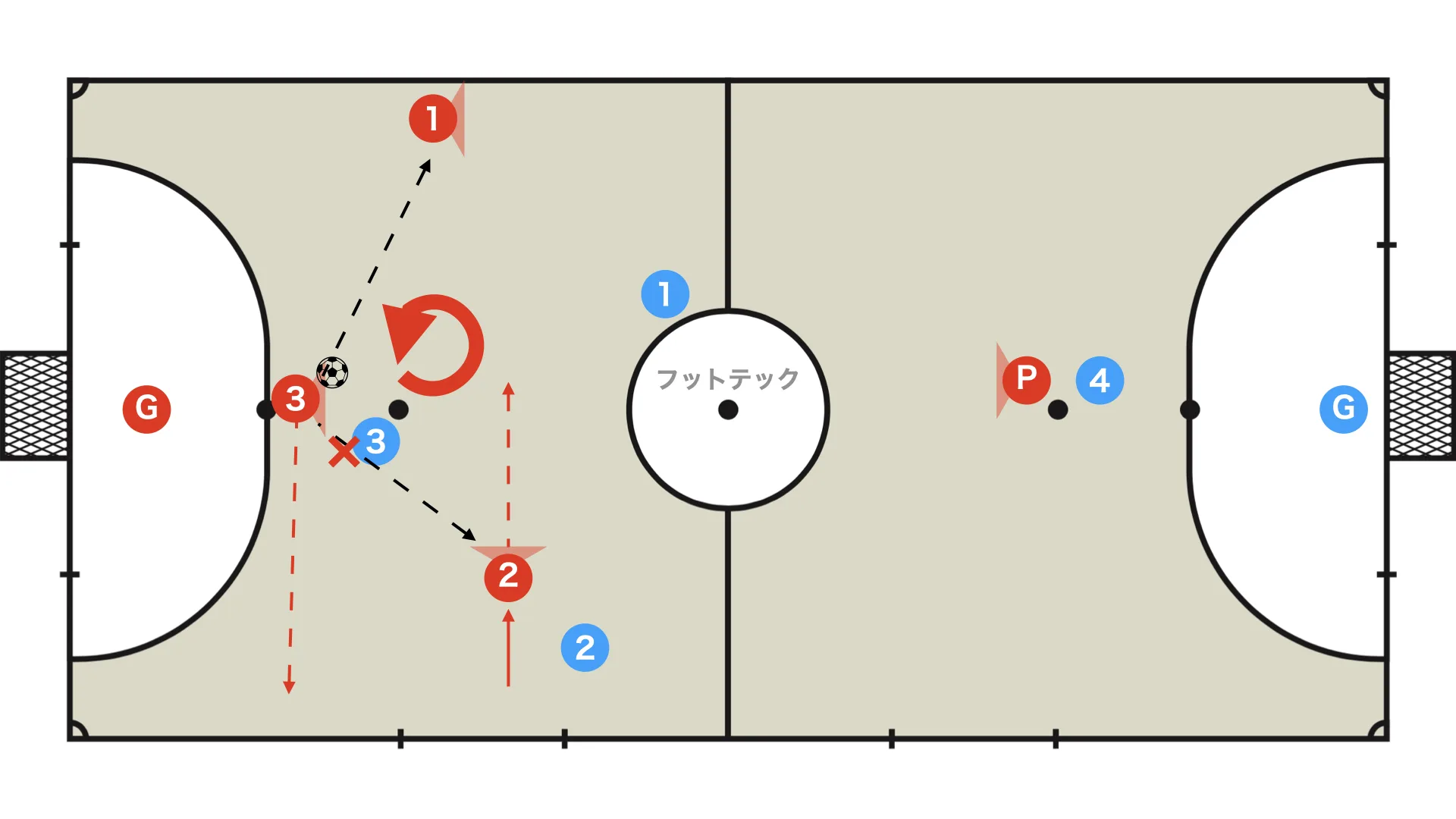
If the ala comes short with a la corta but you still cannot play the pass, switch the ball to the weak side and continue straight into the rotation.
Because the player who checked short on the front side through a la corta can immediately support the ball carrier, you can create a temporary numerical superiority.