Breaking Down Zone Defence with the False Pivo Rotation (Redondo)
Published: 2021.09.24Updated: 2026.05.02
This article is for players who have heard the term "false pivo" before, but are still unsure how it differs from a normal pivo and in what situations it should be used.
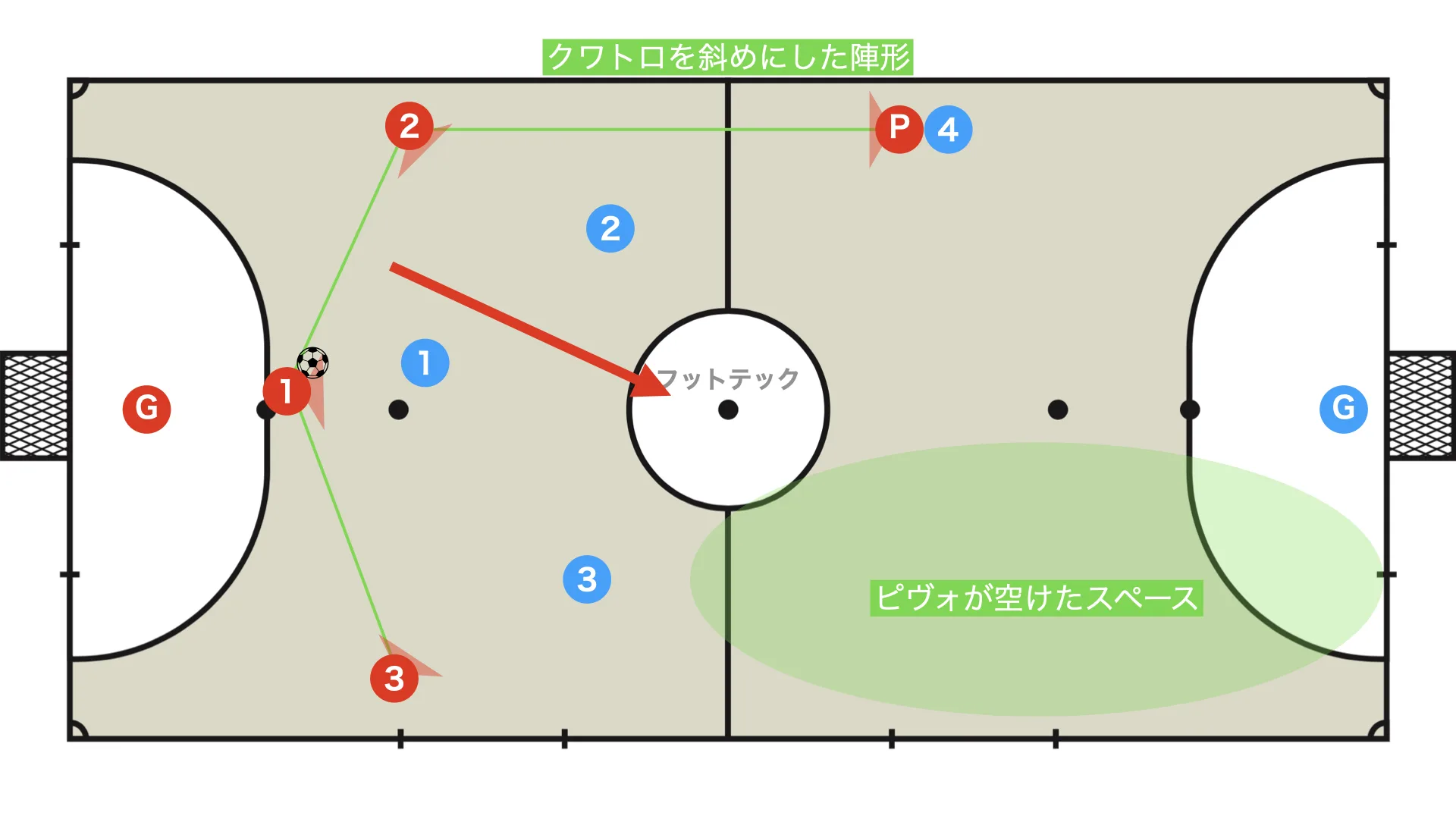
A false pivo is a shape in which the pivo stays wide to create space on the far side. The false pivo rotation (redondo) built around that space is an extremely effective tactic because it can break multiple defensive lines in a zone defence in a connected way.
This article explains the definition of the false pivo, its tactical purpose, and concrete rotation patterns in detail with diagrams.
関連記事
Positional Attack: How to Think About Formations and Rotations
A structured guide to formations and rotations in futsal positional attack. This article explains th…
続きを読む →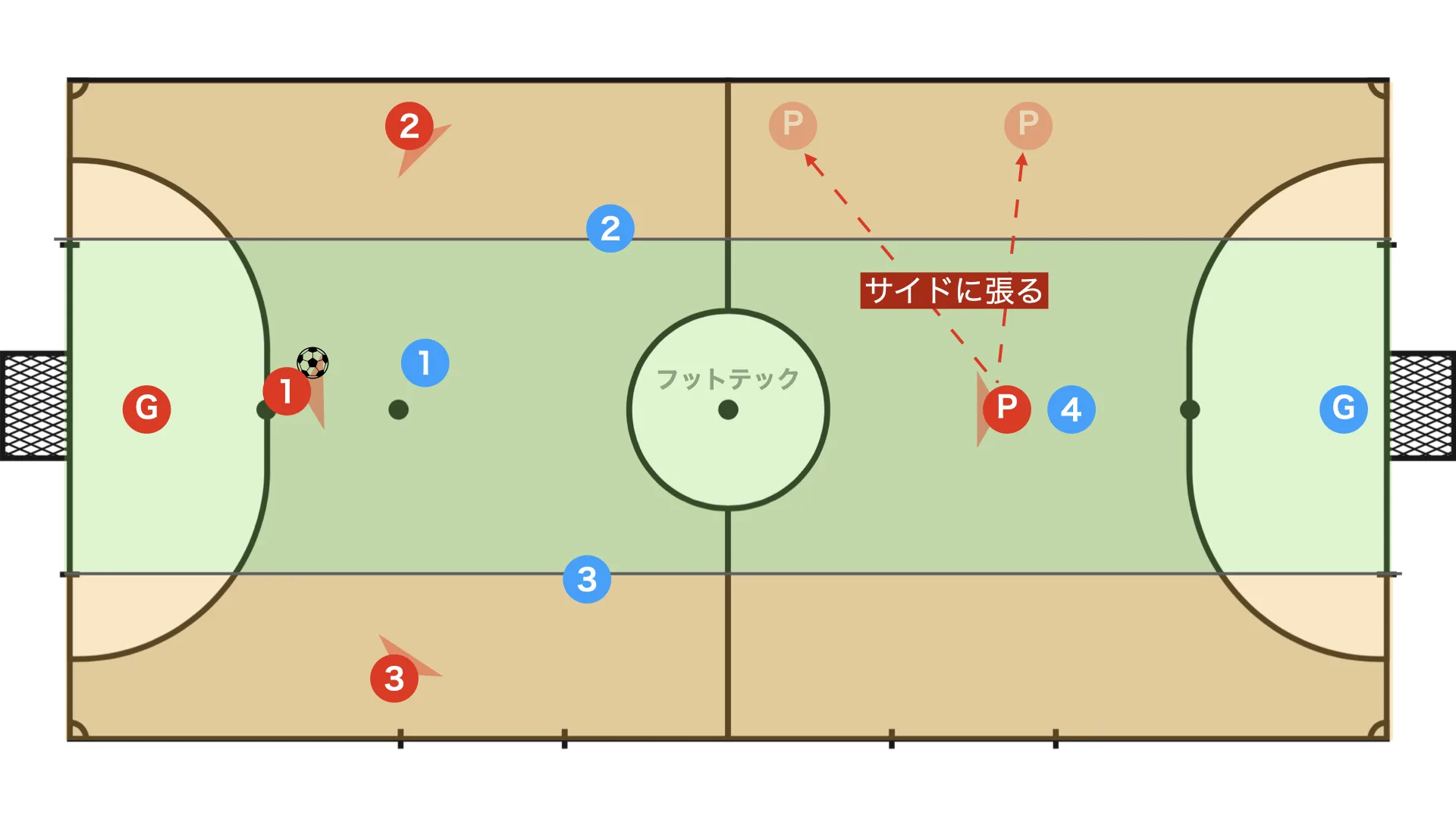
The false pivo originally comes from football's false 9. In futsal, it became well known when former Japan national team coach Miguel Rodrigo used it by moving the pivo out to the side, on the logic that simply posting the pivo up centrally was not creating a useful attacking reference point.
Instead of serving only as a frontline outlet in the usual pivo role, the player may drop into the second line to help the build-up while pretending to be a pivo, or stay wide to create space on the opposite side.
Is "false pivo" the name of a shape, or the name of a position?
The answer is: both.
In context it is usually obvious which meaning is intended, but when referring to the shape, terms like "false pivo setup" or "false pivo shape" are clearer.
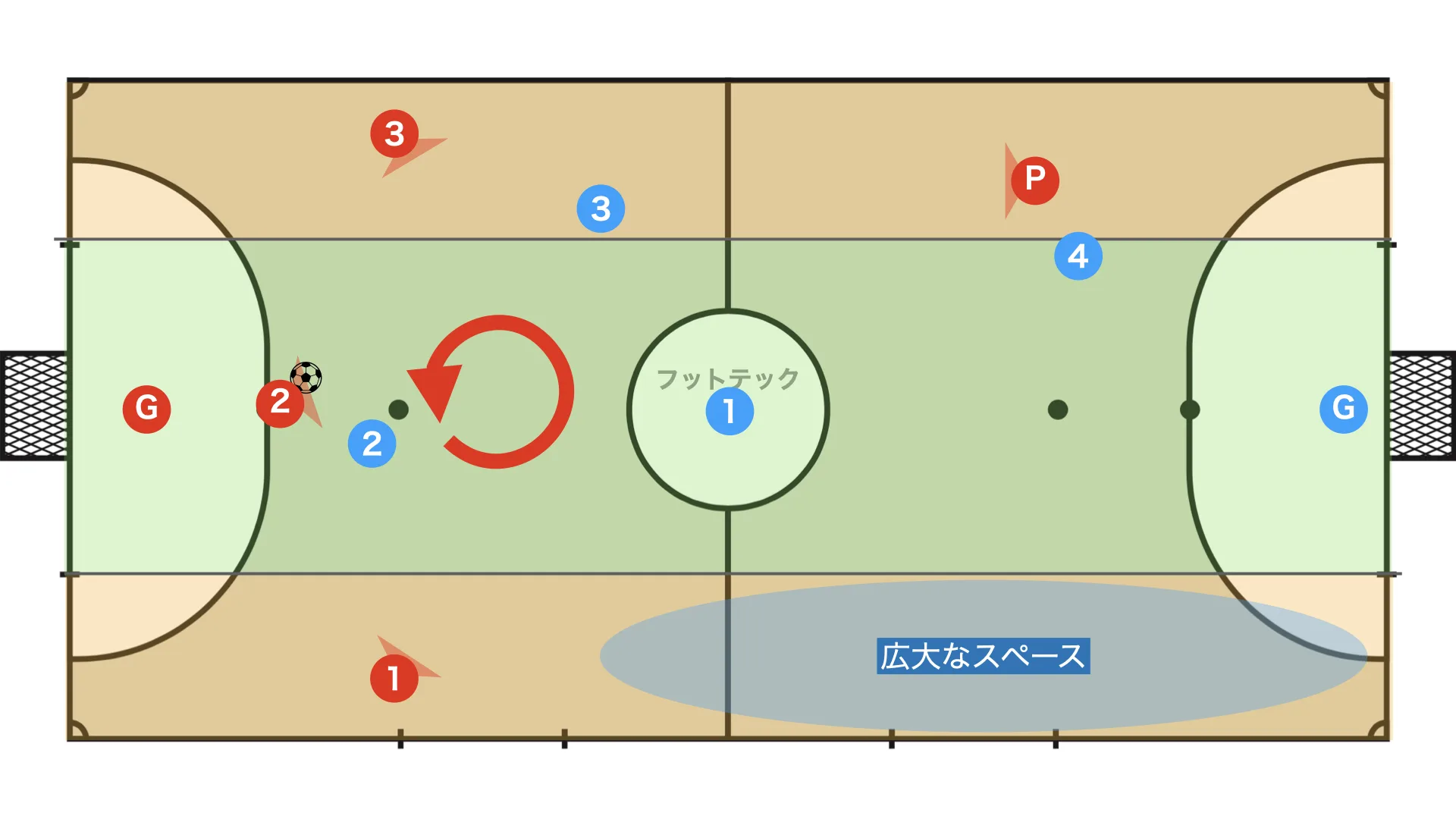
The idea is to make effective use of the space created on the far side when the pivo drifts wide.
The 3-1 shape with the pivo staying wide can also be viewed as a tilted version of quatro.
Because it includes several tactical elements of the quatro, you could describe it as a system that sits halfway between 3-1 and 4-0.
Some teams that are transitioning from 3-1 to 4-0 also introduce it as a way to train 4-0 principles.
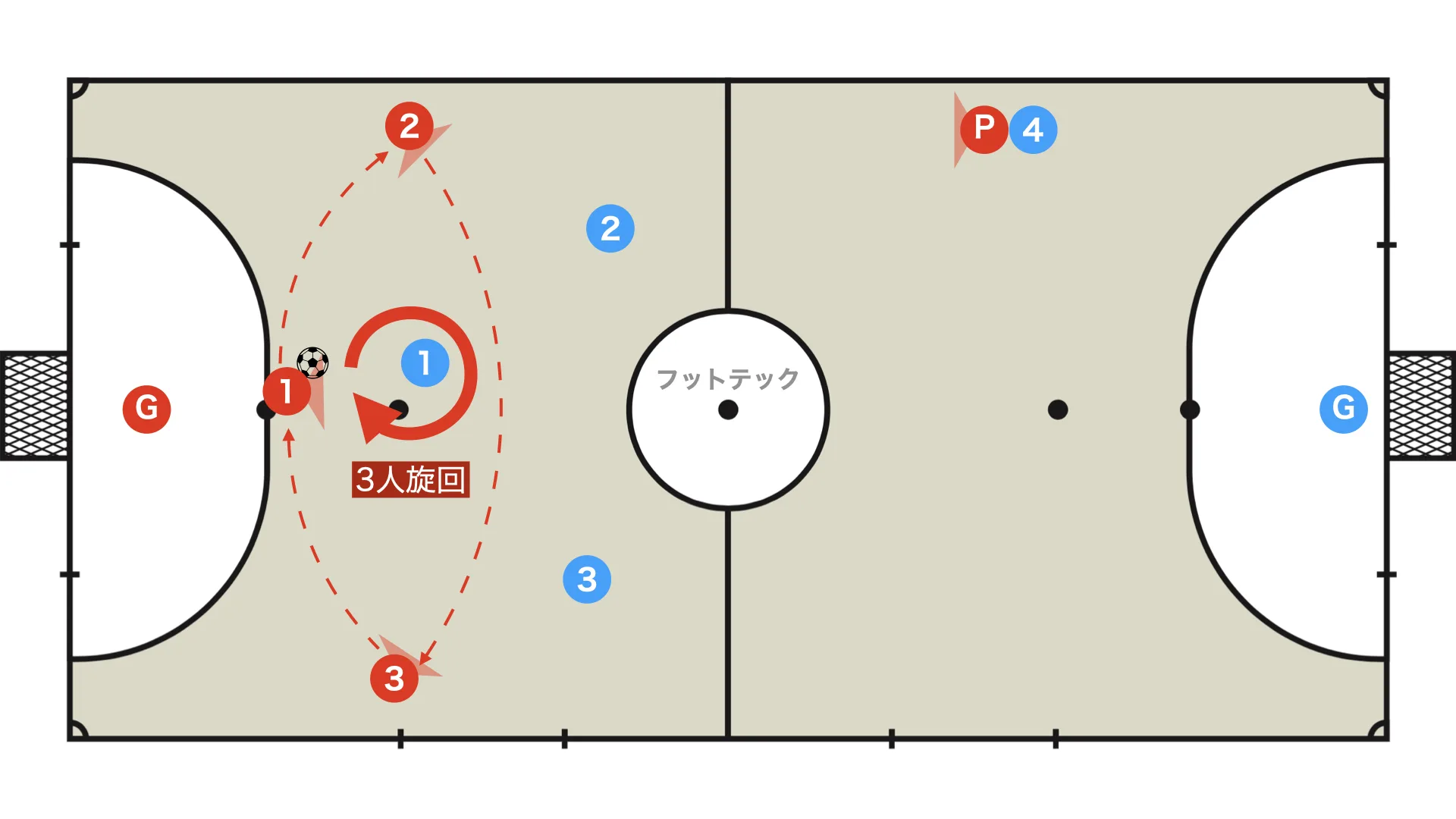
A rotation in which a certain number of players rotate in a certain direction is called a rotation, or redondo.
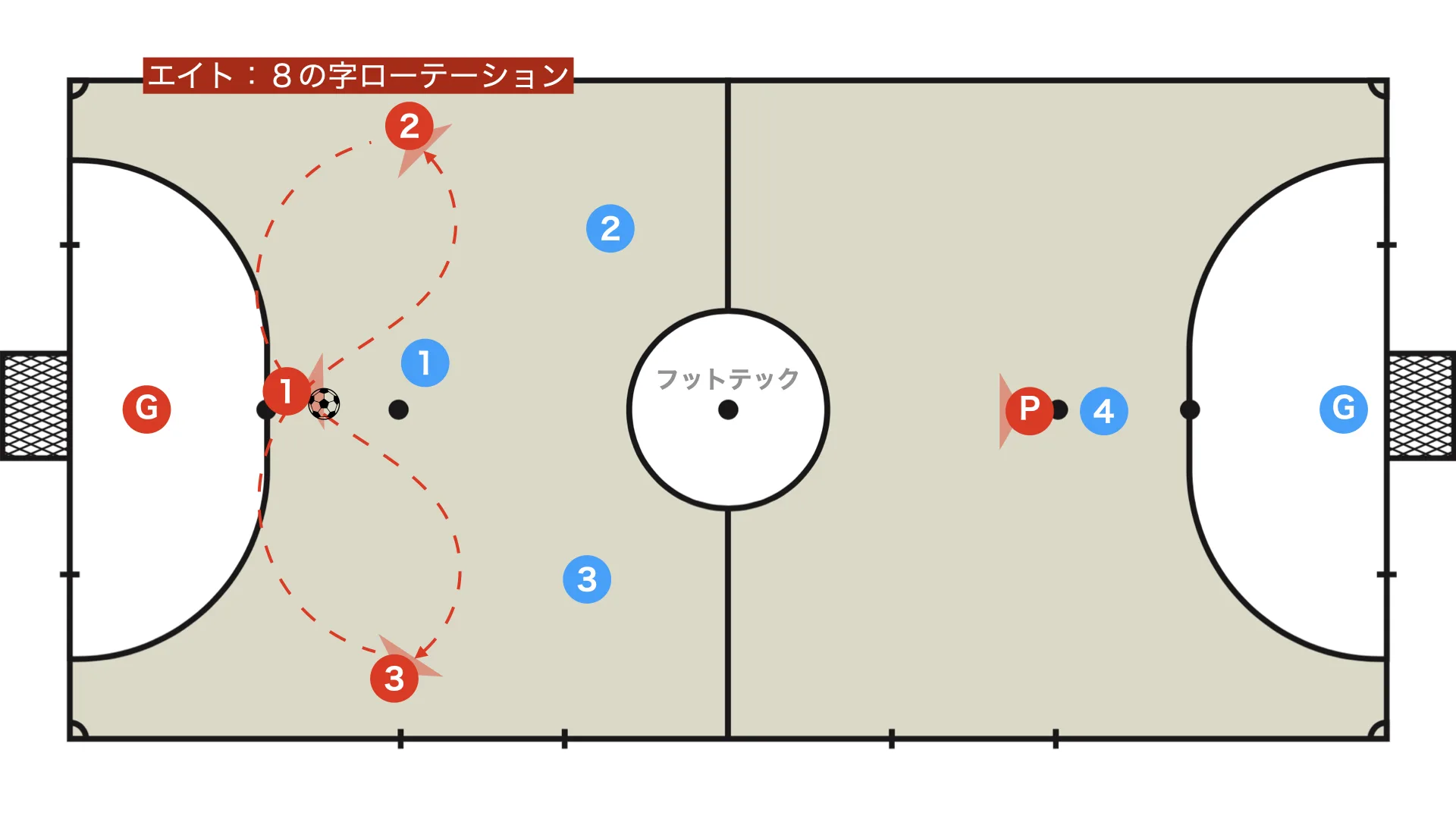
In false pivo rotations, the most common pattern is for the back three to rotate clockwise as shown above.
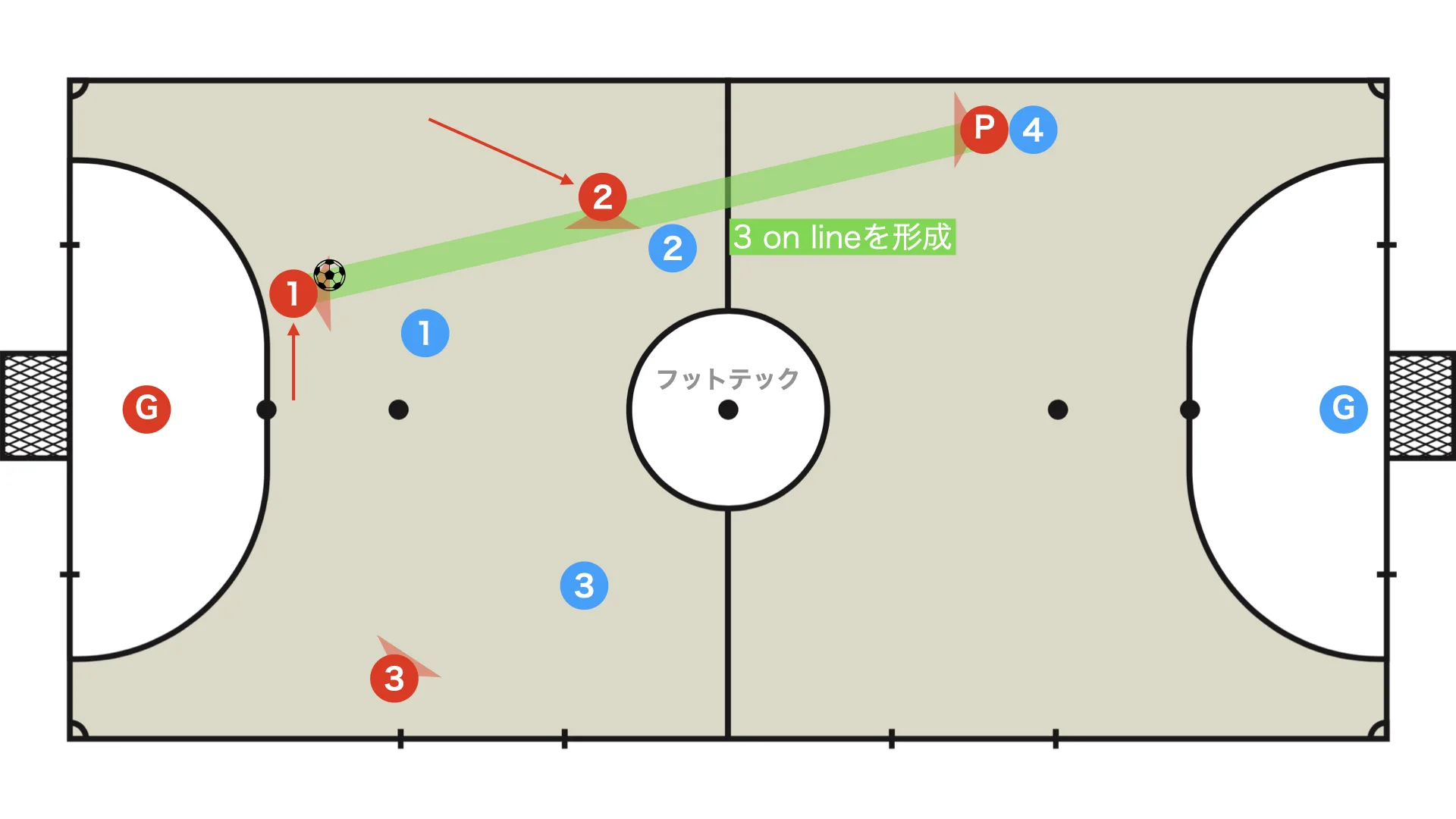
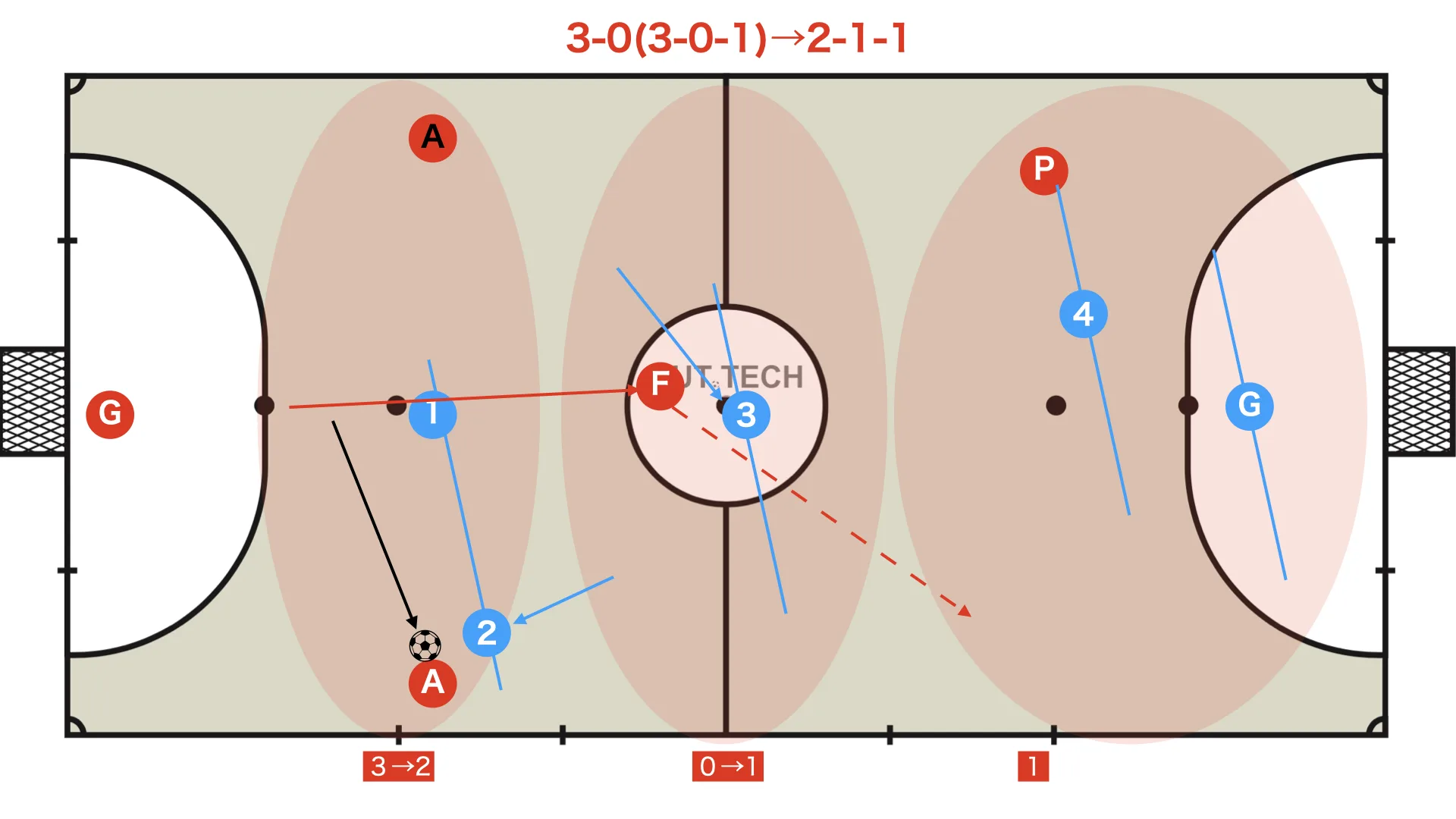
When the ala takes a high position and the fixo shifts toward the side where the pivo is, the fixo, ala, and pivo form a 3-on-line.
Because the ala plays high, the shape temporarily looks like a 2-1-1.
関連記事
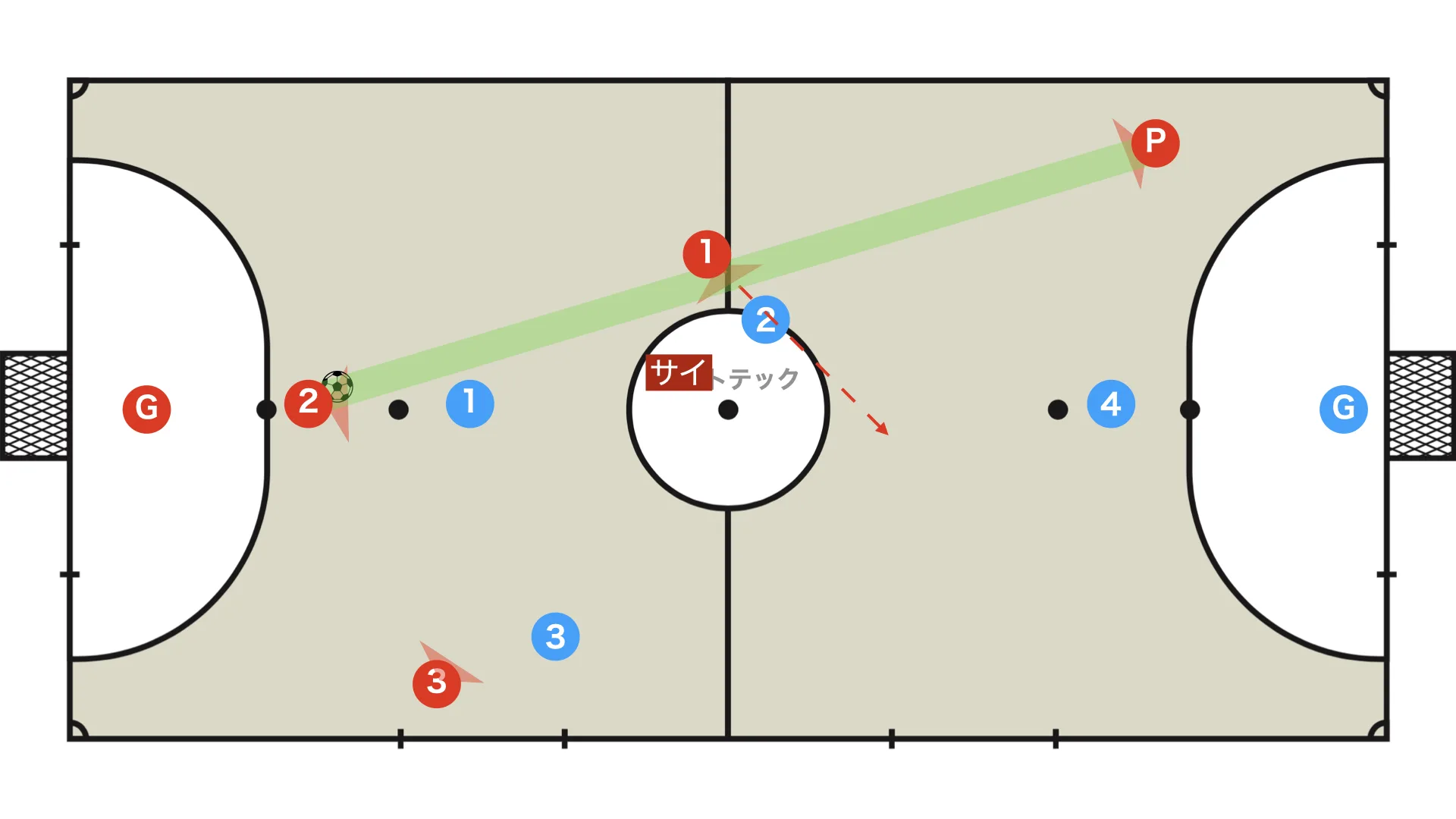
Futsal Sai: Pivo-Ala and the 3-on-Line Pattern
A thorough explanation of the futsal tactical term "sai." This article breaks down how sai works as …
続きを読む →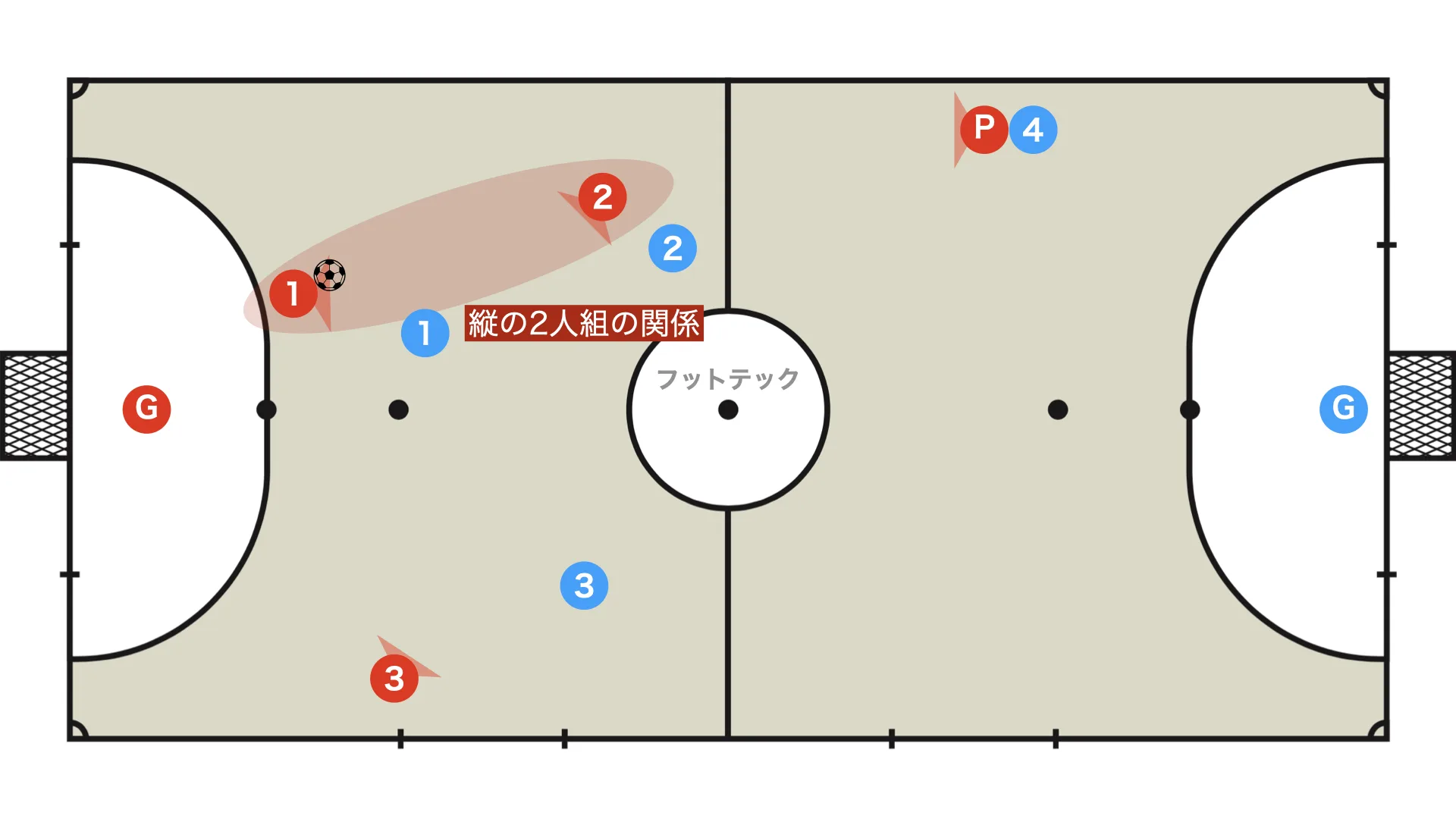
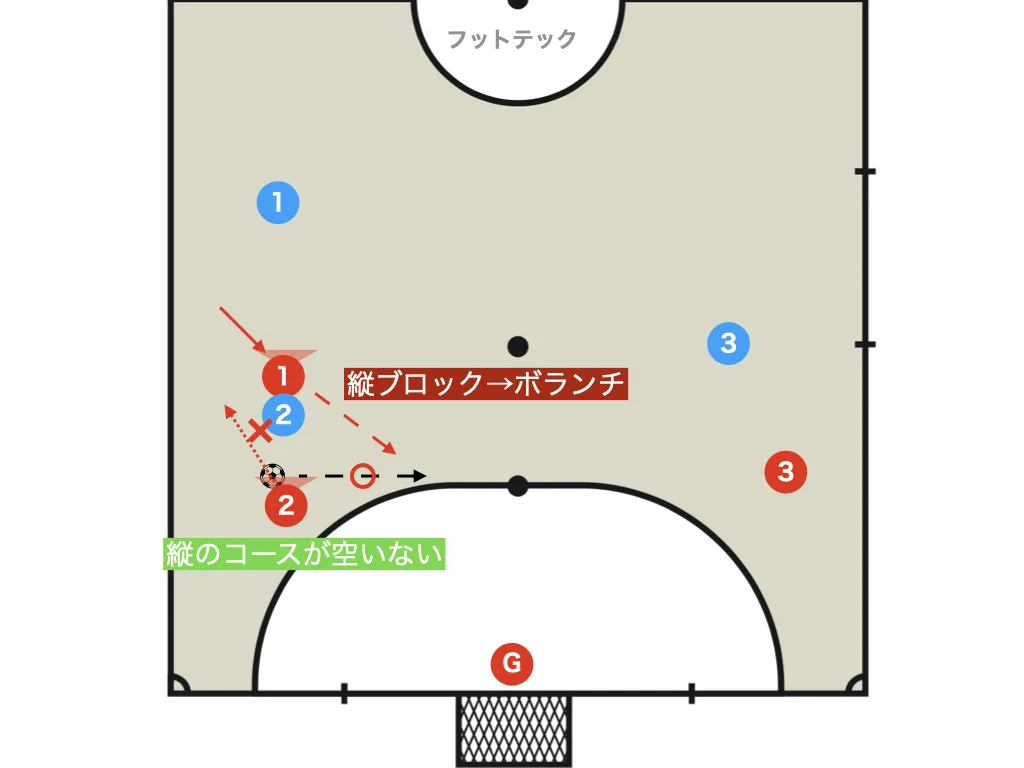
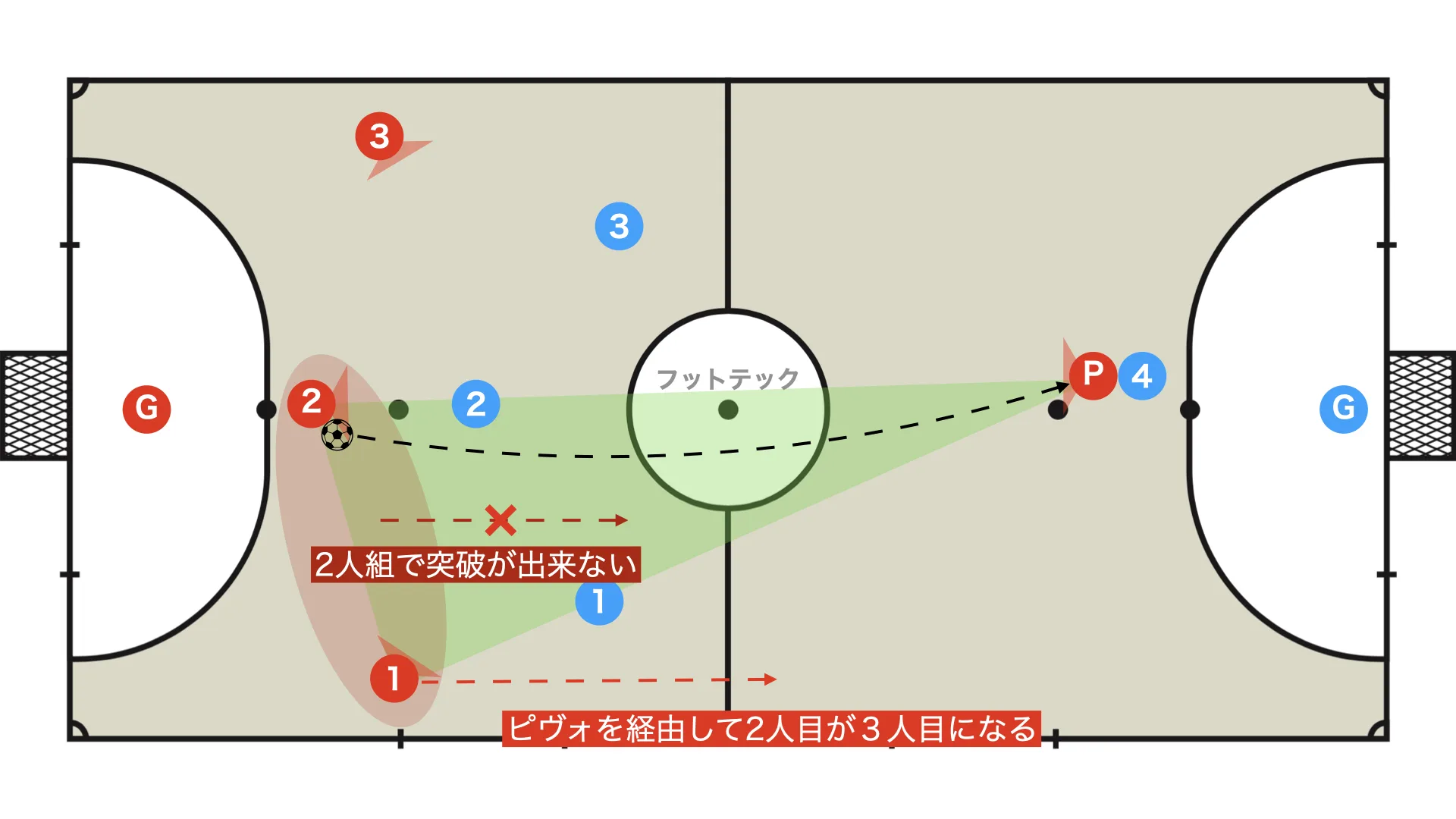
At first, ignore the pivo and try to break through with the vertical pair of two players: ala and fixo.
Effective actions for a vertical pair:
- volante
- block and continue
- inside parallel
- inside one-two
If you want to understand vertical pairs in more detail, read the article below.
関連記事
Vertical Two-Player Combination: How to Break Down the Defence with Volante, Vertical Block, and Continue
An explanation of the vertical two-player relationship in futsal when two players end up in the same…
続きを読む →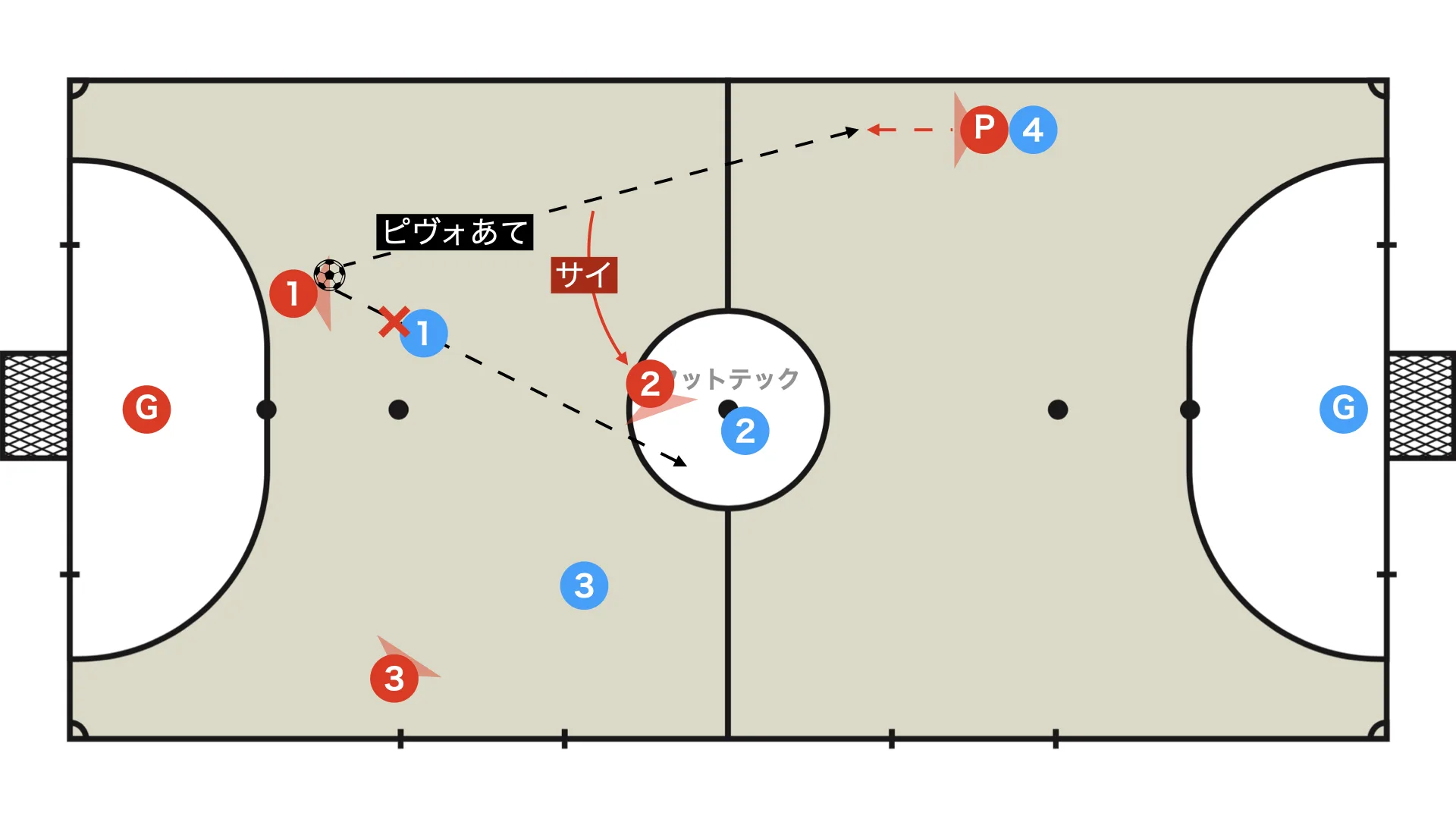
If the vertical pair cannot break through on its own, go through the pivo so that the second player becomes the third man.
関連記事
Futsal Sai: Pivo-Ala and the 3-on-Line Pattern
A thorough explanation of the futsal tactical term "sai." This article breaks down how sai works as …
続きを読む →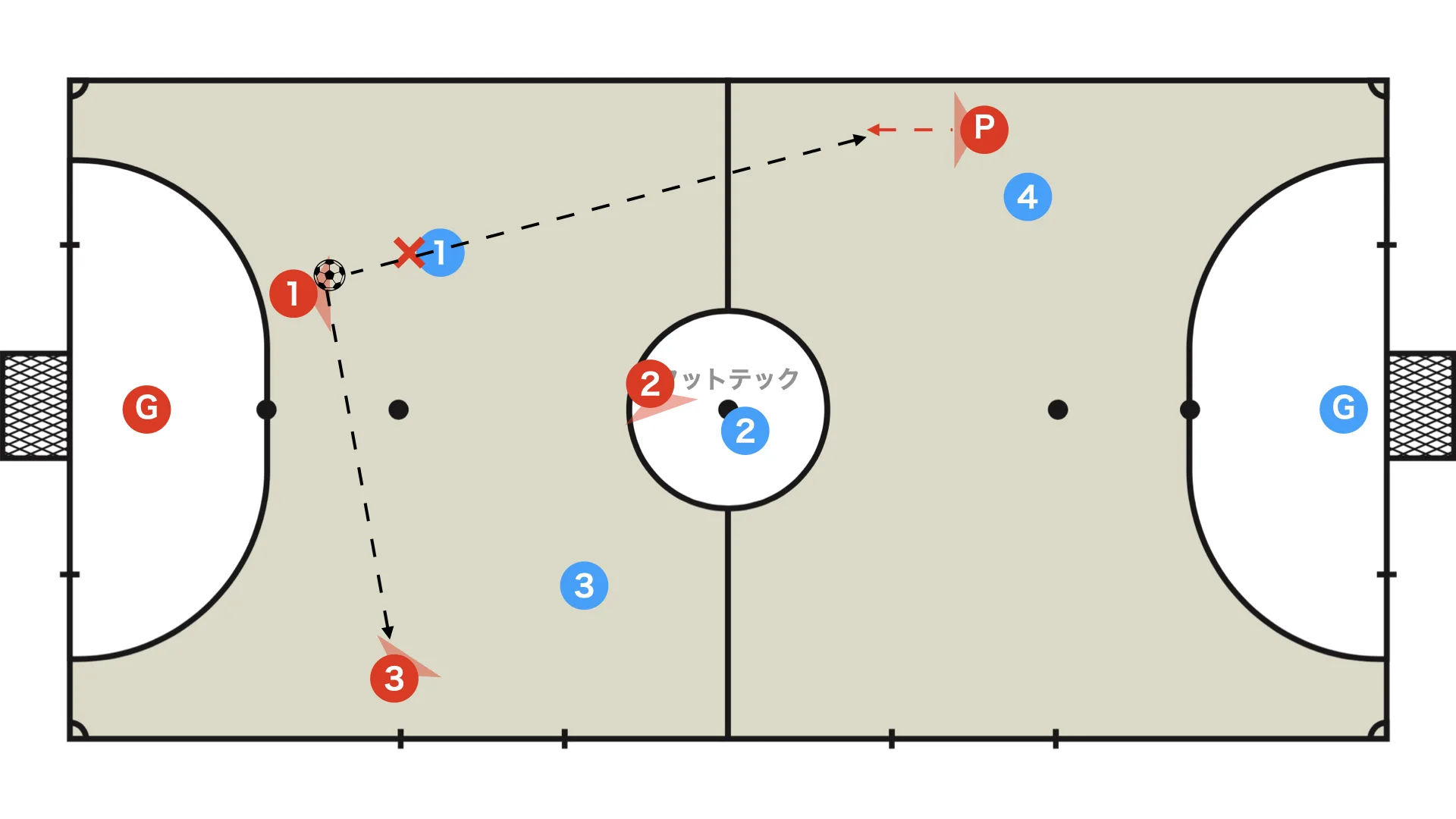
If the pass into the pivo is not available, or if the team wants to make better use of the far-side space, switch the ball to the opposite side and create a two-player relationship there.
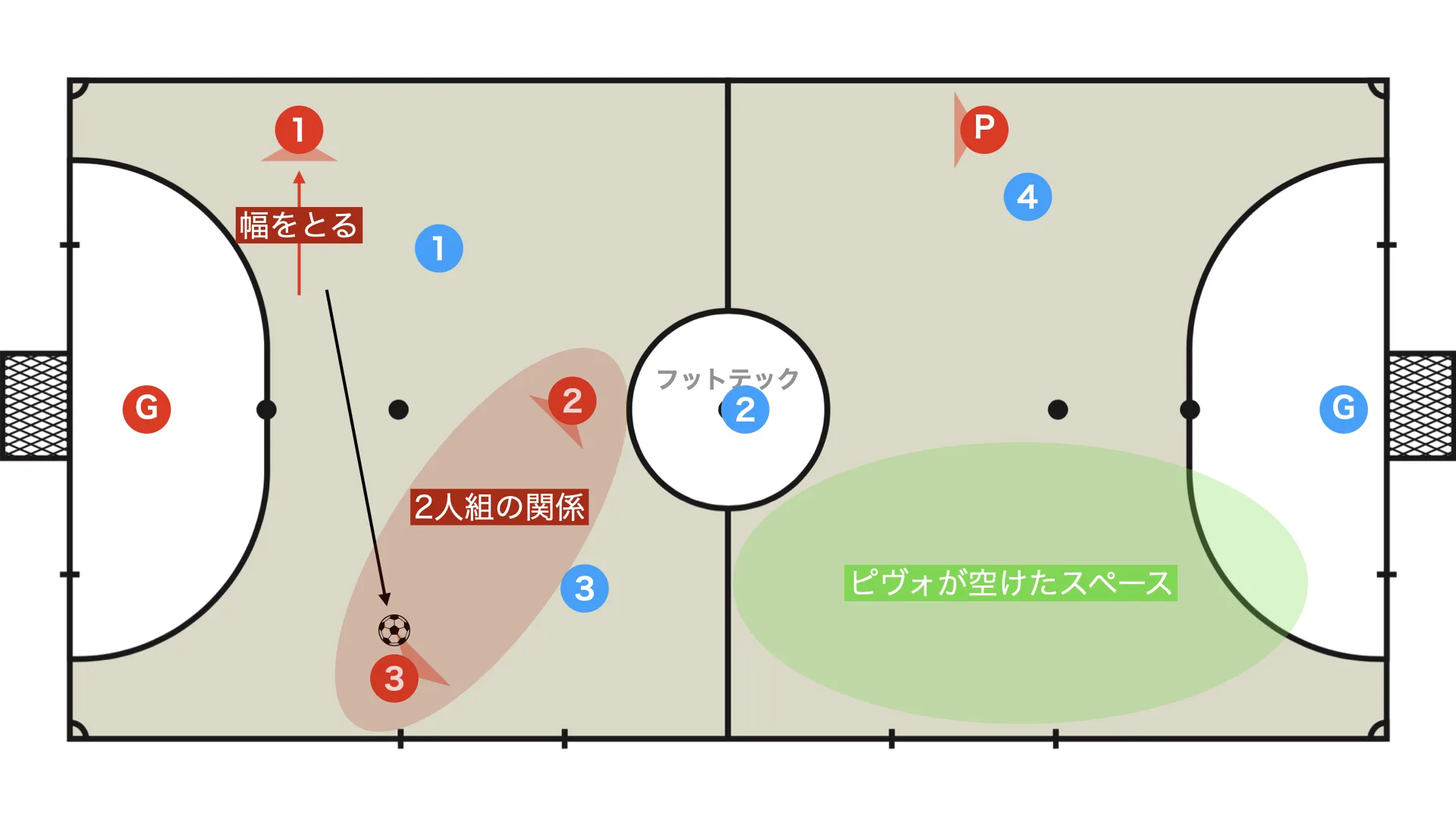
Red 2 and red 3 create a two-player relationship and make effective use of the space opened up by the pivo.
Effective two-player actions:
- one-two
- parallel
- block or curtain
Also, if the opponent is defending in a zone-oriented way, red 2 can also choose to turn in the space between the lines.
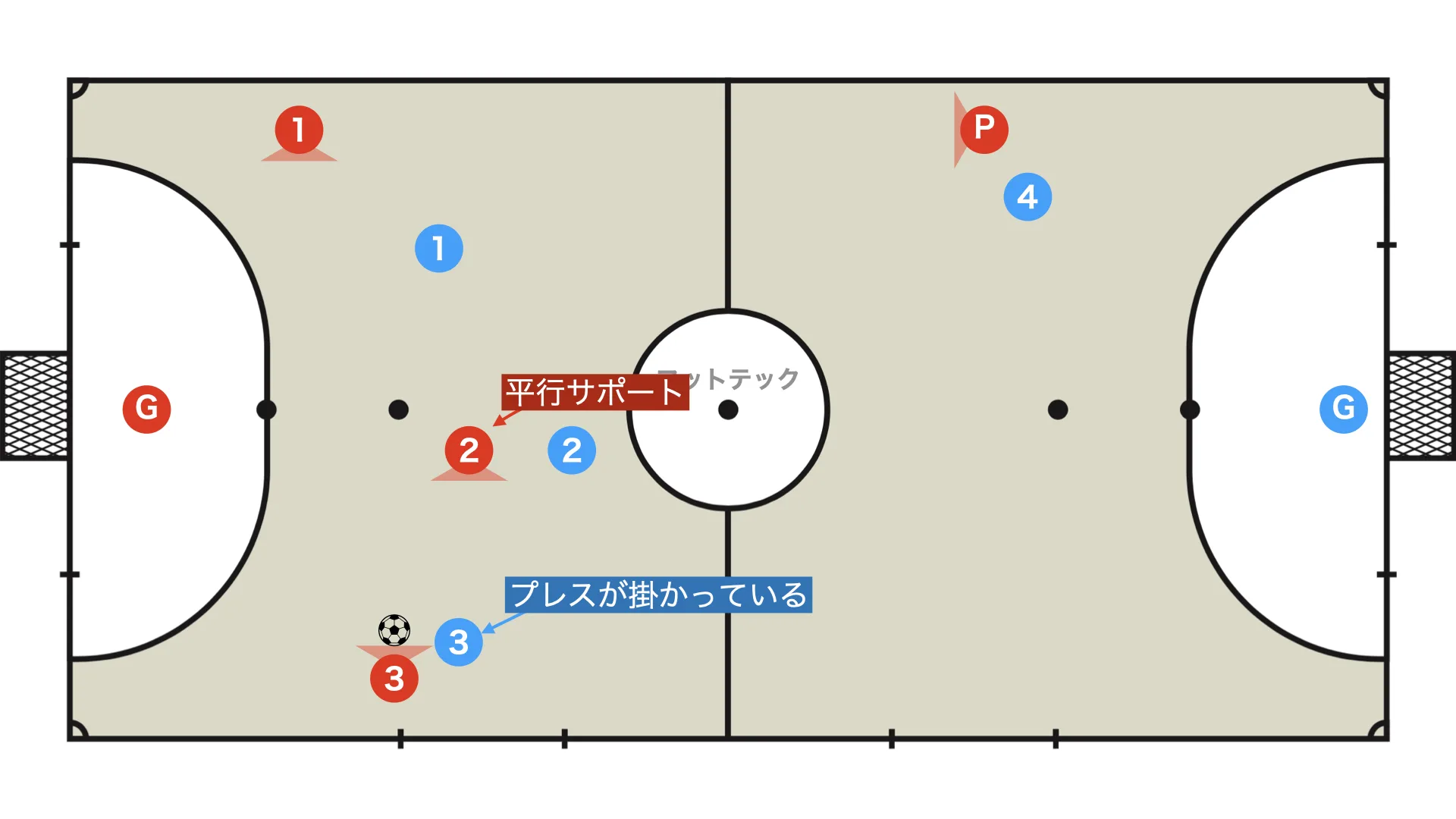
When the ball carrier is being pressed, it is effective to drop to a parallel supporting position and look for a simple one-two.
If the ball carrier dribbles inside, support with a block.
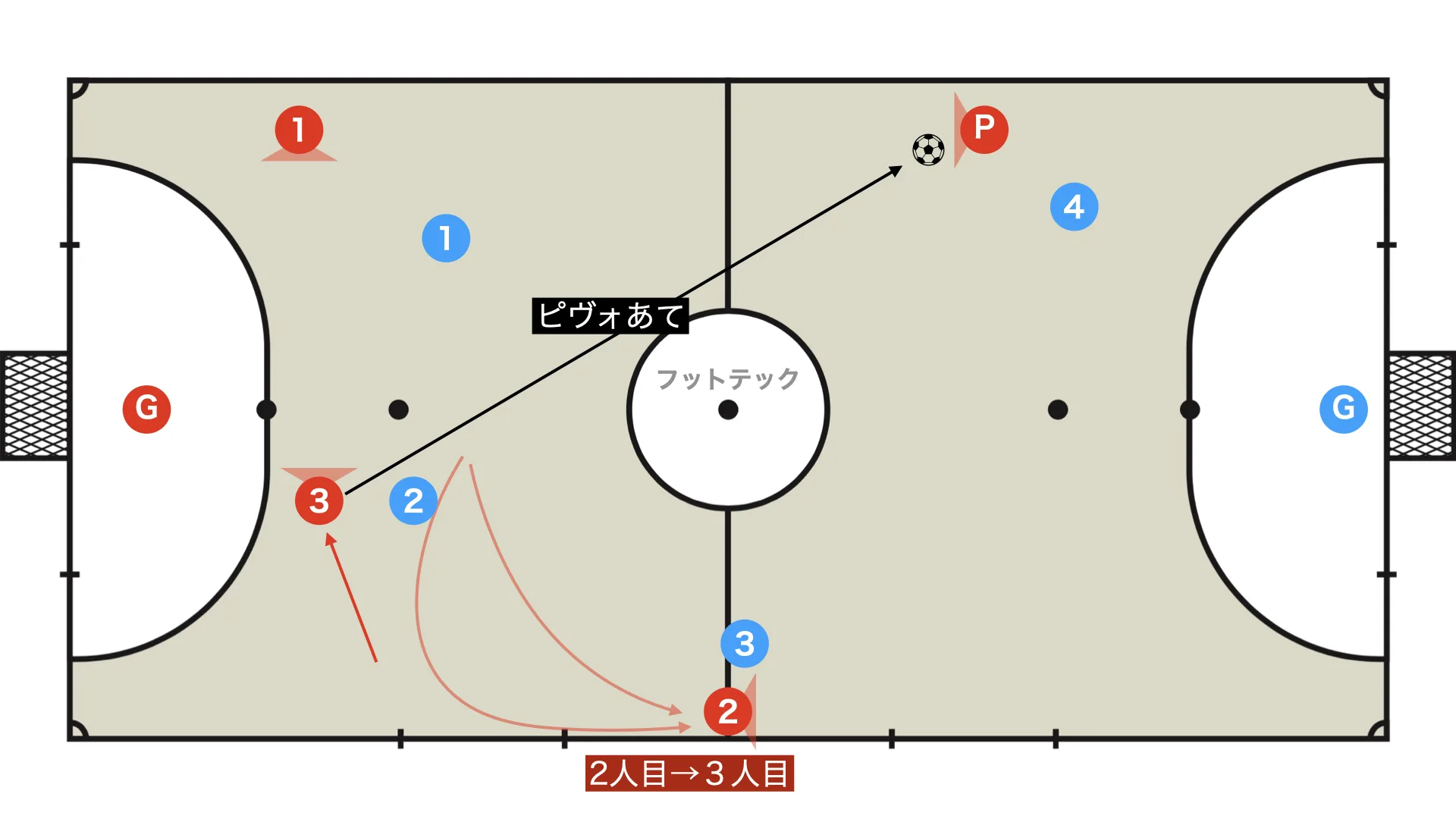
If the two-player combination cannot break through, think about using the pivo so that the second player becomes the third man.
関連記事
Essential for 3-1: Pivo Passes and the Third-Man Run (Two-Player Unit + Pivo)
A breakdown of pivo passes and the third-man run, the core of the 3-1 system. This article clearly e…
続きを読む →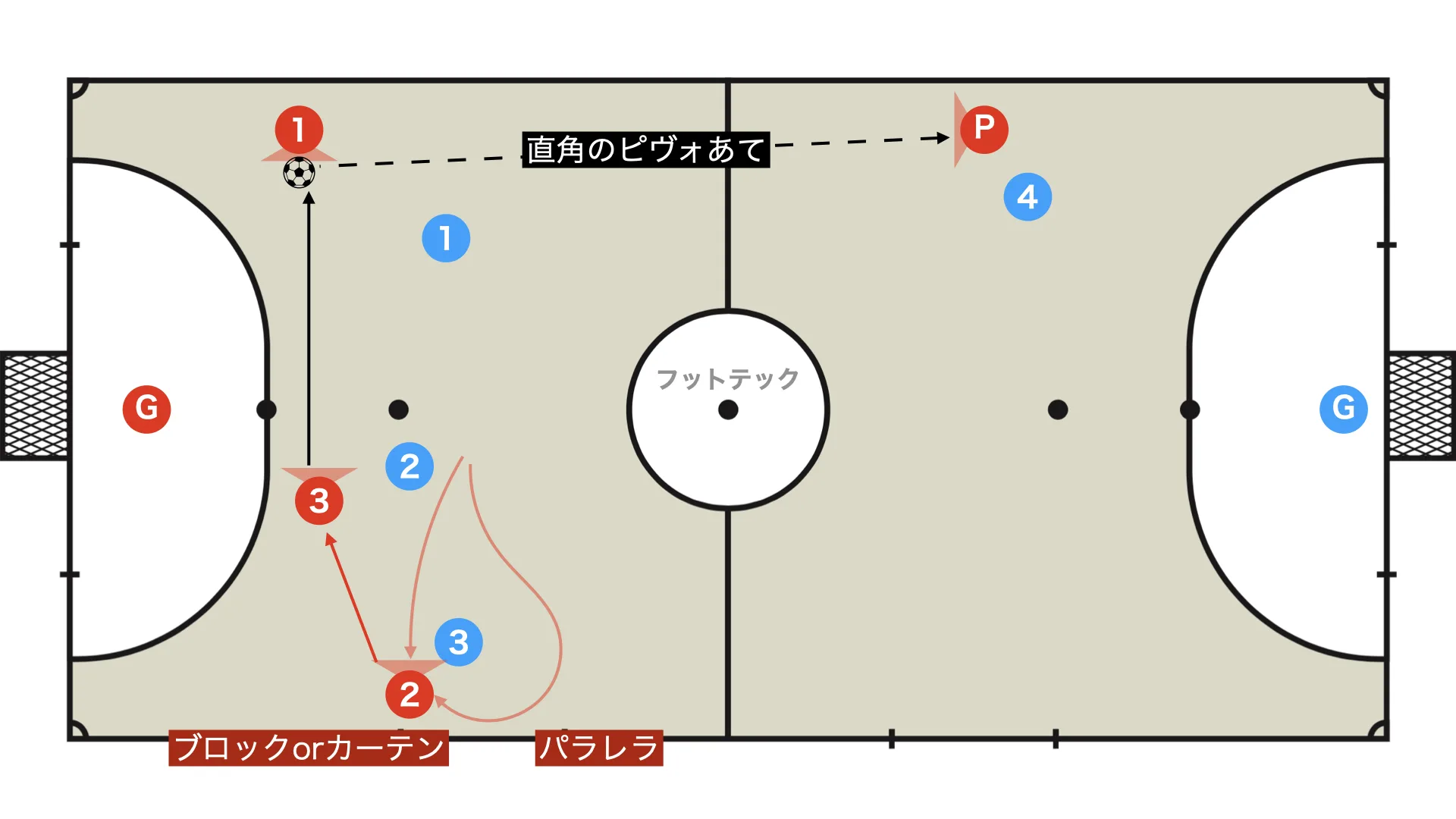
If even the diagonal pass into the pivo is not available, pass to the far-side ala and look for a right-angled pivo pass ((/base/third/l/)).
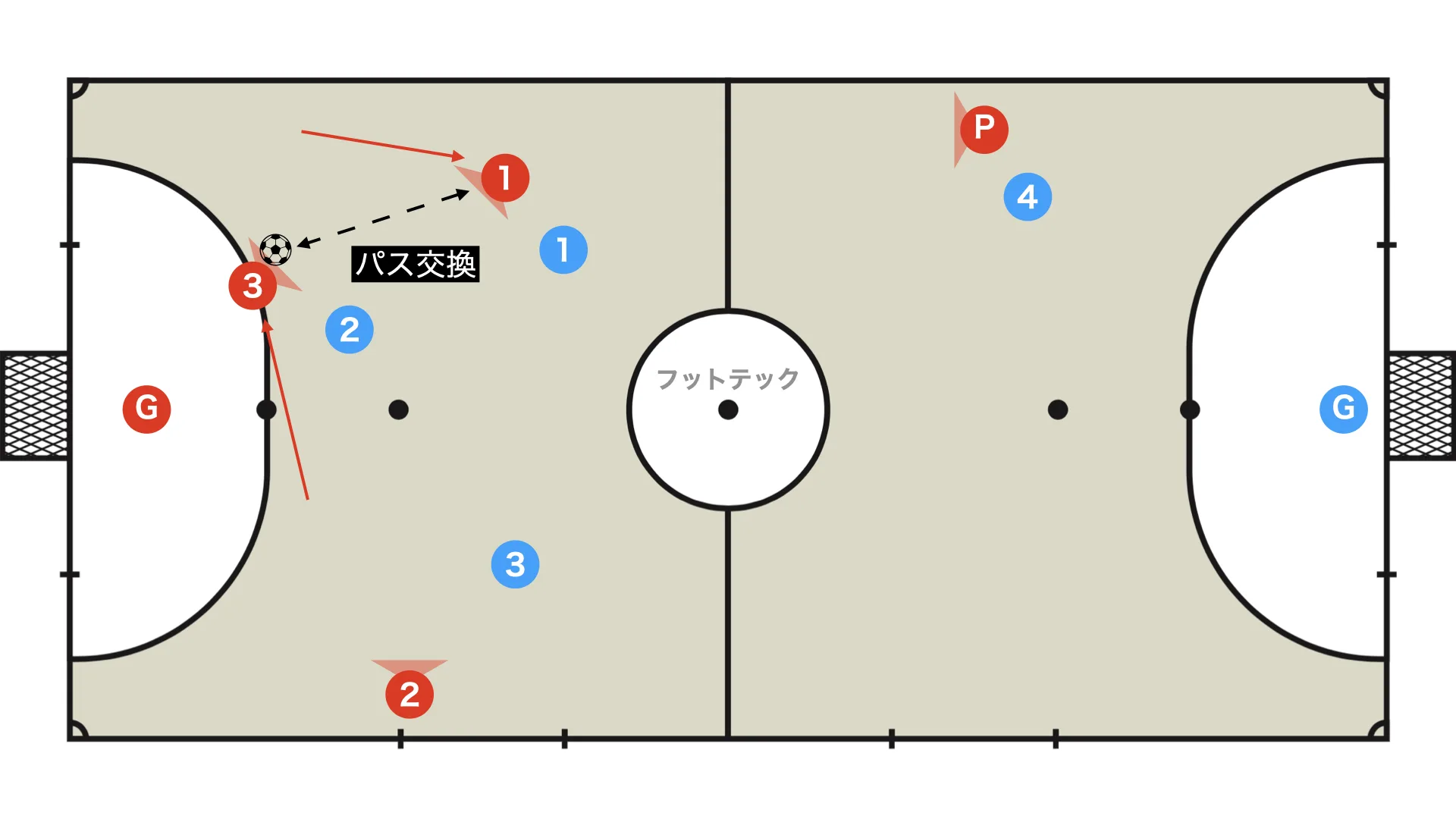
If the pass into the pivo is not available, exchange passes and work to form the 3-on-line again.
At first glance this may look a little awkward, but the aim of that passing exchange is to deliberately draw the defenders toward the ball and open space behind them.
If you want the false pivo to take part in the deeper passing circulation, a more advanced option is the four-player rotation.
On the other hand, one drawback is that a player who is not the pivo effectively becomes the false pivo, which makes it harder to create a reference point higher up the court.