Vertical Two-Player Combination: How to Break Down the Defence with Volante, Vertical Block, and Continue
Published: 2021.07.27Updated: 2026.05.03
Have you ever been unsure what to do in futsal when two players end up in the same lane (side lane)?
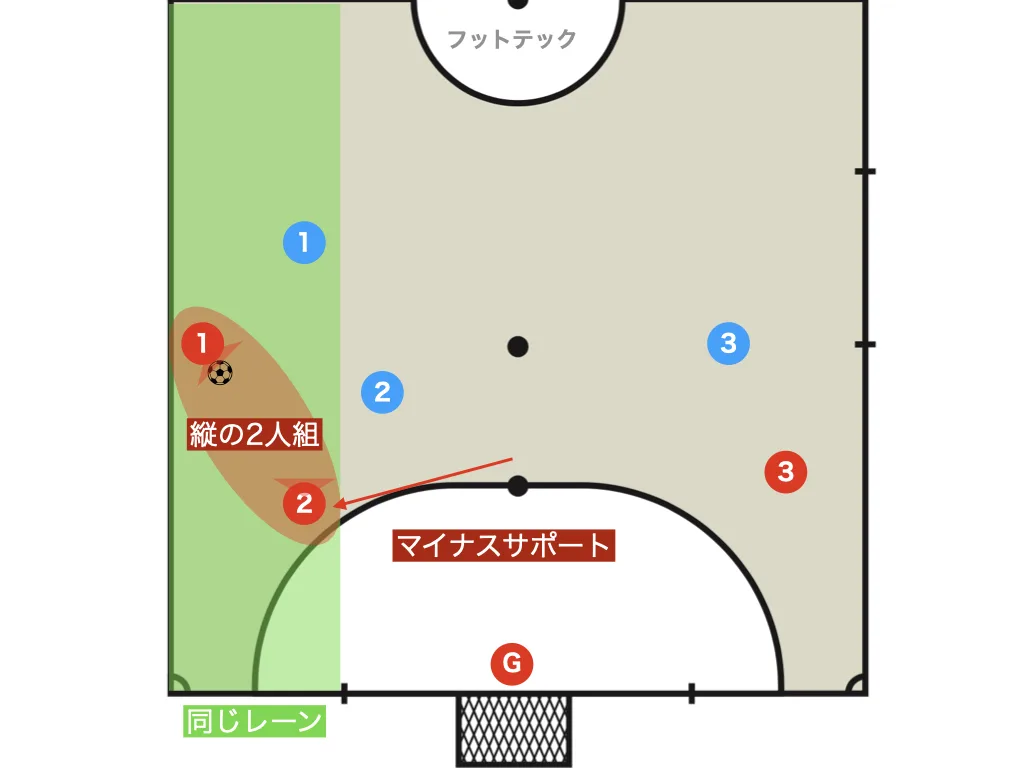
In this article, I will explain the short vertical two-player relationship (ala-fixo), which anyone playing futsal at a competitive level should understand.
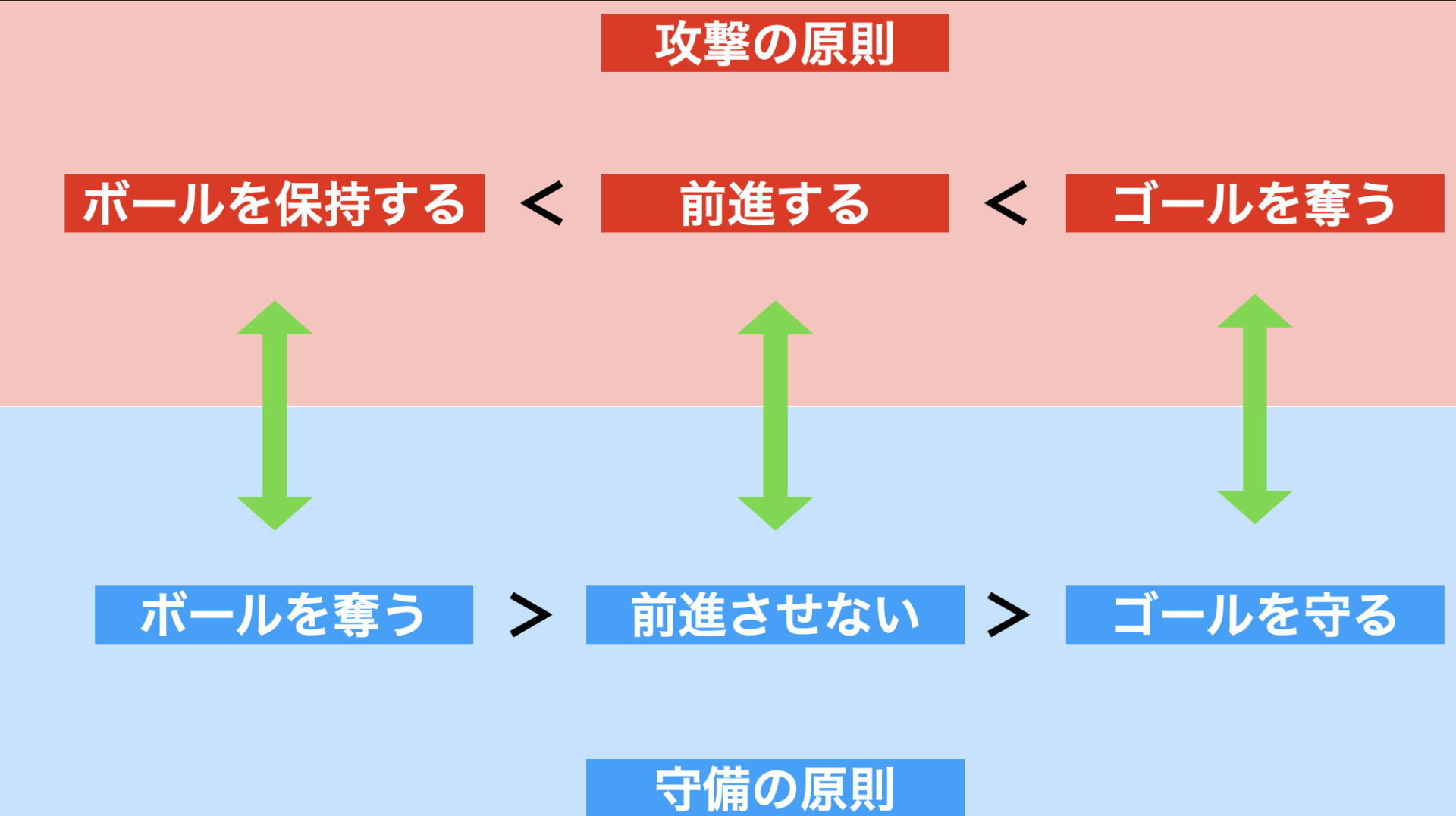
According to the core principles of football, advancing is a higher priority than simply keeping possession.
That is why the priority is vertical block and continue > volante.
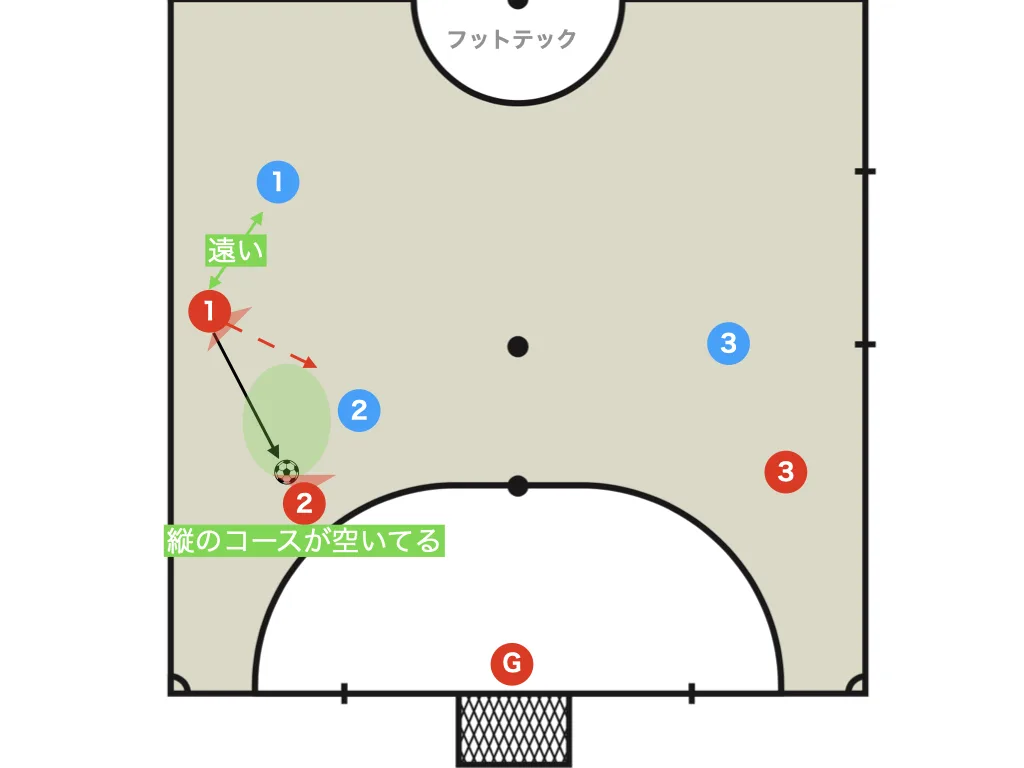
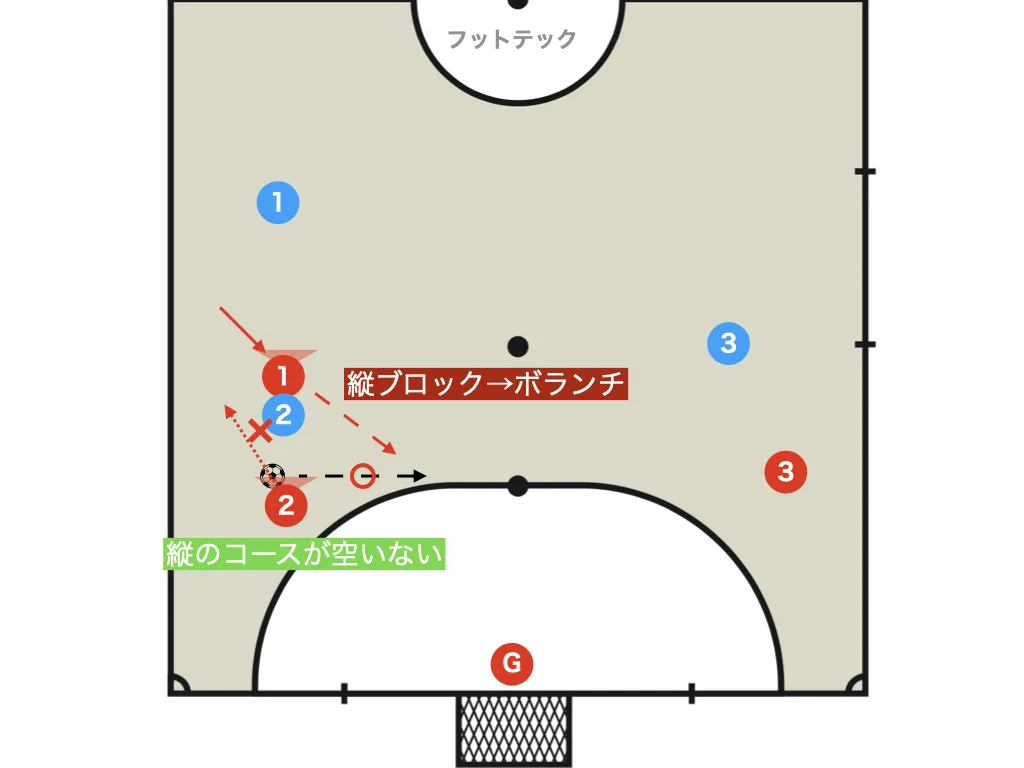
- The vertical lane for the ball carrier (red no. 2) is open
- There is some distance between the off-ball player (red no. 1) and the defender, or the defender does not follow the dropping movement and instead keeps multiple lines (zone defence)
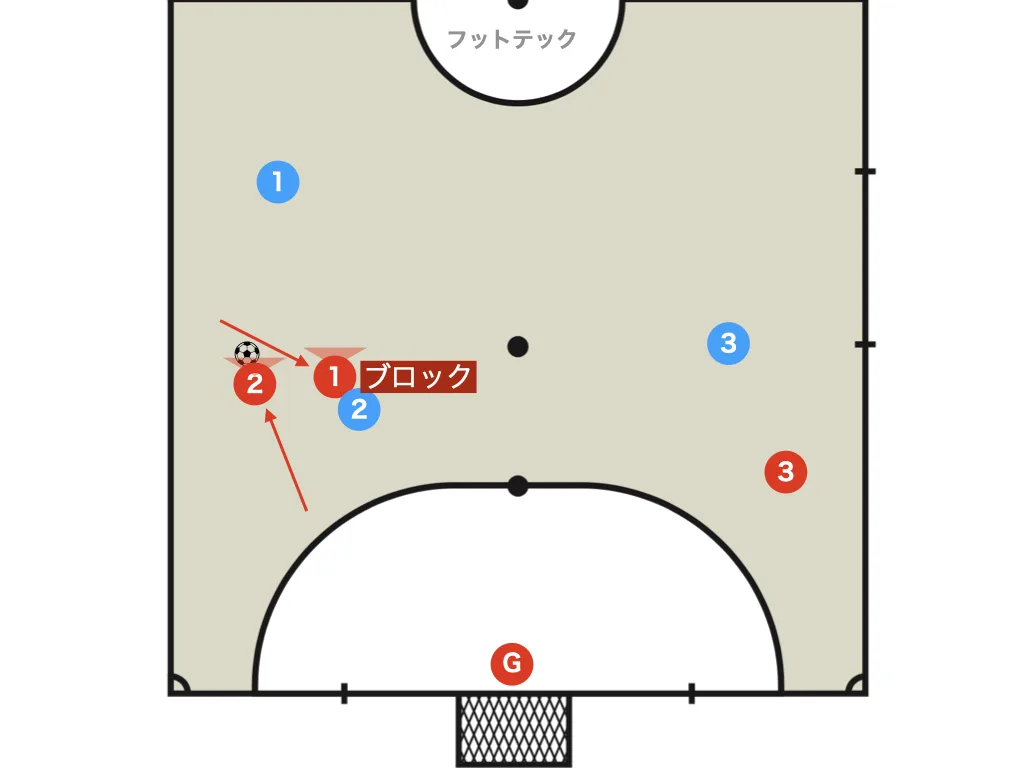
If the ball carrier quickly dribbles beyond the first line (blue no. 2), the blocked defender (blue no. 2) can no longer recover.
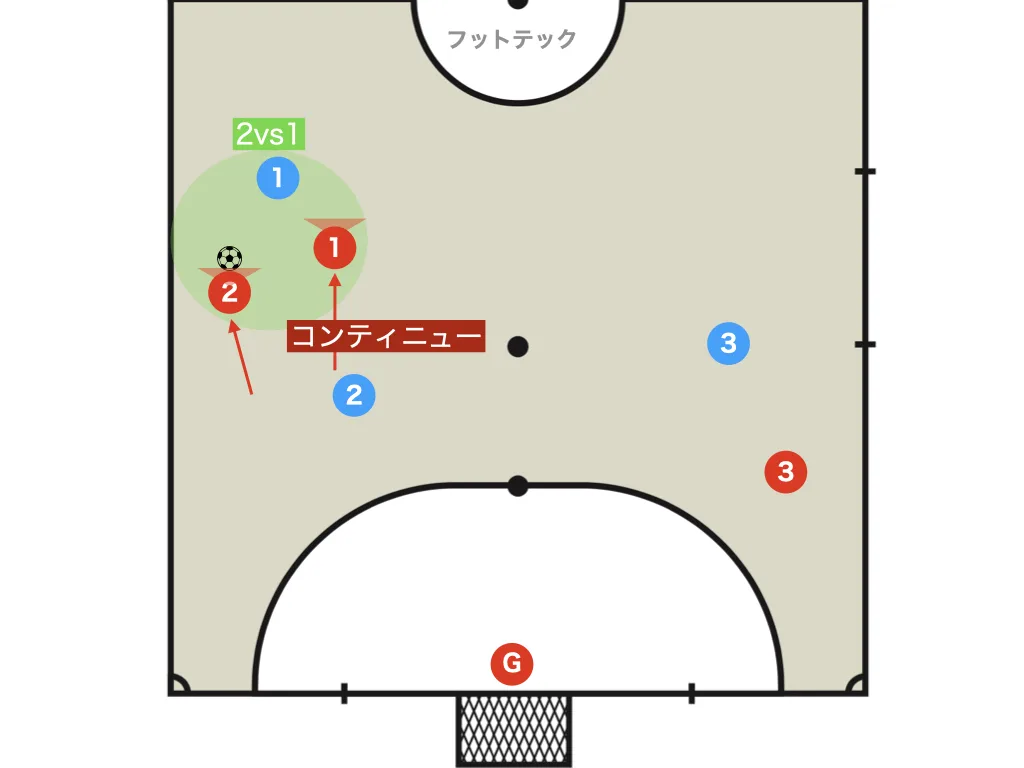
The player who sets the block then continues the run and creates a local 2v1 superiority.
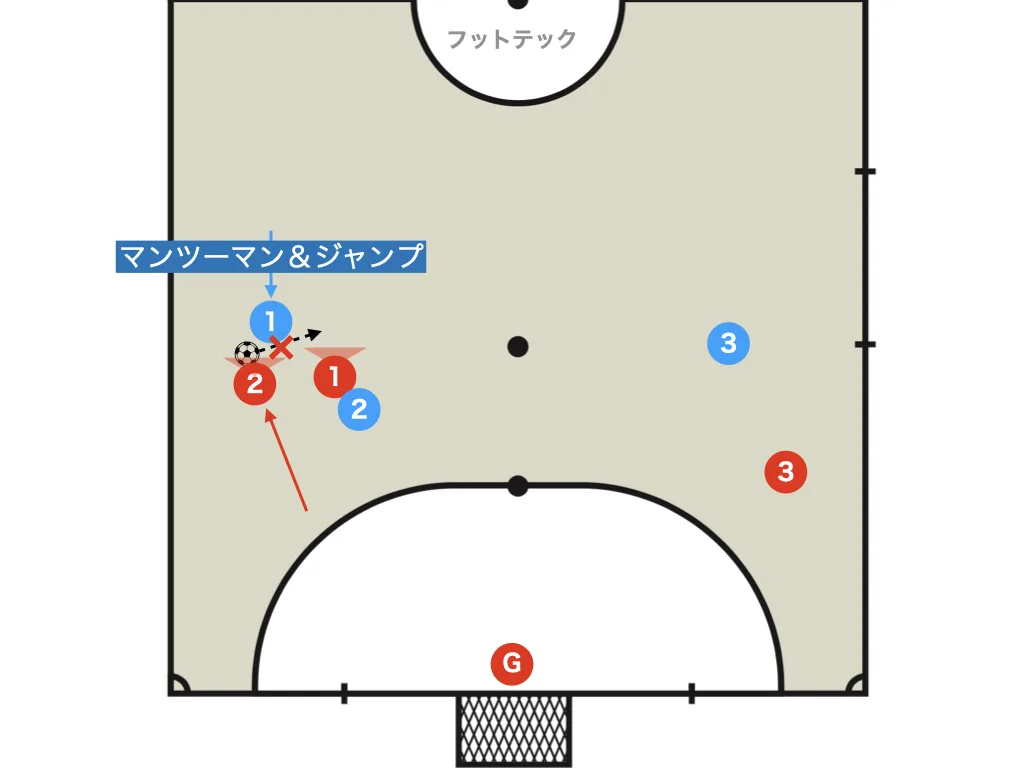
If the player setting the block (red no. 1) starts too close to the marker and the opponent is defending man-to-man, the defender can simply jump with the movement. In this kind of situation, you should not choose the vertical block.
If the vertical lane is closed, or if there is not enough width on the side to carry the ball forward, you must choose the volante rather than the vertical block.
The term volante refers to the overall two-player action that combines the off-ball player dropping a line, especially cutting from the second line into the first line, with the ball carrier's response inside that two-player relationship.
It also became widely known as a group tactic after Shriker Osaka, the F.League champions in the 2016/2017 season, used it frequently.
関連記事
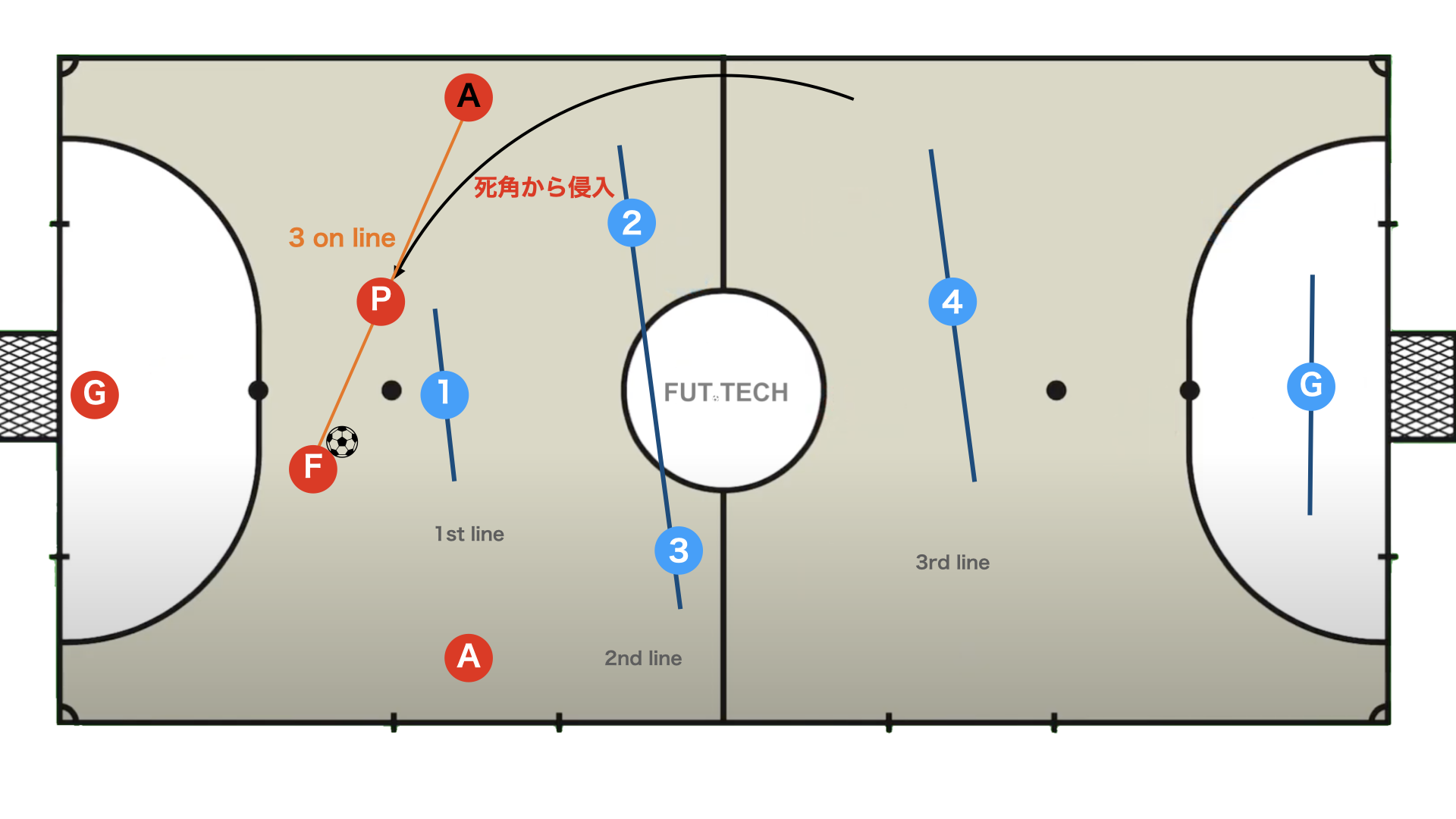
The Tactical Intent of the Line Cut: Three Advantages and Disadvantages
A tactical explanation of the line cut in futsal. This article organizes its definition, three advan…
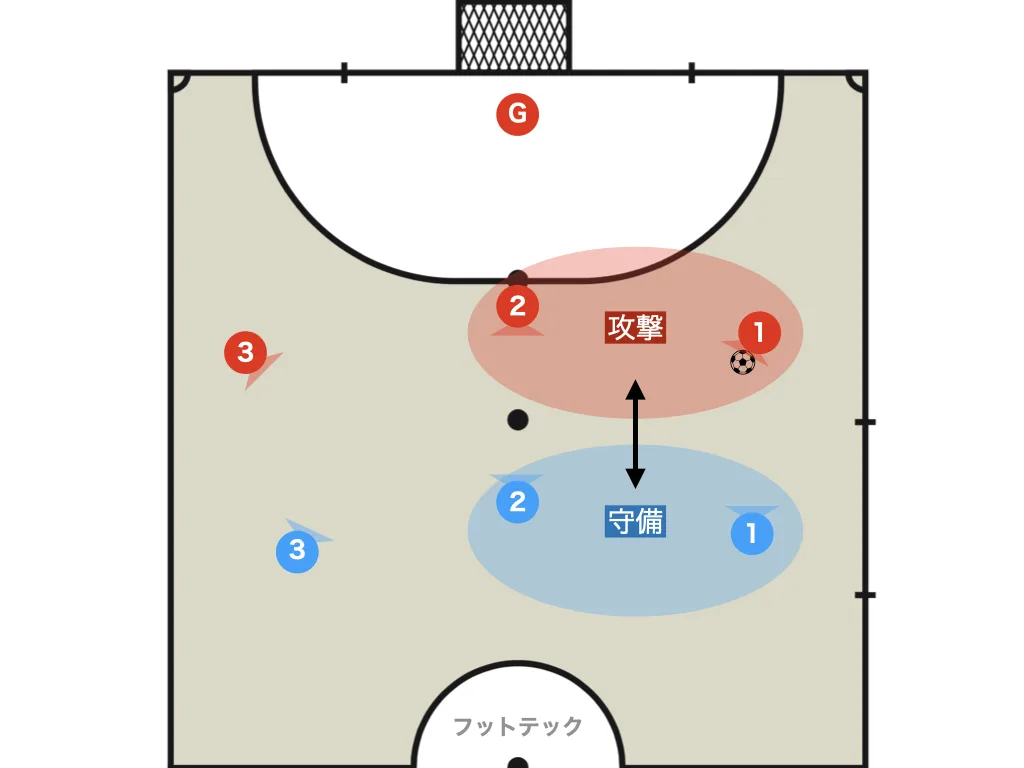
続きを読む →The volante is effective when the opponent builds multiple defensive lines.
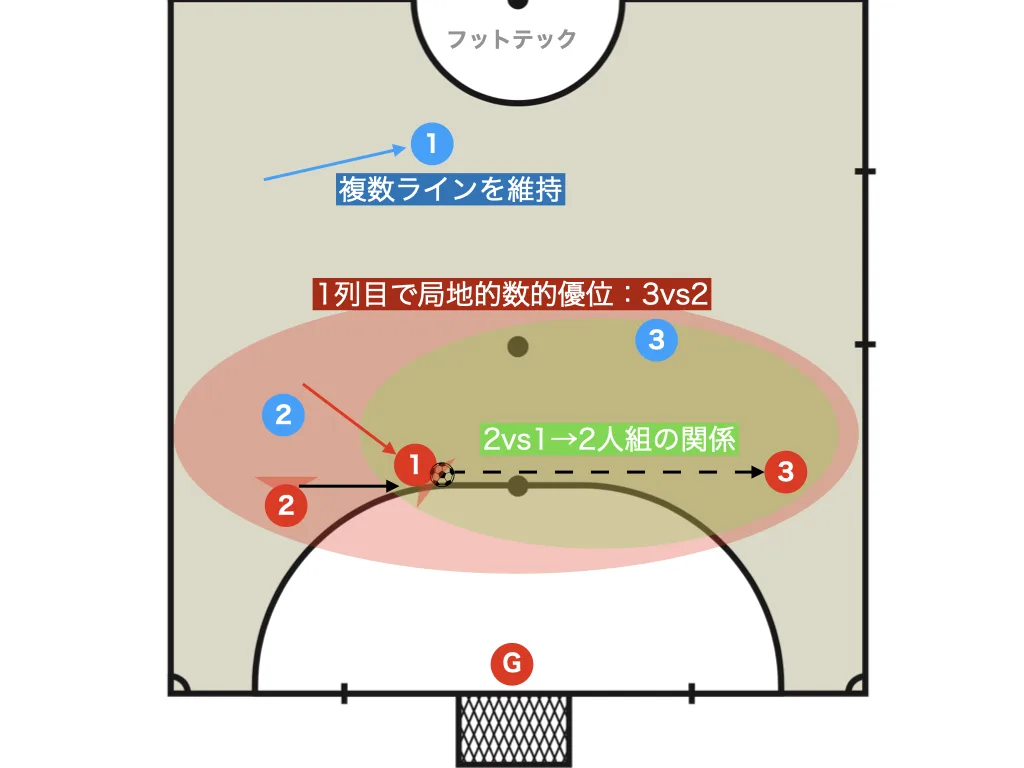
If the defender does not follow the dropping player and instead maintains multiple lines, a 3v2 numerical advantage is created in the first line, so you should try to advance by using that superiority.
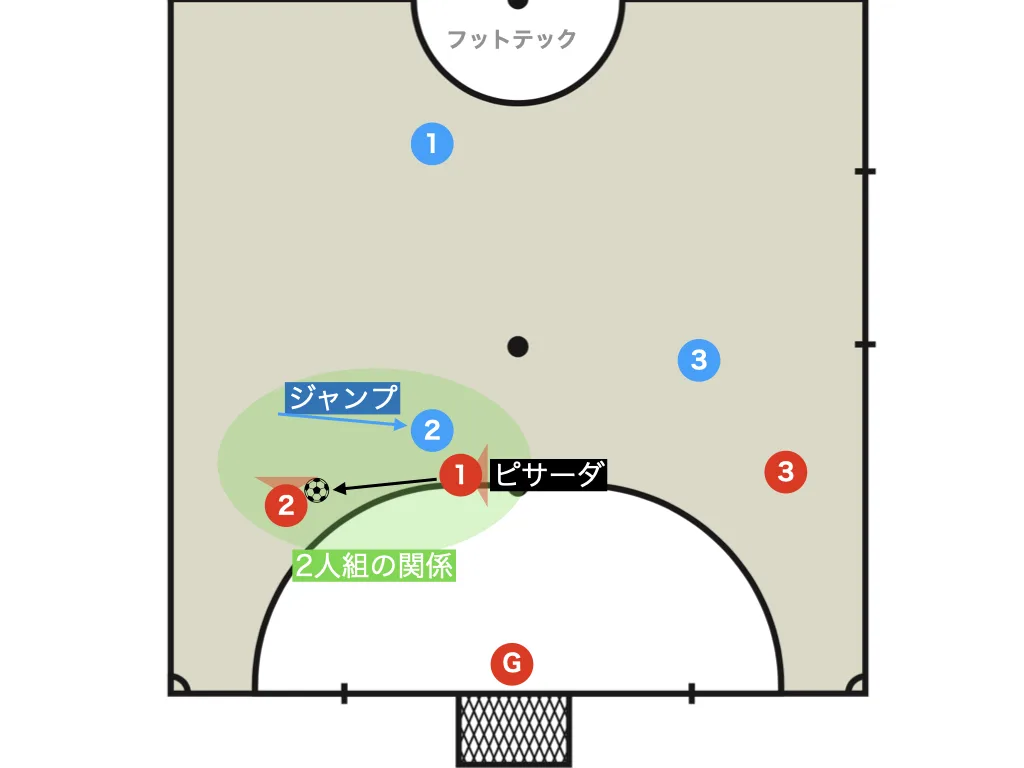
If the defender jumps out as shown above, it is effective to play a pisada pass behind the defender and create a two-player relationship there.
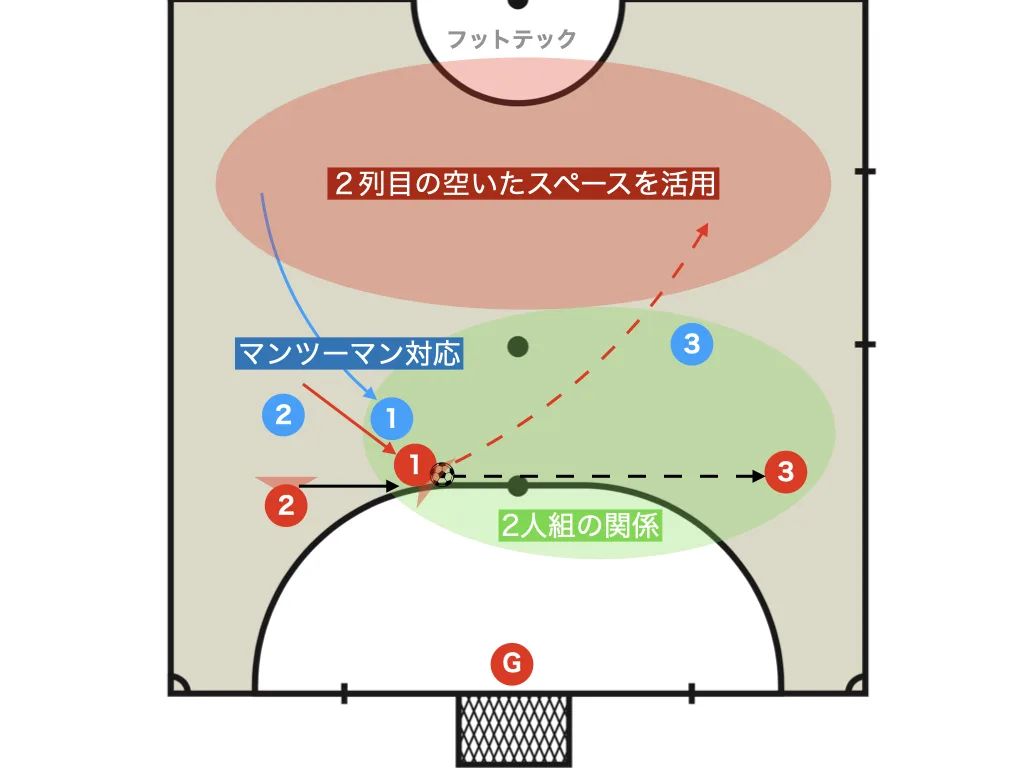
If the opponent follows the volante man-to-man, space opens up in the second line, so you attack that space through a two-player combination.
Effective two-player options:
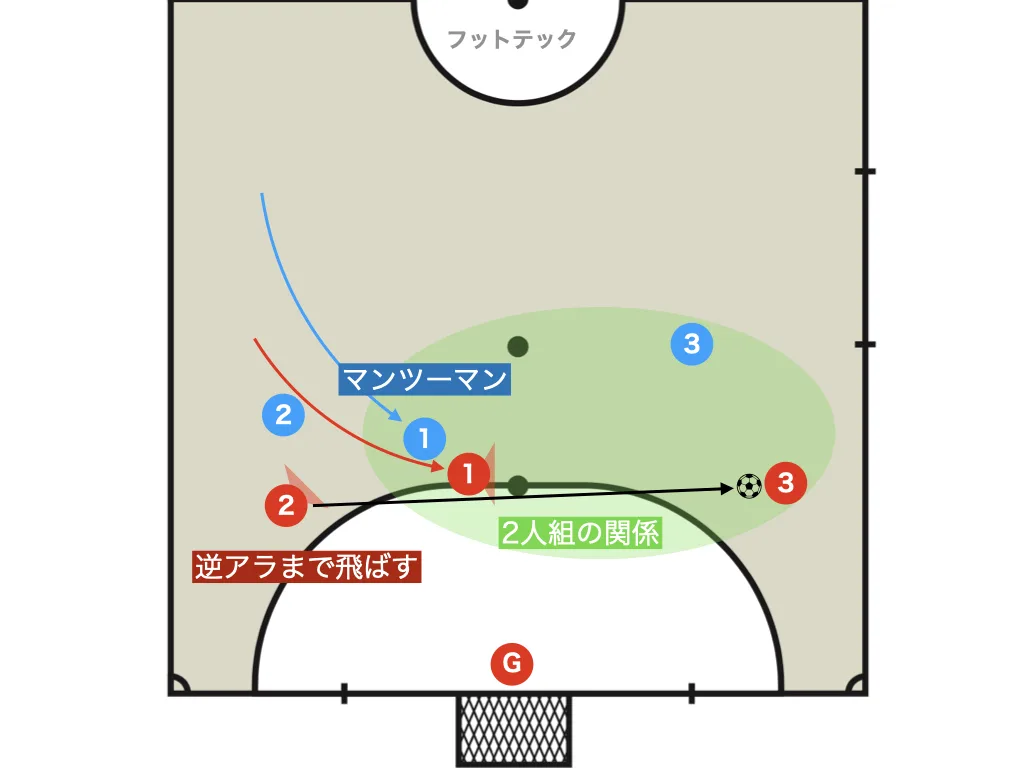
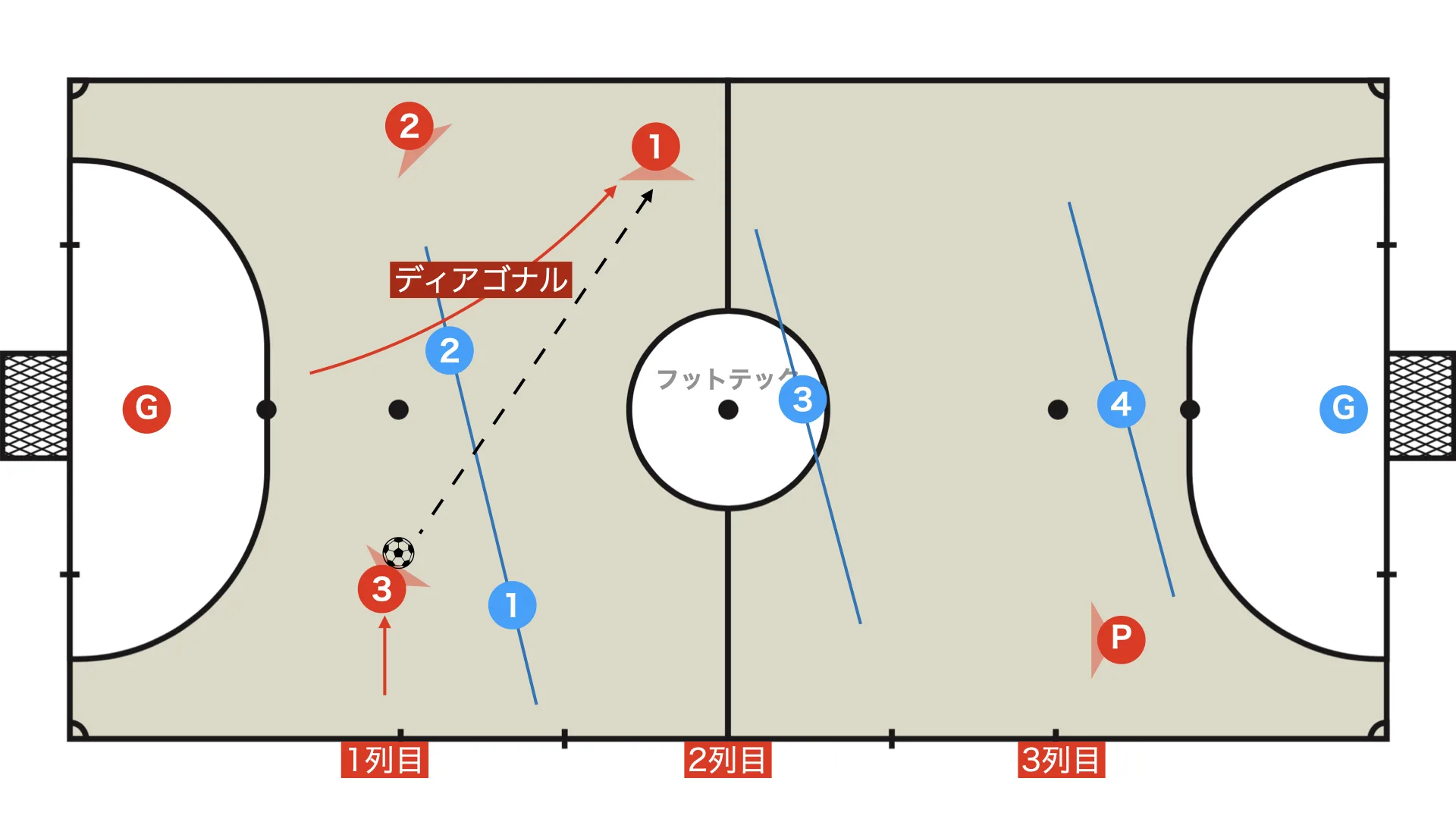
If the opponent tracks man-to-man and it becomes difficult to pass into the volante, switch the ball directly to the weak-side ala.
If the goal is to create a two-player relationship on the far side regardless of how the defence reacts, then instead of forcing the volante pass, it is effective to send the ball directly across to the opposite side.
関連記事
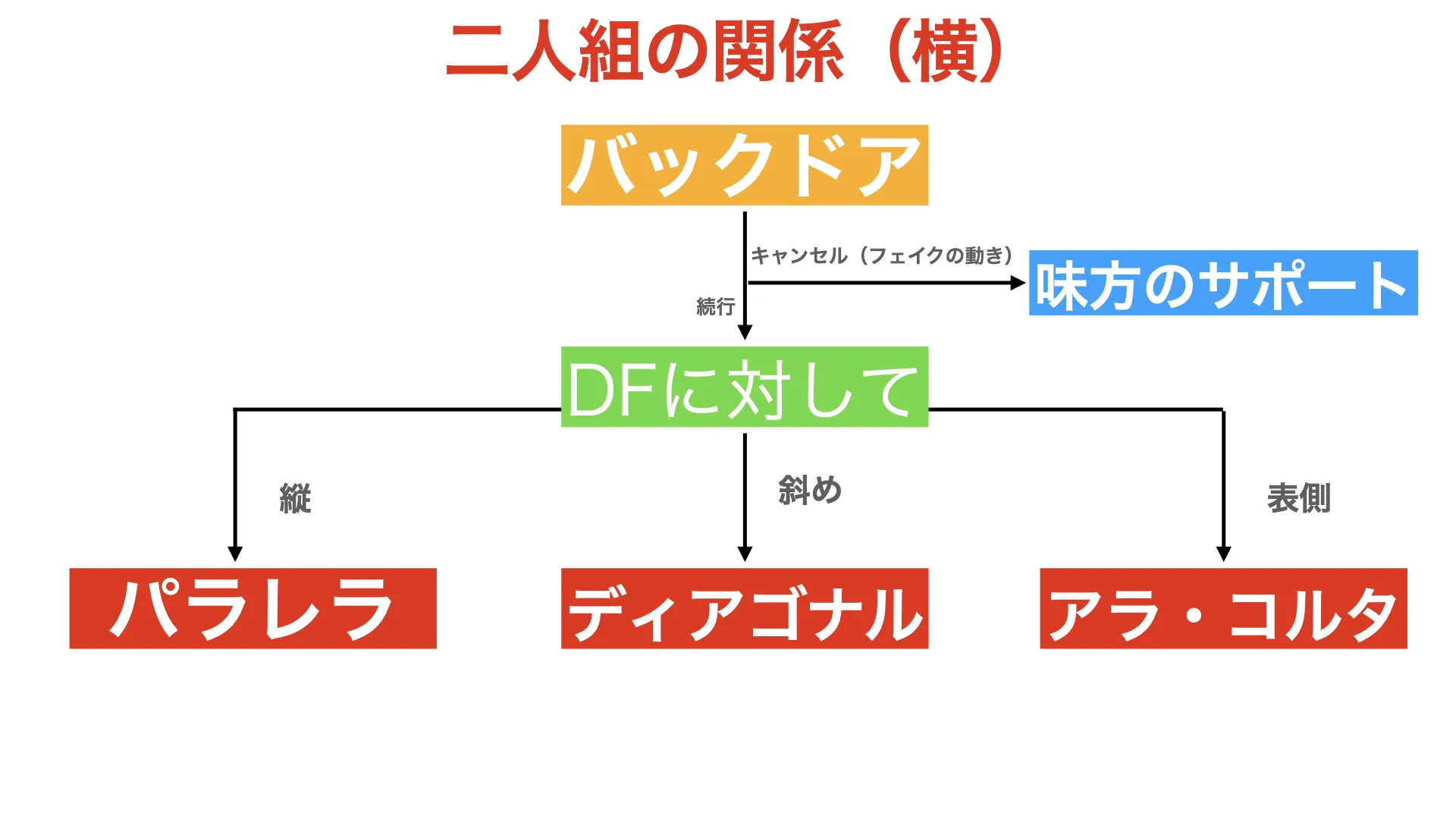
Overview: Two-Player Combinations in Futsal
An overview article explaining two-player combinations in futsal. It organizes the relationships and…
続きを読む →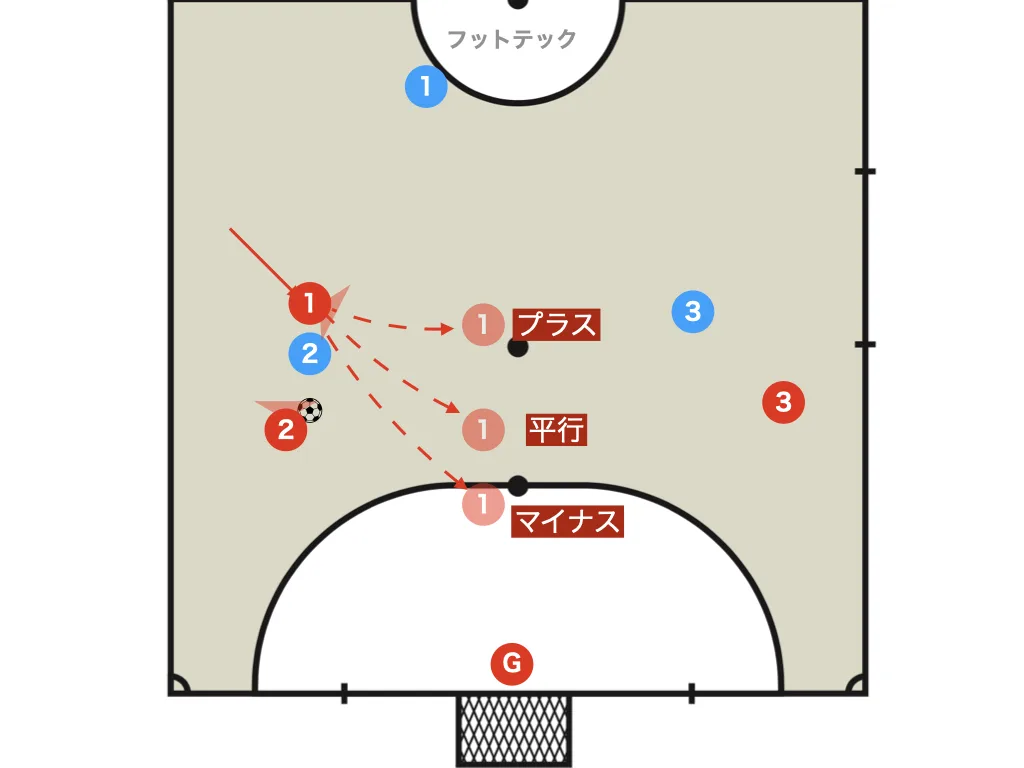
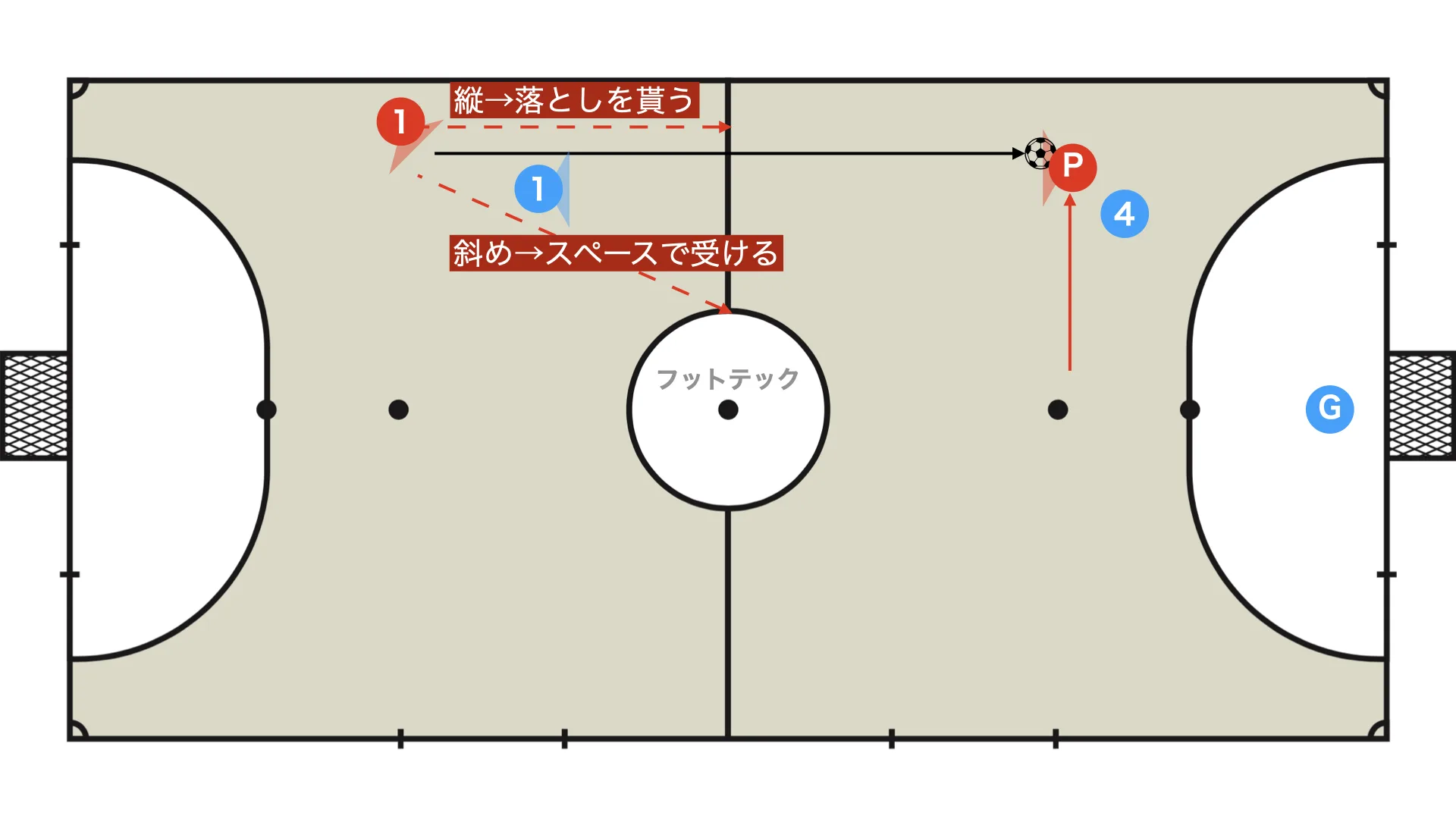
This jeseiza movement can broadly be divided into the following three types, as shown above.
- Receive ahead of the ball line
- Receive level with the ball line (goal line)
- Receive behind the ball line
It is important to choose the right one based on how the opponent defends and on your own team's model.
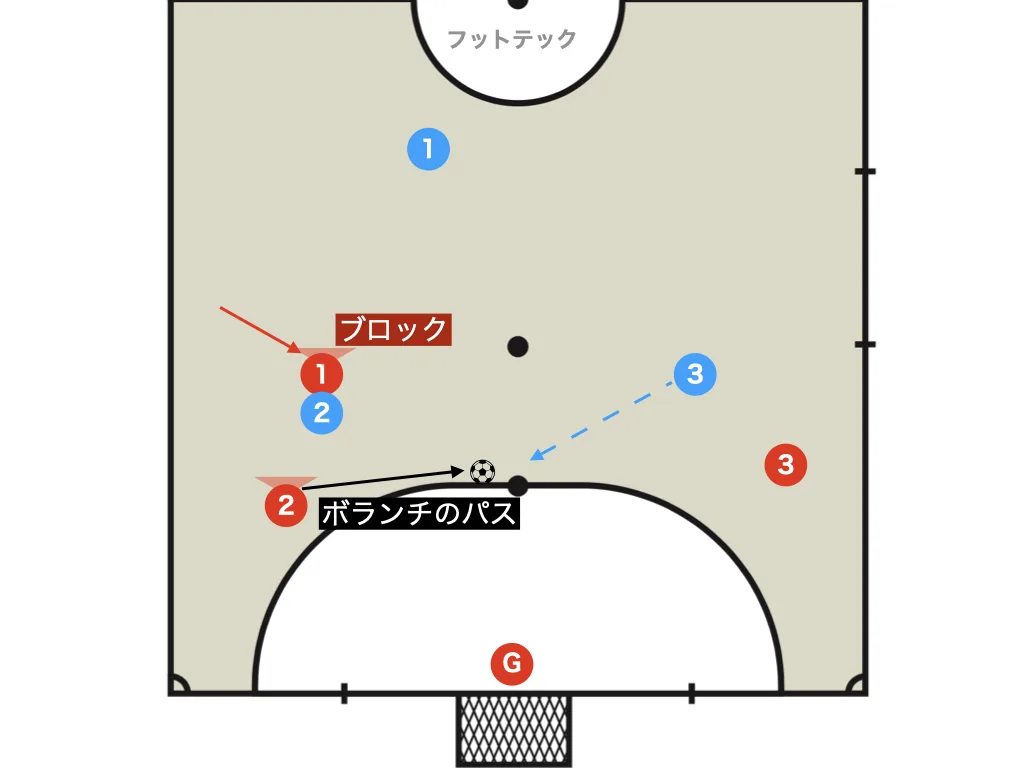
A common mistake in this vertical two-player relationship is confusing a block with a volante.
In the diagram above, red no. 3 makes a blocking action, but red no. 1 mistakes it for a volante movement and plays a pass into the empty space in front of goal.
Because of this risk, quite a few teams choose to treat every vertical two-player action as a volante.
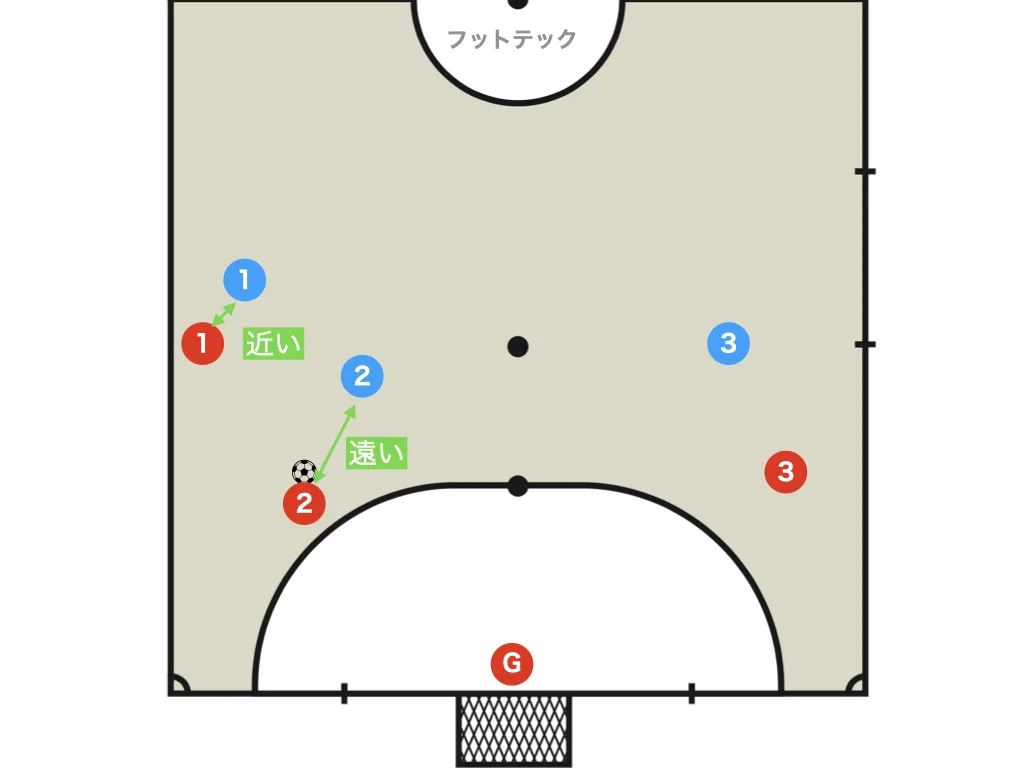
As shown above, if the ball carrier is not under pressure and it looks like red no. 1 can get behind the defender, the team can also break the defence in the following ways.
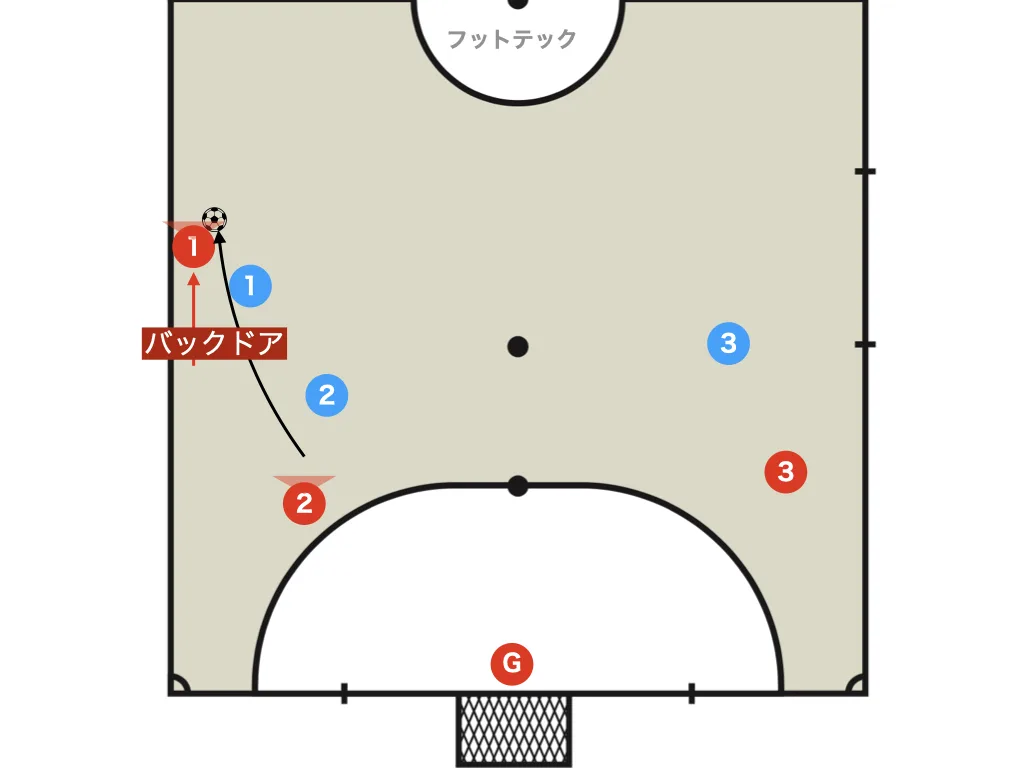
The passer needs to guide the ball slightly toward the touchline and then play a looping pass that goes over the defender's head.
Because this requires a fairly high technical level from the passer, it is not often presented as a best practice.
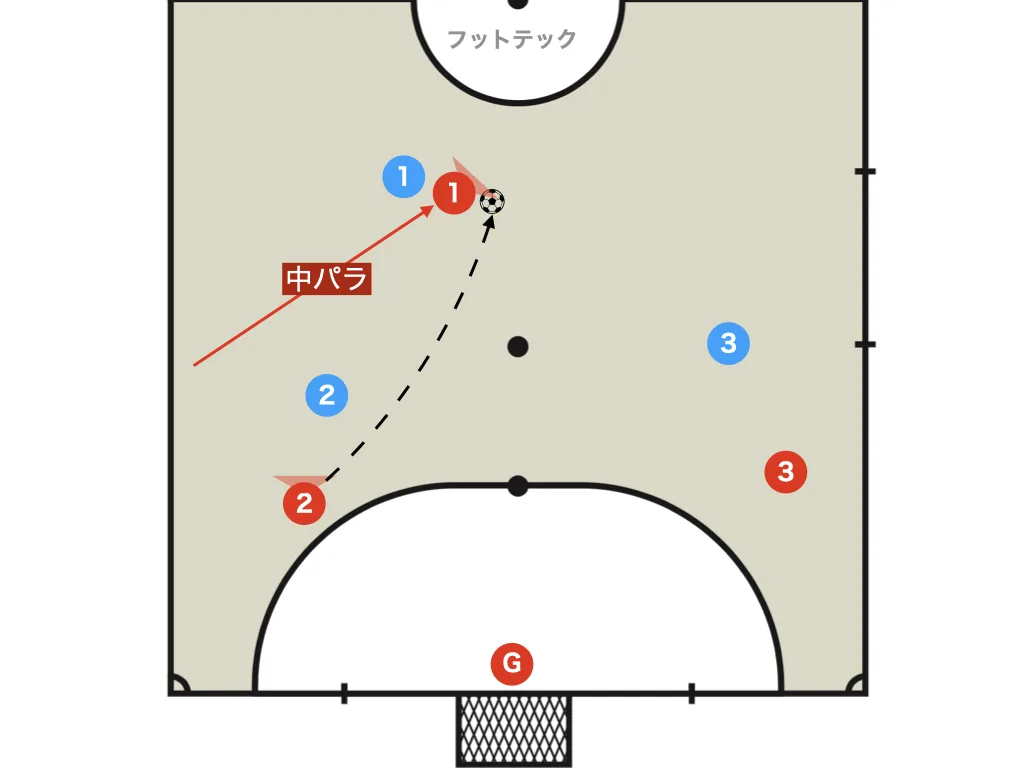
When the ala makes a parallel-like run and receives in the central lane, this is sometimes called a central parallel. (It is not actually parallel to the touchline, but the name gets used anyway. There is no strict, universally fixed name for this tactic.)