How to Use the Space Between the Lines to Break Down Zone Defence
Published: 2021.01.28Updated: 2026.05.03
You may have heard the term "entra," but probably not many people can explain it precisely.
In fact, the commonly used term "entra" is not strictly correct. The accurate term is entre lineas, meaning the space between defensive lines. Understanding this concept properly is the first step in breaking down a zone defence.
This article explains the concept in concrete terms, from the definition of entre lineas to the timing of entering the space, how to move there, and how to pass into it.
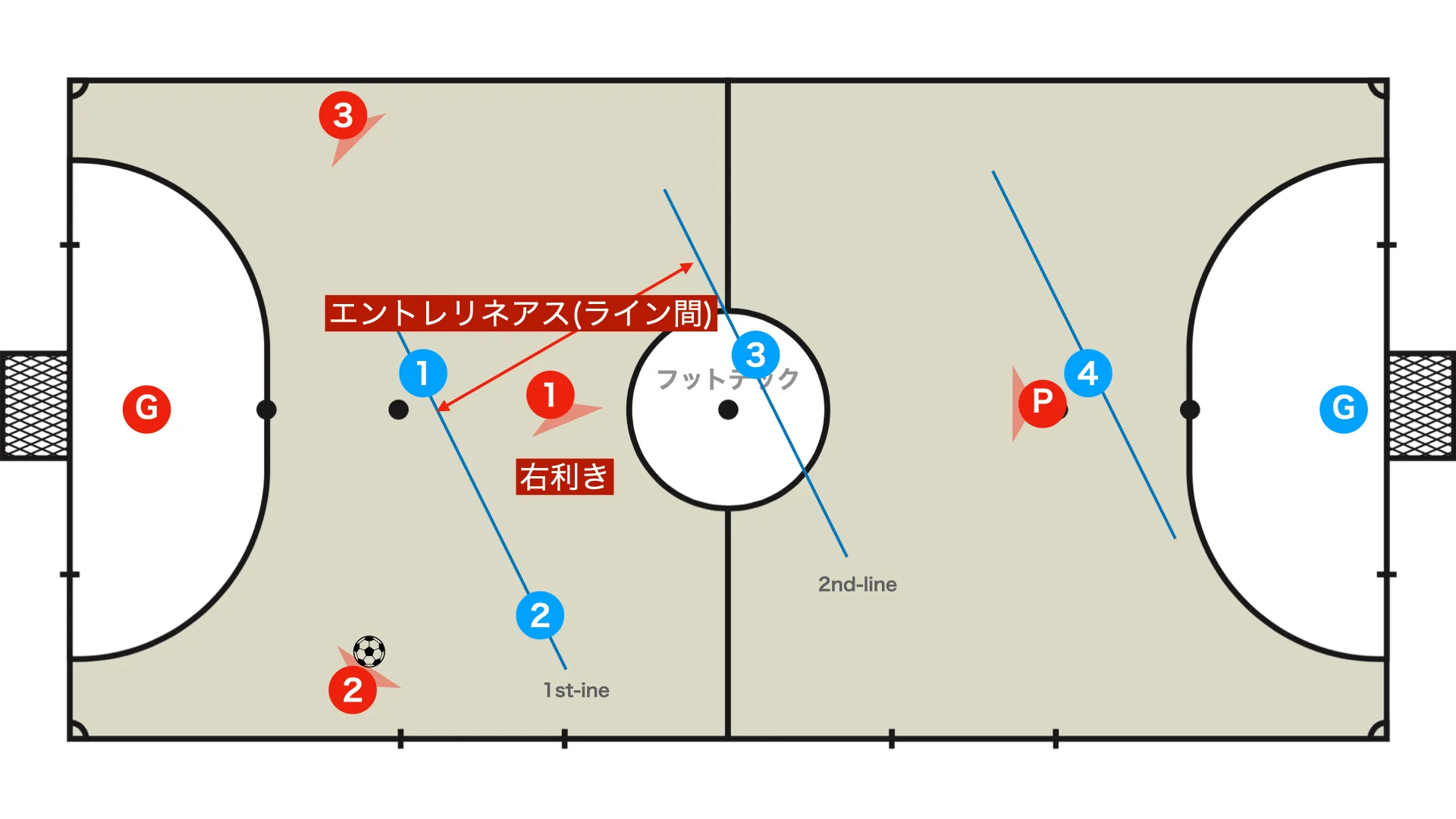
In futsal tactics, entre lineas means the space between the defensive lines built by the defending team.
By definition, there are three kinds of entre lineas:
Types of space between the lines
- Between the 1st and 2nd defensive lines
- Between the 2nd and 3rd defensive lines
- Between the 3rd and 4th defensive lines (the goalkeeper)
Of these, the one that matters most in futsal is the first: the space between the 1st and 2nd lines. In practice, when people say "entre lineas," this is usually what they mean.
To understand entre lineas correctly, you should first understand how the defending side builds multiple defensive lines.
When you look up futsal tactics online, you often come across incorrect explanations.
Here are some common misunderstandings about what "between the lines" actually means.
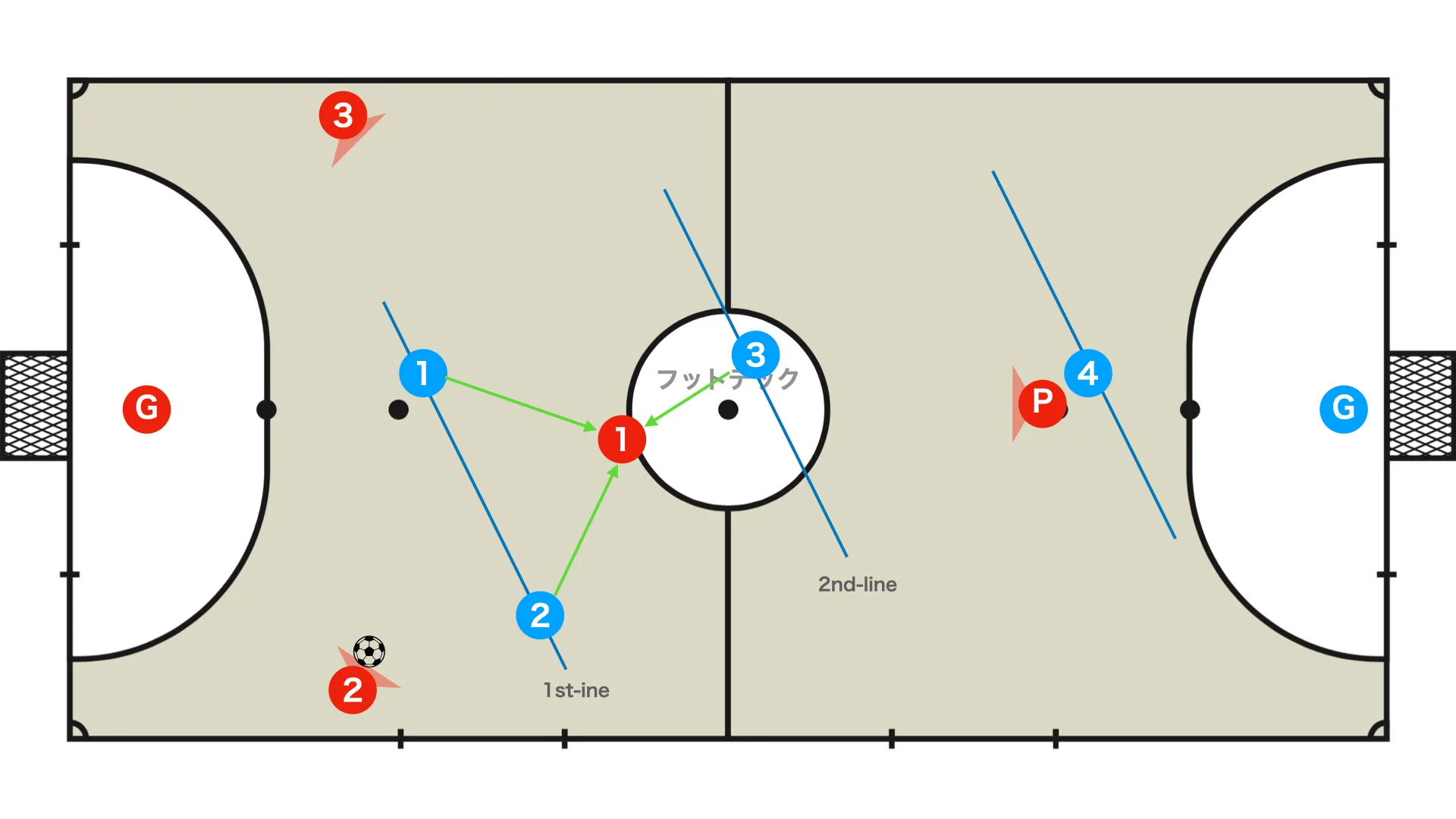
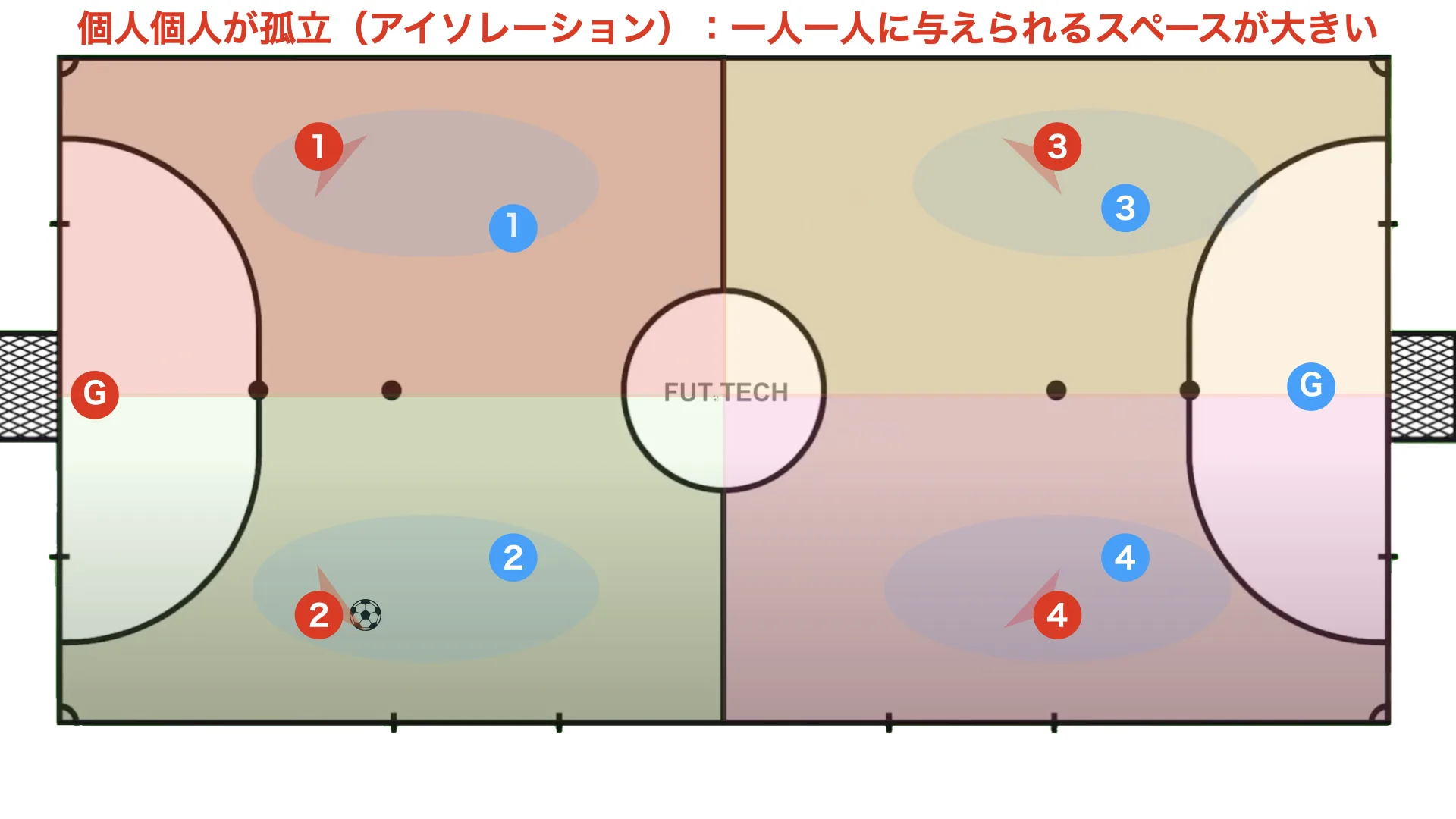
The first example is the vague idea that it simply means any space between defenders.
It is true that the red player (black A) in the diagram is offering support from between the lines, but that way of interpreting the concept is not precise enough.
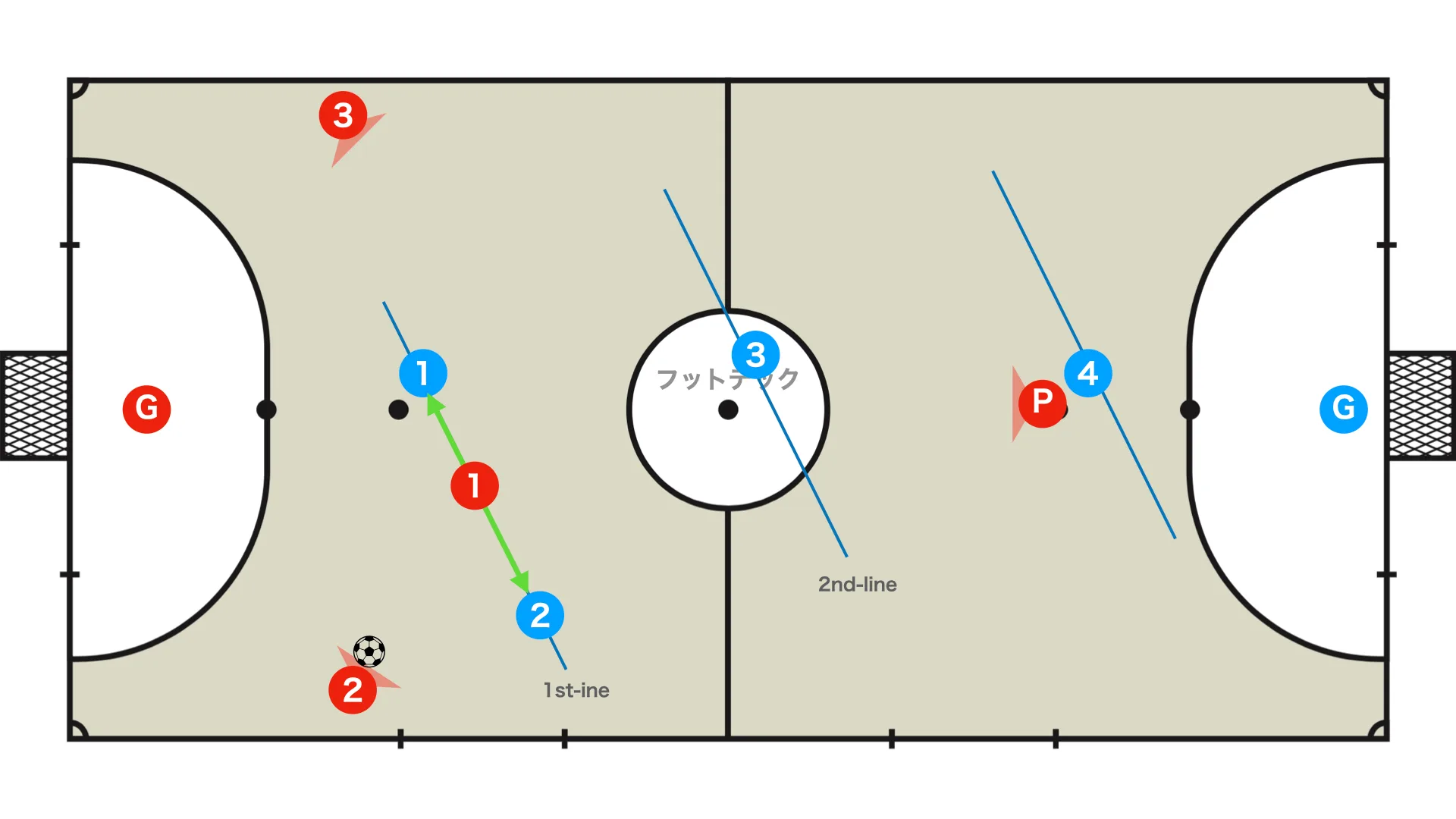
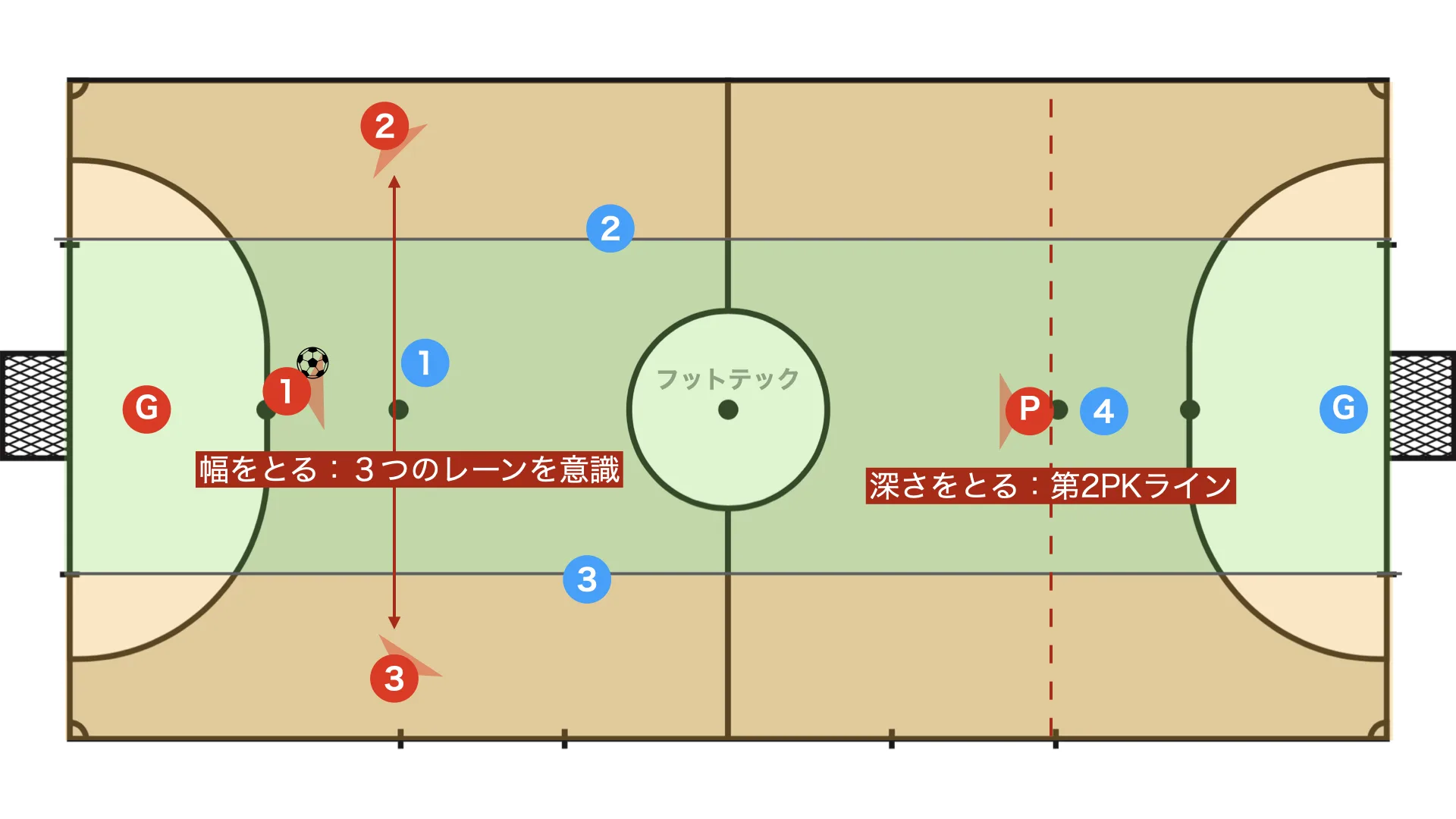
The second example is the idea that it means the space between two players on the same defensive line.
That is just the space between two players, not the space between lines.
One phrase that comes from this misunderstanding is "break through the space between the lines."
Expressions like "use the space between the lines" or "enter the space between the lines" are correct, but the space between the lines is not something you "break through."
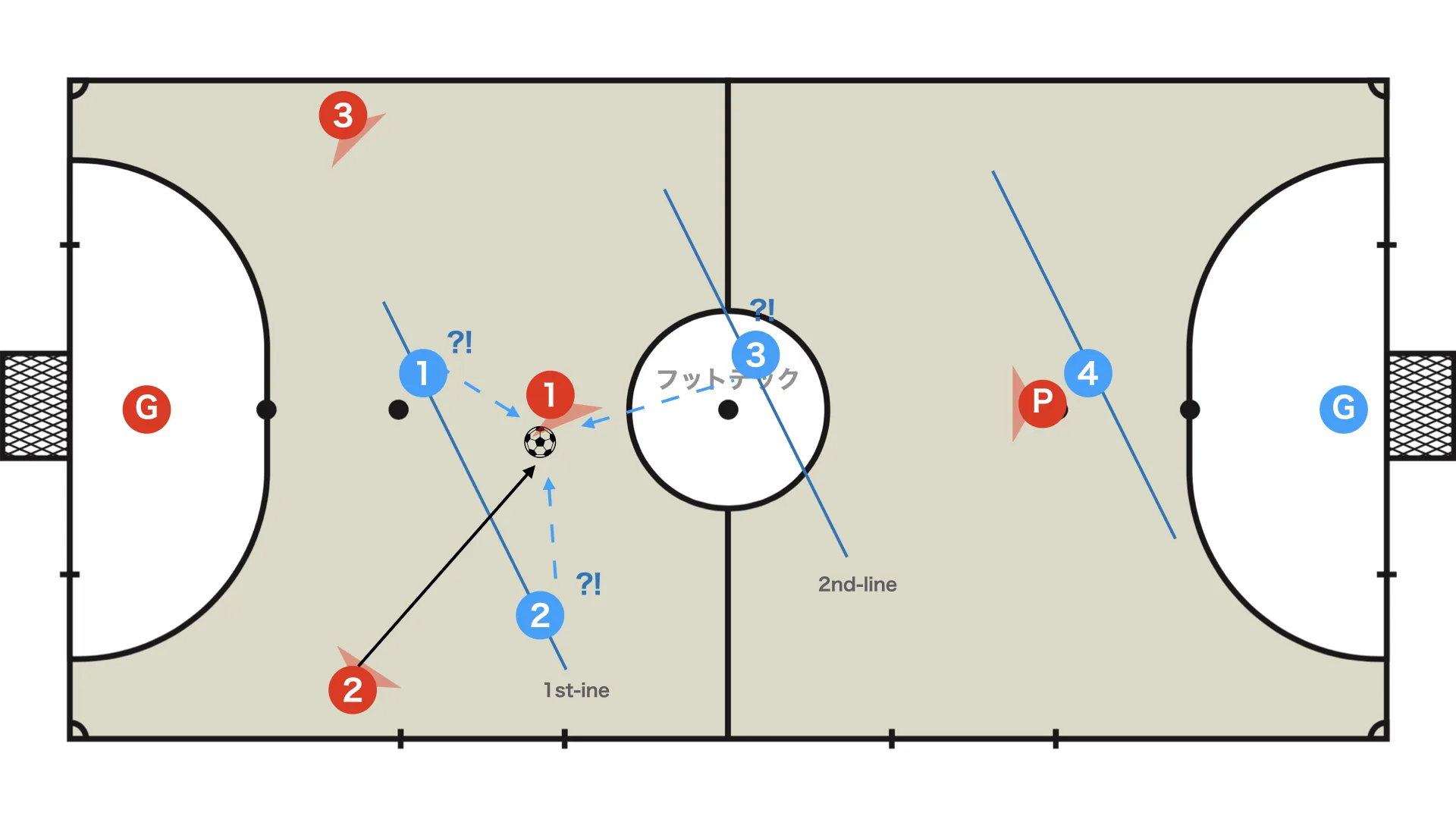
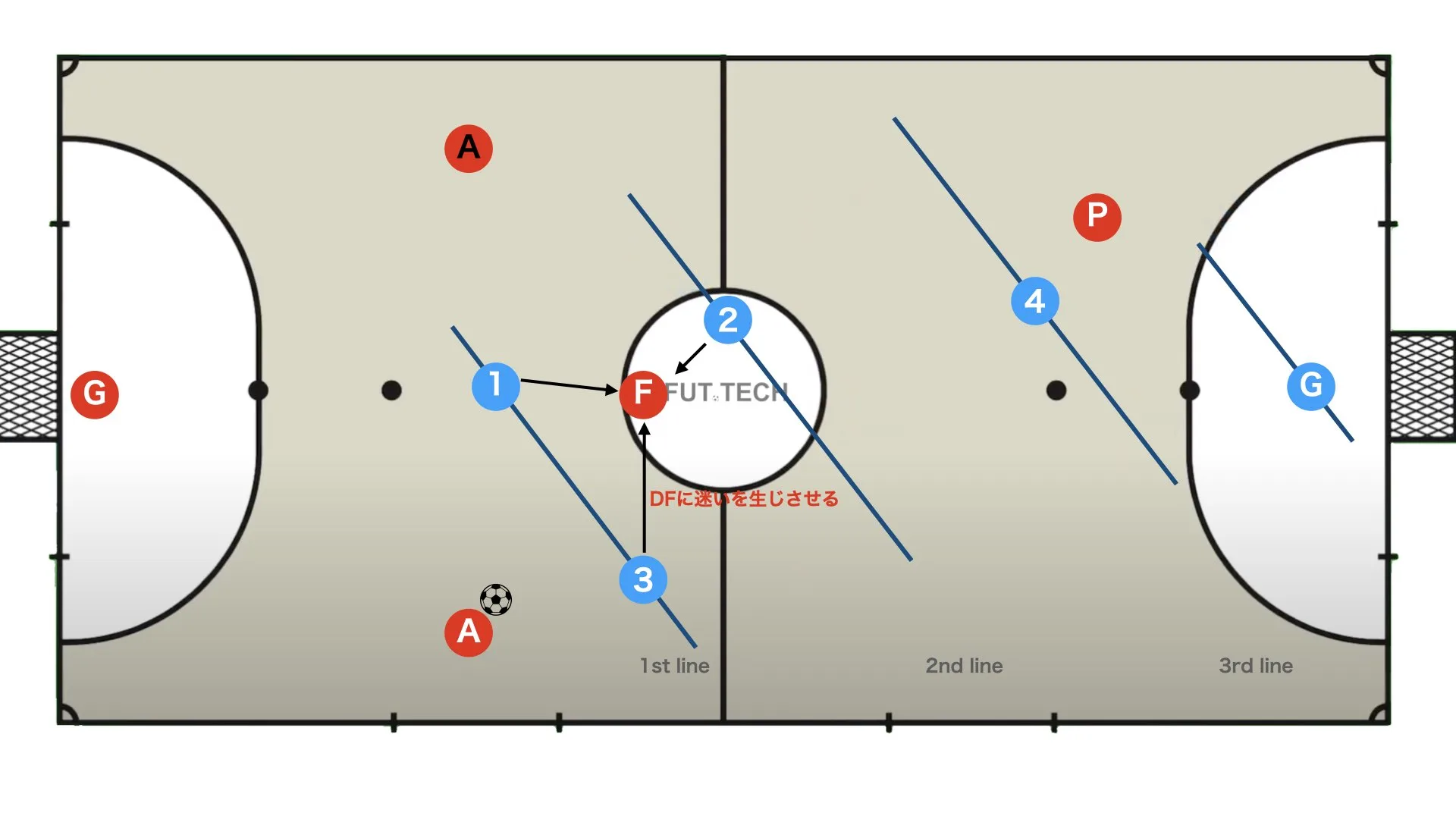
The tactical benefit of using the space between the lines is that it creates hesitation in a defence built on multiple lines.
As shown in the diagram above, when the ball enters that pocket, the defending side hesitates over whether the player from the 1st line or the 2nd line should step in. That hesitation creates cracks in the defence.
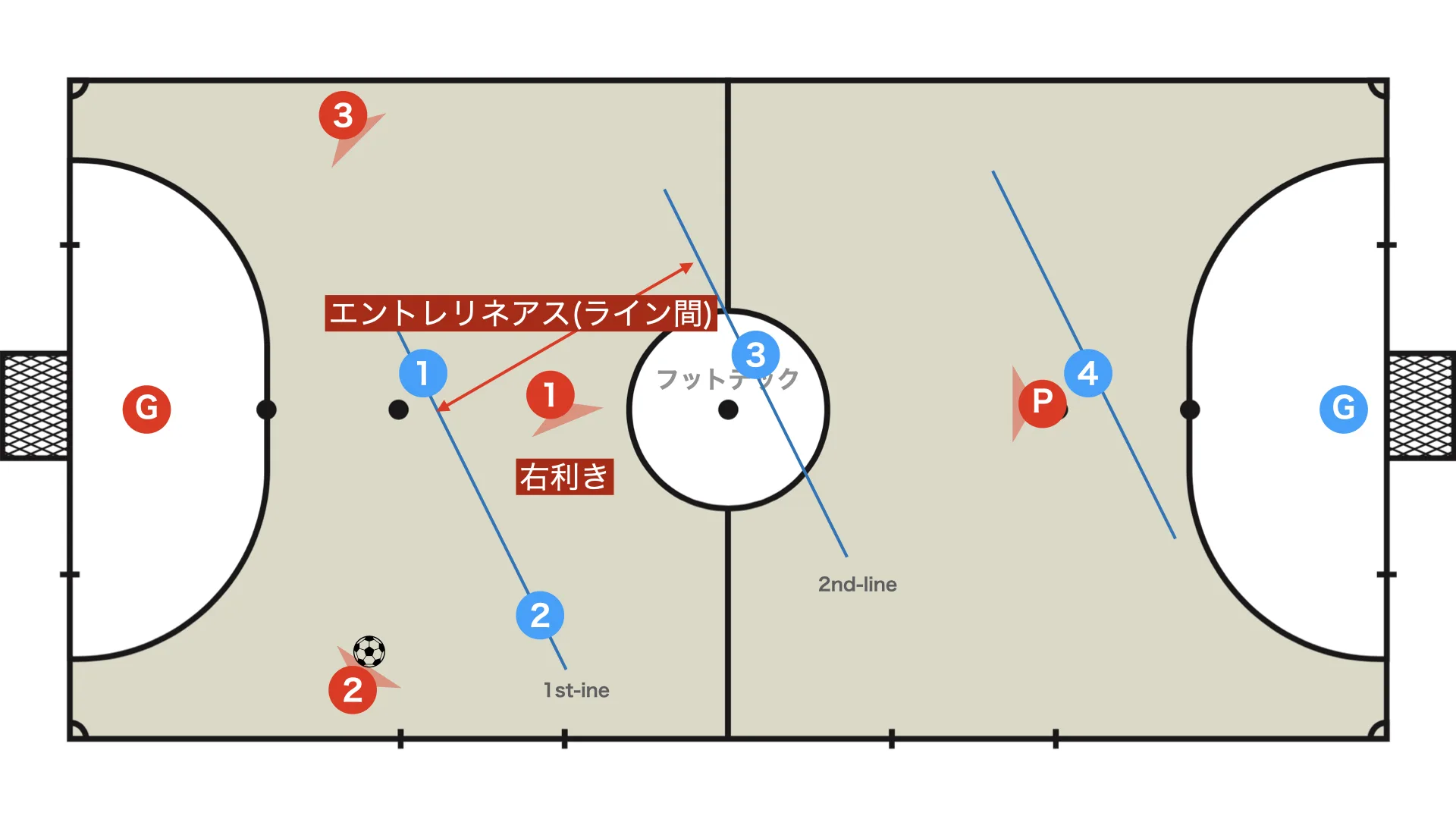
Ideally, the player moving between the lines should have the same stronger foot as the side where the ball is.
That makes it possible to control the ball with the foot farther from the defender (blue 1), turn quickly, and face forward.
Before turning, it is also extremely important to check the situation ahead with a quick scan.
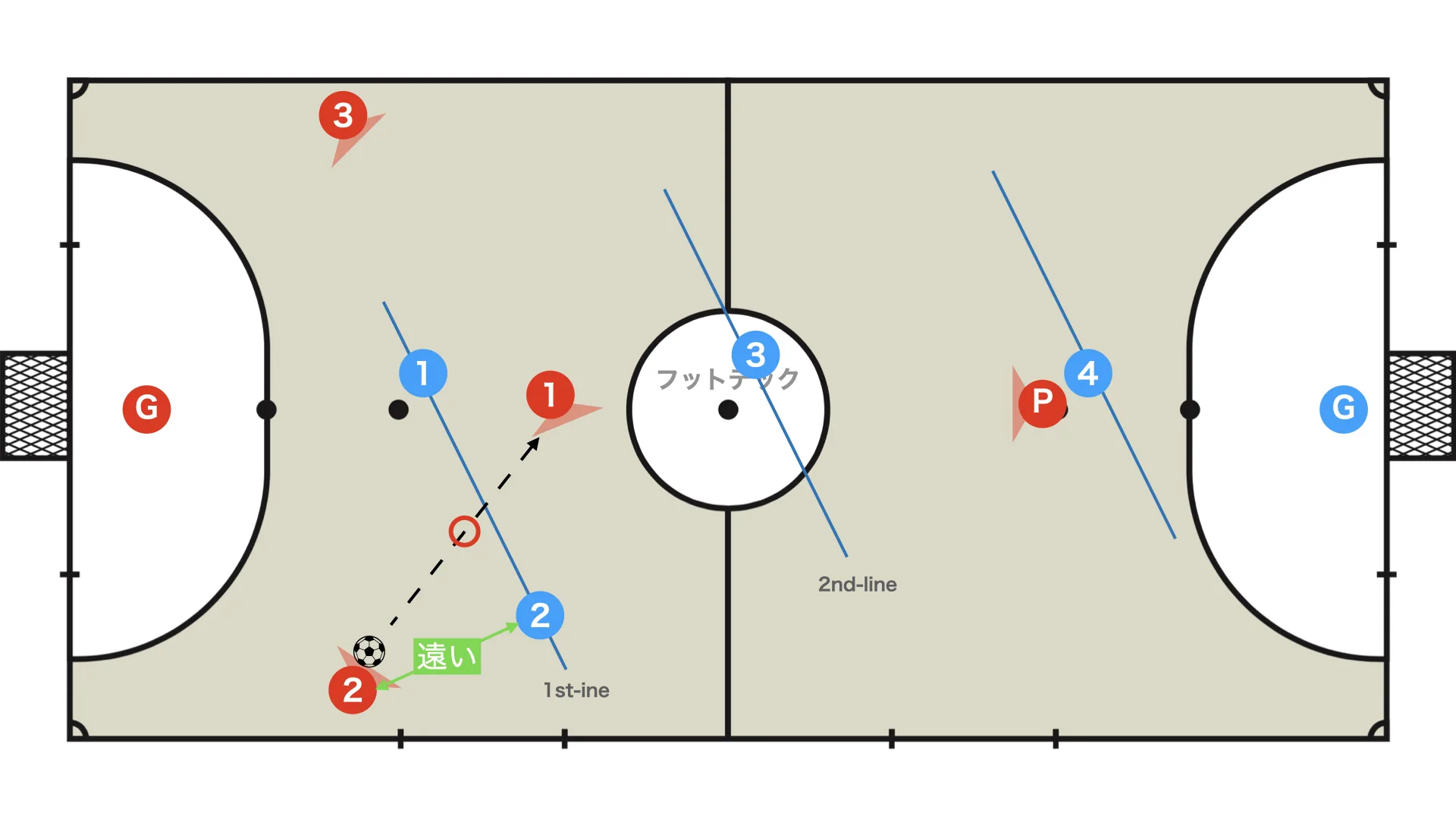
If you want to play into the space between the lines, you first need to make sure the ball carrier is not under pressure.
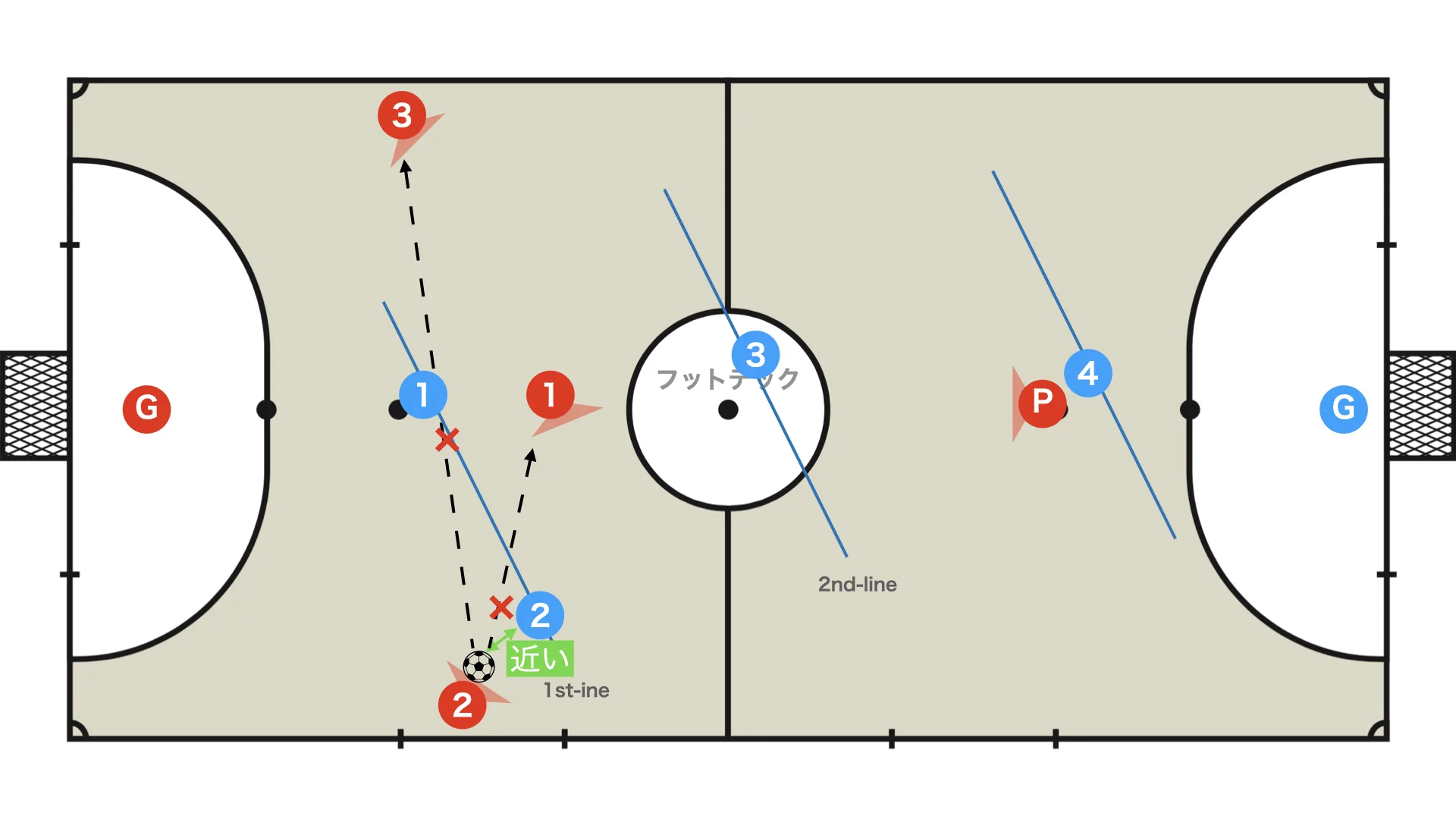
Once the press arrives, the 1st defender can cut the passing lane into the space between the lines, while the 2nd defender (blue 1) stays in place and also blocks the pass toward the weak-side ala (red 3). At that point, the attack is stuck.
If that happens, it is better for the player between the lines to drop back into the 1st line again and give horizontal support to the ball carrier (red 2).
関連記事
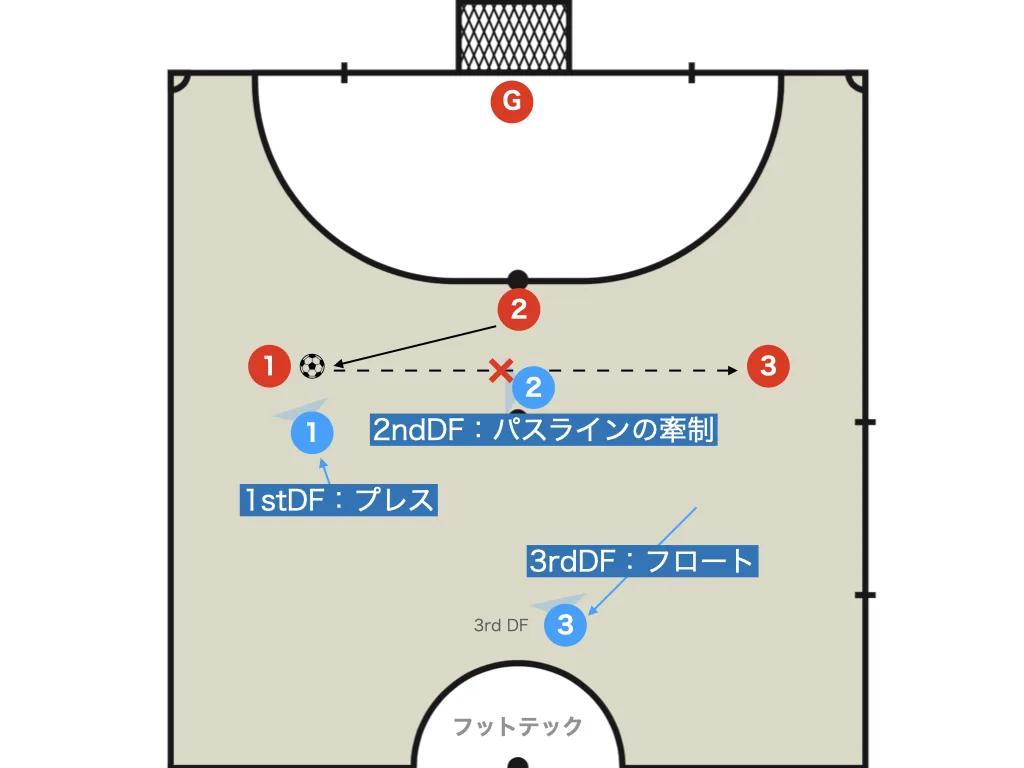
High Pressing: The Defensive Triangle (Epsilon / Y-Shaped Zone Defence)
An explanation of the Y-shaped (epsilon) zone defence used in futsal high pressing. This article bre…
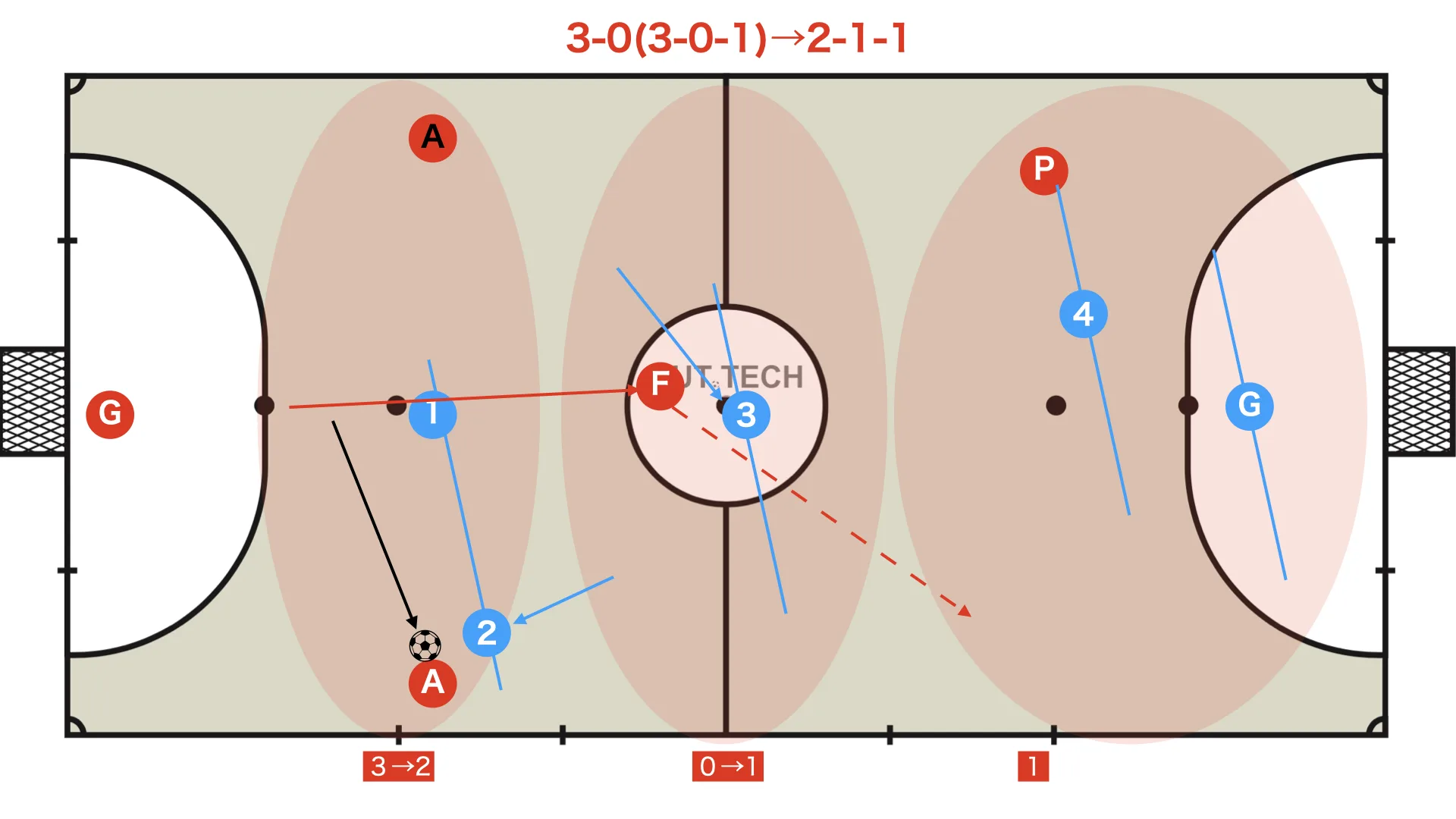
続きを読む →You can use the space between the lines from a variety of formations, but here I will focus on the most common pattern in a 3-1.
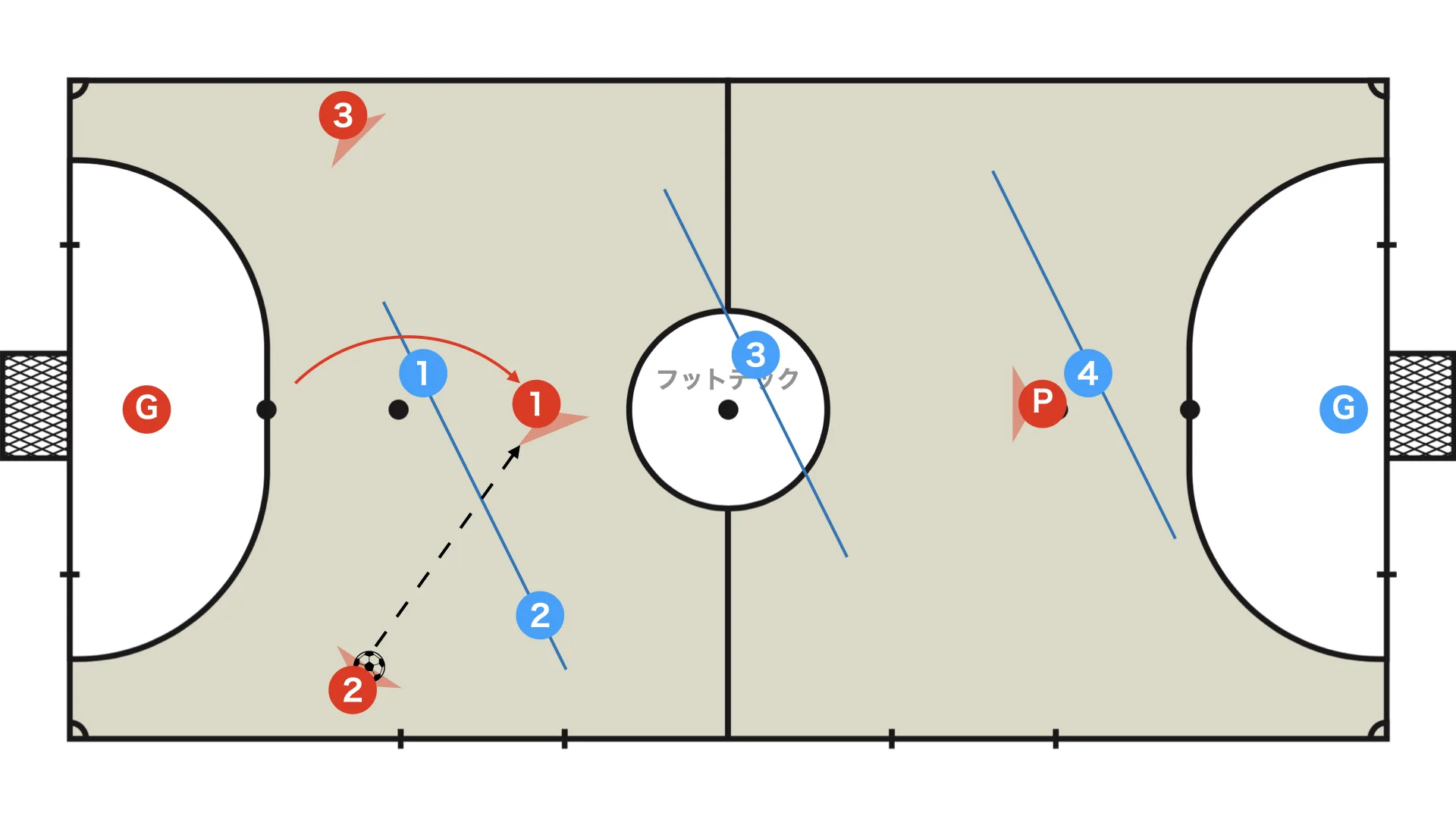
Many teams follow the defensive principle of passing players on after they move behind a defender, so ideally the fixo should move between the lines by going behind the opposing defender (blue 1) as much as possible.
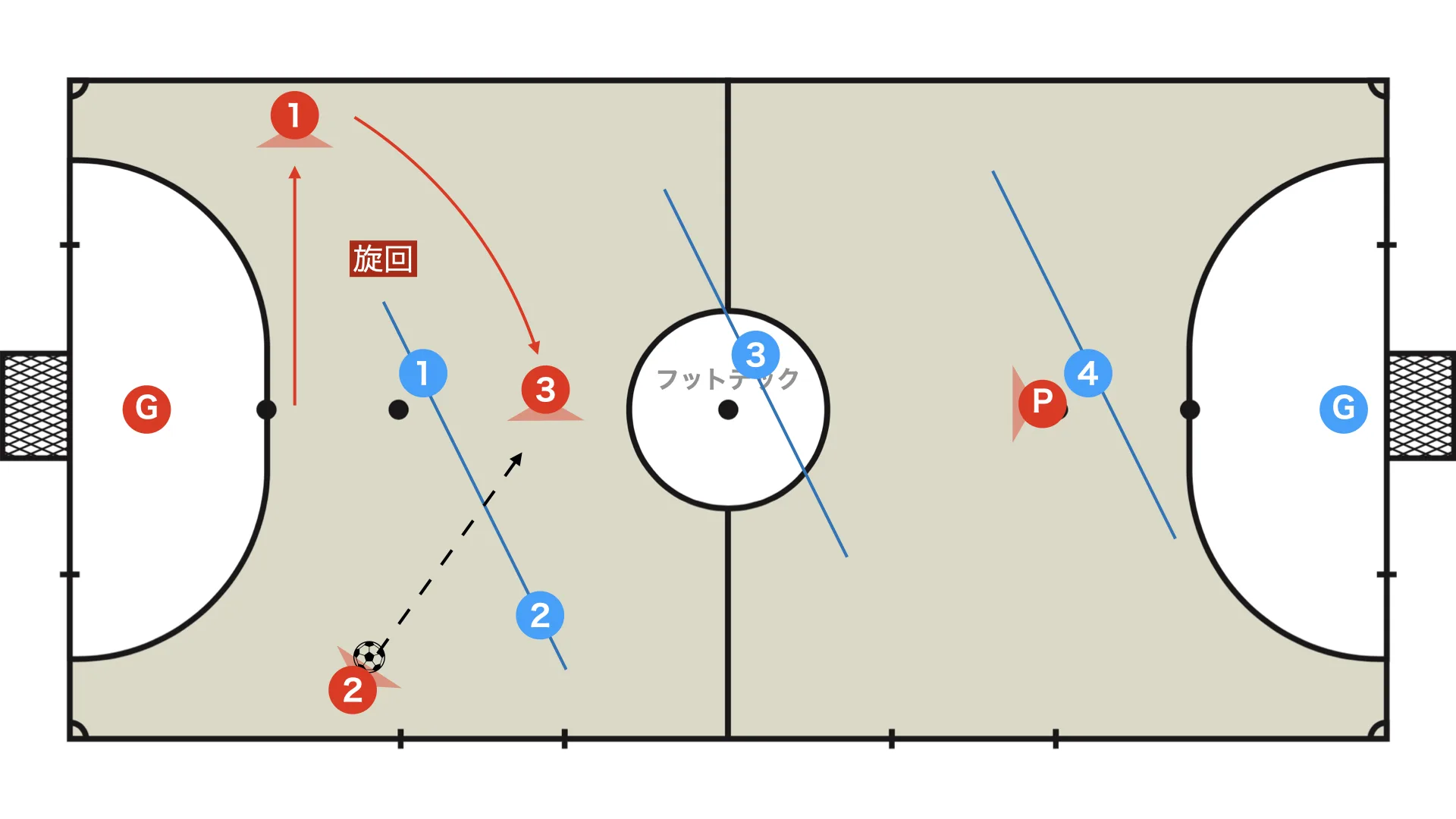
Because the weak-side ala enters from the defender's blind side, it is very hard for the defence to deal with.
At this moment, the fixo (red 1) widens out to restore the team's floor balance.
In futsal, this sequence of movements is called rotation (redondo).
関連記事
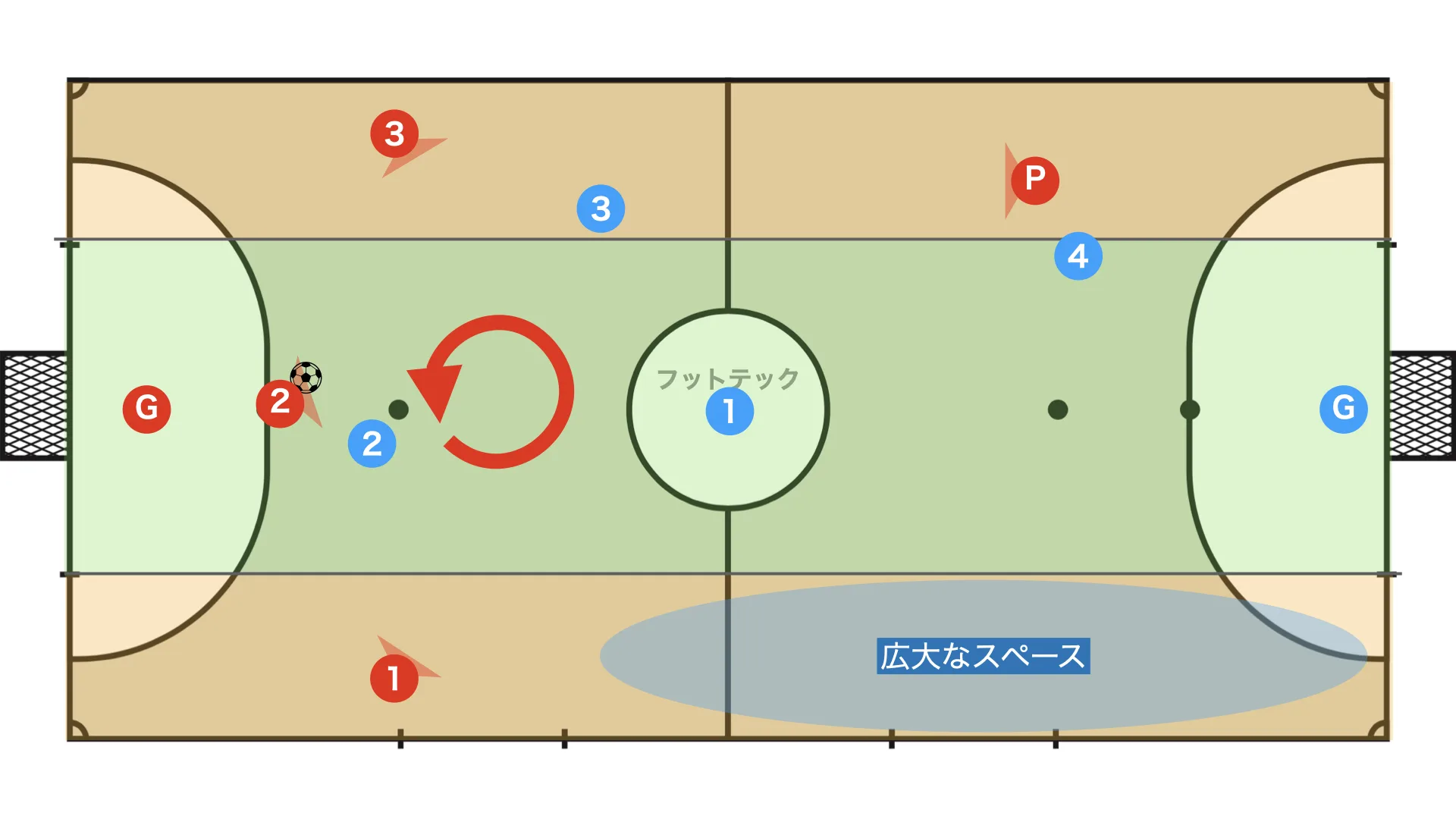
Redondo: A 3-1 Play Model Built Around Rotation
An explanation of a 3-1 play model that uses redondo (rotation). This article breaks down the princi…
続きを読む →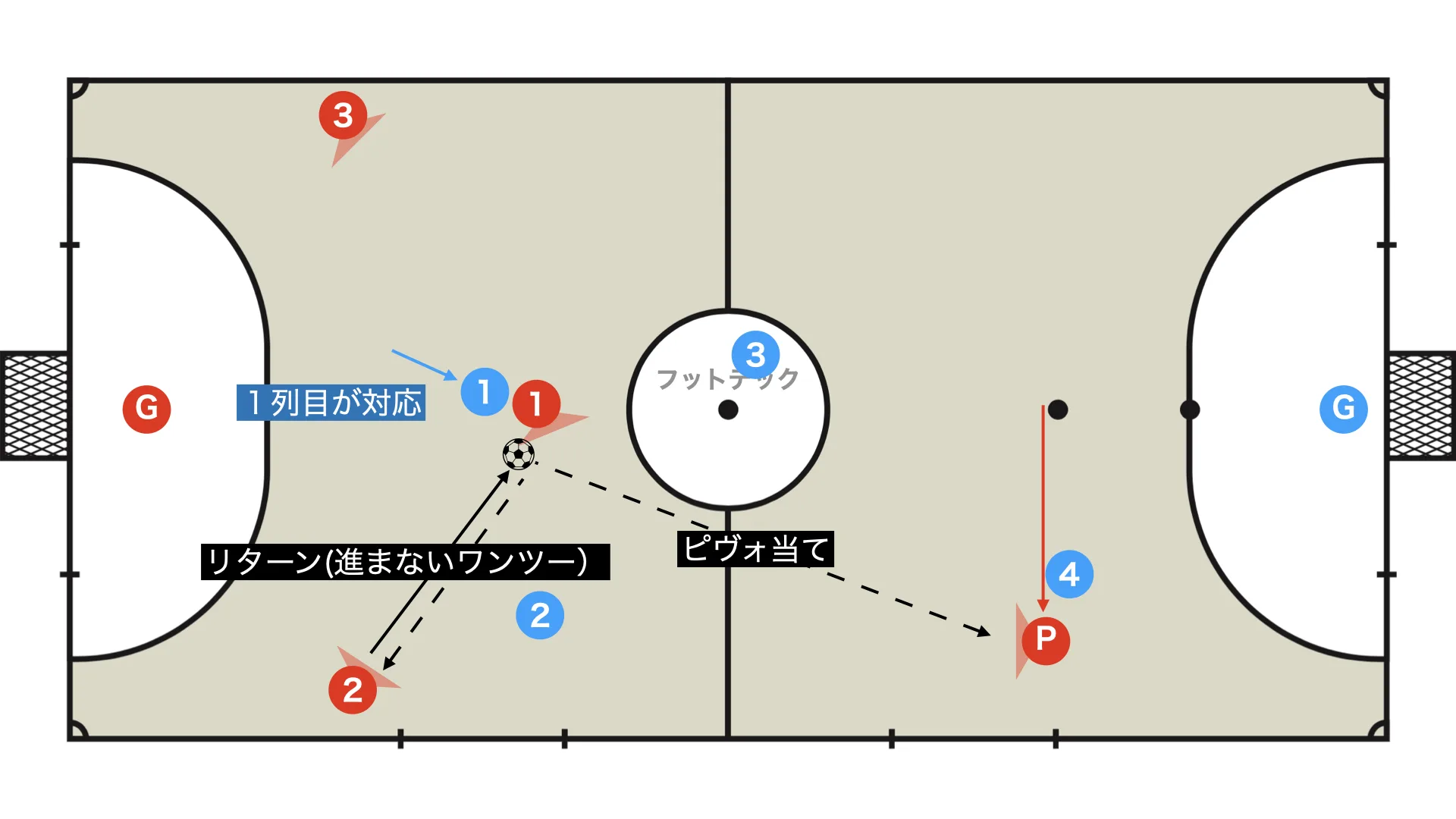
Ideally, the pivot drifts wide so that a pass into the pivot is available from between the lines.
It takes some technique, but if you can play a first-time pass into the pivot from that pocket, you can advance while reducing the risk of losing the ball.
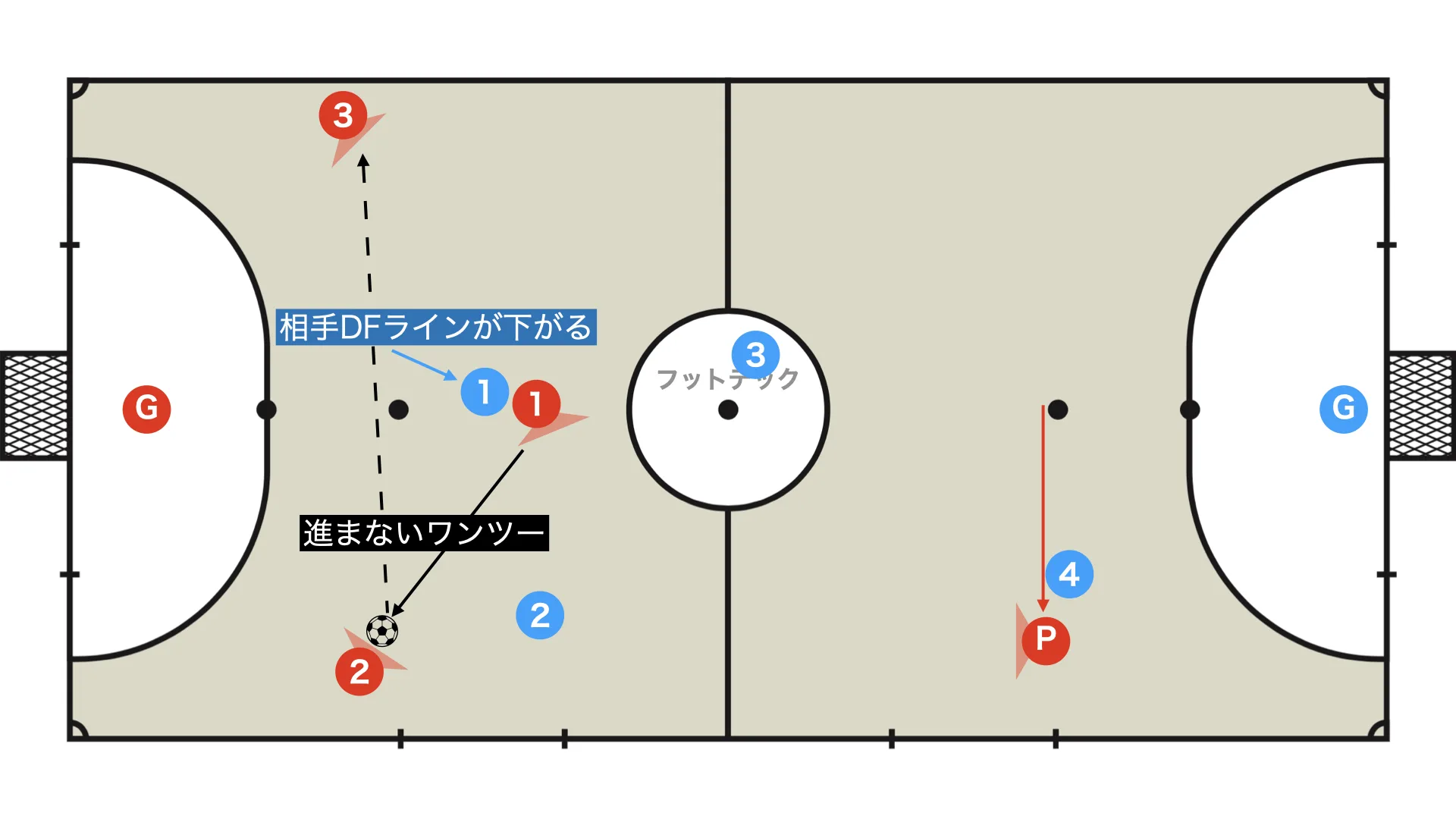
Using a one-two that does not advance can push the opponent's defensive line deeper.
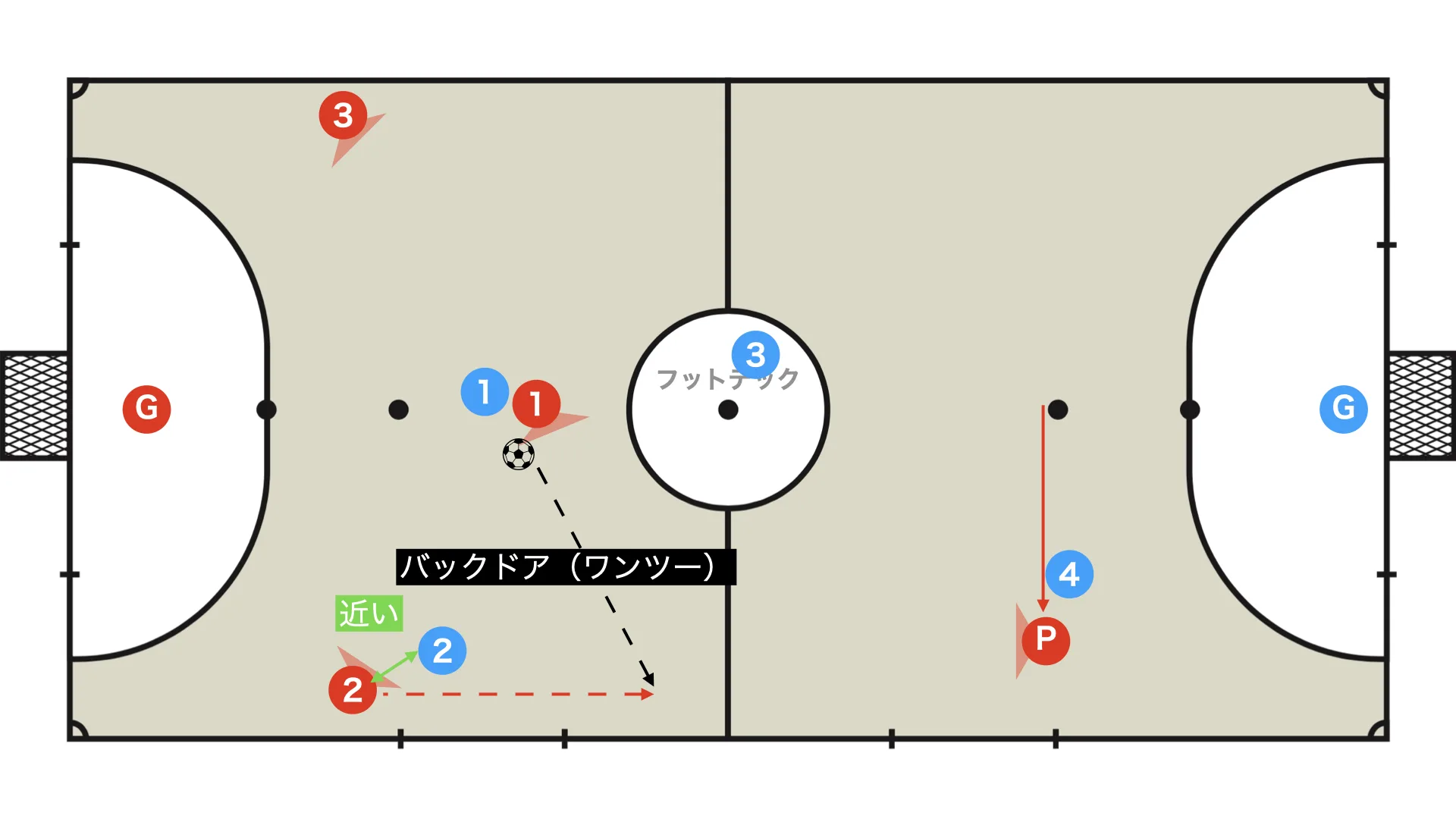
If the marker on red 2 is too close, the non-advancing one-two is no longer available, so the player should quickly attack the space in behind and look for a one-two (backdoor).
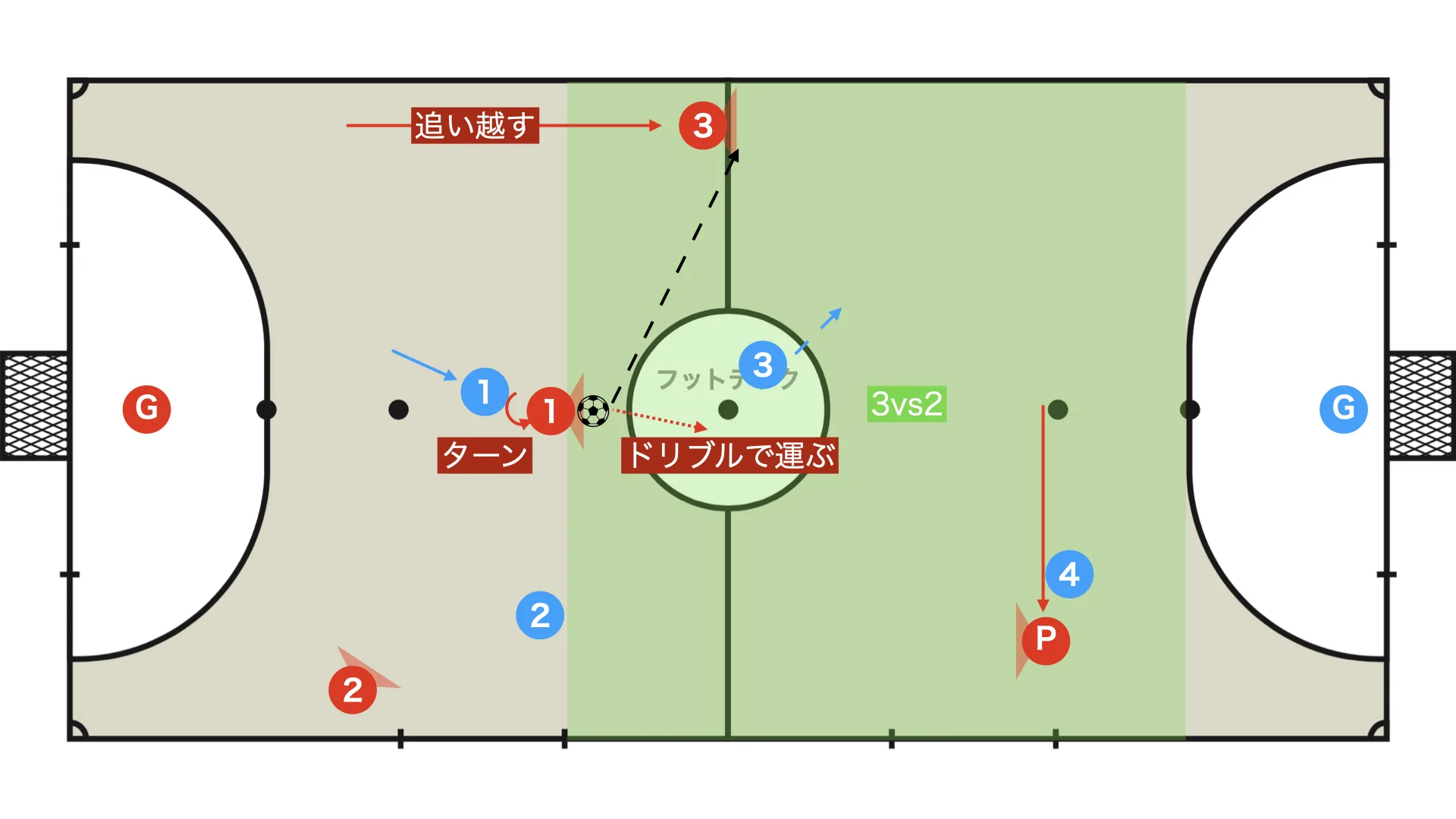
Use your body to protect the ball and carry it where the recovering defender (blue 1), pressing from behind, cannot reach it.
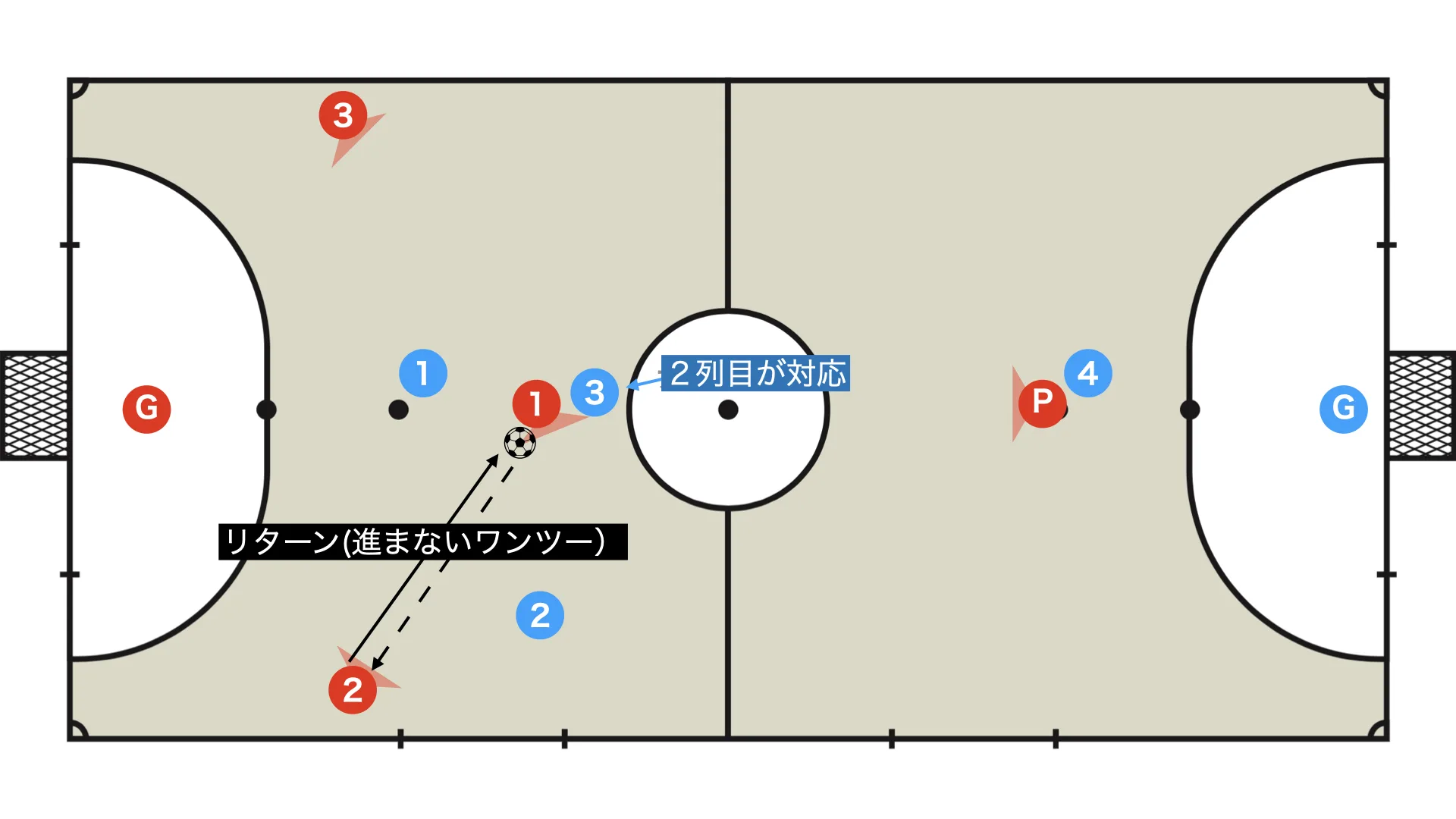
If the 2nd line steps out, trying to force a turn forward can easily lead to losing the ball, so the safer option is to return it.
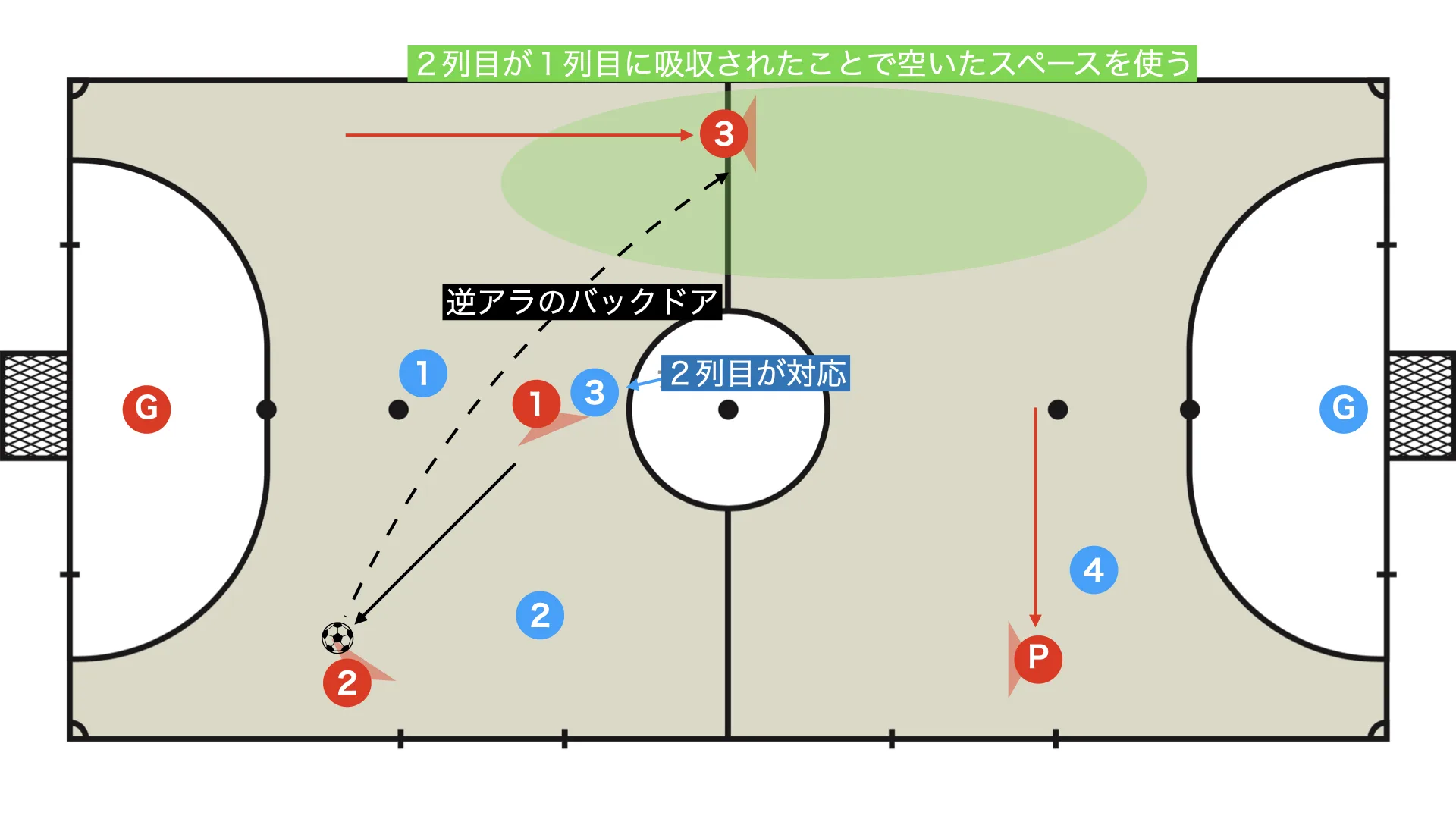
Use the space opened up when the 2nd line is drawn toward the weak-side ala's backdoor run.
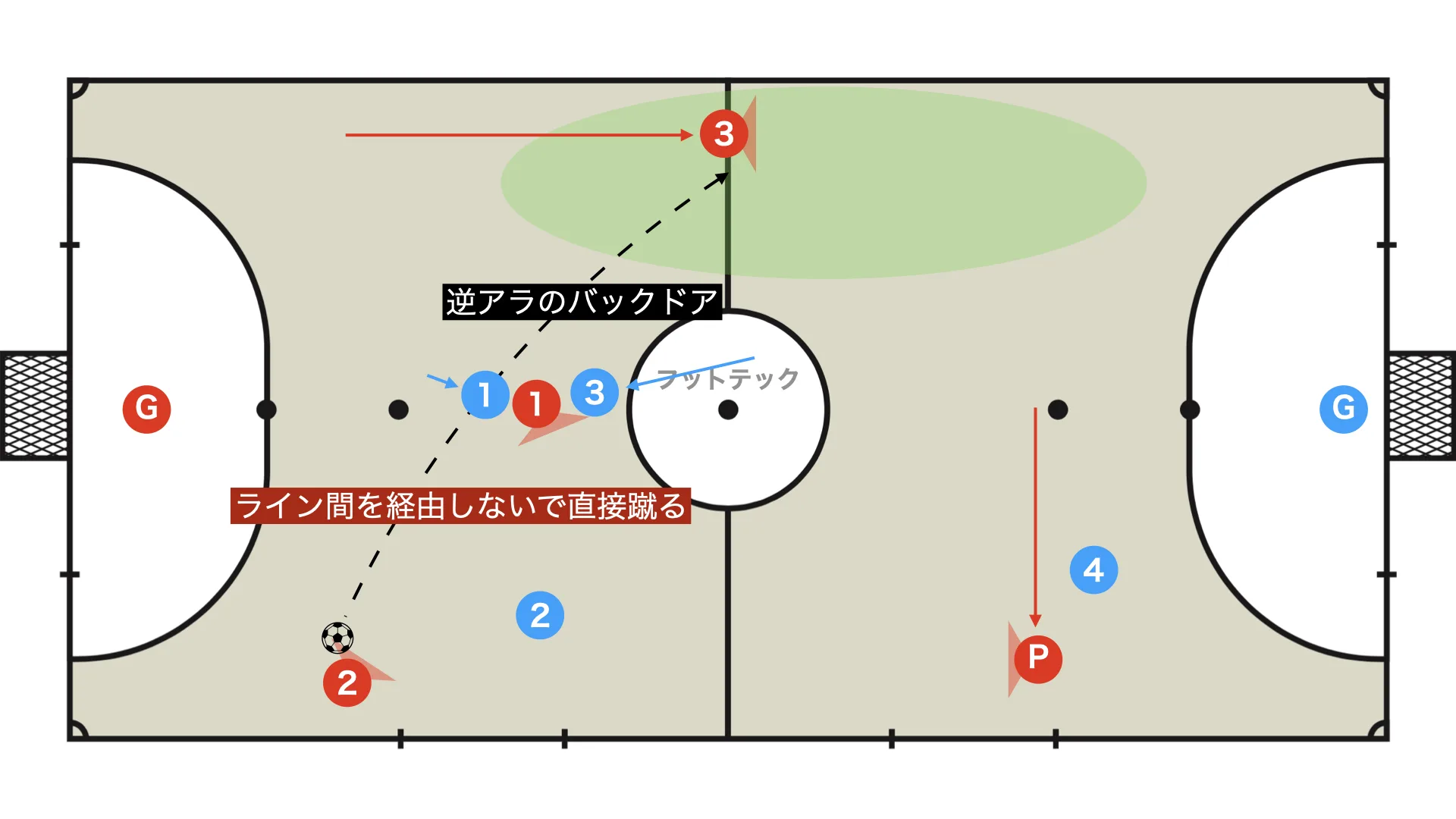
If the defending side makes a mistake, you can also play the ball directly without going through the space between the lines.