Overview: Attacking and Defending After a Red Card in Futsal
Published: 2021.05.25Updated: 2026.05.03
Unlike football, even if you go a player down after a red card in futsal, the dismissed player can return if the team either defends for at least two minutes or concedes within those two minutes.
Naturally, in most cases the attacking side wants to score within those two minutes before the opponent is restored, while the defending side wants to survive the full two minutes.
At the same time, many teams probably think, "Situations where someone gets sent off with a red card are rare, so we do not need to train them." As a result, when that situation actually arrives on match day, they do not know what to do.
This article carefully explains the most orthodox way to attack and defend in a sending-off situation like that.
関連記事
Special Situations
An overview of special situations in futsal, such as power play and red-card dismissal scenarios. Th…
続きを読む →The key principles in sending-off situations are the same as in other special situations, including power play.
Attacking principles
- Prioritize the goal first
- Look for skip passes
- Slow down the defence's rotation
Defensive principles
- Protect the goal first
- Cut out the skip pass
- Stay compact and rotate the defence
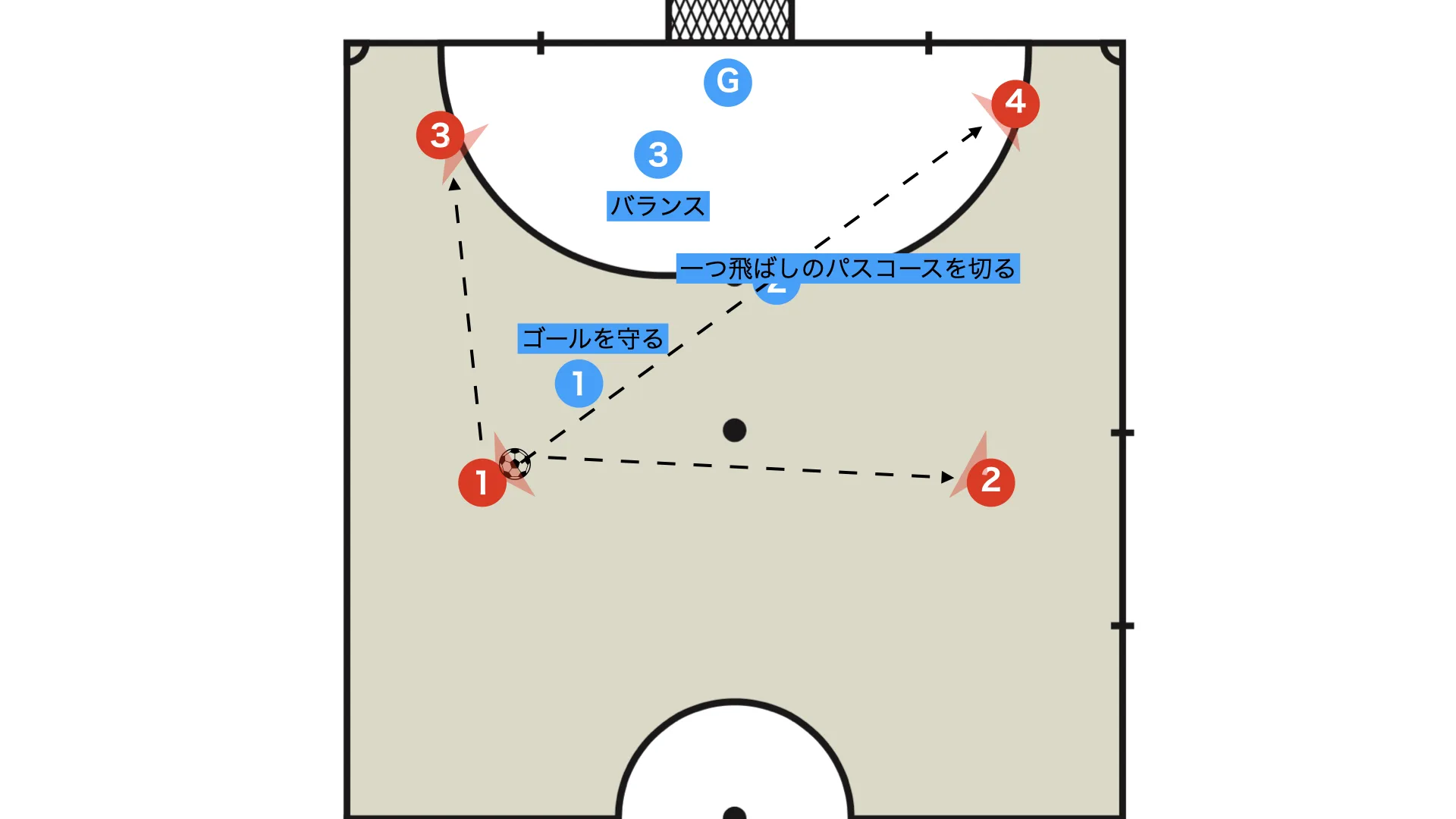
In attack, the most orthodox shape is a box formation (2-2), which uses the space in front of goal effectively. In response, the classic way to defend is with a compact triangle.
(In practice, that leaves the defence looking like two players behind and one in front.)
Of course, if the attacking shape changes, the optimal defensive shape changes slightly as well. But because the defending team is outnumbered, the core idea of staying compact with three players remains the same.
Possible attacking shapes
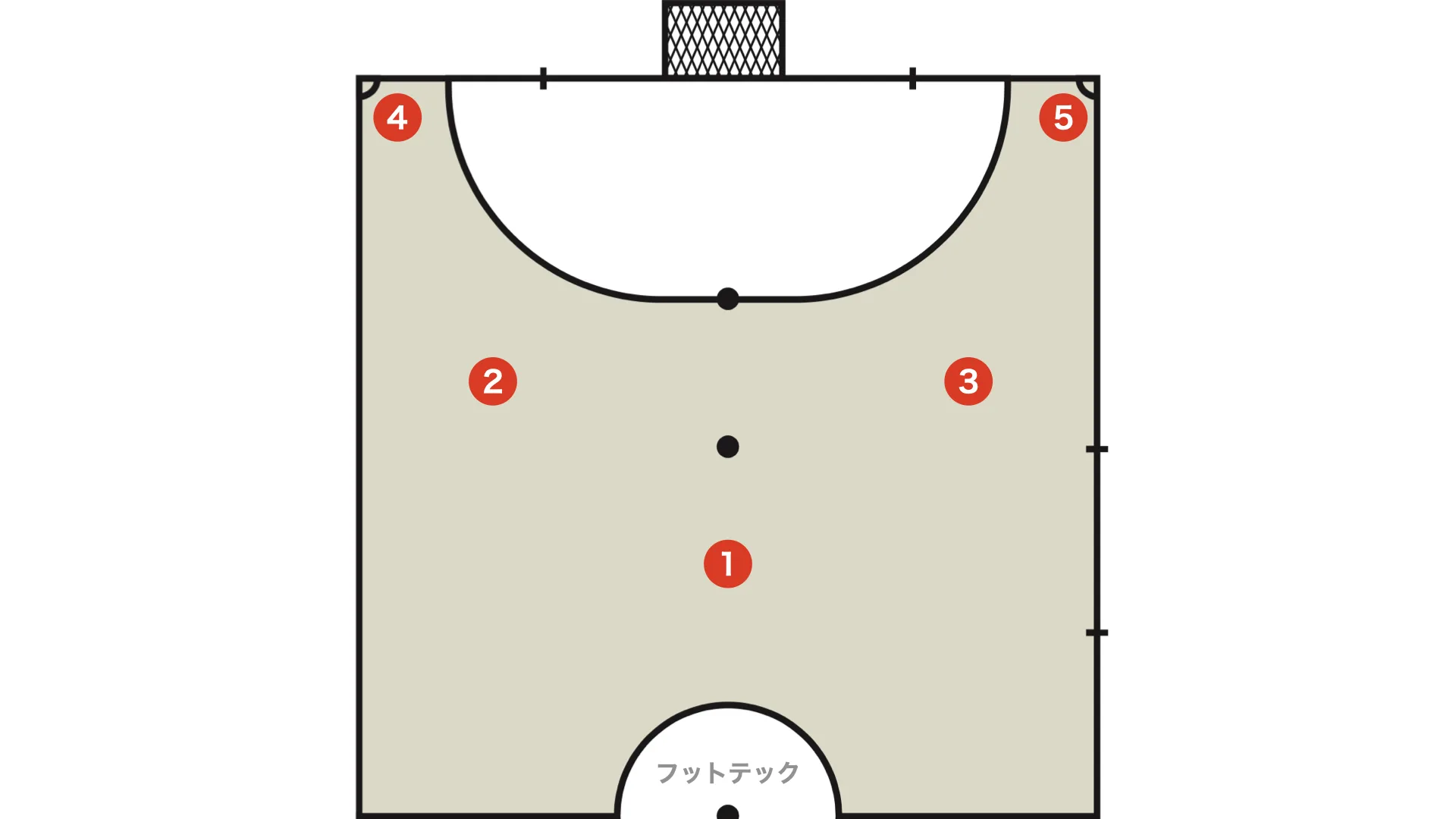
- 2-2 (the most orthodox shape)
- 2-1-1 (overload)
- 1-1-2
- 3-1 (three on one line plus a pivot)
- 1-3 (fixo isolation)
Initial attacking setup
- Use a 2-2 shape
- Put two players high as pivots and keep at least one shooter deeper
- Position players on the opposite side from their strong foot (be aware of body orientation)
Defensive roles
- 1st defender (Blue 1): protect the goal -> then press the ball carrier as the 1st defender
- 2nd defender (Blue 2): screen the passing lane -> cut the diagonal skip pass
- 3rd defender (Blue 3): cover and balance -> slide and respond wherever the ball goes
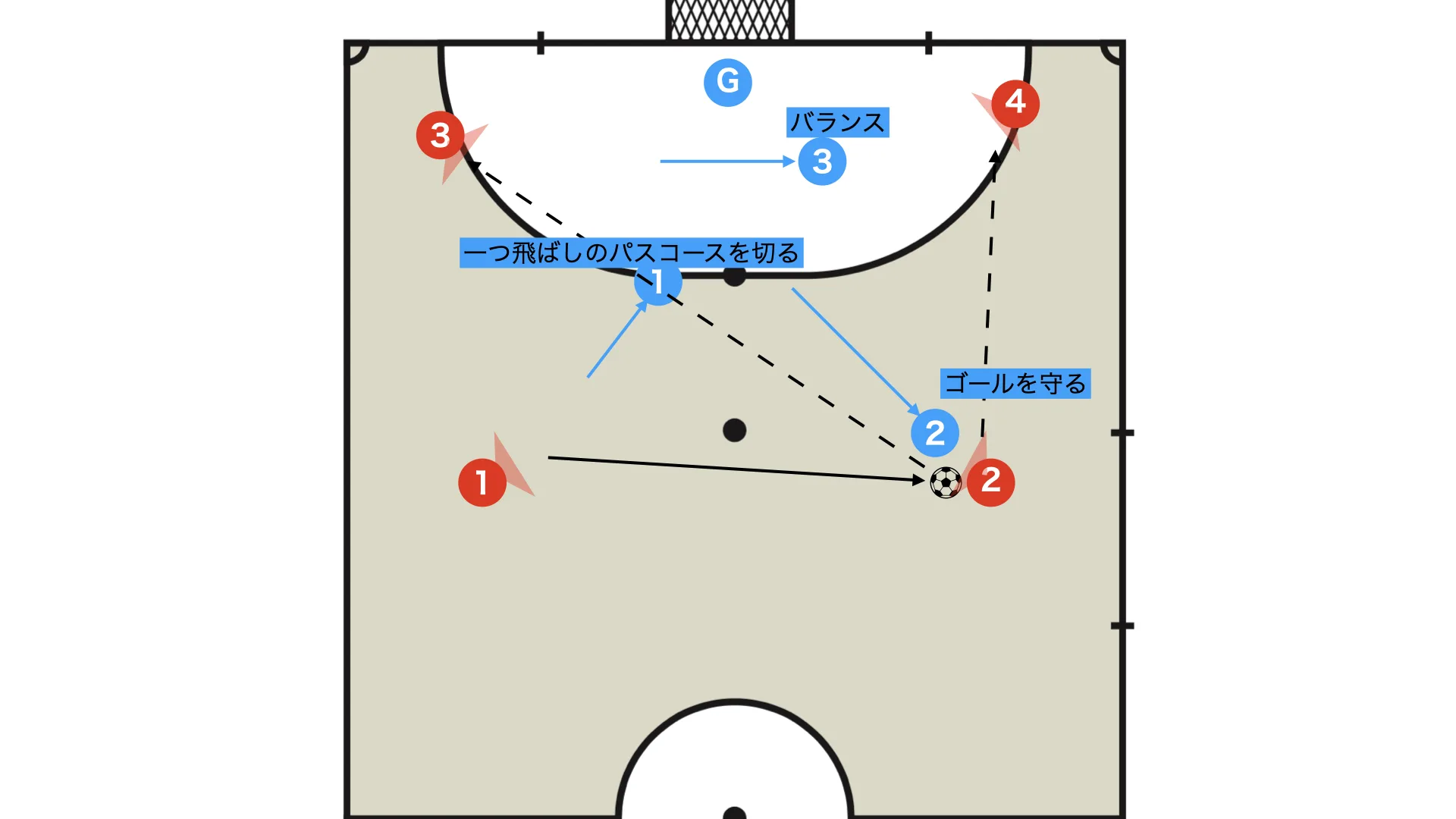
Defence
When a lateral pass is played, the front two defenders (Blue 1 and Blue 2) slide across and swap roles.
If that slide is slow, the defence gives up the risk of a skip pass or a shot, which makes conceding more likely.
What the attacking side should focus on to slow the defence's rotation
- Shorten the time from first touch to pass
- Increase the speed of the pass
- Use direct passing
- Get your head up -> check the skip-pass lane and the shooting lane
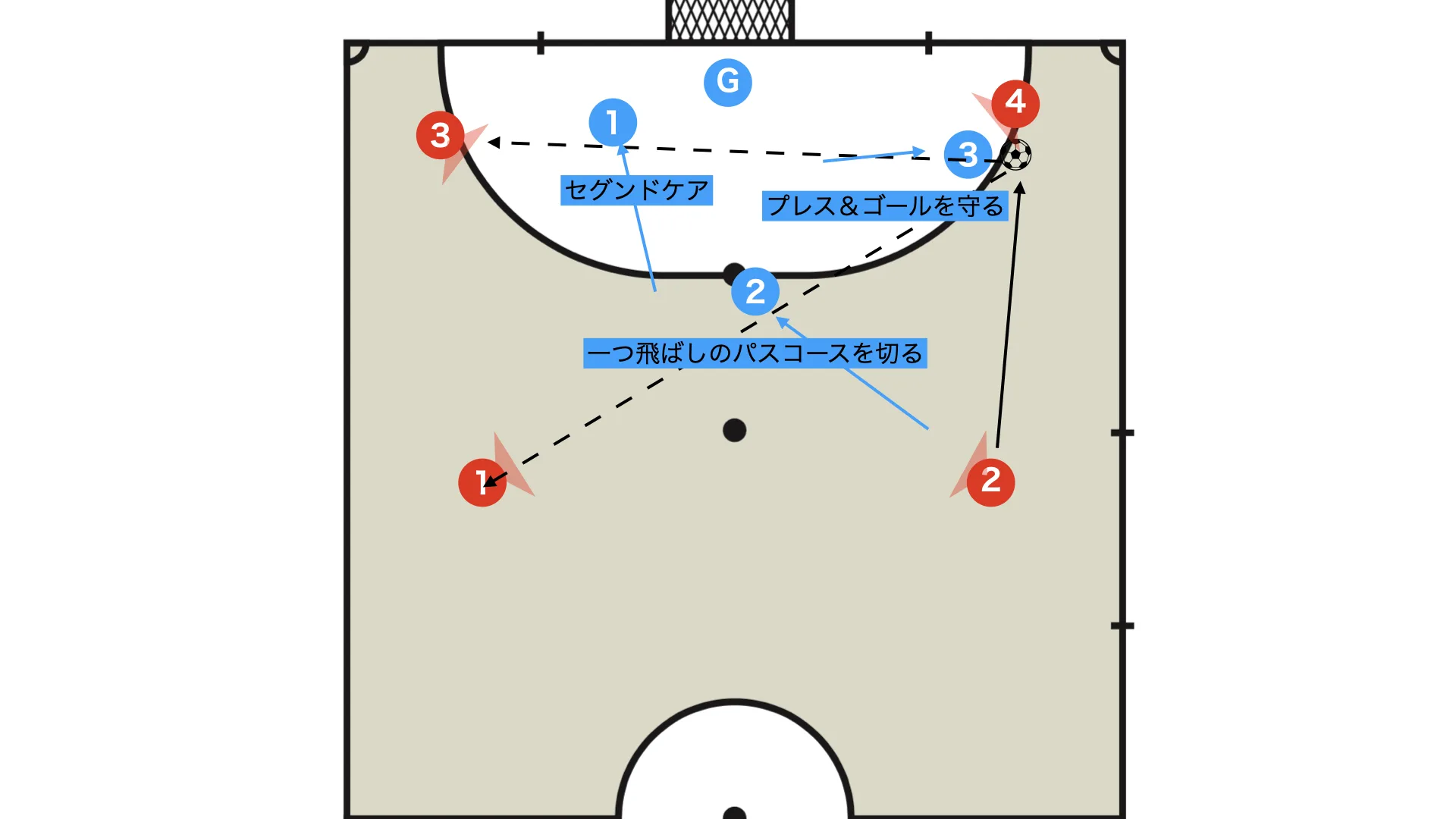
Defence
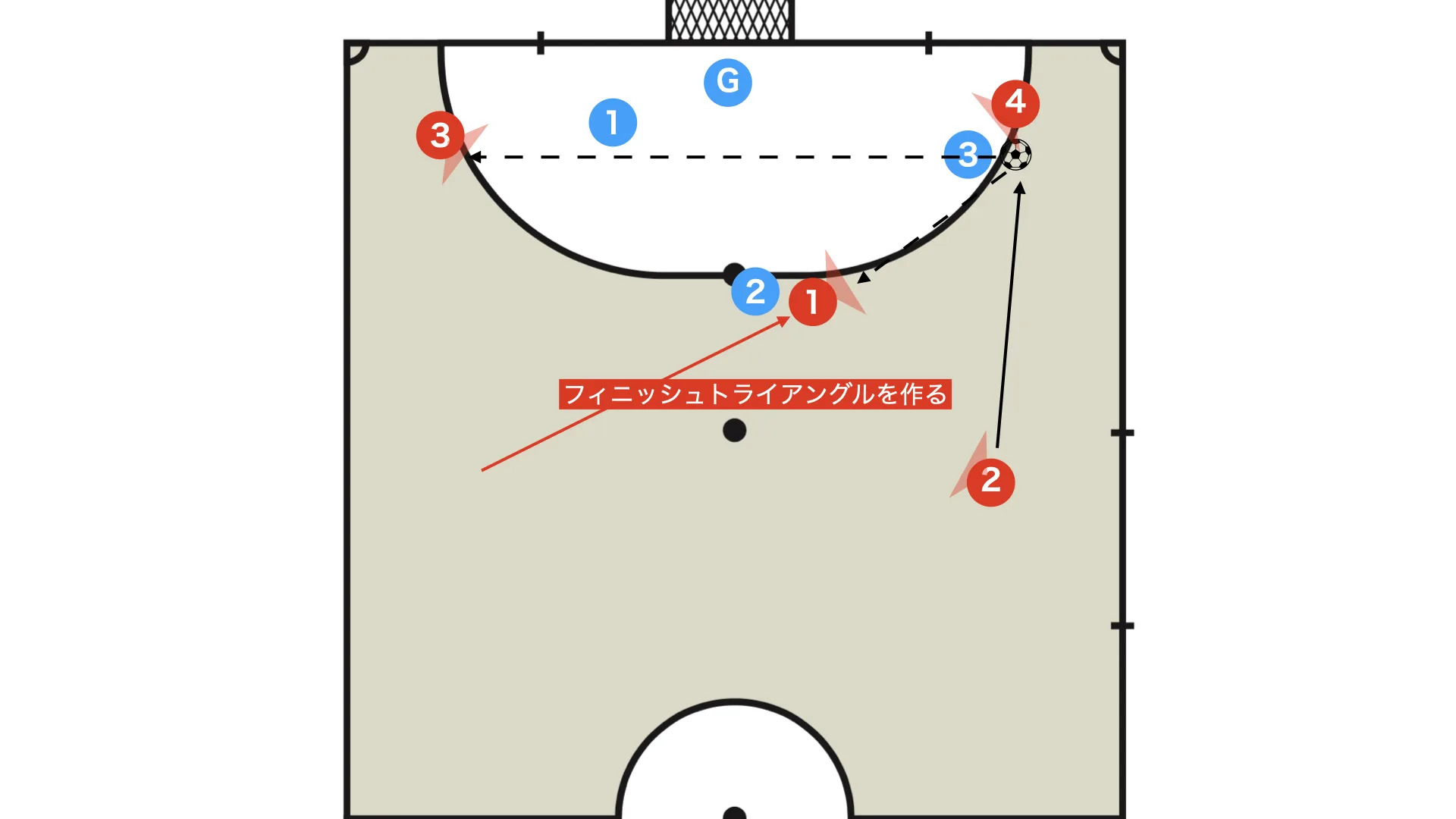
When the ball goes into the front line, the attacking team may try to attack the second-post and rebound lanes directly, so the priority is to cut the lane to the second post.
Attack
When the ball goes into the front line, the diagonal player moves into the rebound position to create a finishing triangle. (The reason it is the diagonal player is that if there is no direct option, you still want a safe outlet.)
関連記事
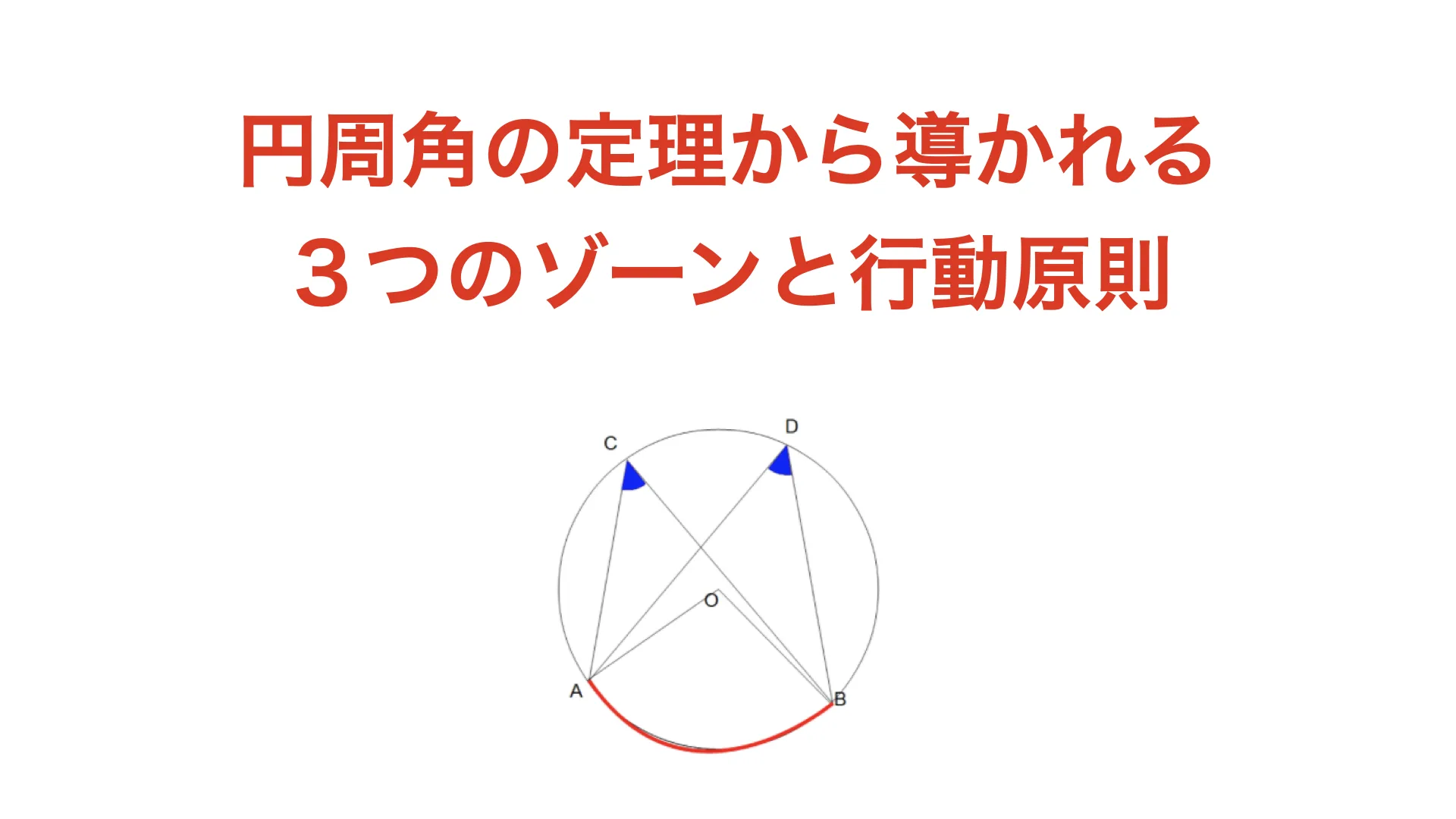
The Finish Triangle: Three Zones and Attacking Principles Derived from Geometry
An explanation of the futsal finish triangle through geometry and the inscribed angle theorem. This …
続きを読む →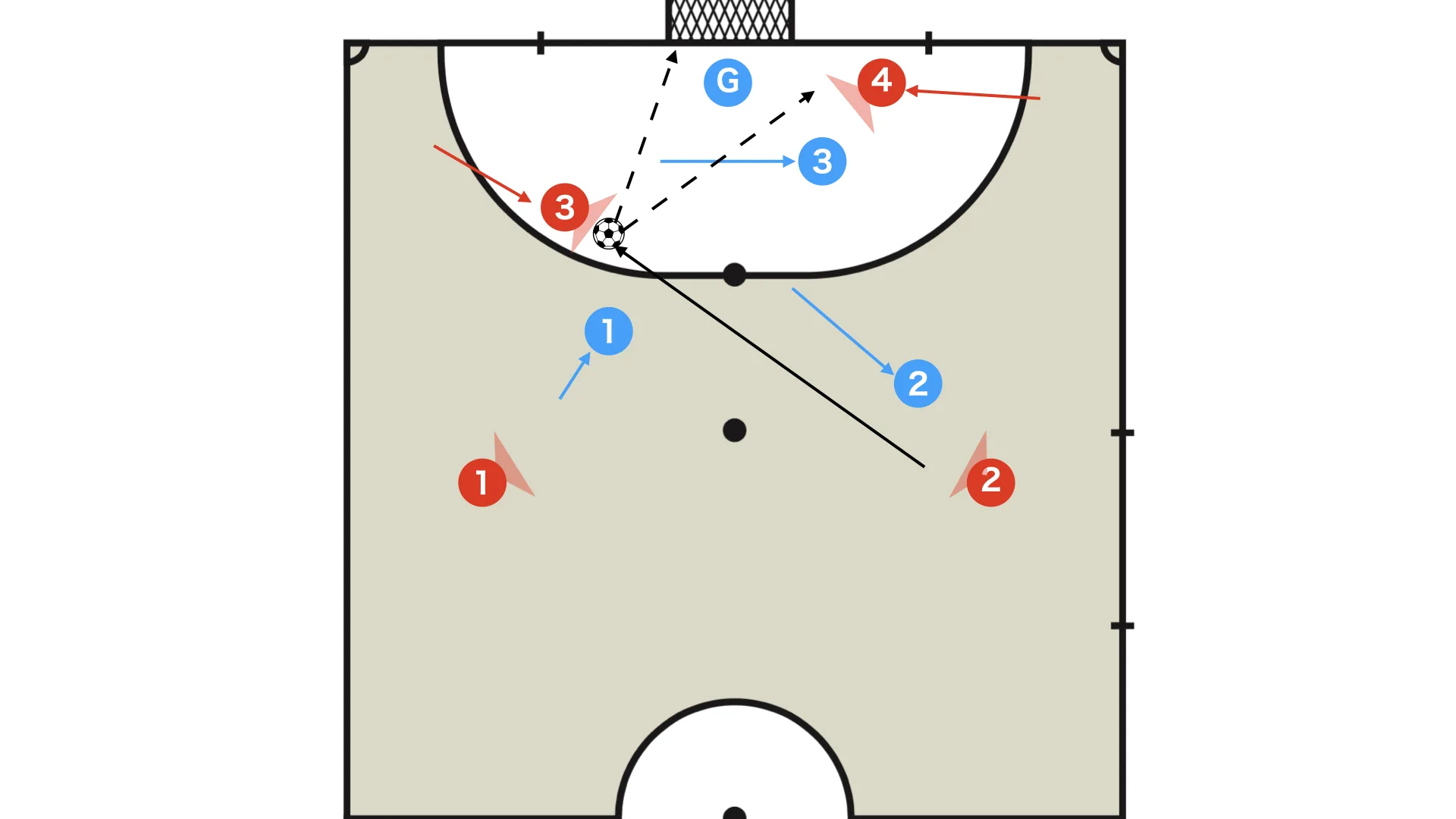
Attack
If the opponent is slow to adjust defensively, the diagonal passing lane opens, so play it quickly.
Once the diagonal pass gets through, shoot directly or look for the second post.
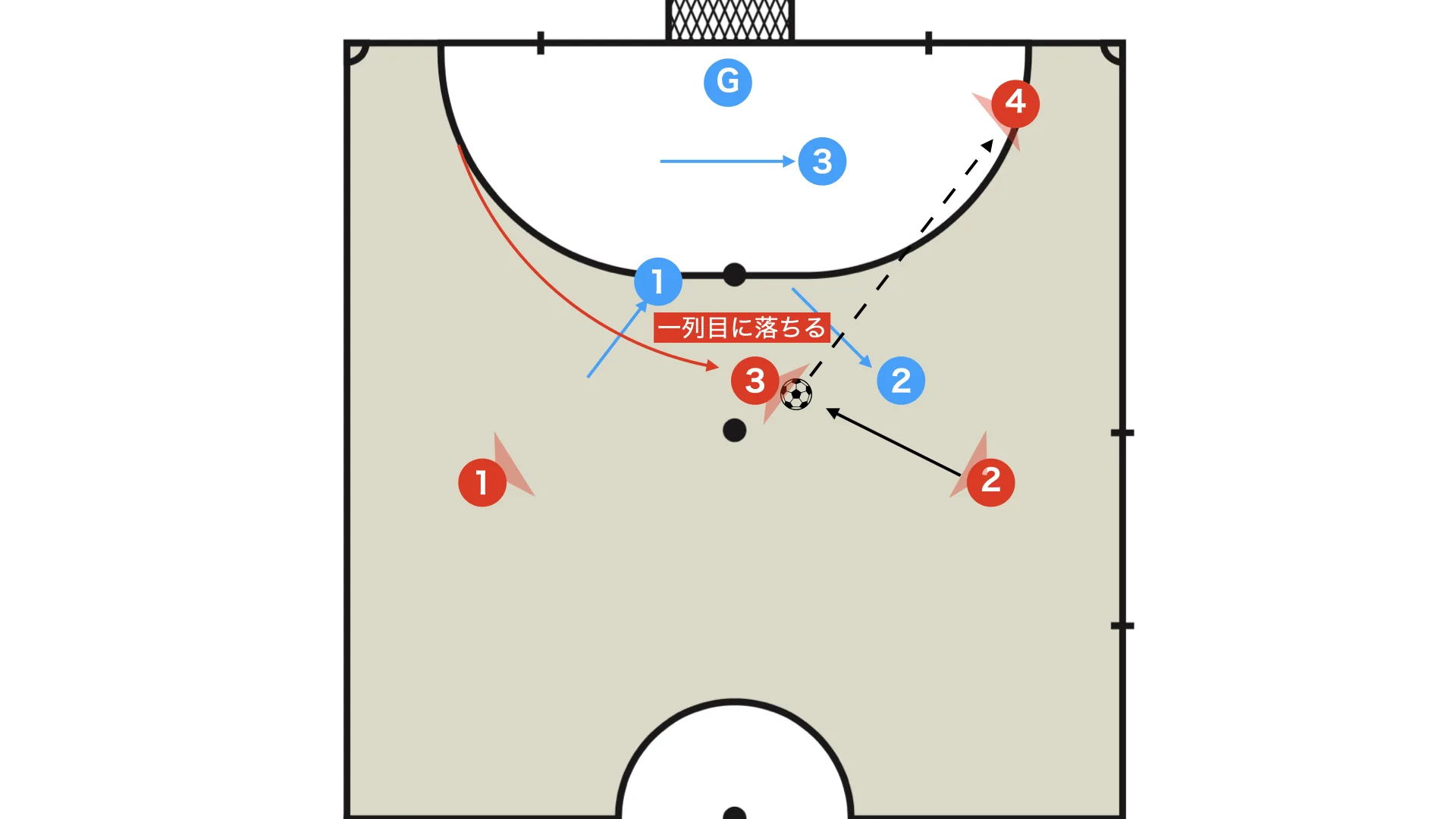
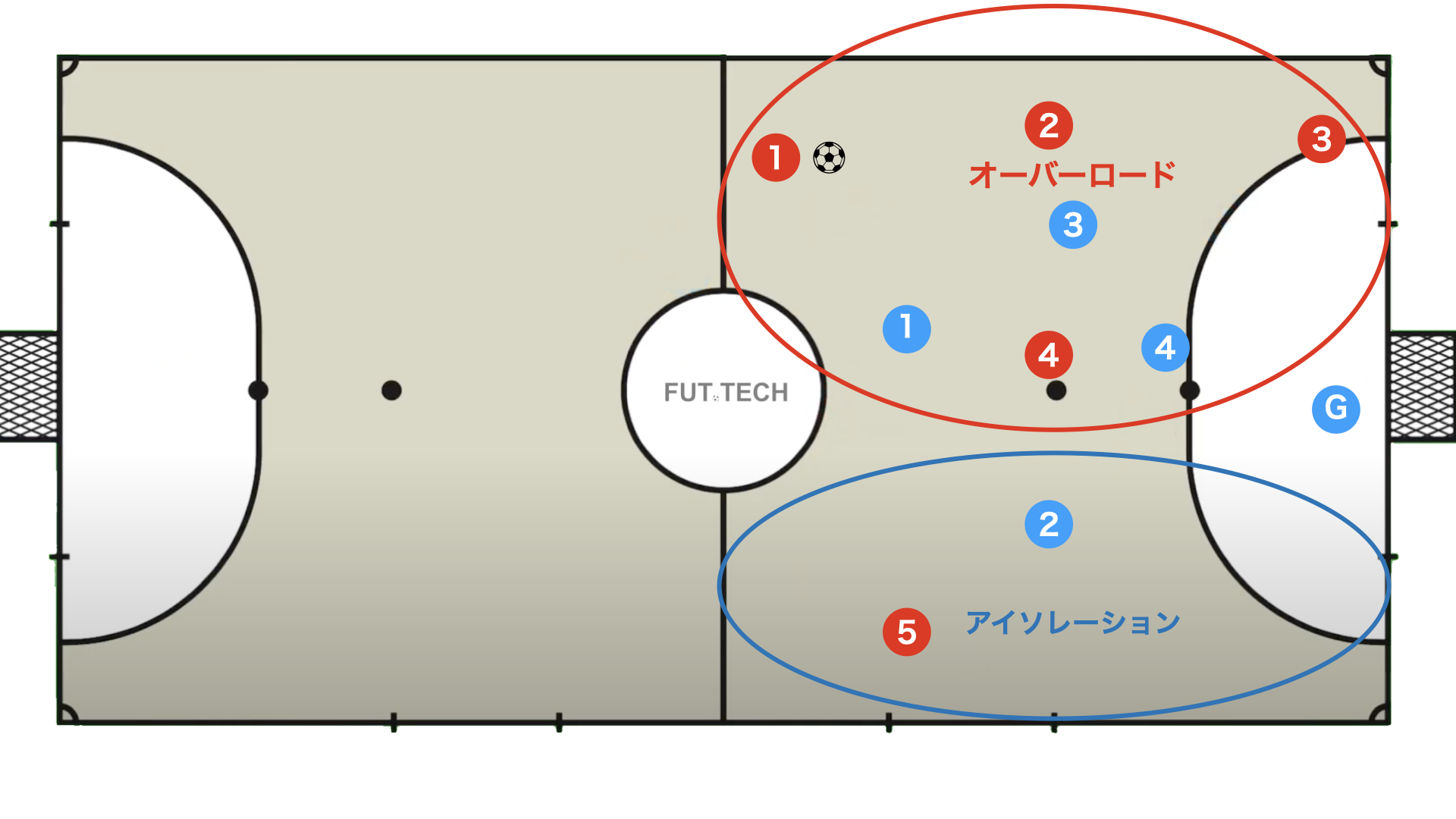
If the opponent stays compact and rotates (slides) quickly, an effective way to change the picture is for a front player to drop off the line into the first line, between the lines.
That creates an overload on the right side and gives you a numerical advantage there.
関連記事
Futsal Tactics: Overload and Isolation
An explanation of two key futsal concepts: overload and isolation. This article clarifies the differ…
続きを読む →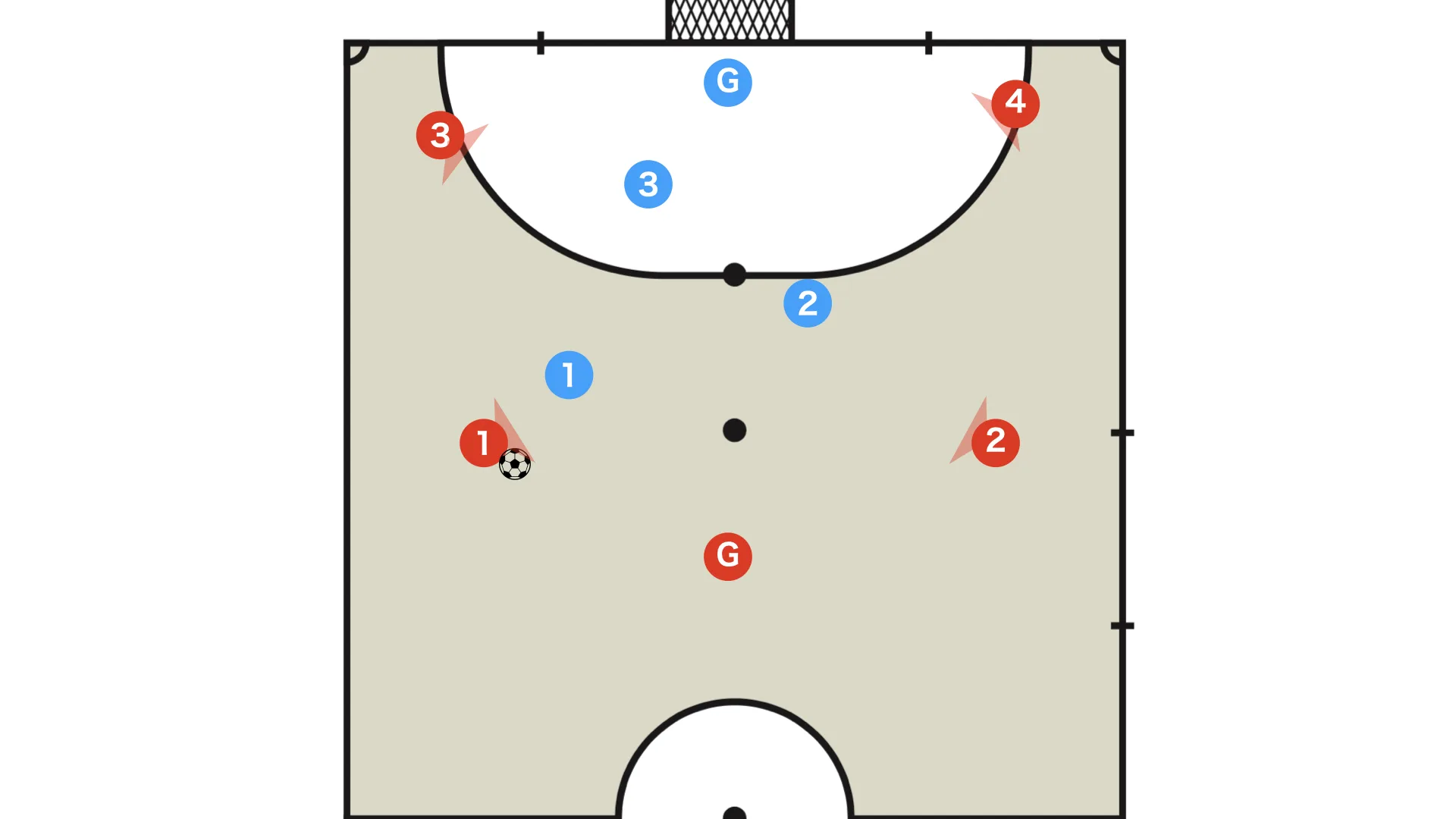
If you absolutely need an early goal, or if you are struggling to score, it can also be effective to push the goalkeeper up and create a 5 vs 3.
That gives the attacking team a two-player advantage, which makes the attack easier, but it also leaves the goal open and brings the risk of conceding.
関連記事
Power Play in Futsal: The Required Skills and 7 Formations Explained
A thorough guide to futsal power play through seven formations. This article systematically covers t…
続きを読む →What did you think?
Because red-card sending-off situations are rare, my impression is that very few teams actually prepare for them in training.
At the very least, I recommend practicing these sending-off situations once every six months.