High Pressing: The Defensive Triangle (Epsilon / Y-Shaped Zone Defence)
Published: 2021.09.27Updated: 2026.05.04
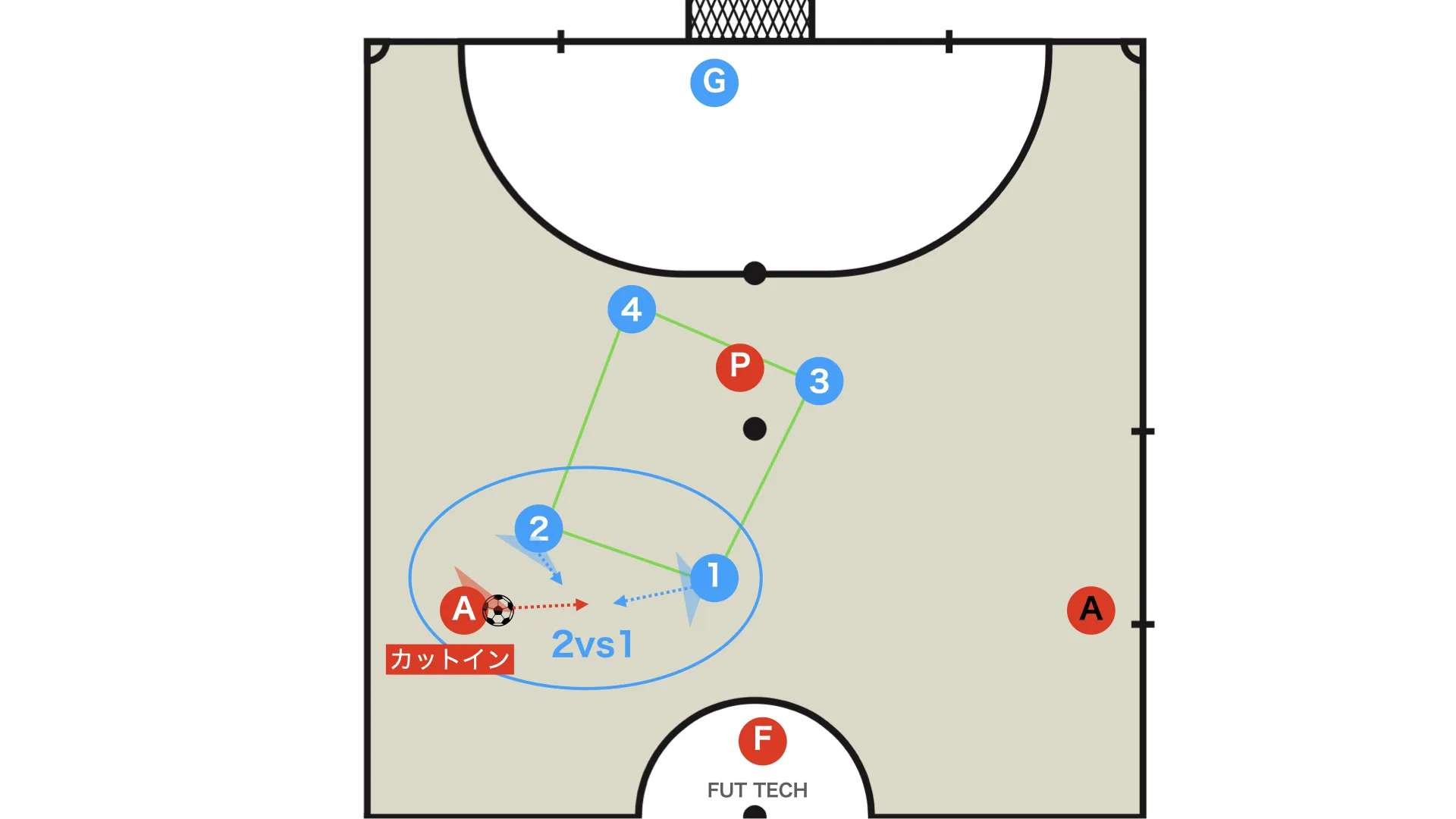
In competitive futsal, when a team can press from the front, it is common to defend in a zone-oriented shape that looks like the letter Y (Υ). Many teams use this structure.
Even so, a lot of players still feel: "I do not really know how this shape is supposed to work, and everything breaks down once we try it."
When I first started playing futsal, I also had no idea how to defend in a Y-shaped zone and ended up causing problems for my teammates.
For players with that same problem, this article explains in detail the roles and defensive rules of the front three players in the Y-shaped zone defence, using diagrams and video.
関連記事
Positional Defence: Overview
An overview of positional defending in futsal. From the first defensive decision of where to set the…
続きを読む →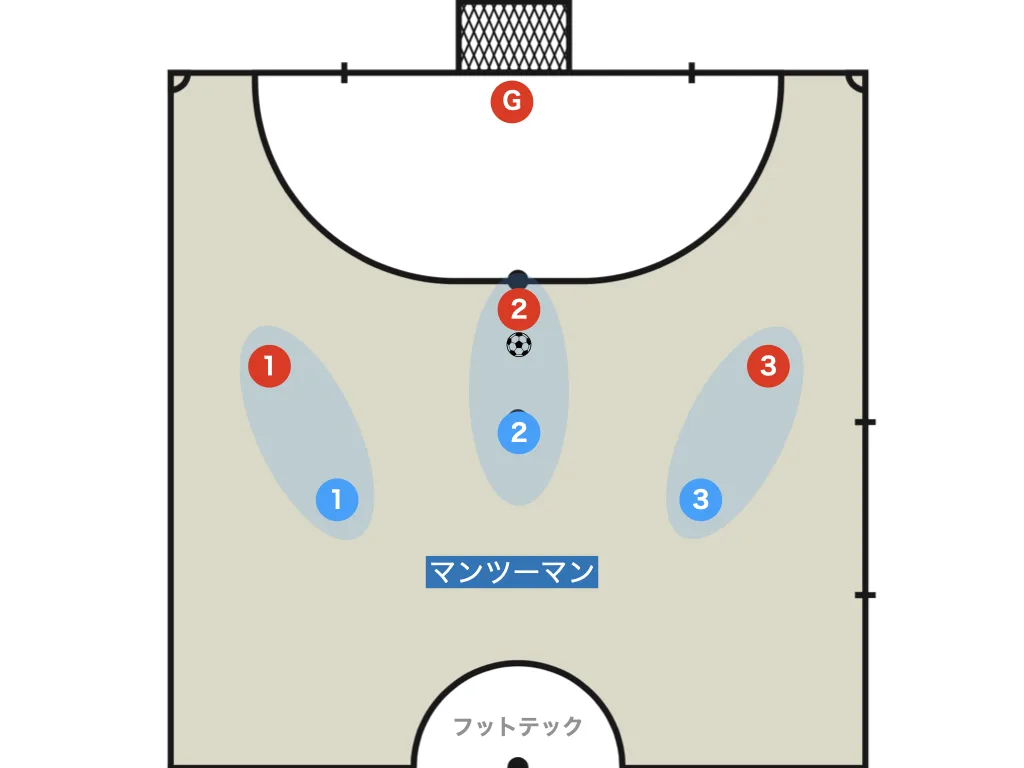
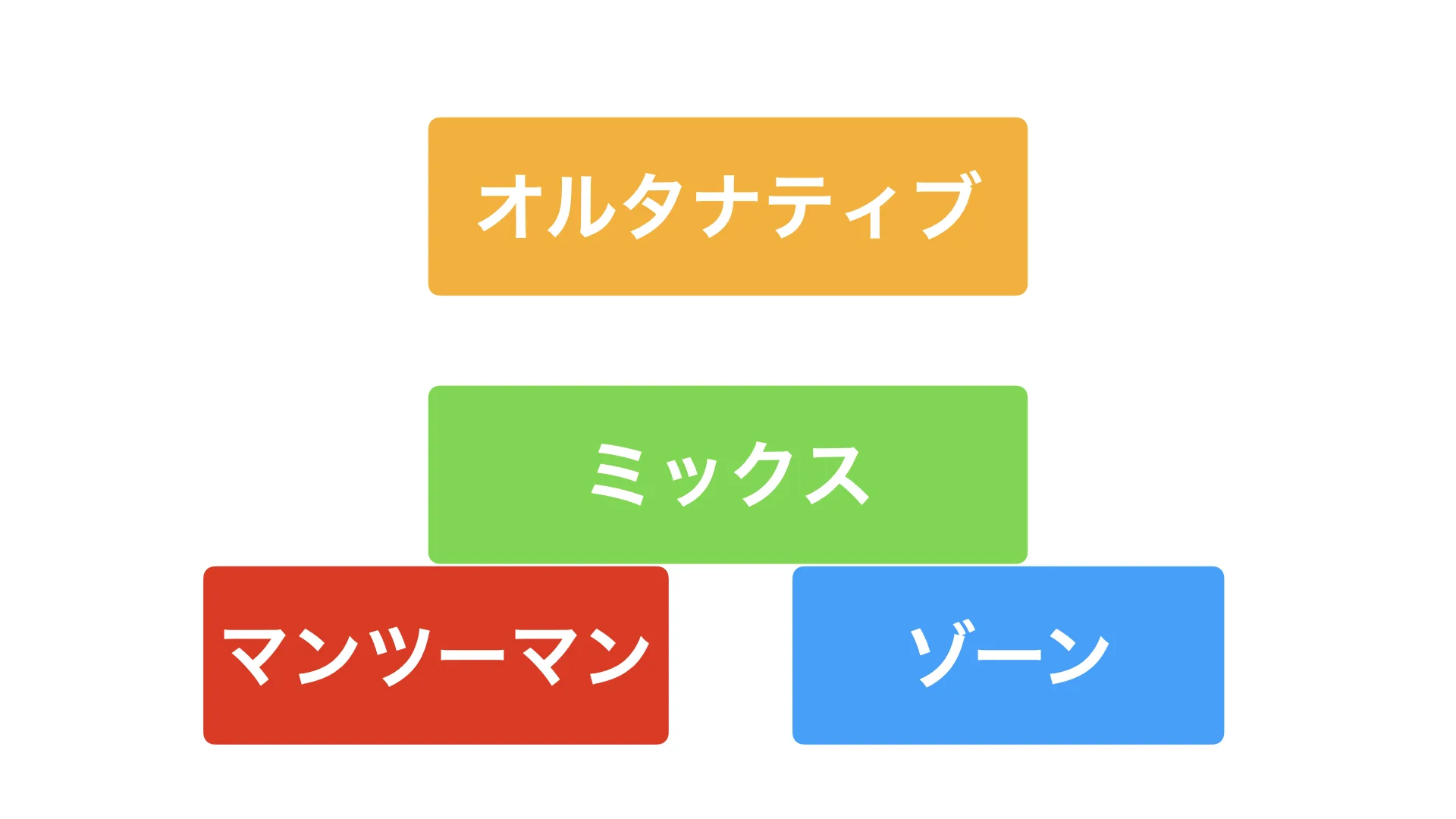
A common approach today is to start from man-to-man reference points, then build multiple defensive lines only after the ball is moved wide. This kind of alternative (selective) defence is widely used, and the Japan national team has used it as well.
関連記事
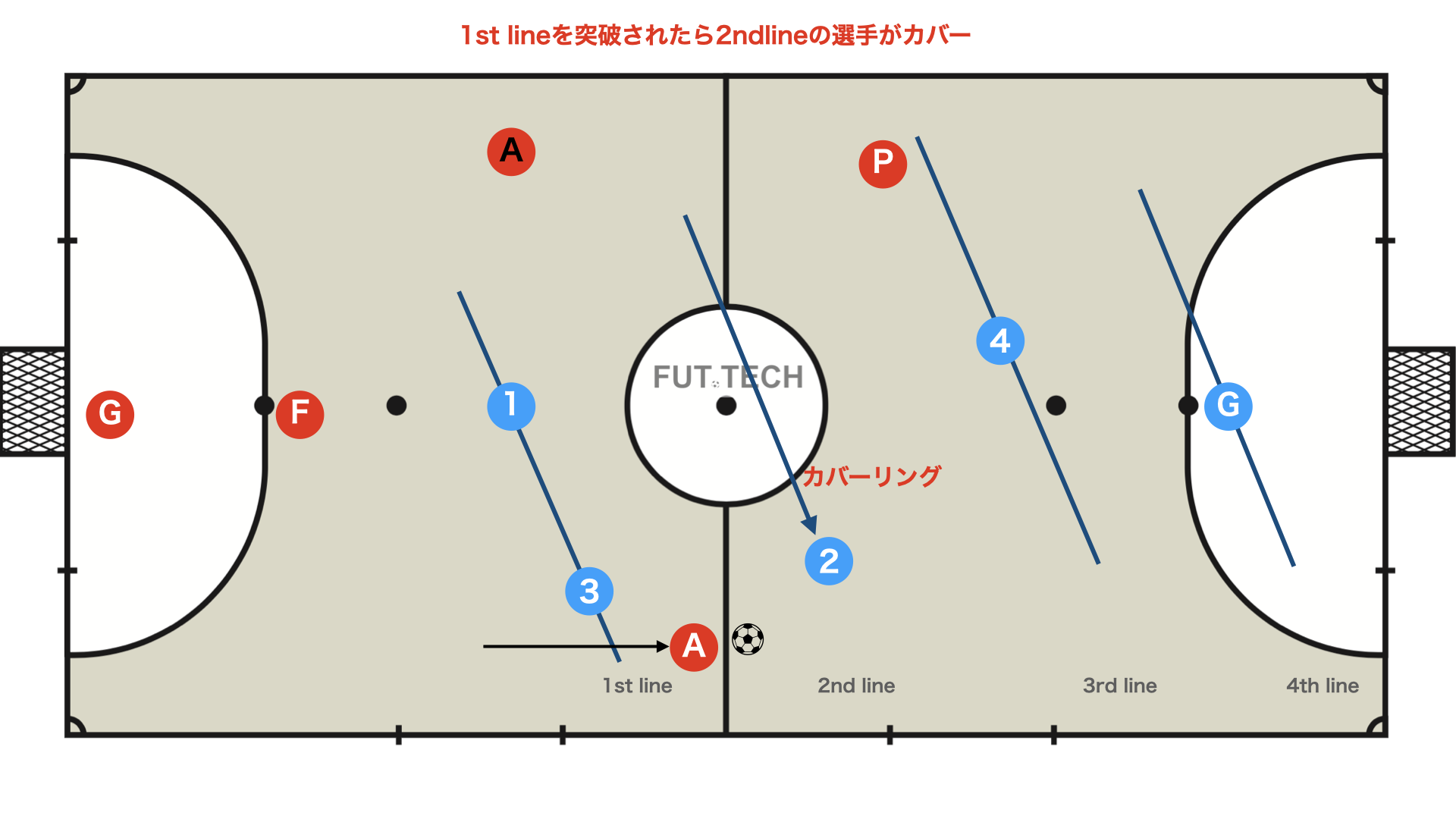
Zone Defence Basics: Building Multiple Defensive Lines and the Ala-to-Ala Pass
A guide to a core concept in futsal zone defence: building multiple defensive lines. This article ex…
続きを読む →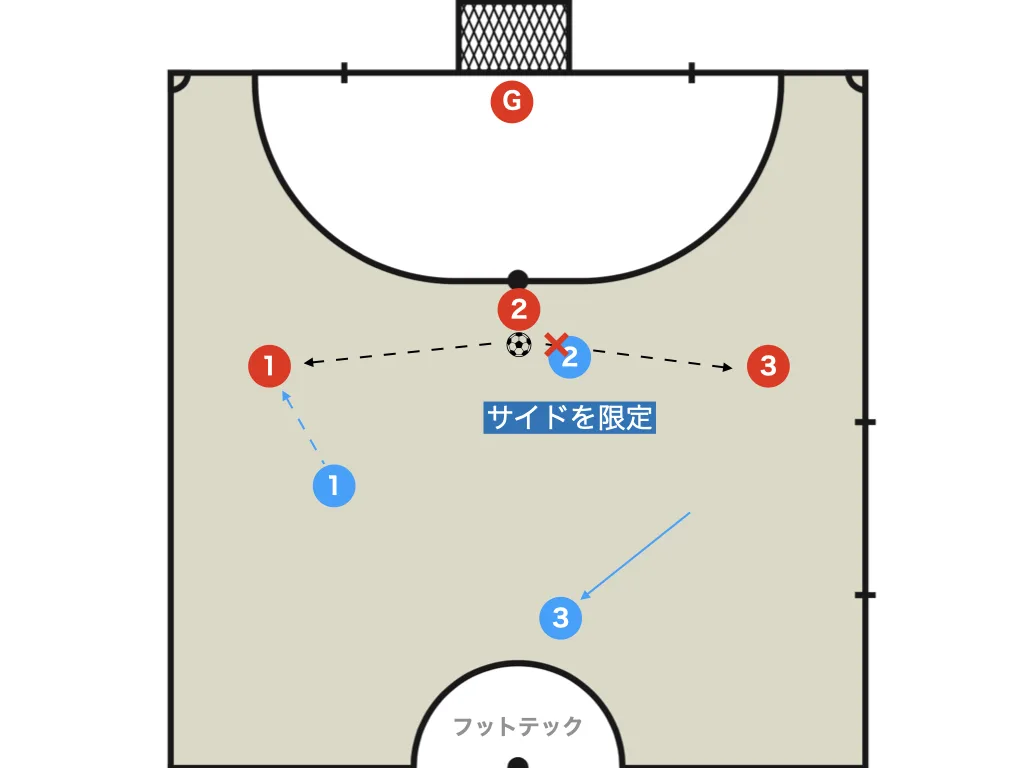
If you force the ball wide from the very beginning and build multiple lines immediately, the 1st defender can read the play earlier and begin the press sooner.
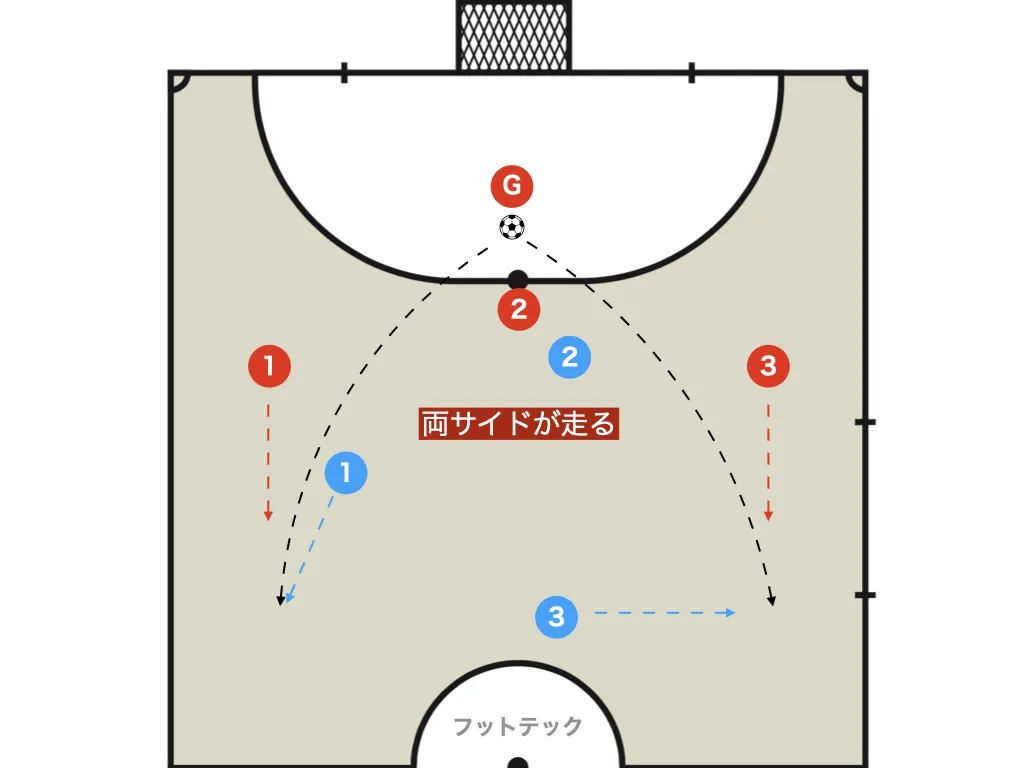
However, if you try to build the Y shape immediately on a goal clearance, you need to be clear about who follows which player if both alas push up.
That is one reason many teams begin with man-to-man references and only build multiple lines after the ball is played to the side.
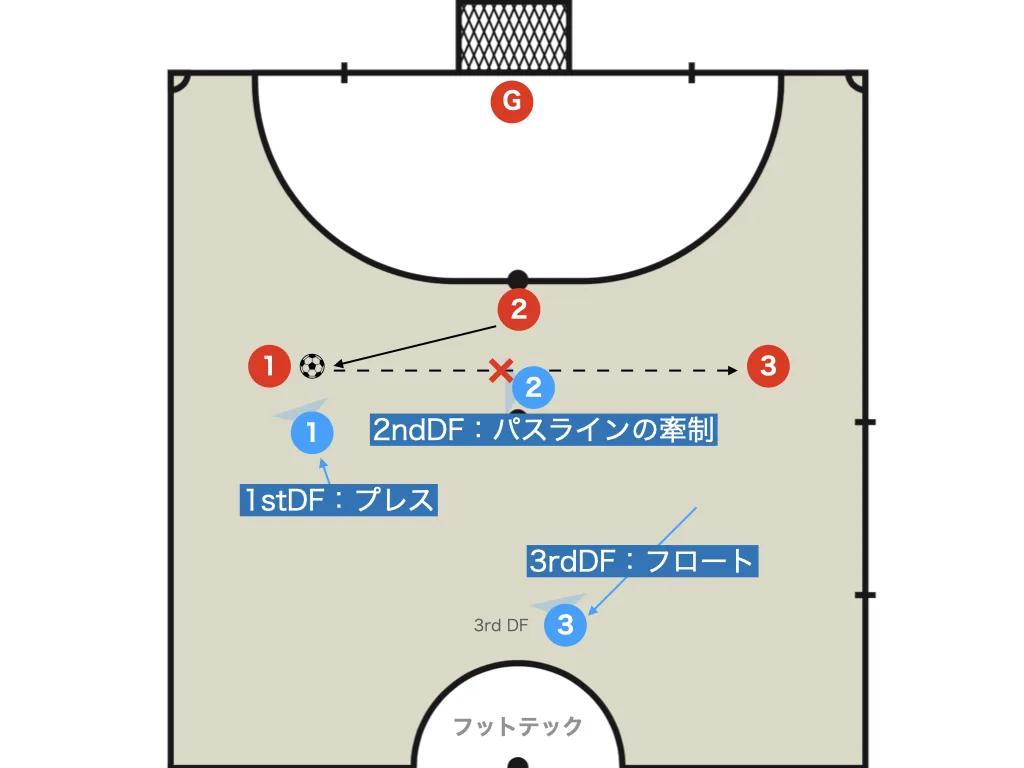
The defensive roles are:
- 1st defender: press the ball carrier
- 2nd defender: screen the skip pass lane (ala-to-ala)
- 3rd defender: float and cover
It is easier to understand in video, so here is a useful explanation clip from the Japan national team.
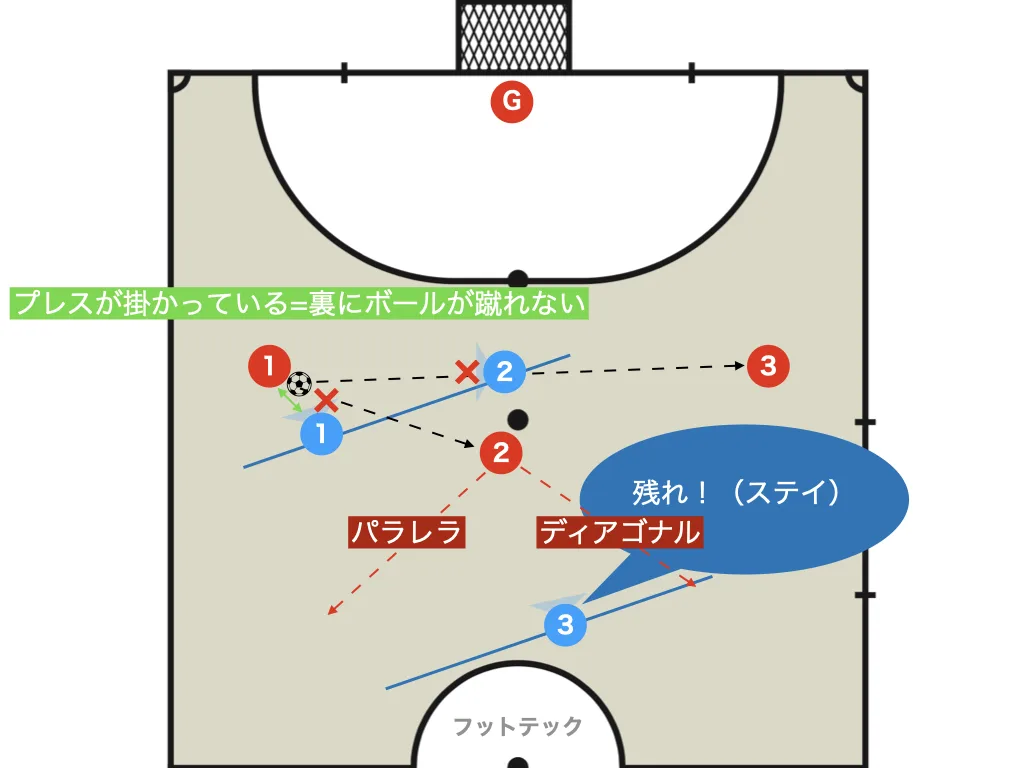
When the 1st defender is able to press properly, the opponent cannot easily play in behind (parallel) or into the space between the lines. In that case, the 2nd defender should stay in place and keep screening the horizontal pass lane.
That is why, when the 1st defender is really applying pressure, it is ideal for the 3rd defender to call out "stay" or "hold".
関連記事
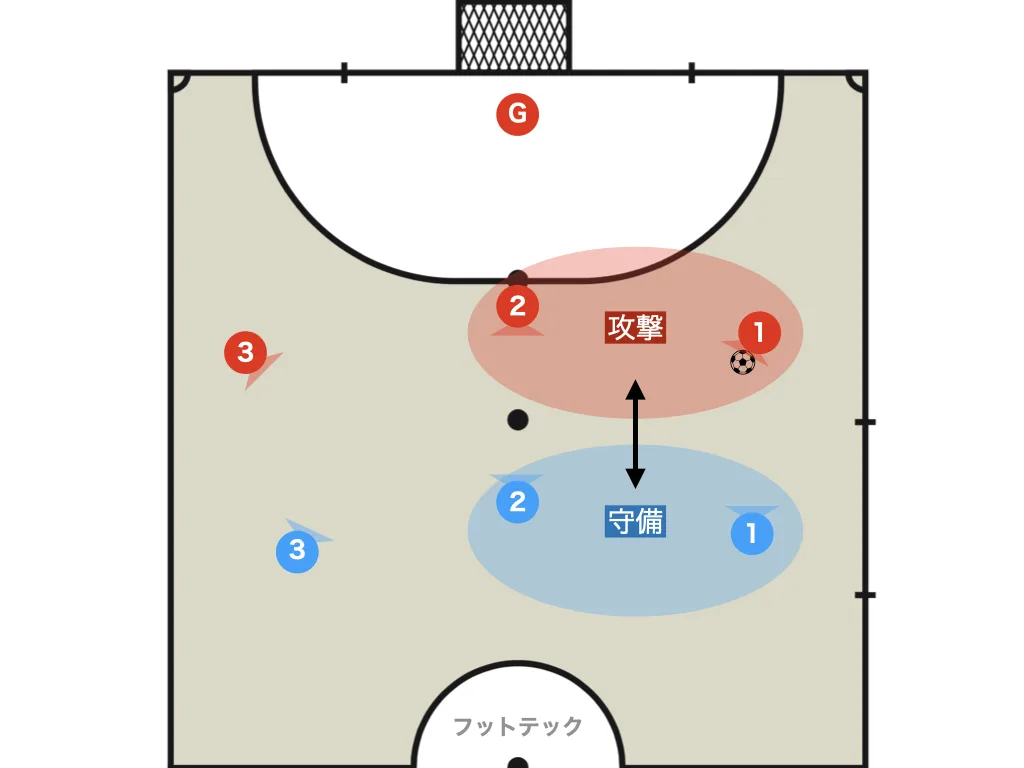
Challenge and Cover: The Defensive Pair (1st and 2nd Defender)
An explanation of the futsal defensive pair known as challenge and cover. This article organizes the…
続きを読む →Using the space between the lines (entre lineas) is a standard way to attack a defence that is trying to build multiple lines.
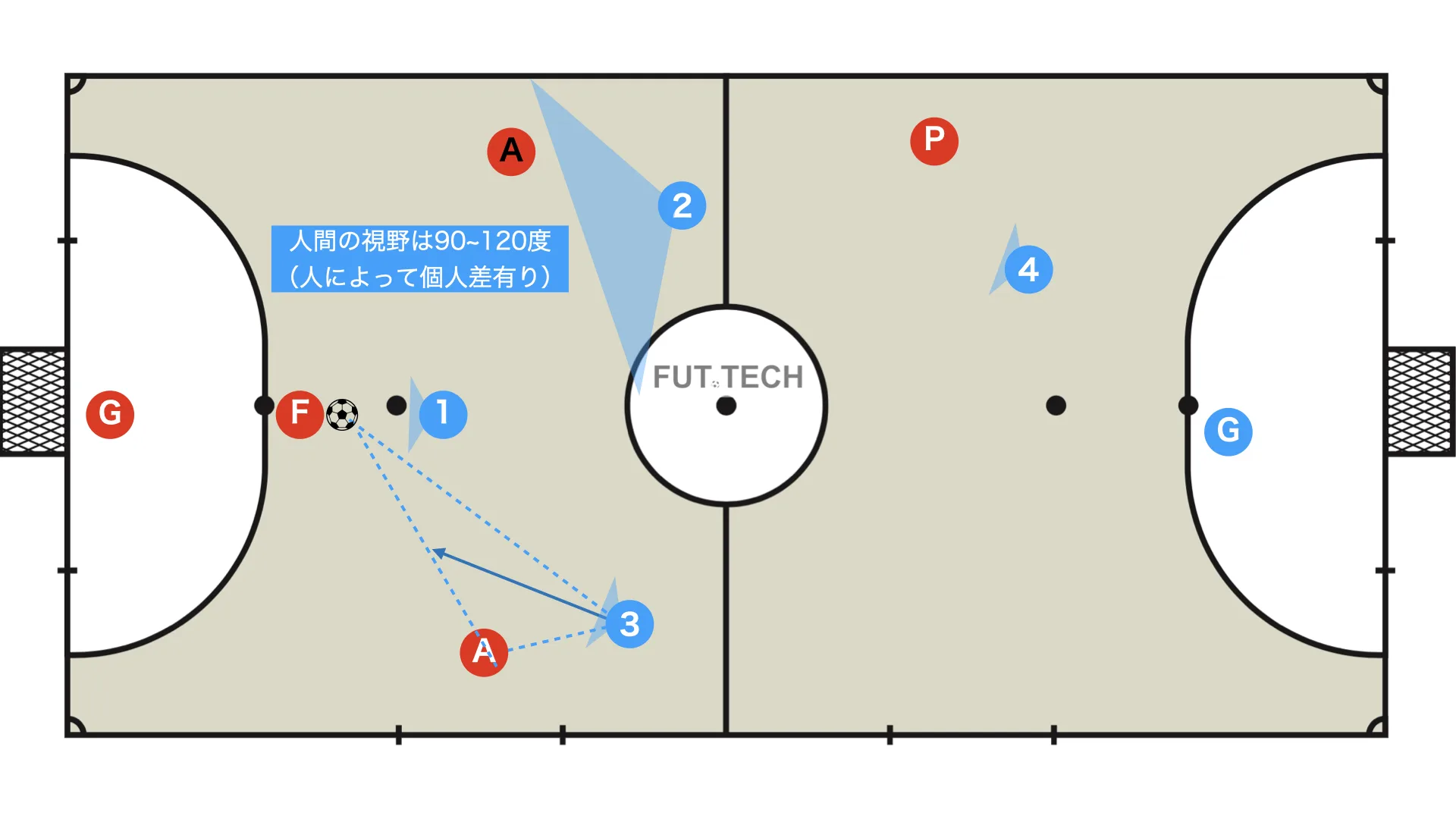
Against this, the defensive response changes depending on whether the 1st defender is really pressuring the ball and cutting the passing lane into that central pocket.
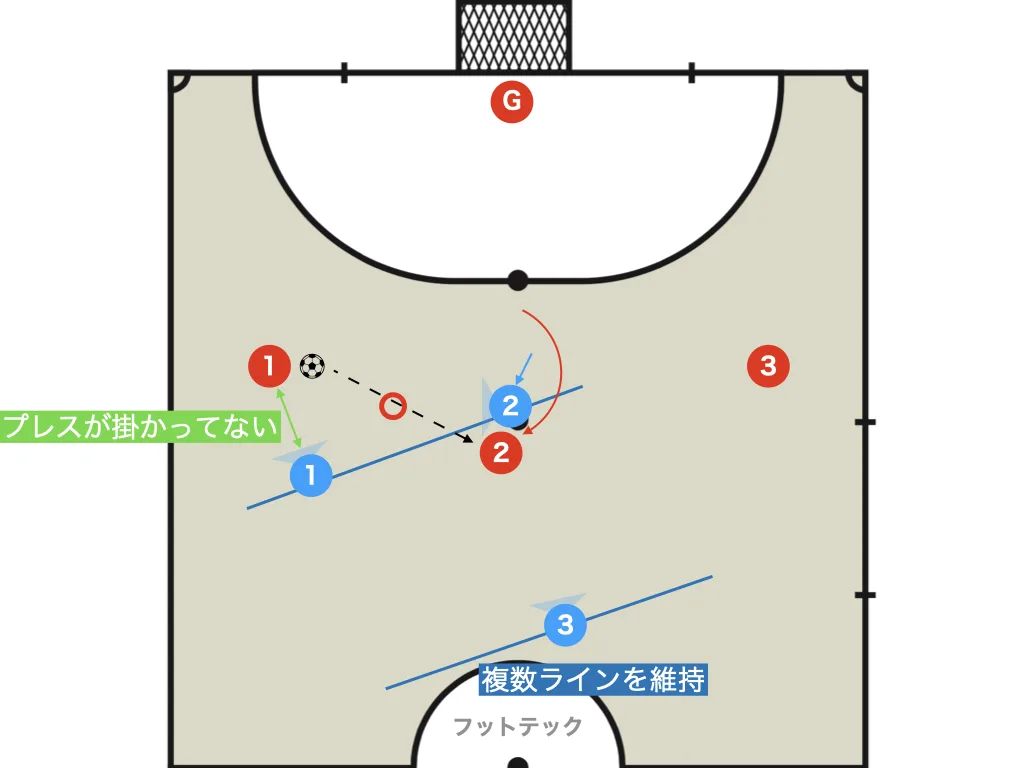
If the 1st defender is not cutting the lane into the space between the lines, the golden rule is for the 2nd defender to protect that central player so the team can keep its layered defensive shape.
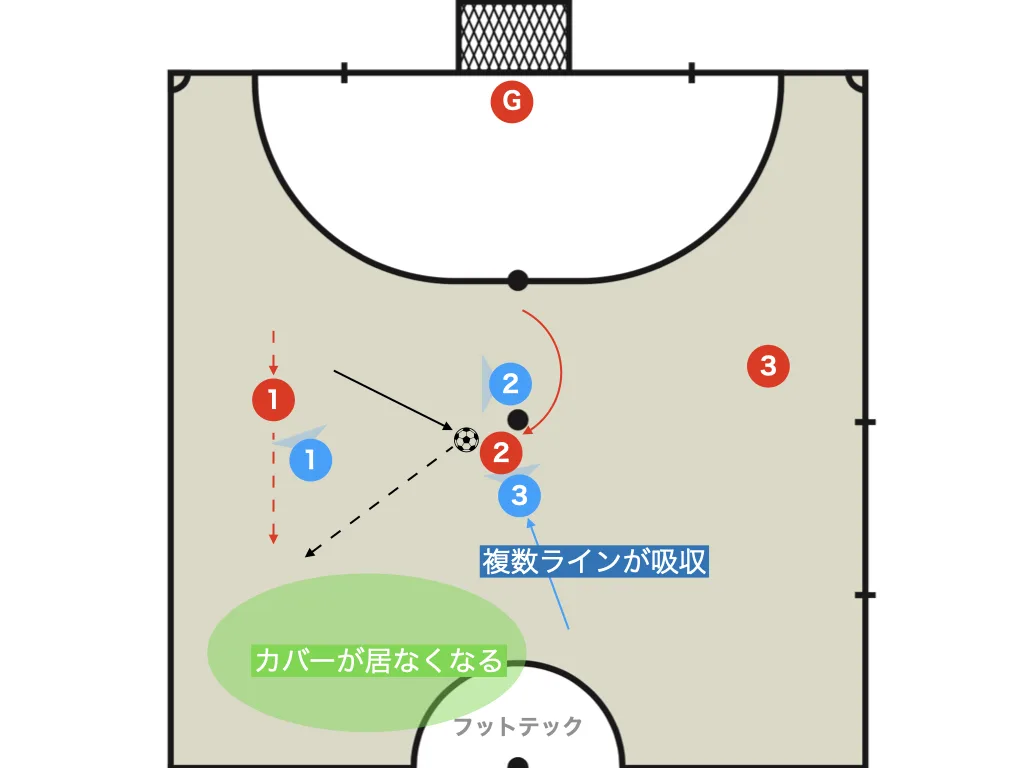
If the 3rd defender steps up to deal with the player between the lines, the layered structure collapses into a flat line. Once that happens, the opponent can break through easily with two-player combinations.
関連記事
Challenge and Cover: The Defensive Pair (1st and 2nd Defender)
An explanation of the futsal defensive pair known as challenge and cover. This article organizes the…
続きを読む →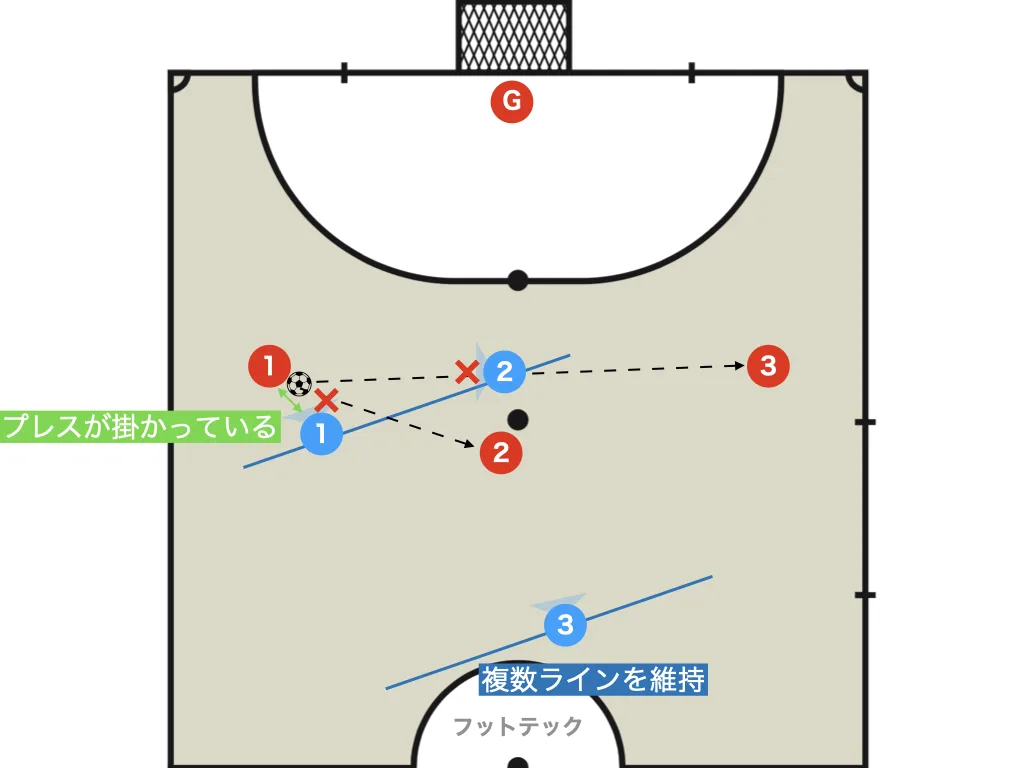
If the 1st defender is clearly cutting the passing lane into the space between the lines, the 2nd defender can ignore that central player, screen the ala-to-ala pass (from red 1 to red 3), and look to win the ball.
As you can see, the correct reaction changes according to the quality of the press and the opponent's position. Because of that, it is extremely important for the deeper defender to communicate what is happening from behind the play.
Typical calls from the 3rd defender are things like "stay" and "go with him".
In principle, the 2nd defender is responsible for screening the ala-to-ala pass. But if the ball still gets through, here are the solutions.
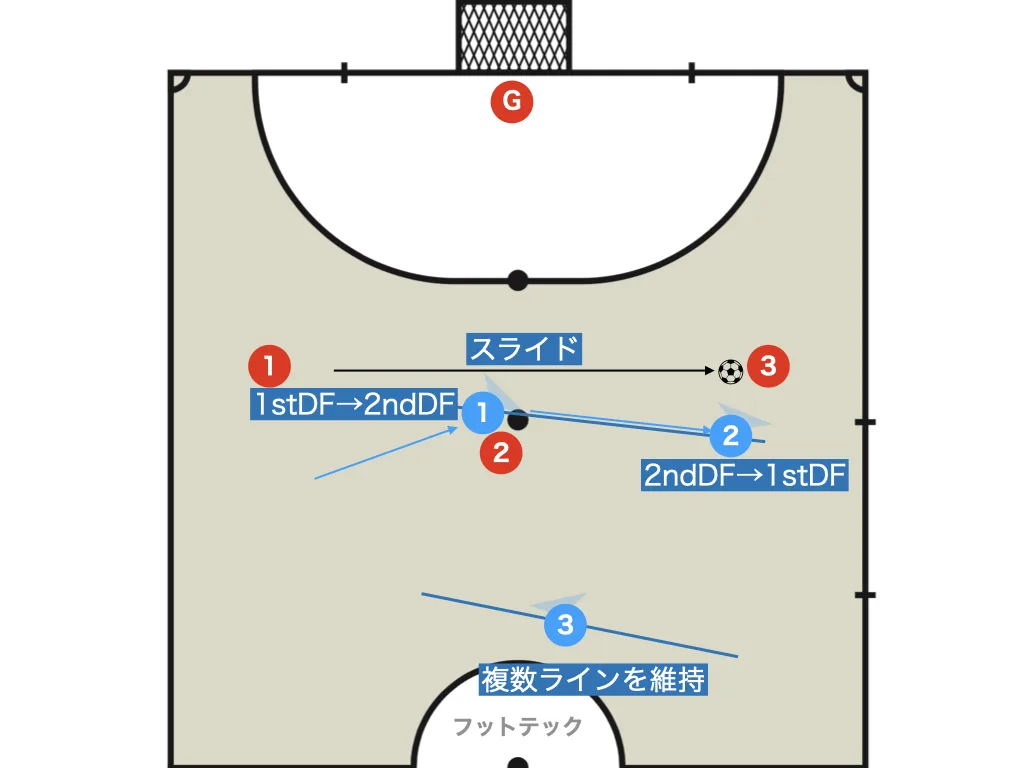
If the pass does not advance the ball very much, the team can slide as shown above and swap the roles of the 1st and 2nd defender.
In general, a backward or negative ala-to-ala pass is best handled with a slide. A flat or advancing pass is usually better handled with the defensive rotation explained next.
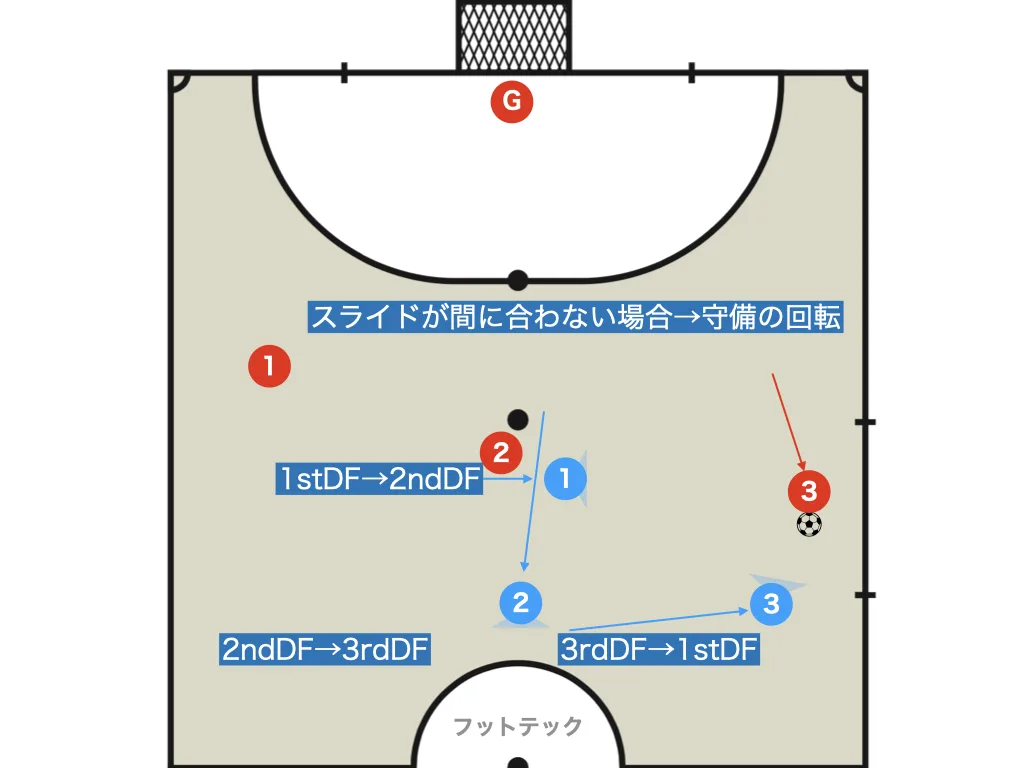
If the opponent advances too far and the slide cannot recover the situation, the defence should rotate.
Defensive rotation:
- Blue 3: 3rd defender -> 1st defender
- Blue 2: 2nd defender -> 3rd defender
- Blue 1: 1st defender -> 2nd defender
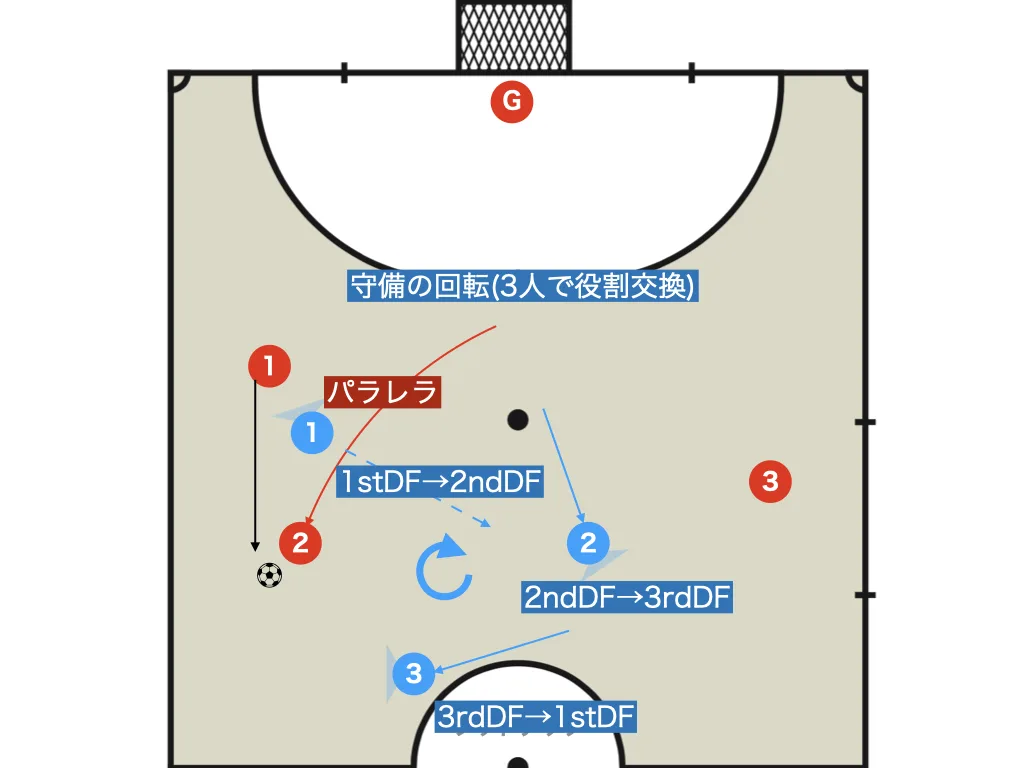
The same idea applies when the opponent breaks the 1st defender with two-player combinations or a dribble. Rotate the defence and rebuild multiple lines.
Typical ways the defence gets broken:
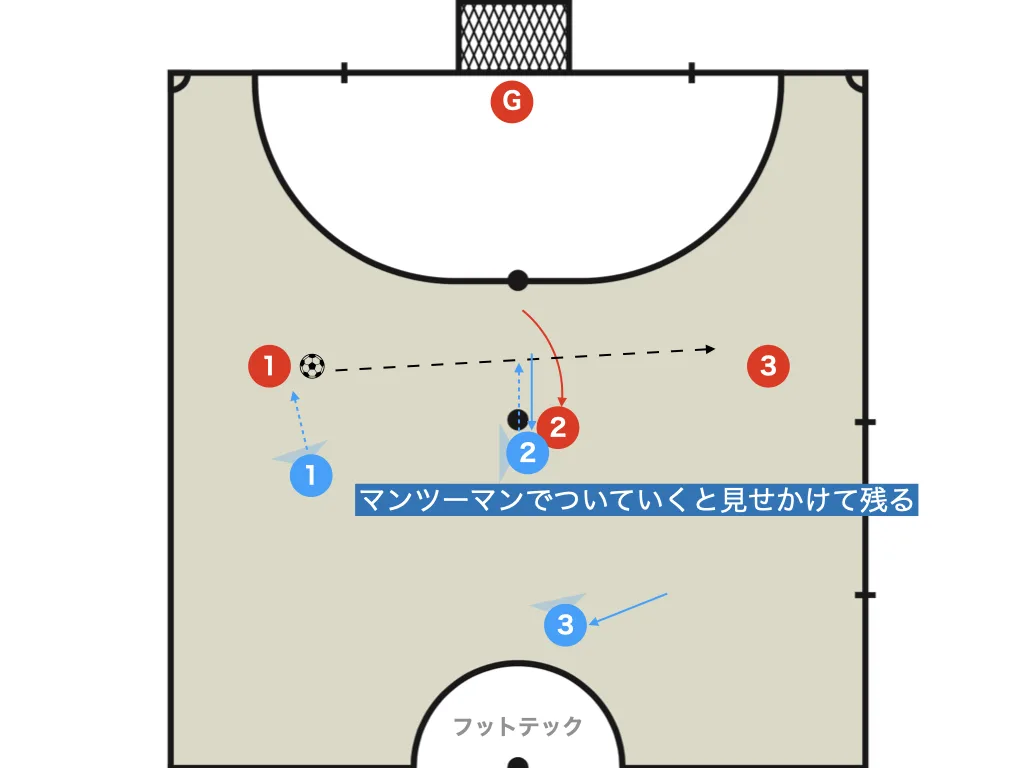
If you pretend to follow in man-to-man fashion but actually stay, you make interceptions easier.
This kind of defending, where the team switches between man-to-man reference points and a layered defensive structure depending on the situation, is what we call alternative defence.
How was it?
Many players assume that zone-oriented defending is the standard in futsal, but among strong national teams overseas, there are actually quite a few that defend man-to-man.
You could even argue that aggressive man-to-man defending is the cutting edge.
At the same time, for teams that cannot rely on outstanding individual defenders, a more organized and zone-oriented structure is often essential.
Use this article as a chance to clearly understand each role inside the defensive triangle and put it into practice with your team.
関連記事
Man-to-Man Defence in Futsal: Simple in Theory, Difficult in Practice
A detailed explanation of man-to-man defending in futsal. This article breaks down the principles, c…
続きを読む →